Garden Blog - Top Tropicals

Date: 7 Oct 2025

🌸 Caring for Winter-Blooming Trees

Smokey  the  tuxedo  cat  plants  a  young  Bauhinia  blakeana  tree  in  the 
 ground  while  Sunshine,  a  ginger  cat,  relaxes  in  a  wicker  recliner  with  a  cup
    of  pumpkin  latte.  A  Callistemon  Little  John  bottlebrush  blooms  beside  him, 
 surrounded  by  pumpkins,  autumn  leaves,  and  warm  golden 
 light.

Tips from Top Tropicals Plant Expert - Tatiana Anderson

When northern gardens fade into gray, our tropicals wake up. Winter is color season here - and even if you live up north, you can still enjoy these same flowering trees indoors or on a sunny patio.

From the fiery Royal Poinciana to the golden Tabebuia and violet Jacaranda, these eight trees prove that winter can bloom anywhere

How to Care for Winter-Flowering Trees

We're often asked, at Top Tropicals, “Can I really grow tropical trees in winter?” Yes — with the right light and care, you can. Here’s what works best both outdoors and indoors, according to our expert, Tatiana Anderson.

🌡️ Fall Planting Guide

Let’s talk about timing, because that’s the part most people get nervous about. Everyone asks: “Isn’t it too cool to plant now?” — and the answer is no! Fall and early winter are actually the best months for tropicals in Zones 9 to 11.

Here’s why: the air has cooled off, but the soil is still warm. Roots love that combination. They quietly spread underground while the rest of the plant takes a break. By spring, those roots are ready to feed a burst of new growth — and that’s when you’ll see the first big flush of flowers.

Pick a sunny spot that gets plenty of light — six to eight hours if you can. Loosen the soil and mix in compost or pine bark so it drains well. Dig a hole about twice as wide as the pot and just as deep. Set the plant level with the ground, backfill, and water it deeply to settle everything in. Then add mulch — two or three inches is plenty — but keep it away from the trunk so it can breathe.

Tatiana’s tip: “Fall planting builds roots while everyone else is resting. By spring, your tree wakes up ready to grow.”

🌳 Outdoor Care (Warm Climates Zones 9–11)

Now, let’s talk about what happens after planting — because real gardening starts once the plant is yours. Tropical trees thrive on routine: steady sunlight, deep watering, and just a bit of attention.

Water them about once a week when the weather is mild, more often if it’s dry or windy. Always check the soil first — if it feels dry two inches down, go ahead and water. Mulch helps more than most people realize — it keeps roots cool in summer and warm in winter, and it saves you from watering as often.

Now, for those of you in Zone 9, here’s the truth: your trees can take a chill, but they don’t love surprises. A quick night in the upper 20s F won’t hurt mature plants, but young ones appreciate a little help — a frost cloth or being planted at the south side.

And don’t underestimate the wind. Cold, dry gusts can burn leaves faster than frost. Use fences, hedges, or taller shrubs as windbreaks, and take advantage of microclimates — those warm pockets next to the house, brick patios, or corners that get extra afternoon sun.

Tatiana’s tip: “A tropical garden in Zone 9 isn’t about fighting nature — it’s about cooperating with it. Find the warm corners, protect from the cold wind, and your trees will thank you with flowers all winter.”

🏚️ Indoor & Patio Care (Cooler Climates)

For our northern friends — yes, you can grow tropicals indoors! You just need good light, warm air, and a little attention.

Pick a large pot, with drainage holes and a light tropical soil mix. Place it in a bright window — south or southwest if you can — or under grow lights for about 12–14 hours a day. Keep temperatures between 65 and 85 F, and water when the top inch of soil dries out.

Misting helps keep leaves clean and adds humidity. Rotate the pot every couple of weeks so all sides get sun. In summer, move your plant outdoors gradually so it can enjoy real sunlight — then bring it back in before nights drop below 40 F.

Tatiana’s tip: “Don’t be afraid of growing trees in pots. They adapt beautifully — just select the right trees and pay attention to their needs.”

✔️ Learn more: Secrets of Winter planting - tropical planting breaks the rules.

🎥 Watch short videos about Winter Bloomers:
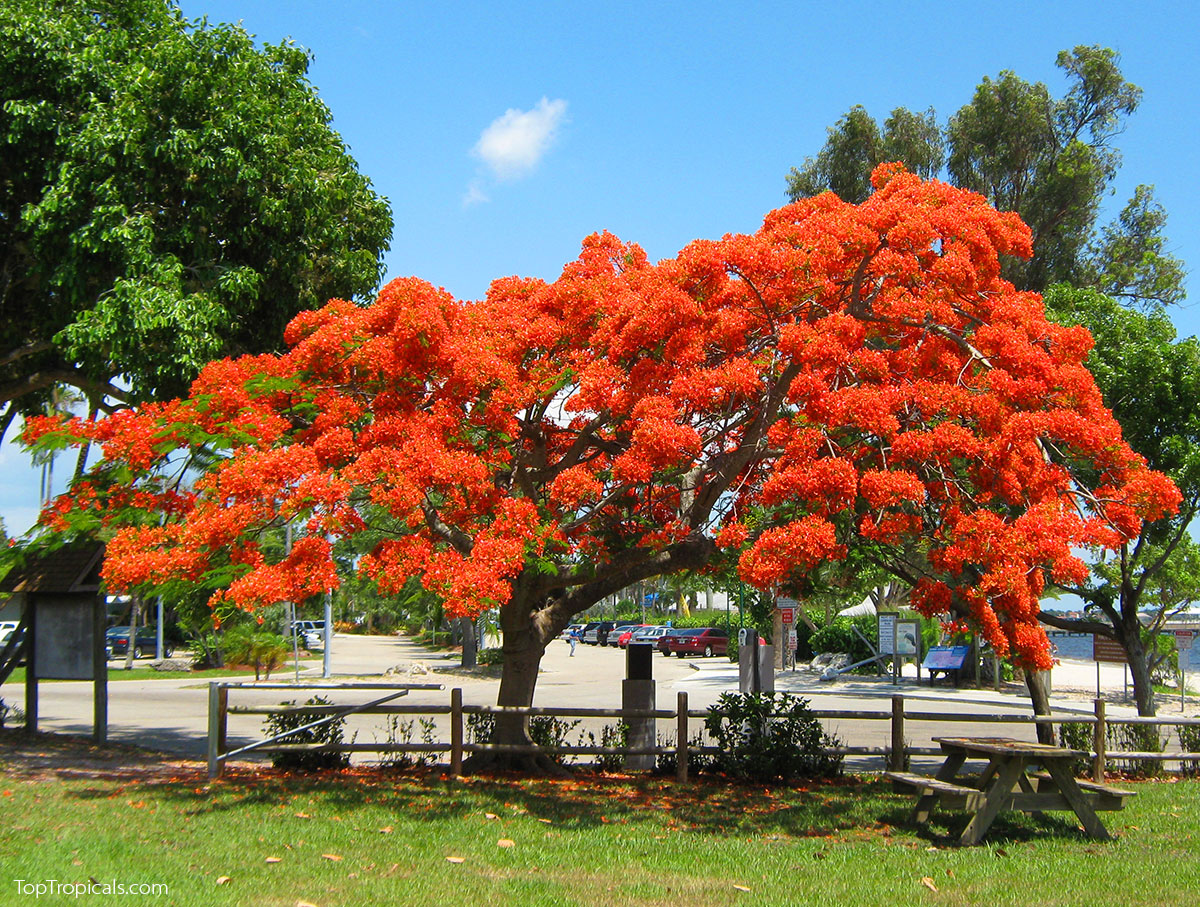
Royal  poinciana,  Flamboyant  tree,  Delonix  regia

💲 Special Offer – 20% off Winter Bloomers!

Get 20% OFF winter bloomers with code

BLOOM2025

Min order $100. Excluding S/H, valid online only, cannot be combined with other offers.

Hurry, offer expires October 13, 2025!
👉 Explore Winter Flowering Plants

Date: 8 Apr 2026

Adenium rainbow - warm, bright, and full of energy

Adenium Phoenix

Adenium Phoenix

Adenium rainbow - warm, bright, and full of energy 🌈

Some adeniums feel calm. And some feel like sunshine!
This set is all about warm orange tones - bright, happy, and hard to overlook. These are the ones that light up a bench even on a cloudy day.


💡 Rainy summer tip


In places like Florida, summer rain can be too much for adeniums.

Adenium Plant Facts

Botanical name: Adenium sp.
Also known as: Adenium, Desert Rose, Impala Lily
USDA Zone: 9 - 10
Highligths Plant with caudexLarge shrub 5-10 ft tallSmall tree 10-20 ftFull sunWater Requirement: Low. Allow soil to dry out between wateringsWatering: Moderate. Water when top soil feels dryYellow, orange flowersRed, crimson, vinous flowersUnusual colorBlue, lavender, purple flowersWhite, off-white flowersPink flowersToxic or Poisonous
Get personalized tips for your region

They are succulents - Desert Roses they are! - and don’t like staying wet for long periods. Constant rain keeps the soil saturated, which can lead to root rot and weak growth.
If you have a rainy season, it’s best to keep them under a roof or covered area.
This helps control watering, keeps the soil from staying soggy, and protects the caudex and roots.
They still need bright light - just not endless rain.

🌸 Today's featured adeniums


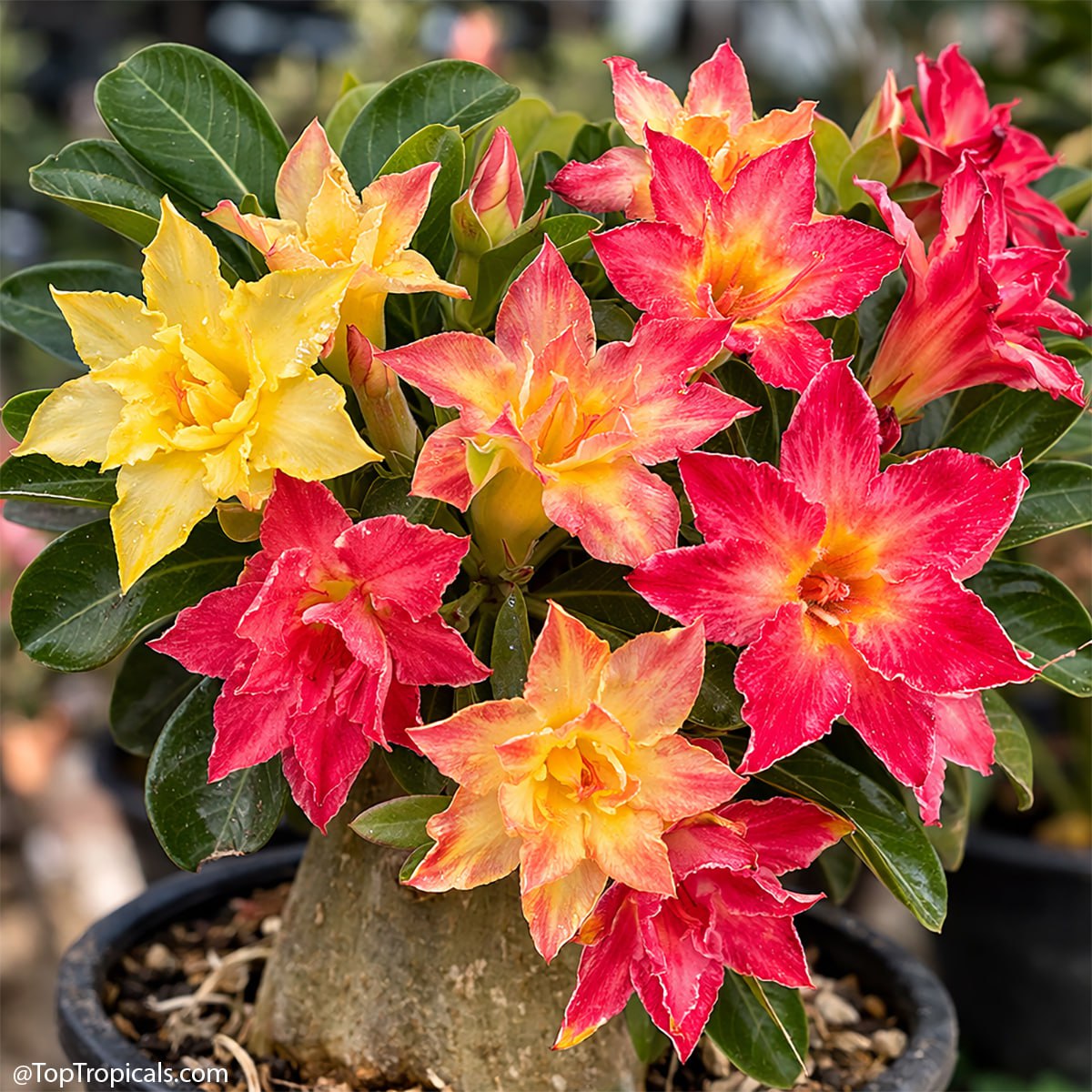
 ✦ Phoenix: Color-changing blooms that shift from soft yellow to pink and coral - looks like a living sunset on one plant.
 ✦ Pra Rod Mary: Warm orange shades with a soft, rounded bloom.
 ✦ Pratum Thong: Golden-orange color with a rich, glowing look.
 ✦ Som Term Sab: Bright, lively tones - name tied to wealth and good fortune.
 ✦ One Heart: Balanced form with warm color and a clean structure.
 ✦ Thong Nuekao: Golden shades with a slightly deeper, more refined tone.

Orange adeniums bring a different kind of energy - warm, glowing, and full of life.
And once you add a few - your collection starts to feel a lot brighter!

🛒 Explore Exotic Thai Adeniums

📚 Learn more:


· Adenium varieties in Plant Encyclopedia
· About #Adenium Rainbow - fantastic varieties
· Adenium rainbow - pink in every shade
· Dark tones that don’t look real. Secret of a Big Caudex.
· Variegated and impossible to ignore adeniums that change your collection. Soil tips.
· We picked 6 adeniums - you’ll probably want all 6. Soil and Watering tip.
· A few adeniums you don’t want to miss. Trimming tip.
· The adenium colors everyone is talking about right now. Light tips for hot climates.
· Adenium rainbow: these 6 will pull you in. Fertilizing tips.
· How to start your dream collection: before you start
· How to grow a happy Adenium

#Container_Garden #Adeniums #How_to #Discover

🟢 Join 👉 TopTropicals

Date: 15 Mar 2026

What Thai Adenium names mean: luck, gold, and mythology

Cats Smokey and Sunshine in adenium garden

Cats Smokey and Sunshine in adenium garden

What Thai Adenium names mean: luck, gold, and mythology 🌸

Many Adenium hybrids come from Thailand, where breeders often give varieties meaningful and poetic names rather than simple codes. Instead of simple labels like "Red Double #27", Thai breeders often give their flowers names that sound like small poems. These names frequently reference wealth, luck, jewels, mythology, and beautiful colors.

Adenium Plant Facts

Botanical name: Adenium sp.
Also known as: Adenium, Desert Rose, Impala Lily
USDA Zone: 9 - 10
Highligths Plant with caudexLarge shrub 5-10 ft tallSmall tree 10-20 ftFull sunWater Requirement: Low. Allow soil to dry out between wateringsWatering: Moderate. Water when top soil feels dryYellow, orange flowersRed, crimson, vinous flowersUnusual colorBlue, lavender, purple flowersWhite, off-white flowersPink flowersToxic or Poisonous
Get personalized tips for your region


Once you start recognizing common Thai words, Adenium names become much easier to understand. Some sound almost like short blessings - promising prosperity, beauty, or good fortune.

Below are examples of Adenium varieties whose names reflect these traditions.

🏯 Thai names related to luck, wealth, and prosperity


These words are extremely common in Thai plant naming and often suggest good fortune or financial success.

· Chok Am Nuay
· Chok Dee
· Chok Sedthee
· Dang Sab Jaren (Dang Sab Mongkol)
· Dang Udomsab
· Mee Stang
· Permsaap (Perm Sab)
· Ramruay
· Sab Jaren Yellow
· Som Term Sab

🏯 Thai names related to gold or wealth (Thong group)


The word Thong means gold and appears in many Thai plant names associated with value and prosperity.

· Golden Carrot (Kuman Thong)
· Happy Gold (Thong Hassadee)
· Mai Thong (Golden Silk)
· Pratum Thong
· Thong Nuekao
· Thong Samsee
· Thong Saprang
· Thong Suk Jai
· Thong Uma
· Thong Yod
· Yellow Gift (Sai Thong)

🏯 Mythological and symbolic creatures

Some Adenium names come directly from Thai mythology and sacred animals.

· Dang Hassadee
· Hassadee Variegated
· Hong Fa
· Hong Yok
· Phoenix
· Swan and Dragon

Hassadee (Hatsadiling) refers to a legendary elephant-bird creature found in Thai mythology.

🏯 Gem and jewel themed names


These names reflect the Thai tradition of treating ornamental plants like living jewels.

Blue Diamond
Chaba Kaew
Maneenate
Petch Pratum (Diamond Lotus)
Ploy Nappan
Ploy Sakorn
Ploysai
Talab Phet

🏯 Thai, Sanskrit, and poetic names


Some Adenium names come from classical or poetic language used in Thai culture.

Bo Tun
Bua Chompoo
Bua Sawan
Chailai (Chai Lai)
Chandra
Leela
Moradok Lok
Namwhan (Nam Whan)
Pra Rod Mary
Pratuma
Sai Fah
Supermaharach

🏯 Color names used in Thai varieties


These words often describe the flower color or tone.

Moung Jinda (Moung Kusuma)
Moung Mongkol
Moung Sakda
Moung Taweesab
Moung VN (Vietnam Purple)

🏯 Country references


Adenium breeding is also popular in Vietnam, Taiwan, and some varieties reflect that origin.

Moung VN (Vietnam Purple)
Taiwan Purple

Once you learn a few Thai words, Adenium names begin to sound less mysterious - and much more meaningful.

🛒 Explore Exotic Thai Adeniums

📚 Learn more:


· About #Adenium Rainbow - fantastic varieties
· How to learn the secret meanings behind Thai flower names
· How to grow a happy Adenium
· The First Video of Exotic Adenium Hybrids

#Container_Garden #Adeniums #Horoscope #How_to #Discover

🟢 Join 👉 TopTropicals

Date: 9 Mar 2026

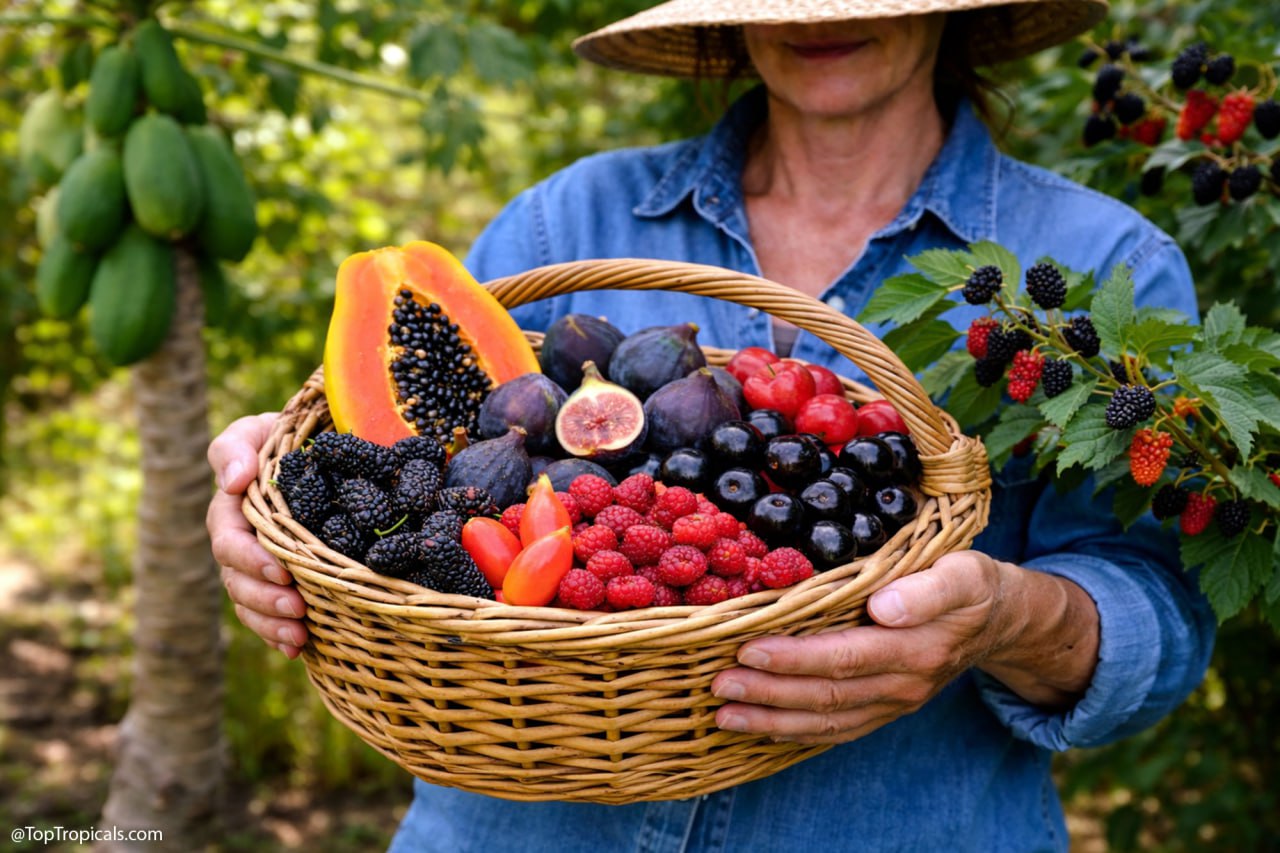
Dont Wait Years: 8 Fruit Plants You Can Harvest the Same Season

Don't wait years for fruit! Harvest papayas, berries, figs, and more in the very same season you plant them with these fast-growing varieties.

Don't wait years for fruit! Harvest papayas, berries, figs, and more in the very same season you plant them with these fast-growing varieties.

Don't Wait Years: 8 Fruit Plants You Can Harvest the Same Season 🍒

Growing fruit at home usually requires years of patience. Most gardeners view fruit trees as a long-term investment that may not pay off for a decade.
But you don't have to wait.
Certain tropical and subtropical plants are "fast-track" growers. In warm climates like Florida, choosing the right varieties means you can see flowers and fruit within months of planting - often in the very same season.
If you want a backyard harvest without the wait, here are the fastest-producing fruits you can plant today.


🍓 1. Blackberry Jam Fruit (Randia formosa)


A compact shrub perfect for containers. It produces star-shaped flowers and dark purple fruit that tastes exactly like blackberry preserves. Established plants often fruit in their first season.

Blackberry Jam Fruit Plant Facts

Botanical name: Randia formosa, Mussaenda formosa, Randia mussaenda, Rosenbergiodendron formosum
Also known as: Blackberry Jam Fruit, Jasmin de rosa
USDA Zone: 9 - 11
Highligths Large shrub 5-10 ft tallSmall tree 10-20 ftSemi-shadeFull sunKeep soil moistWhite, off-white flowersEdible plantPlant attracts butterflies, hummingbirdsFragrant plantSubtropical plant. Mature plant cold hardy at least to 30s F for a short time
Get personalized tips for your region


🍓 2. Peanut Butter Fruit (Bunchosia)


This fast-growing large shrub produces orange pulp with the uncanny flavor and texture of peanut butter. Expect flowers and bright red berries within months of planting in warm conditions.

🍓 3. Papaya (Carica papaya)


The "giant herb" of the fruit world. Papayas are legendary for their speed, often flowering just months after planting and providing sweet, vitamin-rich fruit within the same year.

Papaya Plant Facts

Botanical name: Carica papaya
Also known as: Papaya
USDA Zone: 9 - 11
Highligths Small tree 10-20 ftFull sunWater Requirement: Low. Allow soil to dry out between wateringsWatering: Moderate. Water when top soil feels dryYellow, orange flowersWhite, off-white flowersEdible plantEthnomedical plant.
Plants marked as ethnomedical and/or described as medicinal, are not offered as medicine but rather as ornamentals or plant collectibles.
Ethnomedical statements / products have not been evaluated by the FDA and are not intended to diagnose, treat, cure, or prevent any disease. We urge all customers to consult a physician before using any supplements, herbals or medicines advertised here or elsewhere.Subtropical plant. Mature plant cold hardy at least to 30s F for a short time
Get personalized tips for your region


🍓 4. Grumichama Cherry (Eugenia brasiliensis)


A stunning Brazilian evergreen. Grafted plants can fruit the same season they are planted, offering glossy, dark cherries with a sweet, mild finish.

Grumichama Plant Facts

Botanical name: Eugenia brasiliensis, Eugenia dombeyi
Also known as: Grumichama, Brazilian Cherry
USDA Zone: 9 - 11
Highligths Small tree 10-20 ftSemi-shadeFull sunWatering: Moderate. Water when top soil feels dryEdible plantSubtropical plant. Mature plant cold hardy at least to 30s F for a short timeSeaside, salt tolerant plant
Get personalized tips for your region


🍓 5. Black Surinam Cherry (Eugenia uniflora var. Lolita)


The 'Lolita' cultivar is a game-changer. It grows quickly as an edible hedge and produces nearly black, resin-free fruit that is significantly sweeter than the common red varieties.

Surinam Cherry Plant Facts

Botanical name: Eugenia uniflora, Eugenia michelii
Also known as: Surinam Cherry, Pitanga, Brazilian Cherry
USDA Zone: 9 - 11
Highligths Plant used for bonsaiLarge shrub 5-10 ft tallSmall tree 10-20 ftSemi-shadeFull sunWatering: Moderate. Water when top soil feels dryWatering: Regular. Let topsoil dry slightlyWhite, off-white flowersEdible plantFragrant plantSubtropical plant. Mature plant cold hardy at least to 30s F for a short time
Get personalized tips for your region


🍓 6. Mysore Raspberry and Tropical Blackberries (Rubus sp.)


Unlike traditional berries that require chill hours, these Rubus species thrive in the heat. Their vigorous canes grow rapidly, often fruiting the same season they hit the soil.

Holy Bramble Plant Facts

Botanical name: Rubus sanctus, Rubus ulmifolius subsp. sanctus
Also known as: Holy Bramble, Burning Bush of the Bible
USDA Zone: 7 - 11
Highligths Large shrub 5-10 ft tallGroundcover and low-growing 2ft plantFull sunWatering: Moderate. Water when top soil feels dryPink flowersThorny or spinyEdible plantPlant attracts butterflies, hummingbirdsEthnomedical plant.
Plants marked as ethnomedical and/or described as medicinal, are not offered as medicine but rather as ornamentals or plant collectibles.
Ethnomedical statements / products have not been evaluated by the FDA and are not intended to diagnose, treat, cure, or prevent any disease. We urge all customers to consult a physician before using any supplements, herbals or medicines advertised here or elsewhere.Subtropical plant. Mature plant cold hardy at least to 30s F for a short time
Get personalized tips for your region


🍓 7. Everbearing Mulberry (Morus sp.)


Mulberries are incredibly generous. Everbearing varieties produce sweet berries over an extended window and often begin fruiting the very first year they are planted.

Mulberry Plant Facts

Botanical name: Morus sp.
Also known as: Mulberry
USDA Zone: 8 - 11
Highligths Large tree taller than 20 ftSmall tree 10-20 ftFull sunWatering: Regular. Let topsoil dry slightlyEdible plant
Get personalized tips for your region


🍓 8. Fig Trees (Ficus carica)


Figs are the champions of container gardening. They are highly drought-tolerant and famous for setting honey-sweet fruit even at a very young age—often just months after being established.

Fig Tree Plant Facts

Botanical name: Ficus carica
Also known as: Fig Tree, Brevo
USDA Zone: 7 - 10
Highligths Plant used for bonsaiSmall tree 10-20 ftFull sunWatering: Moderate. Water when top soil feels dryOrnamental foliageEdible plantDeciduous plantSubtropical plant. Mature plant cold hardy at least to 30s F for a short timeFlood tolerant plantSeaside, salt tolerant plant
Get personalized tips for your region


🏡 Where to plant them?

👉 Tips for Faster Results


•  Start Large: Buy "nursery-established" plants rather than seeds.
•  Feed the Need: Use high-quality organic fertilizer to support rapid growth.
•  Sun is Fuel: Most of these varieties require at least 6-8 hours of direct sunlight to trigger flowering.

🛒 Plant these fruits now - some can produce within months

📷 Freshly picked tropical fruit bounty: don't wait years for fruit! Harvest papayas, berries, figs, and more in the very same season you plant them with these fast-growing varieties.

#Food_forest #How_to #Discover

🟢 Join 👉 TopTropicals

Date: 12 Feb 2026

Hoa Mai and the Year of the Horse - why yellow flower Ochna is the luckiest plant of 2026?

Ochna integerrima - Vietnamese Mickey Mouse plant, Hoa Mai - seeds

Ochna integerrima - Vietnamese Mickey Mouse plant, Hoa Mai - seeds

Ochna integerrima - Vietnamese Mickey Mouse plant, Hoa Mai tree

Ochna integerrima - Vietnamese Mickey Mouse plant, Hoa Mai tree

Ochna integerrima - Vietnamese Mickey Mouse plant, Hoa Mai flowers

Ochna integerrima - Vietnamese Mickey Mouse plant, Hoa Mai flowers

🔥 Hoa Mai and the Year of the Horse - why yellow flower Ochna is the luckiest plant of 2026?


Ochna integerrima - Vietnamese Mickey Mouse plant, Hoa Mai has seeds and sepals that resemble the face of Mickey Mouse, hence the common name.

Vietnamese Mickey Mouse Plant Facts

Botanical name: Ochna integerrima, Ochna thomasiana
Also known as: Vietnamese Mickey Mouse Plant, Hoa Mai, Mai Vang, Hoang Mai
USDA Zone: 9 - 11
Highligths Large shrub 5-10 ft tallSemi-shadeFull sunWatering: Moderate. Water when top soil feels dryYellow, orange flowersWhite, off-white flowersPlant attracts butterflies, hummingbirdsEthnomedical plant.
Plants marked as ethnomedical and/or described as medicinal, are not offered as medicine but rather as ornamentals or plant collectibles.
Ethnomedical statements / products have not been evaluated by the FDA and are not intended to diagnose, treat, cure, or prevent any disease. We urge all customers to consult a physician before using any supplements, herbals or medicines advertised here or elsewhere.Fragrant plant
Get personalized tips for your region


💖 On February 17, 2026, the Lunar New Year begins - welcoming the Year of the Fire Horse


And if there is one plant that perfectly captures the bold, bright energy of a new zodiac cycle, it is Ochna integerrima, known in Vietnam as Hoa Mai. This cheerful yellow bloomer is not just decorative. In Vietnam, it is the flower of Tet - a living symbol of luck, prosperity, and fresh beginnings.

💖 Does Vietnamese New Year start on a different date in 2026?


No. In 2026, Tet - the Vietnamese Lunar New Year - begins on the same day as the Chinese Lunar New Year: February 17. Tet follows the lunar calendar, just like Chinese New Year, so both celebrations align this year.
Tet, officially called Tet Nguyen Dan, marks the arrival of spring and is the most important holiday in Vietnam. And nothing represents Tet in southern Vietnam more than Hoa Mai in full bloom.

💖 Why Hoa Mai is the flower of Tet


Hoa Mai literally means "yellow blossoms". In southern Vietnam, these bright yellow flowers open right around Lunar New Year, often covering the entire plant.
The color yellow symbolizes:
· Wealth
· Prosperity
· Happiness
· Good fortune

Families display flowering Hoa Mai trees in homes, courtyards, and businesses during Tet. The more blossoms, the more luck the coming year is believed to bring.

💖 Why it is called the Mickey Mouse plant


After flowering, Ochna integerrima produces glossy black berries that sit on bright red sepals. The combination looks surprisingly like a tiny cartoon face - two black "ears" and a round head - which is how it earned the nickname Vietnamese Mickey Mouse plant.

It is playful, unusual, and a total conversation starter.

💖 A perfect plant for Year of the Fire Horse energy


The Fire Horse year is associated with:
· Passion
· Independence
· Bold action
· Fast movement
And honestly? A plant that explodes into golden blooms in the middle of winter feels exactly right for that kind of year!
If you have been waiting to start something new - planting a rare shrub, reshaping your garden, training a miniature tree - this zodiac cycle carries that "go for it" momentum.

💖 Can you grow Hoa Mai outside Vietnam?


Yes - and that is part of its appeal. Ochna integerrima - Hoa Mai - is:
· A slow-growing, medium shrub
· Trainable into a small tree or bonsai form
· Suitable for containers
· Relatively tolerant of light frost
It blooms in winter, when many tropical collections feel quiet. That alone makes it valuable in warm-climate gardens like Florida.

To encourage winter blooms, steady feeding before and during the cooler season helps stimulate bud formation. Consistent light, good drainage, and balanced fertilization are key.

💖 A living symbol of luck for 2026


Every Lunar New Year carries its own theme. The Year of the Fire Horse is about bold growth, forward motion, and courage.
Hoa Mai blooms exactly at the moment when people reset intentions, clean their homes, and welcome fresh energy. It is not just a plant - it is a seasonal signal that a new chapter has begun.

And if you want to invite a little more golden luck into your garden this February, few plants say "new year, new beginning" better than Hoa Mai in full bloom.

🛒 Plant your own lucky Mickey Mouse Plant

📚 Learn more:


Ochna integerrima in Plant Encyclopedia
What is Mickey Mouse Plant?
2026: Year of the Fire Horse - time to grow bold, live free, and plant lucky
Year of the Fire Horse - what should you grow in 2026?
More #Horoscope info for plants and cats

#Horoscope #Hedges_with_benefits #Nature_Wonders #Fun_Facts

🟢 Join 👉 TopTropicals