Fall is just around the corner, but Florida is still full of sunshine and
growing energy!
It’s one of the best times to plant - cooler days are coming, but
there are still months of warmth ahead for your garden to thrive. Our
nursery is bursting with big, healthy plants that grew all summer long -
loaded with blooms, fruit, and lush foliage, ready to shine in your
yard.
Come stroll the gardens with our PeopleCats,
enjoy the most beautiful season for planting, and let us help you find the
perfect picks for your space. Bring your friends and family for a weekend of
fun, color, and fresh ideas - this is your moment to plant, grow, and
enjoy!
30% OFF online prices
FREE plant with any purchase (including Guava)
Gift bags for first 25 customers with $50+ order
Special deals on select plants
Exciting raffle prizes
Green Magic fertilizer FREE samples
The LAST PERFORMANCE of the Famous Hand Pan Lady! (She is moving from
Florida)
See her previous performance at Top Tropicals - here
and here.
When northern gardens fade into gray, our tropicals wake up. Winter is
color season here - and even if you live up north, you can still enjoy these
same flowering trees indoors or on a sunny patio.
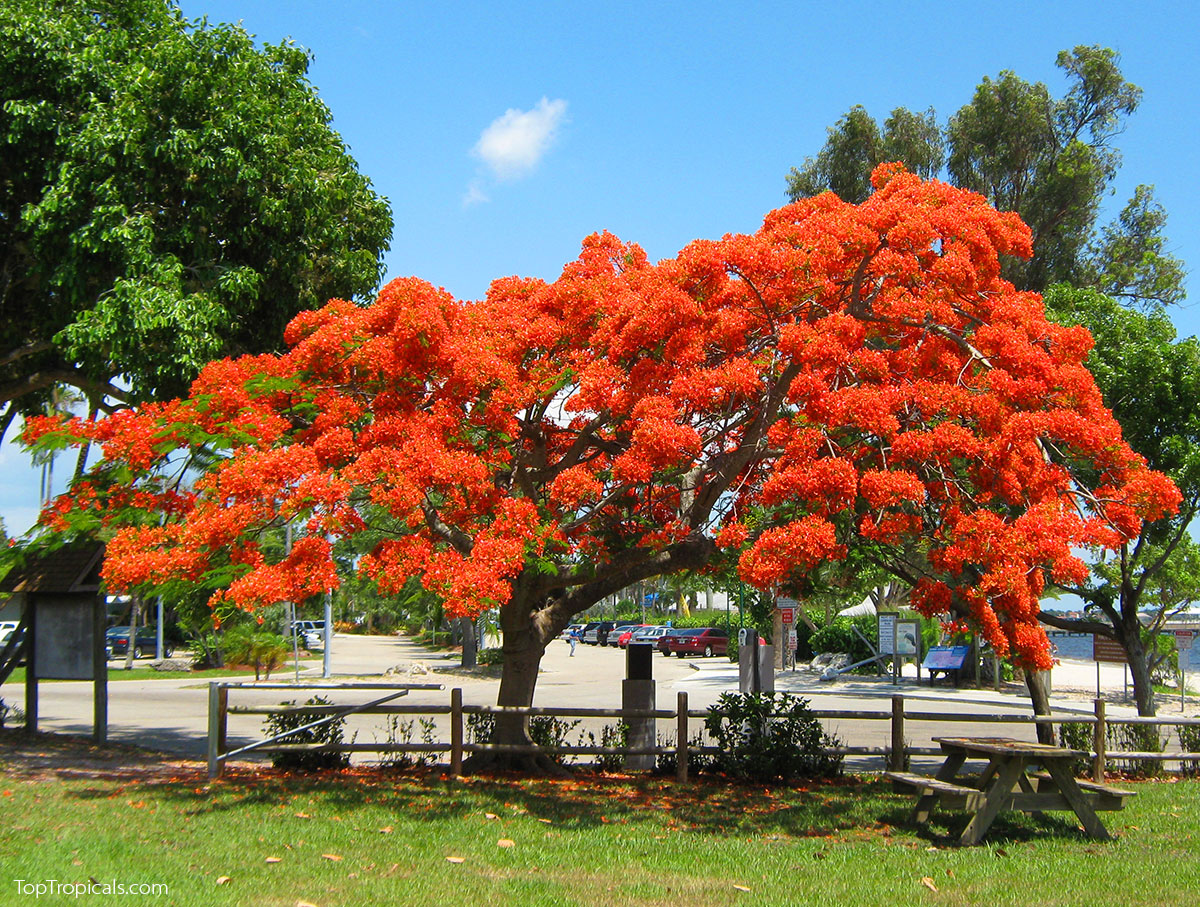
From the fiery Royal
Poinciana to the golden Tabebuia and
violet Jacaranda,
these eight trees prove that winter can bloom anywhere
How to Care for Winter-Flowering Trees
We're often asked, at Top Tropicals, “Can I really grow tropical
trees in winter?”
Yes — with the right light and care, you can.
Here’s what works best both outdoors and indoors, according to our
expert, Tatiana Anderson.
🌡️ Fall Planting Guide
Let’s talk about timing, because that’s the part most people
get nervous about.
Everyone asks: “Isn’t it too cool to plant now?” —
and the answer is no!
Fall and early winter are actually the best months for tropicals in Zones 9
to 11.
Here’s why: the air has cooled off, but the soil is still warm.
Roots love that combination. They quietly spread underground while the rest
of
the plant takes a break.
By spring, those roots are ready to feed a burst of new growth — and
that’s when you’ll see the first big flush of flowers.
Pick a sunny spot that gets plenty of light — six to eight hours
if you can.
Loosen the soil and mix in compost or pine bark so it drains well.
Dig a hole about twice as wide as the pot and just as deep.
Set the plant level with the ground, backfill, and water it deeply to
settle everything in.
Then add mulch — two or three inches is plenty — but keep it
away from the trunk so it can breathe.
Tatiana’s tip: “Fall planting builds roots while everyone
else is resting. By spring, your tree wakes up ready to grow.”
🌳 Outdoor Care (Warm Climates Zones 9–11)
Now, let’s talk about what happens after planting — because
real gardening starts once the plant is yours. Tropical trees thrive on
routine: steady sunlight, deep watering, and just a bit of attention.
Water them about once a week when the weather is mild, more often if
it’s dry or windy.
Always check the soil first — if it feels dry two inches down, go
ahead and water.
Mulch helps more than most people realize — it keeps roots cool in
summer and warm in winter, and it saves you from watering as often.
Now, for those of you in Zone 9, here’s the truth: your trees can
take a chill, but they don’t love surprises.
A quick night in the upper 20s F won’t hurt mature plants, but young
ones appreciate a little help — a frost cloth or being planted at the
south side.
And don’t underestimate the wind. Cold, dry gusts can burn leaves
faster than frost.
Use fences, hedges, or taller shrubs as windbreaks, and take advantage of
microclimates — those warm pockets next to the house, brick patios, or
corners that get extra afternoon sun.
Tatiana’s tip: “A tropical garden in Zone 9 isn’t
about fighting nature — it’s about cooperating with it. Find the
warm corners, protect from the cold wind, and your trees will thank you with
flowers all winter.”
🏚️ Indoor & Patio Care (Cooler Climates)
For our northern friends — yes, you can grow tropicals indoors!
You just need good light, warm air, and a little attention.
Pick a large pot, with drainage holes and a light tropical soil mix.
Place it in a bright window — south or southwest if you can —
or under grow lights for about 12–14 hours a day.
Keep temperatures between 65 and 85 F, and water when the top inch of soil
dries out.
Misting helps keep leaves clean and adds humidity.
Rotate the pot every couple of weeks so all sides get sun. In summer, move
your plant outdoors gradually so it can enjoy real sunlight — then
bring it back in before nights drop below 40 F.
Tatiana’s tip: “Don’t be afraid of growing trees in
pots. They adapt beautifully — just select the right trees and pay
attention to their needs.”
Adenium rainbow - warm, bright, and full of energy
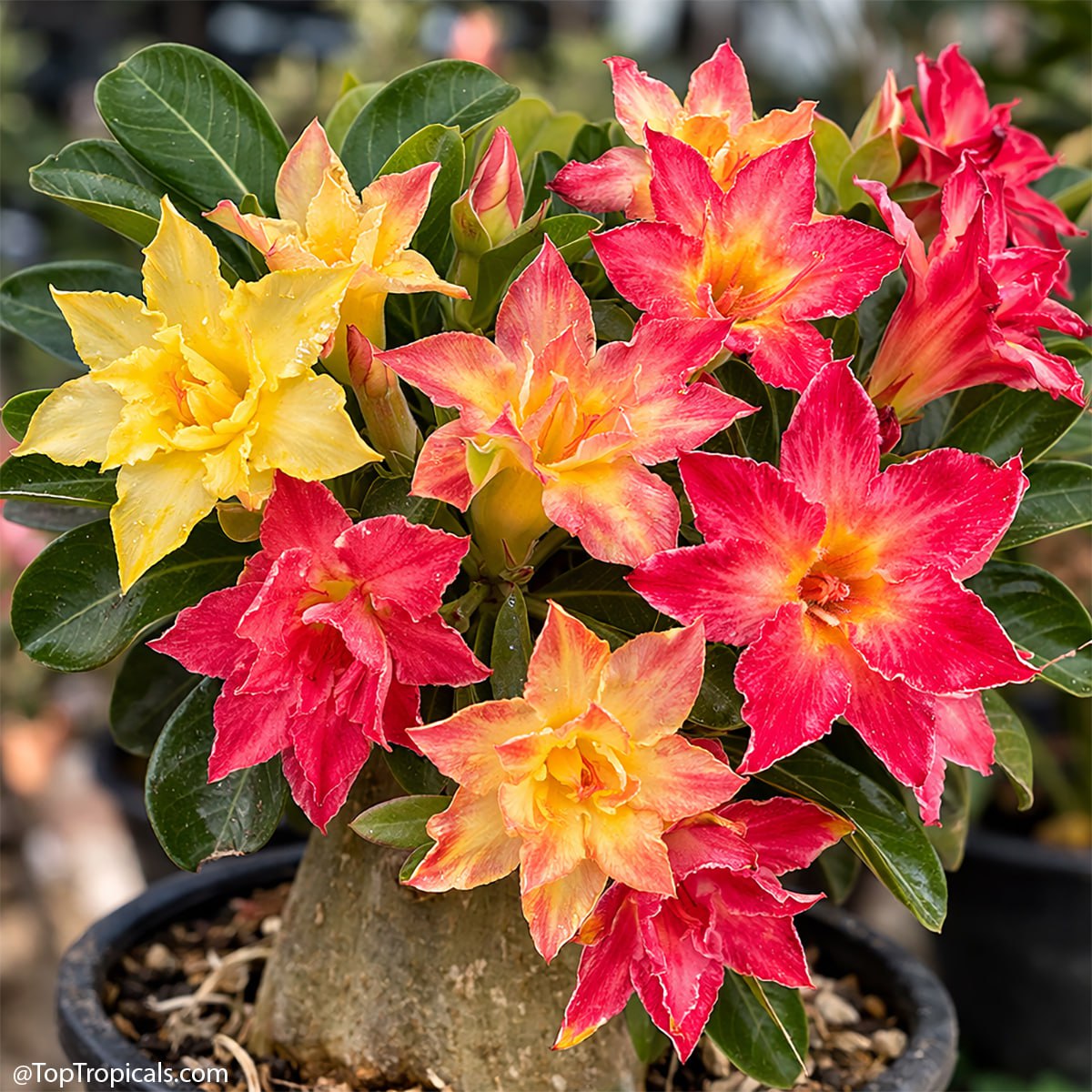
Adenium Phoenix
Adenium rainbow - warm, bright, and full of energy 🌈
Some adeniums feel calm. And some feel like sunshine!
This set is all about warm orange tones - bright, happy, and hard to overlook. These are the ones that light up a bench even on a cloudy day.
💡 Rainy summer tip
In places like Florida, summer rain can be too much for adeniums.
Adenium Plant Facts
Botanical name: Adenium sp. Also known as: Adenium, Desert Rose, Impala Lily
USDA Zone: 9 - 10
Highligths
They are succulents - Desert Roses they are! - and don’t like staying wet for long periods. Constant rain keeps the soil saturated, which can lead to root rot and weak growth.
If you have a rainy season, it’s best to keep them under a roof or covered area.
This helps control watering, keeps the soil from staying soggy, and protects the caudex and roots.
They still need bright light - just not endless rain.
🌸 Today's featured adeniums
✦ Phoenix: Color-changing blooms that shift from soft yellow to pink and coral - looks like a living sunset on one plant. ✦ Pra Rod Mary: Warm orange shades with a soft, rounded bloom. ✦ Pratum Thong: Golden-orange color with a rich, glowing look. ✦ Som Term Sab: Bright, lively tones - name tied to wealth and good fortune. ✦ One Heart: Balanced form with warm color and a clean structure. ✦ Thong Nuekao: Golden shades with a slightly deeper, more refined tone.
Orange adeniums bring a different kind of energy - warm, glowing, and full of life.
And once you add a few - your collection starts to feel a lot brighter!
What Thai Adenium names mean: luck, gold, and mythology
Cats Smokey and Sunshine in adenium garden
What Thai Adenium names mean: luck, gold, and mythology 🌸
Many Adenium hybrids come from Thailand, where breeders often give varieties meaningful and poetic names rather than simple codes. Instead of simple labels like "Red Double #27", Thai breeders often give their flowers names that sound like small poems. These names frequently reference wealth, luck, jewels, mythology, and beautiful colors.
Adenium Plant Facts
Botanical name: Adenium sp. Also known as: Adenium, Desert Rose, Impala Lily
USDA Zone: 9 - 10
Highligths
Once you start recognizing common Thai words, Adenium names become much easier to understand. Some sound almost like short blessings - promising prosperity, beauty, or good fortune.
Below are examples of Adenium varieties whose names reflect these traditions.
🏯 Thai names related to luck, wealth, and prosperity
These words are extremely common in Thai plant naming and often suggest good fortune or financial success.
Dont Wait Years: 8 Fruit Plants You Can Harvest the Same Season
Don't wait years for fruit! Harvest papayas, berries, figs, and more in the very same season you plant them with these fast-growing varieties.
Don't Wait Years: 8 Fruit Plants You Can Harvest the Same Season 🍒
Growing fruit at home usually requires years of patience. Most gardeners view fruit trees as a long-term investment that may not pay off for a decade.
But you don't have to wait.
Certain tropical and subtropical plants are "fast-track" growers. In warm climates like Florida, choosing the right varieties means you can see flowers and fruit within months of planting - often in the very same season.
If you want a backyard harvest without the wait, here are the fastest-producing fruits you can plant today.
A compact shrub perfect for containers. It produces star-shaped flowers and dark purple fruit that tastes exactly like blackberry preserves. Established plants often fruit in their first season.
Blackberry Jam Fruit Plant Facts
Botanical name: Randia formosa, Mussaenda formosa, Randia mussaenda, Rosenbergiodendron formosum Also known as: Blackberry Jam Fruit, Jasmin de rosa
This fast-growing large shrub produces orange pulp with the uncanny flavor and texture of peanut butter. Expect flowers and bright red berries within months of planting in warm conditions.
The "giant herb" of the fruit world. Papayas are legendary for their speed, often flowering just months after planting and providing sweet, vitamin-rich fruit within the same year.
Papaya Plant Facts
Botanical name: Carica papaya Also known as: Papaya
The 'Lolita' cultivar is a game-changer. It grows quickly as an edible hedge and produces nearly black, resin-free fruit that is significantly sweeter than the common red varieties.
Surinam Cherry Plant Facts
Botanical name: Eugenia uniflora, Eugenia michelii Also known as: Surinam Cherry, Pitanga, Brazilian Cherry
Unlike traditional berries that require chill hours, these Rubus species thrive in the heat. Their vigorous canes grow rapidly, often fruiting the same season they hit the soil.
Holy Bramble Plant Facts
Botanical name: Rubus sanctus, Rubus ulmifolius subsp. sanctus Also known as: Holy Bramble, Burning Bush of the Bible
Mulberries are incredibly generous. Everbearing varieties produce sweet berries over an extended window and often begin fruiting the very first year they are planted.
Figs are the champions of container gardening. They are highly drought-tolerant and famous for setting honey-sweet fruit even at a very young age—often just months after being established.
Fig Tree Plant Facts
Botanical name: Ficus carica Also known as: Fig Tree, Brevo
Growing in containers?Fig trees are the drought-tolerant champions.
👉 Tips for Faster Results
• Start Large: Buy "nursery-established" plants rather than seeds. • Feed the Need: Use high-quality organic fertilizer to support rapid growth. • Sun is Fuel: Most of these varieties require at least 6-8 hours of direct sunlight to trigger flowering.
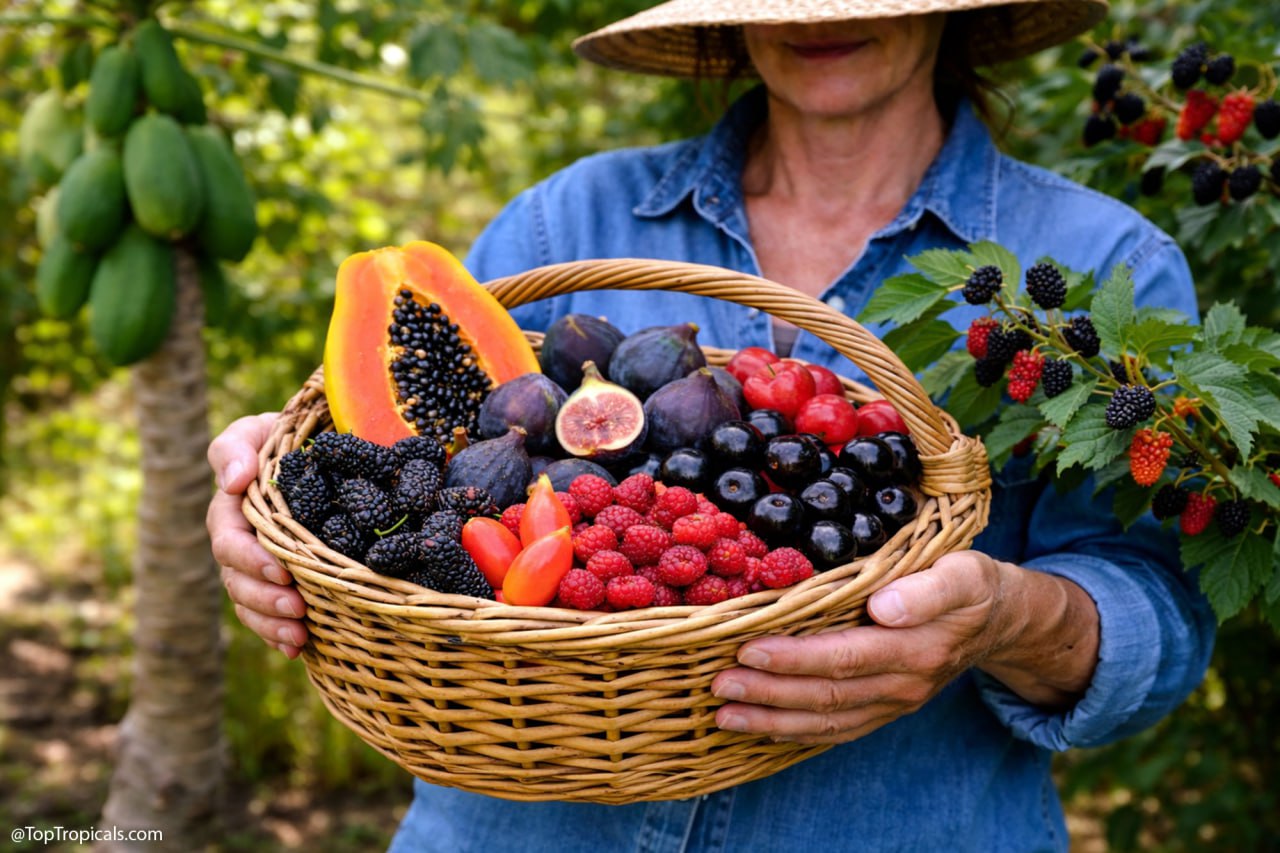
📷 Freshly picked tropical fruit bounty: don't wait years for fruit! Harvest papayas, berries, figs, and more in the very same season you plant them with these fast-growing varieties.


 How to Care for Winter-Flowering Trees