Garden Blog - Top Tropicals

Date: 12 May 2026

EXCLUSIVE INTERVIEW: Behind the scenes with Smokey Sunshine - after years of rumors they speak out!

Interview with Smokey and Sunshine

Interview with Smokey and Sunshine

EXCLUSIVE INTERVIEW: Behind the scenes with Smokey and Sunshine - after years of rumors they speak out!

Many people loved our mascots - Smokey and Sunshine - and kept asking the same questions over and over. So we finally decided to sit them down for an interview and ask everything at once.

Smokey is the tuxedo "engineering cat" with professor glasses, serious plant advice, and strong opinions about fertilizer and soil pH.

Sunshine is the fluffy orange Aloha guy of the group - chubby, relaxed, permanently snack-oriented, and somehow never in a hurry about anything. He approaches life with the confidence of a cat who believes coffee breaks, warm sunshine, and donuts are all basic human rights. He is also the one asking the questions normal people are actually thinking.

Together, they somehow turned gardening into conversations about plants, coffee, cats, donuts, and the meaning of life in a greenhouse.

In this interview, you will find out:

Are Smokey's glasses fake?
Are Sunshine's donuts real?
Are these cats based on real rescued Top Tropicals cats?
How many cats have been adopted by Top Tropicals over the years and how many are currently living in the gardens?
Why does Smokey take gardening so seriously?
Why does Sunshine think every problem can be solved with snacks?

Some answers may surprise you.
Some may explain a lot.

Read the full Smokey & Sunshine interview

"Learn more:
About Smokey & Sunshine

#PeopleCats

Join TopTropicals
Date: 18 Feb 2026

⭐️ Choosing the Right Variety of Jasmine Sambac

By Tatiana Anderson, Horticulture Expert at Top Tropicals

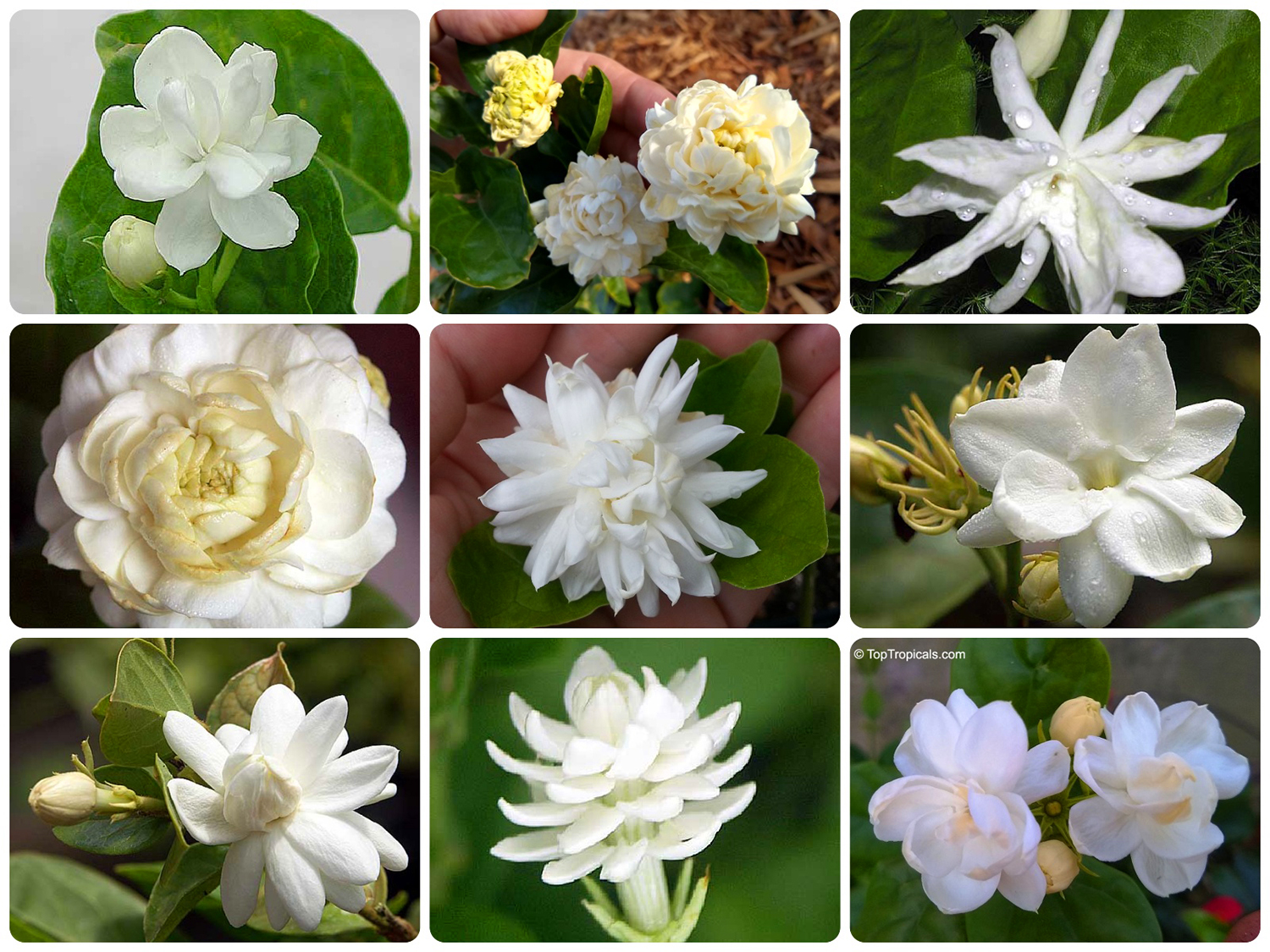
Jasmine  Sambac  varieties  collage  showing  single,  double,  and 
 multi-layered  white  fragrant  flowers  including  Belle  of  India,  Grand  Duke, 
 Arabian  Nights,  and  other 
 forms.

Jasmine Sambac varieties: Arabian Nights, Little Duke, Belle of India, Grand Duke, Duke Supreme, Maid of Orleans, Mysore Mulli, Malichat, Gundu Mallii

One of the reasons Jasmine Sambac is so fascinating is that it does not come in just one form. Each variety has its own personality.

If you want a compact patio plant, Arabian Nights or Little Duke are excellent choices. They stay tidy, bloom generously, and are easy to manage in containers.

If you prefer elegant, elongated petals and a refined look, Belle of India is a favorite. It can be grown as a small bush or trained lightly as a vine.

For those who love full, carnation-like double flowers, Grand Duke of Tuscany and Grand Duke Supreme are classic selections. They are vigorous and make impressive shrubs in warm climates.

If you need a stronger climber for fences or hedges, Maid of Orleans performs beautifully in full sun while Mysore Mulli prefers semi-shade.

Collectors often enjoy rare forms like Mali Chat or newer hybrids such as Gundu Malli, which combine traits from different lines.

How to Grow Jasmine Sambac Successfully
Sambac is not difficult, but it responds best to consistency.

Light: Full sun produces the most flowers. In very hot climates, light afternoon shade is acceptable. Indoors, place it in the brightest window available.

Soil: Use a well-draining potting mix such as Sunshine Abundance. Sambac does not like heavy, constantly wet soil.

Water: Water thoroughly, then allow the top layer to dry slightly before watering again. Reduce watering during cooler months.

Pruning: Light trimming after a bloom cycle encourages branching. More branches mean more flower buds.

Feeding: Sambac is a heavy bloomer, and fragrance takes energy. During active growth, feed regularly with a balanced fertilizer that supports flowering such as Green Magic (controlled release every 6 months) or liquid Sunshine Boosters Pikake (formulated especially for fragrant flowers) - with every watering. I prefer formulas slightly higher in potassium to encourage stronger bud formation and richer bloom cycles. Consistent feeding during warm months makes a visible difference in both flower count and intensity of scent.

With proper care, Jasmine Sambac will reward you not just with flowers, but with perfume that changes the atmosphere of your entire garden.

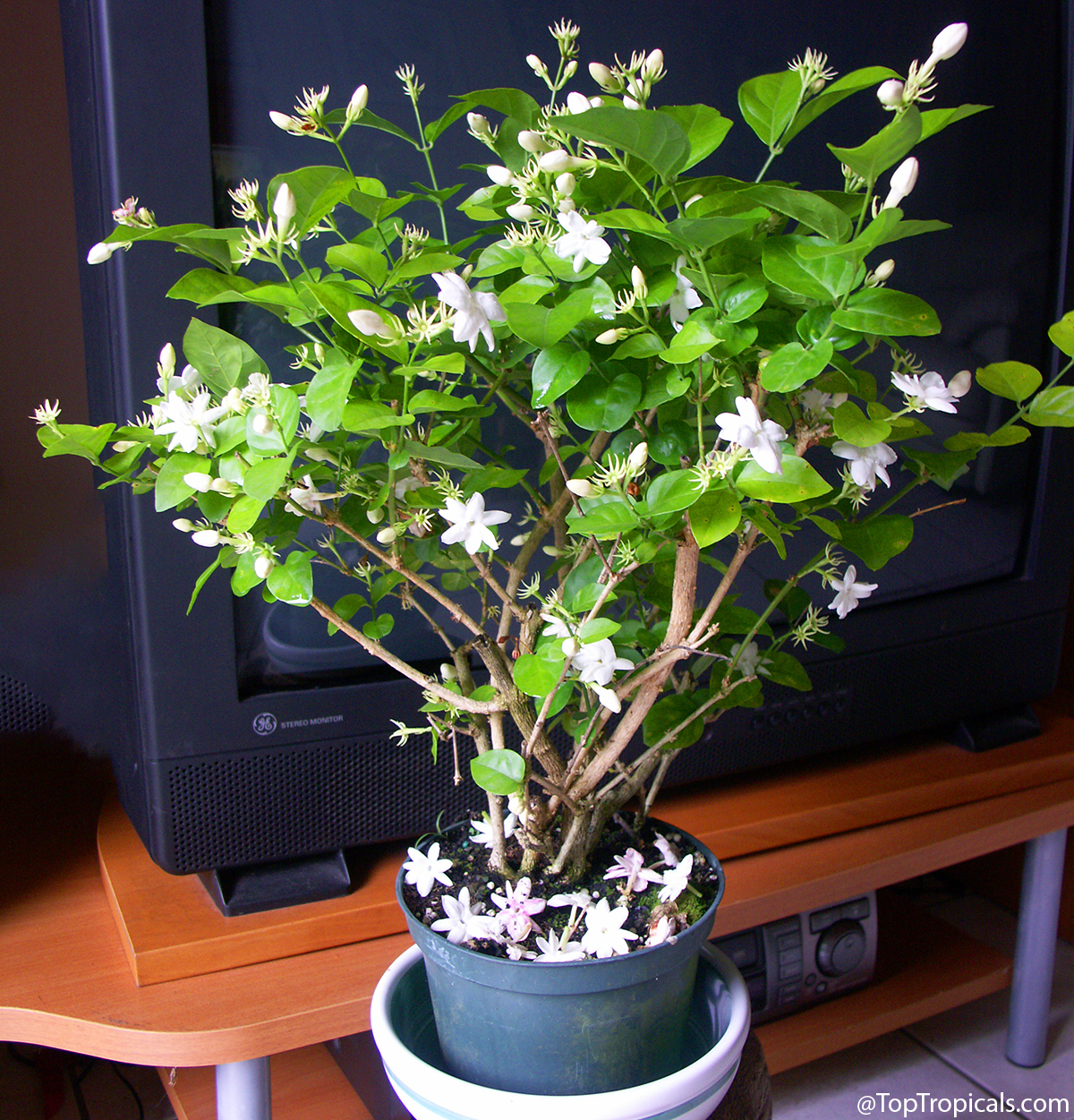
Jasmine  Sambac  Maid  of  Orleans  blooming  indoors  in  a  container  with 
 numerous  white  star-shaped  flowers  and  glossy  green 
 leaves.

Jasmine Sambac Maid of Orleans flowering indoors in a container under bright light.

❓Frequently Asked Questions About Jasmine Sambac

  • Does Jasmine Sambac need full sun?
    It flowers best in full sun. In very hot climates, light afternoon shade is acceptable. Indoors, give it the brightest window possible.
  • Can I grow it in a pot?
    Yes. Sambac performs beautifully in containers. Many gardeners prefer pots because it is easier to control size and move during cold weather.
  • How often does it bloom?
    With proper light and feeding, it blooms in cycles throughout the warm season. Consistency in care makes flowering more reliable.
  • Why is my plant not blooming?
    The most common reasons are insufficient light or irregular feeding. Increase light first, then review your fertilizing routine.
  • Is it difficult to grow indoors?
    Not if you provide strong light and good air circulation. Compact varieties adapt especially well.
  • Is it frost tolerant?
    No. Jasmine Sambac is tropical. Protect it from temperatures below 40F and bring it indoors before frost.

🌸 Year of the Horse Special – Jasmine Bonus

Celebrate 2026 with the fragrance of Jasmine plants. For a limited time, enjoy special savings when you grow one of the most wanted perfume plants in cultivation.

Jasmine Sale - 15% Off
Save 15% on all Jasmine plants. Discount is already applied in the online store - no code needed.
Offer valid through 02/28/2026.

🛒 Explore varieties of Sambac

Date: 16 May 2026

🔮 When the World Around Becomes Too Gray: Plant a Tree. Eat a Donut. Keep going.

When  the  world  feels  gray,  plant  another  tree.  Smokey  brings  the 
 jaboticaba.  Sunshine  brings  donuts  and 
 encouragement.
Sunshine: Smokey, what do we do when the world around becomes too gray?
Smokey: Plant a tree.
Sunshine: And if that does not help?
Smokey: Plant another one.
Sunshine: And eat a donut.
Smokey: Not strictly necessary, but statistically beneficial.

If you have been feeling a little worn down lately, you are not alone.

You already know about the headlines. We do not need to list them. You have probably seen them today before breakfast.

We are not here to pretend that is not happening. It is happening. And it is a lot. But here is the thing we keep coming back to, the thing that has been true for as long as people have had hands and a patch of ground: when the world feels out of control, you can still plant something.

Gardening is not an escape. It is an answer. When you put a tree in the ground, you are making a quiet statement. You are saying that you expect there to be a future. That you intend to be in it. That shade and fruit and flowers still matter, and you are going to make sure they exist in your corner of the world.

That is not naive. That is courageous in the most ordinary and underrated way.

One tree, planted this season, might give you fruit in a few years. It might give butterflies somewhere to stop. It might give a bird a place to nest. It will almost certainly give you something to look at on a hard day that reminds you the world still contains beauty, and that you put some of it there. And if one tree does not quite do it? Plant another one.

Dostoevsky said beauty will save the world. We think a mango fruiting in your backyard counts. So does a Magnolia opening on a quiet morning.

Do not skip the donut.

A donut is a small, simple, completely unnecessary thing. That is exactly the point. It is not productive. It does not solve anything. It is just good, and sometimes that is the whole reason. In a world that constantly demands you be useful and informed and concerned, eating a donut is a quiet act of being human. You are allowed to enjoy a small thing on a hard day. You do not have to earn it.

Rest a little. Then go put something in the ground. Anything that will grow and flower and remind you that beautiful things are still happening whether the headlines mention them or not.

We have the plants. You bring the donuts.

🛒 Plant a sweeter world: grow color and flavor

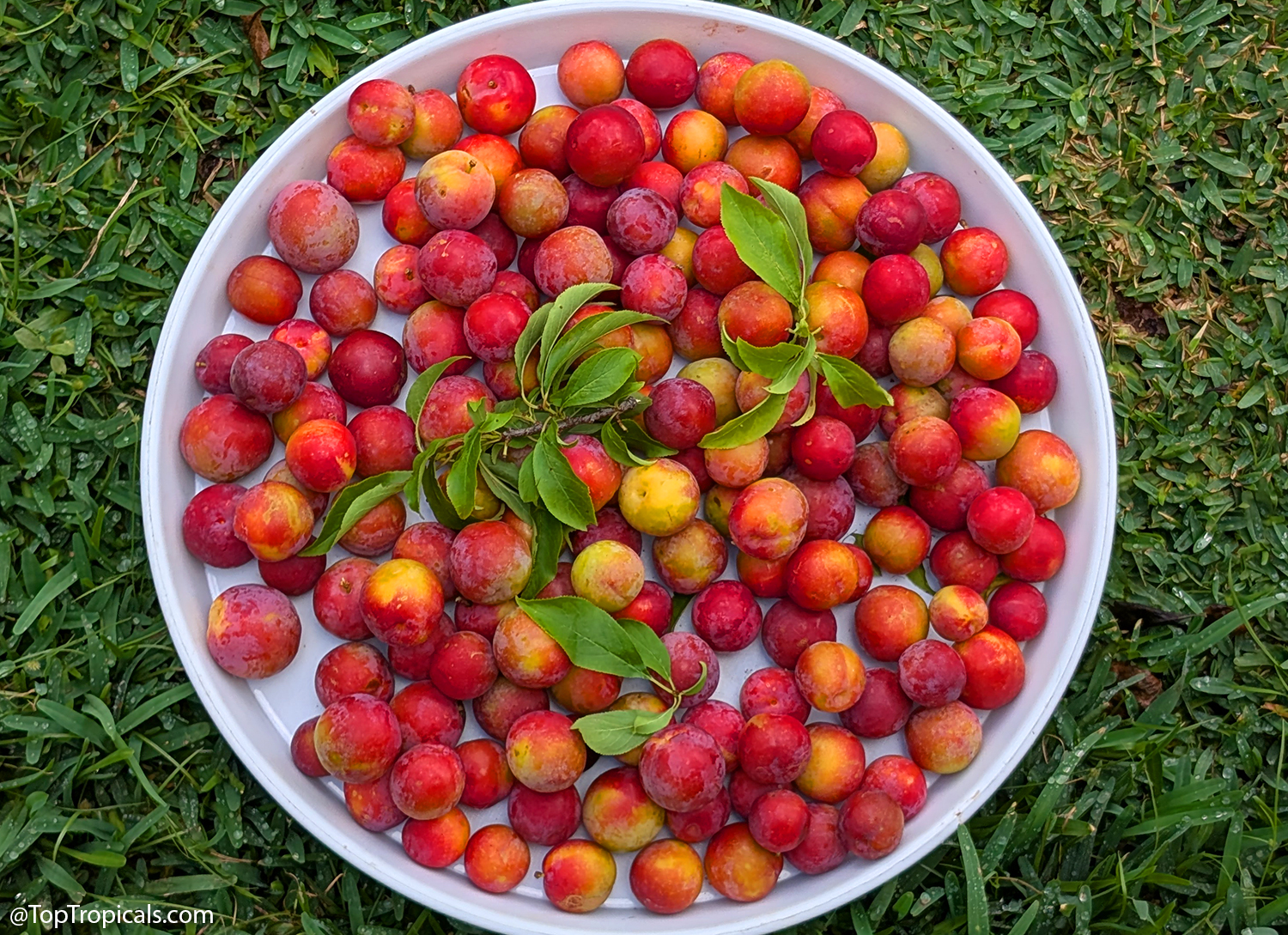
Tray  filled  with  freshly  harvested  tropical  plums  in  shades  of  red, 
 orange,  and  yellow  resting  on  green  grass,  with  a  few  leafy  branches  placed 
 on  top  of  the 
 fruit.

We just finished harvesting loquats and mulberries, and now another wave is coming in - low chill plums, peaches, and nectarines fresh from the garden. This is one of the most rewarding times of the year, when every season brings the fruit of your labor and all that work finally turns into something sweet.

📚 Learn more from our garden Blog

Date: 2 Mar 2026

Eugenia Cherries 🍒

By Tatiana Anderson, Horticulture Expert at Top Tropicals with Smokey & Sunshine help

Eugenia brasiliensis - Grumichama fruit on the branch

Growing Eugenia Cherries (Cherry of the Rio Grande & Grumichama)

Cherry of the Rio Grande and Grumichama are compact, adaptable tropical fruit trees well suited to Southern landscapes. While forgiving, they perform best when planted correctly from the beginning.

Site and Planting

  • Drainage is essential. Avoid low areas where water collects. Plant on a slight mound if soil is heavy or clay-like.
  • Choose full sun for best flowering and fruit production. Partial shade is tolerated.
  • A south or southeast exposure near a wall improves cold resilience and reduces wind stress.
  • Dig a hole twice as wide as the container, but no deeper than the root ball.
  • Set the tree level with surrounding soil. Do not bury the trunk.

Water and Feeding

  • Water regularly during the first few months while roots establish.
  • Once established, trees tolerate short dry periods but fruit best with moderate, consistent moisture.
  • Feed lightly and consistenly. SUNSHINE Boosters Robusta liquid fertilizer is safe to use with with every watering. During hot season you may add controlled release Green Magic every 6 months. It is essential to apply micro elements: Sunshine Superfood micro nutrients complex

Cold Tolerance

  • Protect young trees during hard freezes.
  • Established Cherry of the Rio Grande can tolerate brief drops into the low 20s.
  • Established Grumichama tolerates temperatures into the upper 20s.

Harvest and Production

  • Cherry of the Rio Grande fruits from late spring into summer. Pick when fully dark and slightly soft.
  • Grumichama ripens quickly, often within four weeks after flowering. Pick when glossy and deep purple-black.
  • Both trees often begin fruiting within 2–3 years and increase production steadily with maturity.

Growing in Containers

  • Use at least a 10–20 gallon pot for long-term growth.
  • Ensure multiple drainage holes.
  • Use a high-quality, well-draining container mix. Avoid heavy garden soil. Top Tropicals Abundance soil-less mix is specially formulated for pot growing
  • Place in full sun for best fruiting.
  • Water deeply, then allow the top layer to dry slightly before watering again.
  • Move containers to a protected area during hard freezes.
  • Prune lightly to maintain shape and airflow.

Common Mistakes

  • Planting in poorly drained soil.
  • Overwatering and keeping soil constantly saturated.
  • Over-fertilizing with excessive nitrogen.
  • Planting too deep and burying the trunk.
  • Expecting heavy crops immediately instead of allowing time for maturity.
  • Skipping cold protection for young plants.

Learn more: Tropical Cherries – Eugenias

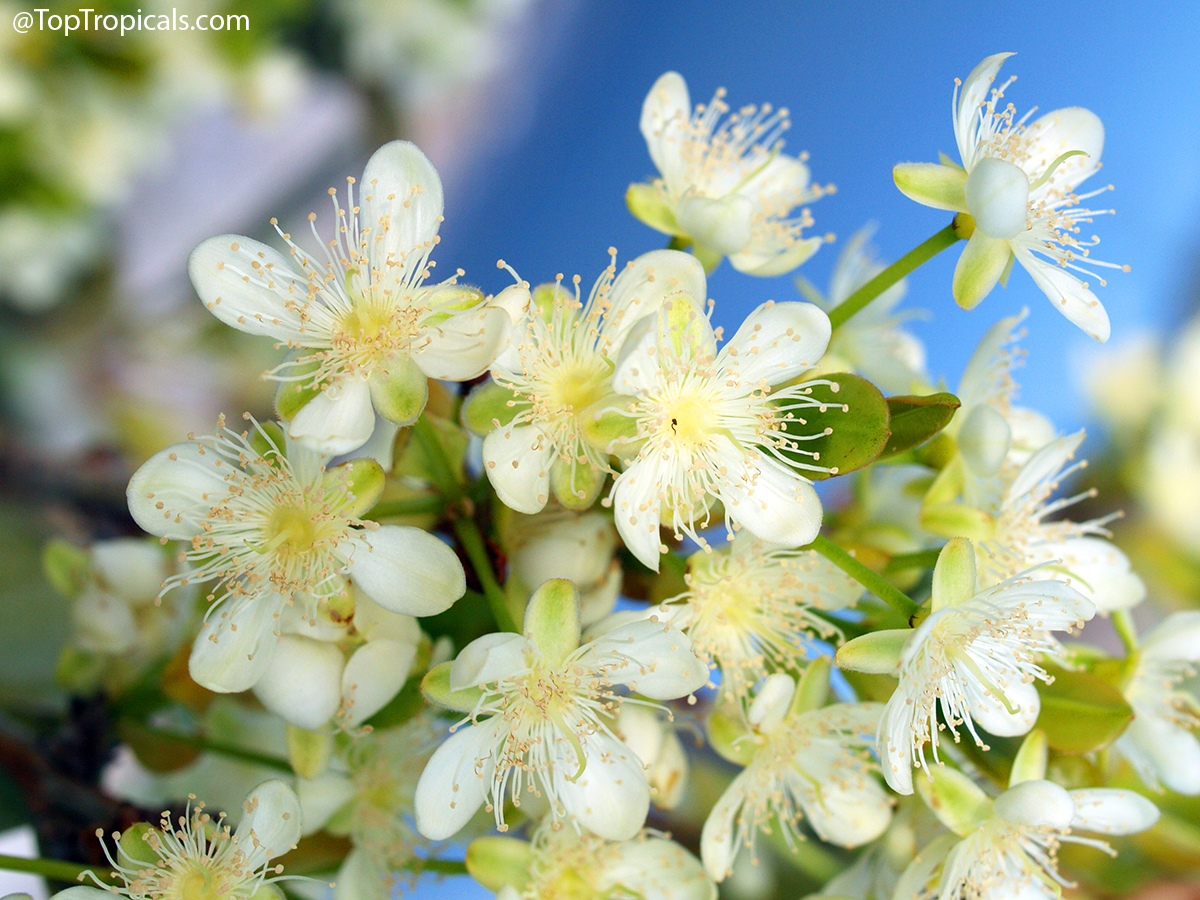
EGrumichama  flowers  (Eugenia  brasiliensis)  in  close-up  showing  white 
 petals  and  long 
 stamens

Eugenia brasiliensis - Grumichama flowers

❓Frequently Asked Questions: Eugenia cherries (FAQ)

  • Which one tastes better – Cherry of the Rio Grande or Grumichama?
    Cherry of the Rio Grande has a deeper, classic “sweet cherry” flavor with slight richness. Grumichama is softer, juicier, and often described as cherry with hints of grape and plum. Both are excellent fresh; Grumichama is especially popular for jam.
  • Which tree produces more fruit?
    Grumichama typically produces heavier crops once mature and can carry hundreds of fruits in a season. Cherry of the Rio Grande produces consistently but in slightly smaller volumes.
  • Do birds take all the fruit?
    Birds are attracted to both trees, especially Grumichama. Netting during peak ripening or harvesting promptly usually solves the issue.
  • Are these true "tropical" trees or subtropical?
    They are best described as subtropical tropicals. Unlike ultra-tender tropical fruits, Eugenia cherries tolerate occasional frost once established, making them more reliable in Southern landscapes.
  • Do they drop fruit messily?
    Fruit will fall if overripe, but the trees are compact and manageable. Regular harvesting prevents ground drop and keeps the area clean.
  • Can they be used for hedging or screening?
    Yes. Their dense evergreen foliage and upright growth make them suitable for edible hedges or privacy screens while still producing fruit.

Choosing between them is not about survival — both have proven resilient. It is about flavor preference, crop volume, and how you want to use the fruit in your kitchen and landscape.

Eugenia brasiliensis - Grumichama fruit close up

Eugenia aggregata (cv. Calycina), Cherry of the Rio Grande

🛒 Add Eugenia cherries to your garden

✍️ Top Ten Fruit Tree Winners of Florida 2026 Record Freeze

Date: 23 Nov 2025

🏡 To Use Your Garden Or Be Used By It

Two  cats  in  a  garden  planting  a  young  tree.  Smokey,  a  black-and-white 
 tuxedo  cat,  holds  a  small  shovel  and  works  the  soil,  while  Sunshine,  a 
 fluffy  orange  tabby,  sits  smiling  beside  a  bag  of  garden 
 soil.

Smokey and Sunshine November Planting.

Smokey: Winter roots make spring easy. Keep that plant straight.
Sunshine: I am keeping it straight by not touching it at all.
Smokey: That is exactly what I was afraid of.

November is the month when the garden finally stops yelling at you. The heat backs off, the bugs calm down, and the weeds take a breath. This is when we get to take control again. And as gardeners, we know the truth: Either you use your garden, or your garden will use you in spring. Let me walk you through this, gardener to gardener.

"November is when the garden finally listens. Give it a little direction now, shape it, guide it, and prepare it for spring. It will reward you all year." - Tatiana Anderson, Top Tropicals Plant Expert

🌴 When The Garden Uses You

We have all lived this scene:

  • March weeds appear, and two days later it looks like a jungle.
  • One missed watering turns into five wilted plants and a full week of recovery.
  • A skipped feeding shows up as yellow leaves and panic searching online.
  • Bugs return fast, and suddenly you are washing leaves every other day.
  • Random plant purchases fill your yard with chaos and mismatched care needs.
  • When the garden takes control, spring feels like hard work, not joy.

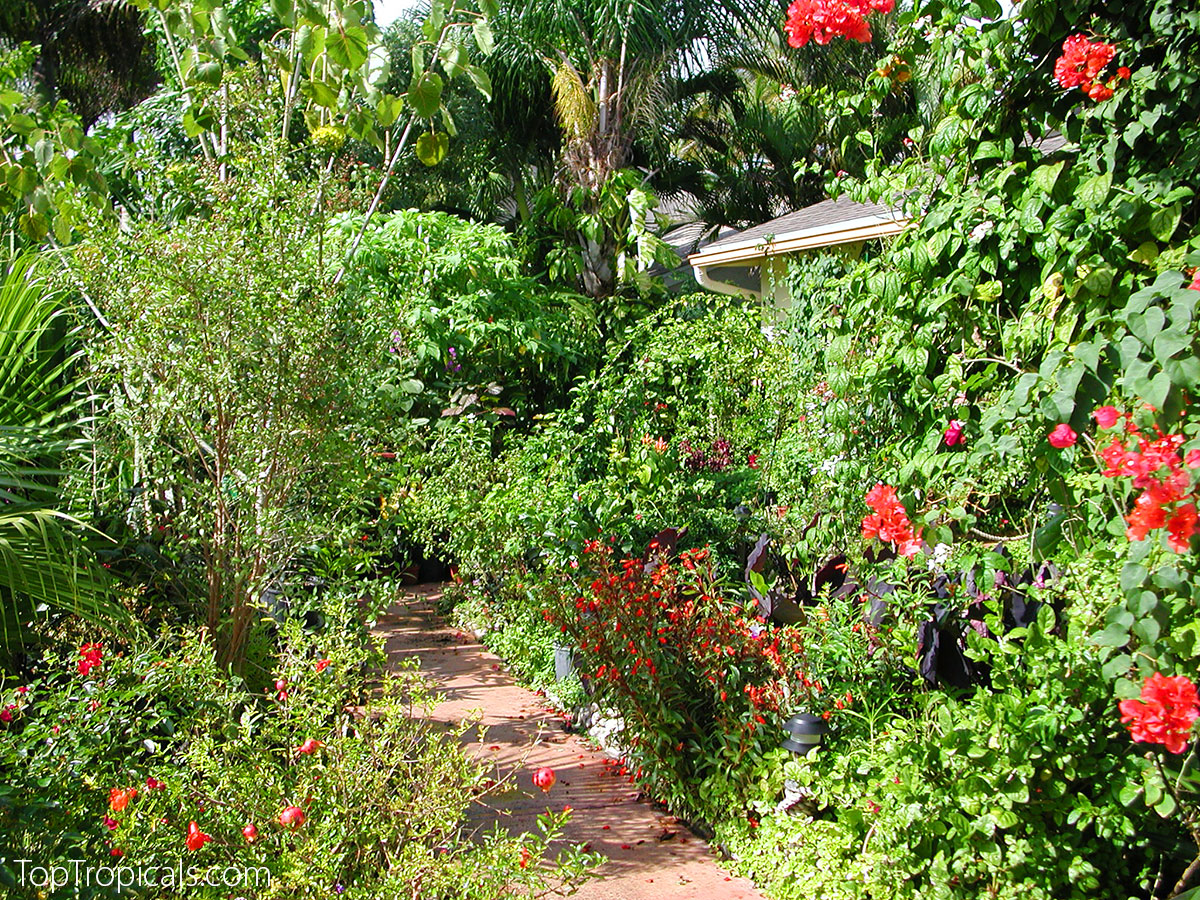
An  overgrown  tropical  garden  with  dense  foliage  and  vines  spilling  over
    a  walkway,  showing  how  a  garden  can  take  over  when  not  maintained.

Overgrown Tropical Garden Showing How a Garden Can Use You

📊 When You Use Your Garden

November flips the script. Plants slow down. Soil stays warm. This is the safest month to experiment, move plants, fix mistakes, and redesign.

What you do now pays off huge in March.

  • You map out sun zones and shade zones.
  • You mulch now so weeds do not explode later.
  • You move plants to better positions without heat stress.
  • You remove the high-drama plants before they start another season of complaints.
  • You pick what you want for next year instead of letting impulse buys rule you.

Spring becomes smooth instead of overwhelming. And honestly? It feels good to walk outside in March and see order instead of chaos.

A  neat,  organized  tropical  garden  with  trimmed  plants,  open  pathways, 
 and  balanced  landscaping,  showing  how  a  gardener  can  use  and  direct  the 
 garden.

In the photo: Every garden starts in small steps. Biquinho Pepper (front) in the garden.

What Benefit Do You Get Personally?

  • Less watering.
  • Fewer bugs.
  • Bigger fruit.
  • Better flowering.
  • Less money wasted.
  • Less time fixing problems you could have prevented now.

This is why experienced tropical gardeners adore November.

Garden

In the photo: Organized Tropical Garden. Firebush (lemon gold variety) and Cordylines (Ti Leaf) make colorful spots in the garden.

🐭 Start With Something Small Today (5 Minutes)

Pick one:

  • Add mulch to the driest spot in your yard.
  • Cut one dead branch from any tree.
  • Move one pot to a better sun angle.
  • Pull three weeds from the worst area.
  • Water deeply once this week.

Small steps now save hours later.

⭐ One Short Story

Last year we planted a Star Fruit in November. By March, it was already covered in flowers, and have been harvesting fruit non-stop since then! That is what winter planning does: it gives plants a head start you can actually see.

Young  Carambola  Star  Fruit  tree  fruiting

🐍 Plants That Will Use You If You Let Them

These are great plants, but only if you plan before planting them:

  • Banana (thirsty)
  • Hibiscus (hungry)
  • Brugmansia (sensitive)
  • Passion vine (takes over anything it touches)

Place them wrong, and they become full-time jobs.

An  overgrown  passion  vine  covering  a  garden  swing,  showing  how  a 
 fast-growing  plant  can  take  over  when  not  maintained.

In the photo: Passion Vine taking over the swing.

🐰 Plants That Work For You

These feel like free upgrades to the yard:

Pick even one of these and your garden starts giving back.

A  landscaped  garden  path  with  a  Cattley  Guava  tree  featuring  a  twisted 
 multicolor  trunk,  surrounded  by  trimmed  tropical  plants  and  decorative 
 garden 
 elements.

In the photo: Cattley Guava brings not only tasty fruit but also a wonderful character with its amazing multi-color twisted trunk.

🌡️ November Advantage

You cannot ruin anything in November. This is the safest, calmest month to shape your garden the way you want. If you act now, spring becomes a victory lap. If you wait, spring becomes a rescue mission.

A  landscaped  tropical  garden  with  a  potted  Adenium  in  full  bloom,  red 
 Cordylines  behind  it,  and  neat  mulched  beds  with  decorative  garden 
 elements.

In the photo: Adenium is a colorful accent in the garden.

💐 Thanksgiving Tie-In

This is the season to reset, breathe, and be thankful for your outdoor space. A garden that works for you is one of the best gifts you can give yourself going into the new year.

Start your November plan today. Use your garden. Do not let it use you.

A  neatly  designed  tropical  garden  bed  featuring  Megaskepasma,  iris, 
 Colocasia,  colorful  Crotons,  Dracaena,  and  Ti  Leaf  plants  arranged  in 
 mulched 
 landscaping.

In the photo: Megaskepasma, Iris, Colocasia, Crotons, Dracaena and Ti Leaf bring instant tropical look to your garden.

Shop Fruit trees

Shop Flowering shrubs