Date: 30 May 2020
How to prevent mango fruit drop
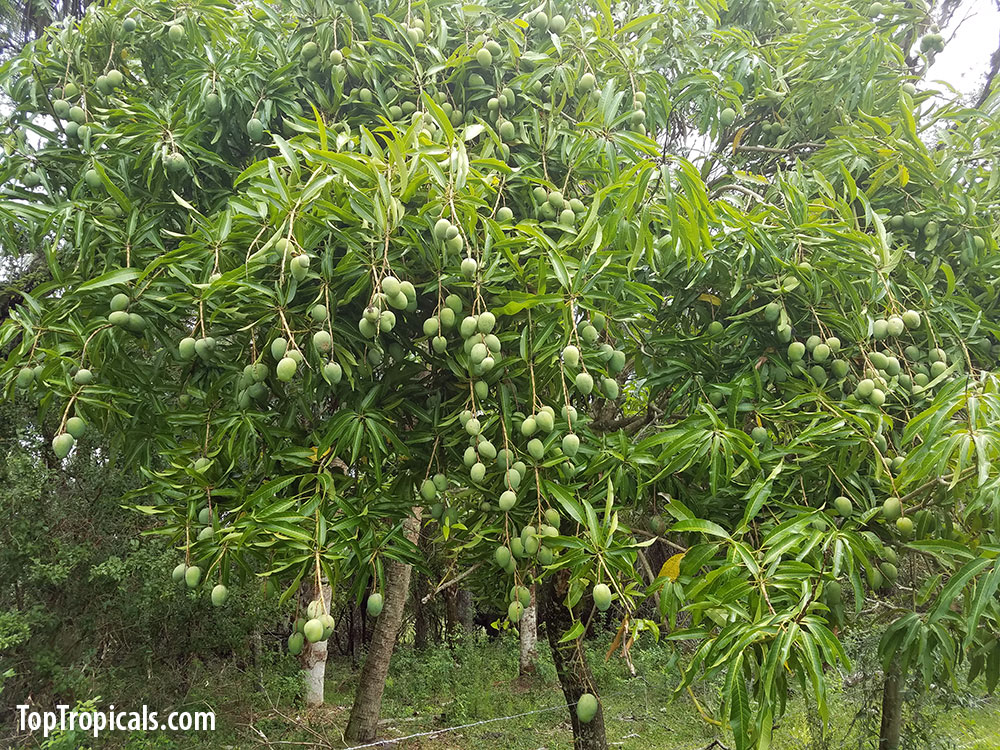
Q: My mature mango tree is fully grown 15 yrs old and each year it fully blooms, sometimes twice. Shortly thereafter, all the baby mangos and flowers fall off providing no mangos for the season. I have tried fertilizing, spraying the tree for fungus or other insects, to no avail. I give up, any suggestions?
A: Dropping fruit in pretty common issue with mango trees. There
may be several reasons, or a combination of reasons.
1. Fungal disease (anthracnose), and/or powdery mildew. To avoid
fungal disease problems, spray your tree when it just begins to form the flower
spikes. Treat foliage with Copper fungicide. There is also another
one, very effective for anthracnose: Thiophanate methyl.
2. Inadequate nutrition. Feed your tree with a combination of
granulated fertilizer Mango-Food, liquid booster SUNSHINE Mango Tango and micro-elements Sunshine Honey and Sunshine Superfood
Check out pictures of our mango tree problems that were fixed within a month by
using Sunshine Boosters.
3. Too much rain or heavy dew during blooming and fruit set (see 1 -
use preventive treatment for fungus)
4. Cold. Sometimes the cause of premature fruit drop is from the
cold weather during bloom and fruit set. Usually the most affected varieties are
the early bloomers including Glenn, Haden. The cold damages the developing
embryo in the seed. The fruit starts to develop but because of ethylene gas
given off by the damaged embryo, the fruit is triggered to drop before
maturity. To see if cold temperature was the cause for your fruit dropping, cut open
the fallen fruit. Even if there is a small speck of brown in the seed,
that's enough damage to stop fruit development.
To learn more how to care for your mango, please read this publication.

Date: 24 Jun 2018

URBAN TROPICAL GARDENING:
10 secrets of successful Container Mango growing on a
balcony.
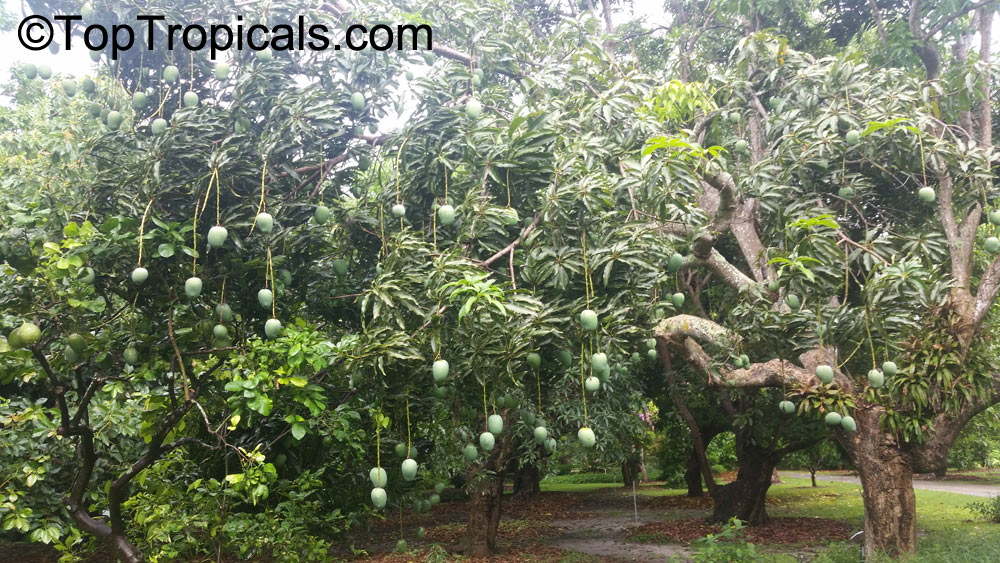
Q: I live in Miami in apartment on a second floor, and I have a balcony with SE exposure. I wonder if I can grow a mango tree in a pot? Will it fruit for me? I recently moved to South Florida and I don't know much about tropical plants; but I tasted real fiberless mangos from someone's garden - it was so delicious and different from those in the grocery store. I wonder if I can have a fruiting tree on my balcony? And if yes, how do I plant and take care of it?
A:
Yes, you can! Here is what you need to do:
1) Temperature. You are lucky to live in Tropics,
keep it on a balcony year round.
2) Light. Position the pot in a spot with the most
sun exposure. Mango trees can take filtered light too, but
the less sun, the less fruit you will get.
3) Soil and Container. Use only
well drained potting mix. Step up the purchased
plant into next size container (3 gal into 7 gal, 7 gal
into 15 gal). When transplanting, make sure to keep growth
point (where roots meet the trunk) just at the top of the
soil. Covering base of the trunk with soil may kill the
plant.
4) Water. Water daily during hot season, but only
if top of soil gets dry. If it still moist, skip that day.
Mangoes (unlike
Avocados!) prefer to stay on a dry side.
5) Fertilizer. Use
balanced fertilizer once a month, 1 tsp per 1 gal of
soil. Do not fertilize during fruiting - this may cause
fruit cracks.
6) Microelements. Apply
SUNSHINE-Superfood once a month. This will help your
mango healthy, vigorous, and resistant to diseases. Use SUNSHINE-Honey to make your
fruit sweeter.
7) Insect control. Watch for scales and mealybugs,
clean with solution of soapy water + vegetable oil (may
need to repeat 2-3 times with 10 days interval), or with
systemic insecticide like imidacloprid only as needed (if
non-harsh treatment didn't help). Most Flea shampoo for
dogs contain that chemical, you may try that shampoo
solution.
8) Trimming. Once potted, do not remove leaves
that are discolored or have spots until new growth
appears. Dark dots on mango leaves, especially in humid
climate like Florida, may be signs of fungus. Treat with
fungicide according to label, and remove only badly
damaged leaves. Trim crown as needed after flowering and
fruiting (by Fall). Train into a small tree, and you may
remove some lower branches eventually.
9) Flower and fruit. Mangoes are winter bloomers
with bunches of tiny flowers coming in thousands. Many of
them set fruit (if pollinating insects present). Keep in
mind that young trees can only bare a few fruit. Normally
a tree will drop excessive fruit and keep only a few that
it can manage. To save the young tree some energy, remove
fruit if too many and leave only 2-3 for the first year.
It will pay you next year with more abundant crop.
10) Variety. Last but not least: Choose the right
variety for container culture! Pick from "condo" dwarf
varieties such as Icecream, Nam Doc Mai, Carrie, Cogshall, Julie, Fairchild, Pickering, Graham, Mallika, and a few others -
check out Mango Chart pdf
and full list of our Mango varieties
Date: 17 Nov 2025
Pram Kai Mai: a sweeter twist on Nam Doc Mai with a story - Mango Rainbow
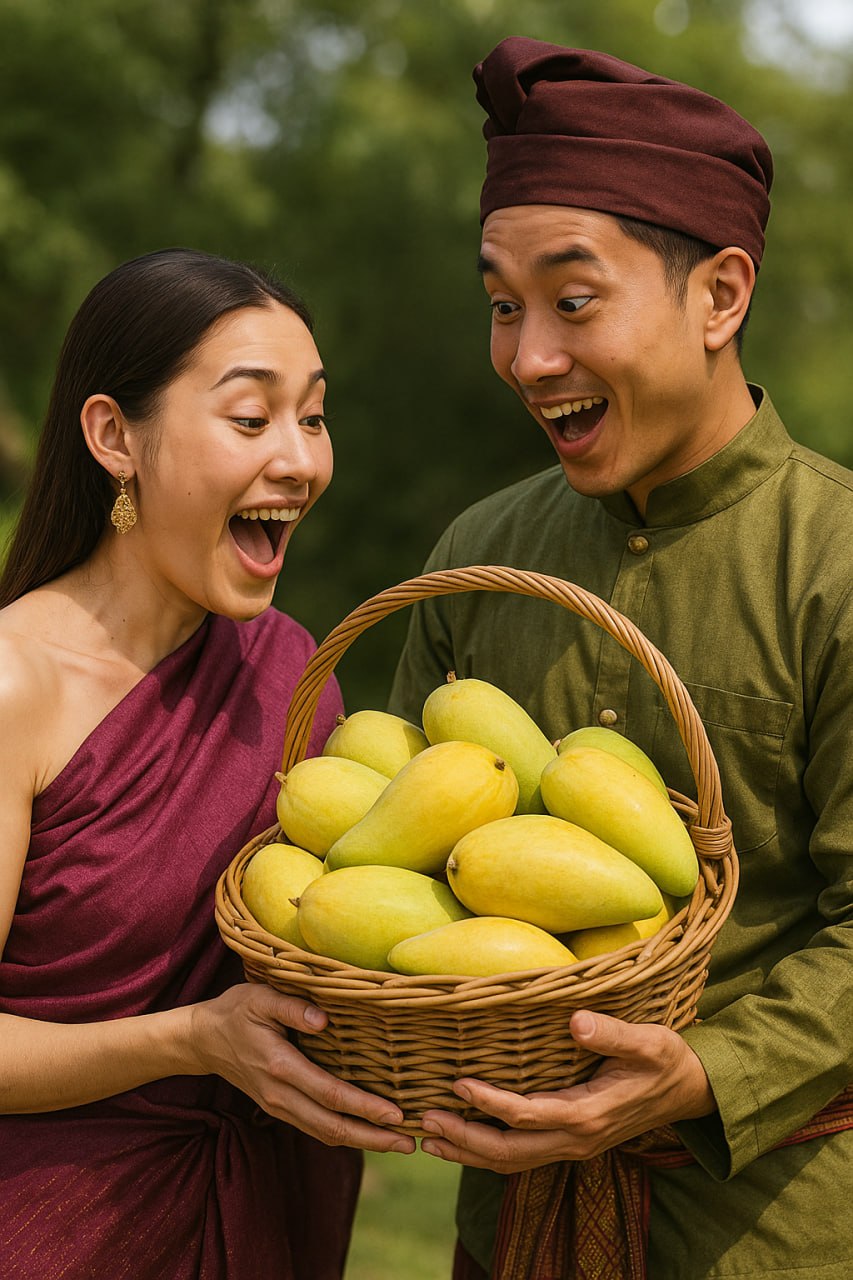
Pram Kai Mai Mango crop in a basket
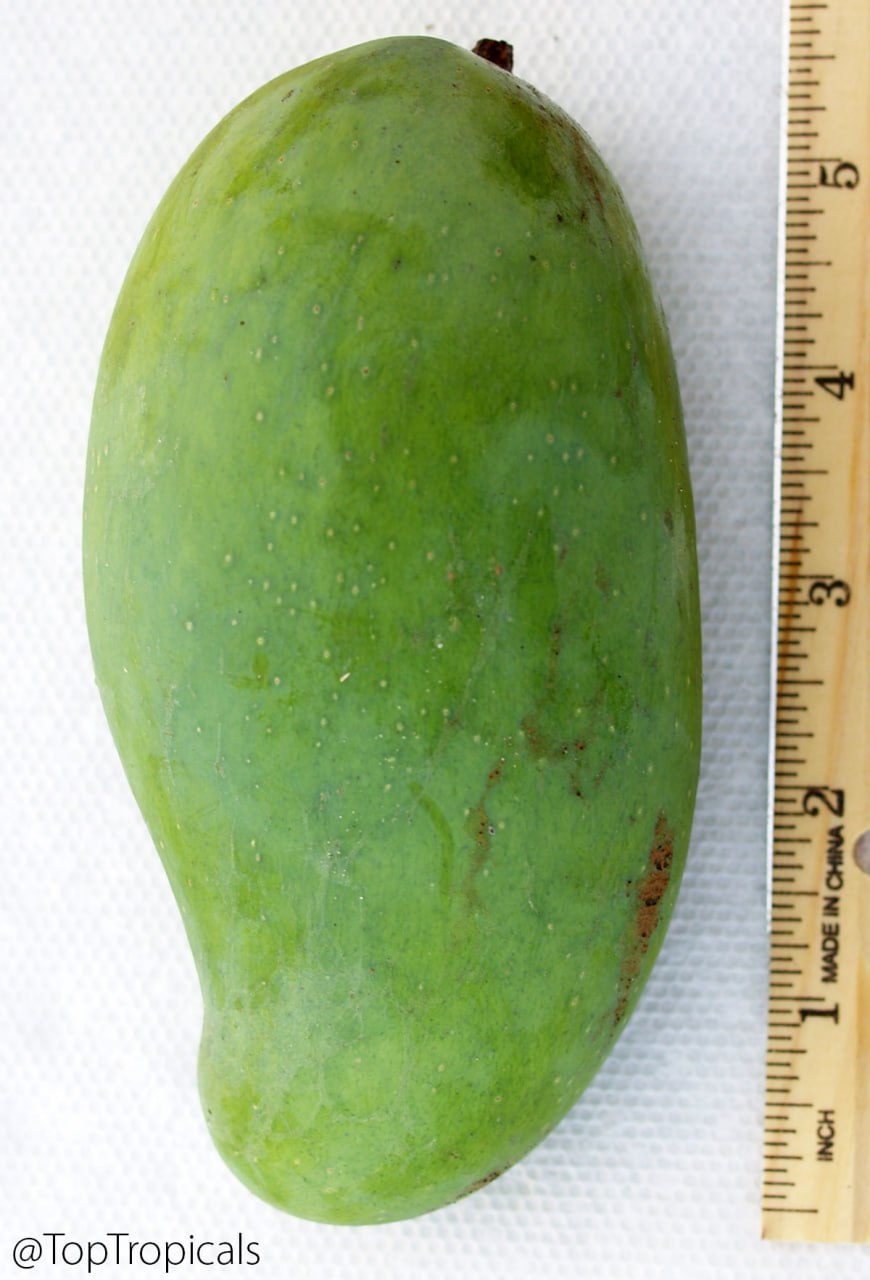
Pram Kai Mai Mango
- 🟡Why mango collectors chase after Pram Kai Mai? Pram Kai Mai is like Nam Doc Mai’s cooler cousin - with even better flavor. This Thai mango can be eaten green when it’s sweet and crispy, or fully ripe when it turns golden and silky. No fiber, just smooth, juicy flesh and a tropical aroma that hits you as soon as you slice it. It’s semi-dwarf, great for pots, and some trees even fruit more than once a year. Rare, compact, and loaded with flavor - this one’s a collector’s dream.
- 🟡Pram Kai Mai is a Thai dessert mango known for its gentle sweetness and smooth, almost fiberless flesh. The name appears in several spellings - Pram Kai Mai, Pram Kai Mea, Pram Kai Mia, Prom Ki Mia, and even Brahm Kai Meu - all referring to the same variety.
- 🟡If we break down the original Thai name พร้ามกายเมีย (Brahm/Pram/Prom Kai Mea/Mai/Mia) literally: Brahm / Pram / Prom relates to "noble, elevated, precious".
กาย - Kai means body
เมีย - Mia means wife
But no one in Thailand interprets this name word-for-word.
In mango names, this construction works as a cultural compliment, a gentle metaphor. The meaning is closer to:
"A mango so good you would save it for the one you love most."
or "A fruit worthy of a beloved wife".
Similar to how in other languages we may call something "royal", "special", or "meant for someone dear", this name is simply expressing admiration.
And the fruit truly matches that feeling. It is fragrant and sweet, with soft tender flesh. It can be enjoyed while still crisp and green, when its flavor is clean and refreshing, or fully ripe, when it becomes rich and smooth, almost melting on the tongue.
🛒 Shop Mango varieties
📚 Learn more: #Mango_Rainbow - varieties you should try
#Food_Forest #Mango #Mango_Rainbow
🟢 Join 👉 TopTropicals
Date: 2 Mar 2019
Featured plant. Mango Hoaloc, Cat Hoa Loc
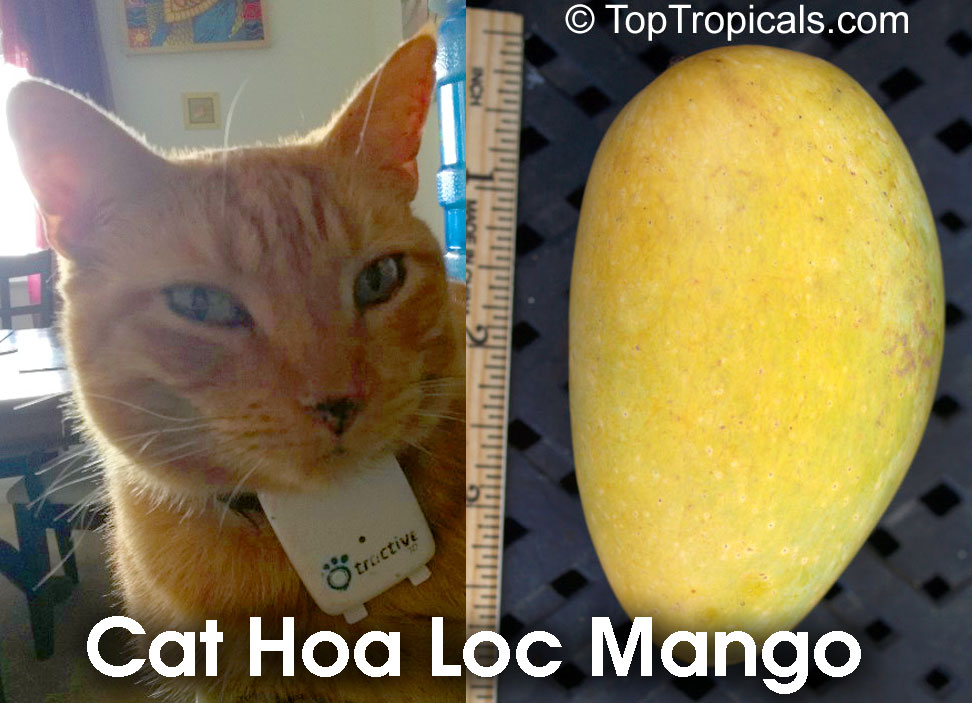
Cat Hoa Loc Mango
Grafted Mango (Mangifera indica) - Hoaloc, Cat Hoa Loc... It is very
rare, Exotic mango variety from Vietnam. The fruit is fiberless, oval yellow,
with very thin seed. It is a rare, collectible variety.
Among Vietnamese mango cultivars, Cat Hoa Loc is the most popular cultivar
because of good appearance, texture, taste, and flavor. Its production ranks
the first among commercial mango cultivars in Vietnam.
It is known as one kind of the most famous mango in the Mekong Delta
and one of the favorite fruit by appealing color, taste and high nutritional
value. Hoa Loc mango became the reputation brand not only in Vietnam but also
in the world. With elongated shape, bright yellow skin when ripe, bright
yellow flesh, flesh architecture firm, smooth and low in fiber, are very tasty and
fragrant.
The Vietnamese Government supports the expanding of the production area
for Cat Hoa Loc mango. At the mature green stage, Cat Hoa Loc mango fruits
usually turn to full ripening within 4-5 days thereby limiting distribution
and marketing options.
So the best way to taste this delicious rare variety is to grow your own!

Date: 13 Nov 2024
Could Mango be the secret to youthful skin?
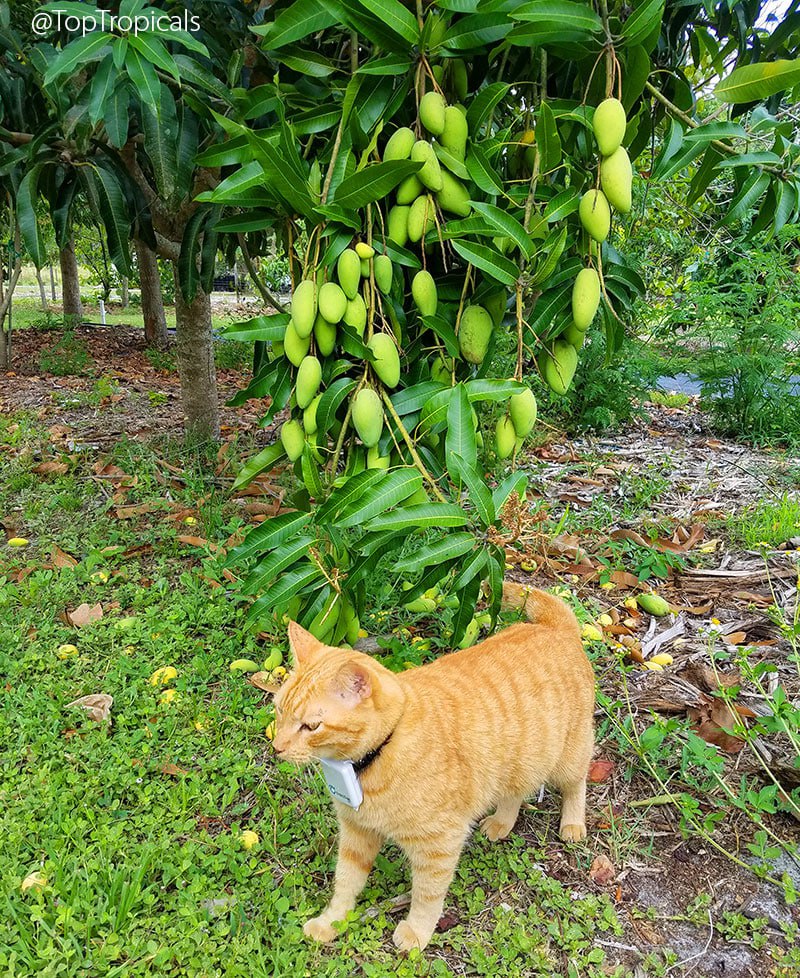
🥭 Could Mango be the secret to youthful skin?
🙂 Packed with anti-aging and immune-boosting benefits, could this tropical fruit be the key to your skin's natural glow?
😊 Mango for Rejuvenation: Mangoes promote rejuvenation and improve skin condition, according to the research.
😊 Anti-Inflammatory and Anti-Aging Effects: Mango contains components with anti-inflammatory and rejuvenating properties.
😊 Vitamin C Boost: Mango is rich in Vitamin C and ascorbic acid, which strengthen the immune system.
😊 Better Iron Absorption: Mango fruit supports improved iron absorption in the body.
😊 Collagen Support: Mango helps maintain collagen levels in connective tissues for healthy skin.
🔥 Plant a mango tree today and start growing your own path to health and vitality!
👍 What other fruit or plants are good for skin? Share in comments⬇️
🛒 Shop Mango Trees
#Food_Forest #Remedies #Mango
🔴 Join 👉 TopTropicals