Date: 4 Jan 2023
Ten steps to Happy Gardening in 2023
Beginning of the year checklist
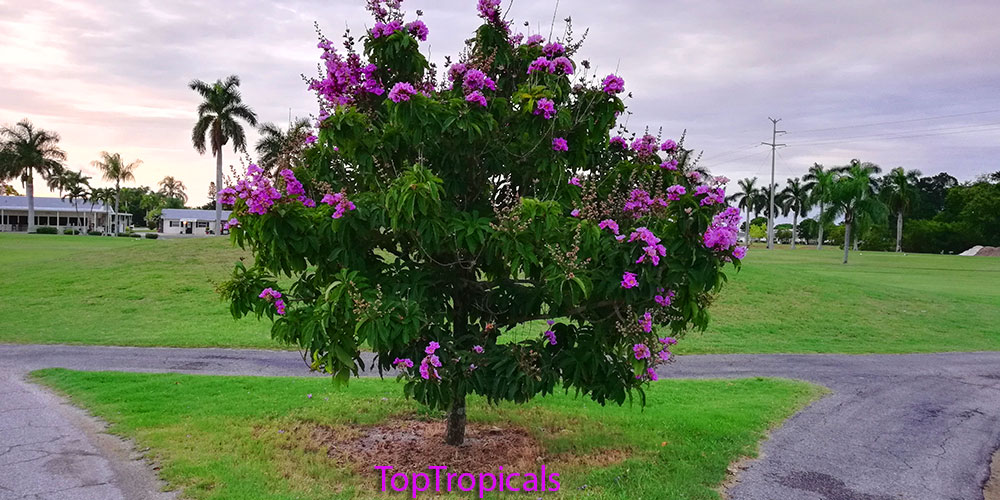
To assist our customers in creating a happy and enjoyable gardening experience this year, we consulted with our horticulturist to compile a list of ten recommended items. Here are the results...
1. A favorite. Get yourself a favorite small flowering plant that is compact, manageable, and easy. Such as Ground
Orchid. Keep it in a pot or plant in the ground by the entryway where it can
be seen often and enjoyed.
2. A fruit of your labor. You need at least one (or one more) fruit tree for your
garden, or for container culture if you live in colder climate. Growing and
especially harvesting tropical fruit will make you happy. The Winner of the last
year was Cherry
Lolita - an easy, compact fruit tree that can produce almost year
around. Some fruit
trees will fruit right away!
3. Be exclusive. A rare plant is a must for every gardener. It can be a useful gem such as
Noni Tree
or an unusual-looking like a Bat Lily - Tacca. Show your friends and neighbors something different
they have never seen!
4. Make it cool. Finally plant that shade tree by your driveway. Yes it takes time to grow, but the sooner
you plant it, the sooner you get that shade! There are some fast growing species, some only take a couple of years to the mature
size.
5. Beauty. If you have an ugly fence or unwanted view in your yard,
cover it with a
flowering vine. Look at the beauty every day and make your life better.
Replace a boring standard hedge with colorful flowering shrubs that will make you smile.
6. Scent. Add some fragrant plants to your landscape and inhale their healing magic.
7. Tropical. For a shady corner, select a showy tropical with lush foliage such as Philodendron or Monstera, or
all time favorite
Banana. Get a feel of tropics.
8. Happiness of giving. Buy a gift plant for someone you care about but don't know how to thank them.
Live plant is the best expression of love and gratitude. If you are unsure
what plant to pick, ask our Team or simply buy a Gift Certificate that will never expire - let them chose the plant they
like.
9. Food for all. A set of quality liquid fertilizers is a must - try Sunshine Boosters that can be used year around. They will make your
plants healthy, strong, fast growing, cold hardy and disease-resistant. You can
choose formulas for different plant types from our selection, or simply buy online a Nutrition Kit of 8 bottles that will cover all your needs and save you
50% on fertilizer cost!
10. Share. Subscribe your friend to TopTropicals Newsletter so they can get a weekly Piece of Tropics in
their mailbox. Cool Cat Photos come as a bonus!
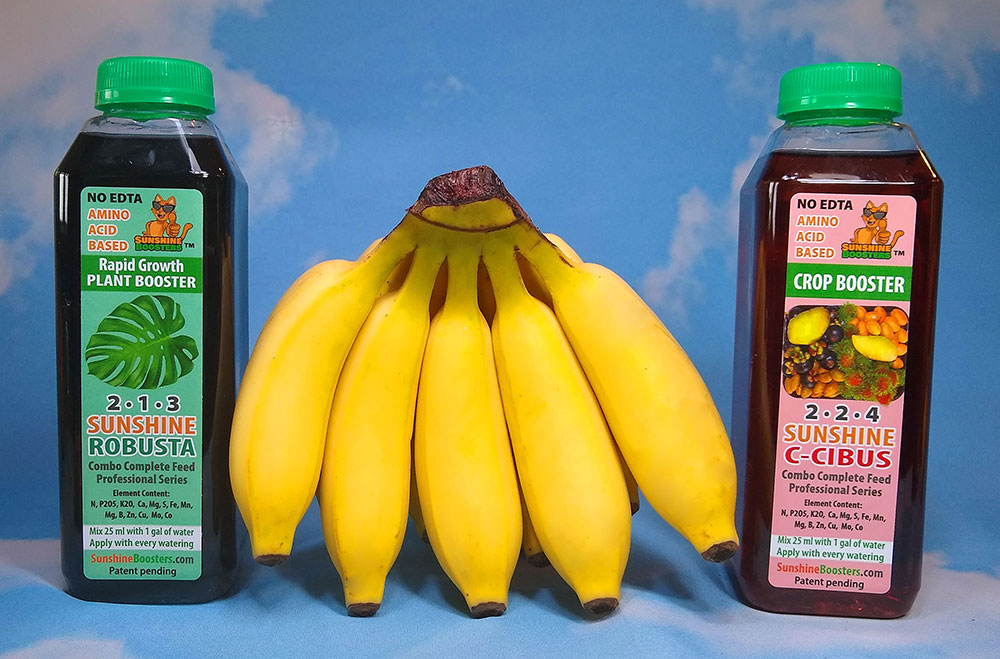
Make sure to always have on hand at least 2 main formulas of Sunshine Boosters - Robusta for vegetative growth, and C-Cibus
Date: 26 Jan 2022
Don't miss this one:
PodCast Premiere!
Episode 1
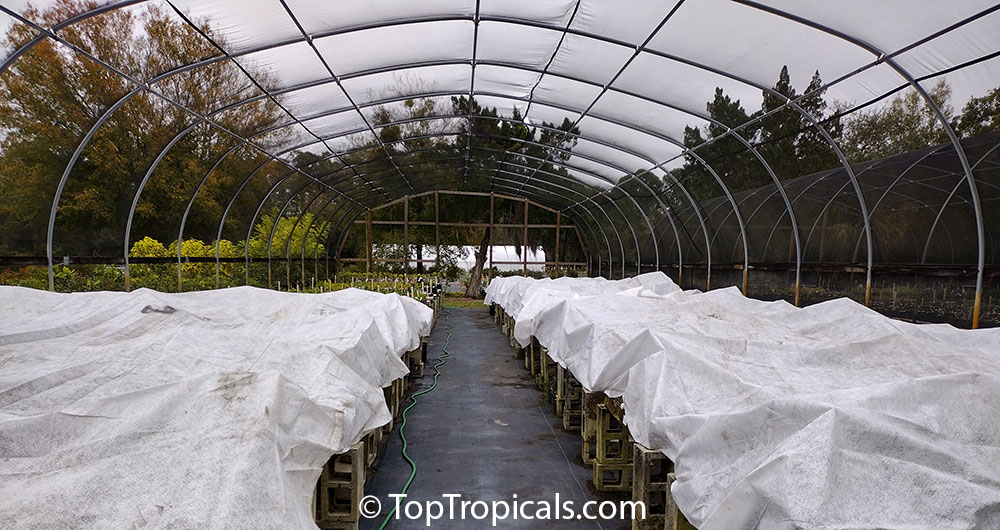
How to Protect Tropical plants in Winter: Q & A
Featuring Horticulturist Mark Hooten
...We are introducing our new Series: Top Tropicals Podcast. Growing tropicals and pushing the limits. Watch the first episode:
How to Protect Tropical plants in Winter
...Who doesn't like tropical beauty? Everyone wants tropical plants. But not everyone lives in a warm climate. Is it possible to grow tropicals outside of Tropics?
Top Tropicals horticulturist Mark Hooten, who is well known to many
gardeners as the Garden Doc with his
Saturday Plant Clinic, is answering gardeners' questions about how to prepare and protect tropical plants during winter...
Premiere scheduled:
Thursday, January 27, 8:00 AM

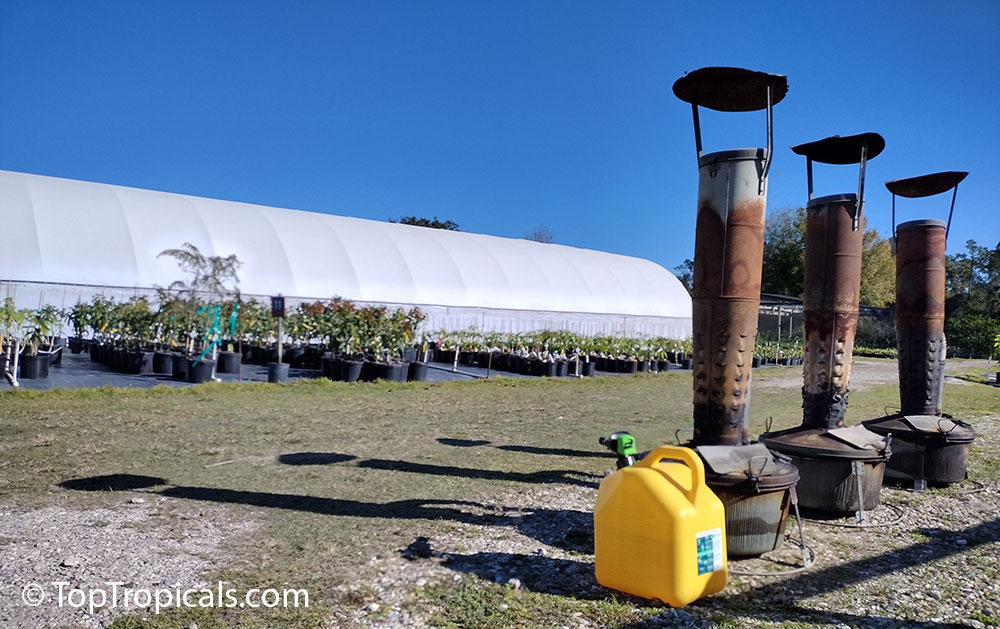
More about cold hardiness and cold protection:
Cold hardy tropical fruit trees
Growing Stephanotis and cold protection
Cold protection of tropical container plants
Plumeria cold protection
Ghost Cold Protection
Seven rules of cold protection for tropicals
Improving cold hardiness before winter: fertilizer and micro-elements
3D garden ideas and winter cold protection
Cold protection - winter action for your plant collection
About Cold Protection
Date: 26 Sep 2021
Edible Landscape: fruit bearing hedge
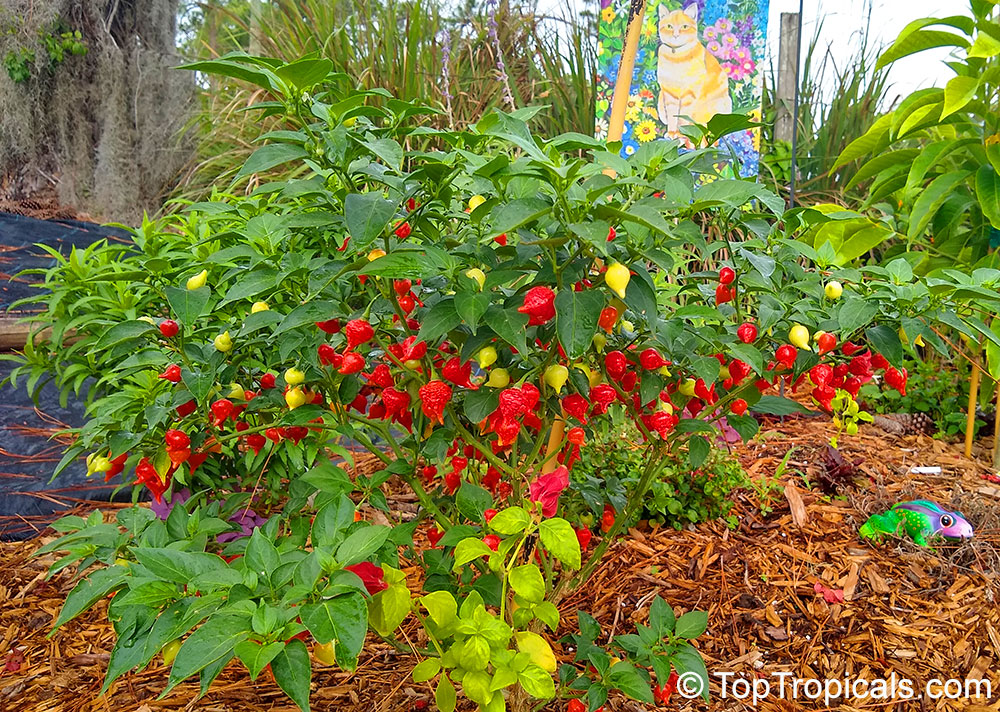
Photo above: Biquinho Pepper (2 months old plant)
Q: My mom had to remove a hedge for some renovations and after being heartbroken about losing my little bird haven, I've decided to plan on a fruit bearing hedge that offers some privacy and places for the little fledgling to wait for food. Any suggestions? I was thinking blueberries or citrus but open to any ideas.
A: Below are a few suggestions for a fruit bearing hedge planted with fast-growing, tropical species. They will contribute to a nice edible landscape for both your family and the birds - they will be very happy!
Larger size hedge (small trees), grows full-size within 1
season:
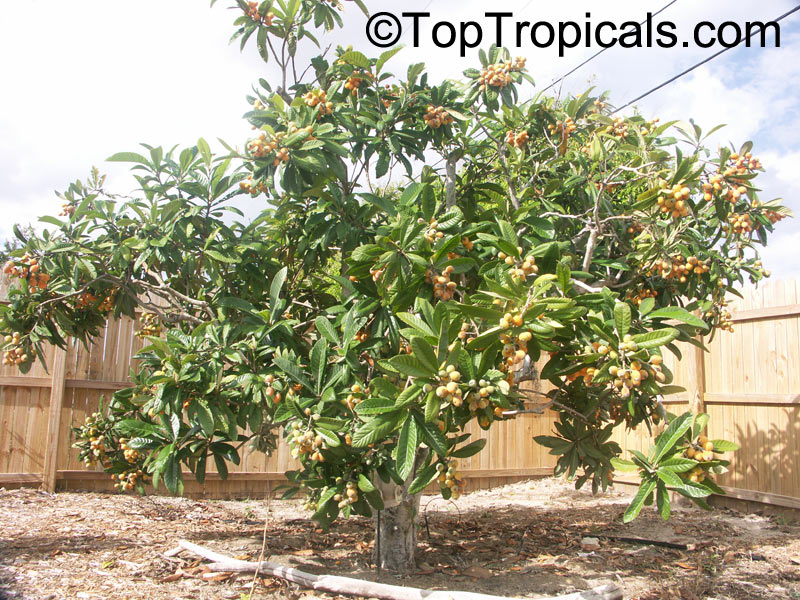
- Loquats
- Dwarf Mulberries (very cold hardy too) such as Dwarf Everbearing
Medium size hedge (shrubs or vines), 2-3 seasons to grow full
size:
-
Black Surinam Cherry Lolita
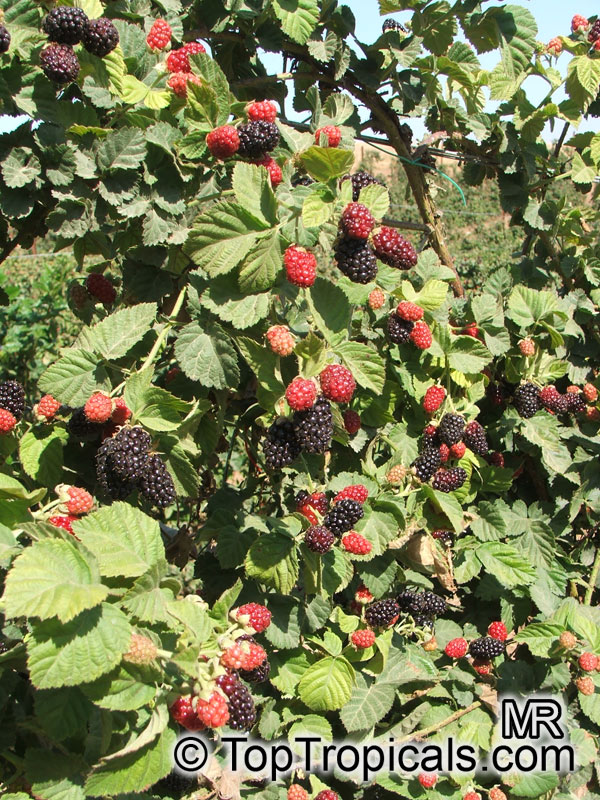
- Blackberries and raspberries
Low hedge (4-5 ft tall, 1 season, fast growing):
-
Biquinho Pepper
- Wiri
Wiri Pepper
Citrus is probably not a good idea, not bird's favorite, and blueberries require a special acidic soil here in Florida, so they will need extra maintenance, special soil, and heavy mulching.

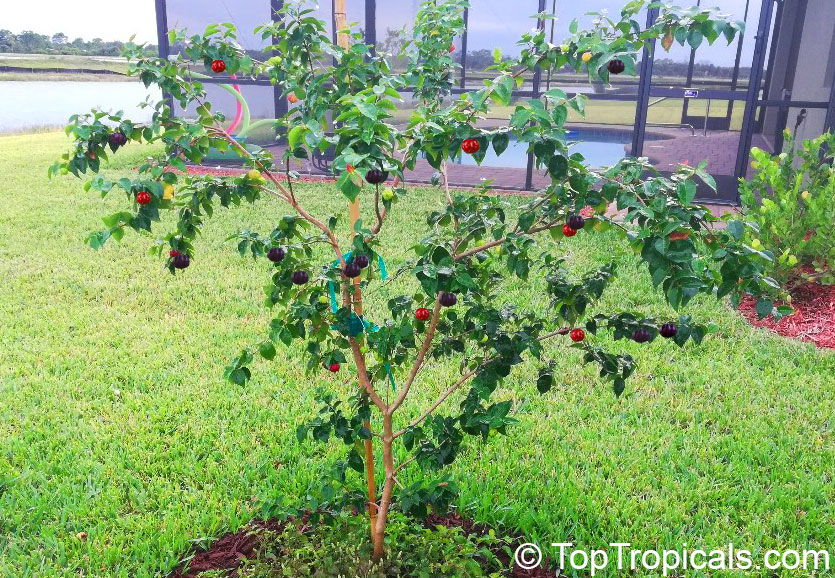
Surinam Cherry Lolita, 2 year old plant
Date: 25 Jun 2021
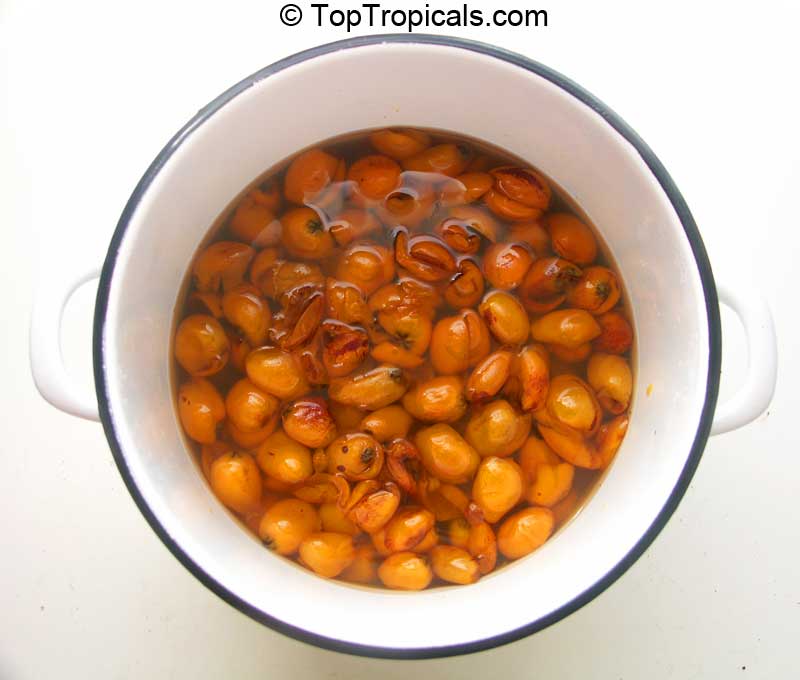
Kristi's Loquat Tropical BBQ sauce
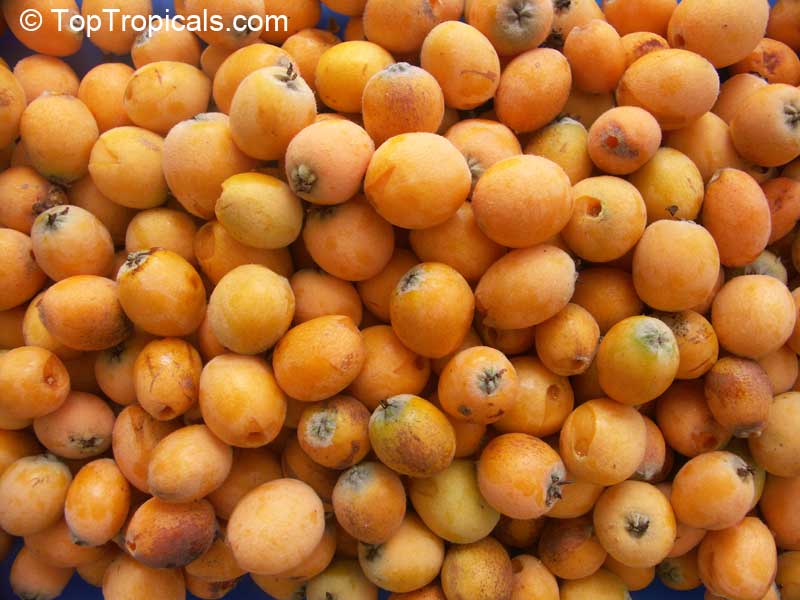
Loquat trees are famous for their abundant fruit production. Many customers who purchased this tree from us, soon end up with some serious crops and start asking if we have any special recipes for loquat fruit - because you can only eat so much out of hand! Here is our manager Kristi's favorite Loquat recipe - not only delicious and tropically-aromatic, but also good for you. Happy Tropical Meal!
Ingredients
2 lbs loquat fruit
- cup soft brown sugar
- cups malt vinegar
1 onion chopped - cloves garlic
1/2 tsp salt
1/2 tsp black pepper
1/4 tsp cayenne pepper
6 cloves whole or 1/2 tsp ground cloves
Instructions
Wash the fruit, cut them in half and remove stones. The loquats will
lose about a third of their weight once stoned (3 lbs of whole fruit = 2 lbs of fruit, stones removed). Add loquats and all remaining
ingredients to a large saucepan. Bring to a low boil, then simmer for about an hour, stirring occasionally. The liquid will have reduced quite a bit and the fruit
will be collapsed and very soft. Allow to cool slightly, then liquidize the sauce in a blender or a food processor. Be careful, hot sauce really
burns!
This delicious tropical sauce is great for any BBQ - with meats or fish. Enjoy!
Date: 15 Jun 2021

Healthy Plants: Q&A from Mr Booster
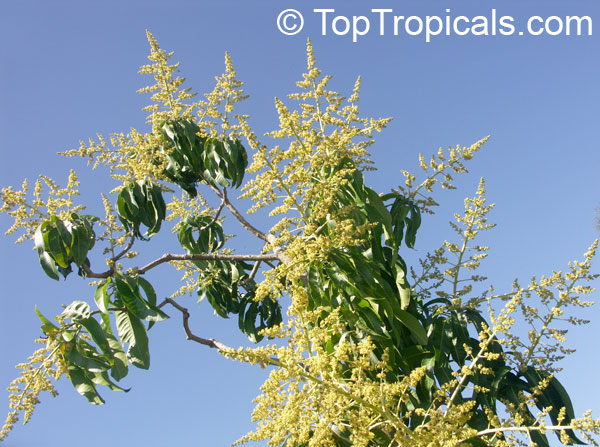
How to prevent mango flowers drop
Q:The mango blossoms my tree had in February have blown off due to weather conditions. Do you know what I can do to prevent this from happening again in the future?
A: The only "guarantee" to protect mango flowers from cold
weather damage here in Florida is to plant a LATE flowering variety. Generally,
mango trees are winter bloomers. Those varieties called "early season" start
flowering in January (for example, Nam Doc Mai), and of course very often they
get affected by cold, so they drop. Some varieties are so called "late season"
- for example Venus. They start flowering in spring when the weather conditions are
more favorable.
Another thing that may help you with mango flower drop is applying plant
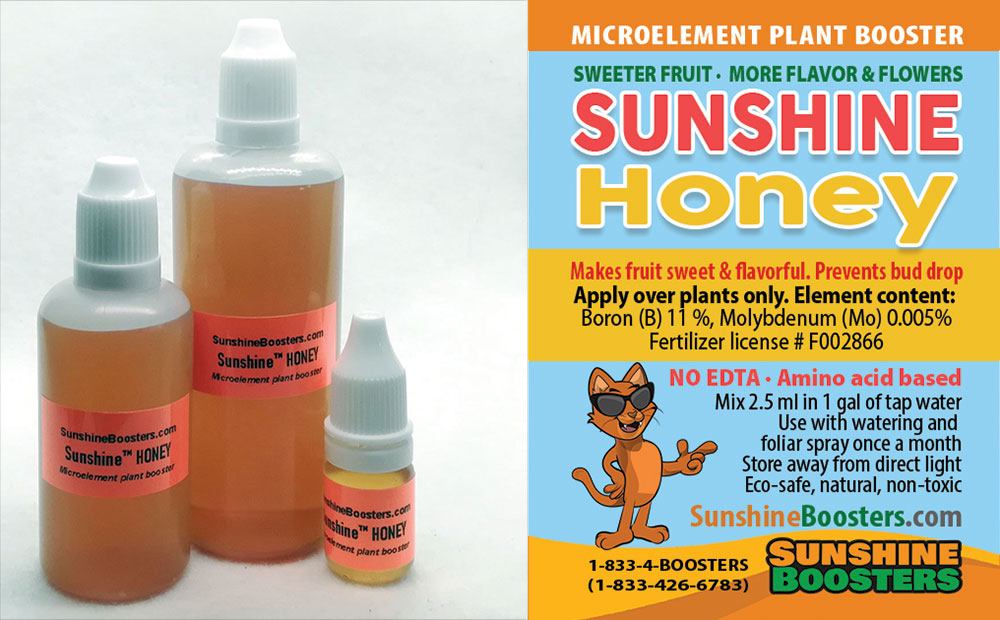
micro-element supplement Sunshine-Honey - it contains Molybdenum and Boron, which help flower
and fruit development/strength and prevent their drop.
Read more: Boosting Mango Flowers and Fruit.