Date: 26 Mar 2020
Nature's farmacy: Coronavirus cure discovery? Cinchona - Fever Tree
by Alex Butova
As the world's health experts race to find a cure for the novel
coronavirus, this drug have jumped to their attention - Chloroquine. It contains
alkaloid Quinine, extracted from the bark of the Cinchona, or Fever Tree.
We receive many questions from our customers if we carry this plant.
Although we do not offer it at the moment, we definitely can tell you more about
this interesting medicinal plant!
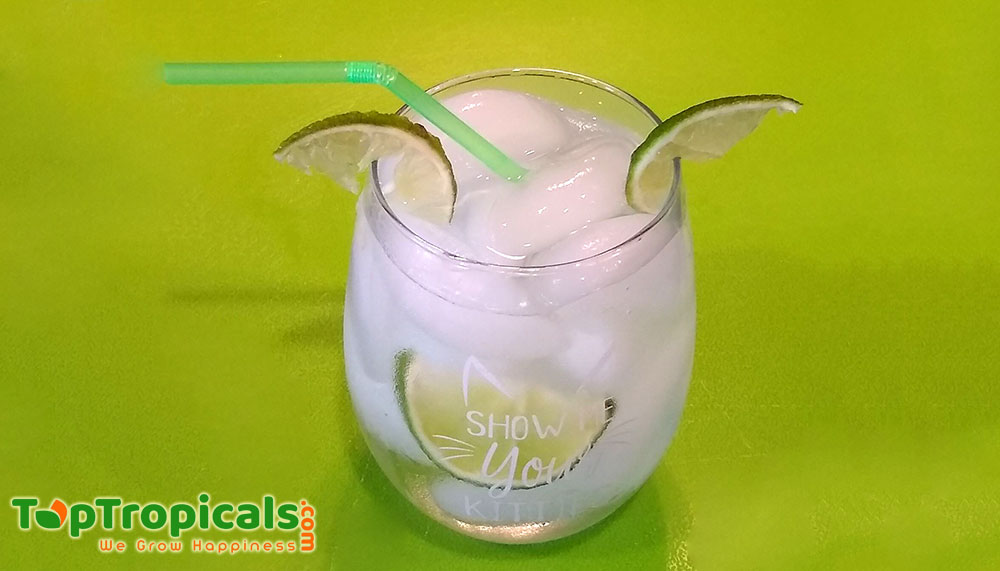
If you like gin and tonic, you will be familiar with the bitter taste of
the tonic which is provided by quinine. While it is now mainly used
to add a flavor to our favorite tipple, the Cinchona tree bark once held a
place as one of the most important drugs in history.
Cinchona was discovered in the 1630s as a treatment for malaria and, for
350 years, was the only effective cure known in Europe until synthetic
replacements were developed in the 1940s. Malaria remains today one of the deadliest
diseases known throughout the tropics, but up until the 20th century the
disease was prevalent throughout Europe, including Britain.
The Cinchona tree is native to the Eastern slopes of the Andes with a range across Ecuador, Peru and Bolivia. Once the bark became an established medicine, particularly in the 18th and 19th centuries, demand started to outstrip supply. Threats of overharvesting and the desire to control the source of this precious bark drove various competing empires to source this plant for themselves. Understandably, the Spanish, who were in control of this area of South America, actively tried to prevent this, but failed to establish successful plantations themselves. A race to source and cultivate Cinchona ensued, and eventually both the Dutch, in Indonesia, and the British, in India, founded government controlled plantations for the mass production of quinine.
Chloroquine appears to have "broad-spectrum antiviral properties" and effects on immune response, and to be effective against severe acute respiratory syndrome... As the rest of the world, we are looking forward to the research results and hope the cure will be found soon!
In the meantime, let's just have more Gin-n-Tonic!
Date: 17 Mar 2020
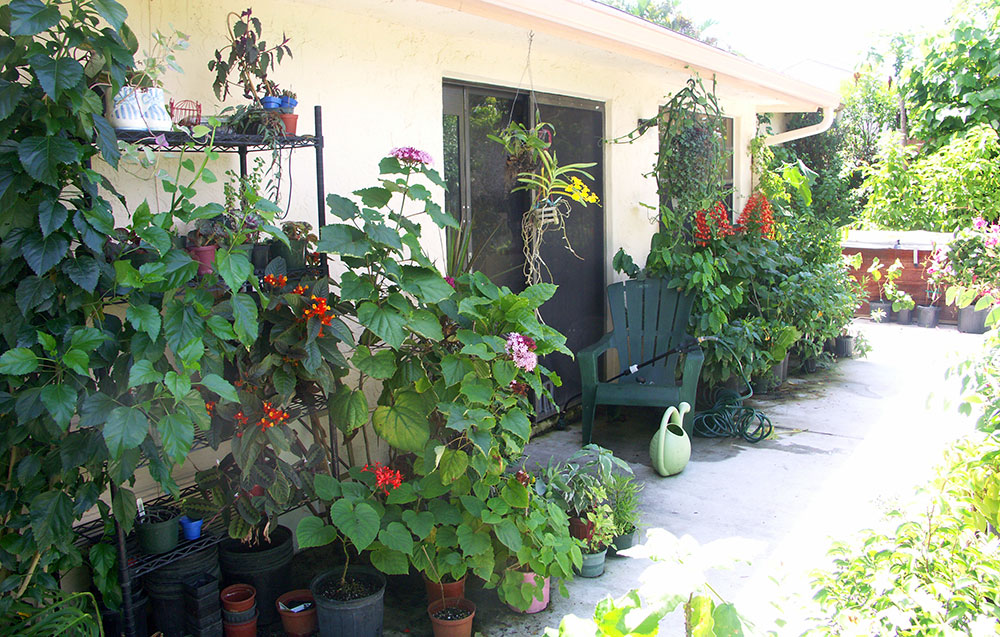
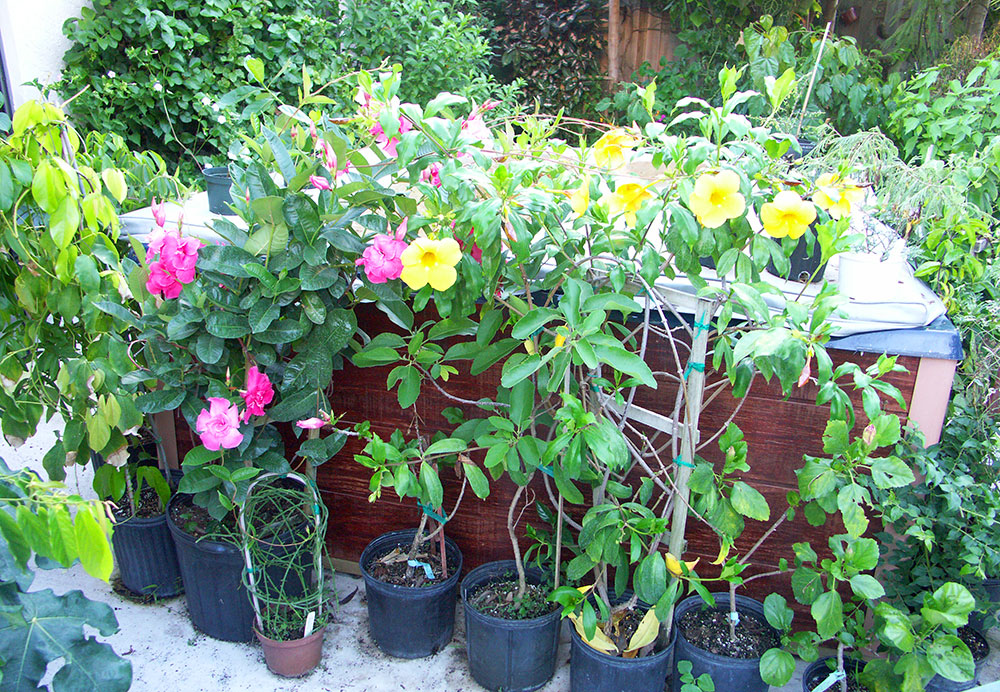
We got a letter that we must share!
To the folks at Top Tropicals,
This is not really a question, more of a statement of gratitude. Top
Tropicals has been my go to resource for everything tropical plant related for more
than a decade... You have always been a source of information, knowledge and
of course, beautiful plants. And now, more than ever, in these stressful
times, I find myself returning to the world of plants that I love so much.
Staying out of the public and away from friends and familiar places is hard on
many of us. I guess they are calling it "social distancing" and I understand the
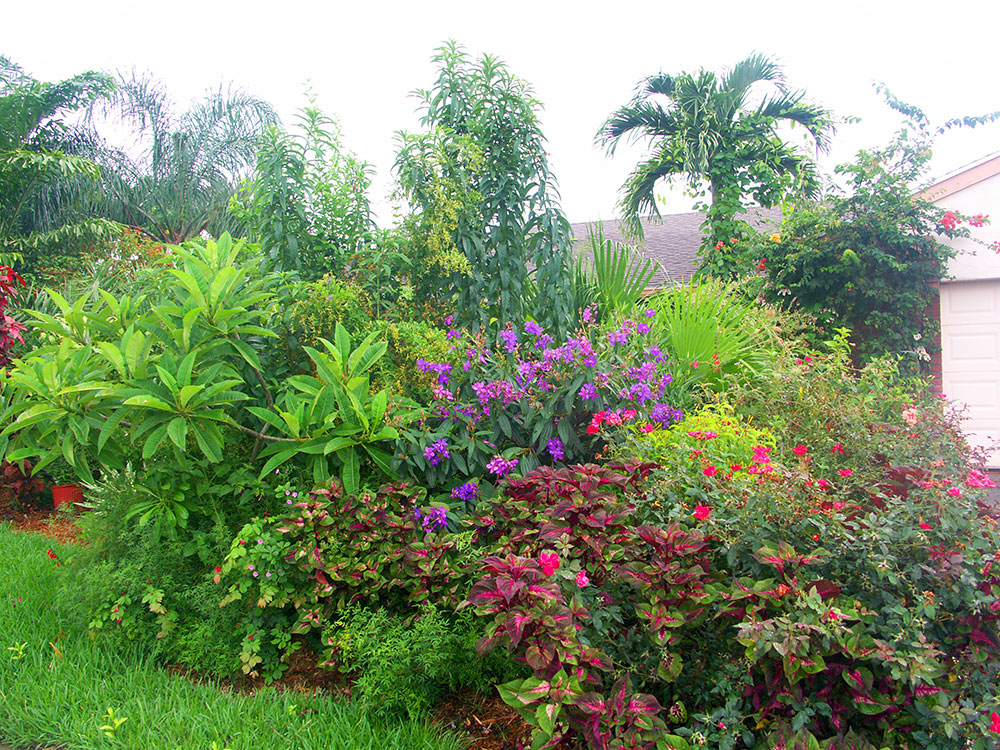
sensibility of it all. So I take great comfort in spending relaxing time
with my other friends and family, my plants. The weather is getting warmer,
Spring is in the air, and I choose to not worry about things I can't change and
instead I will devote time, energy and love to my special plants. Thank you
Top Tropicals for being there for all of us gardeners and plant lovers. I look
forward to browsing your newsletters each week to see pictures of the People
Cats and to pick out my next best friend!
Sincerely, Becky M. - Woodland Hills, CA
Date: 13 Mar 2020
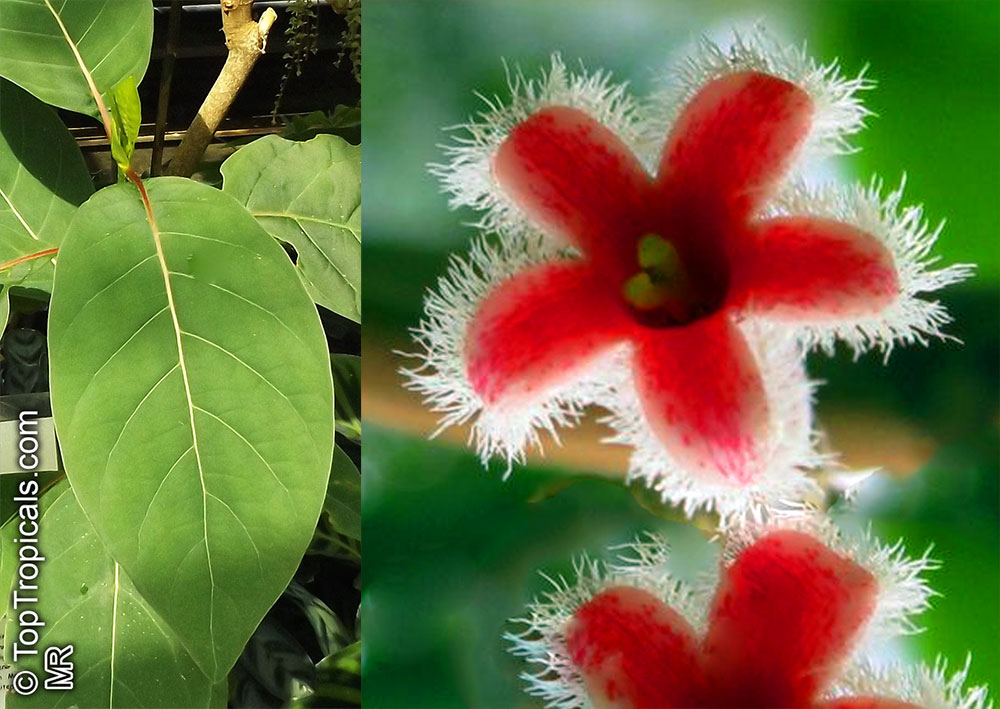
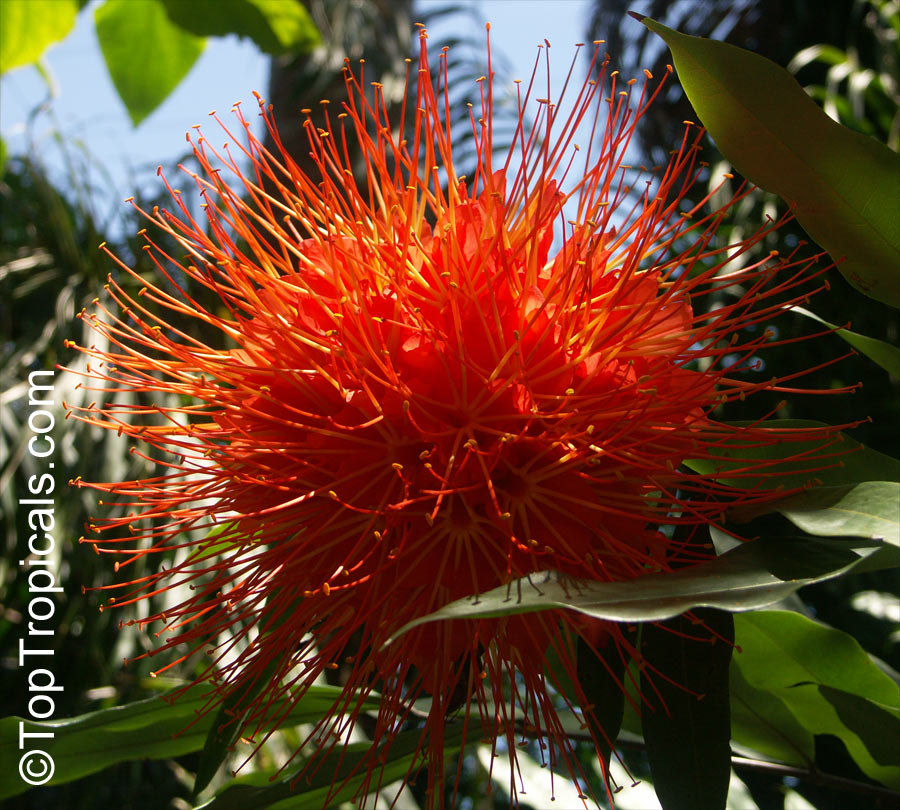
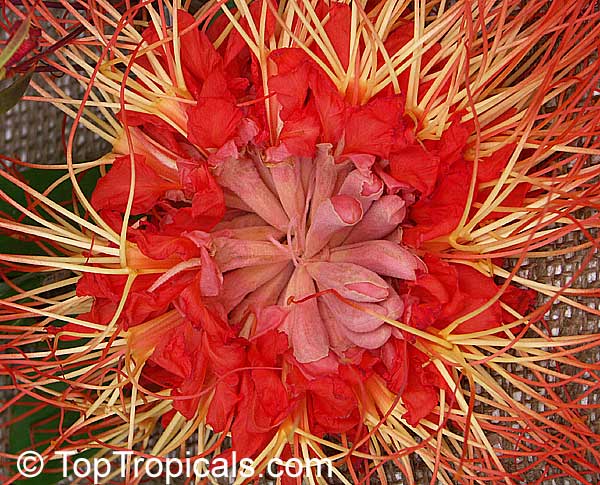
The stunning beauty of Brownea
by Mark Hooten, the Garden Doc
Recently, while admiring the stunning beauty of a large flowering Brownea planted on the grounds here at Top Tropicals, I began wondering why these most splendid of tropical flowering trees remain so rare and obscure in South Florida. Much of our local climate seems perfectly conducive to their cultivation...
CONTINUE READING >>

Date: 23 Jan 2020
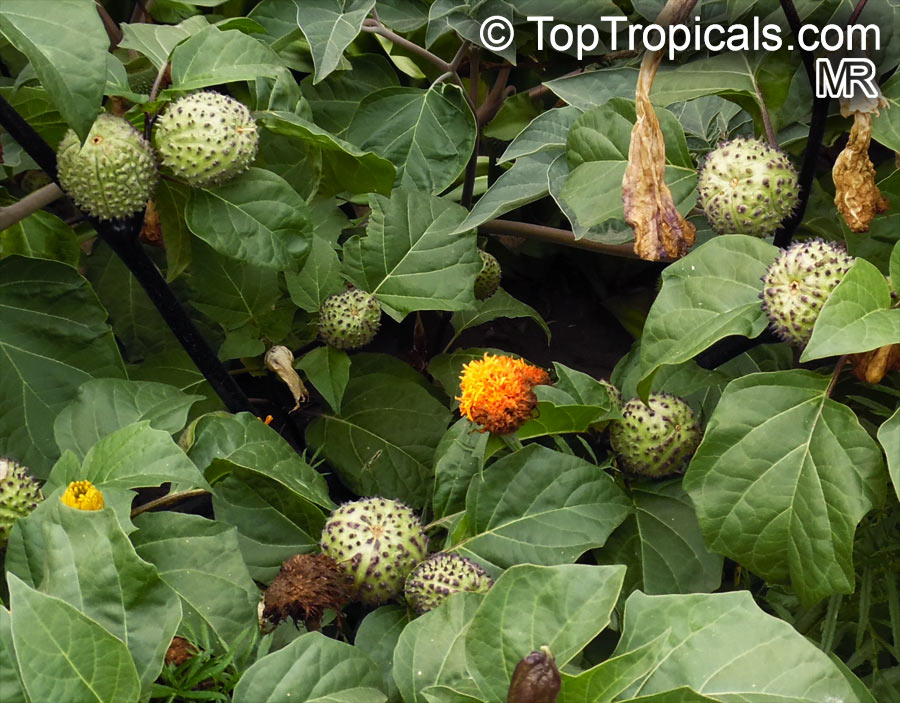
Datura: a fragrant treat for tropical or indoor garden
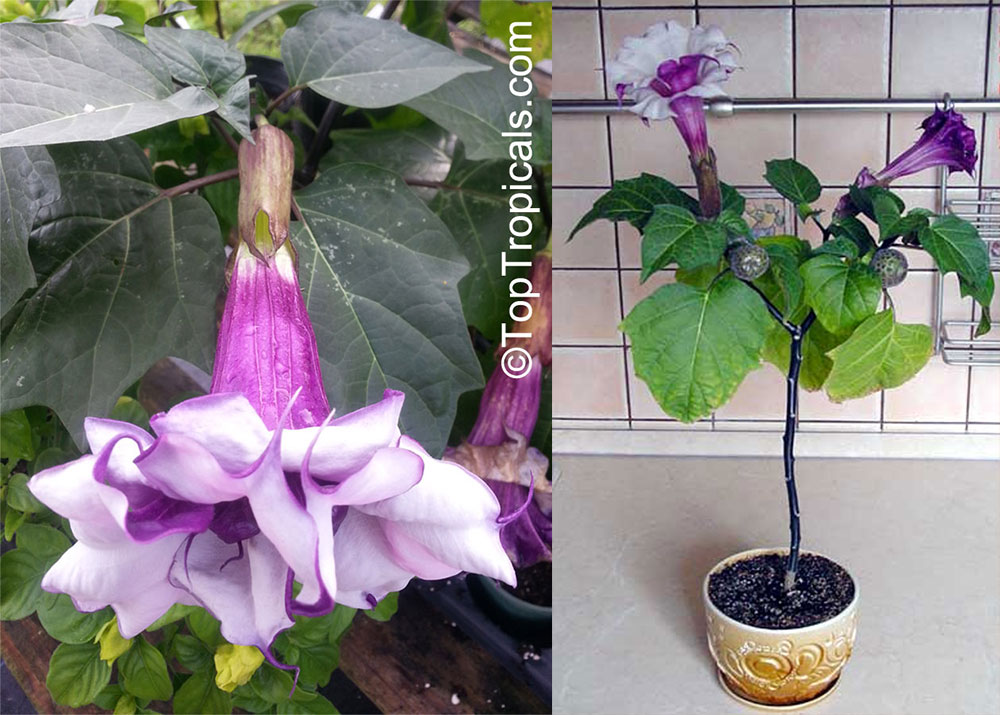
Q: A few years ago I purchased Datura from you and it was doing well. As a matter of fact I took cuttings and propagated new plants. Now they have markings on the leaves and I do not know what it is. Any remedy?
A: Generally, Datura is a bi-annual plant, unlike its close
relative perennial Brugmansia that grows for many years. Which means, Datura is
short-lived (2-3 years maximum for the same plant) although it seeds easily and
is a very fast grower, reaching from seedling to 4-5 ft size in a matter of
couple months.
At this time of the year, markings on the leaves may be a result of normal
aging (the plant may already exhausted its natural cycle) in combination with
a cool weather that affects the leaves and overall look.
Here at Top Tropicals we especially love this plant and keep up with
propagating new plants every few months. Propagation may be by means of seeds or
cuttings, but seeds are always better for stronger, longer-lasting Datura
specimens. A lot of times you will notice little baby seedlings around the Mother
plant, even if you think all seeds has been harvested.
Just continue growing younger plants from seeds, and Datura will always be
with you in your garden to bring you joy of showy scented flowers. It makes a
great houseplant too!

Date: 19 Jan 2020
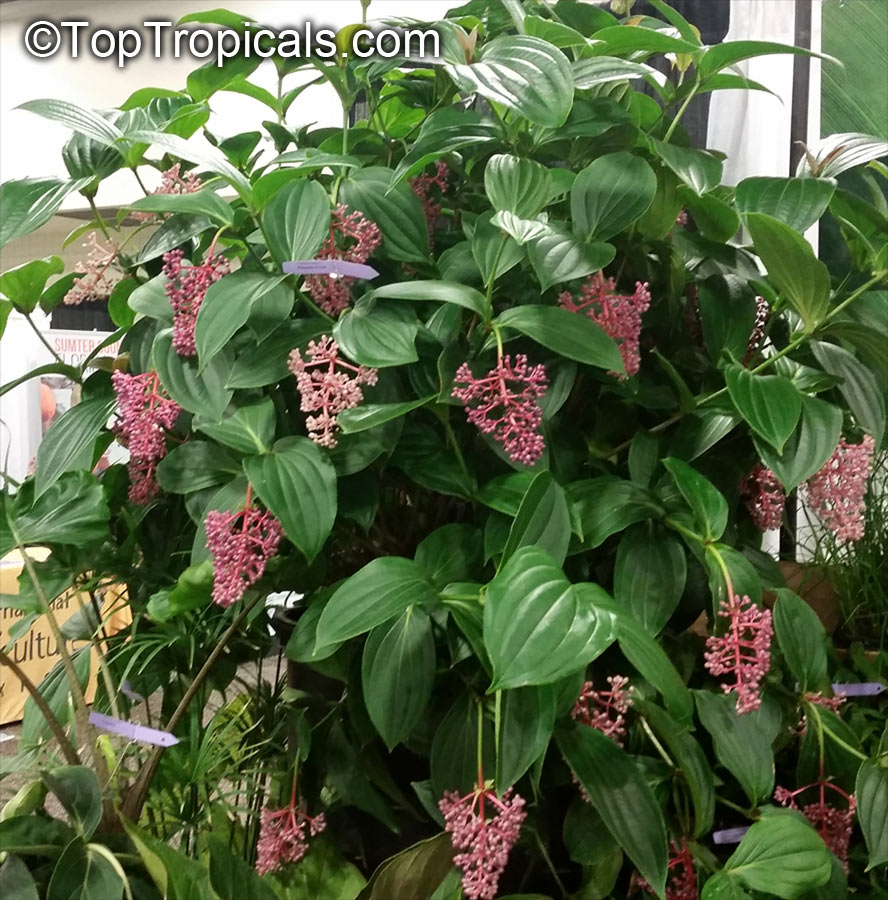
The Rolls Royce of House Plants: Medinilla
by Onika Amell, tropical plant expert
...This is an extremely showy tropical plant with bunches of bright pink
blooms that will flower for months on end. What a stunning and colorful
plant! Showy should be its middle name. It is one of those plants that truly
evokes feelings of elegance and drama...
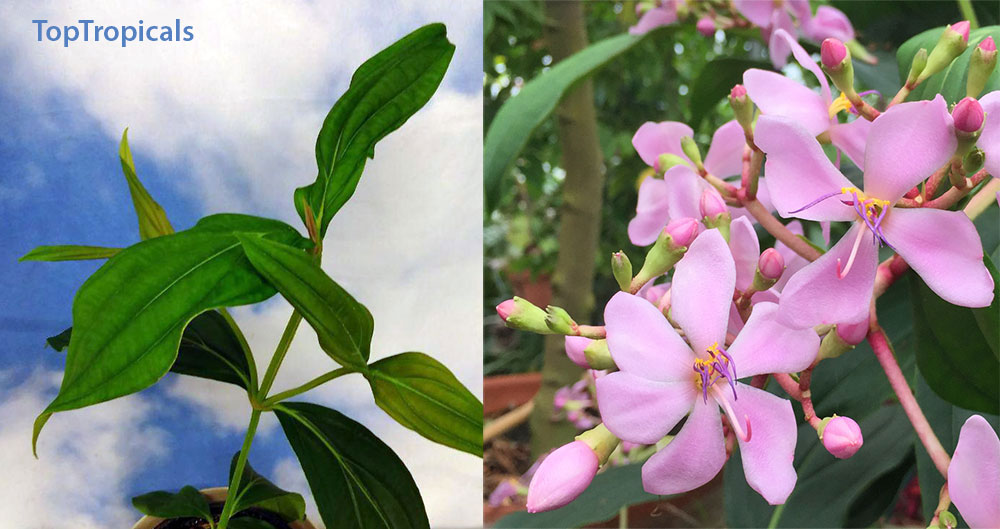
Medinilla apoensis - Philippine Pink is particularly rare and hard to find
in the trade. The flowers on this particular Medinilla is not hidden
underneath so it is not necessary to grow it in a hanging basket like so many other
species. It is a tall upright grower that will flower throughout the summer.
For all you obsessed collectors out there, do not hesitate. This Medinilla is
not in many US collections. The plants we have right now are at least 1-1.5
feet tall and are blooming size. Wink wink ;)