Date: 4 Jun 2020
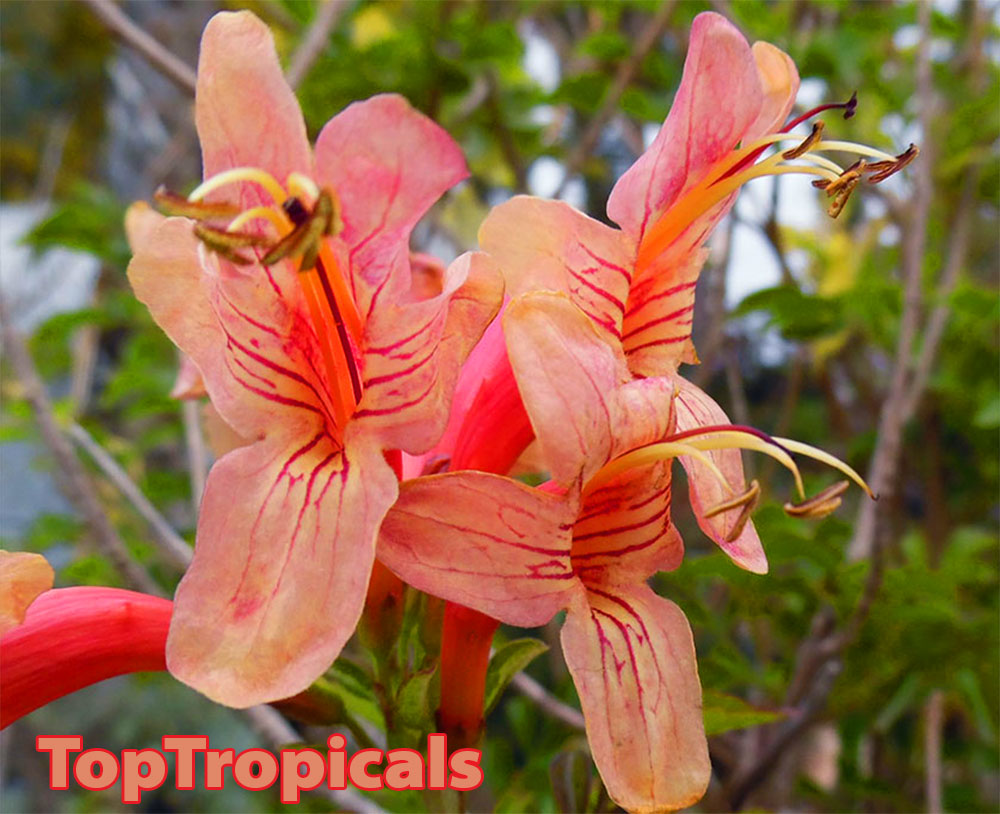
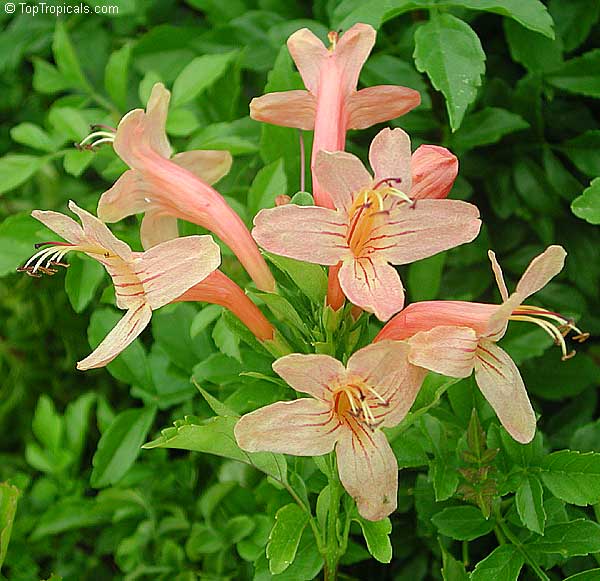
Plant of the Month: Tecomaria capensis Apricot
Stevie's Pick: what's in bloom?
Today we are starting a new column about the most spectacular specials that are in bloom or in fruit today. Our exotic plant grower Steven Gowdy will spotlight the most interesting plants he discovers and recommends today while working in TopTropicals greenhouses.
Summer is in full bloom and everyone is wanting dirt under there nails
after being quarantined for two months! Enjoy warm tropical breezes with
Apricot flowers of this showy African Tecomaria in your garden.
Tecomas and Tecomarias make a wonderful splash of color in any garden,
and apricot is no exception. Tecomaria Apricot has pretty unusual color of
flowers, ranging from bright apricot color to light-salmon. Ever blooming in
warmer climates, it can grow 3-4 feet high and a whopping 4-5 feet wide. In
addition to its beautiful flowers, this plant has many medicinal benefits. An
easy fast growing addition to any landscape, it is a great hummingbird and
butterfly attractor. It is pretty cold hardy and can tolerate light frost which
is a great benefit for gardeners living in subtropical climates with cooler
winters.

Date: 23 May 2020
Perfumed Milky Way Tree
by Onika Amell, tropical plant expert
What is a garden without fragrance? Unknown to so many gardeners because
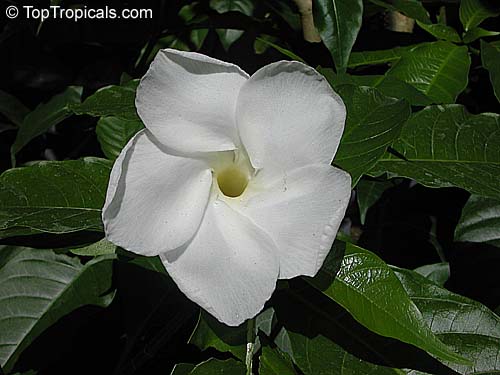
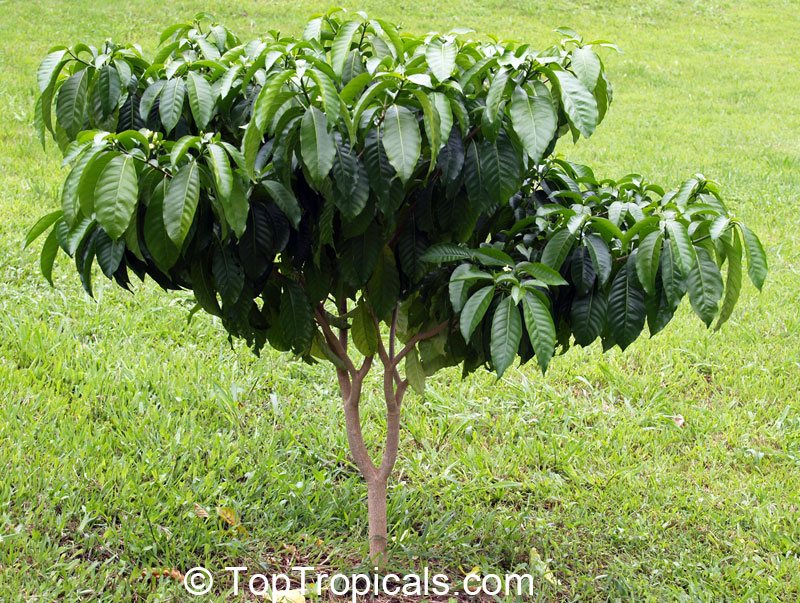
of its rarity, the Milky Way tree or Stemmadenia litoralis is one of those trees that are simply
unforgettable. This is without a doubt one of the most fragrant flowering trees you can
plant in the tropics or warm greenhouse conditions...
When this tree is in full bloom, masses of large, white, tornado-shaped
flowers cover the branches. The fragrance is something to behold… soft,
vanilla sweet and musky. Leaves are dark green and sparkly and a striking contrast
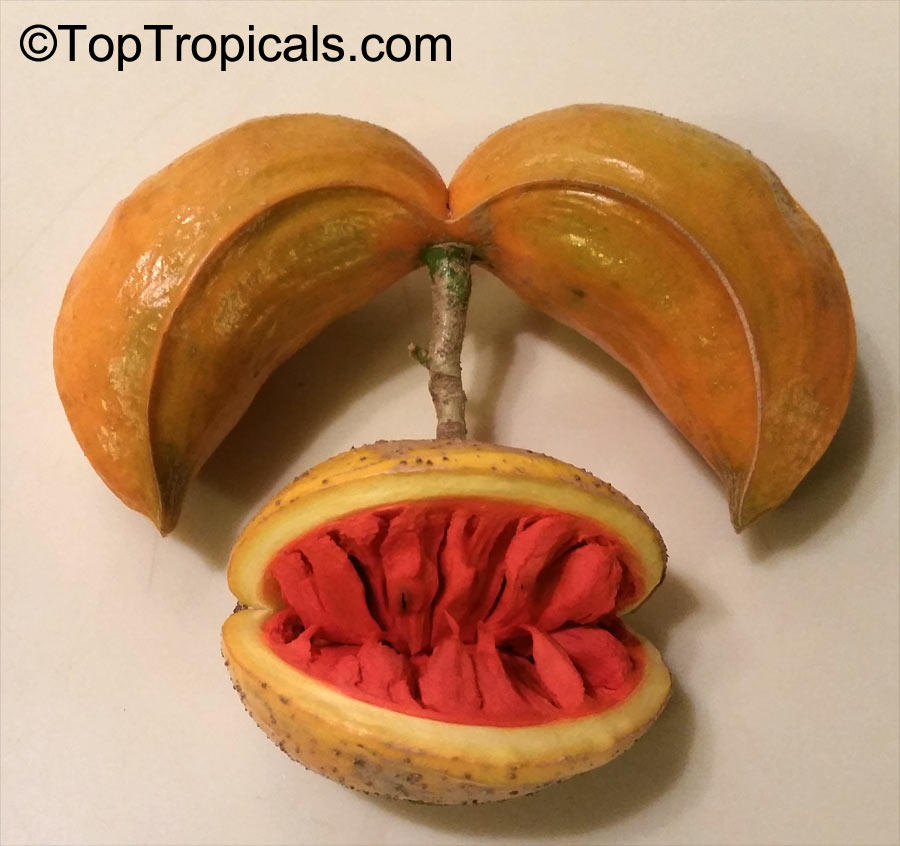
against the large, white flowers. Even the seed pods are pretty,
double-horned and orange-gold, born in pairs and hanging from the tree. This tree is so
ornamental!..
CONTINUE READING >>
Date: 20 May 2020
How to prevent Jasmine flower drop
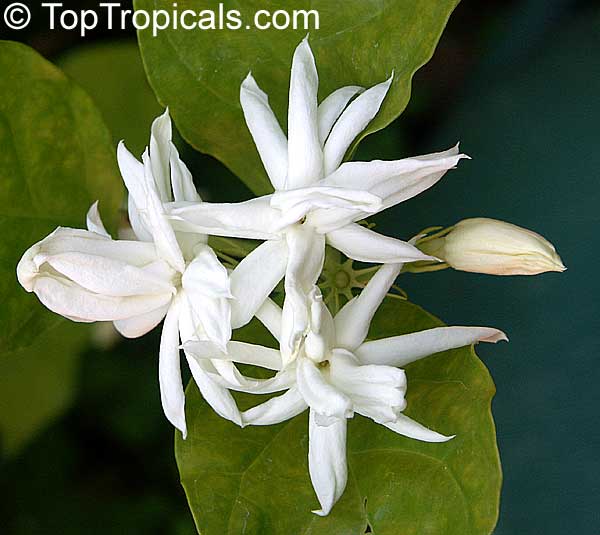
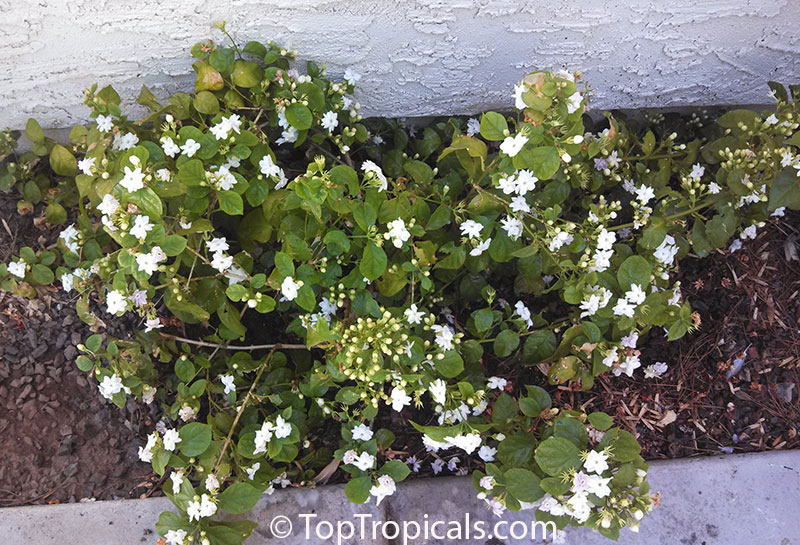
Q: My jasmine buds turn purple to brown and drop before it blooms. What should I do to get the jasmines to bloom fully. Appreciate your help & suggestions.
A: At this time of the year in Florida, jasmines may drop flowers because of the sudden hot weather. The plants
didn't have a chance yet to change their metabolism to summer type. The high
temperatures promoted early bloom, but the plant is not strong enough to
support the flowers. It needs extra food. To improve flower quality and reduce
bud drop, we recommend these supplements:
SUNSHINE Pikake - Fragrant Plant Booster
Sunshine Honey
and Sunshine Superfood
Date: 8 Apr 2020
Gardening has hooked another fan!
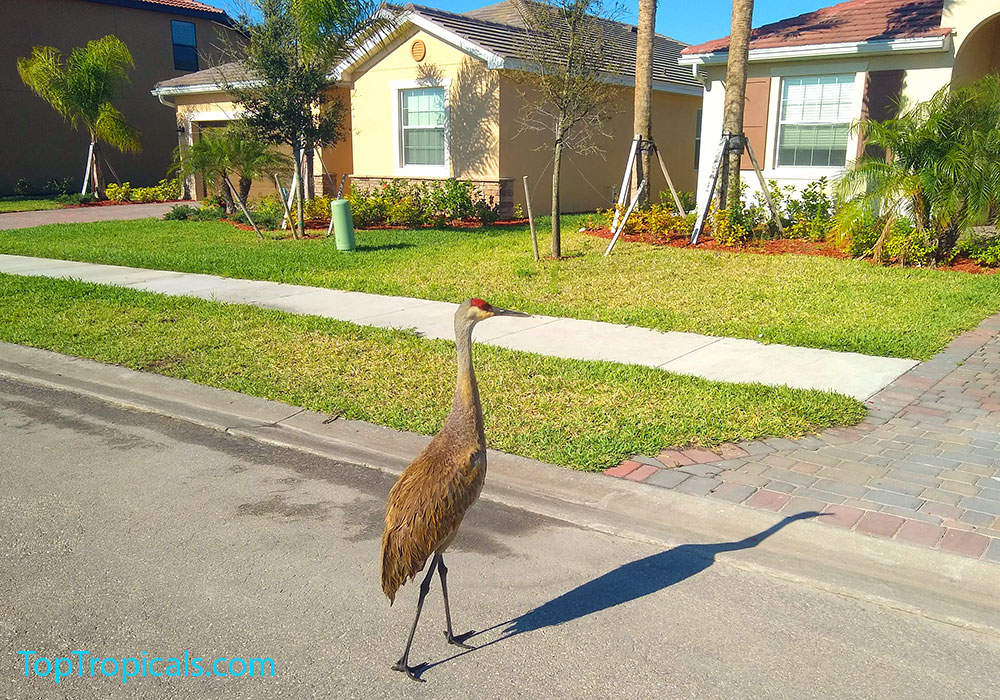
Over the last few weeks, we've been discussing using this time to engage
in the activities that make you happy, to do more of what you love. Of
course, for all of us at Top Tropicals, we have been singing the praises of
gardening and tropical plants for years and sharing the love with any friends and
neighbors who have expressed an interest in our activity of choice.
Do we have an affect on some people? Do we encourage them to try their hand
at gardening and experience the wonder of plants? Yesterday, we just saw it
with our own eyes. Our neighbor, to whom we once gave an Ylang Ylang tree, has consistently and politely resisted a suggestion
to try gardening herself and put some new and interesting plants in an
otherwise traditionally landscaped builders' home. Even her husband emphatically
stated that he was never going to put plants in, let alone take existing plain
boring stuff out!
What a pleasant surprise when we saw them both and their 2 young children
digging in the garden together yesterday. They replaced a whole section of
generic stock plants provided by the builder and filled the area in with loads
of colorful flowers and even topped it off with a healthy dose of new mulch!
We couldn't believe our eyes and was so happy to see the gardening "bug" made
yet another friend!
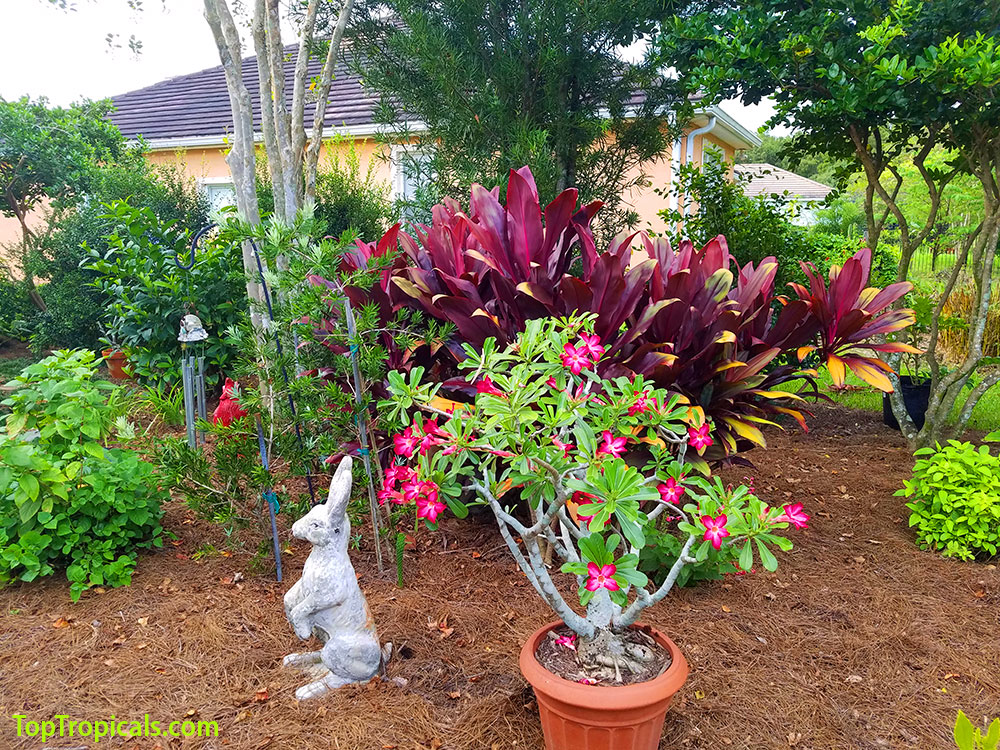
We hope our Dream Cart Offer will help someone make their dreams come true, and this forced vacation time will be well spent on their home and garden!
Save 20% on ANY 20 Dream Plants in your cart!
Date: 26 Mar 2020
Nature's farmacy: Coronavirus cure discovery? Cinchona - Fever Tree
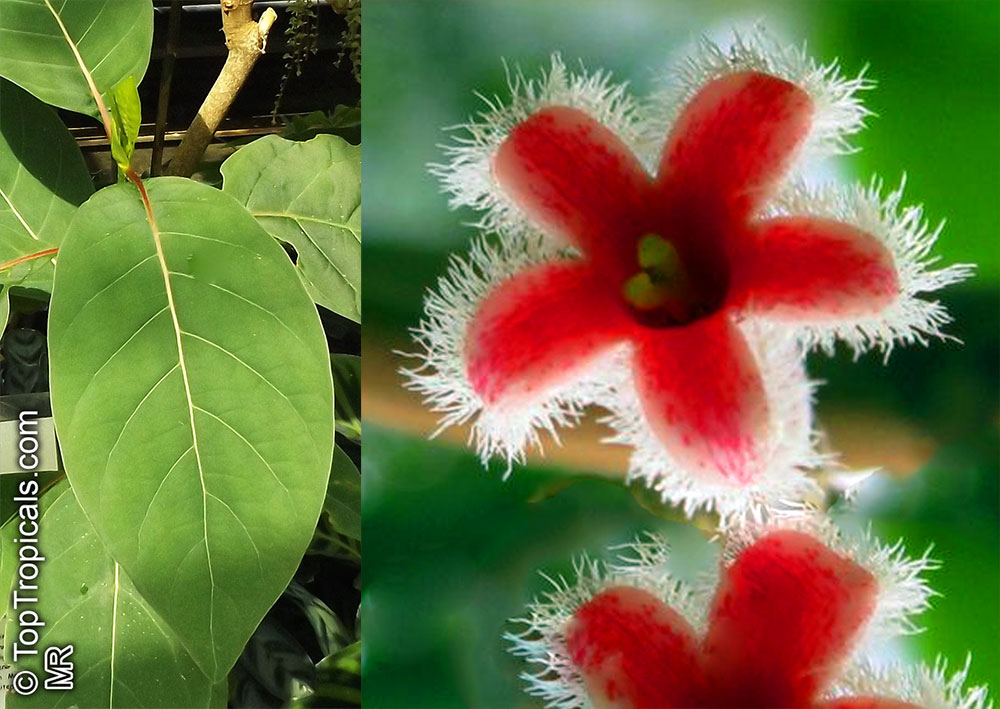
by Alex Butova
As the world's health experts race to find a cure for the novel
coronavirus, this drug have jumped to their attention - Chloroquine. It contains
alkaloid Quinine, extracted from the bark of the Cinchona, or Fever Tree.
We receive many questions from our customers if we carry this plant.
Although we do not offer it at the moment, we definitely can tell you more about
this interesting medicinal plant!
If you like gin and tonic, you will be familiar with the bitter taste of
the tonic which is provided by quinine. While it is now mainly used
to add a flavor to our favorite tipple, the Cinchona tree bark once held a
place as one of the most important drugs in history.
Cinchona was discovered in the 1630s as a treatment for malaria and, for
350 years, was the only effective cure known in Europe until synthetic
replacements were developed in the 1940s. Malaria remains today one of the deadliest
diseases known throughout the tropics, but up until the 20th century the
disease was prevalent throughout Europe, including Britain.
The Cinchona tree is native to the Eastern slopes of the Andes with a range across Ecuador, Peru and Bolivia. Once the bark became an established medicine, particularly in the 18th and 19th centuries, demand started to outstrip supply. Threats of overharvesting and the desire to control the source of this precious bark drove various competing empires to source this plant for themselves. Understandably, the Spanish, who were in control of this area of South America, actively tried to prevent this, but failed to establish successful plantations themselves. A race to source and cultivate Cinchona ensued, and eventually both the Dutch, in Indonesia, and the British, in India, founded government controlled plantations for the mass production of quinine.
Chloroquine appears to have "broad-spectrum antiviral properties" and effects on immune response, and to be effective against severe acute respiratory syndrome... As the rest of the world, we are looking forward to the research results and hope the cure will be found soon!
In the meantime, let's just have more Gin-n-Tonic!