Garden Blog - Top Tropicals

Date: 16 Feb 2026

Yes, you can grow a mango tree on your patio - here is how to do it right
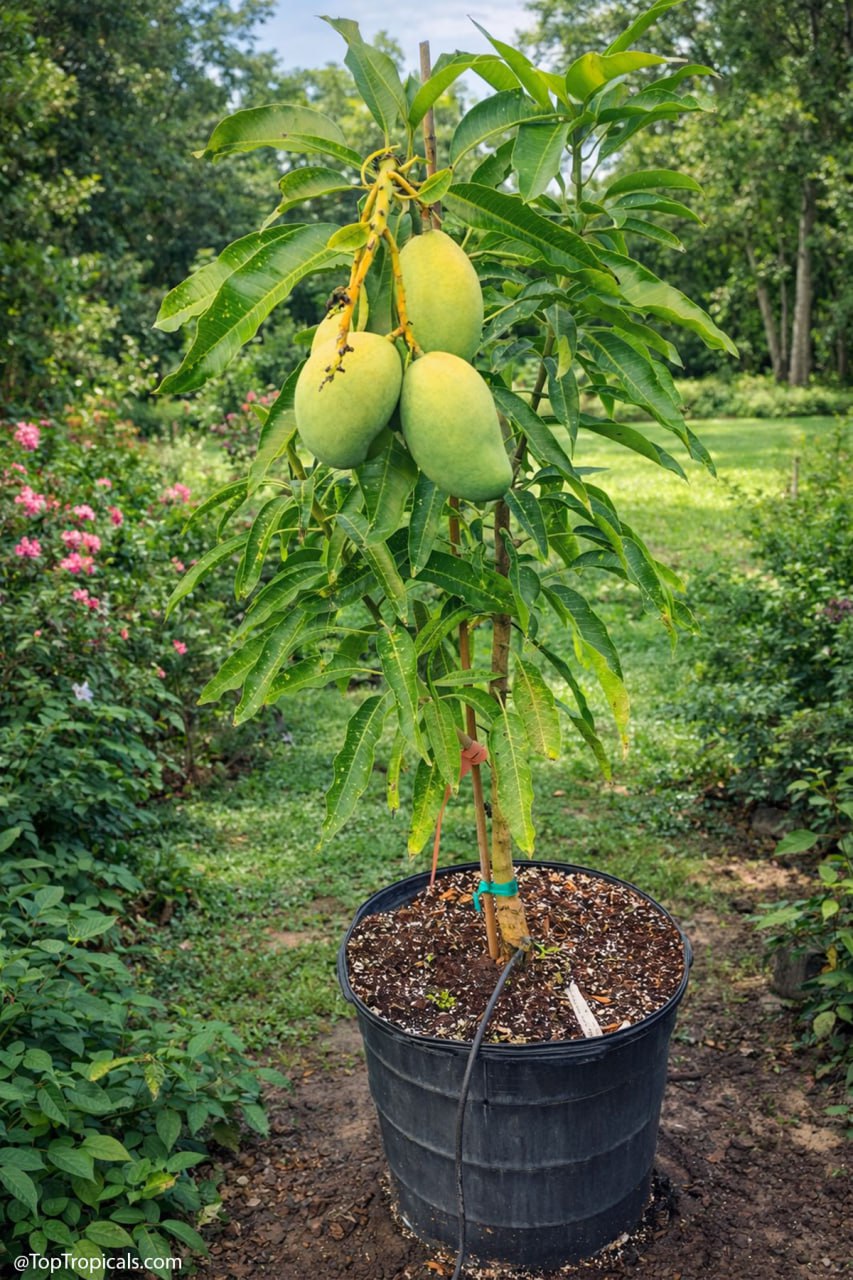
Mango fruiting in container

Mango fruiting in container

🥭 Yes, you can grow a container mango tree on your patio - here is how to do it right


Think you need a backyard orchard to grow mangoes? You don't. Mango trees grow very well in containers. Compact varieties, often called condo mangoes, stay naturally smaller and are well suited for pots, patios, and small yards. We grow and ship mango trees nationwide and have seen which varieties perform best in containers.

Growing mangoes in pots is also practical in cooler climates. The tree can be moved to protection during cold weather while still producing real fruit. Here is how to do it right.

🥭 Pick the right condo mango tree variety


Choose condo or semi-dwarf mango varieties that stay smaller and respond well to pruning. These mango trees usually stay 6 to 10 feet tall in containers with light pruning. Fruit size is full-size, just fewer than on large trees.

Good mango choices for pots include:
  • · Cogshall - compact and productive
  • · Pickering - naturally small and reliable
  • · Carrie - manageable size, great flavor
  • · Ice Cream - slow growing, narrow canopy
  • · Julie - classic Caribbean type
  • · more condo varieties...


🥭 Choose the right pot


Start small. Young mango trees do best in a 5- to 7-gallon pot. Oversized containers too early often cause overwatering and root issues.

Increase size gradually:
First pot: 5-7 gallons
Next size: 10-15 gallons
Mature container: 20-25 gallons

The pot must drain well. Mango roots dislike wet soil. Add holes if needed. Plastic, ceramic, and fabric pots all work.
  • 🥭 Use fast-draining soil


    Mango trees need air around their roots.
    Use a loose, fast-draining mix, such as Abundance Professional Soilless Mix. Improve drainage with perlite, pine bark, or coarse sand. Avoid heavy or water-holding soils. Drainage matters more than fancy ingredients.
  • 🥭 Water carefully


    Mango trees prefer a wet-dry cycle.
    Water deeply, then allow the top few inches of soil to dry before watering again. Always check with your finger first.
    In warm weather, water once or twice a week. In winter, much less. Overwatering is the most common container mistake.
  • 🥭 Give plenty of sun


    Mango trees love sun and heat.
    Place the pot in full sun with at least 8 hours daily. More sun improves growth and flowering.
    If overwintered indoors, use the brightest window possible. Grow lights help, but outdoor sun is best when weather allows.
  • 🥭 Fertilize lightly but consistently


    Potted mango trees benefit from regular feeding during active growth.
    Use a balanced mango or fruit tree fertilizer such as Sunshine Mango Tango (safe to use with every watering, year-around). Controlled-release fertilizer Green Magic (every 6 months) work well too. Avoid excess feeding, which promotes leaves over flowers.
    If leaves pale, check watering first, then nutrition.
  • 🥭 Prune to stay compact


    Pruning is essential for mangoes in pots.
    Light tipping and trimming control size, encourage branching, and increase flowering points. Keep the canopy open and balanced. Watch how simple tipping works in real life: .
    Avoid heavy pruning before flowering. Most pruning is best right after harvest.
  • 🥭 Protect from cold


    Mango trees are tropical and cold-sensitive.
    When temperatures drop below 40F, move the pot to protection or indoors. Young trees are especially vulnerable.
    During winter, reduce watering and stop fertilizing. Growth slows and the tree rests.
    When warm weather returns, reintroduce the tree to sun gradually to prevent leaf burn.
  • 🥭 Final thoughts


    Growing a mango tree in a pot is practical and rewarding. With the right variety, good drainage, full sun, and careful watering, a potted mango can thrive and fruit for years, even in small spaces. Ready to start? Choose a compact mango variety.


🛒 Discover Condo Mango

📚 Learn more:
#Food_Forest #How_to #Discover #Mango

Plant Facts

Mangifera indica
Mango
USDA Zone: 9-11
Large tree taller than 20 ftSmall tree 10-20 ftFull sunModerate waterYellow, orange flowersPink flowersEdible plantSeaside, salt tolerant plant
🟢 Join 👉 TopTropicals

Date: 31 Dec 2016

New Video: SUNSHINE Plant Boosters

TT Laboratories presents: SUNSHINE In A Bottle!

Check out this video: SUNSHINE In A Bottle


SUNSHINE is a new generation of a plant booster, formulated specifically for tropical plants. SUNSHINE intention and direction is towards the general health of the plant and boosting its immune system; helping plant to recover from stress, increase flower and fruit production, improve cold hardiness, disease resistance, seed germination and much more!
TTLaboratories is offering the following products:
- SUNSHINE E - for general applications, stress relief and growth boosting
- SUNSHINE T (Thermo) - for better cold tolerance
- SUNSHINE BC - for bonsai and caudex
- SUNSHINE S - for seeds germination
- SUNSHINE H - for house plants
All of the SUNSHINE products come in an easy to use dropper for small to large application use.

Get some SUNSHINE!...

Stay updated with TopTropicals Videos by subscribing to our channel at YouTube.com/TopTropicals and get our latest video news of what's fruiting and blooming!

Date: 18 Nov 2016

Happy Holiday Season!

WINTER COMING TIPS. As the weather gets cooler, many of you move your potted tropical plants indoors. Please remember:

1. Lower air humidity, lower light and short day may cause some LEAF DROP. This is normal for seasonal environment change.

2. REDICE WATERING as winter coming. Under lower light and in cooler temperature, plants won't need much water; some plants go dormant and only need minimum water. Excess water may damage roots and kill a plant in winter.

3. NO FERTILIZER in winter. Active growth stops. Let the plant to go into dormancy or simply have a rest.

4. Watch for INSECTS by inspecting leaves regularly. They may attack plants more likely in the indoor conditions.

5. Apply SUNSHINE boosters to protect your plants from cold by boosting their immune system, vogor and cold tolerance. STAY WARM!

20% off sale ending soon! Check out our large selection of plants that are easily grown in containers. This week only, 20% off!

Date: 19 Aug 2016

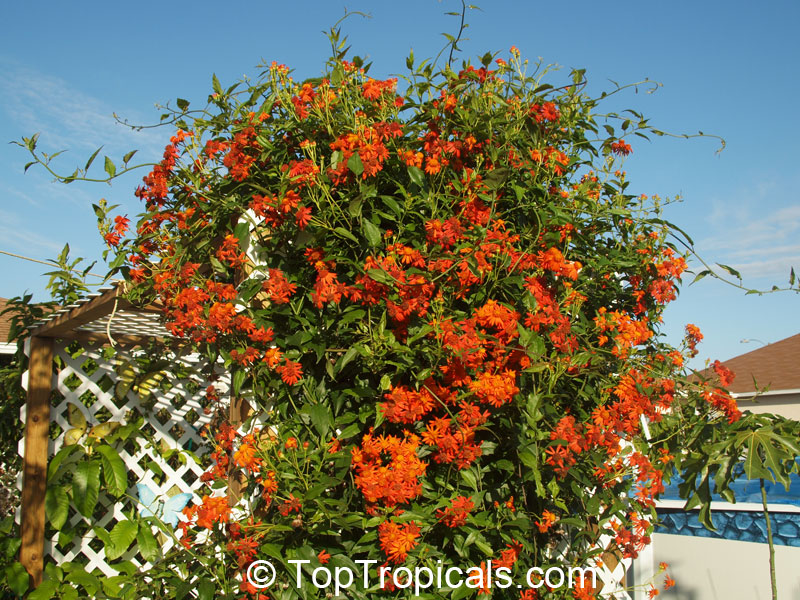
Growing Mexican Flame Vine as an annual

Q: While down in Fort Myers a few years ago, I saw this plant - Senecio confusus or Mexican Flame Vine, growing over chain-link fencing. At any rate, I fell in love with the plant then and there, only to later see it up here in Wisconsin, albeit down in Madison at The Centennial House, a noted botanical garden. This has led me to believe it may be possible to use this plant up here in the north as an annual. I could really use the orange coloration in mixed containers, etc. What I would like to try to find out is, will it grow and flower sufficiently within one of our growing seasons up here to make the choice worthwhile? Again, seeing it at Centennial House at least leads me to believe it may be possible. China where the flower was admired for its beauty and believed to have medicinal properties that promoted good health and long life. The Japanese Emperor was so smitten with the kiku flower that he adopted it as his personal crest, and it remains the insignia of the imperial family today. The art of growing and displaying Kiku for the Emperor's garden represented by amazing Imperial styles: Ozukuri, Ogiku, Kengai... Imagine growing out of one stem a single chrysanthemum trained to produce hundreds of simultaneous blossoms in a massive, dome-shaped array.

A: Mexican Flame vine is a good candidate to be grown as annual, thanks to these features:
- extremely fast growing
- it flowers in small size and young age
- long flowering period (2-3 months depending on conditions), throughout early Spring into Summer, sometimes it has a second blooming season by end of Summer.
- we keep large mature plants in stock year round, so you can have blooming size specimen as early as spring once your temperatures reach 65F so the plant will feel comfortable and develop quickly.
- easy to propagate - more plants can be made for next year season.

In winter, a potted plant can be cut back and kept in semi-dormant state indoors - garage, enclosed patio, with temperatures around 50F and above. Some gardeners from North prefer to plant a tropical specimen with a pot into the ground (make sure to add extra drainage holes), and when winter comes, it makes it easier to dig it out and save till warm season.

Date: 12 Aug 2016

Grow lights overview

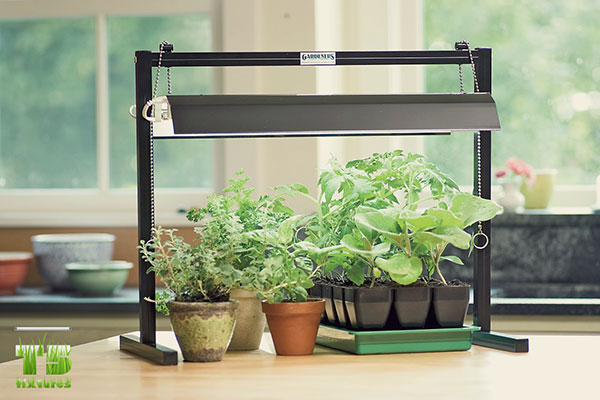
By Benjamin Thorton. If you are an avid gardener living in a place where there are distinct seasons, then you probably know the feeling of dread that sets in when summer ends, because that means that soon you will have to harvest what has grown and put gardening on hold until next spring. However, there is a way how you can continue gardening even when it is cold and snowy outside, and that is to use grow lights to create an indoors garden. So if you want to find out more about what are grow lights and how to use them, then keep on reading...

For more information on grow lights, visit T5fixtures.com, a website that provides all the latest information on indoors gardening and lighting, that you can use to facilitate plant growth. Have this information as a guide to growing healthy, big-yielding plants without having to leave your house.

This week only, 20% OFF on all plants well suitable for indoor culture. Most tropical plants can be grown in containers and many of them indoors, but this selection is the best for beginners, check them out!