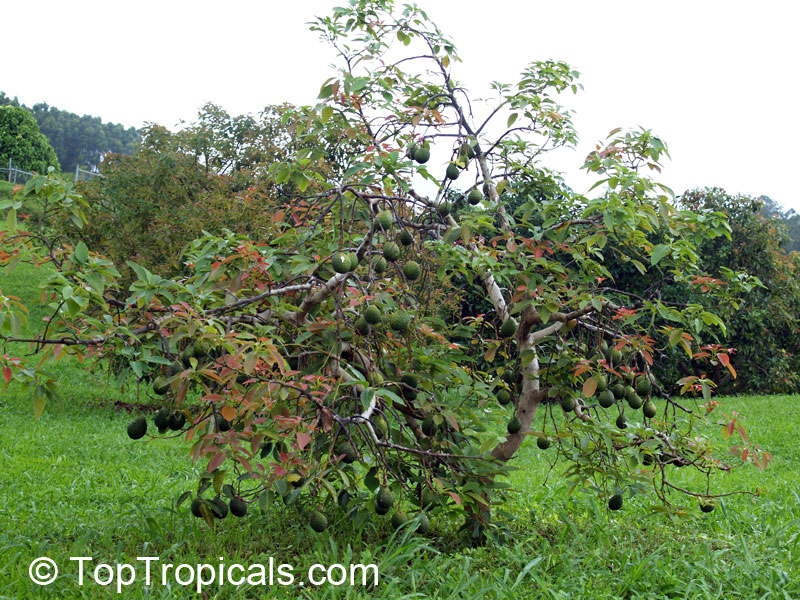
7 secrets of a Happy Avocado Tree
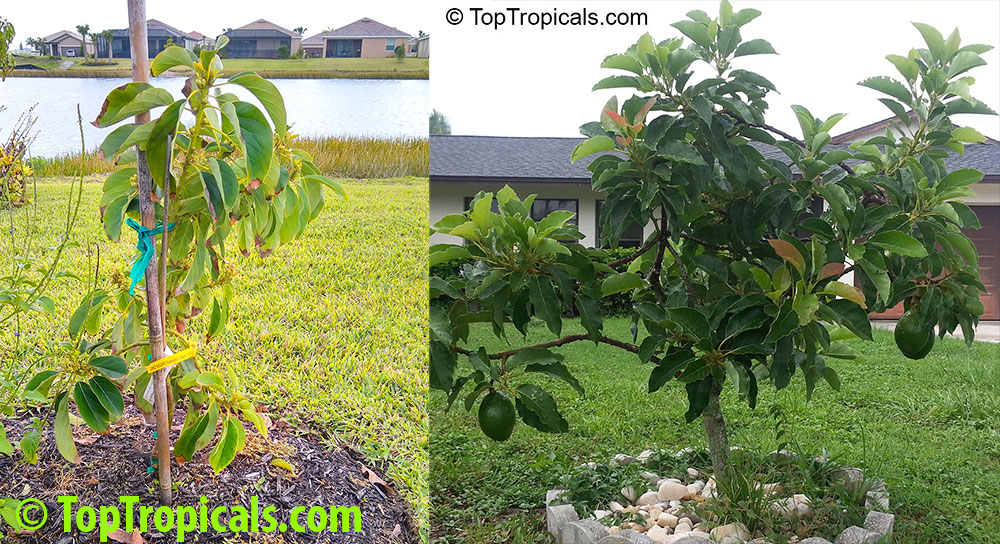
Q: I purchased an avocado tree from local garden centers three
times but every time it dies on me. My neighbor has a nice tree in his yard and
it grows beautifuly. I just purchased one online from you and I need to know
what I was doing wrong? Are there any secrets how to make an Avocado tree
happy? I have a big garden and several mango trees, but no luck with
Avocado...
A: Avocado tree is famous for being such a pain to establish. But once it
starts growing, it's growing! We will share a few simple tricks how to make
it right.
1. Plant high and provide good drainage. Wet feet is number one
reason for failing an avocado tree. It doesn't like wet soil and won't
tolerate soggy conditions. Plant it in the highest spot of your yard and slightly on
a "hill" (3-4"higher than the surrounding ground).
DO NOT plant Avocado tree in low spots or wet spots of your yard. Save
those spots for Cannas or Black Sapote or even a Mango if you want a fruit tree there.
2. Use quality soil. Use only well-drained soil with high content of
organic matter. You may add compost to existing sandy soil, or add some professional potting mix that contains pine bark and perlite. Remove
rocks from the hole if you see any while digging. Dig a big hole and fill it
with a good soil; compact the soil in the hole very well before setting the
root ball. Reminder: plant the tree high!
3. Water regularly. After planting an Avocado tree in a nice high
spot with a good drainage, start watering it... daily! Avocado likes water,
although it doesn't like wet feet! Once you figure out this combination, you've
got the recipe of success. Water by hand daily for the first week after
planting, then twice a week for couple weeks, then once you notice new growth -
you may rely on sprinklers, but keep watching the tree and don't let the soil
over-dry. It must be slightly moist, but not soggy.
4. Fertilize. For such finicky tree, we suggest mild formulas of
fertilizers. Dry fertilizers may burn roots, especially of a young tree. Even
smart-release granulated fertilizers should be used very carefully. The best
way to feed your young avocado tree - get a complete set of Sunshine Boosters Pro system. It has all necessary elements for all
stages of plant development and never burns the roots. Sunshine Boosters Pro can
be used with every watering - no need to guess how much and when. Besides,
it is a natural fertilizer based on amino acids - exactly what you want to use
on your fruit trees and other edibles!
5. Boost immune system of the tree. Apply Sunshine Epi plant hormone every 2 weeks as a foliar spray to boost
immune system and metabolism of the tree and protect it from diseases. Epi makes
plants (especially young plants) grow twice faster! It also enhances effect
of fertilizers by increasing plant metabolism.
6. Do not prune until you see significant growth. The tree is small
and can use as many leaves and branches as possible for photosynthesis and
healthy metabolism. We suggest to avoid pruning for at least the first year. On
the second year your tree most likely will be covered with flowers (assuming
you followed fertilizer program). Let it go through the blooming stage and
setting fruit; prune in Fall after fruiting is over.
7. Keep number of fruit to minimum for the first crop. Don't let the
small tree exhaust itself. Keep just 2-3 fruit to develop. The next year, no
need to control fruit quantity, the tree will develop as many as it can
support.
P.S. If you got the tree from a mail-order, remember to establish it
in a pot before planting in the ground; move gradually from shade to sun.
Follow planting instructions.
Learn more
about Sunshine Nutrition System - a Natural solution for your garden.