Garden Blog - Top Tropicals

Date: 27 Feb 2026

Grilled star fruit slices: quick-n-fun exotic recipes
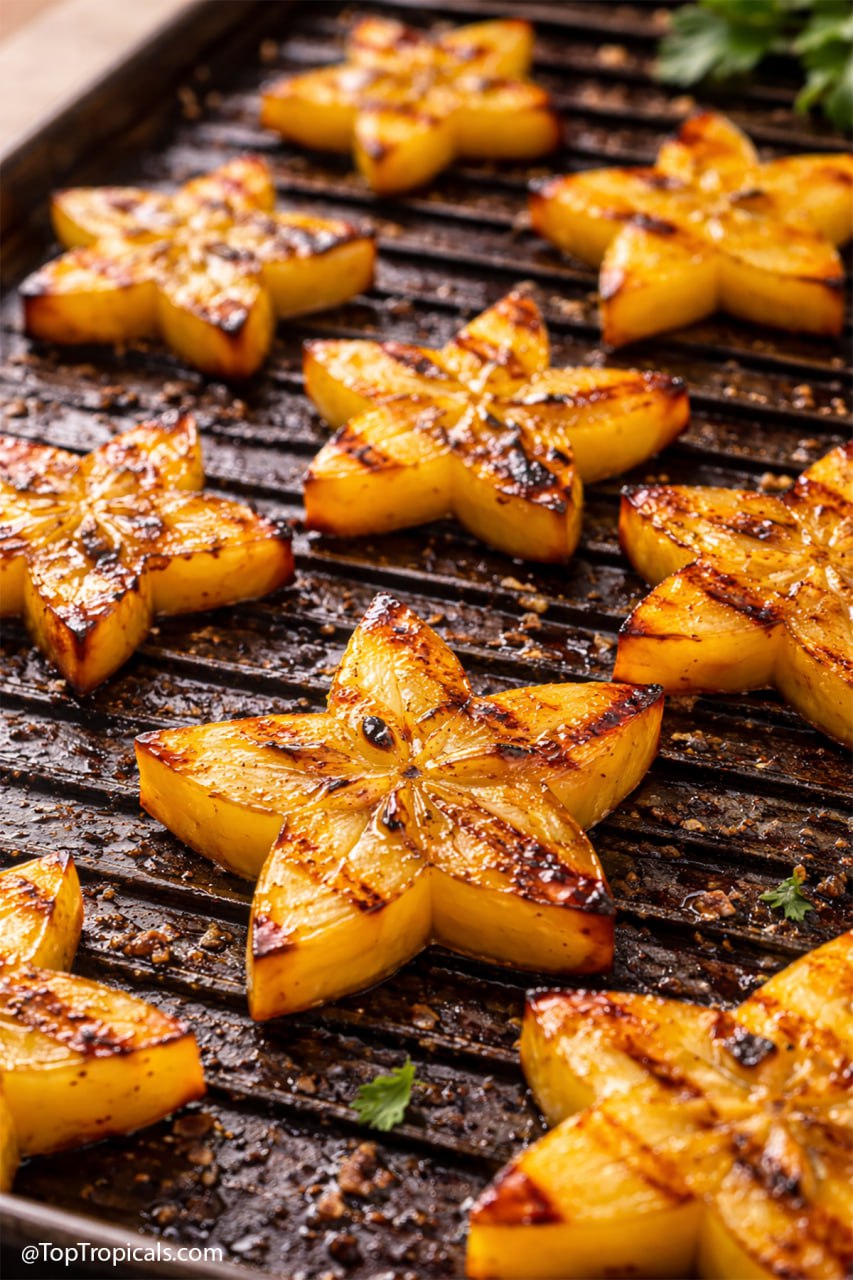
Grilled star fruit slices on grill pan
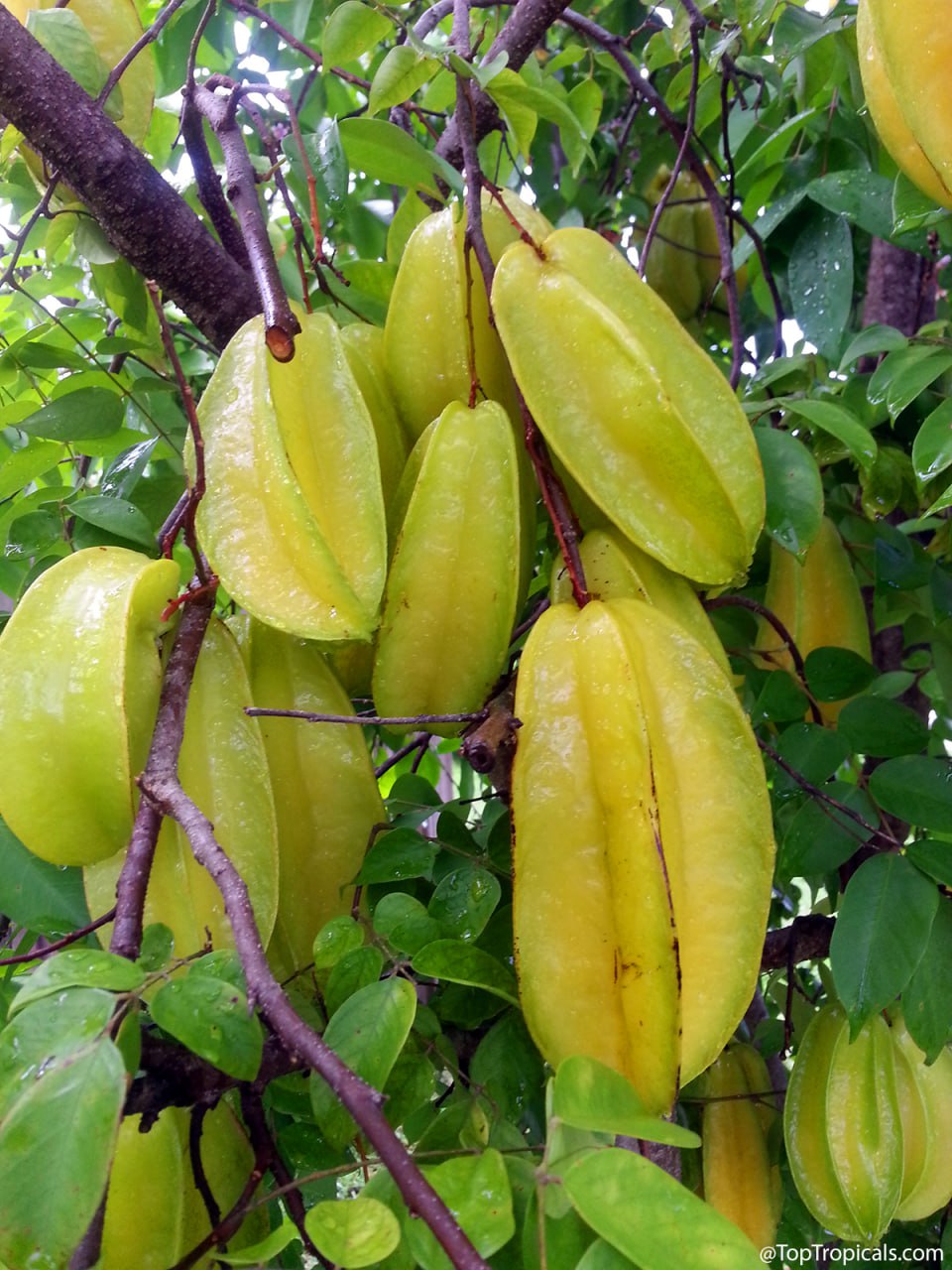
Grilled star fruit slices on grill pan

Averrhoa carambola - Star Fruit Carambola Tree

Averrhoa carambola - Star Fruit Carambola Tree

🍴 Grilled star fruit slices: quick-n-fun exotic recipes


Grilled Star Fruit Slices

Ingredients

  • 1 ripe star fruit (carambola)
  • 1 teaspoon honey
  • 1 teaspoon butter or coconut oil

Instructions

  1. Slice the star fruit crosswise into star-shaped pieces.
  2. Heat a grill pan or skillet and lightly grease with butter or coconut oil.
  3. Place the slices on the hot surface and grill briefly on each side.
  4. Drizzle lightly with honey as the edges begin to caramelize.
  5. Serve warm as a tropical side dish or dessert topping.


🌿 About the plant:


Carambola, or Star Fruit, is a small tropical tree with glossy leaves and crisp, juicy fruit that slices into perfect stars.

🏡 In the garden:


Thrives in zones 9-11. Likes sun, regular water, and protection from strong winds. Dwarf varieties do well in large containers.

🛒 Plant Star Fruit Carambola Tree

📚 Learn more:

Plant Facts

Averrhoa carambola
Carambola, Starfruit, Five-finger, Balimbing
USDA Zone: 9-11
Small tree 10-20 ftSemi-shadeFull sunRegular waterEdible plantSubtropical plant. Mature plant cold hardy at least to 30s F for a short time
  • Averrhoa carambola in Plant Encyclopedia
  • How to gets lots of Star Fruit Carambola
  • Star Fruit from our garden
  • Grow your own Carambola
  • Top 10 fast-fruiting trees: #8. Carambola - Starfruit
  • Carambola Banana Whip
  • Carambola Jam recipe
  • When young Carambola trees are covered with fruit
  • Carambola tree is the Star of the orchard

  • #Food_Forest #Recipes

    🟢 Join 👉 TopTropicals

    Date: 24 Jun 2018

    Fabulous Frangipani - Plumeria

    New article! By Jane Jordan, a horticulturist who studied and worked at the RHS botanical gardens in Cannington, England. She now lives in Sarasota, Florida. Alongside her passion for horticulture, she is also a novelist.
    "...The name Frangipani is derived from a 16th century Italian Marquess, who invented a plumeria scented perfume. While in Hawaii they are known as Lei trees. Lei means garland or wreath, and Lei flower garlands are famously given as a symbol of affection. Hawaii has become synonymous with this beautiful flower, although Frangipani, is native to warm tropical areas of the Mexico, Central America, India and the Caribbean, accordingly, this plant is well suited to the Floridian climate and hardy to USDA planting zones 9-11..."
    Read

    Date: 24 Jun 2018

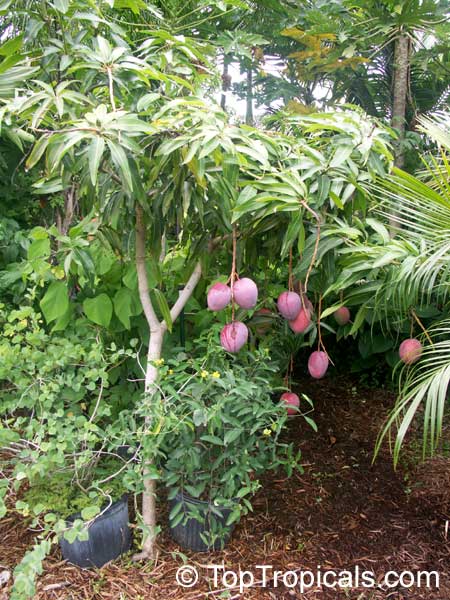
    Choosing the right Mango for your garden

    Q: Do the mango trees you sell already have fruit? Or how long does it take to get fruit? Are they tricky to keep up? I live locally and have been interested in getting a few!

    A: Some of our mangos in both 3 gal and 7 gal pots have fruit on them. All our mango trees are grafted which means they are ready to produce fruit. So if not the same year, you should get fruit the next year.
    Mangoes in general are easy to grow plants. They are not picky about soil and water, however they need full sun for fruiting. When you are lucky to live in tropical or subtropical climate, your mango will thrive in a ground, and within 2-3 years you will have a mature tree, and a crop every year (those who have cold winters, still can grow a mango tree in a pot, and move it indoors for colder period). Visit our garden center for a tour of our Mango Gardenthat is only 3 years old and is full of fruit! Tasting table available :) We offer over 100 varieties, and our experts can help you to make the right choice for your garden. To start your own mango tree collection, depending on space available, you may begin with the following varieties:
    Nam Doc Mai - one of the most popular and delicious Asian mango
    Carrie - very compact grower, reliable producer with great taste
    Cogshall and Ice Cream - dwarf varieties for small yards, excellent taste
    Alphonso - considered one of the best tasting

    See full list of our mango varieties

    Date: 7 Mar 2017

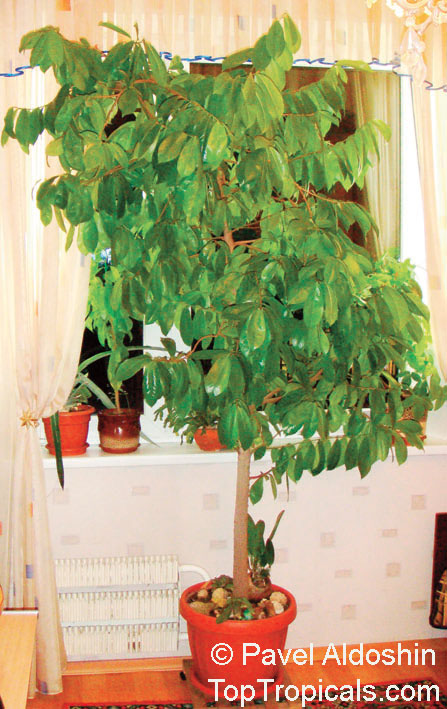
    Taking care of Guanabana (Soursop) after shipping

    Q: Since I have never grown a soursop tree before I need some pro help. My tree was delivered absolutely beautiful, leaves were a pretty green. I potted it and gave it a good drink of water and put it in a shaded area outside. Then the weather here became cool so I brought it in for a few days until the weather warmed, and it lost all the leaves. Is it in shock and will come around eventually? Will I be able to grow this tree indoors during winter?

    A: Soursop - Annona muricata trees are very sensitive to temperature drops. This always causes leaf loss. You seem to be doing everything right. Do not water until soil gets slightly dry; keep it in bright shade. The weather should be good now with high temperatures and humidity rising. No fertilizer until the plant shows active new growth. Be patient with your plant, it should recover soon.

    Soursop is an ultra-tropical tree and doesn't take any freeze. If you live in cooler climate, keep the plant in a pot (the good news is, Annonas in general have compact nature and are perfect for container culture). Bring the tree indoors during cold period, providing bright light.

    Remember that grafted trees start flowering and producing fruit right away, unlike seedlings of Soursop that may take a few years till fruiting.

    We have very interesting article about growing and fruiting Soursop in apartment. Check out Tropical Treasures Magazine #7

    Date: 15 May 2024

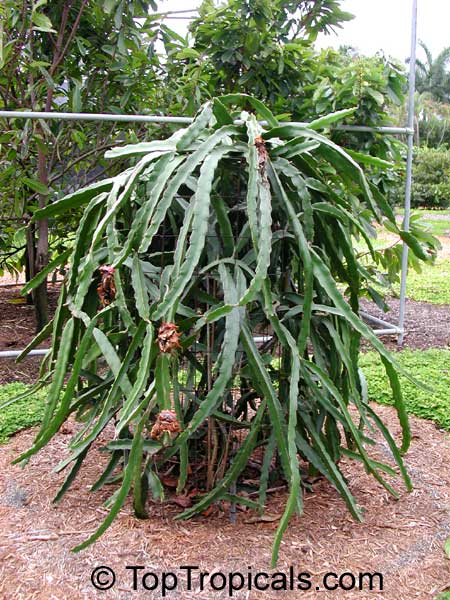
    What does a dragon taste like? Does Dragon Fruit come from a monster cactus? Learn why you need to grow your own

    Hylocereus and Selenicereus Dragon Fruit or Pitaya

    Hylocereus and Selenicereus Dragon Fruit or Pitaya

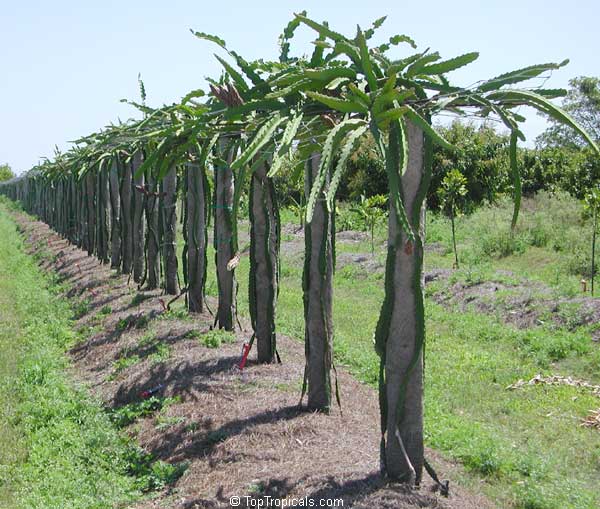
    Hylocereus and Selenicereus Dragon Fruit or Pitaya trees on trellis

    Hylocereus and Selenicereus Dragon Fruit or Pitaya trees on trellis

    Hylocereus and Selenicereus Dragon Fruit or Pitaya on trellis

    Hylocereus and Selenicereus Dragon Fruit or Pitaya on trellis

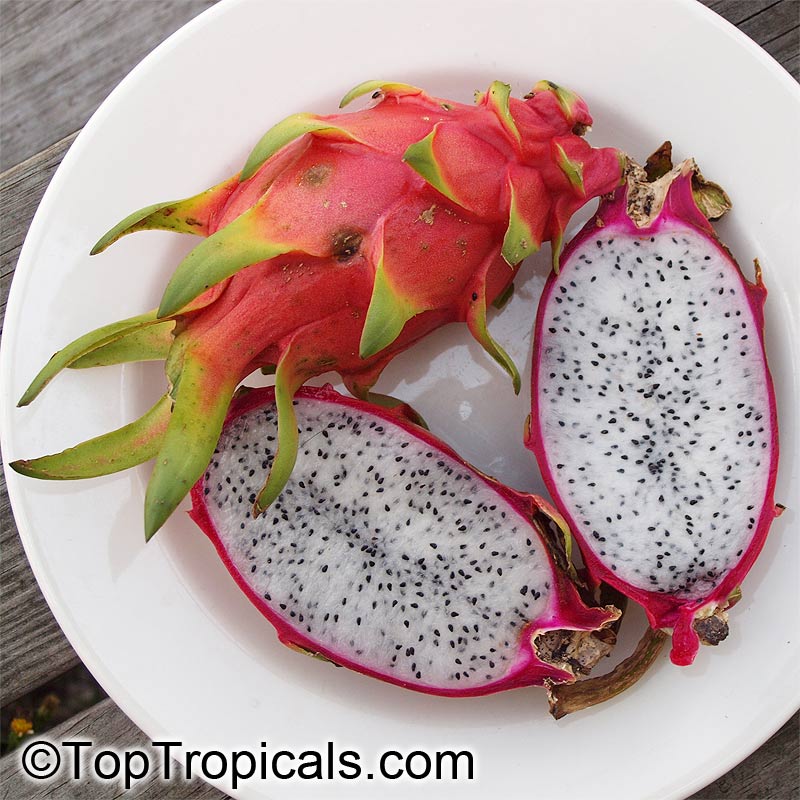
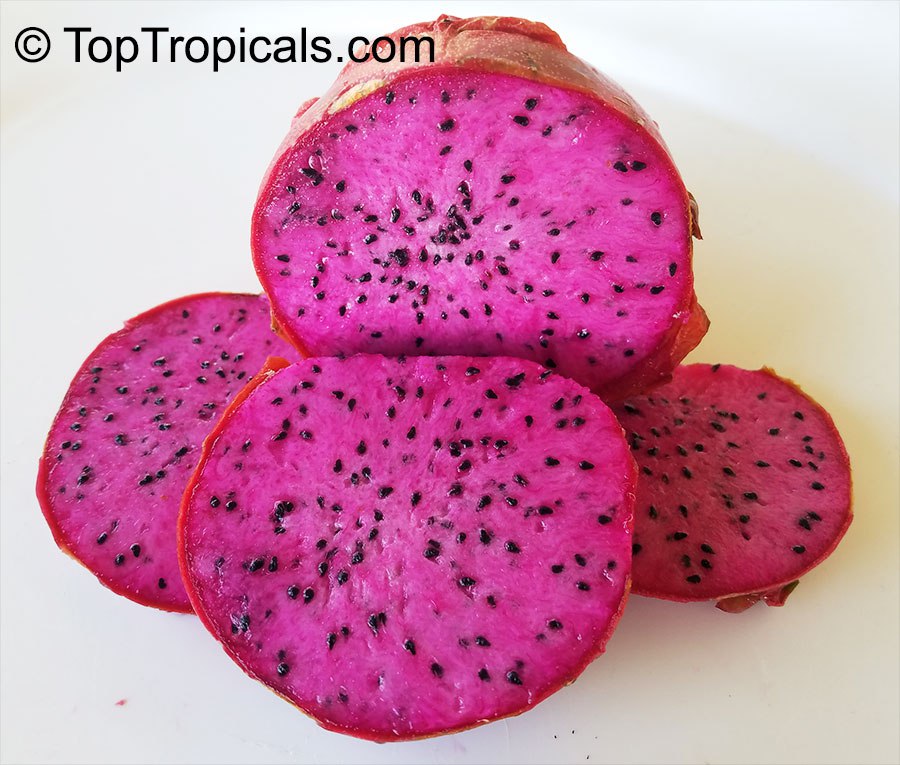
    Hylocereus and Selenicereus Dragon Fruit or Pitaya red fruit

    Hylocereus and Selenicereus Dragon Fruit or Pitaya red fruit

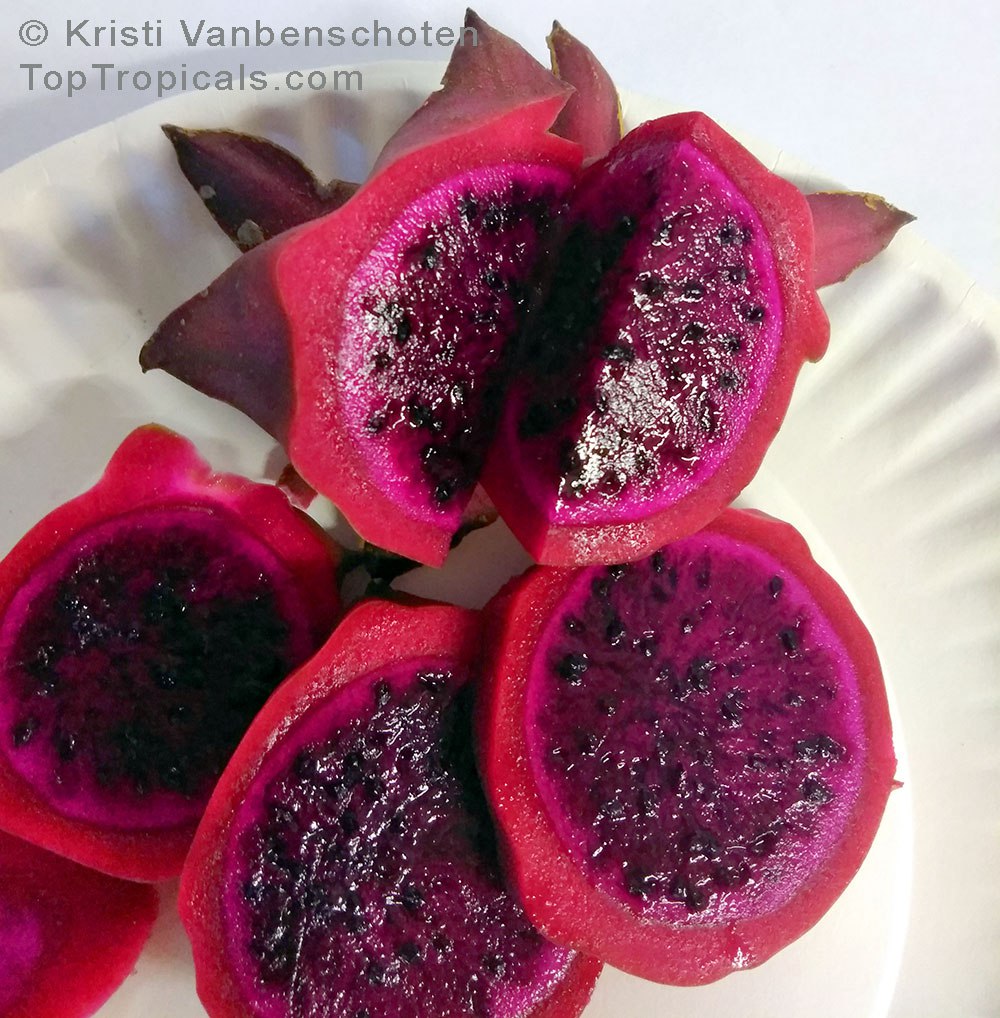
    Hylocereus and Selenicereus Dragon Fruit or Pitaya purple fruit

    Hylocereus and Selenicereus Dragon Fruit or Pitaya purple fruit

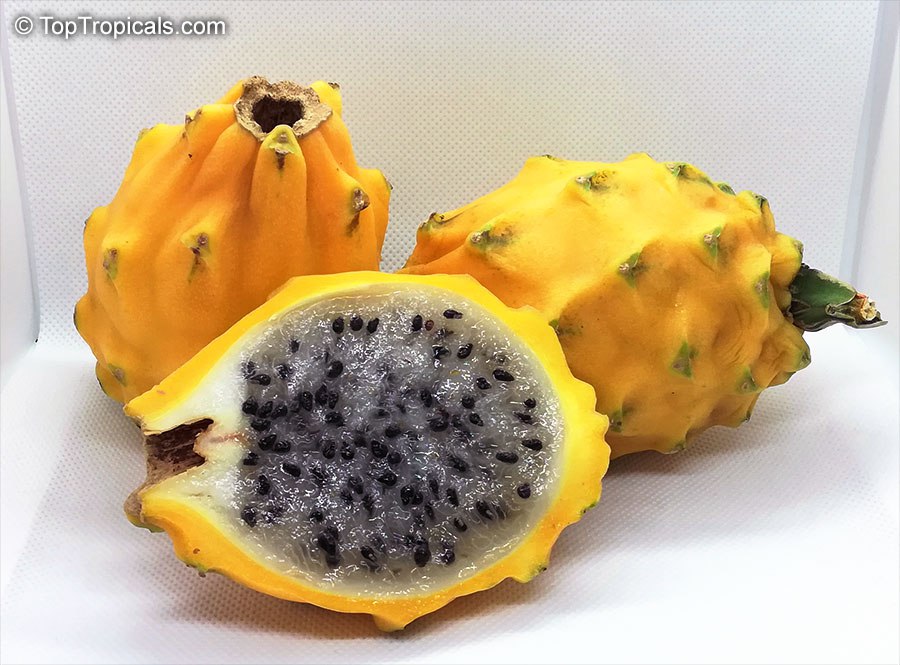
    Hylocereus and Selenicereus Dragon Fruit or Pitaya Yellow Parlora

    Hylocereus and Selenicereus Dragon Fruit or Pitaya Yellow Parlora

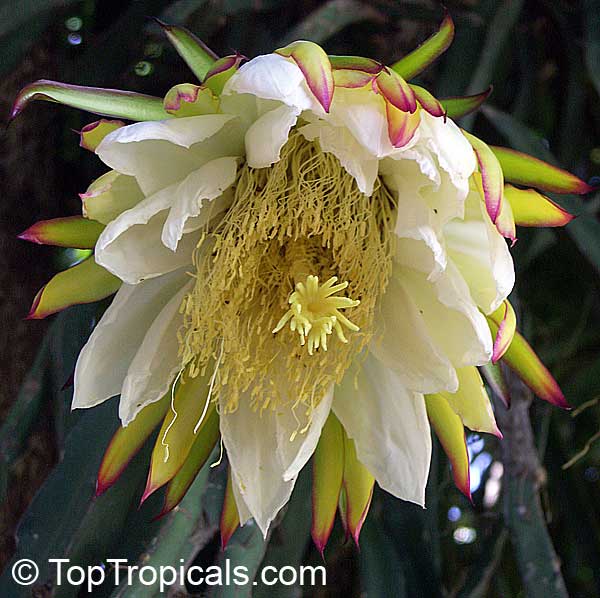
    Hylocereus and Selenicereus Dragon Fruit or Pitaya flower

    Hylocereus and Selenicereus Dragon Fruit or Pitaya flower

    🐲 What does a dragon taste like? Does Dragon Fruit come from a monster cactus? Learn why you need to grow your own. 🌵
    • 🔴 You may have tried a Dragon fruit from the store l, but do you know how it grows? On a cactus tree!
    • 🔴 Names: varieties of Hylocereus and Selenicereus - these fruit bearing cactus plants are also called Dragon Fruit or Pitaya.
    • 🔴 Commercially grown fruit sold in a grocery store may be tasteless. You need to grow your own good variety to have tasty, sweet, flavorful fruit!
    • 🔴 Dragon fruit comes in many varieties. Colors of flesh differ: white, pink, dark red and even purple. The outside of the fruit can be red/pink or yellow.
    • 🔴 In commercial groves, Pitayas grow like cactus trees, over a strong support - big "umbrella frames" ☂️
    • 🔴 It is an easy plant, with low water needs, takes both sun and semi-shade.
    • 🔴 Our favorite variety is Yellow Dragon Fruit Palora, (Selenicereus megalanthus). It is the sweetest and has the most flavor of all. We shared some recipes earlier.
    • 🔴 Can be grown in container with a wooden trellis. And the flower is beautiful, too!


    📚 Learn more about Dragon Fruit
    🍹 Recipe: What to do with a Dragon fruit?

    🛒Grow your own Tasty Dragon Fruits

    #Food_Forest #Recipes #Nature_Wonders

    🏵 TopTropicals