Garden Blog - Top Tropicals

Date: 12 Apr 2016

Hot novelty plant for hot Arizona

Q: What plants would you recommend for very hot and dry spot in front of my house that gets full sun all day long? I live in AZ, we recently had a couple good rains but this is going to be it for a long time. It gets so hot during the day that every plant I tried didn't make it. We have a few nice orange trees growing well but I would like to plant something compact, colorful and hopefully fragrant if there is such plant.

A: There is a perfect small size plant for you that is extremely fragrant and yet will be thriving in these conditions. It is the famous Jasmine sambac. It will appreciate dry air of Arizona and will bloom profusely for you in full sun or in partial shade. It doesn't mind heat at all.

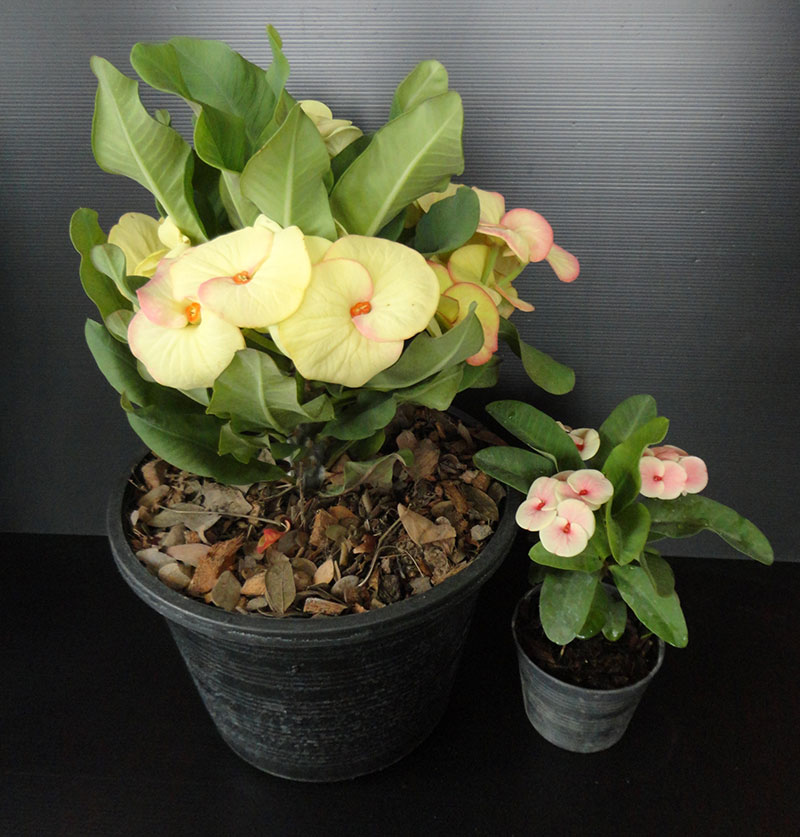
For colorful accents, a proven winner is Crown of Thorns - Euphorbia millii. New giant size flower varieties were recently selected in Thailand, and we just received a great selection, look at the colors! These plants don't mind hot sunny location at all. The more sun, the better the bloom! Small plants need regular watering until establish, then once they start developing, they will require less water.

Giant Euphorbia flowers from Thailand are 4-5 times bigger than regular flower euphorbia. Diameter of the flower is around 2". Compare giant flower to normal size - picture on the right.

See full list of plants for hot and dry spots.

Date: 26 Mar 2016

Growing Exotic Adeniums

Exotic varieties of Desert Roses. Adeniums have many spectacular hybrids. The basic culture is very similar to orchids. A small pot with excellent drainage is a must. Adeniums do not like both over-watering or drying-out. There is a secret how to create a large swollen caudex: raise the plant a bit every time you re-pot it, so that the upper part of roots will be a little exposed. The plant will form more roots that will go down.

To make your plant develop a large swollen base/trunk, you'll need a good quality fertilizer. Fertilizer requirement for swelling up trunks is also used to increase flowering. It shouldn't be too high in nitrogen, the middle number should be the highest (similar to 10-50-10). Never apply fertilizer directly on roots and do not liquid feed when a plant is thirsty: always water first slightly to avoid root burn and leaf drop. Do not wet leaves. Adeniums need lots of light for heavy flowering.

Most hybrids and species start blooming in the spring when the conditions are warm and days get longer, and continue blooming through the fall and winter in warmer climates. Adeniums like a neutral to hard water. Acidic water tends to sour the soil too fast and may cause root rot. Water plants preferably in the early morning, and allow them to drink up throughout the day. Watering can be done daily to every few days. Never allow your plants to sit in a saucer of water, but don't let them to dry out too often - this causes adeniums to go into early dormancy.

Planting instructions for bare-rooted succulent plants. Position the plant in a pot, size of root system. Use only well-drained soil with high content of Perlite and/or sand (cactus mix can be used), water once and keep in warm (75-80F) place in filtered light. Do not water again until soil dries on surface. Once the plant is established and starts growing new leaves (may take a few weeks), gradually move it into brighter light. Then you can start fertilizing it.

See full list of Adeniums - plants and seeds.

Date: 2 Apr 2026

Skip the Egg Hunt - Start a Plant Hunt 🐰

Smokey  the  black-and-white  cat  with  glasses  sits  on  a  patio  taking 
 notes  while  Sunshine,  a  fluffy  orange  cat  wearing  bunny  ears,  holds  a  small 
 potted  mango  tree  with  light  yellow 
 flowers.
Sunshine: I went egg hunting. Found something better. Let’s grow it on the balcony. Mango-filled donuts, here I come.

Smokey: Finally. You’re thinking.

Read more about Smokey & Sunshine

Groundhog said long winter… and it sure felt like it. But now it is finally over, and balconies and patios are waking up again.

Easter is here, and with it comes that fresh start feeling - time to open the doors, bring plants back out, and start growing.

We made it through the cold. For northern gardeners, that is every year; for borderline zones, it is a reminder that freezes happen. That is exactly why growing in pots makes sense - you stay flexible.

Container growing is not just about pots - it is about choosing the right plants. The best options stay manageable, produce well, and handle being moved.

Let's look at what works. Start with plants that naturally stay compact and adapt well to containers. These are the ones that won’t outgrow your space and will reward you quickly. These are proven performers in containers - compact, productive, and easy to manage:

Simple rule: if it stays compact and handles pruning, it works in a container.

Skip the egg hunt this year - go on a plant hunt instead. Start with one or two plants this Easter - not ten. Get them established, learn how they grow, and then expand.

Container basics (keep it simple):

  • Pot size: start with 3–7 gallon, upgrade as plant grows
  • Soil: fast-draining mix (never heavy garden soil)
  • Water: soak well, then let top inch dry
  • Feeding: consistent light feeding works better than heavy doses
  • Sun: most tropicals want full sun (6+ hours)

🐣 Browse our Easter Container Collection

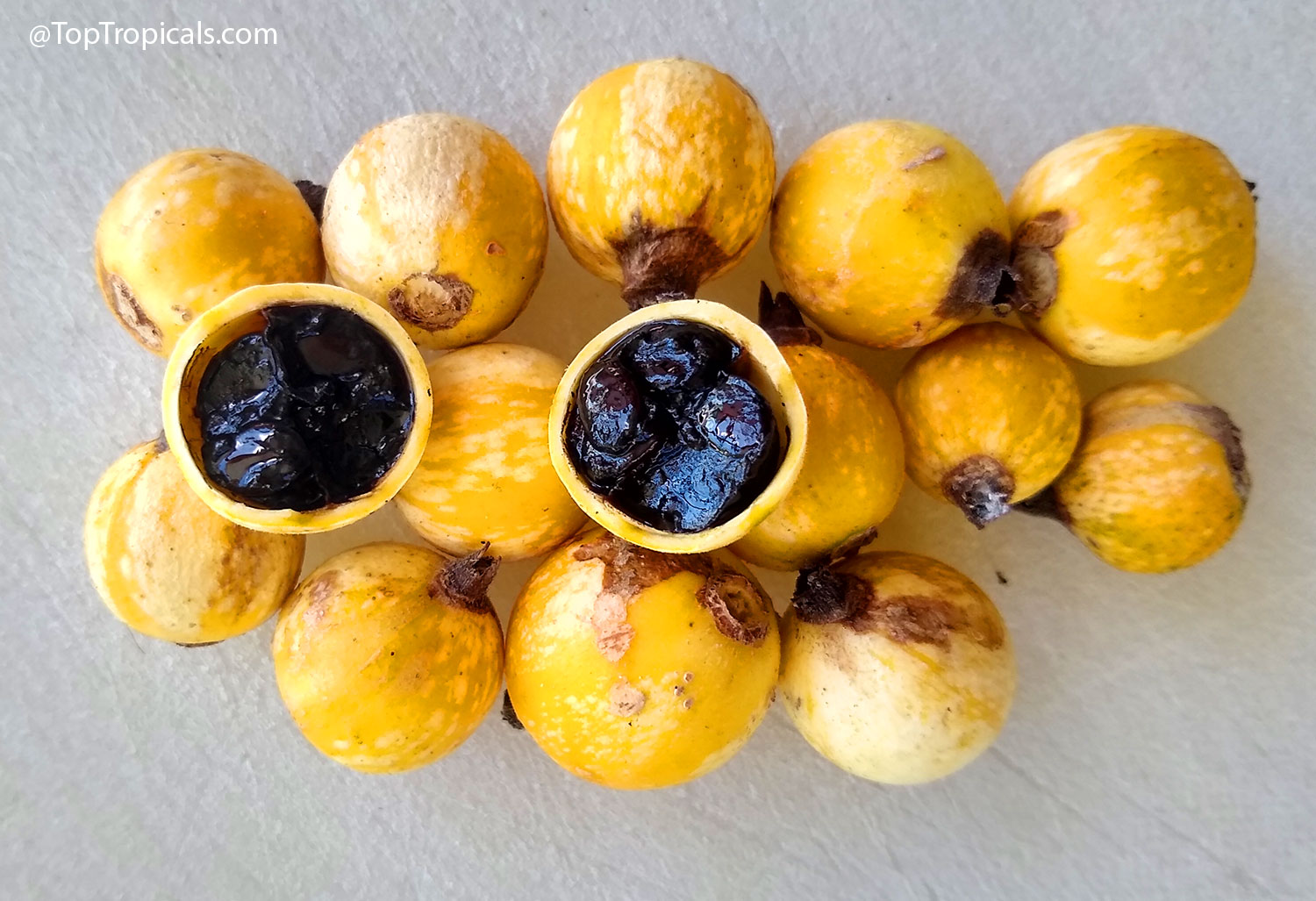
Randia  formosa  (Blackberry  Jam  Fruit)  showing  yellow  ripe  fruits,  some 
 cut  open  to  reveal  glossy  dark  pulp 
 inside.

Randia formosa - Blackberry Jam Fruit

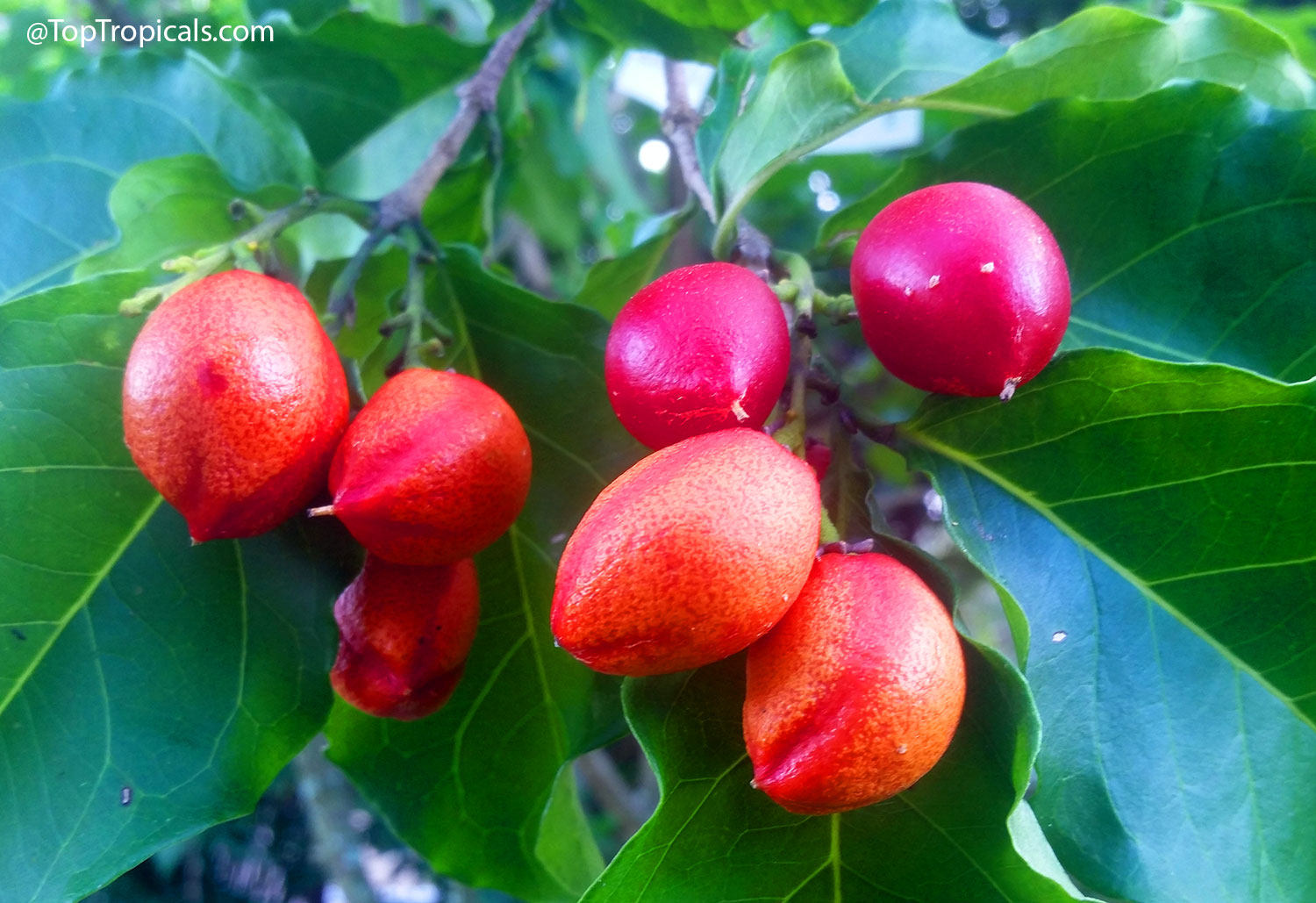
Bunchosia  argentea  (Peanut  Butter  Fruit)  showing  clusters  of  red  ripe 
 fruits  on  a  leafy 
 branch.

Bunchosia argentea - Peanut Butter Fruit

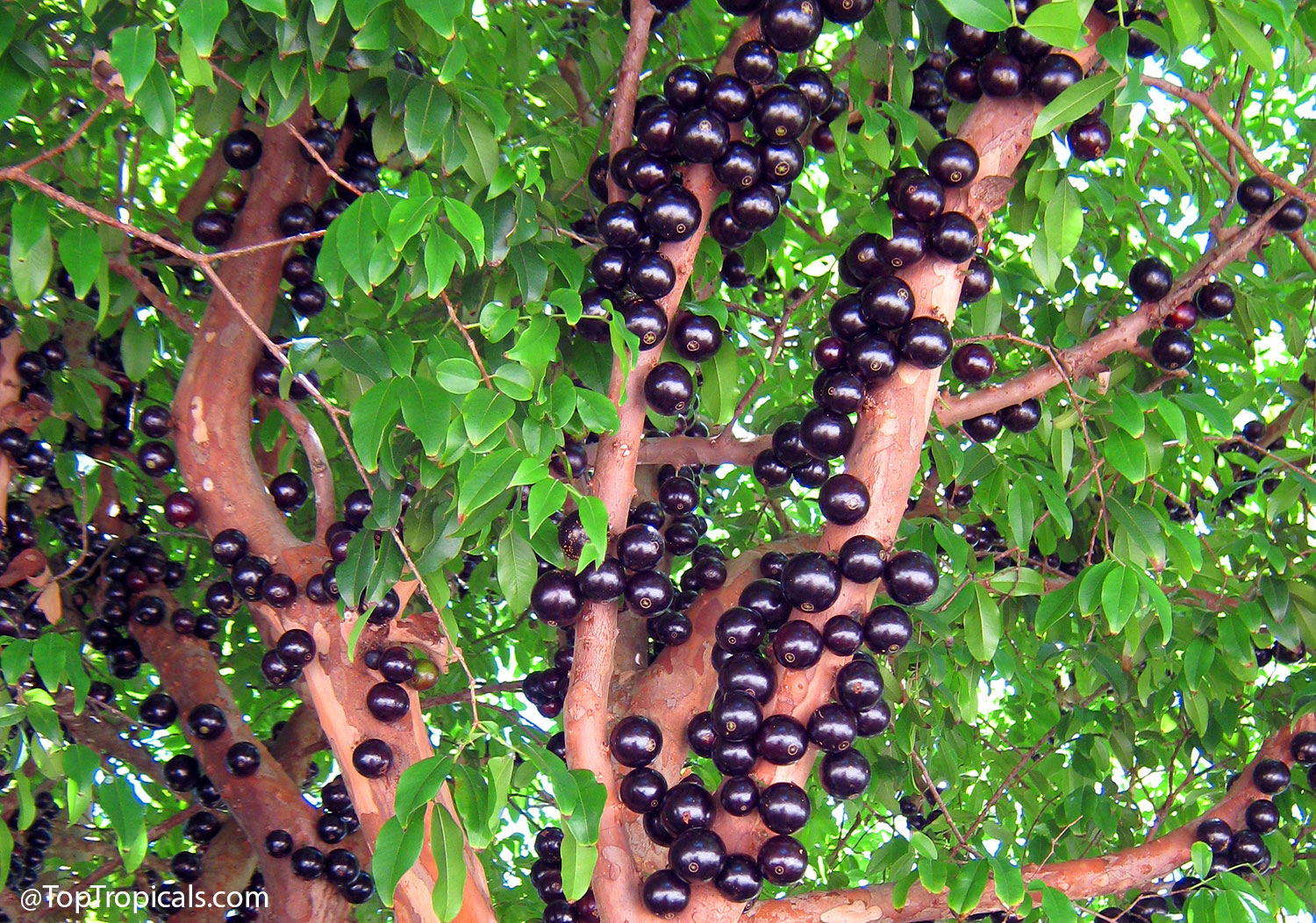
Myrciaria  cauliflora  (Jaboticaba)  tree  with  clusters  of  dark 
 purple-black  fruits  growing  directly  on  the 
 trunk.

Myrciaria cauliflora - Jaboticaba

Eugenia  brasiliensis  (Grumichama)  with  red  ripe  cherries  hanging  from  a
   branch  against  blue 
 sky.

Eugenia brazilensis - Grumichama and more Eugenia Cherries

Date: 18 Apr 2026

The Secret to a Sharper Mind Might Be Growing in Your Backyard

The Secret to a Sharper Mind Might Be Growing in Your Backyard

The Secret to a Sharper Mind Might Be Growing in Your Backyard


Your garden shed might hold a more powerful tool for brain health than your medicine cabinet. What if the best defense against cognitive decline isn’t found in a pill bottle - but right outside your door? While we often think of gardening as just a hobby, new research suggests that the combination of physical "zone-pushing" and harvesting your own nutrient-dense tropical fruit could be a literal life-saver for your brain.

  • 🍒 What the Research Actually Says


A massive study recently published in the journal Neurology followed more than 92,000 people to see how diet impacts the mind. The findings were clear: the quality of the plant-based foods you eat plays a massive role in your risk of dementia. It isn't just about "eating your veggies" - it's about which ones you choose.
(The full study: Plant-Based Dietary Patterns and Risk of Alzheimer Disease and Related Dementias in the Multiethnic Cohort Study)

  • 🍒 Why Growing Your Own Fruit Changes the Game


If you grow your own fruit, you quietly solve two problems at once. It turns a "diet plan" into a natural part of your day.

1. Effortless Nutrition
When a ripe mango, a handful of mulberries, or a fresh guava is hanging within arm's reach, you eat it. It replaces processed, sugary snacks without any "willpower" required. You are naturally moving toward the high-quality, whole-food diet the research supports.

2. Functional Fitness
Gardening doesn't feel like a workout, but it is. Bending, pruning, carrying pots, and digging are all forms of functional movement. It’s steady, useful physical activity that supports your heart and brain while you’re focused on your plants.

3. The "Outdoor" Effect
Sunlight and fresh air are natural mood boosters. The mental focus required to manage tropical plants - especially when you’re protecting them from a surprise freeze - provides a level of mental engagement and stress relief that you just can't get from a treadmill.

  • 🍒 What to plant if you are just starting


You don’t need a massive orchard to start investing in your brain health. One or two plants can shift your habits immediately.

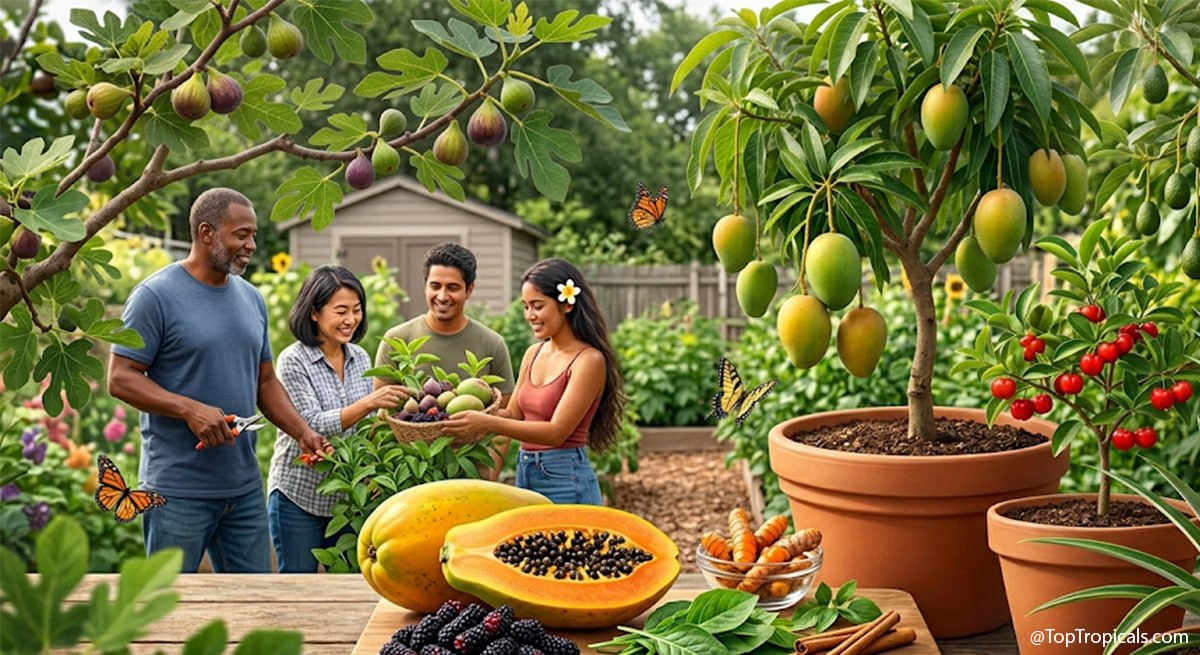
For Fast Results: Papaya and Mulberries produce fruit quickly and are incredibly easy to manage. Turmeric (curcuma), leafy greens (Longevity spinach, Katuk) and Cinnamon proved instant harvest.
For Small Spaces: Dwarf Mango varieties and Cherries (Eugenias or Acerola), Pineapples thrive in containers and provide massive doses of antioxidants.
For the "Zone Pusher": Figs and cold-hardy Avocados offer healthy fats and fiber that are essential for long-term health.

  • 🍒 Start Small, Start Now


The research makes one thing clear: improving your food quality matters, and you can see results no matter your age. Planting a fruit tree changes what you eat, how you move, and how often you step outside.
That’s more than just gardening - that’s a lifestyle shift your brain will thank you for.

🍒 FAQ


Does fruit really support brain health?
Yes. Diets rich in whole, high-quality plant foods are linked to a lower risk of dementia, especially when they replace processed snacks and added sugars.

Is gardening enough to count as exercise?
Absolutely. Regular gardening provides steady, functional movement that improves circulation and supports overall physical health.

Is it too late for me to start?
No. The study showed that even participants who improved their diet quality in their 60s and 70s saw a measurable reduction in dementia risk.

🛒 Start your tropical fruit journey

Guava · Mango · Mulberry · Papaya · Pineapple · Avocado · Cherries · Figs

📚 Learn more:


#Food_Forest #Remedies #Discover

🟢 Join 👉 TopTropicals
Date: 3 Aug 2025

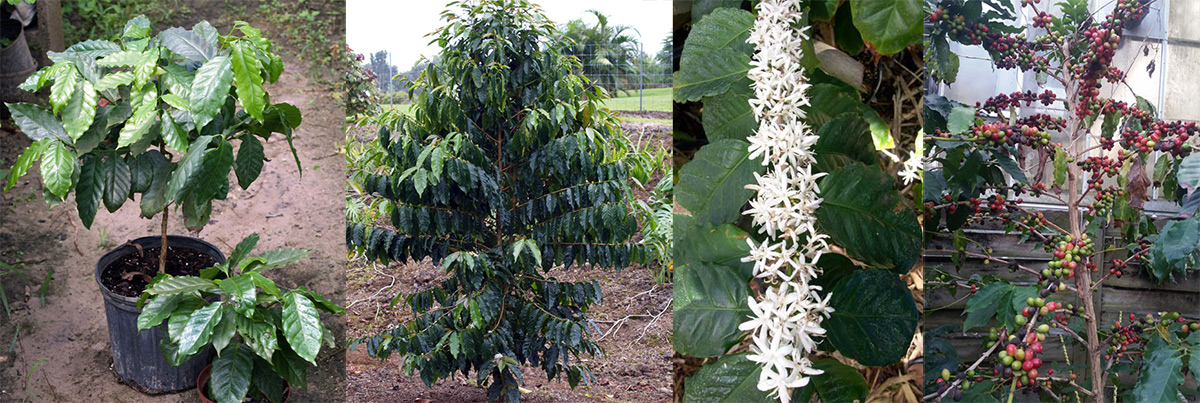
Four  stages  of  Coffee  Tree  growth:  a  young  potted  plant,  a  mature  tree  in  the  ground,  white  star-shaped  blooms,  and  a  branch  full  of  ripening  red  and  green  coffee  cherries.

What is the most popular and easiest tropical fruit tree to grow indoors?

No doubt about it - it's the Coffee Tree.

  • Coffee is shade-loving and easy to grow with regular water
  • It grows into a dark green shrub or small tree (about 3 to 5 feet tall in a pot)
  • Its fragrant, star-shaped flowers resemble gardenias
  • The whole fruit is edible and turns green to yellow to red
  • The seeds are real "coffee beans" that can be dried, roasted, and ground at home.

Five Reasons to Grow a Coffee Plant

  • Perfect Indoor Fruit Tree: Thrives in filtered light and stays compact
  • Low Maintenance: Forgiving, adaptable, and ideal for new gardeners
  • Aesthetic Appeal: Glossy green leaves and clusters of white blooms
  • Homegrown Coffee: Yes, you can roast your own beans.
  • Year-Round Beauty: Evergreen with seasonal fragrance

Coffee Plant Care Tips

  • Light: Bright, indirect light is best. Avoid harsh afternoon sun.
  • Water: Keep soil lightly moist but not soggy. Let the top inch dry out before watering again.
  • Humidity: Loves higher humidity. Mist regularly or place on a pebble tray.
  • Fertilizer: Use a balanced, gentle fertilizer like Sunshine Boosters C-Cibus every few weeks during growing season.
  • Soil: Loose, rich, and well-drained. High in organic matter and slightly acidic. For potted plants, use a quality indoor tropical mix, such as Top Tropicals Abundance mix
  • Repotting: Refresh soil and size up the pot every 1–2 years to keep roots healthy.
  • Can I grow it outdoors?: Yes - bring it outside in warm months and back indoors before frost. It's best suited for USDA zones 10-11, but container growing gives you flexibility in cooler climates.
  • How long until I get beans?: Expect flowers and fruit within 3 to 4 years from seedling stage - often sooner if you start with a young tree.
  • What does the fruit taste like?: Mild and sweet-tart, like a mix between a cherry and a cranberry. You can eat it fresh.

How to Make Coffee from Your Own Tree

  • Harvest: Pick the ripe red cherries
  • Pop and Soak: Squeeze out the beans and ferment 1-2 days to remove pulp
  • Dry: Spread out to dry for 1-2 weeks until hard and papery
  • Husk: Remove the thin shell to reveal green beans
  • Roast: Use a dry skillet or oven until fragrant
  • Grind and Brew: Cool, grind, and enjoy the freshest coffee you've ever had.
    Learn more: How to make your own coffee from homegrown beans

Coffee Health Benefits

  • Rich in antioxidants - supports heart and brain health
  • Boosts focus and mental alertness
  • Supports metabolism and fat-burning

Why Coffee Makes the Perfect Gift Plant

  • Long-living and beautiful
  • Symbolic, useful, and personal
  • Great for coffee lovers, gardeners, and the "person who has everything"

Read Garden Blog about Coffee

Shop Coffee Plants