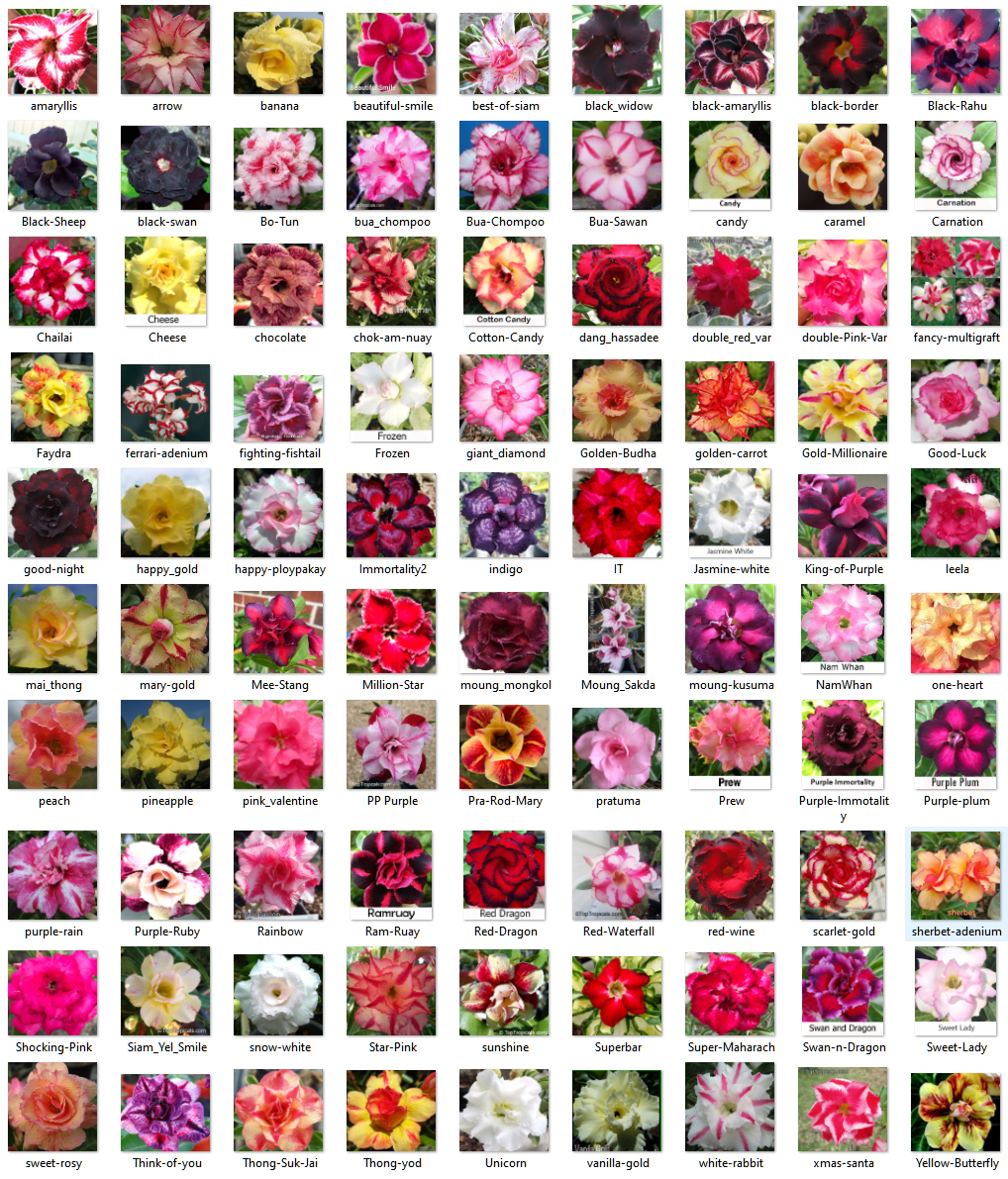
Date: 27 Jan 2026
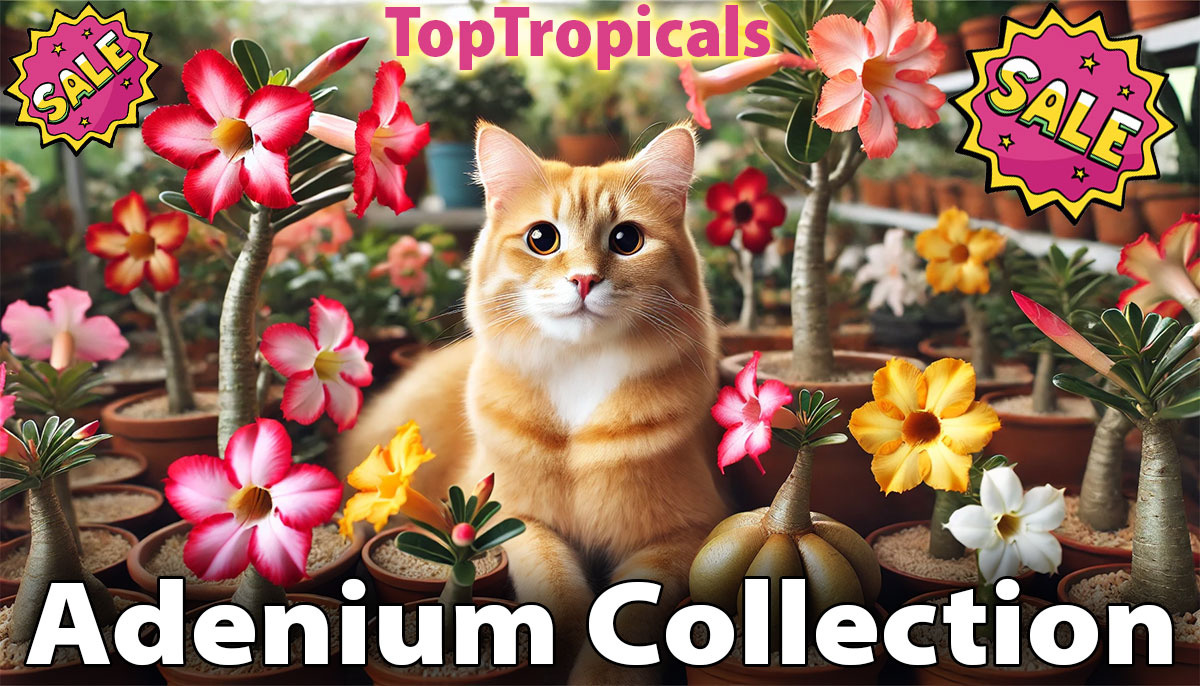
🌸 Why adenium?
- Easy to grow in containers
- Thrive in sun or shade, indoors or out
- Tolerant of low humidity
- Very low water needs
- Forgiving plants that tolerate missed watering
- Long-lived plants that improve with age
- Compact size, ideal for patios, balconies, and windows
- Form unique, sculptural caudex shapes
- Decorative even when not in bloom
- Produce stunning, long-lasting flowers
- Often blooming in a few months
🌸 Adenium Care Basics
Adeniums have many spectacular hybrids, and their basic culture is closer to orchids than to typical houseplants. The key is a small pot, excellent drainage, bright light, and careful watering.
Pot and Soil
- Use a small pot sized to the root system.
- Excellent drainage is required.
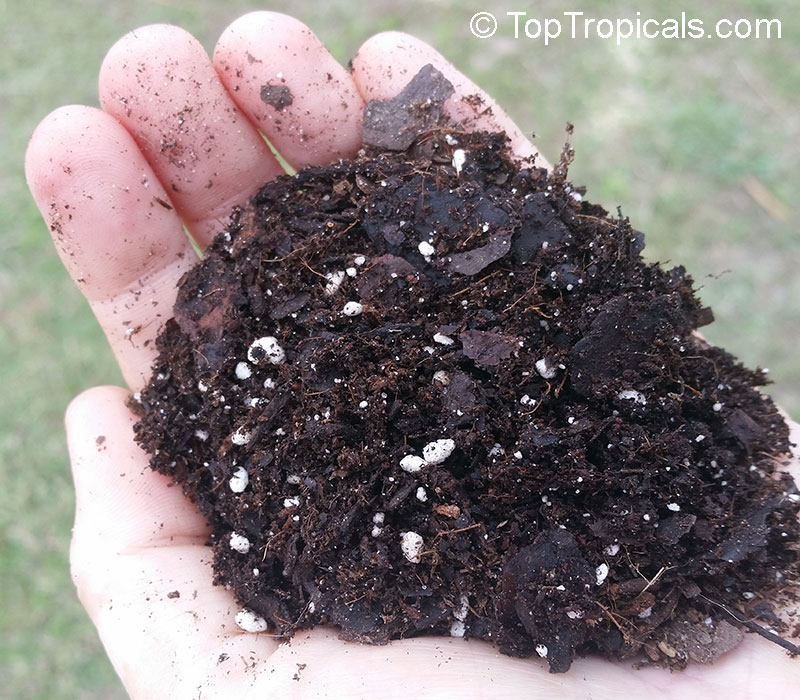
- Use a very well-drained mix. We recommend specially formulated for Adeniums Desert Rose Soilless Mix
Light and Blooming
- Give lots of light for heavy flowering.
- In warm conditions and longer days, most hybrids and species begin blooming in spring.
- In warmer climates they can keep blooming through fall and winter.
Watering (Most Important)
- Adeniums dislike both extremes: over-watering and drying out too often.
- Use neutral to hard water when possible.
- Acidic water can sour the mix quickly and may cause root rot.
- Water in the early morning so the plant can drink through the day.
- Watering frequency can range from daily to every few days, depending on heat, light, and how fast the mix dries.
- Never let the pot sit in a saucer of water.
- Do not let the plant dry out too often, or it may go into early dormancy.
- Do not wet the leaves.
Fertilizer (Caudex + Flowers)
- To build a large swollen base/trunk (caudex), use a good quality fertilizer.
- A fertilizer that helps trunk swelling also supports flowering. The best choice for this is Sunshine Megaflor.
- Avoid fertilizers that are too high in nitrogen; choose a formula where the middle number is the highest.
- Never apply fertilizer directly on roots.
- Do not liquid feed a thirsty plant.
- Always water lightly first, then feed, to avoid root burn and leaf drop.
The Caudex "Secret" (Shaping the Base)
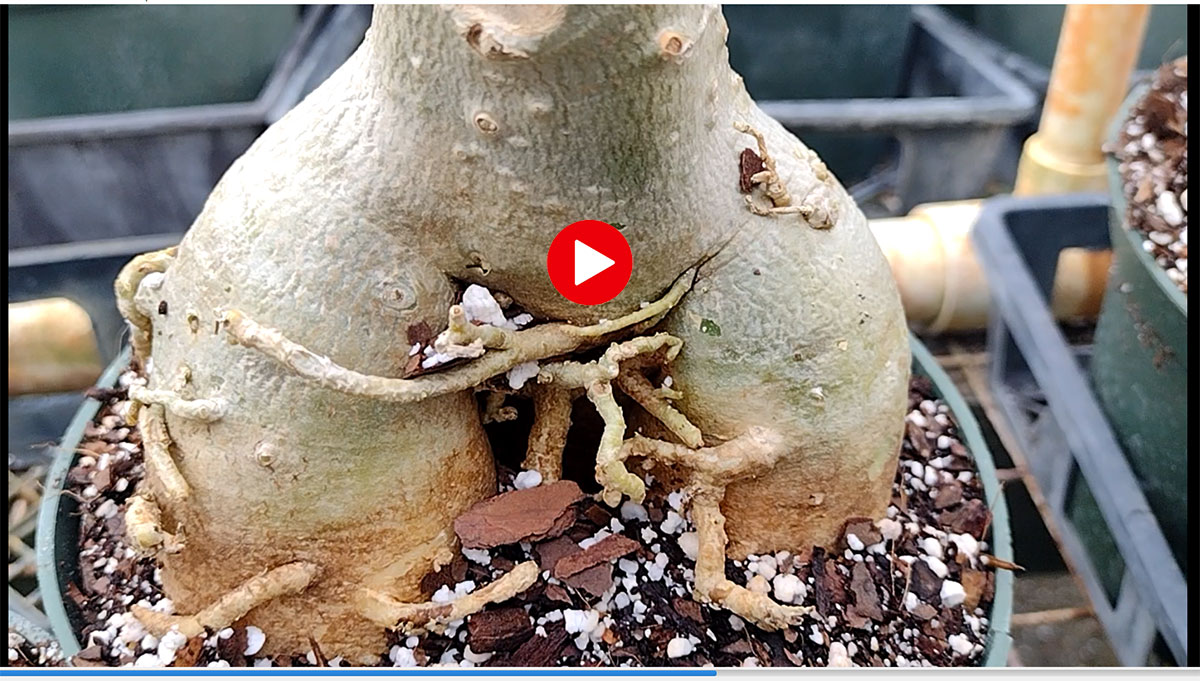
- At each repotting, lift the plant slightly so the upper roots are a little exposed.
- This encourages new roots to grow downward and helps create a thicker, more interesting caudex shape.
Multi-Grafted Plants (Important Note)
- Adenium hybrids can be multi-grafted with several colors/varieties on the same plant.
- The swollen base forms only when the rootstock plant is grown from seed.
✍️ Adenium FAQ
How much light do Adeniums need?
Adeniums need lots of light for heavy flowering. Most hybrids and species start blooming when conditions are warm and days get longer, and in warmer climates they can keep blooming through fall and winter.
What is the best pot size for Adeniums?
Use a small pot sized to the root system, with excellent drainage. A small pot with excellent drainage is a must.
What kind of soil mix should I use?
Use only a well-drained mix. Adeniums do best in very well-drained soil. A small pot plus excellent drainage is the foundation of success.
How often should I water Adeniums?
Adeniums do not like both over-watering and drying-out too often. Water preferably in the early morning and do not water again until the mix dries on the surface. Watering can range from daily to every few days depending on heat, light, and how fast the mix dries.
Can Adeniums sit in a saucer of water?
No. Never allow your Adenium to sit in a saucer of water.
Should I wet the leaves when watering?
No. Do not wet the leaves.
What kind of water do Adeniums prefer?
Adeniums prefer neutral to hard water. Acidic water tends to sour the soil too fast and may cause root rot.
How do I create a large, swollen caudex?
At each repotting, lift the plant slightly so the upper parts of the roots are a little exposed. This encourages the plant to form more roots that grow downward and helps create a thicker, more interesting caudex.
What fertilizer should I use for caudex growth and blooms?
Use a good quality fertilizer to support both trunk swelling and flowering. Avoid formulas that are too high in nitrogen; the middle number should be the highest. Never apply fertilizer directly on roots, and do not liquid feed when the plant is thirsty. Water lightly first, then feed, to avoid root burn and leaf drop.
Can an Adenium have multiple flower colors on one plant?
Yes. Adenium hybrids can be multi-grafted with several colors or varieties on the same plant. Note that the swollen base forms only when the rootstock plant is grown from seed.
✍️ Learn About Adeniums 🎥 Watch Adenium Videos 🛒 Shop AdeniumsDate: 13 Feb 2026
Last-minute Valentine idea: let them choose!
👩❤️💋 Last-minute Valentine idea: let them choose!
If timing, weather, or plant selection feels uncertain, a Gift Card keeps things easy. Your Valentine can choose the perfect plant when the time is right - especially helpful for gardeners up north or when you want the gift to unfold later.
👩❤️💋 Valentine’s Day Gift Card Bonus
To make Valentine’s Day a little sweeter, we are adding 15% extra value to every gift card for a limited time.
Just include a Valentine greeting in the gift card message field.
💵 For example, a $100 gift card becomes $115 to spend.
Offer valid through 02/15/2026. The bonus value is not valid with other promotions or discounts. Gift cards cannot be used to purchase other gift cards. Bonus value is added at the time of purchase.
🎁 Get a Gift Card
🛒 Explore gift plants
📚 Learn more:
- ✦ Valentines day Best Gift Plant Ideas
- ✦ Eight favorite plants of romance, affection, and emotional connection
- ✦ Four popular plants of friendship, appreciation, and shared connection
- ✦ Top nine plants of love, desire, and the senses: aphrodisiacs and sensory connections
#Shade_Garden #Container_Garden
🟢 Join 👉 TopTropicals
Date: 23 Feb 2026
❄️ The Hardiness Report: February 2026 ❄️
🐾 Smokey & Sunshine’s real-world survival data from our Sebring, Florida Research Gardens. Smokey analyzed the data. Sunshine just stayed happy. Here is what they found.

Smokey: This is macadamia strength.
Sunshine: I should put a macadamia nut in my coffee and borrow some of that strength.
Smokey: Do not get too nutty yet. It still needs curing and cracking.
📊 Weather Data – February 1–6, 2026
Sebring, Florida – 132 years of recorded observations
This was not a light frost. It was a prolonged, windy, penetrating hard
freeze.
- 🌡 Minimum temperature: 25F
- ❄️ Wind chill: 14F
- ⏳ Duration: 3 nights of 8–10 hour hard freeze
- ☀️ Daytime temperatures: around 50F for 7 days
- 🌀 Wind: sustained 20 mph, gusts 40–50 mph
While all our plants in pots were protected in greenhouses, our in-ground plantings faced the freeze outdoors. We covered what we could. Even so, some plants were damaged, some died, and some surprised us by surviving.
In the next few newsletters, we will share the real survivors - the plants that proved themselves in the ground, under real conditions. Smokey and Sunshine have been out in the fields assessing the damage from the February 1–6 freeze. While many plants struggled, the Macadamia proved to be a true standout. This is how we grow them to handle the tough years.
Why does this matter? Because we have gotten used to warm winters, and this freeze was a rude awakening. Not everyone lives in Miami. If you garden in places where a real cold event can happen, you have to be prepared - and you have to plant what can take it.
🌰 Macadamia: Freeze Tested and Standing
When temperatures dropped to 25F with wind chill near 14F, our established macadamia trees remained upright, green, and structurally intact. Leaves held. Branches stayed firm. No collapse, no panic.
That is not luck. That is macadamia hardiness.
Often considered a "tropical luxury nut," macadamia proved it can handle more than many gardeners expect. In USDA Zones 9b-11, with proper drainage and site selection, it is not just ornamental - it is a long-term food tree with real resilience.
In a winter that reminded us not to take warmth for granted, macadamia earned its place on the survivor list.
The nut itself is famous for its strength. The shell is among the hardest in the nut world, requiring serious pressure to crack. Inside, the kernel is creamy, buttery, rich, and deeply satisfying. High in monounsaturated fats and naturally low in sugar, macadamias have long been valued both for flavor and for nutrition.
The tree is equally impressive. An evergreen with tough leaves and elegant spring flowers, it matures into a productive, manageable canopy. Nuts develop slowly over six to seven months. Production begins in a few years and increases steadily as the tree matures. Plant it once, and it can reward you for decades.
Cold will come again. It always does. The question is not whether winter will test your garden. The question is whether your trees are ready. Macadamia proved it is. If you are building a garden that feeds you for decades, this is a tree worth planting.
Date: 2 Mar 2026
😼😺 The Story Behind Smokey and Sunshine 🐾

Smokey: Not so fast, genius. Twenty five degrees is not the North Pole. And polar bears and penguins do not share zip codes.
Sunshine: You always pour cold water on my brilliance. Fine. Where do we start?
Smokey: Well, first you go talk to Tatiana. She graduated from the Geography Department. She can explain climate zones. Cherry of the Rio Grande can grow in North Florida, Texas, and similar climates. Let’s master that before we conquer Arctic.
Sunshine: So… Phase One: Geography?
Smokey: Exactly.
Some stories are easier to tell with a little humor. Smokey and Sunshine were never just mascots. They represent the two forces behind every decision we make here: bold ideas and careful reality. One dreams big. The other checks the climate zone map. Together, they remind us that growing plants is part science, part optimism, and always personal. If you have ever wondered why they keep appearing in our newsletters, you can read their full story on the Smokey and Sunshine page. They have been with us longer than most people realize.
🐾 Learn the Story of Smoky and Sunshine
Freeze Testing of Grumichama and Cherry of Rio Grande 🍒❄️
When temperatures dropped to 25F, with wind chill near 14F, winter made it clear which tropical trees were truly resilient. Some plants burned back. Tender growth collapsed. But our established Eugenia cherries stood steady. Leaves held. Branches stayed flexible. The canopy remained intact.
Cherry of the Rio Grande (Eugenia aggregata) and Grumichama (Eugenia brasiliensis) are among the most cold-hardy tropical cherries for Southern gardens. Both are native to Brazil and thrive in USDA Zones 9b–11, and even protected 9a sites.
Cherry of the Rio Grande produces dark ruby fruit that ripens almost black, with a rich, full cherry flavor. It flowers early in spring and can fruit well into summer. Mature trees can tolerate brief drops into the low 20s once established. Trees typically grow 8 to 15 feet tall, remain naturally compact, and often begin fruiting within 2 to 3 years.
Grumichama is an evergreen tree known for both beauty and productivity. In spring, it covers itself in white starburst flowers that attract pollinators. Within about four weeks, glossy purple-black fruit develops. Established trees tolerate temperatures into the upper 20s and grow well in the ground or in 5–10 gallon containers. Mature trees can produce hundreds of fruits per season.
Across the Eugenia group, strengths are consistent: early bearing, compact growth, heat tolerance, light freeze endurance, and low pest pressure. They are adaptable to different soils, need modest water once established, and perform in full sun or partial shade. Birds enjoy the fruit, but there is usually plenty to share.
Nutritionally, Eugenia cherries provide Vitamin C, fiber, antioxidants, and notable Vitamin A that supports eye health. They offer sweetness with real dietary value.
In the kitchen, they are simple and rewarding. Cherry of the Rio Grande makes an easy compote. Simmer the fruit with a small amount of water until soft, mash lightly, and spoon over pancakes or warm bread. Grumichama turns into a deep red jam with sugar and lime, or can be blended into a bright spoon drizzle over vanilla ice cream.
Even when not fruiting, both trees remain attractive year-round with glossy evergreen foliage and clean structure. They fit well into edible landscapes, small yards, and container gardens.
Winter will return. The difference lies in planting fruit trees that can handle heat, humidity, and the occasional cold snap. If you are building a food forest for lasting harvests, cold-hardy tropical cherries like Cherry of the Rio Grande and Grumichama deserve a place in your garden.
Date: 17 Feb 2017
Our sales, news and updates
Radio Top Tropicals Live Webcast upcoming event: Saturday February 18, at 11 am EST.
Topic: WEED OR WONDER PLANT?
We will explore plants considered invasive species, or weeds, here in Florida, and reveal interesting and not-so-well-known facts about them.
1) Schinus terebinthifolius - Brazilian Pepper, or Florida Holly. This species is essential for migratory birds, bears, and other critters. Berries are used in China for medicine. Used as a spice in Italy, as well as here in the US.
2) Phyllanthus amarus - Seed on the leaf. A scourge of nurseries, it may yet lead to the cure of Hepatitis B & C.
3) Melaleuca leucophylla - Punk tree, Paper tree. One of the finest trees for raising of epiphytes. Tiger Balm brand ointment is made from these trees. An excellent timber source as well.
Our Host Robert Riefer - Florida State Certified Crop Adviser, and Weed Specialist - answering all your gardening questions.
Listen to Radio Top Tropicals, every Saturday, at 11 am EST! You may use our website radio player DURING AIR TIME and see the pictures of plants we are talking about. To ask questions using live chat, you need to log in at Mixlr.com or simply call our office 239-887-3323 during air time!
If you missed a live webcast, you may listen to recording by following Showreel item link.
Check out our upcoming radio shows and get your gardening questions ready!
New Article: Aphrodisiacs of the plant world.
Last Saturday, the topic of our Webcast was Plants of Love - Aphrodisiacs (click to listen to recording).
Today, we are introducing an article by Kristi, our Meet the Gardener host - Aphrodisiacs of the plant world.