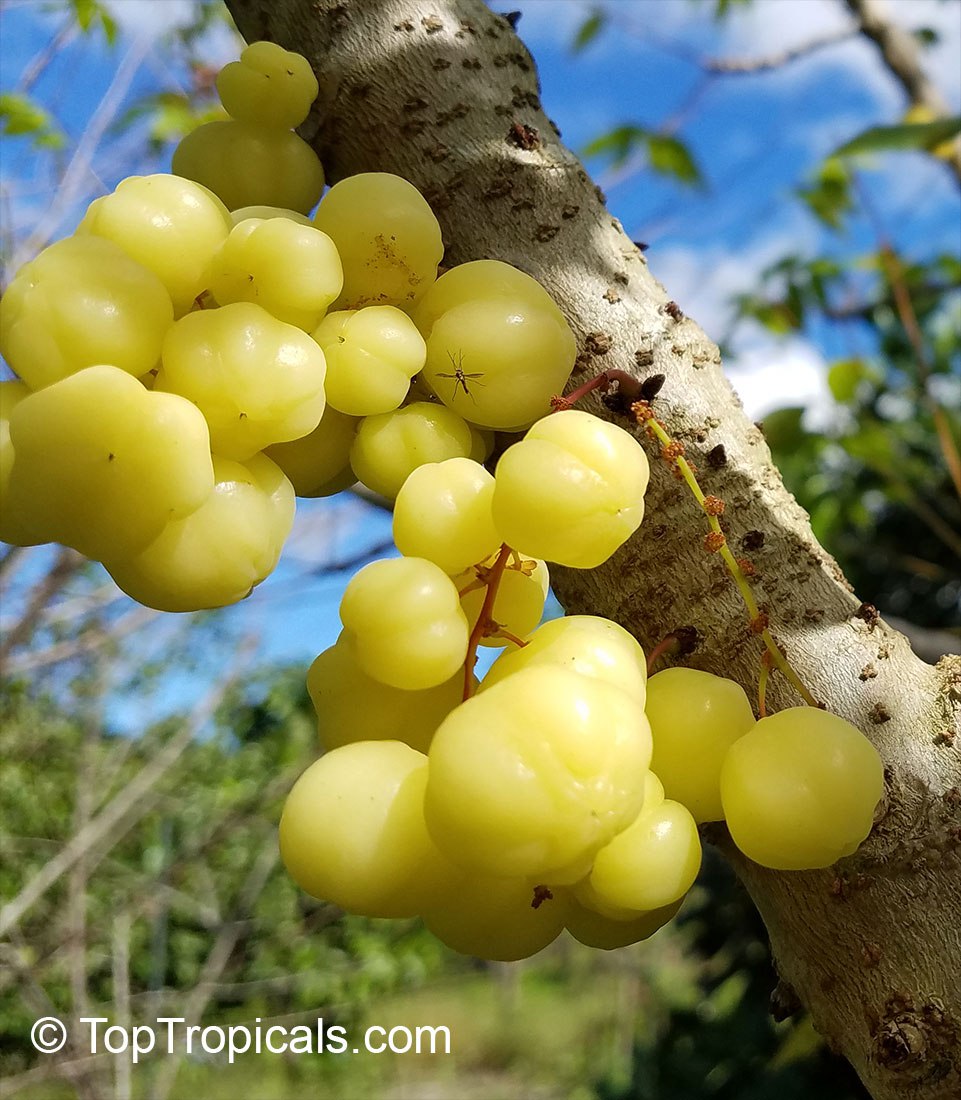
Open ripe Ice Cream Bean pods and scoop out the sweet white pulp.
Remove and save the seeds if you want to plant more Ice Cream Bean trees.
Chill the pulp for 20 to 30 minutes.
Serve the chilled pulp over crushed ice as a natural shaved-ice dessert.
🌿 About the plant:
Ice cream bean (Inga edulis) produces long pods filled with sweet, cottony white pulp surrounding dark seeds. The flavor is mild, vanilla-like, and naturally creamy. The pulp is eaten fresh and used as a natural dessert across South and Central America.
🌱 In the garden:
Inga edulis is a fast-growing tropical tree with lush foliage and nitrogen-fixing roots that improve soil health. It is a perfect tree for a quick shade solution in just one season. While large in the ground, it can be managed with pruning in home orchards.
Yes, you can grow a mango tree on your patio - here is how to do it right
Mango fruiting in container
🥭 Yes, you can grow a container mango tree on your patio - here is how to do it right
Think you need a backyard orchard to grow mangoes? You don't. Mango trees grow very well in containers. Compact varieties, often called condo mangoes, stay naturally smaller and are well suited for pots, patios, and small yards. We grow and ship mango trees nationwide and have seen which varieties perform best in containers.
Growing mangoes in pots is also practical in cooler climates. The tree can be moved to protection during cold weather while still producing real fruit. Here is how to do it right.
🥭 Pick the right condo mango tree variety
Choose condo or semi-dwarf mango varieties that stay smaller and respond well to pruning. These mango trees usually stay 6 to 10 feet tall in containers with light pruning. Fruit size is full-size, just fewer than on large trees.
Start small. Young mango trees do best in a 5- to 7-gallon pot. Oversized containers too early often cause overwatering and root issues.
Increase size gradually:
First pot: 5-7 gallons
Next size: 10-15 gallons
Mature container: 20-25 gallons
The pot must drain well. Mango roots dislike wet soil. Add holes if needed. Plastic, ceramic, and fabric pots all work.
🥭 Use fast-draining soil
Mango trees need air around their roots.
Use a loose, fast-draining mix, such as Abundance Professional Soilless Mix. Improve drainage with perlite, pine bark, or coarse sand. Avoid heavy or water-holding soils. Drainage matters more than fancy ingredients.
🥭 Water carefully
Mango trees prefer a wet-dry cycle.
Water deeply, then allow the top few inches of soil to dry before watering again. Always check with your finger first.
In warm weather, water once or twice a week. In winter, much less. Overwatering is the most common container mistake.
🥭 Give plenty of sun
Mango trees love sun and heat.
Place the pot in full sun with at least 8 hours daily. More sun improves growth and flowering.
If overwintered indoors, use the brightest window possible. Grow lights help, but outdoor sun is best when weather allows.
🥭 Fertilize lightly but consistently
Potted mango trees benefit from regular feeding during active growth.
Use a balanced mango or fruit tree fertilizer such as Sunshine Mango Tango (safe to use with every watering, year-around). Controlled-release fertilizer Green Magic (every 6 months) work well too. Avoid excess feeding, which promotes leaves over flowers.
If leaves pale, check watering first, then nutrition.
🥭 Prune to stay compact
Pruning is essential for mangoes in pots.
Light tipping and trimming control size, encourage branching, and increase flowering points. Keep the canopy open and balanced. Watch how simple tipping works in real life: .
Avoid heavy pruning before flowering. Most pruning is best right after harvest.
🥭 Protect from cold
Mango trees are tropical and cold-sensitive.
When temperatures drop below 40F, move the pot to protection or indoors. Young trees are especially vulnerable.
During winter, reduce watering and stop fertilizing. Growth slows and the tree rests.
When warm weather returns, reintroduce the tree to sun gradually to prevent leaf burn.
🥭 Final thoughts
Growing a mango tree in a pot is practical and rewarding. With the right variety, good drainage, full sun, and careful watering, a potted mango can thrive and fruit for years, even in small spaces.
Ready to start? Choose a compact mango variety.
3 year old macadamia tree after 3 nights of hard
freeze in February 2026 - standing strong.
Earlier in early February we had a rough stretch at the B-Farm in Sebring. Three nights around 25°F with steady wind. Weather like that quickly shows which plants actually belong in Zone 9 and which ones only look good on paper.
Once things warmed up and we could see the real results, a few clear winners stood out. All of the macadamias handled the cold surprisingly well. The grumichamas stayed solid. And the cold-hardy avocado varieties again proved why gardeners rely on them in borderline climates.
Instead of listing every tropical plant that might survive a freeze, we decided to keep things practical and focus on the ones that actually went through this cold spell and that we currently have in stock.
If you garden in USDA Zone 8b-9, these are the kinds of trees that make winter a lot less stressful.
Extended sale 15% off on all fruit trees! Take advantage of our "Spring is coming!" fruit tree sale extension 15% off on all fruit trees and spices, including mango new exclusive varieties. No minimum order required. Hurry up, sale extension ends on Saturday, Feb 25.
Radio Top Tropicals Live Webcast upcoming event: Saturday February 25, at 11 am EST. Topic: GROW YOUR OWN! DUDE! 1) Herbs, both annual and perennial.
2) Fruit trees.
3) Foods once thought to be only ornamental.
Our Host Robert Riefer - Internationally Certified Crop Adviser - answering all your questions.
Listen to Radio Top Tropicals, every Saturday, at 11 am EST! You may use our website radio player DURING AIR TIME and see the pictures of plants we are talking about. To ask questions using live chat, you need to log in at Mixlr.com or simply call our office 239-887-3323 during air time!
If you missed a live webcast, you may listen to recording by following Showreel item link.
Pisces- 2/19 - 3/20. As a WATER sign ruled by both Jupiter and Moon (and Neptune, that was not discovered until 1846, after the plant correspondences were established; Neptune is considered a "higher octave" of the Moon), Pisces plants are often large but hard to find, and may grow near the ocean. The most healing plants for Pisces are those that strengthen the immune system or have an antibacterial effect. Pisces plants may also catalyze expanded states of awareness and be helpful in dream work.
Herbs connected to Pisces are ruled by its former ruler, the Moon (Neptune, the current ruler, was not discovered until 1846, after the plant correspondences were established; Neptune is considered a “higher octave†of the Moon). Diseases of Pisces have traditionally included psychotic disorders, various forms of substance addiction, lung diseases such as tuberculosis, and ailments of the foot; contemporary herbalists also add immune system diseases. Pisces is strengthened by rosemary's ability to promote an aura of centered grounding. This protective herb helps strengthen boundaries and cultivate a closer connection to the physical realm.
Chill out and relax by planting a tree! We just watched the most exciting Super Bowl ever... What a game! It was the greatest comeback in Super Bowl in history. Now it is time to let Top Tropicals help give your garden a great comeback too. Relax, have some peaceful happy time, and nothing can be better than planting a tree!
The best tree ever, by many features is a Mango tree. Here at least 5 reasons why:
1. Mango tree is good for beginners since it has low maintenance requirements, including low water needs.
2. Mango tree is easy to ship.
3. Mango tree is a great present.
4. Mango tree is a rewarding fruit tree that will produce fruit for you the same or next year - all our varieties are grafted and ready to bloom.
5. Mango tree produces the most delicious fruit in the world. The sweetest, flavorful, fiberless varieties can be only tasted from home gardens - they simply are not available from grocery stores due to transportation reasons (only fiborous low quality fruit can be safely shipped and stored).