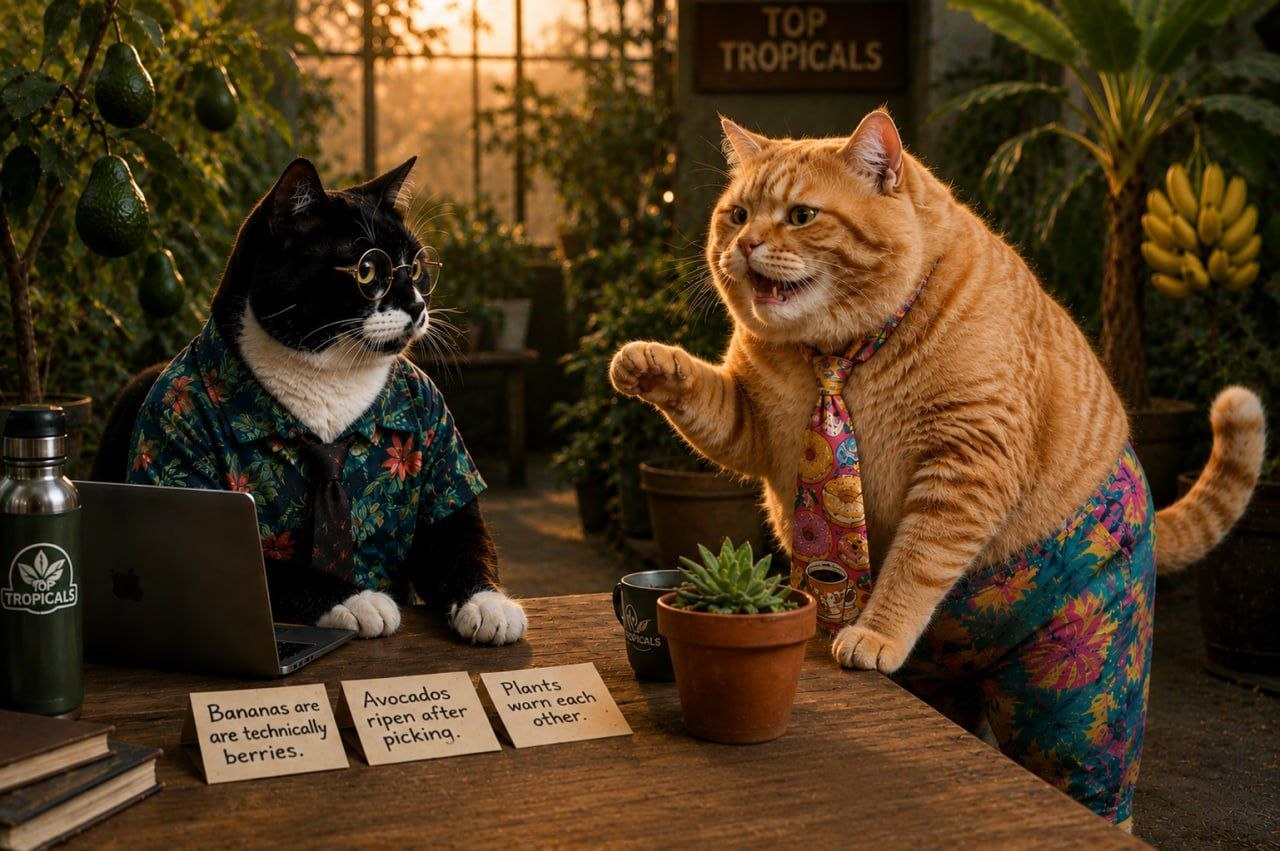
Sunshine: Smokey, I have a date in one hour. Smokey: Congratulations. Try not to order donuts. Sunshine: I will try really hard. She is very smart. I need to sound intelligent. Smokey: Then don't open your mouth. Your IQ will appear much higher. Sunshine: You were on Jeopardy. Give me some random facts to impress her with my knowledge. Smokey: I lost in the first round. Sunshine: You still know more than me. Smokey: Everyone knows more than you, Sunshine. How random? Sunshine: Smart random. Not weird random. Smokey: Those are the same category, Sunshine. Sunshine: Just give me the facts. Smokey: Avocados don't ripen on the tree. They mature there, then ripen after picking. Sunshine: That sounds like personal growth. Smokey: Plants warn each other about insects using chemical signals. Sunshine: Romantic. Mysterious. Slightly terrifying. Smokey: Bananas are technically berries. Sunshine: Perfect. I'll say that and then stare thoughtfully at my coffee. Smokey: Don't say everything you know in the first five minutes. Sunshine: What if she asks about dessert? Smokey: Then you'll be fine. Sunshine: What if she doesn't? Smokey: Lead with the banana thing. And please — not your ridiculous pants. Sunshine: They are a statement. Smokey: Yes. The statement is do not approach me
The year is almost over but the winter is not. This Christmas weekend at
our Sebring B-farm we had it down to 30F. As a tropical gardener, winter can
be challenging, especially if you grow plants outside of tropical zones.
To protect your garden from the cold, consider the following:
1. Monitor freeze watches and be prepared to take action if
necessary.
2. Create temporary structures like mini-greenhouses using PVC pipes,
carport frames, or bamboo sticks to support covers.
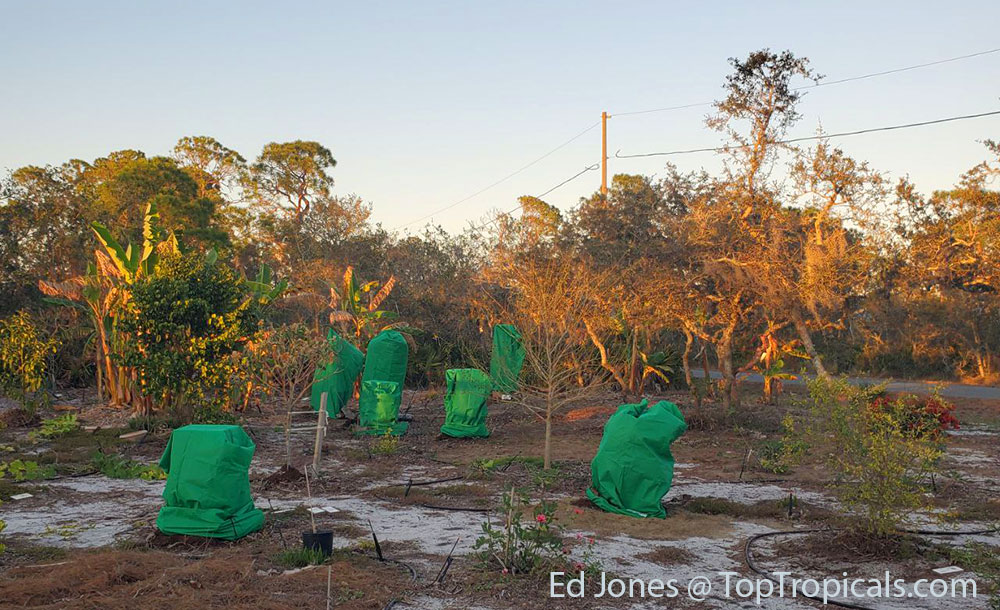
3. Use covers such as frost cloth, cardboard boxes, blankets, and bed
sheets.
4. Use Christmas lights and other heating elements, including propane
heaters, to keep plants warm.
5. Add a layer of heavy mulch around plant trunks to protect them from the
cold.
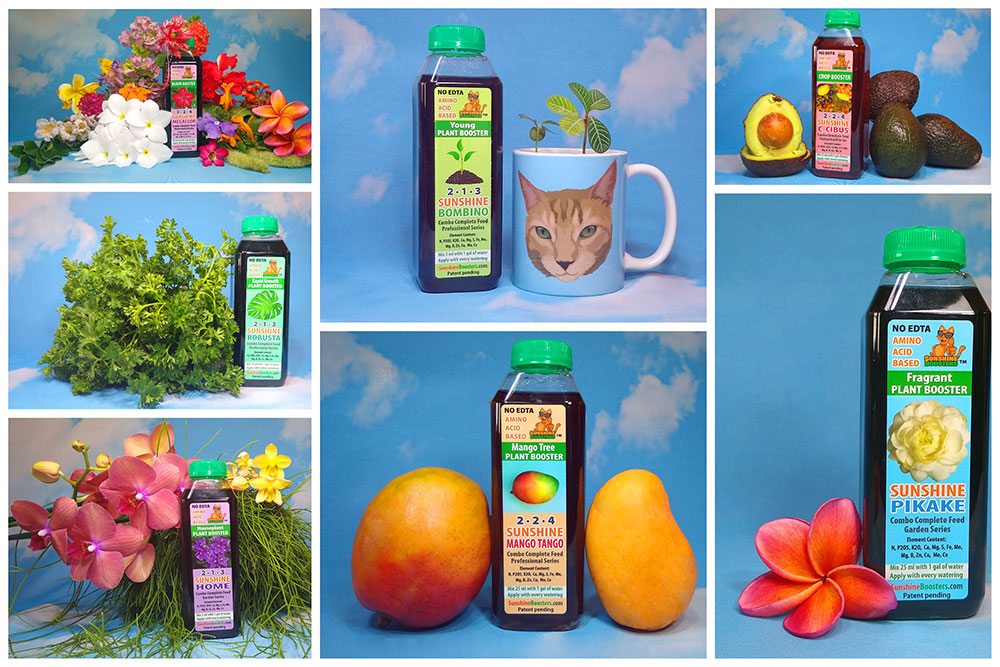
6. Apply plant boosters that improve cold hardiness, such as Sunshine Epi,
Sunshine-Si, and Sunshine Superfood.
At TopTropicals B-Farm, we sprayed our plants with a special cold hardiness treatment Sunshine-Si and covered and wrapped
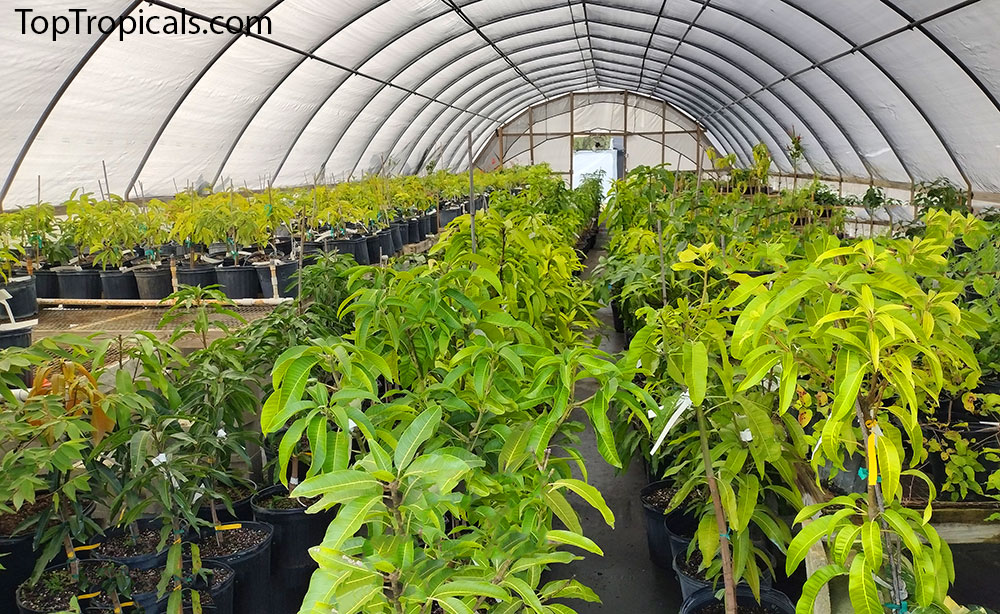
everything we could. We also moved cold sensitive species inside greenhouses.
All of our plants are looking great and happy!
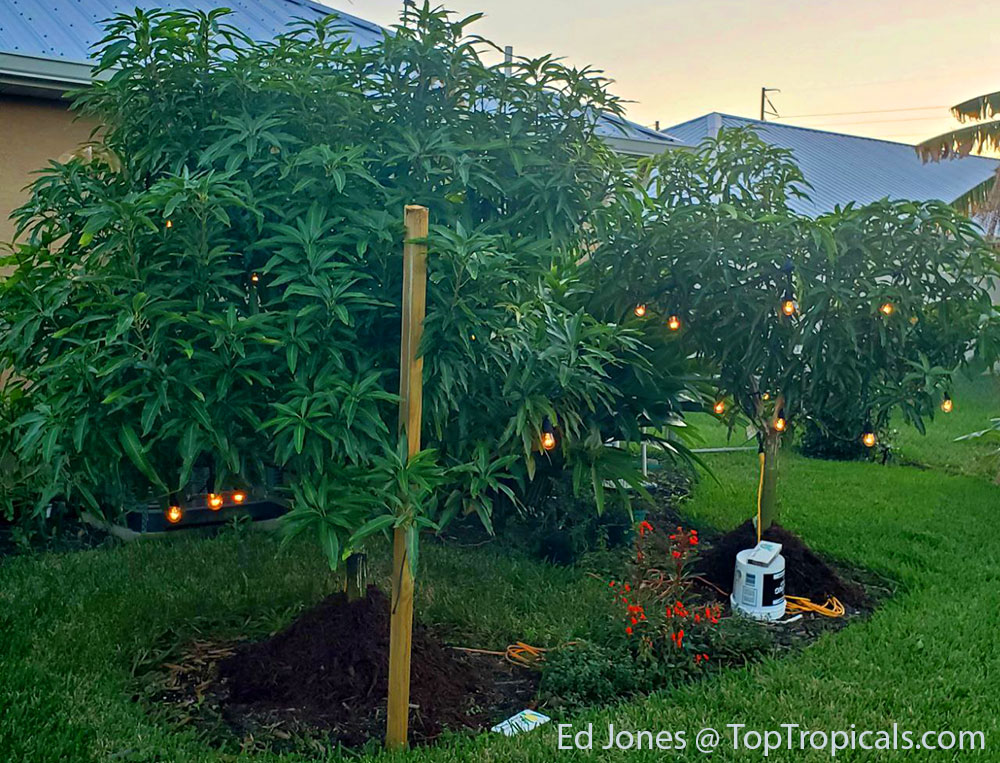
Photo above: Mulching mango trunks and using Christmas lights for
cold protection
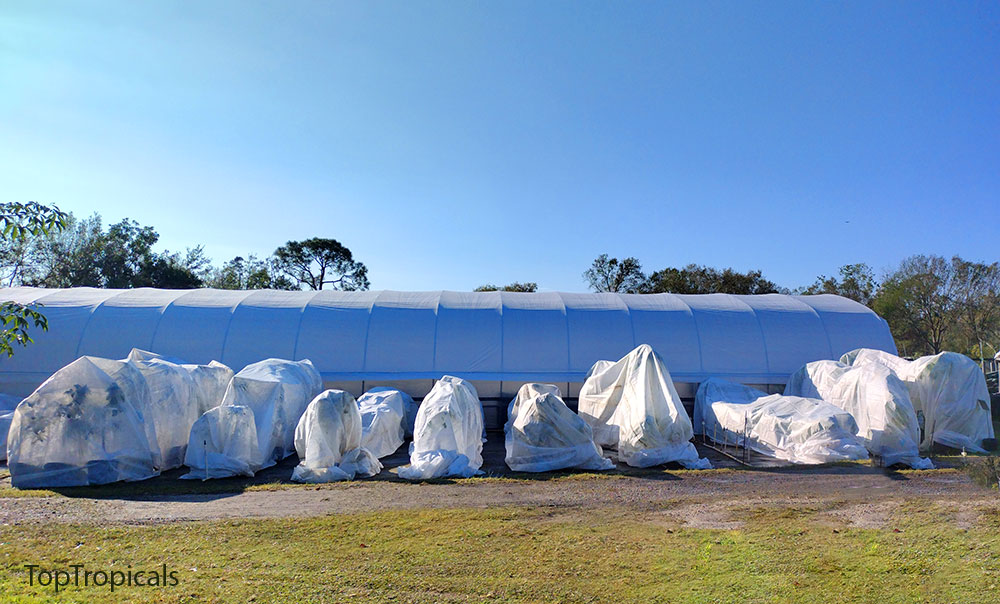
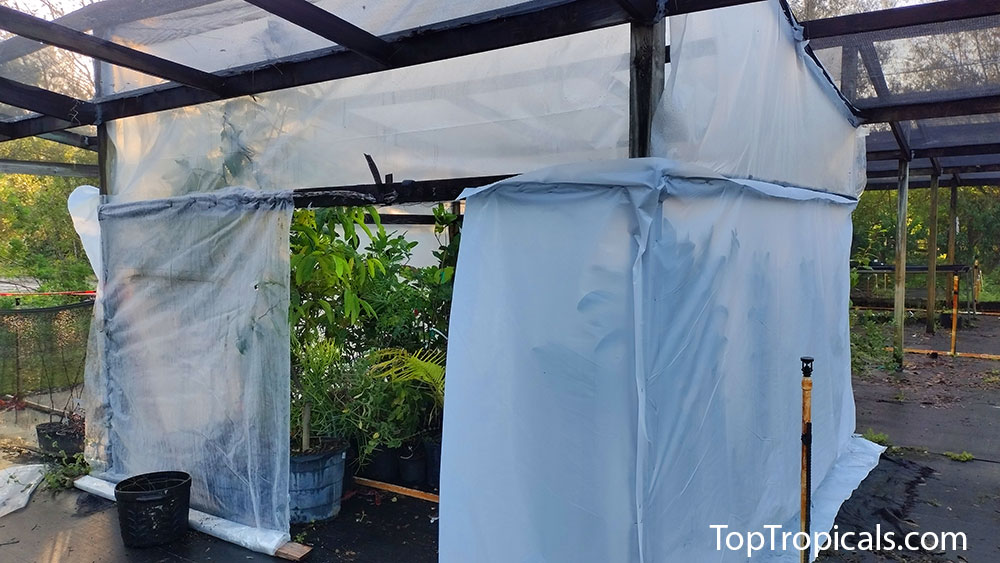
Photo above: Temporary wrapping of a section of a greenhouse with a
plastic or frost cloth protects from a windchill. It may also win you a few
degrees even without a heater. In this particular case, according to our temp
sensors, it was 30F outside, and 41F inside this "dome", no heaters used.
Sunshine Boosters:
Last chance to stock up at a lower price!
Sunshine
Boosters are natural, amino acid-based liquid fertilizers made with only
the highest quality ingredients. Starting in 2023, the pricing for Sunshine
Boosters will be adjusting to reflect the increasing cost of supplies. This is
your last chance to stock up on Sunshine Boosters before the end of the year!
Sunshine Boosters are safe to use year around, with every watering.
Don't miss out on this opportunity to get the best
value for your money!
Use discount for even better
deal:
22FOR22
for 22% off orders $220+
Min order $220. Offer expires 12-31-22
Date: 26 Oct 2018
Improving cold hardiness before
winter: fertilizer and micro-elements
Q:
I live in New Jersey and it is getting cool here, with
temperatures in the upper 40s, but my tropical plant
collection is in a heated sunroom (still around 70s).
Should I continue fertilizing my plants? And if yes, my
second question about deciduous Sugar Apple tree. Should I
continue fertilizing it until it drops leaves?
A:
First of all, even though you live outside tropical
climate, your plants enjoy warm temperatures year round,
and can be treated like if they were in a Southern
garden.
Plant nutrients, both macro-elements (regular
fertilizer) and micro-elements (such as iron, manganese,
magnesium, copper, and other elements) play an important
role not only in overall plant health but also in plant
hardiness.
The rule of thumb is, even in warm climates we cut off
any fertilizer by the end of October. You still have
time for the last treatment this year (next will be in
March, or when your plants start showing new growth).
You may apply just a bit of slow-release granulated
fertilizer, or water-soluble by foliar spray, diluted
1/2 of label strength, to all evergreen species in your
collection.
The most important application before winter is
micro-elements and other plant boosters that will help
you plant collection survive winter months with a
shorter daylight and cooler temperatures. Now it is a
perfect time to make these simple steps:
1) Miscro-element applications, any one of: Superfood, Iron Supplement, Greenleaf.
2) Sunshine-T application: for
improving cold hardiness, plus immune system resistance
to insects and deceases.
3)
Sunshine-Honey application for all fruit trees to
encourage bigger and sweeter fruit next year.
Regarding your second question. Deciduous tropical
plants like Annonas, Adeniums, Plumerias, etc - do not
need regular fertilizer at this time, however, go ahead
and apply microelements Superfood complex, as well
as Sunshine-Honey, while
leaves are still green. These two will give a kick-start
to provide better flowering in spring, and production of
sweeter fruit later.
1. Plant a
tree... or a shrub, even just a small perennial will do. This plant will
make you feel good and accomplished for the whole year, until next Labor Day
(or even longer!). You will always see this fruit of your work and remember
your motivation, so things are not that bad with you!
2. Pull 66 weeds.
Needless to say, you have plenty of those in your yard at the moment.
Why 66? Just do it and see what happens. If you don't see any happy results,
pull another 66.
3. Fertilize
all plants in your garden or potted collection with slow release fertilizer and microelements. Remember, this is the last chance to give them food and
strength to survive, before winter. Starting October, all leftover fertilizer
goes to storage, even in tropical gardens.
4. Apply SUNSHINEbooster to protect your plants from cool temperature, help to go into
dormancy and rest without stress.
Remember, there are products for all your pre-winter needs: Sunshine-T for improving cold tolerance, Sunshine-BC for caudex and bonsai plants, Sunshine-H for houseplants, and general booster Sunshine-E to cover all occasions... 50 and 100 ml bottles available for large plant collections.
Sunshine-Honey should be applied on all fruit trees to ensure their next
year successful crop.
5. Add extra
mulch in those areas where it was washed off with summer rains or broke
down. One day of mulch work will provide 6 months of safe overwintering for
your plants.
6. Have a BBQ
or simply a nice meal with your friends or family. Enjoy your holiday
relaxation after hard work weekend and recharge your Happiness for many days to
come.
Date: 31 May 2026
🔮
The Search for Enchanted Incense
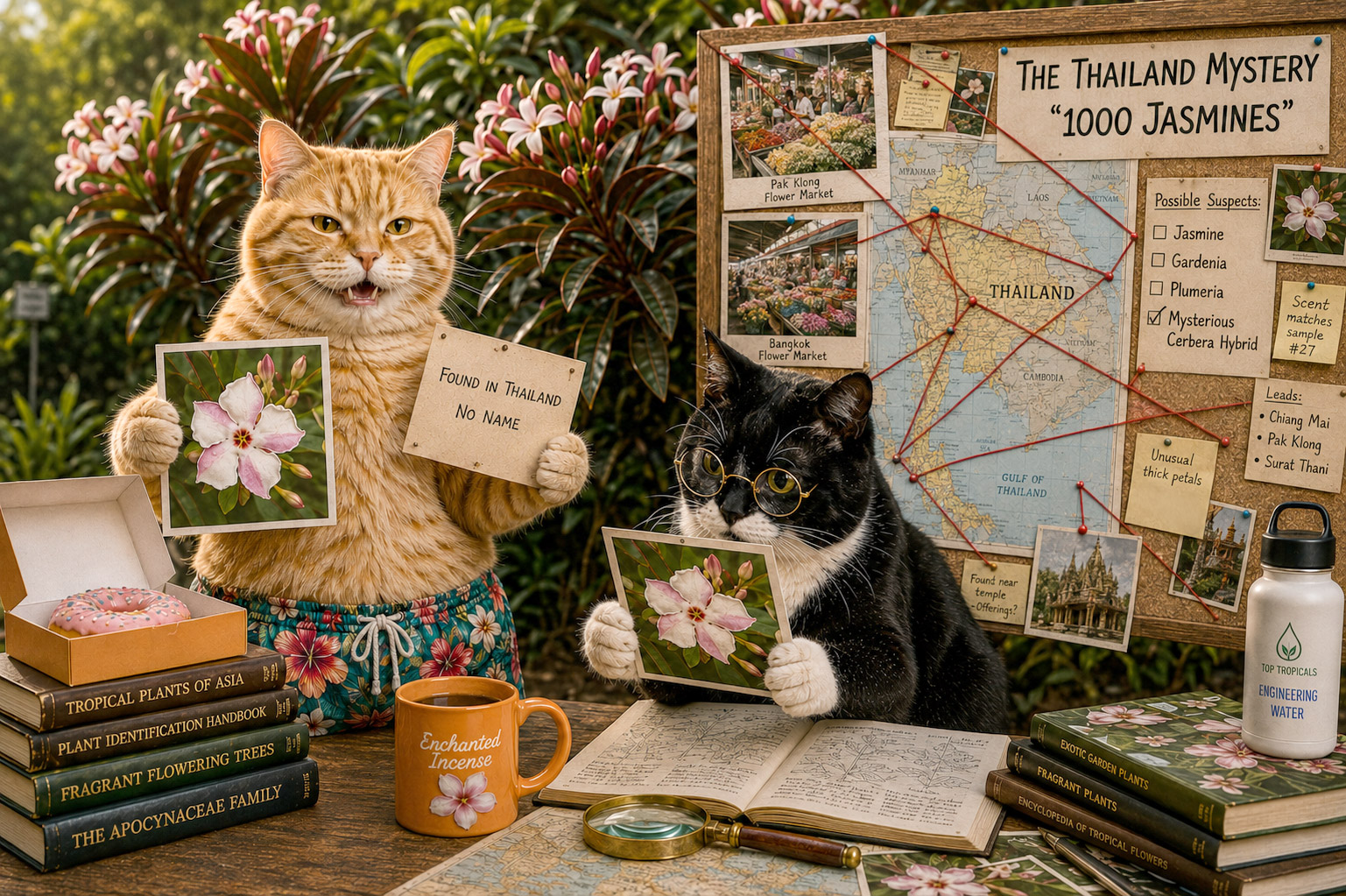
Sunshine: John said it smelled like a thousand
jasmines. Smokey: And somehow that's all the information he brought
back from Thailand. Sunshine: He brought a photo, too. Smokey: Excellent. We can begin our international manhunt.
Well, Smokey and Sunshine have closed the case and found the mystery
plant. The cork board is coming down, the magnifying glass is back in the
drawer, and the "Enchanted
Incense" mug is finally empty.
Now let's talk about the plant itself.
🌸 Some plants arrive with a label. Some arrive with a
story.
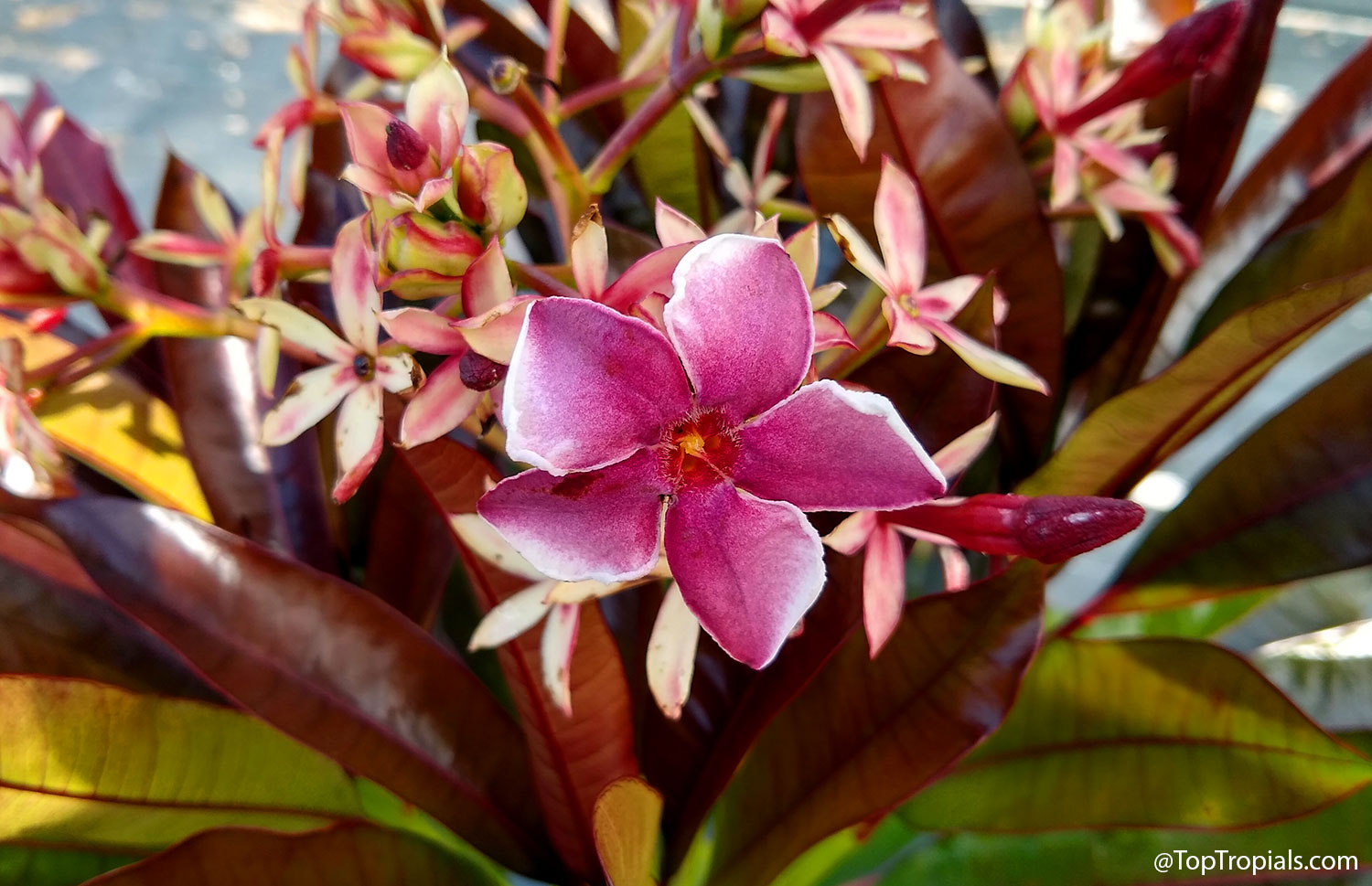
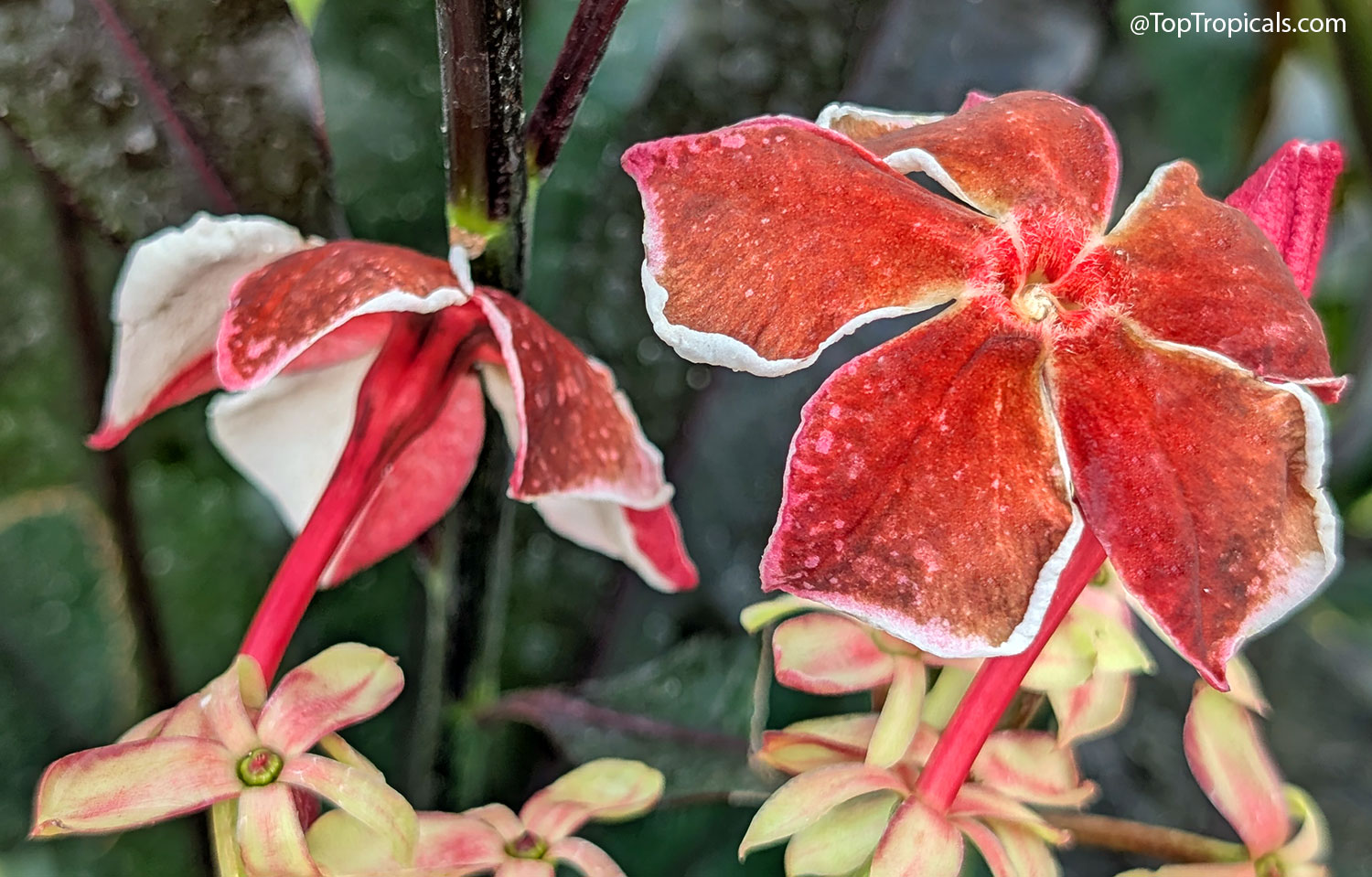
Cerbera x manghas - Enchanted Incense - produces some of the most
unusual
fragrant flowers in the tropical garden. Its velvety reddish blooms,
outlined in white and carried on vivid pink tubes, create an exotic display
that looks hand-painted.
When our good friend John Mood returned from a plant conference in
Thailand, he did not bring us a plant. He brought us a mystery.
John had spent decades growing and collecting rare tropical plants. When he
said he had found something special, we paid attention.
On a visit to Chatuchak
Market, one of the most famous plant markets in Asia,
something stopped him. Not the flowers. The fragrance.
"I found a plant that smells stronger than a thousand jasmines," John
told us.
That one sentence stayed with us for years.
He had photographs. He had his memory of that scent. What he did not have
was a name. No tag. No seller information. Just the photos and the certainty
that he had smelled something genuinely unusual.
So we started looking.
We showed the photographs around. We asked collectors. We compared flowers.
Every lead turned into another question. But eventually, after years of
searching on and off, we found it.
The mystery plant turned out to be an unusual Cerbera
unlike anything we had grown before.
Today we call it Enchanted Incense. Fragrance lovers recognized
immediately what John had recognized in that Bangkok market. This was not
just another pretty tropical flower.
🌸 The Plant
Even when
not in full bloom, Cerbera
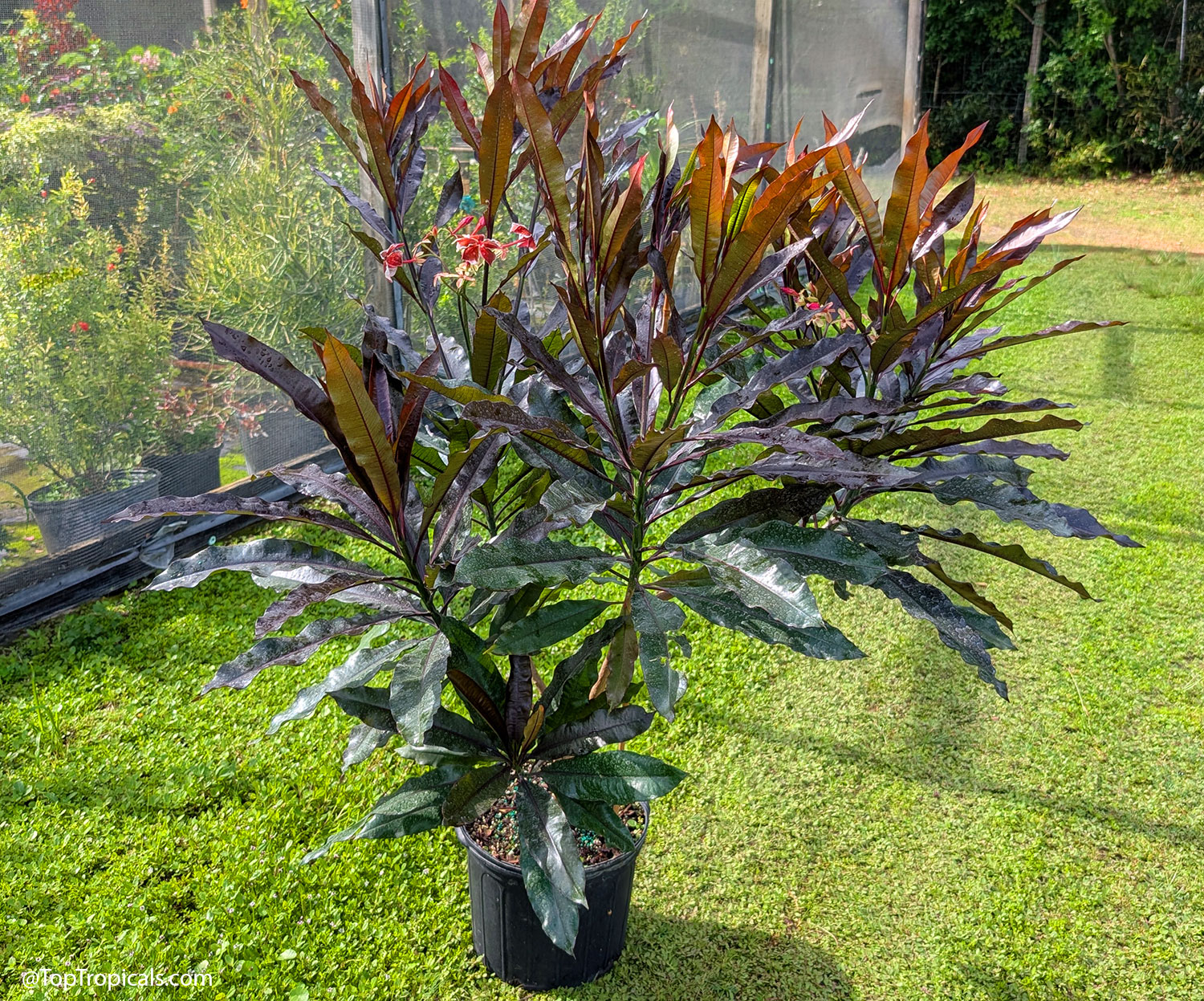
x manghas Enchanted Incense is a standout plant. Its glossy, deep
burgundy foliage and bronze new growth create a bold tropical presence,
while the unusual flowers add an extra layer of intrigue.
Visitors at our nursery still walk past it and stop. Not because they
noticed the plant. Because they noticed something in the air and could not
figure
out where it was coming from.
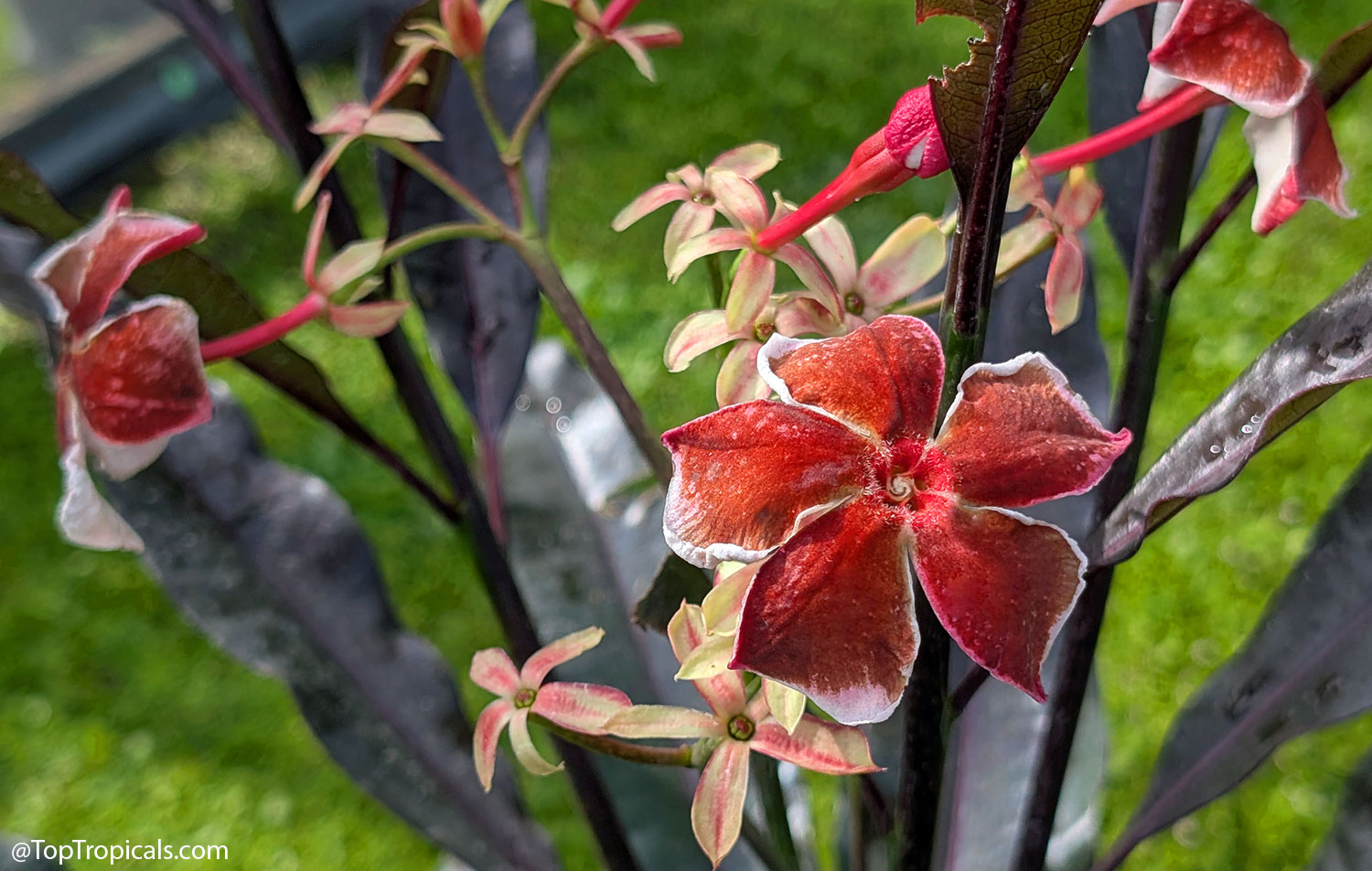
The flowers start soft pink and white, then deepen to rich red and auve as
they mature. They come in clusters, four to five inches across, and the
fragrance they produce does not stay close to the flower. It moves. It fills
the space around the plant. On a warm morning it can perfume an entire
patio.
The foliage is worth mentioning too. Deep green leaves with burgundy and
mauve tones that make it attractive even when it is not blooming. The growth
habit is slow and slightly weeping, similar to plumeria,
which is no coincidence since they are close
relatives. Unlike plumeria, Enchanted Incense stays evergreen in warm
climates.
It is a compact, slow-growing small tree that is happy in a container. That
makes it practical for gardeners in colder climates who need to bring it in
for winter, and for anyone who wants a fragrant plant near a seating area
rather than somewhere across the yard.
🌸 Why We Grow It
The
flowers of Cerbera
x manghas - Enchanted Incense - look otherworldly. Deep reddish petals,
bright pink
tubes, and contrasting white edges combine to create one of the most
distinctive fragrant blooms.
We grow thousands of plants, and most can be described in a sentence or
two.
This one cannot.
A large Enchanted Incense grows right outside our office. Every year it
reminds us why we
spent so much time searching for it.
Visitors stop beside it and ask the same question: "What is that
smell?"
They usually notice the fragrance before they notice the plant.
Some follow the scent across the nursery. Others stop in the middle of a
conversation and start looking around. Nearly
everyone ends up standing next to the tree trying to figure out where that
incredible fragrance is coming from.
In a world full of beautiful tropical plants, Enchanted Incense remains
one of the few that announces itself before you even see it.
Cerbera
x manghas -
Enchanted Incense can display remarkable variation in flower color. This
form
combines soft rose-pink blooms with white-edged petals and rich burgundy
foliage, creating a striking contrast throughout the plant.
Light: Full sun is best (at least
six hours
daily). It will tolerate partial shade but blooms much more generously in
good
light.
Watering: Water regularly during
warm weather. In cool weather and winter, keep the soil on the drier side.
Overwatering when
temperatures are low is the most common mistake.
Soil: Use a well-draining mix. This
plant absolutely does not want wet feet.
Fertilizer: Feed with a
Green Magic
controlled-release fertilizer for flowering plants in spring, supplemented
with occasional liquid fertilizer through the summer. For non-stop blooms
without the risk of
salt build-up in containers, we highly recommend
Sunshine
Boosters™.
Read
our Guide to Sunshine Boosters™ and Green Magic fertilizer
Winter Care: Bring it indoors
when temperatures approach the mid-30s°F. The rootstock is fairly
tough,
but the foliage is not. Cold and wet conditions combined are the real risk.
One Last Thing
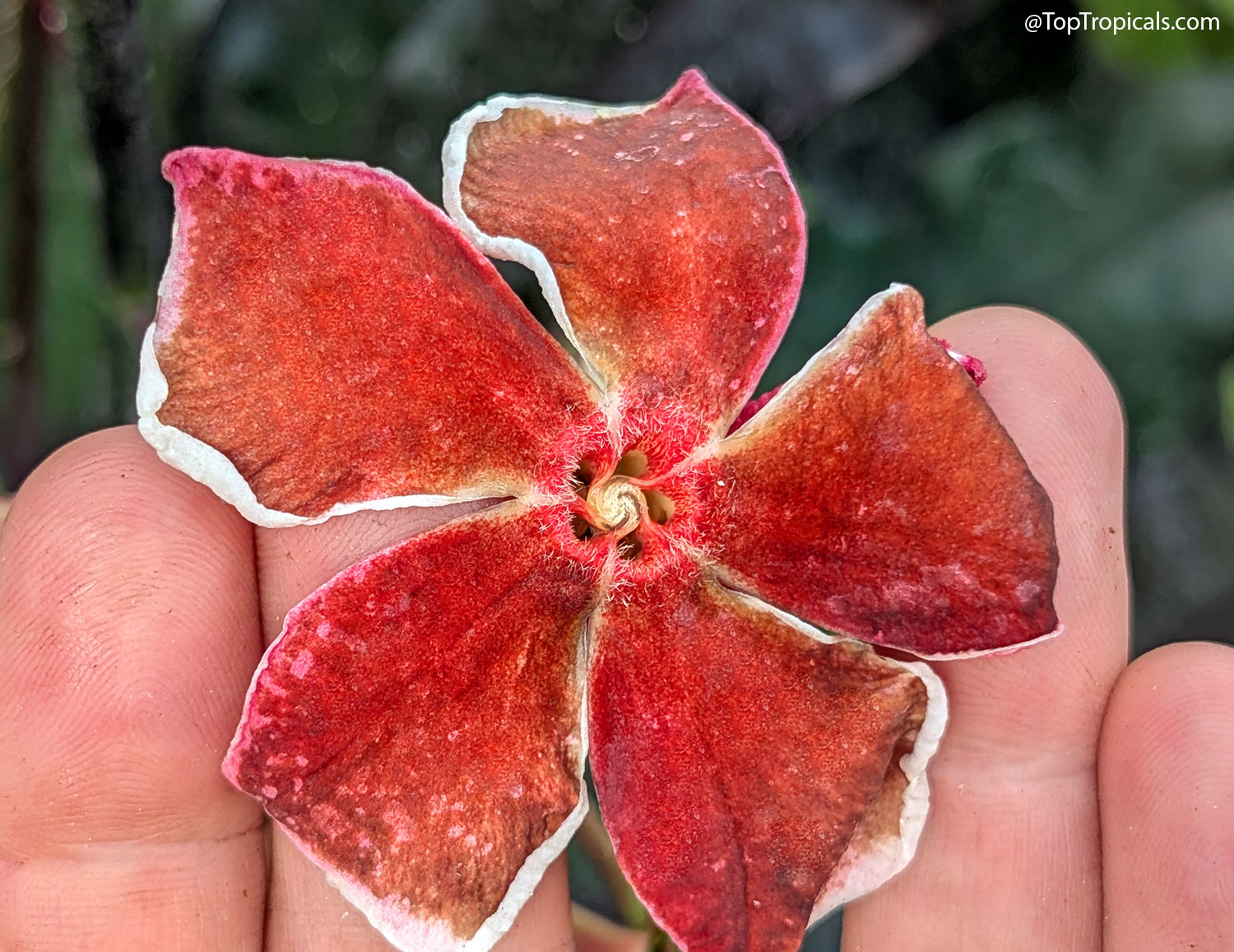
A closer
look reveals the remarkable details of Cerbera
x manghas - Enchanted Incense.
The velvety petals, crisp white edging, and fuzzy pink center give the
flower an appearance
unlike anything else in the garden. And then comes the scent...
John came back from Bangkok with a few photographs and a fragrance he
could not forget. It took us years to track down the plant behind that
memory. We have never regretted a single minute of the search.
Sunshine: So after all those years, what's the answer? Smokey: Stand next to the plant. Sunshine: That's it? Smokey: The fragrance explains the rest.
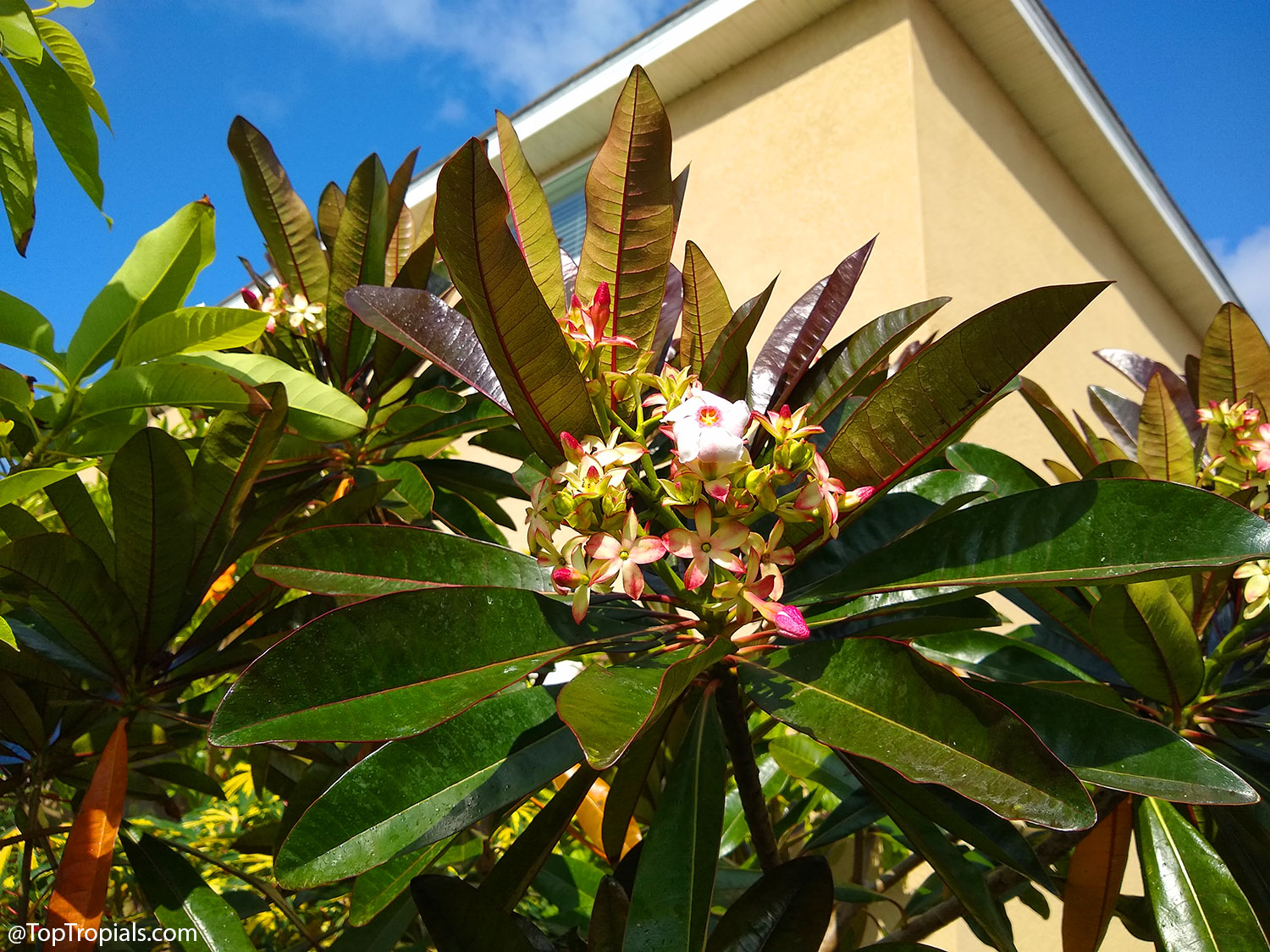
A closer
look reveals the remarkable details of Cerbera
x manghas - Enchanted Incense develops into an attractive small tree
with lush evergreen foliage and colorful new growth. In the
landscape, it combines year-round structure with clusters of bright
redding-pink fragrant flowers that stand out beautifully against the glossy
leaves.



 Growing Tips