Garden Blog - Top Tropicals

Date: 18 Sep 2025

Passion fruit fizz: Quick-n-Fun exotic recipes

Passion fruit fizz: Quick-n-Fun exotic recipes

🍴 Passion fruit fizz: Quick-n-Fun exotic recipes 🍹


  • 🔴Scoop passion fruit pulp into sparkling water with a squeeze of orange juice.
  • 🔴A bubbly, tangy tropical soda!
  • 🔴You may add a plash of Rum (optional)


🛒

Passion fruit fizz recipes

Ingredients

  • 2 passion fruits (pulp scooped)
  • 1 cup sparkling water
  • 1 tbsp orange juice
  • (Optional) 1 shot rum

Instructions

  1. Scoop passion fruit pulp into a glass.
  2. Add sparkling water and orange juice, stir gently.
  3. Optionally add a splash of rum.
  4. Serve chilled with an orange slice garnish.
Shop Passion fruit plants

#Food_Forest #Recipes

🟢 Join 👉 TopTropicals

Date: 28 Sep 2025

10-minute recipe Bo La Lot with a leaf youve never cooked before!

Bo La Lot recipe with Vietnamese pepper Lalot (Piper sarmentosum)

🍴 10-minute recipe Bo La Lot with a leaf you’ve never cooked before!

  • 🌮 Forget boring tacos - this wrap will blow your mind! In Vietnam they call it Bo La Lot - beef wrapped in peppery Lalot leaves.
  • 🌮 It started as grape leaf wraps in the Middle East, but in tropical Asia grapes don’t grow, so people swapped to Lalot. Way more flavor than grape leaves!
  • 🌮 Grilled beef, garlic, onion, lemongrass - all can be tucked into these shiny green leaves. Smoky, juicy, and so good you’ll wonder why you didn't try it sooner! It's better than grape leaf wraps, because it has so much flavor!
  • 🌮 Most large leaf pepper plants will work for this recipe - Vietnamese pepper Lalot (Piper sarmentosum), Betel Leaf (Piper betle), or even large leaves of the traditional Black Pepper plant (Piper nigrum).


🌯 BO LA LOT RECIPE


✔️ Ingredients

  • · 1 pound ground beef or turkey
  • · 2 tablespoons chopped lemongrass (optional)
  • · 1 tbsp spice powder
  • · 1 tbsp curry powder
  • · 1 tbsp finely minced garlic
  • · 1 tbsp oyster sauce or fish sauce (optional)
  • · 1 tsp ground black pepper
  • · 1 tbsp finely minced shallots
  • · 1 tbsp soy sauce
  • · 2 tsp sugar or honey
  • · 1/2 tbsp olive oil
  • · 1/2 tbsp salt
  • · 10-15 fresh Lalot leaves


👉 Directions

  • · Preheat the grill.
  • · Combine all ingredients in a large mixing bowl and mix well.
  • · Wrap about 2 tablespoons of the mixture into each betel leaf.
  • · Spear 3 to 4 betel leaf wraps onto a skewer and grill until the meat is thoroughly cooked.
  • · Be sure to eat immediately.


🛒 Grow Leaf Pappers for tasty, peppery recipes

📚 Learn more:


📱

#Food_Forest #Recipes #Container_Garden #How_to

🟢 Join 👉 TopTropicals

Date: 20 Oct 2023

How to help a weak tree to recover and thrive?

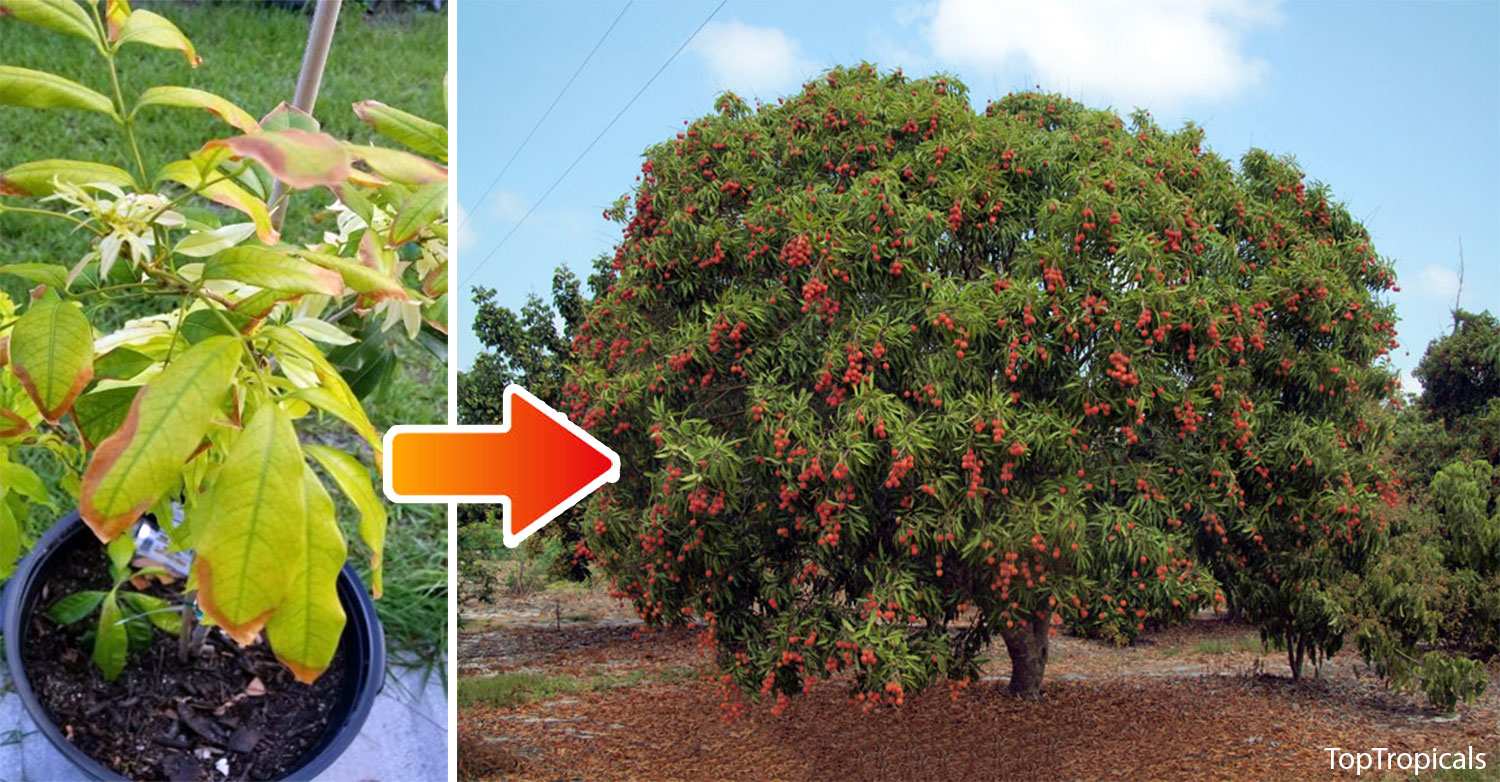
small  and  large  lychee  tree

Q: Look at my sad looking Lychee tree. Can you share with me any ideas about this tree condition?

A: From the photo (left), we see a few potential issues. The problem might be due to a combination of factors such as a heavy potting mix with poor drainage, over-watering, an underdeveloped root system sensitive to these conditions, leaf burn, and a lack of nutrients.

Suggestions for fixing the problem

1. Soil mix. First, assess the quality of the soil. If the plant has been in the same pot for a while, the soil at the bottom may have become compacted, leading to poor drainage. If this is the case, carefully remove the root system from the existing soil (by removing excess soil around the roots without disturbing the roots themselves). Repot the tree into fresh, well-draining potting mix with good drainage characteristics, which typically contains materials like bark and perlite. Ensure that the new pot is exactly the size of the root ball; using a significantly larger pot can lead to soggy conditions that harm the roots.

2. Light. Place the potted tree in an area with filtered light, avoiding direct sunlight throughout the day.

3. Water. Control the watering. During this recovery period, your plant will need very limited water until it shows signs of improvement and new growth. After repotting, water it thoroughly just once, and avoid watering again until the top layer of soil becomes dry. Then, water as needed. Avoid keeping the soil consistently wet, especially during rainy periods. Protect the plant from excessive rain.

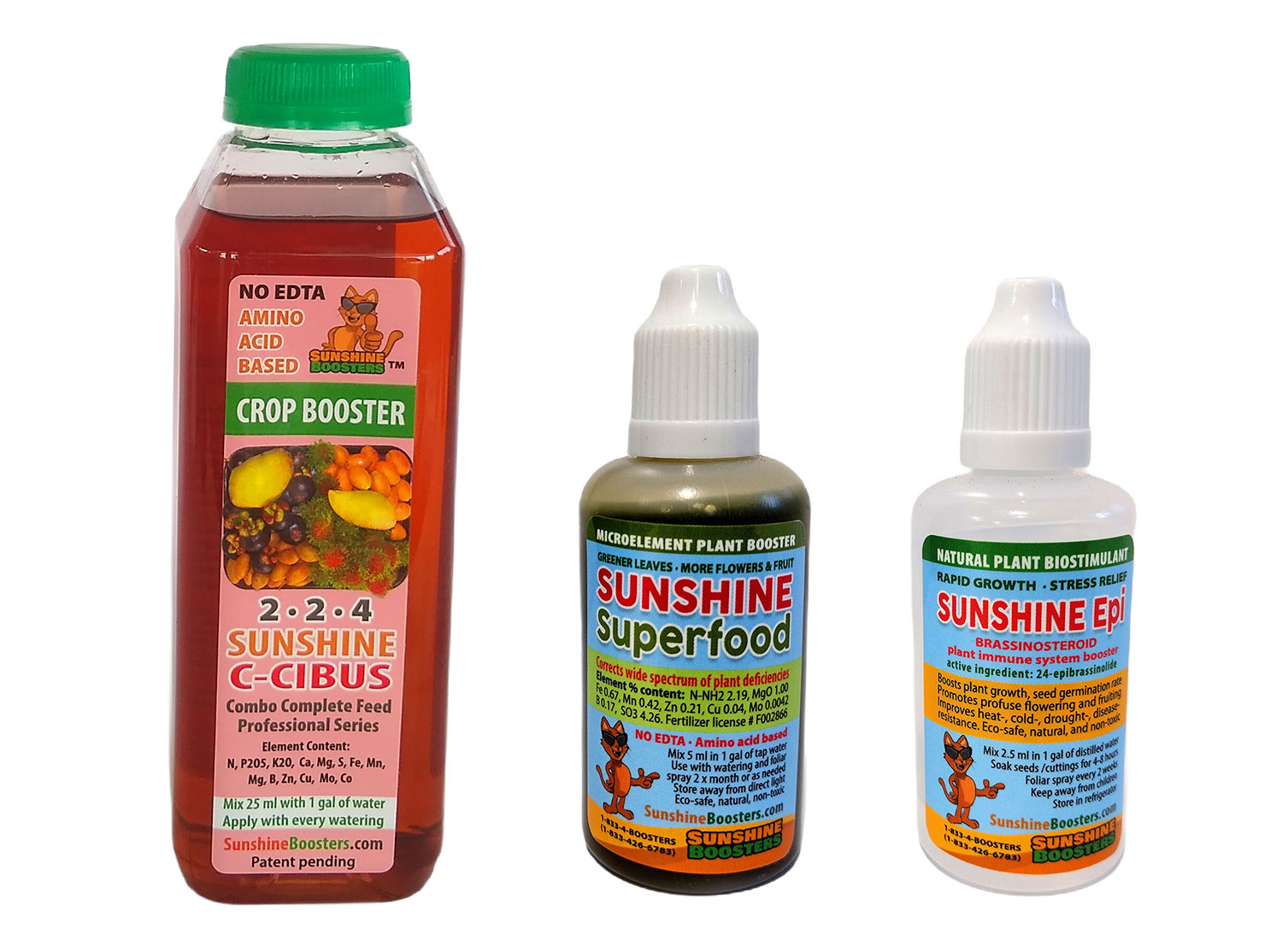
4. Supplements. Consider applying Sunshine Superfood micro-elements following the label instructions, once a month. Additionally, using Sunshine Epi bio-stimulant, sprayed every other week, can help the plant recover from stress and encourage growth. You can also use Sunshine C-Cibus at half the recommended concentration with each watering. Hold off on any other fertilizers until the plant has sufficiently recovered and begins to show signs of new growth.

5. Transplanting. If you plan to transplant the tree into the ground, it's advisable to wait until spring when nighttime temperatures consistently stay above 65F for at least two weeks.

6. Temperature. Keep the tree in a warm environment. When temperatures drop below 50F, bring it indoors.

These steps should help the tree recover, grow healthy leaves, and establish a better root system, preparing it for successful transplantation into the ground or a larger container, ensuring a happy and productive life ahead.

Sunshine  Boosters:  C-Cibus,  Superfood,  Epi

Date: 31 Mar 2023

Elderberry Kir Royale

Grow your own... drink and medicine

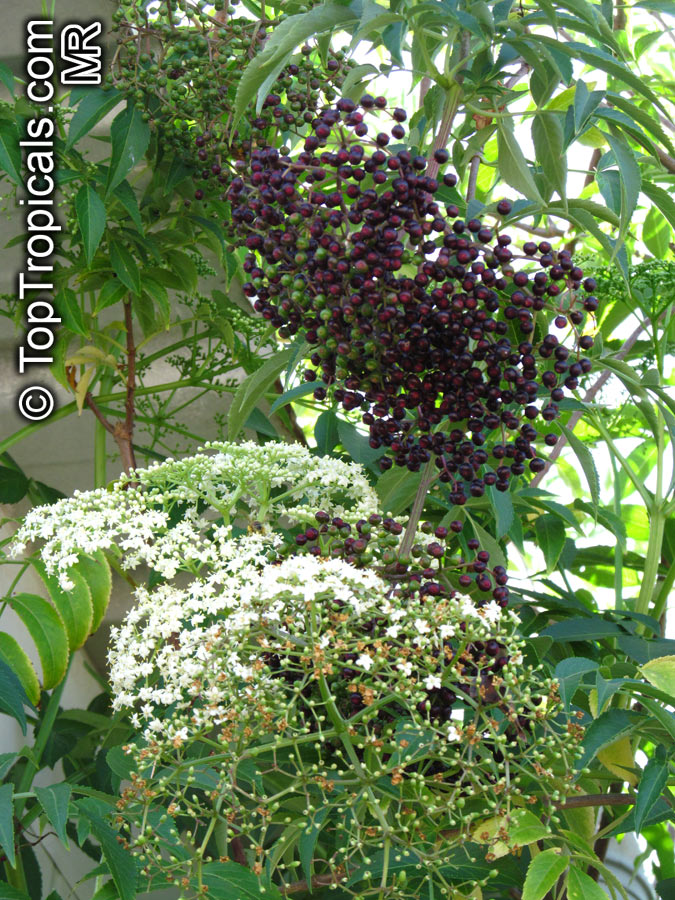
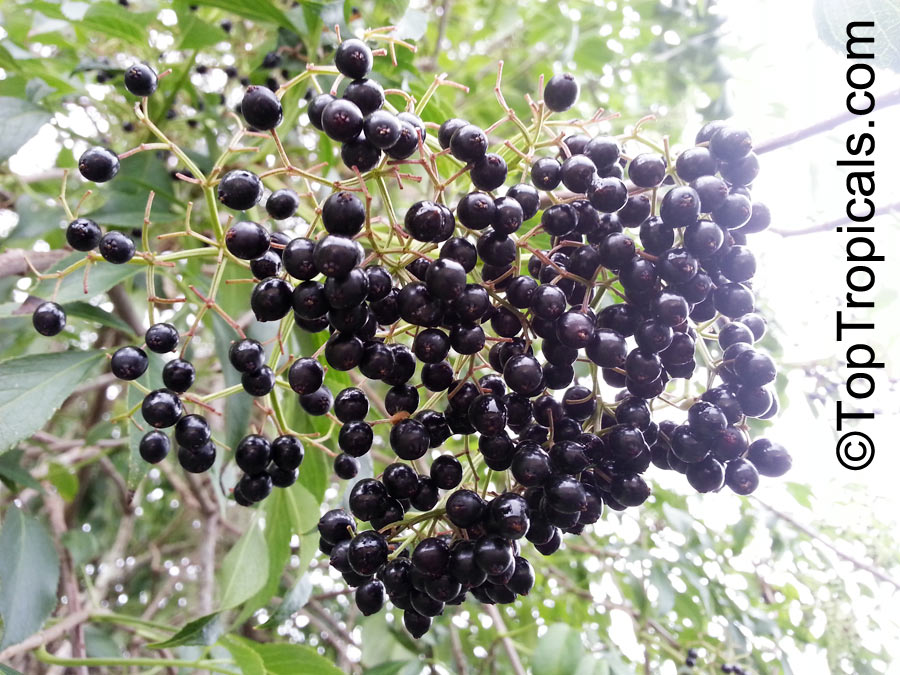
Sambucus  canadensis  (nigra)  -  Elderberry,  American  Elder

In the summertime, Elderberry bushes transform into small, bushy trees adorned with sizable umbels of white flowers. As late summer approaches, the tree produces an abundance of dark purple berry clusters. Elderberry is known for its ability to withstand cold weather and can thrive in a variety of soils in either full or partial sun. While it typically grows to a height of 10 feet, its spreading can be managed through pruning.

This dense shrub is beloved by nesting birds, who are not the only creatures that appreciate its fruit. People also prize Elderberry for its delicious uses in winemaking, cocktails, and jellies. Elderberry syrup or cordial can be used to create flavorful fruity drinks and cocktails, like the Elderberry Kir Royale. Alternatively, the berries can be left to infuse their flavor into spirits, with Elderberry gin being a particularly delightful option.

Sambucus  canadensis  Elderberry,  American  Elder  berries

Elderberry Cordial

When it comes to combating various strains of the flu virus, Elderberry Cordial ranks among the top natural remedies. Whether sipped in small servings or drizzled over a delectable dessert, Elderberry Cordial is a guilt-free way to fortify your immune system against colds and flus.

2 cups of fresh elderberries
16 oz water

  1. 1/2 cups sugar

1/2 lemon (rind + juice)
2 tablespoons minced fresh ginger
  1. stick cinnamon, crushed
    1 ¼ cups dried elderberries

1/4 cup dried rosehips
About 3 cups brandy
Honey, to taste

Add all ingredients in a jar and cover with a lid. Set aside in a cool, dark place for 3-4 weeks. When ready to decant, strain and squeeze through cheesecloth. For every 1 cup of liquid retained, add 1/2 cup honey. Mix thoroughly. Pour the cordial into a decorative bottle for storage, or gift giving.

Elderberry Kir Royale Cocktail

5 oz white wine, sparkling wine or champagne
2 oz Elderberry cordial
Rocks
Mint leaves (optional)
Pour the Champagne in a flute glass. Add the Elderberry Cordial slowly.
Party time!

Elderberry  Kir  Royale  Cocktail

Date: 17 Sep 2021

Hibiscus: TopTropicals' first plant

- September 2001 @ TopTropicals -

Q: I wonder how you started your plant business and what was your first plant?

A: It was 20 years ago this month that we started Top Tropicals Project. No idea where it was going or how to even get "there", just started with the idea of sharing these wonderful creatures we call plants with anyone and everyone who felt the same way.

Believe it or not, the first plant at TopTropicals was a hibiscus. Right before we opened our plant nursery in Florida, we ran into a place called Winn Soldani's FANCY HIBISCUS. The variety of colors inspired us to start our own tropical plant business. We asked the owner Winn Soldani: what plants do you suggest us to grow in Florida? His answer was, "Your plant will find you". Very soon we discovered jasmines, then perfume trees and fruit trees - all those became our specialty. Then very quickly TopTropicals.com turned into a large Plant Mall where you can find every tropical plant you can think of!
But at TopTropicals we still grow hibiscus!

- September 2004 @ TopTropicals -

Hibiscus Plus

Hibiscus is a wonderful plant, considering there are thousands of hybrids with color palettes you can only imagine. Especially interesting are those rare and useful species, yet very easy to grow, such as:
- Salad Hibiscus - Hibiscus furcellatus - yes, used in salads
- Coral Hibiscus with crazy pendant flowers - Hibiscus schizopetalus
- African Cranberry hibiscus that is used for making teas and salads - Hibiscus acetocella
- Cotton Candy Hibiscus mutabilis - the flower changes color, opens as white and turns into bright pink within 3 days, like Yesterday-Today-Tomorrow
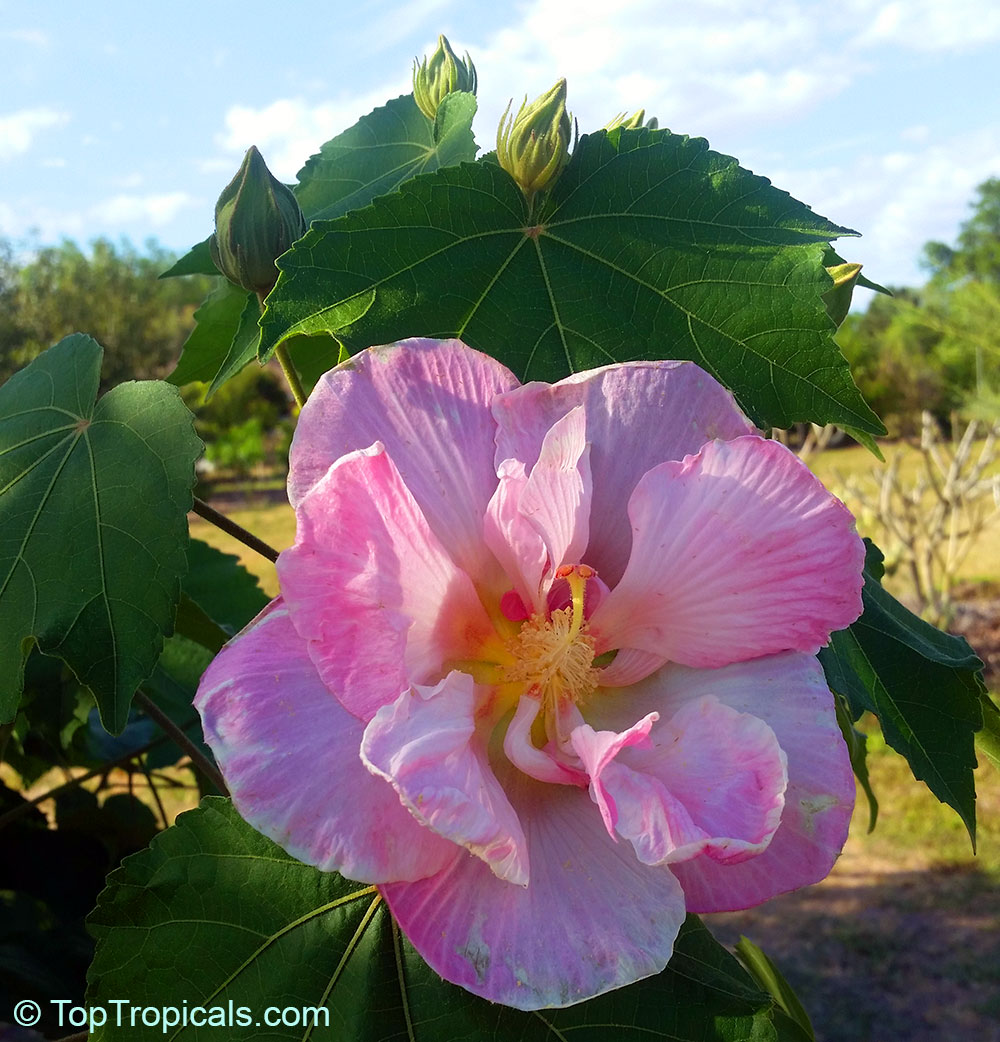
Photo above: Hibiscus mutabilis Cotton Candy

Care of Hibiscus and other flowering tropicals

"If your plant isn't flowering, feed it."
- Winn Soldani, Fancy Hibiscus -

Among gardeners, Hibiscus plants have a reputation to have couple maintenance issues:
1) they can get bugsy (because they must be so tasty!)
2) they can get leggy, especially fancy grafted cultivars, and after a while they don't look as perfect as when they came from a nursery.

4 tips for healthy and pretty hibiscus plant

1. Full sun. Essential for profuse flowering and keeps away diseases.
2. Pruning. Keep it pruned and it will get bushy and produce more blooms.
3. Well-drained soil. Hibiscus likes regular watering but hates wet feet.
4. Nutrition program. Hibiscus plants are heavy feeders. But keep in mind that if you just keep pushing granulated plant food, you can over-fertilize the plant. Excessive salts will accumulate in soil and you will end up with a sickly looking plant.

Keys to balanced plant food and bloom booster

1) Use liquid fertilizer, preferably amino acid based, it won't create nutrients lock up
2) Fertilize on regular basis, it's better dilute concentration and add food with every watering
3) Always add micro-elements - they are essential for plant health

If you do this part right, the result will be:
- healthy, green plants, like they just came from a nursery
- reliable blooming circle
- better cold tolerance and disease resistance. Remember that a strong plant will be less stressed and less "bugged" by bugs!

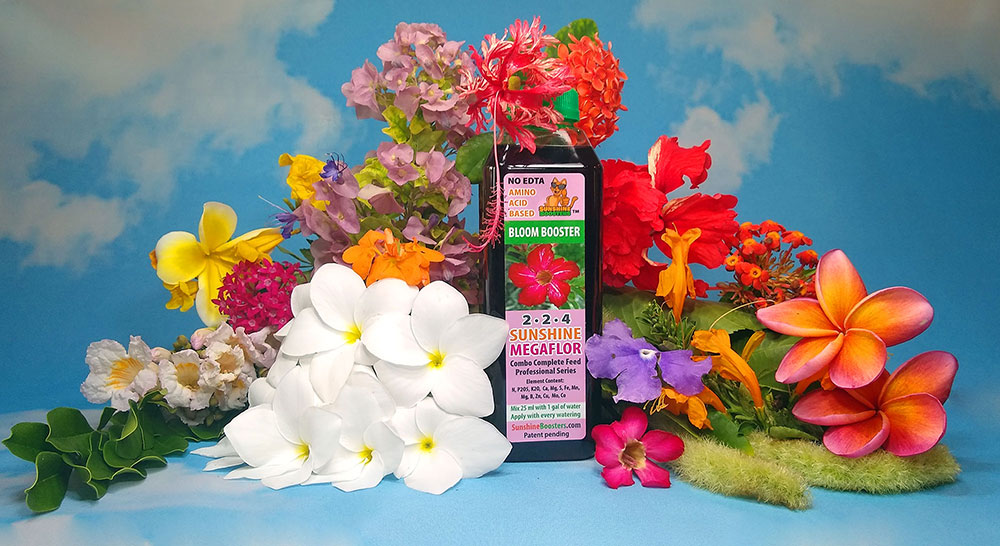
We always suggest Sunshine Boosters - scientifically balanced liquid fertilizers that are amino acid based = they are natural and organic, can be used for both flowers and edibles, and what's most important - year around. They are safe to use virtually with every watering.

This is all you need for healthy plants and lots of flowers!