Looking for a small tree that blooms like fireworks but still fits on
your patio? We hear this question all the time at Top Tropicals: Cassia or
Bauhinia? Both are tropical showstoppers, but they shine in very different
ways.
🌞
Cassias: Sunshine Fireworks
Cassia trees
are some of the most rewarding tropical bloomers you can
grow. Fast-growing, free-flowering, and surprisingly cold-tolerant, they
thrive in full sun and summer heat. Their bright clusters come in shades of
yellow, orange, pink, red, and even multicolor blends. The famous Rainbow
Cassias
show swirls of coral, gold, and rose on the same tree, creating a living
fireworks display.
Cassias can also be grown in pots with pruning and
patience. Once mature, they reward you with breathtaking color that turns
any patio
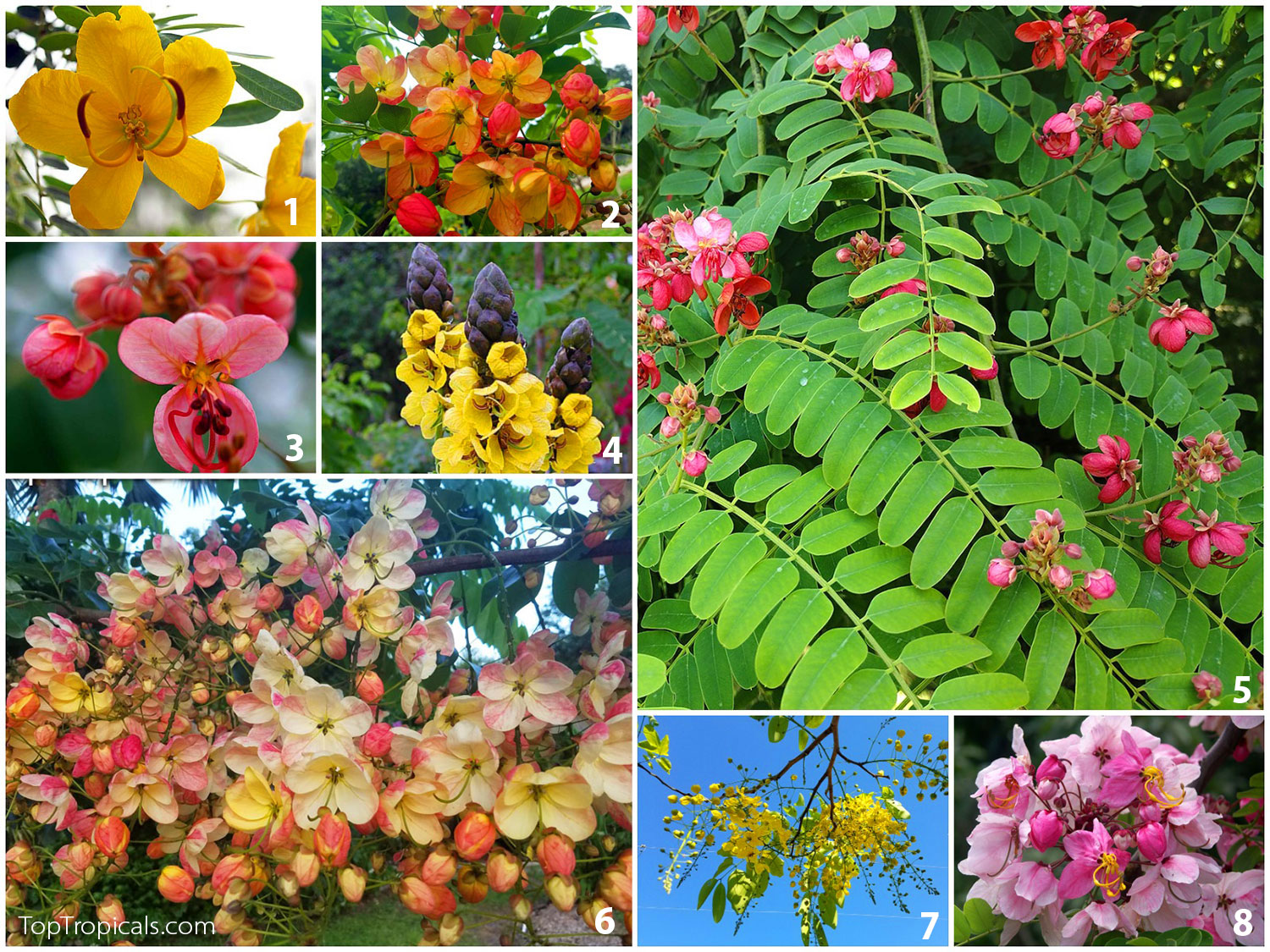
or pool deck into a tropical show. Most showy cassias (numbers correspond to
the photos in the collage above):
Cassia
bicapsularis (Butterfly Bush) - is a fast-growing,
low-maintenance shrub covered in bright yellow, butterfly-like blooms from
fall
through winter.
Cassia roxburghii (Ceylon Senna) - graceful tree with spreading,
drooping branches appearing to be overweighed by its wealth of clustering
red
blossoms.
Cassia
x nodosa (Pink Shower) - is a spectacular medium-sized, fast-growing
tree with cascading clusters of fragrant pink-and-white appleblossom blooms
in spring and summer.
Cassia fistula (Golden Shower) - to many tropical gardeners, the
most beautiful of cassias with masses of bright gold flower clusters appear
on
almost every branch.
Cassia javanica (Apple Blossom) - dazzles with dense clusters of
pink-to-white blossoms that change shades as they bloom, creating a
spectacular
display that lasts for months.
"Cassias love the heat and sunshine," says Tatiana
Anderson, Top Tropicals Plant Expert. "They are perfect for anyone
who wants big
bursts of color and doesn’t mind giving them space and light to grow."
Bauhinia Magic: Orchid-Like Blooms in a Compact Size
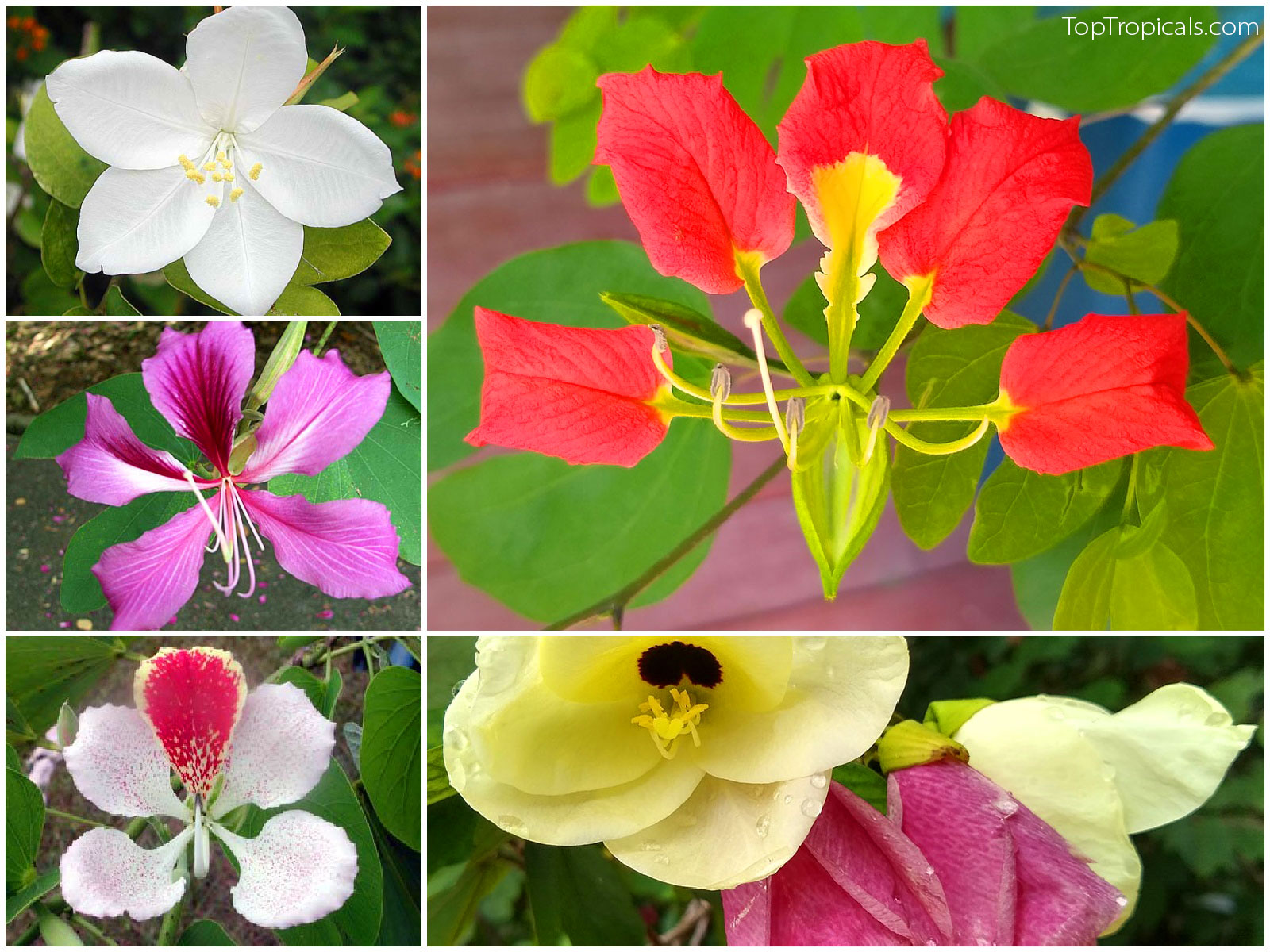
Bauhinia orchid trees: top left
– Bauhinia acuminata (Dwarf White Orchid Tree), middle left –
Bauhinia blakeana (Hong Kong Orchid Tree), bottom left – Bauhinia
monandra
(Napoleon’s Plume Orchid Tree), top right – Bauhinia
madagascariensis (Red Dwarf Orchid Tree), and bottom right – Bauhinia
tomentosa
(Yellow Orchid Tree)
Bauhinia trees
known as Orchid Trees, bring a touch of tropical luxury
to any space. Their butterfly-shaped leaves and orchid-like blossoms appear
in shades of red, pink, purple, white, and yellow, often lasting up to ten
months a year. Bauhinias are ideal for gardeners who want nonstop color in a
manageable size. Most species grow well in large pots and bloom young, often
within the first season.
The following compact varieties stay neat and flower almost
continuously in warm weather:
Bauhinia blakeana (Hong Kong Orchid Tree). A large tree in the
ground, but compact in pots if trimmed. Grafted trees flower right
away.
Winter bloomer, cold hardy to light frost.
The Hong Kong Orchid Tree is especially prized because it
is sterile and produces no messy seed pods, keeping patios clean. Grafted Buhinia
blakeana trees begin blooming while still small, making them perfect for
containers or tight spaces.
"Bauhinias are generous bloomers," Tatiana explains. "They respond
beautifully to regular feeding and full sun. If nights turn too cold, just
move the
pot to a sunny porch - they’ll keep their tropical charm most of the
year."
Give them full sun, regular fertilizer, and a well-drained
mix such as Sunshine
Abundance, and they will reward you with months of vivid
blooms. When nights turn too cold, simply move the pot to a sunny porch or
bright
window. Bauhinias adjust beautifully and keep their tropical grace year
after
year.
🎥
Watch Short Videos:
💲
Special Offer – 20% off Cassias and Bauhinias!
Get 20% OFF Cassias and Bauhinias with code
RAINBOW2025
Min order $100. Excluding S/H, valid online only,
cannot be combined with other offers.
Do Fruit Trees Increase Property Value? Tropical Plants That Pay Off
Yard with fruiting tropical trees
Landscaped yard in Florida
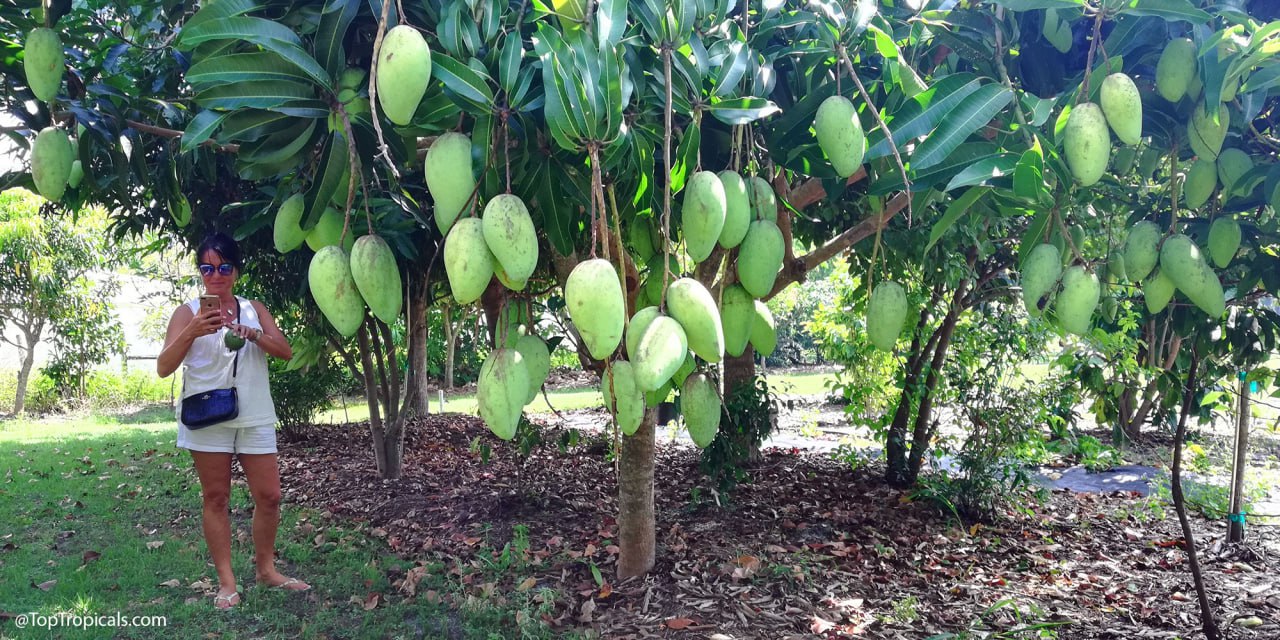
Mango tree fruiting in the garden
Do Fruit Trees Increase Property Value? Tropical Plants That Pay Off 🏡
Can your backyard pay for itself? Learn which 12 tropical fruit trees real estate experts say are the smartest investment for your landscape. Discover how tropical fruit trees like mango and avocado add "edible equity" and curb appeal to your property, making it more desirable to future buyers. Turn your yard into a private paradise that lowers grocery bills and boosts home value.
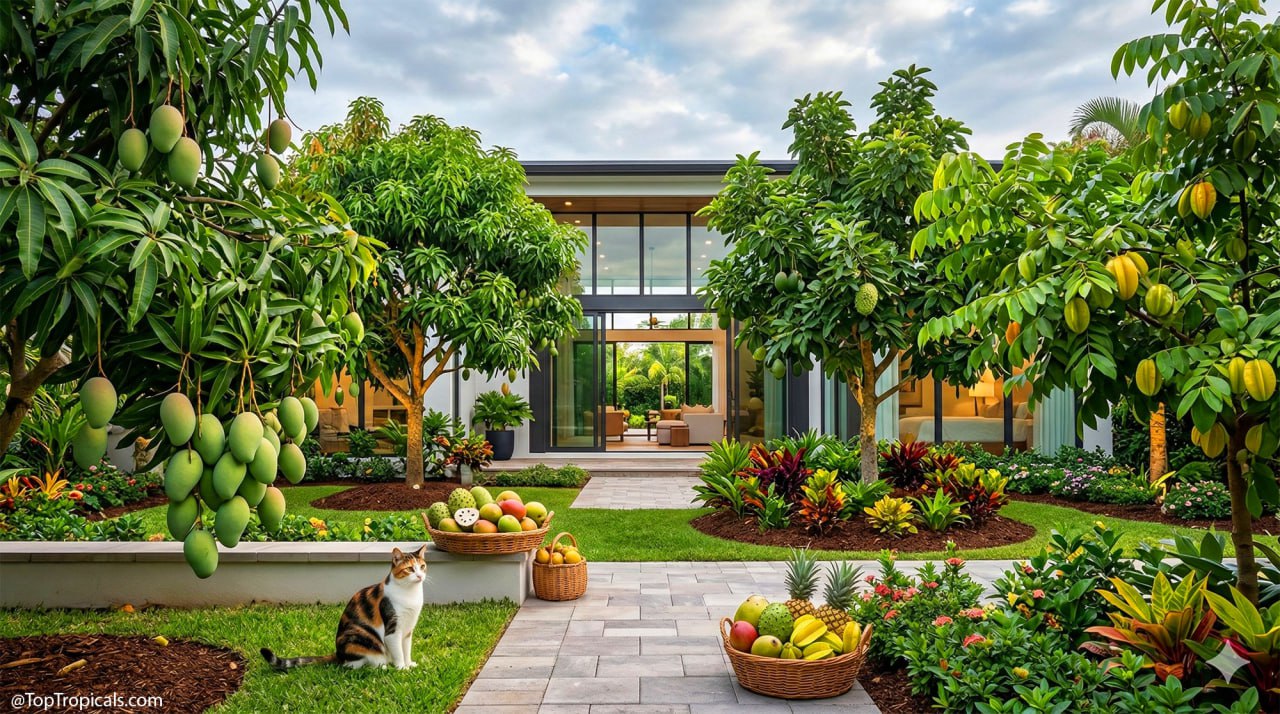
In warm climates like Florida, a mango tree isn't just landscaping - it’s a food-producing asset. Mature tropical fruit trees offer "edible equity," saving homeowners hundreds in grocery bills while creating a unique, memorable aesthetic for buyers.
Mango Plant Facts
Botanical name: Mangifera indica Also known as: Mango
USDA Zone: 9 - 11
Highligths
🥭 1. Focus on "Instant Recognition" Favorites
Trees buyers already know and love provide the strongest ROI. They signal that the yard is already productive - something new builds can’t offer.
• Top Picks: Mango, Avocado, Papaya, Banana, Guava, and Loquat.
Avocado Plant Facts
Botanical name: Persea americana, Persea gratissima Also known as: Avocado, Alligator Pear, Aguacate, Abacate
USDA Zone: 9 - 11
Highligths
• The Value: A single mature avocado or mango tree can yield hundreds of pounds of fruit annually.
🥭 2. Create a "Memorable Discovery" with Exotic Varieties
Unusual fruits turn a standard yard into a tropical orchard, acting as a conversation piece during home tours.
• The Exotic List: Jackfruit, Sugar Apple, Soursop, Sapodilla, Ice Cream Bean, and Star Fruit.
🥭 3. Strategic Placement for Energy Savings
Large-canopy trees like jackfruit or mango do more than provide food; they act as natural insulation.
• Natural Cooling: Strategic planting reduces afternoon sun exposure and lowers AC costs. • Indoor/Outdoor Flow: Use trees to frame window views, block neighbors, and create private "outdoor rooms."
🥭 4. The Power of the "Mini Orchard"
A collection of 3–5 trees creates a stronger emotional pull than a lone plant. Buyers begin to visualize a lifestyle of smoothies and harvests.
• Winning Combos: Mango + Avocado + Papaya or Guava + Star Fruit + Banana.
🥭 5. Maintenance: Health Equals Value
Fruit trees only add value if they look manageable. A neglected tree suggests a neglected home.
• Pre-Sale Prep: Prune for tidiness, mulch the base, and clear fallen fruit. • Spacing Matters: Avoid overcrowding; ensure buyers can walk comfortably through the yard without feeling "closed in."
🥭 The Long-Term Play
Unlike decorative plants that may need frequent replacement, fruit trees appreciate over time. Because a mango tree takes years to reach peak production, the best time to plant for future resale value is now. By the time you list, your yard will offer shade, privacy, and a harvest that buyers find hard to resist.
The Magic Number 65: when tropicals finally wake and the 7-Day Rule you should know
Champaka tree new growth sprouts
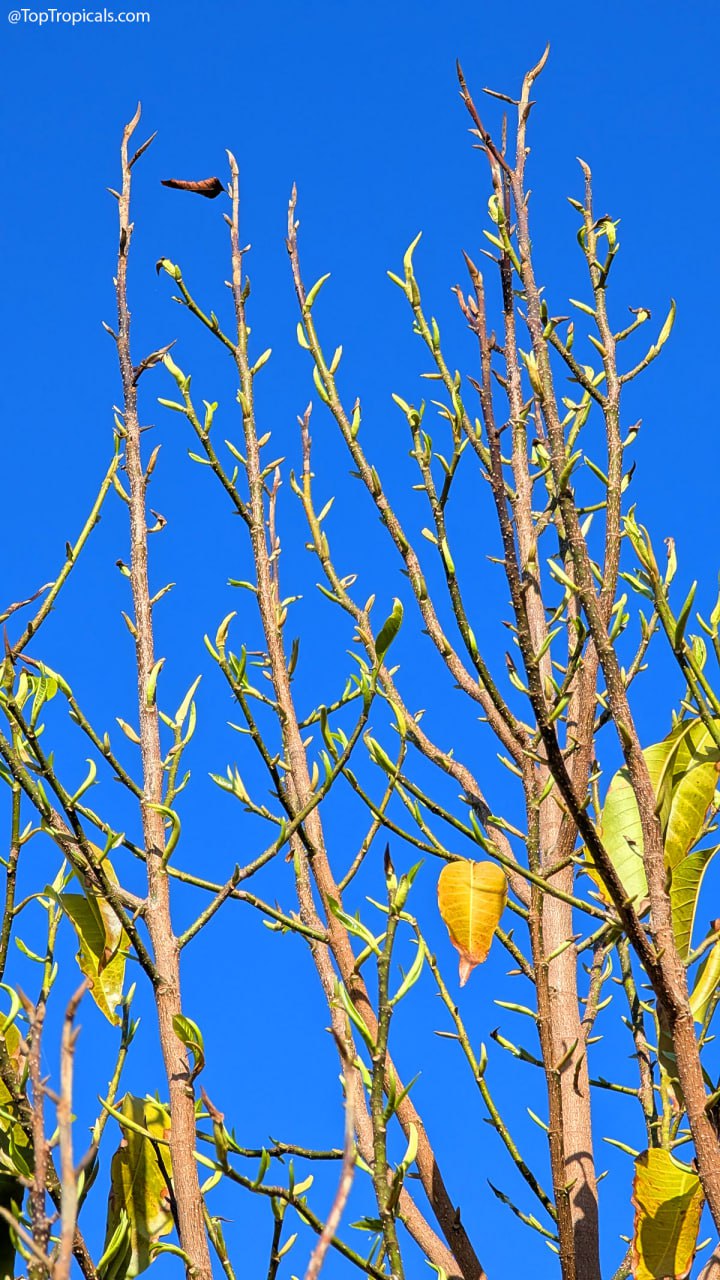
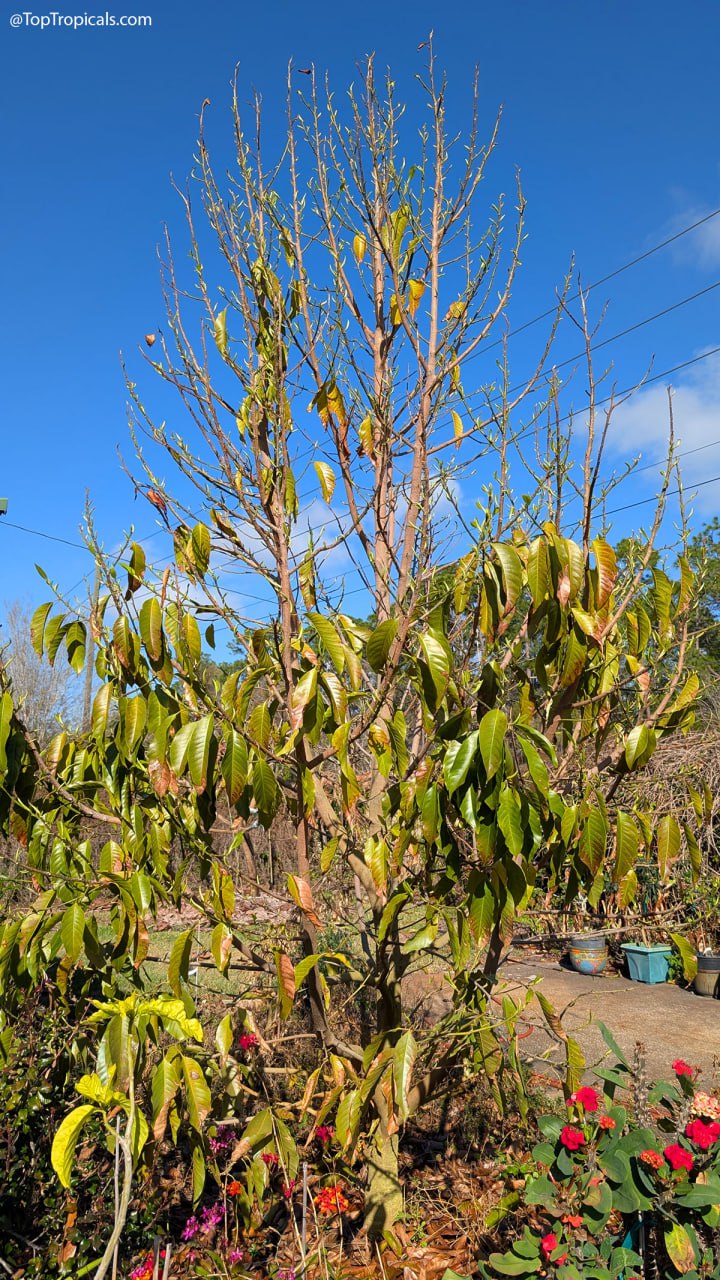
A Champaka tree (Joy Perfume Tree) first fresh sprouts
The Magic Number 65: when tropicals finally wake and the 7-Day Rule you should know 🌱
Discover the "Magic 65" rule for waking up your garden and the exact time to start fertilizing for maximum growth. Learn the specific temperature threshold that signals your tropicals to wake up and how to handle spring cold snaps.
🌿 If you’ve been staring at your dormant trees and shrubs wondering if they survived the winter, you aren't alone. The most frequent question every spring is: "When will my tropical plants start sprouting?"
🌿 While the calendar might say spring, tropical plants don’t use a watch - they use a thermometer. If you want to see green shoots and active growth, there is one "Magic Number" you need to watch: 65F 🌡
🌿 The 7-Day Rule for Tropical Growth
The gold standard for the tropical world is simple: plants generally wake up when minimum nighttime temperatures remain at or above 65F for at least one full week.
🌿 Why 65°F?
Tropical species are biologically programmed to stay dormant to protect their cell structure from cold damage. A single warm day won't fool them, but seven consecutive nights of 65F+ signals that the "growing season" has officially arrived. Once you hit that 7-day mark, you’ll see buds pushing and fresh leaves finally sprouting.
🌿 Can You Force Them to Wake Up Faster?
Patience is a virtue, but if you’re looking to "push" your plants, focus on two things: 🌞 Sun Exposure: Ensure they are in the brightest spot possible to warm the soil. ♨️ Heat Retention: Use dark mulch or move potted plants onto concrete surfaces that retain daytime heat.
🌿 When to Start Fertilizing
❌ Don’t reach for the fertilizer until you see that active growth. Feeding a dormant plant can lead to root rot or wasted nutrients. 👉 The Signal: After that first week of 65F nights. ✅ The Action: Once you see green tips, start your fertilization routine. This is when the plant actually has the metabolic "engine" running to use those nutrients.
🌿 Watch Out for the "False Spring"
Before you go all-in, ensure the risk of a hard freeze has passed. A minor cold snap - a few nights in the 50s - won't kill your progress, but it will act as a "pause" button. If cool weather persists, tropicals may "lock up" and return to dormancy. If that happens, simply reset your clock and wait for the next stretch of 65F nights.
🌿 Ready for the Wake-Up Call? Fuel Your Tropical Growth!
Don’t get caught empty-handed when that 7th day of 65F hits. Stock up now so you can feed them the moment they wake up. Using the right nutrients during the active growth phase is key to lush blooms. Check out our curated selection of professional-grade fertilizers:
📷 Recovery in Action: The Joy Perfume Tree - Champaka showing off its first fresh sprouts in March after a chilly Florida winter. This is exactly what happens once you hit that 7-day streak of 65F nights! 📚 Learn more: ✦ Why is my Champaka Tree dropping leaves?
What tropical plants survived Floridas historic freeze without protection
Florida historic freeze
What tropical plants survived Florida's historic freeze without protection
In the first week of February 2026, arctic air pushed deep into Florida. For many areas, this was the coldest event in over a century.
We received one question over and over: How did your gardens do?
Top Tropicals Farm in Sebring, Florida is up and running - and this freeze became a real-world hardiness test for tropical and subtropical plants. Below is our initial field report after inspecting established plantings.
📊 Weather data - February 1-6, 2026
Sebring, Florida - 132 years of recorded observations
This was not a light frost. It was prolonged, windy, penetrating hard freeze.
🌡 Minimum temperature: 25F ❄️ Wind chill: 14F ⏳ Duration: 3 nights of 8-10 hour hard freeze ☀️ Daytime temperatures: around 50F for 7 days 🌀 Wind: sustained 20 mph, gusts 40-50 mph
Cold protection
In-ground trees: selected plants covered with frost cloth, especially
Mango Plant Facts
Botanical name: Mangifera indica Also known as: Mango
USDA Zone: 9 - 11
Highligths
mango and young
Avocado Plant Facts
Botanical name: Persea americana, Persea gratissima Also known as: Avocado, Alligator Pear, Aguacate, Abacate
USDA Zone: 9 - 11
Highligths
avocado trees. Tender container plants: moved into greenhouses with propane heat above 34F. Hardy container plants: frost cloth and wind protection only - no plastic Nutrition support: plants fertilized regularly during the growing season with Green Magic and Sunshine Boosters to maintain vigor and hardiness.
However, the plants listed below had no protection at all.
All were established trees 2-3 years in the ground.
The plants below had NO PROTECTION, established trees 2-3 years old
Botanical name: Psidium cattleyanum, Psidium littorale Also known as: Cattley Guava, Sand Plum, Strawberry Guava
USDA Zone: 9 - 11
Highligths
Eugenias (Grumichama, Rio Grande, Surinam and more)
Olive trees
Bay Leaf (Laurus nobilis)
Fig trees (Ficus carica)
Prunus sp - Peaches, Plums, Nectarines
Persimmons
Rubus (Blackberries) including Tropical Mysore Raspberry
Elderberry (Sambucus)
Yerba Mate - Ilex paraguariensis
Opuntia - Nopal Cactus, Prickly Pear
🌸 Flowering Trees and Shrubs:
Beaucarnea recurvata - Pony Tail
Ponytail Palm Plant Facts
Botanical name: Beaucarnea recurvata, Nolina recurvata Also known as: Ponytail Palm, Pony Tail, Bottle Palm, Nolina, Elephant-foot Tree
USDA Zone: 10 - 11
Highligths
Callistemon - Bottlebrush
Yucca
Tabebuias
Magnolia figo and Little Gem
Banana Magnolia Plant Facts
Botanical name: Magnolia figo, Michelia figo, Magnolia fuscata Also known as: Banana Magnolia, Banana Shrub, Port Wine Magnolia
USDA Zone: 7 - 10
Highligths
Calliandra tweedii - Red Powderpuff
Sophora tomentosa
Yellow Necklace Pod Plant Facts
Botanical name: Sophora tomentosa Also known as: Yellow Necklace Pod, Silverbush
USDA Zone: 8 - 11
Highligths
Galphimia gracillis - Thriallis
Thriallis Plant Facts
Botanical name: Galphimia gracillis, Galphimia gracilis, Galphimia glauca Also known as: Thriallis, Rain of Gold, Spray of Gold
USDA Zone: 9 - 11
Highligths
Acacia trees
Osmanthus fragrans
Tea Olive Plant Facts
Botanical name: Osmanthus fragrans, Olea fragrans, Olea ovalis, Osmanthus longibracteatus, Osmanthus macrocarpus Also known as: Tea Olive, Fragrant Olive, Sweet Olive, Kinmokusei in Japan
USDA Zone: 8 - 11
Highligths
Abutilon trees
Erythrina - several species
Monkey Ear tree - Enterolobium cyclocarpum
Bauhinia Orchid Trees - several species
Pseudobombax ellipticum - Shaving Brush Tree
Shaving Brush Tree Plant Facts
Botanical name: Pseudobombax ellipticum, Bombax ellipticum Also known as: Shaving Brush Tree
USDA Zone: 9 - 11
Highligths
Bulnesia arborea- Vera Wood
Vera Plant Facts
Botanical name: Bulnesia arborea Also known as: Vera, Verawood, Vera Wood, Maracaibo Lignum Vitae
USDA Zone: 10 - 12
Highligths
Caesalpinia mexicana, Mexican Bird of Paradise
Mexican Bird of Paradise Plant Facts
Botanical name: Caesalpinia mexicana Also known as: Mexican Bird of Paradise, Dwarf Poinciana
USDA Zone: 9 - 11
Highligths
Sansevieria - Snake Plant
Foxtail fern - Asparagus densiflorus
Lonicera - several varieties
Jacaranda tree
Eucalyptus
Plumbago Imperial Blue
Philodendron bipinnatum
Gardenias
Gingers (dormant rhizomes)
✳️ Minimal leaf damage only:
(These plants showed light cosmetic damage but no structural injury)
🍑 Tropical Fruit Trees and Edibles:
Glycosmis pentaphylla - Gin Berry
Ash sheora Plant Facts
Botanical name: Glycosmis pentaphylla, Limonia pentaphylla Also known as: Ash sheora, Orangeberry, Rum Berry, Gin Berry
USDA Zone: 9 - 10
Highligths
Black sapote tree
Tamarind tree
Syzygiums: Rose Apple and Java Plum
🌸 Flowering Trees and Shrubs:
Pandora vine
Jasminum - several species
Stenocarpus sinuatus - Firewheel Tree
Firewheel Tree Plant Facts
Botanical name: Stenocarpus sinuatus Also known as: Firewheel Tree
USDA Zone: 9 - 11
Highligths
Xanthostemon
Quisqualis indica
Rangoon Creeper Plant Facts
Botanical name: Combretum indicum, Quisqualis indica Also known as: Rangoon Creeper, Burma Creeper, Chinese Honeysuckle
USDA Zone: 10 - 11
Highligths
Schotia tree
Eranthemum pulchellum - Blue Sage
Blue sage Plant Facts
Botanical name: Eranthemum pulchellum, Eranthemum nervosum Also known as: Blue sage, Blue eranthemum, Lead Flower
USDA Zone: 9 - 11
Highligths
Hiptage benghalensis - Helicopter Flower
Hiptage Plant Facts
Botanical name: Hiptage benghalensis, Hyptage bengalensis Also known as: Hiptage, Helicopter Flower, Madhavi
USDA Zone: 9 - 10
Highligths
🏡 What this means for Florida gardeners
This freeze was a stress test few gardens are prepared for. Yet many species handled 25F, wind, and multi-night freeze conditions without protection.
Choosing proven survivors, planting in smart microclimates, and maintaining strong plant health during the growing season makes a measurable difference.
More updates will follow as full recovery continues - but these early results already help define a stronger plant palette for future winters.
Rare Pineapple that looks like a sunset and thrives on neglect
Pineapple Lava Burst colorful leaves
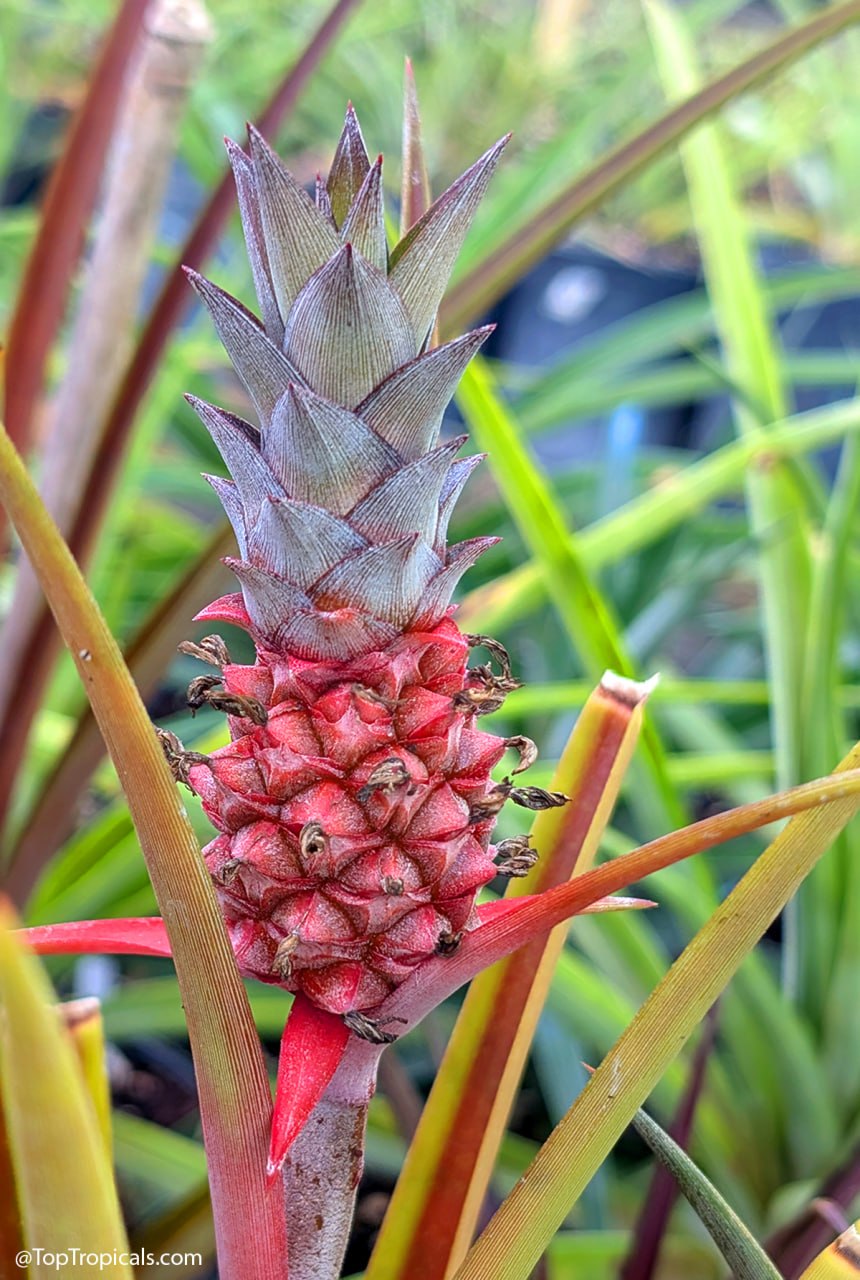
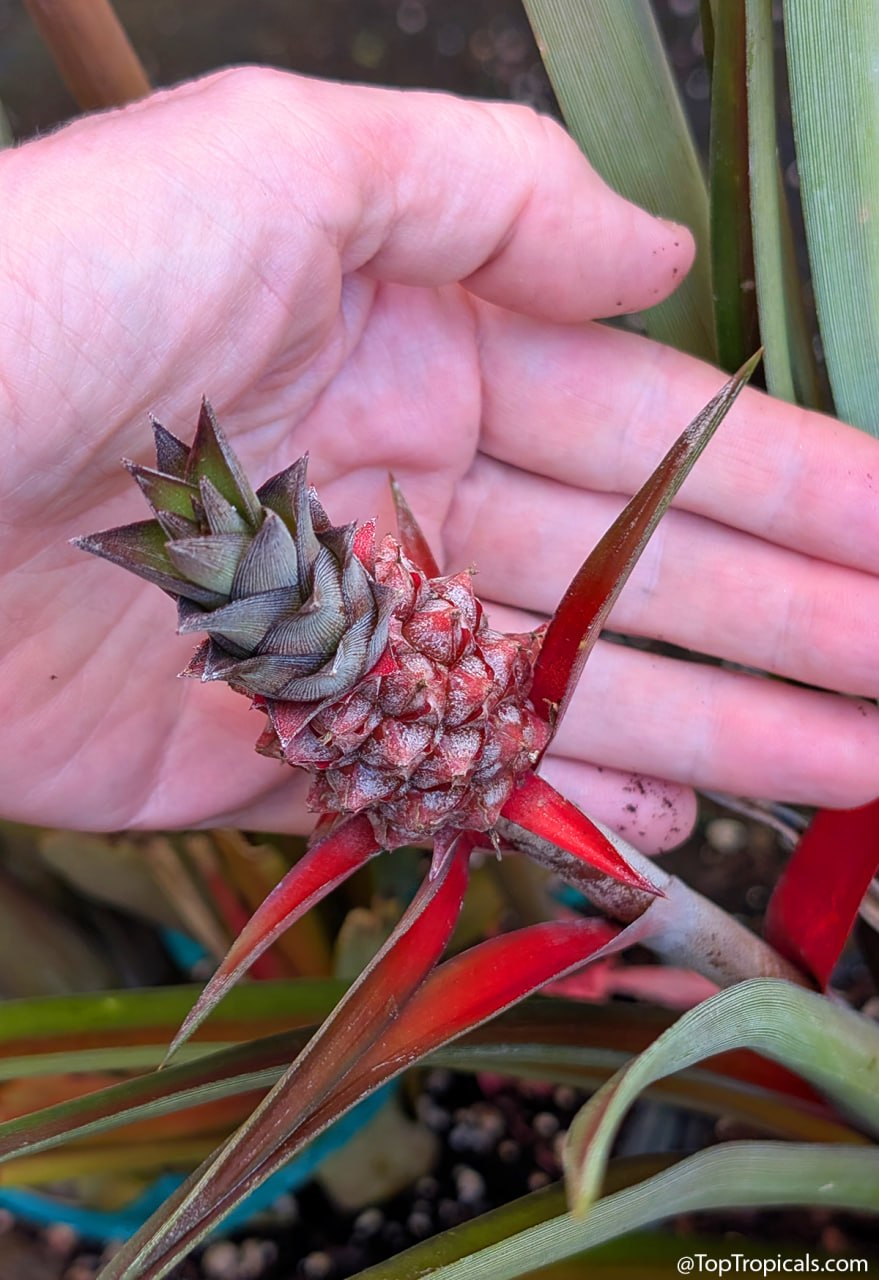
Pineapple Lava Burst fruit
Pineapple Lava Burst fruit
🌅 Rare Pineapple that looks like a sunset and thrives on neglect
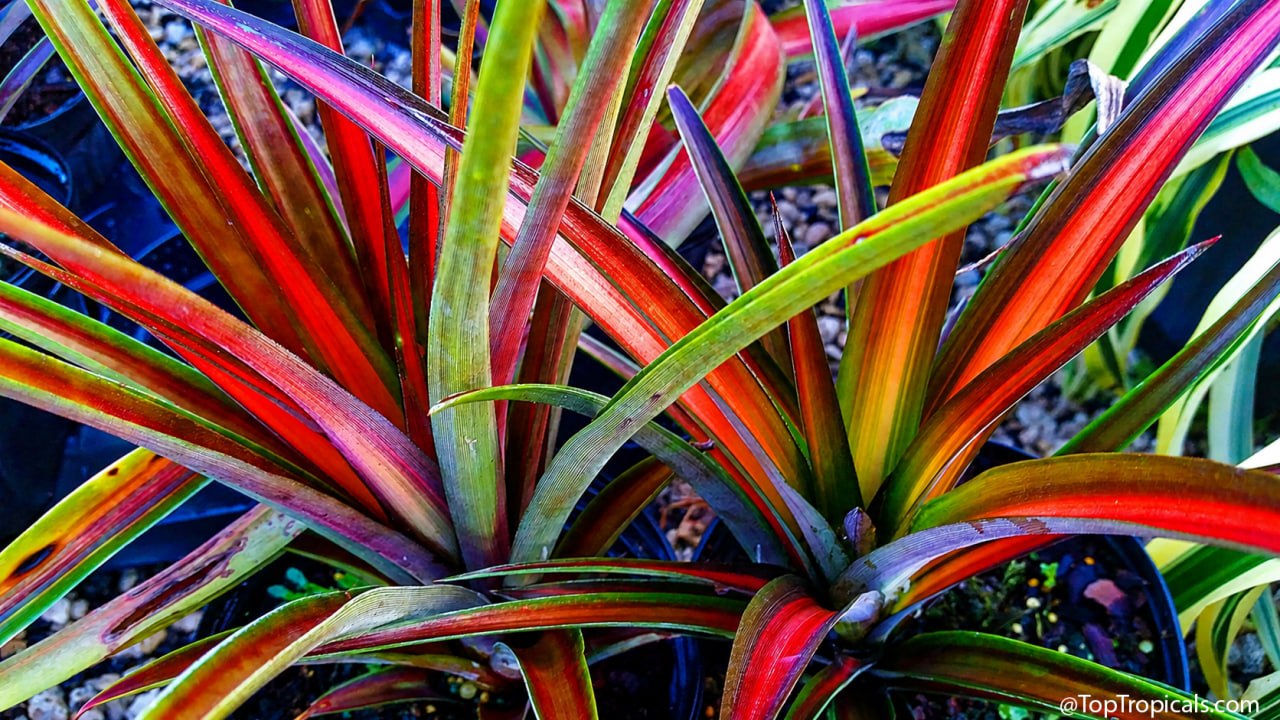
Forget plain green plants - this pineapple looks like a tropical sunset! One look at Pineapple Lava Burst and you immediately understand why people stop and stare. This isn't your typical pineapple plant hiding quietly in the background; the leaves explode with shades of burgundy, pink, cream, green, and bronze, often changing intensity depending on sunlight and temperature. Even gardeners who don't normally collect bromeliads suddenly want one after seeing it in person.
Pineapple Plant Facts
Botanical name: Ananas comosus Also known as: Pineapple, Pina
USDA Zone: 9 - 11
Highligths
🍍 A pineapple plant that acts like living artwork
Pineapple Lava Burst belongs to the same plant family as bromeliads, and it definitely inherited the dramatic side of the family. The long arching leaves create a fountain-like shape, while the bold variegation gives the plant a painted appearance. In bright light, the burgundy and pink tones become especially intense, making the whole plant glow with tropical color.
Unlike many ornamental plants that only shine during bloom season, Lava Burst stays visually interesting year-round. Even without fruit, it looks like a centerpiece.
🍍 Yes - it actually produces a pineapple
One of the fun surprises about Lava Burst is that it does produce a real edible pineapple. The fruit is usually smaller than grocery store pineapples, but that’s not really the point. When the colorful fruit forms in the center, the plant becomes a tropical sculpture - a combination of striped foliage and bright fruit that looks like it belongs in a botanical garden rather than a typical backyard.
🍍 Pro-Grower Tips for Success
👌 Color Intensity: To get the most "lava" out of your plant, give it plenty of light. Increased UV exposure is the physiological trigger for anthocyanin production - the pigment responsible for those deep red and pink tones. If your plant is looking a bit green, it’s likely asking for a sunnier spot.
👌 Cold Hardiness & Protection: While these thrive in the heat, they are sensitive to frost. After the recent 25°F freezes we’ve seen in Florida, remember that these are the perfect "mobile" plants. Because they handle containers so well, you can easily move them into a garage or indoors during a cold snap to protect the foliage from burn.
👌 Fertilizing for Vibrancy: To keep the variegation crisp and the colors saturated, use a high-quality micro-element fertilizer - SUNSHINE Ananas - Pineapple and Bromeliad Booster with every watering. During active growth season, a gentle application of Green Magic provides the necessary nutrients to maintain plant health and color intensity without the risk of burning the delicate root system.
🍍 Surprisingly easy for a tropical-looking plant
Despite looking rare and complicated, ornamental pineapples are generally very manageable. Lava Burst likes warmth, bright light, and fast-draining soil. It handles containers extremely well, which makes it popular for patios, pool areas, lanais, and sunny windows indoors. Like many pineapple varieties, it dislikes soggy soil more than occasional dryness, making it much easier to grow than many fussy tropical foliage plants.
Its architectural shape also pairs beautifully with palms, crotons, cordylines, and other colorful tropical mainstays. Whether you have a sprawling poolside landscape or a small-space apartment garden, this plant brings a wow factor that is hard to beat.