Date: 3 Aug 2022
Grow your own food:
Tropical Asparagus (Katuk)
By Alex Butova, the Witch of Herbs and Cats
...One of the most popular leaf vegetables in South Asia and Southeast
Asia, the Tropical Asparagus (Katuk) - Sauropus androgynus, is notable for its high yields and palatability. Cooked Tropical Asparagus is great with crab meat, minced pork, dried shrimp, or in a soup...
Katuk is one of the most popular leaf vegetables in Southeast Asia. It is
among only a few flora containing vitamin K. Leaves and stemmed can be cooked as vegetable; the plant has many medicinal
properties.
Katuk is fast growing and keeps growing as you trim it for your kitchen needs. Multiple upright stems can reach 6-7 ft high. It has
great ornamental value, has pretty red flowers and ornamental fruit showing
shiny black seeds when they crack open. Varieties with green leaves and
variegated leaves have slightly different flavor but are equally good for your
healthy, fiber-rich diet... CONTINUE READING >>
Date: 22 Dec 2021
Pipers, the Pepper Plants
Piper nigrum (Black Pepper), the one that is used more frequently than salt or sugar!
by Alex Butova, the Witch of Herbs and Cats
...Who doesn't know Black Pepper? Every household has a pepper shaker,
even if they are not fans of spicy food. But do you know where black pepper
comes from? Certainly, from a plant. But not from the same plant that gives us
Chili pepper! You will be surprised to know that Black pepper along with its
other spicy relatives, belong to the same family as a Peperomia houseplant!
In the 16th century, people began using name pepper to also mean the unrelated
New World Chili pepper (genus Capsicum of family Solanaceae). Piper's
spiciness is due to the chemical compound piperine, which is a different kind of
spicy from the capsaicin characteristic of Chili peppers...
Today we will tell you more about the most interesting and useful species -
Piper nigrum (Black Pepper), Piper betle (Betel Leaf), Piper sarmentosum (Lalot), and Piper auritum (false Kava-Kava, or Root Beer Plant).
CONTINUE READING >>
Piper auritum (false Kava-Kava, or Root Beer Plant) - the most useful especially in Mexican cuisine
Date: 26 Jul 2020
The best grafted Loquat varieties
at 15% OFF for 3 days!
Q: I have a nice Loquat tree started from seed. I understand it will not bear fruit unless grafted. Can you graft the tree in your nursery? If this is not possible let me know the cost of Loquat tree and I buy it from your nursery.
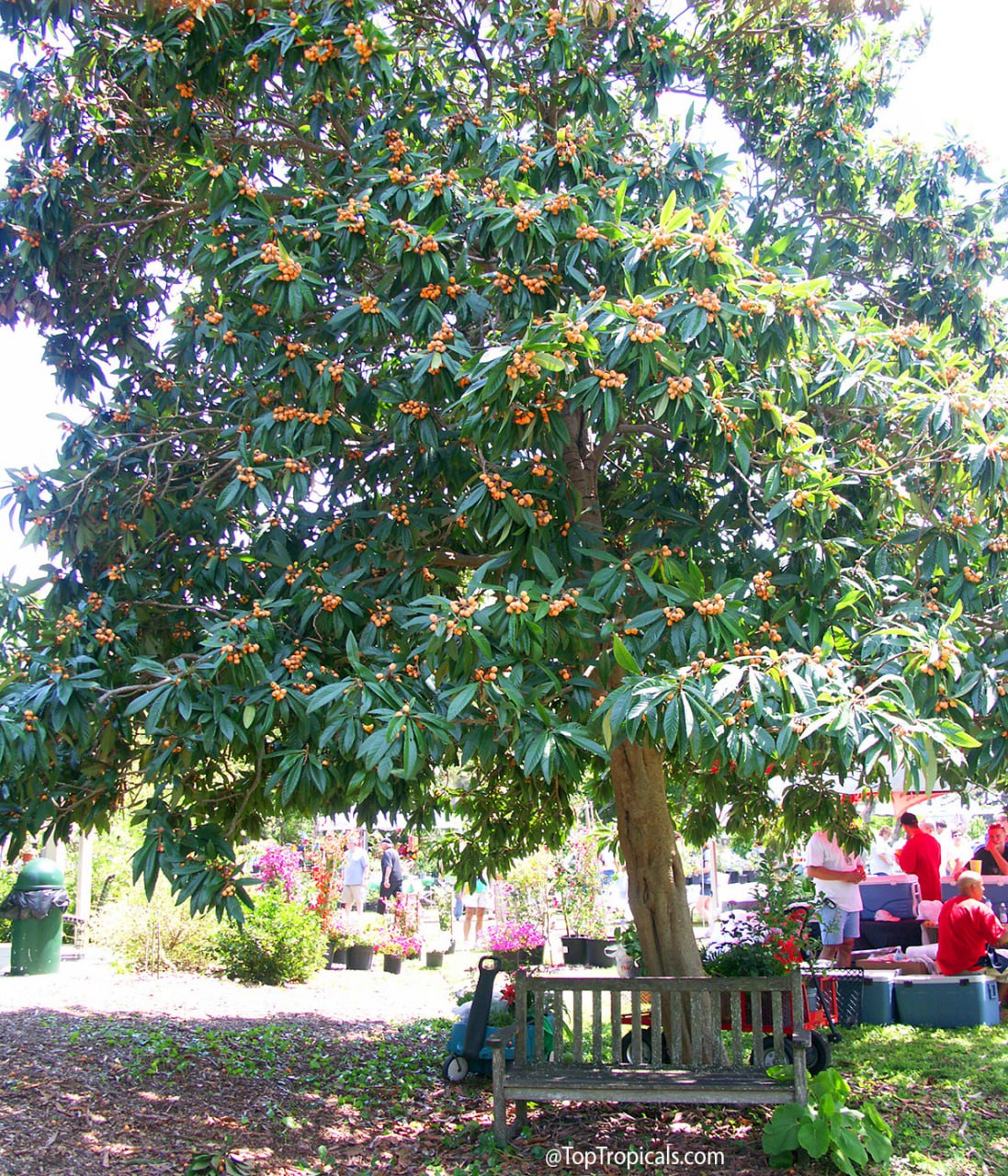
A: From our experience, Loquat trees grown from seed bear fruit
much sooner (within 5-6 years) than seedlings of such trees as Mango and
Avocado (8-15 years). Also, unlike Mango and Avocado, the fruit quality of a
Loquat seedling is usually not too bad. However, in order to have a tree with a
superior fruit, it is recommended to plant grafted variety for a guaranteed
tasty crop. If your seedling is already a large plant (with a trunk diameter
over 5 mm), it may be too late to graft it, because quality graft requires fresh
wood.
If you have plenty of room in your yard with enough space for both grafted
tree and a seedling, you may still plant the seedling in the ground and give
it a chance to produce in a few years. If your garden space is limited, we
recommend you to plant a grafted variety and enjoy fruit as soon as the next
year.
The most popular grafted Loquat varieties, heavy
producers:
Champagne
Christmas
Gold
Nugget
Yehuda
SALE: 15% OFF now, no min. order!
- $20% OFF discount code PARENTS2020 for orders over
$200
- 5% automatically off all orders over $100
= make it a steal!
Offer expires 7-28-20
If you are local, stop by our Garden Center and we will pick the biggest
and the best tree for you. Or just order online and get it in just a few
days to your doorstep!
See full list of Loquat varieties available at the moment.
Date: 24 Aug 2019
How to keep iguanas away?
Q: Really enjoy all the plants that I have got from you, but having a hard time keeping iguanas eating everything! We are not on the water, any solution to keep them out?
A: Iguanas may become quite a problem in the garden. Our first suggestion would be - get a Duck as we have (Duck Dobi), she is so dominant and keeps any wild animals away from the property, including gators... and cats! They are scared of her! Dobi thinks she owns the place.
Here are a few other ways to control iguana problem in your backyard:
1. Rid your lawn of dropped fruits. Iguanas love fruit. And they love
low-hanging fruit or fruit that's easy to get to. If you have fruit trees, take
the time to pick up your yard and dispose of any dropped fruit.
2. Keep a lid on a garbage can. Put your garbage cans in a place they
can't get to, or put a cinder block on your can lid.
3. Do not leave pet food out. If you're putting a bowl of dog food or a
plate of cat food out for your pets, you're inviting iguanas into your yard.
4. Fill iguana holes. Iguanas like to dig. Wherever you see a hole,
fill it. Stuff rocks into the hole first, then fill it with dirt and top it with
sod. The iguana may return to dig again, but he won't dig through large
rocks.
5 Do NOT feed the iguanas. Don't be friendly with them, so they won't
come back.
6. Wire netting around plants. You can use wire netting or screens to
prevent iguanas from entering plants and shrubs.
7. Spray them with a hose. When you see an iguana in the yard, spray
them with the hose. They also hate loud noises. Constant harassment can keep
them from returning.
8. Keep your yard clean. Excessive overgrowth or yard storage are great
places for iguanas to hide.
9. Do not leave food out, unattended. Iguanas are mainly herbivores but
that doesn't mean they won't smell something good and want to eat it. They
will TRY anything.
Hopefully these tips help keep your iguana problems to a minimum.
Date: 14 Jul 2019
Dwarf and Condo mangoes - easy mangoes
Q: We leave in zone 6a, could you tell us what is the list of different types of mango plants that could be planted indoor and that they can bear fruits?
A:There is a large group of mangoes called "Condo Mango" - they literally can be grown in your apartment! Those are dwarf varieties that can remain compact in containers with minimal pruning and successfully bear fruit providing bright light and proper care, including plant food.
The best dwarf and semi-dwarf varieties are: Carrie, Cogshall, Cushman, Fairchild, Graham, Ice Cream, Julie, Mallika, Nam Doc Mai, Pickering, Irwin, Jahangir, Juliette, Lancetilla, Little Gem, Manilita, Sia Tong, Torbert, Pim Seng Mun, Super Julie.
They produce juicy, fiberless sweet fruit. Julie is also a very popular dwarf variety, however, it is very cold sensitive and not the easiest to grow. If you get a 3 gal size mango, step it up to 7 gal when the plant reaches 4 ft; you may use a bigger container as the root system grows, up to 15 gal or even 25 gal, space permitting. Trim the tree under 6-8 ft after production season is over (summer-fall).
See more information on growing condo mangoes
RECOMMENDED FERTILIZERS:
Mango-Food - Smart Release Fruit Tree Booster
Fruit Festival Plant Food - Super Crop Booster
For sweeter fruit, use
SUNSHINE-Honey - sugar booster