Garden Blog - Top Tropicals

Date: 14 Jul 2019

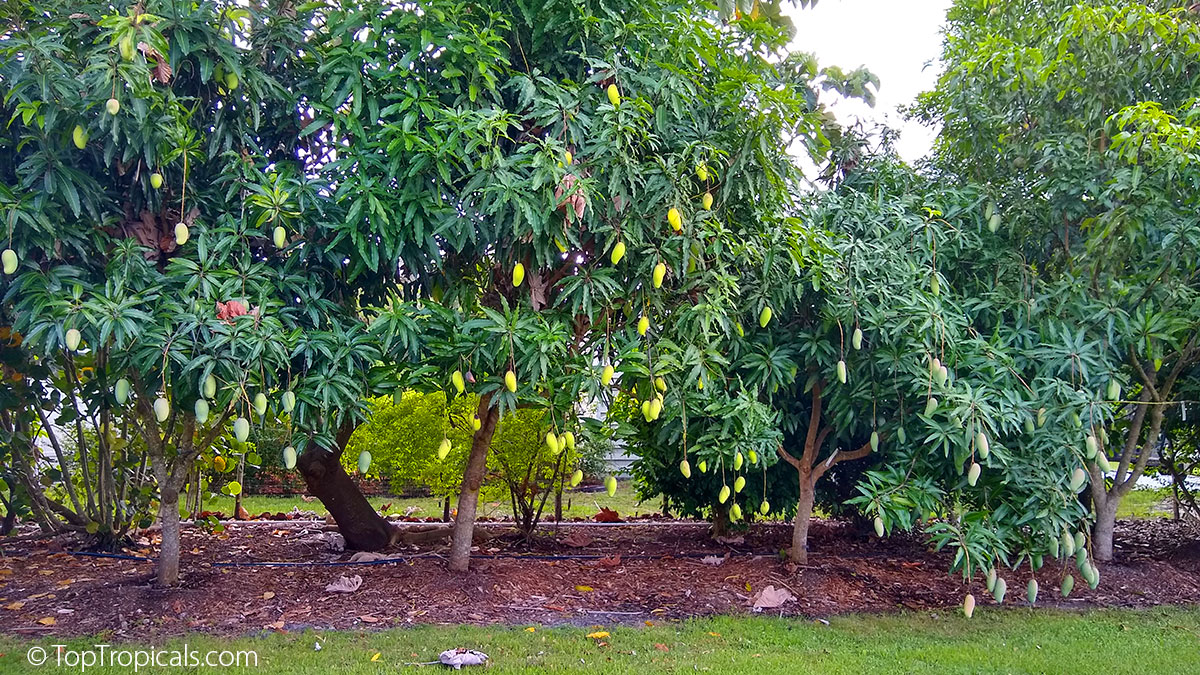
Dwarf and Condo mangoes - easy mangoes

Q: We leave in zone 6a, could you tell us what is the list of different types of mango plants that could be planted indoor and that they can bear fruits?

A:There is a large group of mangoes called "Condo Mango" - they literally can be grown in your apartment! Those are dwarf varieties that can remain compact in containers with minimal pruning and successfully bear fruit providing bright light and proper care, including plant food.

The best dwarf and semi-dwarf varieties are: Carrie, Cogshall, Cushman, Fairchild, Graham, Ice Cream, Julie, Mallika, Nam Doc Mai, Pickering, Irwin, Jahangir, Juliette, Lancetilla, Little Gem, Manilita, Sia Tong, Torbert, Pim Seng Mun, Super Julie.

They produce juicy, fiberless sweet fruit. Julie is also a very popular dwarf variety, however, it is very cold sensitive and not the easiest to grow. If you get a 3 gal size mango, step it up to 7 gal when the plant reaches 4 ft; you may use a bigger container as the root system grows, up to 15 gal or even 25 gal, space permitting. Trim the tree under 6-8 ft after production season is over (summer-fall).

See more information on growing condo mangoes

RECOMMENDED FERTILIZERS:

Mango-Food - Smart Release Fruit Tree Booster
Fruit Festival Plant Food - Super Crop Booster
For sweeter fruit, use SUNSHINE-Honey - sugar booster

Date: 17 Apr 2019

Mulberries - biggest, sweetest, and compact...

TopTropicals.com

Q: What is the difference between Pakistani and Australian Mulberry plants? Would one be better suited for South Florida backyard? Can one be maintained/pruned to be a tall shrub vs a large tree? Which one has the sweetest fruit? Thank you for the previous plants we've purchased from you. They're all doing great.!

A: These two varieties are very similar indeed. Both fruit are very large. Var. Pakistani fruit is a little longer than var. Australia and the tree is a more vigorous grower, but they both are very sweet, even before the fruit fully ripen. Both trees are a good choice and start fruiting at a young age.
We've had Australia in the ground in our garden for 4 years by now and for some reason, it has been very slow growing which is normally not the case with Mulberries. Maybe it is not fully happy with FL humid conditions.
There are two Mulberry varieties that can be maintained as bushes: Issai and Dwarf Everbearing. However, even vigorous Mulberry trees respond well to pruning and can be kept compact for easy harvesting. Just make sure to prune before the flowering season starts; here in S Florida Mulberries start flowering in March, and fruit start ripening during April-May.

Check out our Mulberry trees.

Date: 28 Mar 2019

Hawaiian Dwarf is a True Star!

TopTropicals.com

By Mark Hooten, the Garden Doc

Q: I live in Southern Ohio and love growing lots of tropical plants. In the warm months, they all go outside under the protection of tall trees, but in the cold months, they all come inside in a snug but very brightly lit sun-room. For many years I have successfully kept a dwarf Meyer's lemon which amazes my friends, and I am wondering if you could suggest some other dwarf tropical fruit tree which I might be able to grow that would amaze them even more?

A: Without hesitation, I would strongly suggest a particular variety of carambola (star-fruit) called Dwarf Hawaiian, as it is truly special as tropical fruit trees go. First and foremost, they begin fruiting at a very young age, often while only in a one-gallon pot, and even less than a couple of feet tall with a very little trimming. Better even is that they are perfectly happy living perpetually in a pot. I have one myself which is content in a 12 inch pot and which fruits freely throughout the year. Also, even though it should be too much to be expected, the fruits are of the highest quality and are as sweet as candy. I also like the fact that the fruits hang decoratively on the tiny tree for quite some time before finally ripening, rather like ornaments. One of these little trees in-fruit is an amazing sight and ought to make anyone take notice, especially in a sun-room in Ohio! They really are very easy to grow, and if you have a Meyer's lemon which does well, you'll certainly have no particular issues with a Dwarf Hawaiian carambola.

However, I have found that in order for them to remain extra dwarf and fruit especially precociously, this variety needs to be grafted and not cutting grown. Fortunately, Top Tropicals has recently obtained a number of these extra wonderful grafted trees which are of the highest quality I have seen in some time, all of which will likely begin fruiting very shortly. They simply are wonderful little trees! Check them out...

TopTropicals.com

Date: 20 Nov 2024

Thanksgiving Sale starts today!

Giving Thanks is Giving Peace

Thanksgiving  cat  and  turkey

"Gratitude makes sense of our past, brings peace for today, and creates a vision for tomorrow." - Melody Beattie

Happy holiday season! To our wonderful customers, thank you for your support throughout the year - we are truly grateful! We wish you peace, health, and beautiful gardens filled with abundant fruit and ever-blooming flowers.

As a token of our appreciation, enjoy 10% off plants, seeds, and garden supplies with the code below. Let's make your gardens even more fruitful and vibrant this Thanksgiving!

THANKS24

Min order $150. Excluding S/H. Exp. 11/29/24

Bunchosia  argentea  -  Peanut  Butter 
 Tree

Photo above: Bunchosia argentea

Date: 13 Feb 2025

Tropical Seeds You Should Start Now for Spring Planting

Cat  planting  seeds

Eight fast-growing, rewarding tropical perennials
to start from seed

Q: What tropical seeds can I start now so the seedlings will be ready for spring planting and produce flowers or fruit this year?

A: Many tropical plants grow quickly from seed and can mature within the same year, rewarding you with flowers or even fruit. Some of these tropical perennials can even be grown as annuals in cooler climates! The key is to start them early indoors, then transplant them outdoors as soon as warm weather arrives. With just a little planning, you can enjoy vibrant blooms and a harvest in just weeks or a few months. Below are some of the fastest-growing tropicals to try for a lush, same-year garden.

1. Pigeon Pea

Cajanus  cajan  Bicolor  Fuerte  -  Pigeon  Pea

Cajanus cajan Bicolor Fuerte - Pigeon Pea - is an ancient superfood cultivated for over 4,800 years, with roots in India and Ancient Egypt. This hardy, drought-tolerant perennial shrub produces nutritious, protein-rich beans used in rice dishes, soups, and even tofu. Easy to grow, it thrives in poor soils, improves soil quality, and offers medicinal benefits, making it a valuable plant for both gardens and kitchens. Seed to crop in just one season!

2. Lipstick Tree - Annatto

Bixa  orellana  -  The  Lipstick  Tree

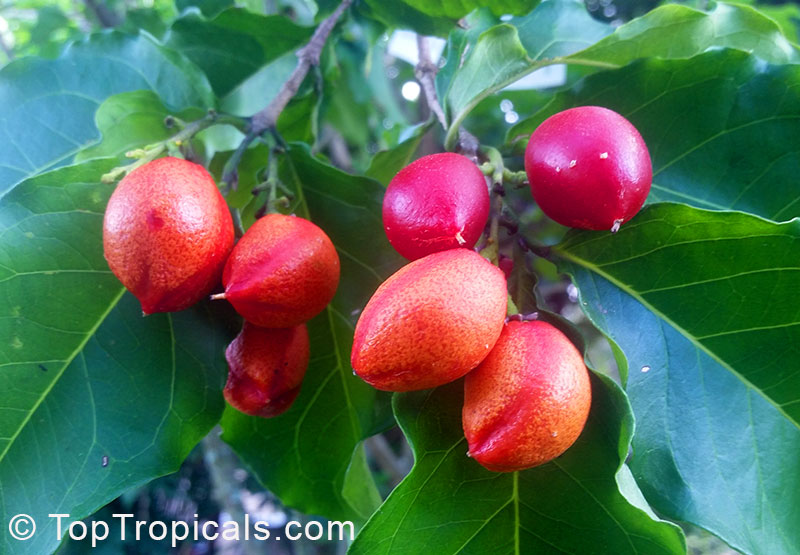
Bixa orellana - The Lipstick Tree, native to South America, is a striking shrub with large leaves, pink flowers, and vibrant red seeds. Its seeds produce Annatto, a natural pigment used in cosmetics, especially lipstick, as well as in culinary applications for its color and mild, peppery flavor. Beyond its beauty and versatility, annatto offers antioxidant and anti-inflammatory benefits, while the plant itself makes an excellent hedge or ornamental feature.

3. Mexican Bird of Paradise

Caesalpinia  mexicana  -  Mexican  Bird  of  Paradise

Caesalpinia mexicana - Mexican Bird of Paradise - is a rare gem among tropical shrubs, offering fragrant butter-yellow blooms that stand out against its feathery green foliage. A heat-loving, drought-tolerant plant, it attracts hummingbirds and can be grown as a compact shrub or small tree. Native to northern Mexico, it thrives in full sun with minimal water, making it a low-maintenance yet striking addition to any garden or patio.

4. Tree Calliandra

Calliandra  houstoniana  -  Tree  Calliandra

Calliandra houstoniana - Tree Calliandra is the only tree-form Powderpuff, growing into a lush, bushy tree in just one season. Its fluffy pink blooms appear year-round, drawing in hummingbirds and butterflies for a nonstop display of color and life. Super fast-growing and beautiful, it's a must-have for wildlife-friendly gardens!

5. Butterfly Pea - Clitoria

Clitoria  ternatea  -  Butterfly  Pea

Clitoria ternatea - Butterfly Pea - is a stunning vine with vibrant blue, white, or purple flowers that captivate both gardeners and pollinators. Beyond its beauty, it's prized for its herbal benefits, with its flowers used in teas for stress relief and cognitive support. The famous Blue Tea, a caffeine-free infusion, turns purple with a splash of lemon, making it both a visual delight and a health-boosting drink. Fast-growing and easy to manage, this delicate yet vigorous vine is perfect for fences, trellises, and containers. Seed to crop in just one season!

6. Cas Guava

Guava  Cas,  Psidium  friedrichsthalianum

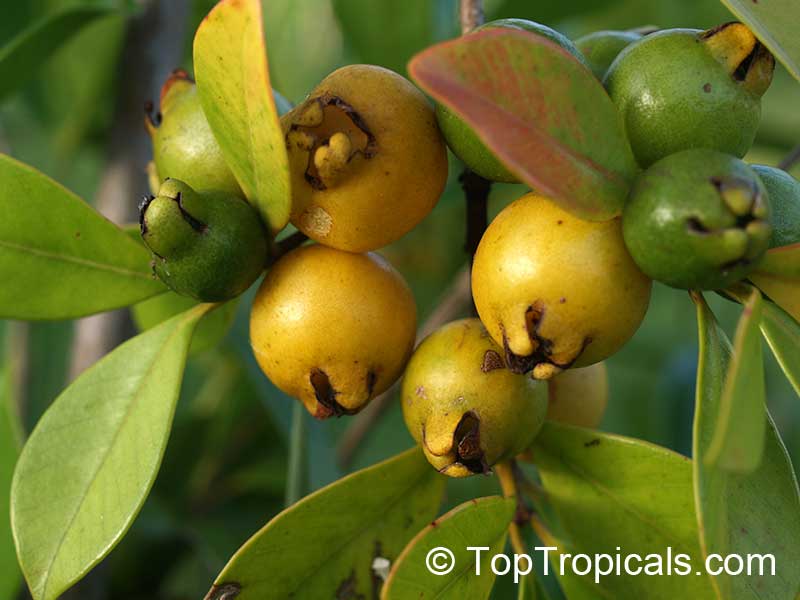
Psidium friedrichsthalianum - Costa Rican Guava, or Cas Guava, is a super sour fruit with four times more vitamin C than a lemon, making it a powerhouse for immune support. Popular in Costa Rica's "Agua de Cas", its tangy juice is perfect for refreshing drinks. Hardy and resilient, this low-maintenance tree thrives in poor soils while resisting pests and diseases. This is the fastest growing and the most productive guava tree with 2-3 crops per year! From seed to crop: 3 years.

7. Agua de Flor de Jamaica - Karkade Tea

Hibiscus  sabdariffa,  Roselle),  Karkade  Tea

The most health-beneficial hibiscus is Hibiscus sabdariffa (Roselle), known for its deep red calyces used in Agua de Flor de Jamaica and Karkade Tea. This tart, refreshing tea is packed with antioxidants and supports heart health, digestion, and immune function. A fast-growing plant, it goes from seed to a lush, flower-filled bush in just one season! From seed to crop: in just 3 months!

8. Dwarf Papaya TR Hovey

Guava  Cas,  Psidium  friedrichsthalianum

Papaya Dwarf TR Hovey, Carica papaya - is a dwarf marvel, reaching only 4-5 feet tall while producing giant, melon-sized sweet papayas! This compact variety is perfect for small gardens and container growing, offering big fruit on a tiny tree - a true space-saving tropical treasure! Only 2 years from seed to fruit.

Shop tropical seeds