Date: 15 Jan 2021
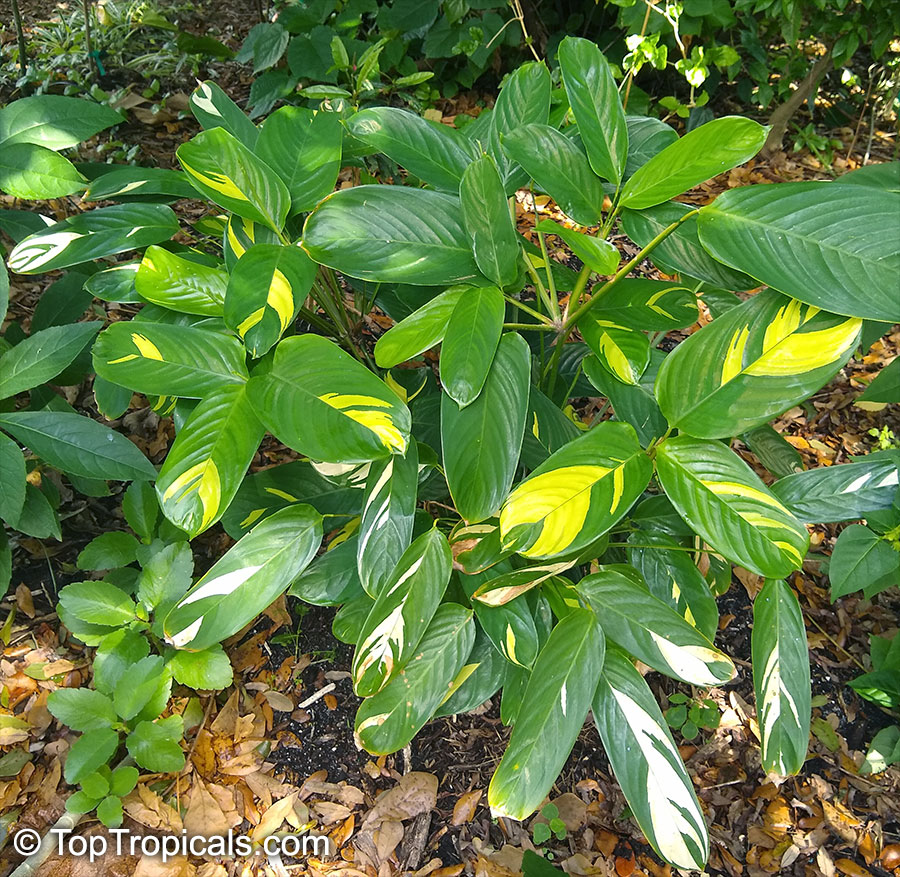
Never-never be without one! Ctenanthe lubbersiana variegata
Stevie's Pick: what's special today?
Our exotic plant grower Steven Gowdy spotlights the most interesting plants he discovers and recommends today while working in TopTropicals greenhouses.
Year 2021 is celebrated as a Year of Variegated Foliage plants, and I have something special for those rare plant collectors. Besides exclusive Monstera variegata Thai Constellation, there are a few less expensive plants that are as much beautiful and yet fit into any budget.
Known as the Never-never plant, this beauty is native to Brazil. I think in South Florida a shade garden should
never-never be without one!
Ctenanthe lubbersiana variegata has deep
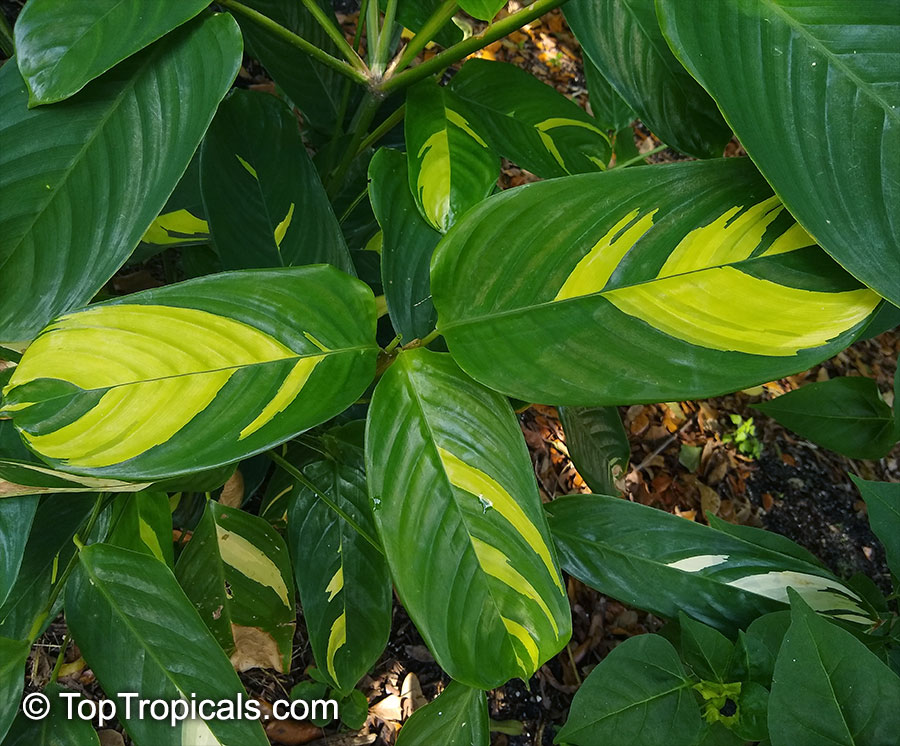
variegation, with branching bamboo-like stems and oblong green, veined leaves that are mottled with cream and gold. Needing high humidity and indirect, bright filtered light, it just screams tropical and fun! Ctenanthe is a close relative of showy Marantas grown for the beauty of their foliage, and also makes a great house plant in
cooler climates.
In warmer climates, it can be planted as an under story plant. The plant is growing to 2-3 feet high and 4-6 feet wide, with leaf patterns of indistinct cream and green marbling. It does have a rapid growth rate and liking soil moist, but not soggy. In the winter, water
should only be given when the dirt is somewhat dry. Watch out for mealy bugs, spider mites, and aphids and apply Sunshine NoBug if you notice any - they
will be easy to get rid of.
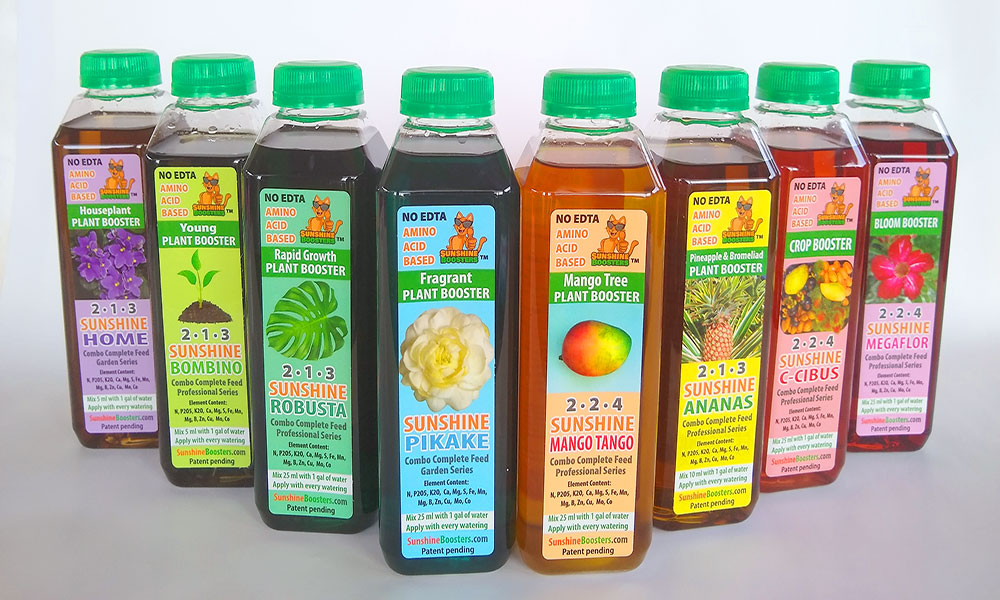
Give it a liquid fertilizer SUNSHINE Robusta - Rapid Growth Booster and divide as needed.
This plant is one of my favorites. I planted a nice specimen at TopTropicals entrance gate last year, and now we finally have beautiful baby plants propagated from it, looking great!

Date: 15 Oct 2020
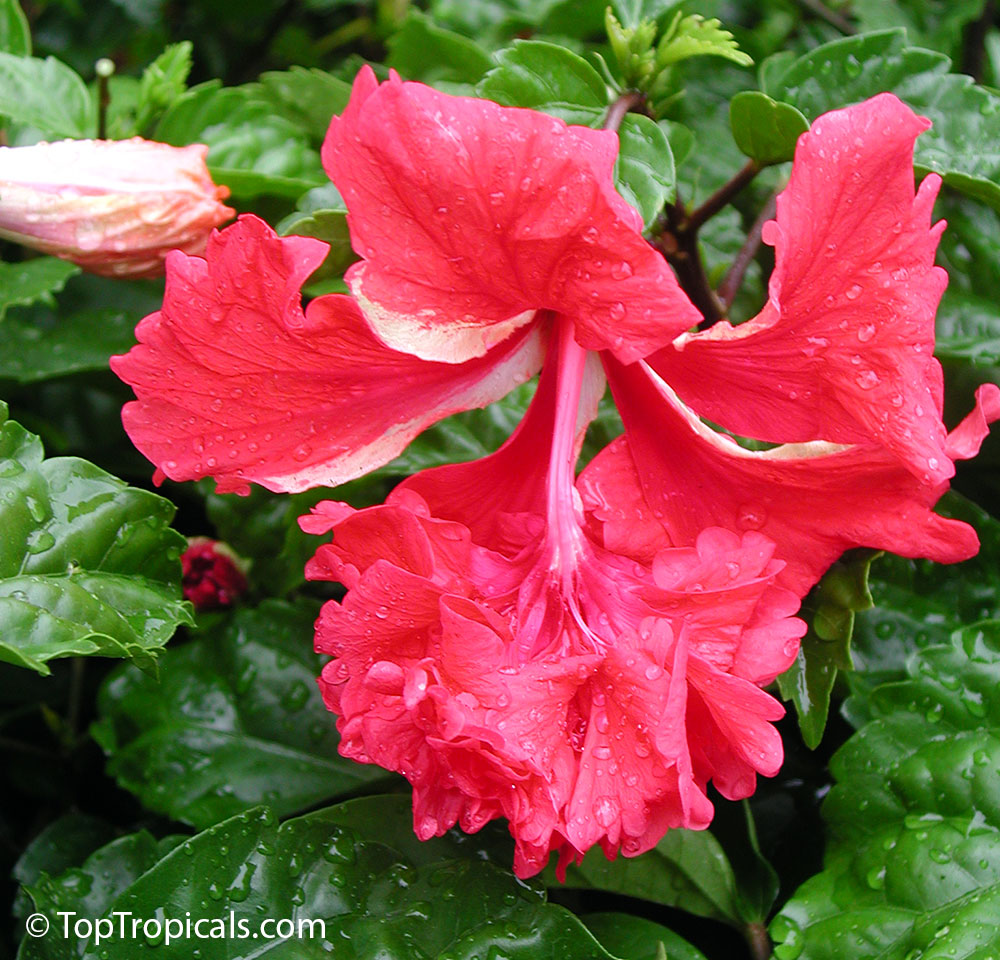
Plant of the Month: Hibiscus El Capitolio
Stevie's Pick: what's in bloom?
Our exotic plant grower Steven Gowdy will spotlight the most interesting plants he discovers and recommends today while working in TopTropicals greenhouses.
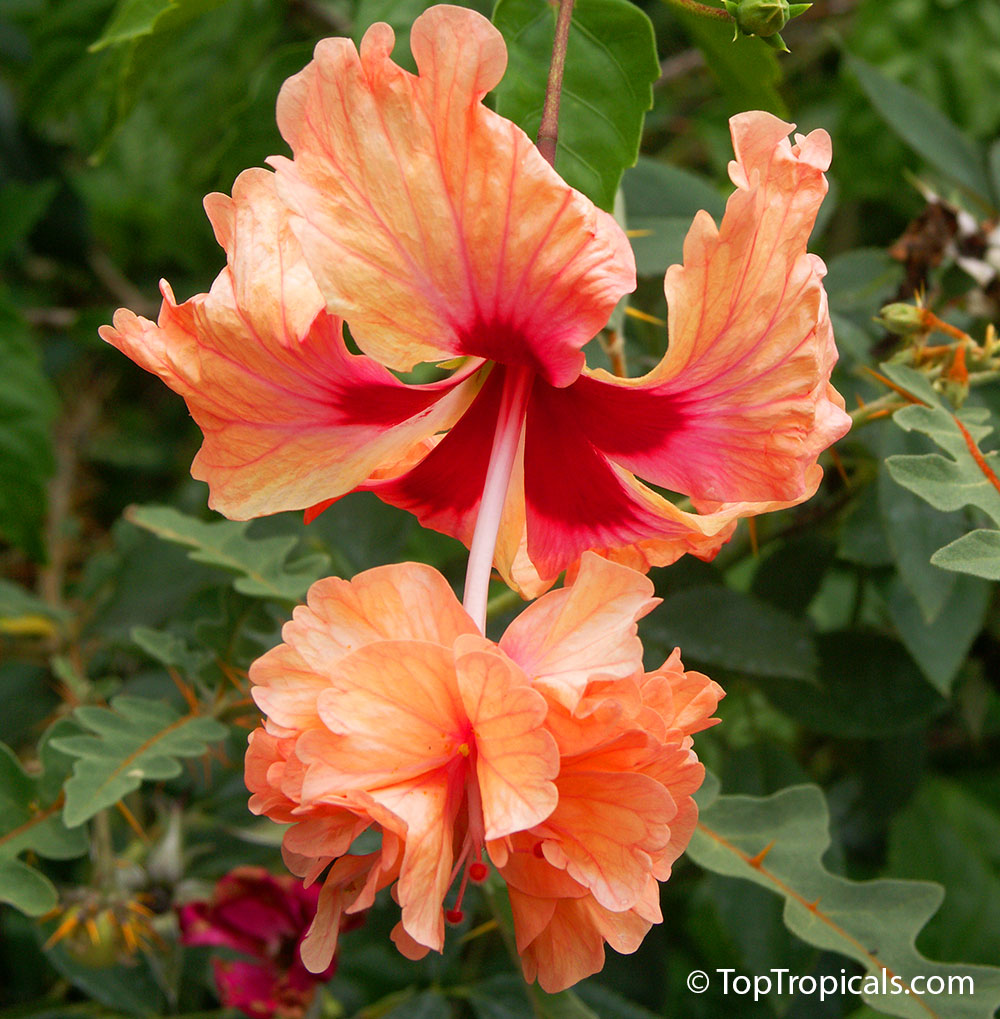
OMG! These plants are awesome. The flowers are stunning, ruffled,
brightly colored. These are very unique double flowers about 5"long, with ruffled
petals, followed by a sort of a stamen, than more ruffled petals... Wow.
These are the perfect plants - they can be grown in a container or in-ground, in
full sun. They are drought and disease resistant, ever-blooming, can be
pruned into a standard weeping tree, or pruned into a bush... It's a convenient,
dream plant! Prune frequently, because it blooms on new wood.
Hibiscus El Capitolio grows best in zones 9 through 11. In colder
climates leave it in a container outside in the summer months, but bring inside in
the winter months.
Remember - ever-blooming! You prune and they will flower all year long.
These are fabulous plants that will satisfy any first-time or experienced
gardener: you just can't go wrong El Capitolio! They will have you growing
happiness... That's true.

Stevie with Kristi and Jamie celebrating his Happy Birthday. Check out Stevie's painting "TopTropicals Theme"
Date: 23 Sep 2020
Fast-fruiting trees?
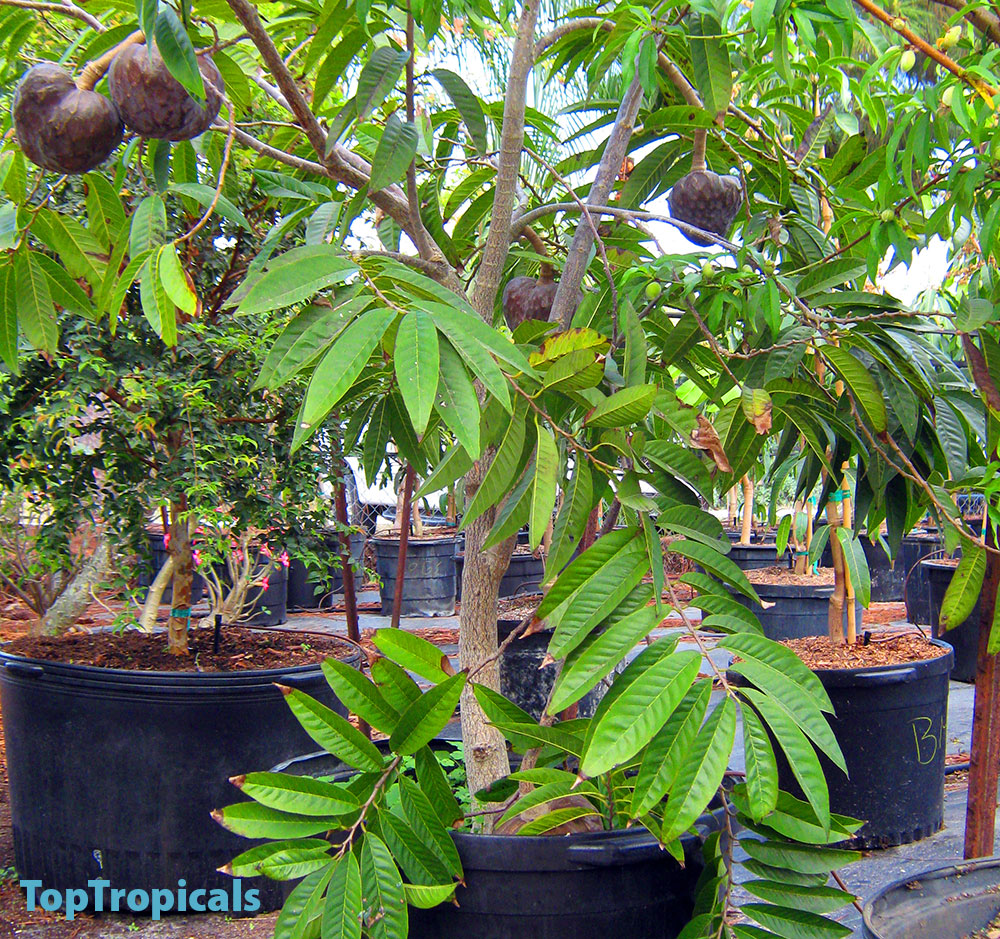
Photo above: Annona reticulata - Red Custard Apple
Q: More of a question than a review, but a review regarding your catalog, it would be easier for us buyers, if we could search for plants that produce fruit in 2 years or less, I don't have the patience to wait longer than that for fruit. I'm trying to buy for a fairly good sized garden but want some fast growers and fruit produced in 2 yrs. Can you help me out?
A: Fruiting time depends on many factors (established size,
growing conditions, fertilizing, and even specific variety), this is why we can
not just put a simple icon "will fruit within 2 years".
However, most grafted and air-layered fruit trees, including all Mango, Avocado, Loquat, Sapote, Sapodilla, Lychee/Longan, Peaches and Nectarines - will fruit right away. If you see in our store
"grafted" or "air-layered" in plant description - these trees will fruit
soon. Some of them already flowering and fruiting.
Some non-grafted trees or seedlings like Annona, Artocarpus (Jackfruit), Eugenia, Guava, Banana, Dragon fruit, Mulberry, Blackberry/Raspberry - will fruit within 3-4 years from seed or even
sooner (Banana, Mulberry, Dragon fruit, Blackberry-Raspberry - within a year).
Usually it says in description that this plant can produce fruit soon.
Bigger size plants are more established and have more energy to produce, so
try to get larger size plants if your budget permits, and especially if you can
pick up bigger plants rather than shipping them - obviously, shipping has size
limitations.
In addition, all spice trees like Bay Leaf, Bay Rum, Allspice and many more - they will
produce spice for you right away, so you don't need to wait at all!
If you have questions about fruiting time on any specific plant you put
your eye on, don't hesitate to ask!
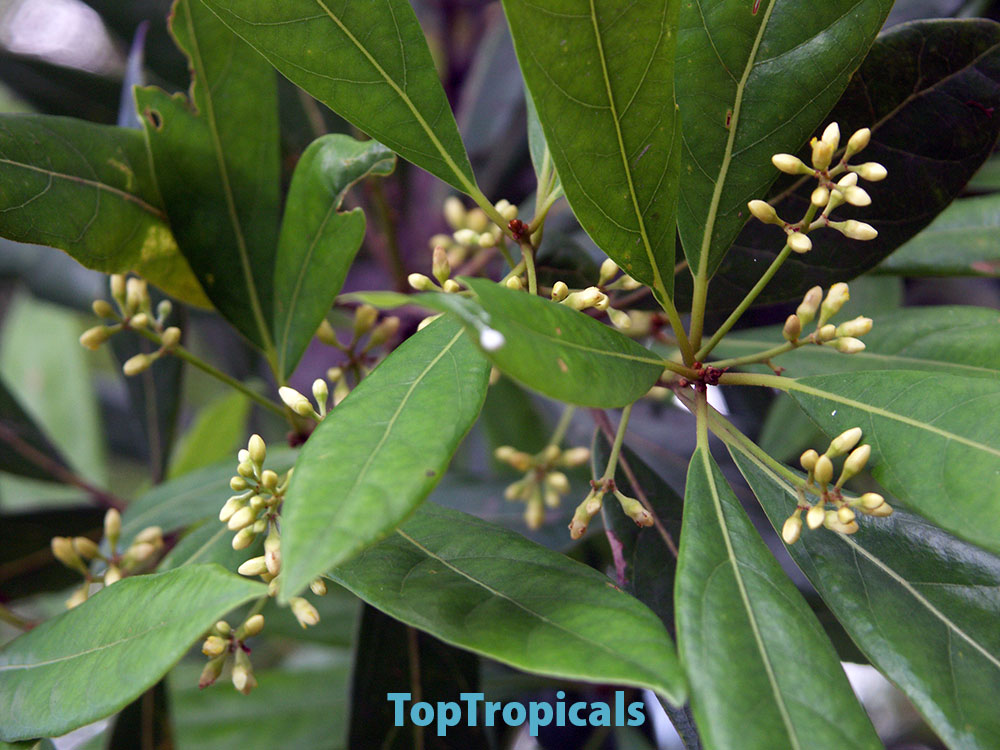
Photo above: Pimenta dioica - Allspice
Date: 19 Jul 2020
Sugar grains on leaves?
by Mark Hooten, the Garden Doc
Q: On my Stemmadenia tree I noticed tiny drops (like white sand grain or sugar crystals) and wonder if this is a disease or some kind of insect and what can I do about it?
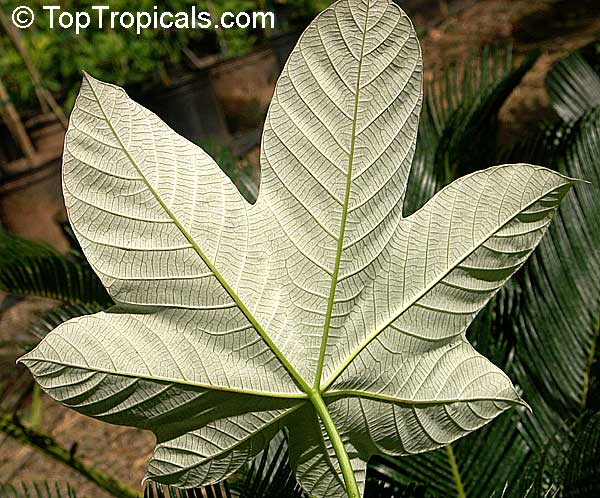
A: Sometimes certain vigorously growing (mostly tropical) plants
develop suspiciously-looking tiny "growths" mostly on the undersides of their
leaves. Without strong magnification, they can be easily mistaken for mealy
bugs, scale insects, or any number of parasitic disease vectors.
However, according to plant pathologists, these are actually harmless
excretions actually exuded by the plants themselves. A chemical analysis of these
tiny granules shows that they are nothing more than polysaccharides.
Polysaccharides are basically complex chains of sugar/glucose molecules which are
simply a production of all plants undergoing photosynthesis. Polysaccharides are
at the beginning of the entire food-chain. These odd tiny sugar-grained
nodules are actually only semi-crystalline complex sugars which certain plants
have over manufactured and have had no choice but to excrete through their
stomata (breathing pores).
I have personally observed Cecropia, Psychotria, Spondias (Hog Plum), and Guavas doing this... there are many others. Nothing to worry about,
they are harmless, but if they bother you - wash them off with a hose water.
Date: 30 Jun 2020
Plants like to snack!
How to feed Poinciana tree
(and other tropical flowering trees)
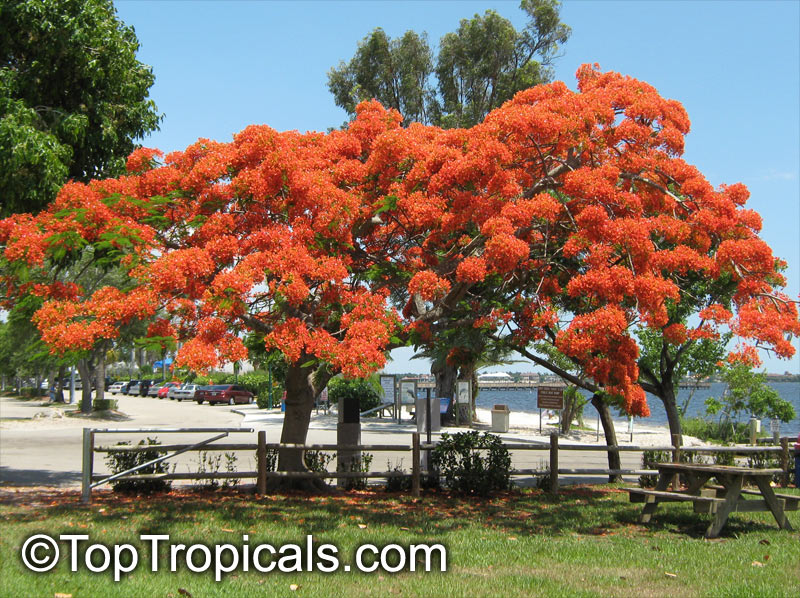
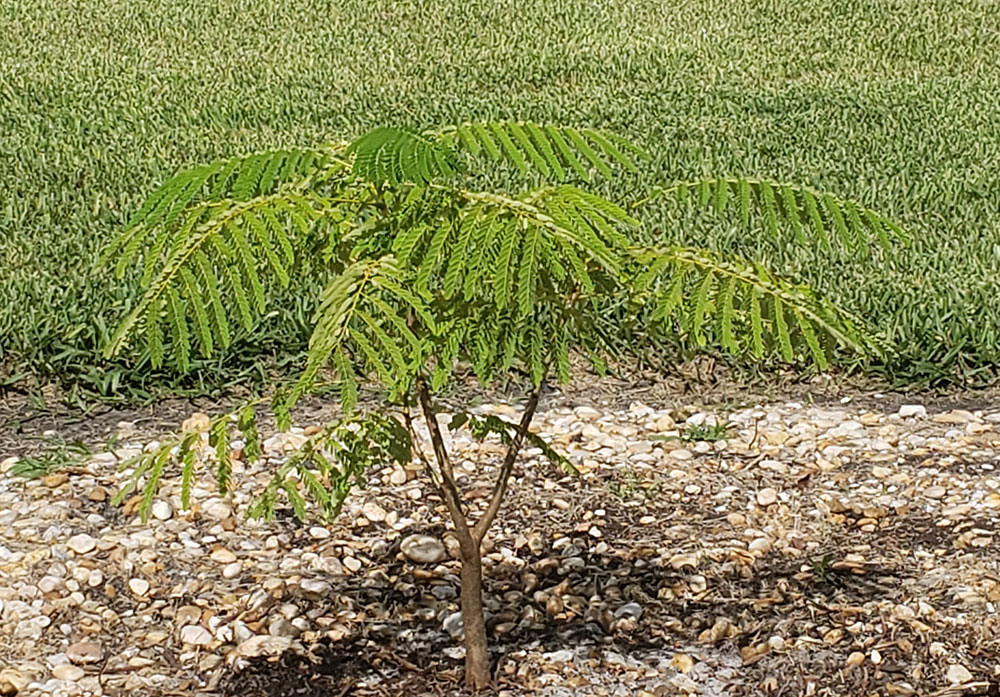
Q: We purchased a Royal Poinciana tree from TopTropicals not too long ago and we gradually gave it more sun until finally we were able to plant it in direct sunlight where it's been for a week or so. Rain has been sporadic lately so I'm giving it a little bit of water every day. It seems to be doing fine. I do have a question about whether the leaves are as green as they should be? I read online that I should fertilize it with gardenia / ixoria fertilizer in March, June, and October. I looked on homedepot.com but didn't really find anything that goes by that name. Would fertilizer help? Can you suggest a fertilizer?
A: Your Poinciana tree looks pretty healthy and happy,
congratulations with a great job!
Traditional (old-school) fertilizer recommendations usually suggest feeding
a plant 2-3 times a year with a slow-release fertilizer. And although a
plant will benefit from any fertilizer application (extra food is always good),
however, for the best results, faster growth, sooner and more profuse
blooming, your should use complete plant nutrition products - liquid fertilizers (see
why liquid
fertilizers are better than dry).
Here is an example. Some people eat a big heavy meal once a day which we
all know, is not very healthy. Other people eat balanced food more frequently
but in smaller portions - this is always the best way to go.
From this point, plants prefer SNACKING - frequent feeding, but with less
concentrated, mild and balanced nutrients.
For your beautiful Poinciana tree (and other flowering plants), we suggest
the following nutrition program:
1) SUNSHINE Megaflor - Bloom Nutrition Booster - you may use this fertilizer as frequent as with every watering, it won't burn the roots, and will provide a complete nutrition for all plant needs throughout the year. You can continue fertilizing with Megaflor even during winter time. Sunshine Megaflor will help you to keep the plant healthy, vigorous, and resistant to stress and diseases. It turns leaves green and makes the plant strong so it will start flowering sooner for you.
2) Tropical Allure - Smart-Release Booster. Apply it once a month during hot season only (in Florida - from March to November).