Garden Blog - Top Tropicals

Date: 20 Dec 2025

Grumichama spoon drizzle: quick-n-fun exotic recipes

Grumichama spoon drizzle

Grumichama spoon drizzle

Eugenia brasiliensis fruit tree - Grumichama

Eugenia brasiliensis fruit tree - Grumichama

🍴 Grumichama Spoon Drizzle

Ingredients

  • Ripe grumichama fruit (Eugenia brasiliensis), pulp only
  • Water, a small splash
  • Vanilla ice cream, for serving

Instructions

  1. Remove seeds from ripe grumichama fruit and collect the pulp.
  2. Blend the pulp with a small splash of water until smooth and pourable.
  3. Spoon or drizzle over vanilla ice cream and serve immediately.

📚 Learn more:

Grumichama Plant Facts

Botanical name: Eugenia brasiliensis, Eugenia dombeyi
Also known as: Grumichama, Brazilian Cherry
USDA Zone: 9 - 11
Highligths Small tree 10-20 ftSemi-shadeFull sunWatering: Moderate. Water when top soil feels dryEdible plantSubtropical plant. Mature plant cold hardy at least to 30s F for a short timeSeaside, salt tolerant plant
Get personalized tips for your region

Eugenia brasiliensis fruit tree - Grumichama in Plant Encyclopedia
Grumichama jam recipe
The best tasting and most beautiful tropical cherry
Why grow Grumichama? Benefits of Brazilian Eugenia Tree - Cherry of the Tropics

#Food_Forest #Recipes

🟢 Join 👉 TopTropicals

Date: 6 Jan 2026

How to grow papaya from seed without killing it, Part 2: seeds germination step by step

Ppaya fruit

Ppaya fruit

🍊 How to grow papaya from seed without killing it, Part 2: seeds germination step by step


Papaya germination is simple (see part 1), but it is rarely forgiving. Most failures happen not because seeds are bad, but because moisture, temperature, or patience is off by just a little. In Part 2, we focus entirely on germination - from preparing seeds to creating the right conditions for strong, healthy sprouts.

🍊 Papaya seed germination requirements


The simple papaya growing rules that actually work

Fresh seeds taken from ripe fruit usually germinate in 2–3 weeks, as long as temperatures stay above 70F. Warmer is better - ideally 85-90F.
Bottom heat helps a lot. Seed germination mats work very well.

🍊 Key conditions:


🟡Well-draining potting mix or coconut fiber
🟡Moist soil, never soggy
🟡Consistent warmth
🟡Stored dry seeds often go dormant and can take 8–10 weeks to sprout. When stored properly, papaya seeds remain viable for at least 12 months.

🍊 How to extract and prepare papaya seeds correctly


Growing papaya from seed sounds easy until this happens

So you bought a papaya at the grocery store and decided to plant the seeds. Here is the correct way to do it.

Removing the seeds
🟡Cut the fruit in half lengthwise
🟡Cut each half lengthwise again
🟡Scoop seeds from each quarter with a teaspoon

Choosing viable seeds
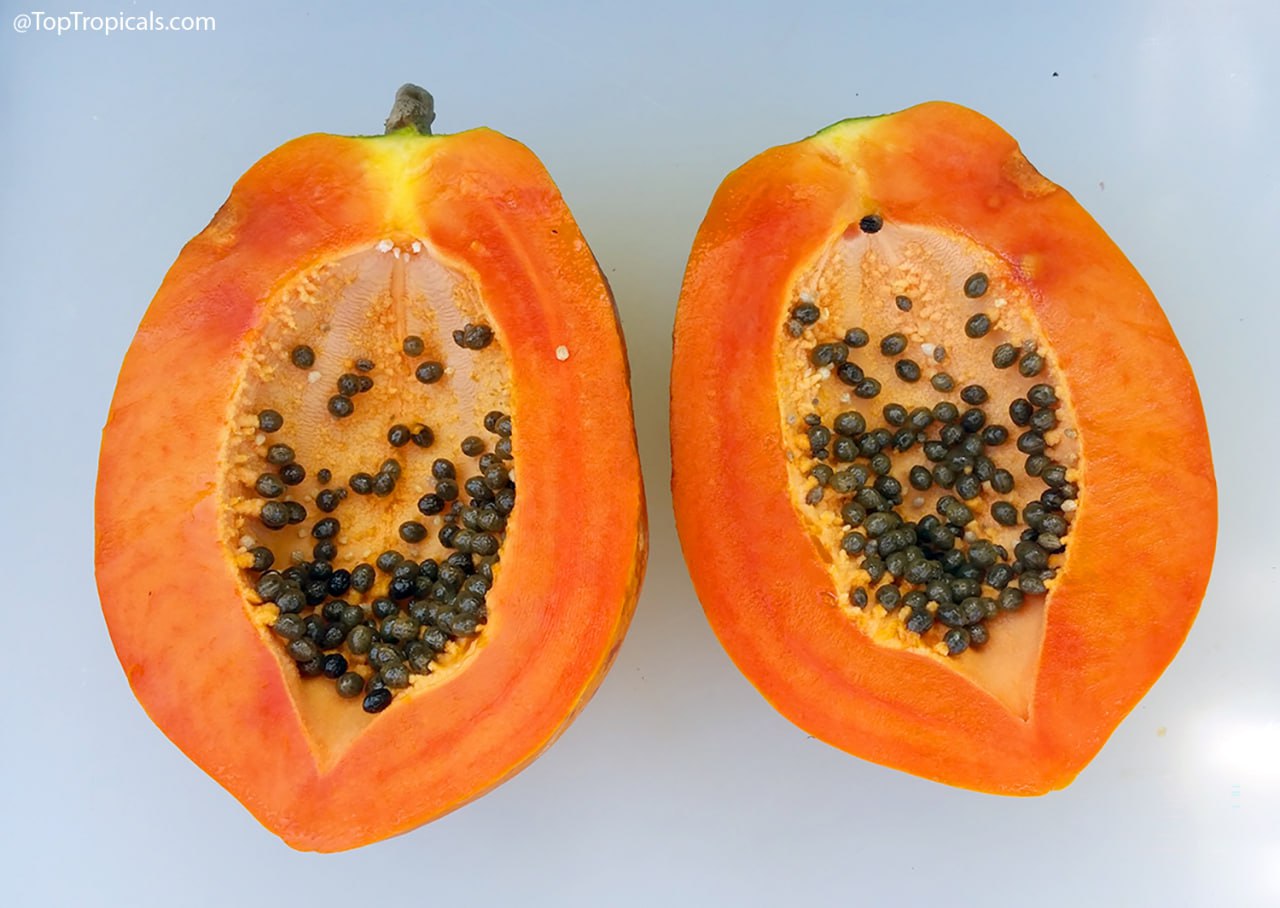
🟡Good seeds are black and about 1/4 inch in diameter
🟡Small, green, or white seeds are immature and will not germinate
🟡Fresh papaya seeds are coated with a slimy layer that prevents sprouting inside the fruit. This coating must be removed.

Cleaning and storing
🟡Rinse seeds thoroughly (a strainer works well)
🟡Remove all pulp and slime
🟡Dry seeds on a paper towel

If storing seeds:
🟡Dry completely for several days
🟡Even slightly moist seeds will rot in storage

If planting right away:
🟡Remove all pulp and slime and plant as soon as possible

If your papaya seeds have sprouted, you have already passed a major hurdle. Unfortunately, this is where many plants are lost next - not from poor germination, but from transplanting mistakes, excess water, or lack of sun. In Part 3, we cover containers, sunlight, watering, and the most common mistakes that kill papaya after it starts growing.

👉 Coming up next: Part 3 - Containers, sunlight, and common mistakes

🛒 Explore Papaya varieties

📚 Learn more:

Papaya Plant Facts

Botanical name: Carica papaya
Also known as: Papaya
USDA Zone: 9 - 11
Highligths Small tree 10-20 ftFull sunWater Requirement: Low. Allow soil to dry out between wateringsWatering: Moderate. Water when top soil feels dryYellow, orange flowersWhite, off-white flowersEdible plantEthnomedical plant.
Plants marked as ethnomedical and/or described as medicinal, are not offered as medicine but rather as ornamentals or plant collectibles.
Ethnomedical statements / products have not been evaluated by the FDA and are not intended to diagnose, treat, cure, or prevent any disease. We urge all customers to consult a physician before using any supplements, herbals or medicines advertised here or elsewhere.Subtropical plant. Mature plant cold hardy at least to 30s F for a short time
Get personalized tips for your region

· Carica papaya in Plant Encyclopedia
· How to grow papaya from seed without killing it: Part 1: Papaya basics
Part 2: Seeds germination
Part 3: Containers, sunlight, and common mistakes
· Carefree Garden: How Easy Is It to Grow a Papaya Tree?
· Male papaya produces fruit!
· Top 10 fast-fruiting trees: #6. Papaya
· How to have fresh Papaya fruit year around
· The truth about Papaya
· Papayas contain a secret enzyme

🎥 Nobel Prize goes to this pregnant male papaya

#Food_Forest #How_to #Papaya

🟢 Join 👉 TopTropicals

Date: 12 Jan 2026

Cherry of the Rio Grande quick compote: quick-n-fun exotic recipes

Cherry of the Rio Grande quick compote over pancakes

Cherry of the Rio Grande quick compote over pancakes

Eugenia aggregata - Cherry of the Rio Grande fruit

Eugenia aggregata - Cherry of the Rio Grande fruit

🍴 Cherry of the Rio Grande Quick Compote

This fast cherry compote is made from Cherry of the Rio Grande (Eugenia aggregata). It is tart, rich, and perfect over pancakes, waffles, toast, or warm bread.

Ingredients

  • 1 cup Cherry of the Rio Grande fruit, pitted
  • 2 to 4 tablespoons water

Instructions

  1. Place cherries and water in a small saucepan.
  2. Simmer over medium heat until the cherries soften and release juice.
  3. Mash lightly with a spoon for a chunky texture.
  4. Spoon warm compote over pancakes or bread and serve immediately.

🛒 Plant Cherry of the Rio Grande

📚 Learn more:

Cherry of the Rio Grande Plant Facts

Botanical name: Eugenia involucrata, Eugenia aggregata
Also known as: Cherry of the Rio Grande, Cere Jodo Rio Grande
USDA Zone: 9 - 11
Highligths Small tree 10-20 ftSemi-shadeFull sunWatering: Moderate. Water when top soil feels dryWatering: Regular. Let topsoil dry slightlyEdible plantSubtropical plant. Mature plant cold hardy at least to 30s F for a short time
Get personalized tips for your region

Eugenia aggregata - Cherry of the Rio Grande in Plant Encyclopedia
Don't plant cherries until you see this one!
Ten best fruit trees to grow in Florida and Southern landscapes. Tropical Cherries: Eugenias

#Food_Forest #Recipes

🟢 Join 👉 TopTropicals
Date: 9 Nov 2019

Saving Fallen Papaya Tree

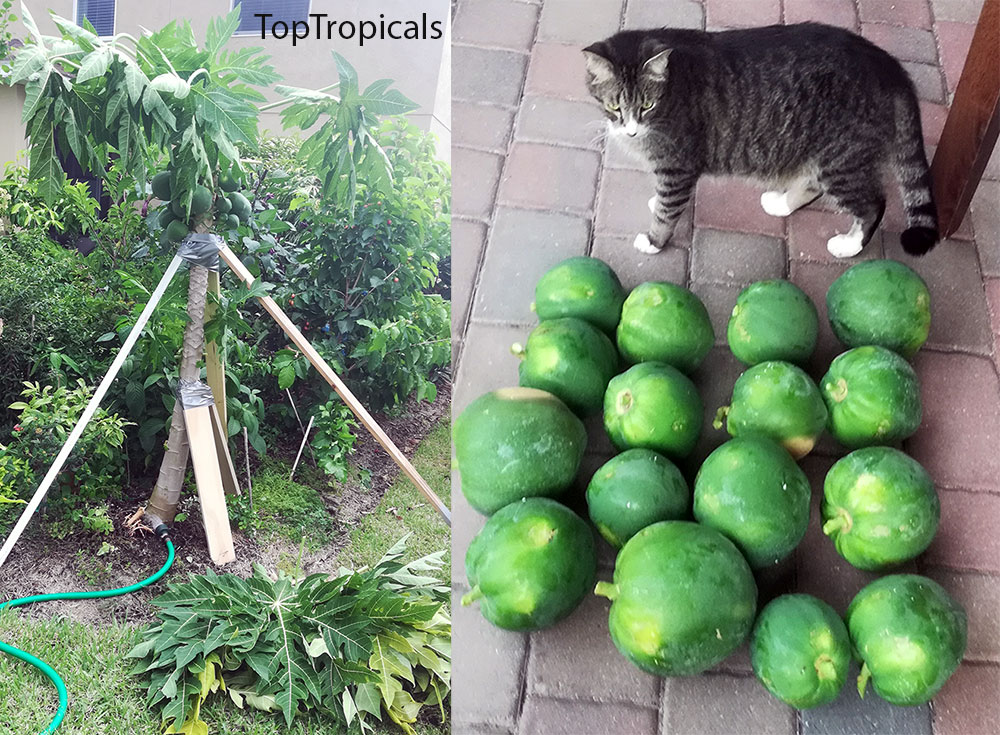
Q: Hope there is help for my beautiful amazing papaya tree! There where a loooooooot of fruits on it, but it broke! First of all, it was leaning and friends tried to straight my beautiful tree. What can I do? Will it get fruits again?

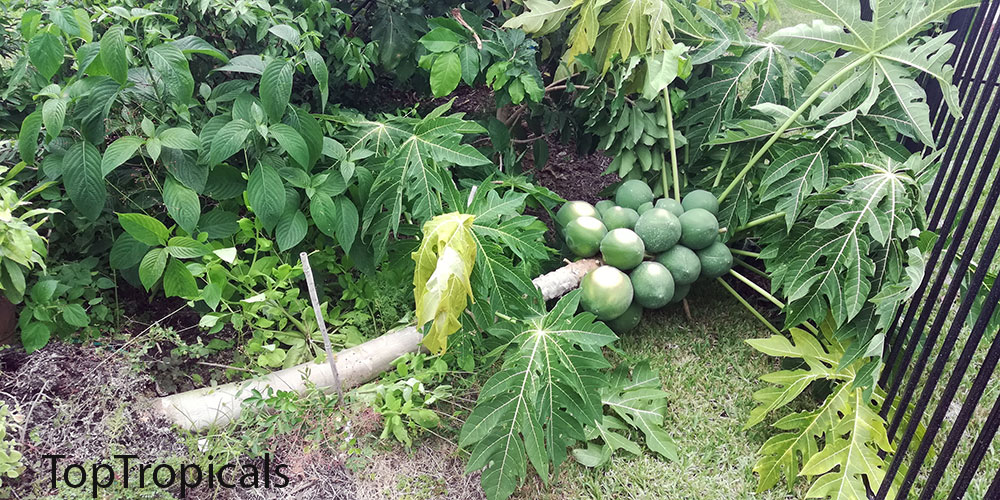
A: A couple months ago we also had a Papaya tree loaded with fruit that fell down (see photos). It was heart-breaking. We secured it and it continued growing for a couple of weeks but unfortunately, at the end the tree still died, leaving us a million fruit. The Papaya tree has a very sensitive root system and is hard to re-establish once the roots are damaged.
However, if it just has a broken top, it has a good chance to grow back from the side shoots.
Of course, remove all the fruit so they don't take energy from the recovering tree.
When a tree is loaded with fruit, it is important to provide support for heavy branches and for the trunk if needed. Always support the fruiting tree to prevent from possible falling BEFORE it starts leaning down and may become broken by even a light wind.
In the photo, you can see how we fixed boards around, but it was already after the tree fell. Unfortunately, it was too late since the roots got damaged. Always need to stake the tree up before the branches get too heavy!

RECOMMENDED FERTILIZERS:
Fruit Festival Plant Food - Super Crop Booster
Mango-Food - Smart Release Fruit Tree Booster
SUNSHINE-Honey - sugar booster

Maradol Papaya $10 Hot Sale

Only local pick up from our Garden Center
Hurry up, while supply lasts!

Date: 29 Jan 2020

The most luscious Hospitality Fruit: Pineapple

by Mark Hooten, the Garden Doc

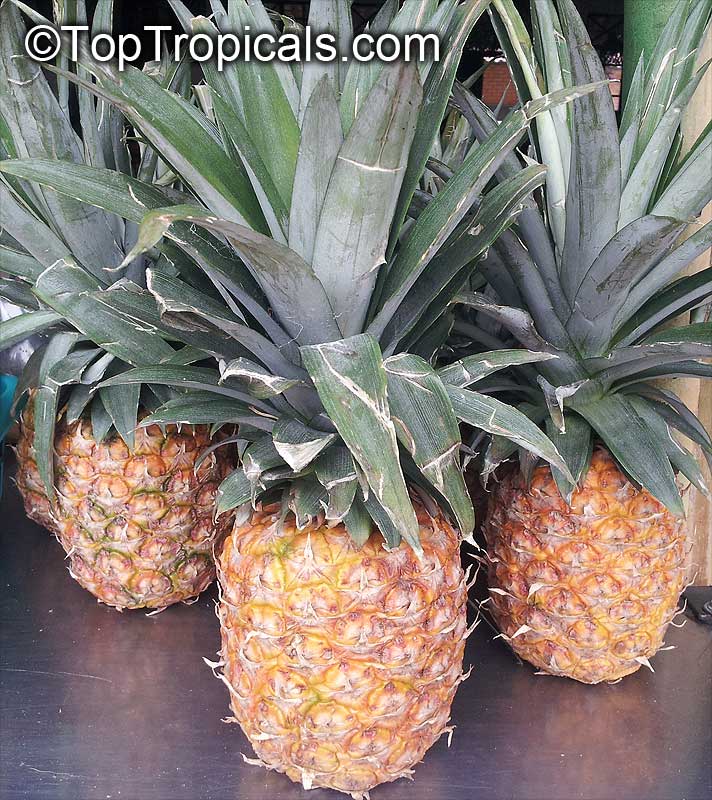
I wonder how many people know that the Pineapple (Ananas comosus) was actually the very first New World tropical fruit to have been sampled fresh by European royalty? It happened 527 years ago, when one made it to Spain, being personally delivered to King Ferdinand and Queen Isabella by Christopher Columbus... He had obtained a huge number of them, however only one actually survived intact and edible! That pineapple was instantly declared to be the most luscious wonderful fruit ever!..
...During the 1700s before the Revolutionary War, the overly monetarily intoxicated super-rich were actually paying a modern equivalent of⁠ - get this - 8000 dollars for a single fruit!..
...In conclusion, I will add the simple recipe for my personally favorite go-to comfort food...

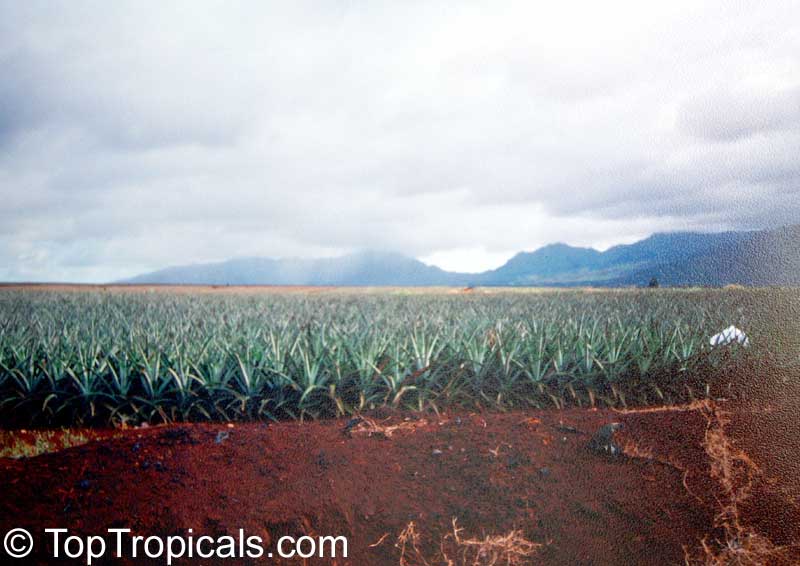
Pineapple plantation in Hawaii