Garden Blog - Top Tropicals

Date: 23 Feb 2026

❄️ The Hardiness Report: February 2026 ❄️

🐾 Smokey & Sunshine’s real-world survival data from our Sebring, Florida Research Gardens. Smokey analyzed the data. Sunshine just stayed happy. Here is what they found.

Macadamia  tree  surviving  25F  freeze  as  Smokey  inspects  leaves  and 
 Sunshine  holds  steaming  coffee  in  frosty  garden.
Sunshine: Twenty five degrees. Wind chill fourteen. And it is still standing... like nothing happened?
Smokey: This is macadamia strength.
Sunshine: I should put a macadamia nut in my coffee and borrow some of that strength.
Smokey: Do not get too nutty yet. It still needs curing and cracking.

📊 Weather Data – February 1–6, 2026

Sebring, Florida – 132 years of recorded observations
This was not a light frost. It was a prolonged, windy, penetrating hard freeze.

  • 🌡 Minimum temperature: 25F
  • ❄️ Wind chill: 14F
  • ⏳ Duration: 3 nights of 8–10 hour hard freeze
  • ☀️ Daytime temperatures: around 50F for 7 days
  • 🌀 Wind: sustained 20 mph, gusts 40–50 mph

While all our plants in pots were protected in greenhouses, our in-ground plantings faced the freeze outdoors. We covered what we could. Even so, some plants were damaged, some died, and some surprised us by surviving.

In the next few newsletters, we will share the real survivors - the plants that proved themselves in the ground, under real conditions. Smokey and Sunshine have been out in the fields assessing the damage from the February 1–6 freeze. While many plants struggled, the Macadamia proved to be a true standout. This is how we grow them to handle the tough years.

Why does this matter? Because we have gotten used to warm winters, and this freeze was a rude awakening. Not everyone lives in Miami. If you garden in places where a real cold event can happen, you have to be prepared - and you have to plant what can take it.

🌰 Macadamia: Freeze Tested and Standing
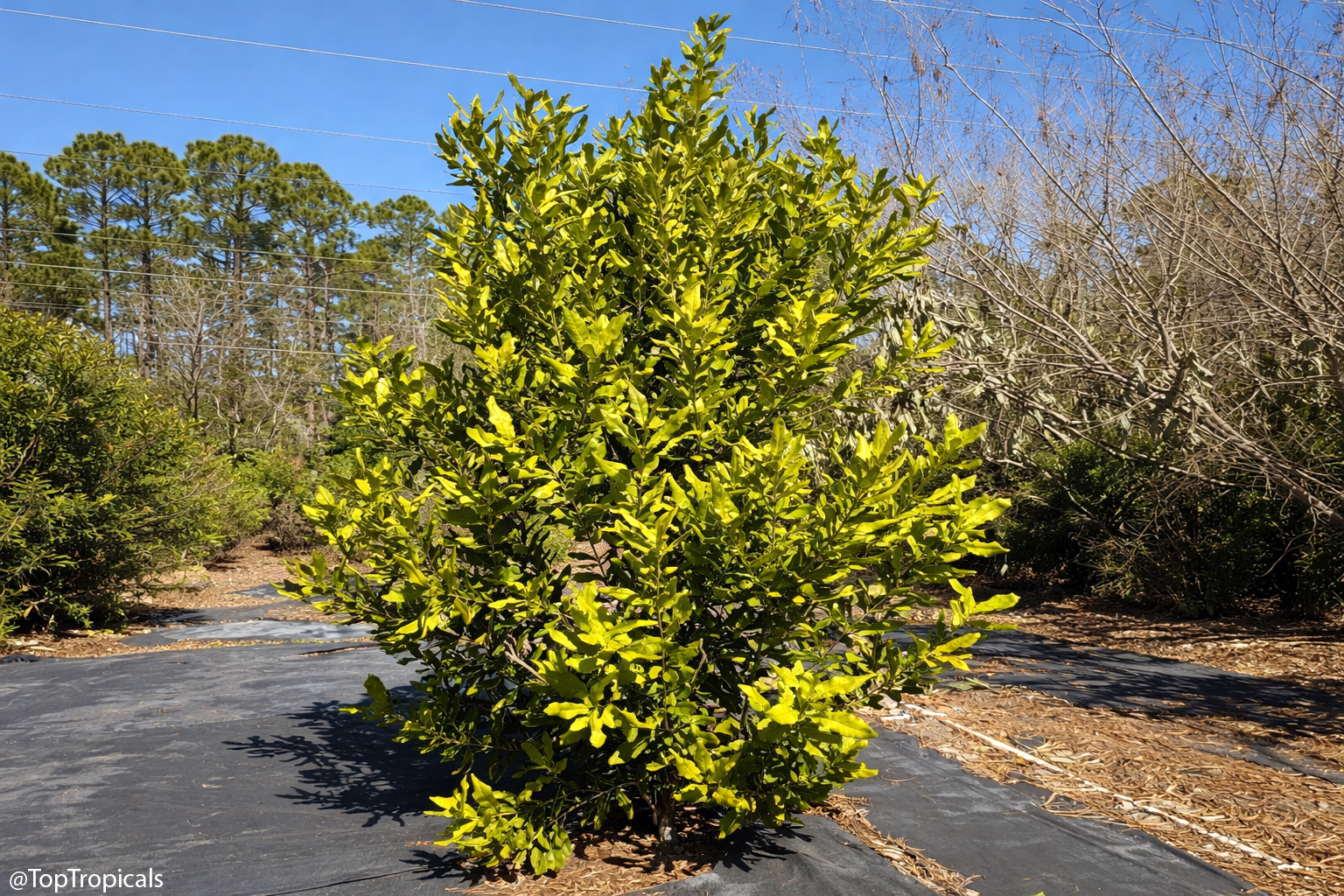
Three  year  old  macadamia  tree  after  three  nights  of  25F  hard  freeze  in 
 February  2026,  showing  healthy  foliage.

3 year old macadamia tree after 3 nights of hard freeze in February 2026 - standing strong.

When temperatures dropped to 25F with wind chill near 14F, our established macadamia trees remained upright, green, and structurally intact. Leaves held. Branches stayed firm. No collapse, no panic.

That is not luck. That is macadamia hardiness.

Often considered a "tropical luxury nut," macadamia proved it can handle more than many gardeners expect. In USDA Zones 9b-11, with proper drainage and site selection, it is not just ornamental - it is a long-term food tree with real resilience.

In a winter that reminded us not to take warmth for granted, macadamia earned its place on the survivor list.

The nut itself is famous for its strength. The shell is among the hardest in the nut world, requiring serious pressure to crack. Inside, the kernel is creamy, buttery, rich, and deeply satisfying. High in monounsaturated fats and naturally low in sugar, macadamias have long been valued both for flavor and for nutrition.

The tree is equally impressive. An evergreen with tough leaves and elegant spring flowers, it matures into a productive, manageable canopy. Nuts develop slowly over six to seven months. Production begins in a few years and increases steadily as the tree matures. Plant it once, and it can reward you for decades.
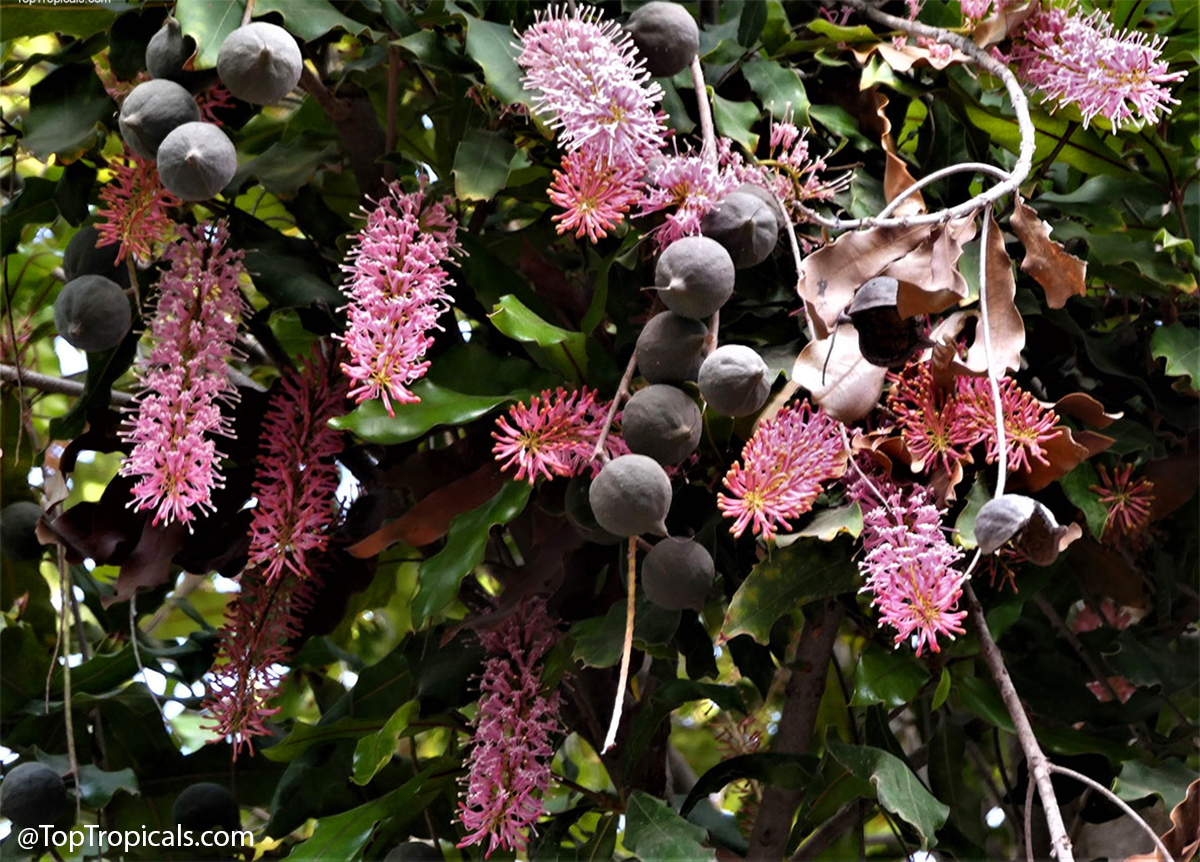
Macadamia  tree  with  pink  flower  racemes  and  developing  round  green  nuts
   on  branches.

Macadamia flowers and developing nuts on the tree.

Cold will come again. It always does. The question is not whether winter will test your garden. The question is whether your trees are ready. Macadamia proved it is. If you are building a garden that feeds you for decades, this is a tree worth planting.

🛒 Add Macadamia Tree to your garden
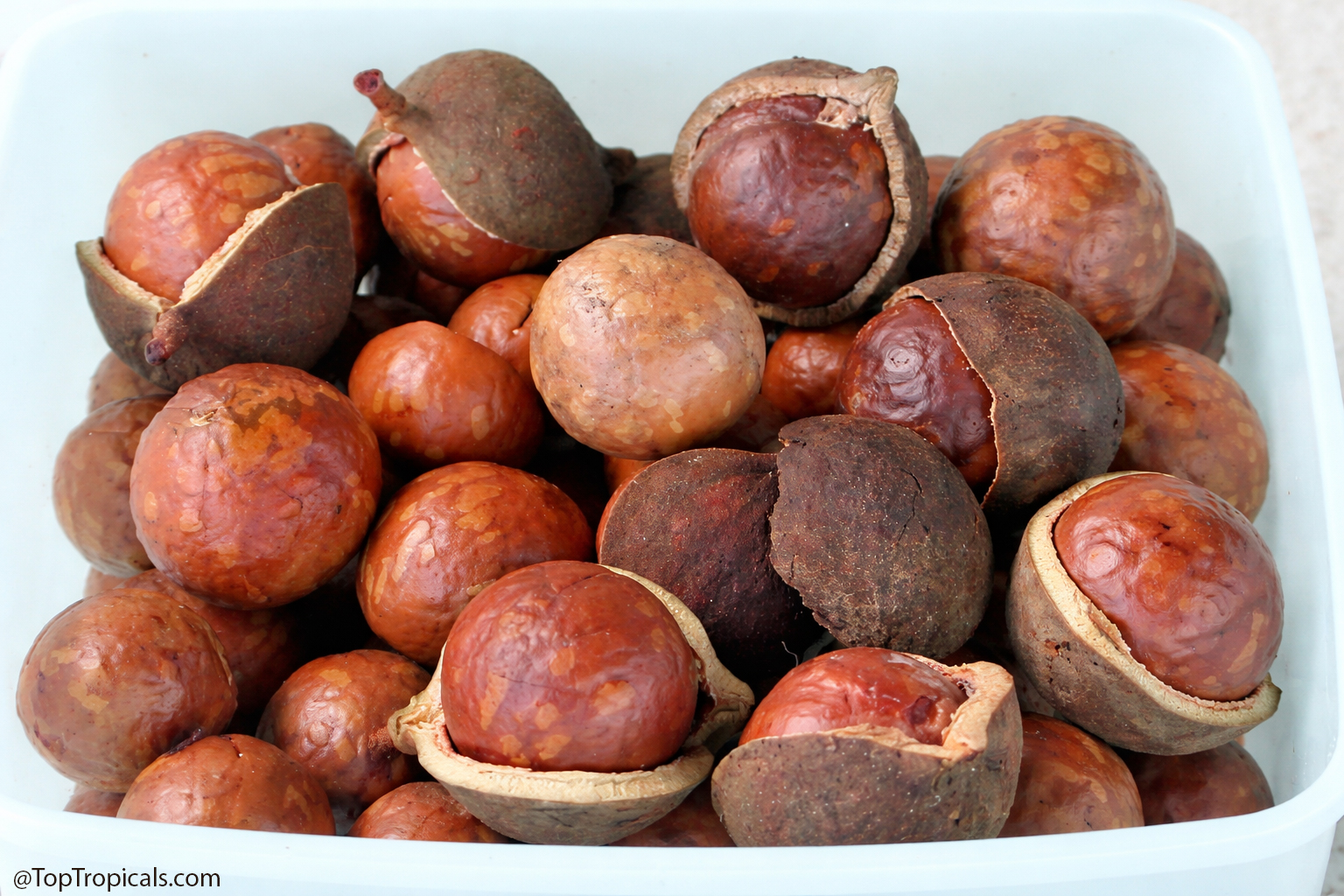
Fresh  macadamia  nuts  with  outer  husks  removed  and  hard  brown  shells 
 exposed  in  a  container.

Freshly harvested macadamia nuts with husk removed and hard shells visible.

Date: 20 Jan 2026

Smokey and Sunshine

Anthropomorphic
Sunshine: Newsletter?
Smokey: Yes.
Sunshine: Another article?
Smokey: No.
Sunshine: Advice?
Smokey: Also no.
Sunshine: Just plants?
Smokey: Just plants. New arrivals and top picks by our horticulturist
Sunshine: Perfect. I just enjoy the plants and coffee. Hope everyone reading does too.

Shop new arrivals

Date: 20 Jun 2026

Last minute gift shopping: Gift Card with 15% BONUS VALUE for Fathers Day!

Smokey and Sunshine ordering a Gift Card

Smokey and Sunshine ordering a Gift Card

🎁 Last minute gift shopping: Gift Card with 15% BONUS VALUE for Father's Day!


Smokey: What happened? Lost your ridiculous pants?
Sunshine: They're not ridiculous. They're a statement. Besides, I have a problem. Bigger than those pants. My dad's Father's Day gift plants won't arrive before Father's Day.
Smokey: When did you order them?
Sunshine: Five minutes ago.
Smokey: Use a gift certificate.
Sunshine: Will that save my fat orange ass?
Smokey: Yes. It's sent by email. Assuming you remember your dad's email address. Plus, it has 15% extra value.
Sunshine: Perfect. Dad gets what he wants. And I keep the donuts.

🎁 Live plants make perfect gifts! Let Dad choose the plants he likes.


Order now and the gift card automatically will be 15% larger face value, for example:
- You pay $100, we'll issue a $115 gift card
- You pay $200, the card will be of $230 value.
Make sure to use words "Happy Fathers Day" in message field to qualify for the bonus value

Offer valid through 6/23/2026.
The Gift Card has no expiration date.
The Gift Card can be used to buy plants, seeds, and garden supplies.


🎁 Feel free to use this code yourself or share it with your friend.

🛒 Buy Gift Card with Bonus Value

📚 Learn more:


·  About Smokey & Sunshine

#Discounts #Smokey_Sunshine

🟢 Join 👉 TopTropicals and share with your friends

Date: 23 Nov 2025

🏡 To Use Your Garden Or Be Used By It

Two  cats  in  a  garden  planting  a  young  tree.  Smokey,  a  black-and-white 
 tuxedo  cat,  holds  a  small  shovel  and  works  the  soil,  while  Sunshine,  a 
 fluffy  orange  tabby,  sits  smiling  beside  a  bag  of  garden 
 soil.

Smokey and Sunshine November Planting.

Smokey: Winter roots make spring easy. Keep that plant straight.
Sunshine: I am keeping it straight by not touching it at all.
Smokey: That is exactly what I was afraid of.

November is the month when the garden finally stops yelling at you. The heat backs off, the bugs calm down, and the weeds take a breath. This is when we get to take control again. And as gardeners, we know the truth: Either you use your garden, or your garden will use you in spring. Let me walk you through this, gardener to gardener.

"November is when the garden finally listens. Give it a little direction now, shape it, guide it, and prepare it for spring. It will reward you all year." - Tatiana Anderson, Top Tropicals Plant Expert

🌴 When The Garden Uses You

We have all lived this scene:

  • March weeds appear, and two days later it looks like a jungle.
  • One missed watering turns into five wilted plants and a full week of recovery.
  • A skipped feeding shows up as yellow leaves and panic searching online.
  • Bugs return fast, and suddenly you are washing leaves every other day.
  • Random plant purchases fill your yard with chaos and mismatched care needs.
  • When the garden takes control, spring feels like hard work, not joy.

An  overgrown  tropical  garden  with  dense  foliage  and  vines  spilling  over
    a  walkway,  showing  how  a  garden  can  take  over  when  not  maintained.

Overgrown Tropical Garden Showing How a Garden Can Use You

📊 When You Use Your Garden

November flips the script. Plants slow down. Soil stays warm. This is the safest month to experiment, move plants, fix mistakes, and redesign.

What you do now pays off huge in March.

  • You map out sun zones and shade zones.
  • You mulch now so weeds do not explode later.
  • You move plants to better positions without heat stress.
  • You remove the high-drama plants before they start another season of complaints.
  • You pick what you want for next year instead of letting impulse buys rule you.

Spring becomes smooth instead of overwhelming. And honestly? It feels good to walk outside in March and see order instead of chaos.

A  neat,  organized  tropical  garden  with  trimmed  plants,  open  pathways, 
 and  balanced  landscaping,  showing  how  a  gardener  can  use  and  direct  the 
 garden.

In the photo: Every garden starts in small steps. Biquinho Pepper (front) in the garden.

What Benefit Do You Get Personally?

  • Less watering.
  • Fewer bugs.
  • Bigger fruit.
  • Better flowering.
  • Less money wasted.
  • Less time fixing problems you could have prevented now.

This is why experienced tropical gardeners adore November.

Garden

In the photo: Organized Tropical Garden. Firebush (lemon gold variety) and Cordylines (Ti Leaf) make colorful spots in the garden.

🐭 Start With Something Small Today (5 Minutes)

Pick one:

  • Add mulch to the driest spot in your yard.
  • Cut one dead branch from any tree.
  • Move one pot to a better sun angle.
  • Pull three weeds from the worst area.
  • Water deeply once this week.

Small steps now save hours later.

⭐ One Short Story

Last year we planted a Star Fruit in November. By March, it was already covered in flowers, and have been harvesting fruit non-stop since then! That is what winter planning does: it gives plants a head start you can actually see.

Young  Carambola  Star  Fruit  tree  fruiting

🐍 Plants That Will Use You If You Let Them

These are great plants, but only if you plan before planting them:

  • Banana (thirsty)
  • Hibiscus (hungry)
  • Brugmansia (sensitive)
  • Passion vine (takes over anything it touches)

Place them wrong, and they become full-time jobs.

An  overgrown  passion  vine  covering  a  garden  swing,  showing  how  a 
 fast-growing  plant  can  take  over  when  not  maintained.

In the photo: Passion Vine taking over the swing.

🐰 Plants That Work For You

These feel like free upgrades to the yard:

Pick even one of these and your garden starts giving back.

A  landscaped  garden  path  with  a  Cattley  Guava  tree  featuring  a  twisted 
 multicolor  trunk,  surrounded  by  trimmed  tropical  plants  and  decorative 
 garden 
 elements.

In the photo: Cattley Guava brings not only tasty fruit but also a wonderful character with its amazing multi-color twisted trunk.

🌡️ November Advantage

You cannot ruin anything in November. This is the safest, calmest month to shape your garden the way you want. If you act now, spring becomes a victory lap. If you wait, spring becomes a rescue mission.

A  landscaped  tropical  garden  with  a  potted  Adenium  in  full  bloom,  red 
 Cordylines  behind  it,  and  neat  mulched  beds  with  decorative  garden 
 elements.

In the photo: Adenium is a colorful accent in the garden.

💐 Thanksgiving Tie-In

This is the season to reset, breathe, and be thankful for your outdoor space. A garden that works for you is one of the best gifts you can give yourself going into the new year.

Start your November plan today. Use your garden. Do not let it use you.

A  neatly  designed  tropical  garden  bed  featuring  Megaskepasma,  iris, 
 Colocasia,  colorful  Crotons,  Dracaena,  and  Ti  Leaf  plants  arranged  in 
 mulched 
 landscaping.

In the photo: Megaskepasma, Iris, Colocasia, Crotons, Dracaena and Ti Leaf bring instant tropical look to your garden.

Shop Fruit trees

Shop Flowering shrubs

Date: 27 Feb 2025

What Fertilizer to Use Now and How?
Five important keys to healthy plants

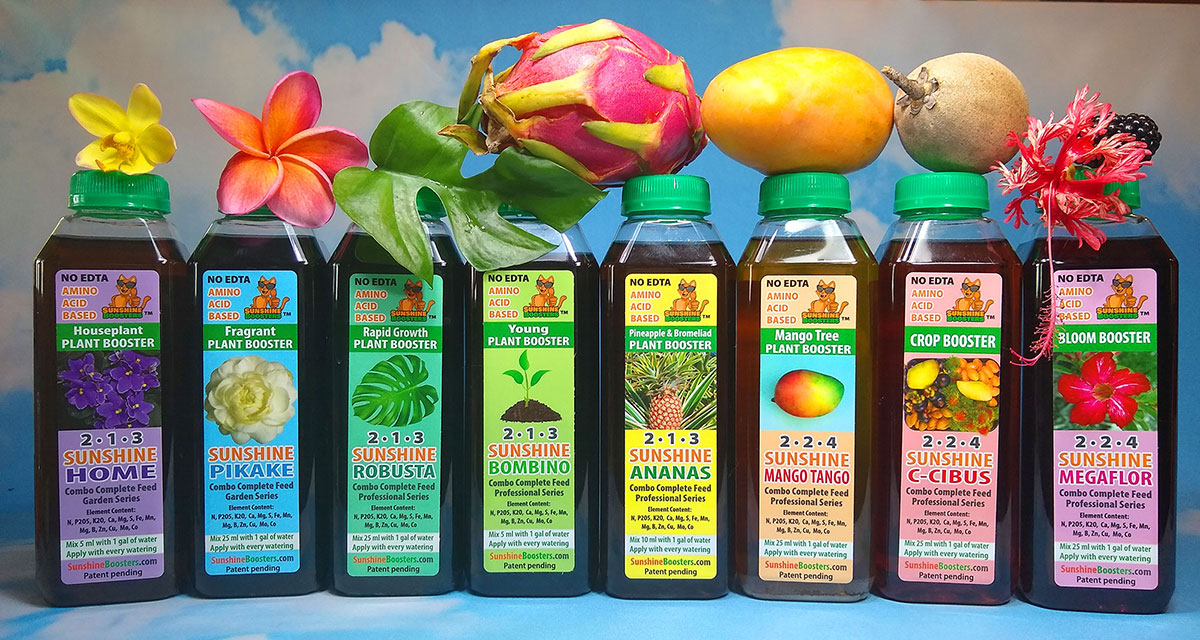
Sunshine  Boosters  Selection

Q: It's early Spring this year. Should I start fertilizing my plants sooner than usual?

A: Most fertilizer instructions recommend fertilizing tropical plants from March to November. This is because plants don't need as much food during the cooler months when many go dormant, and excess nutrients can burn the roots if not absorbed. However, for the most effective fertilizer program and healthy plants, consider these points:

1. Sunshine Boosters Year-Round

Liquid amino-acid-based fertilizers like Sunshine Boosters are safe to use year-round. Since watering is reduced in cooler weather, the intake of water-soluble fertilizer is also lower, providing plants with just the essential nutrients for their minimal needs.

2. Dry Fertilizer Schedule

Be cautious with dry fertilizers. Apply them only during active growth in the hot season.

3. Temperature Is Key

If March is still cold, delay dry fertilizer use. However, if nighttime temperatures in February stay above 65F, you can start a dry fertilizer program using slow-release, granulated plant food.

4. What Fertilizers to Use and How

Check out our Sunshine Boosters selection for different types of plants and choose the right type for your needs. These can be applied as often as with every watering:

For Rapid Growth
Sunshine Robusta - Rapid Growth Booster: general fertilizer for both foliage plants and small starters that need an extra boost.

For Flowers
Sunshine Megaflor - Bloom Booster: boosts flowers on established plants; and Sunshine Pikake - Fragrant Plant Booster: best for fragrant flowers.

For Fruit Trees
Sunshine C-Cibus - Crop Booster: contains all necessary elements for fruit trees and their production. Sunshine Mango Tango - specifically formulated for Mango and Avocado trees, and Sunshine Citron - ideal for citrus trees.

For Tender Perennials
Sunshine Orchidasm - Orchid Total Feed and Sunshine Ananas - Pineapple and Bromeliad Booster: mild formulas for these tender perennials.

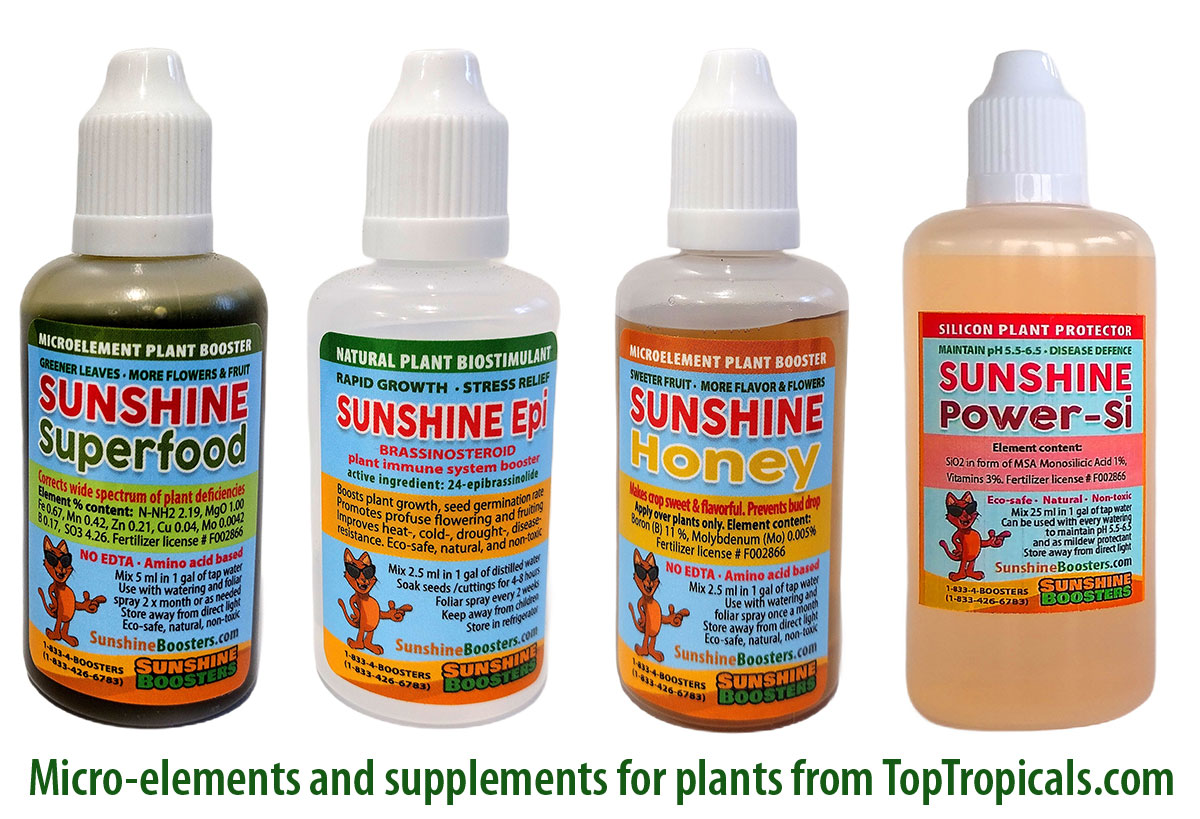
5. Microelement Supplements Are a Must

Besides macronutrients, plants need additional microelements, just like humans need vitamins. Be sure to apply these supplements along with your regular plant food:

For Green Leaves and Health
Sunshine SuperFood - Complex Microelement Supplement: a must for healthy plants. Apply once a month.

For Stress Relief
Sunshine-Epi - Brassinosteroid Plant Hormone: essential for plants recovering from stress (shipping, transplanting, drought, insect damage, cold stress, etc.). Apply as needed.

For Sweeter, Bigger Fruit
Sunshine Honey - Fruit Sugar Booster: application on fruit trees will make fruit bigger and sweeter by directing sugars to the fruit from other plant parts, and helps to prevent bud drop. Apply 4 times a year: at bud setting, flowering, fruit setting, and after harvesting.

For Better Resistance
Sunshine Power Si - Silicon Protector - enhances resistance to insects, diseases, drought, and frost, while boosting growth. Apply once a month, along with Sunshine SuperFood.

Need Help? Our Plant Experts Are Ready to Assist!

Microelements  and  supplements  for 
 plants