Garden Blog - Top Tropicals

Date: 31 Dec 2025

2026: Year of the Fire Horse - time to grow bold, live free, and plant lucky

2026: Year of the Fire Horse

2026: Year of the Fire Horse

🐎 2026: Year of the Fire Horse - time to grow bold, live free, and plant lucky

  • 🔥 Hold on to your flower pots - because on February 17, 2026, the Year of the Fire Horse gallops in, ready to shake things up.
This zodiac year brings passion, freedom, and a go-big-or-go-home kind of energy.
If you've been itching to make a change, start a new project, or finally plant that herb garden - this is your cosmic green light!
  • 🔥 What kind of energy does the Fire Horse bring?


    The Horse is all about movement, independence, and bold decisions. Fire Horses, in particular, are fiery (naturally), adventurous, and stubborn in the best way. They're known for charging ahead fearlessly - sometimes without thinking it through. That means 2026 is a year to take chances, but stay grounded. Think big, but don’t skip the planning.
  • 🔥 What does that have to do with plants?


    A lot, actually. Horses are herbivores. In the year of the Fire Horse, plants aren’t just background decoration - they’re fuel, fortune, and Feng Shui. The Fire element thrives on bright colors, strong scents, and warm energy, so the right plants can balance all that intensity, boost your luck, and keep your home and garden in harmony.


📚 Learn more:


#Horoscope

🟢 Join 👉 TopTropicals

Date: 5 Jan 2026

A  tuxedo  cat  planting  a  small  shrub  in  a  tropical  garden  while  a  ginger
    cat  relaxes  nearby  with  coffee  and  donuts,  illustrating  winter  planting  in 
 a  warm 
 climate.
Sunshine: January might feel warm, but its still winter. Wool socks, scarf, hot coffee.
Smokey: You get warm when you work. Plant now so roots are established before spring growth starts.
Sunshine: Alright. Lets see who stays warmer - you digging or me with coffee.

🌴 Why winter planting works in a warm climate

By our plant expert Tatiana Anderson

We are lucky to live in a warm climate. This is how I think about the seasons here. Winter is for roots. Spring is for growth. Summer is for managing heat and water.

So if we want plants that handle summer better, we plant them in the season that gives them the best start. Winter here is comfortable. The soil stays workable. The days are mild. And plants are not being stressed by heat. That is exactly why winter is the best time to plant in Florida and other warm areas.

If we use this season well, plants go into spring already settled instead of trying to catch up. This is what I like to plant now, and why.

🟢 Trees first. Anything that will be in the ground for years. Fruit trees, shade trees, flowering trees. When we plant them in winter, they can focus on roots before the spring growth surge starts. By the time spring arrives, the tree is anchored and ready to grow on top.
Examples: mango, avocado, Eugenia cherries, jackfruit, sapodilla, longan, lychee, canistel.

🟢 Shrubs next. Shrubs establish faster than trees, but winter still gives them an advantage. They settle in quietly before the spring flush and bloom cycles begin. That usually means steadier growth and fewer problems once heat returns.
Examples: gardenia, jasmine, brunfelsia, hibiscus, clerodendrums.

🟢 Vines are often overlooked. Vines want to grow fast when spring starts. If the root system is not ready, you get weak growth and frustration. Planting vines in winter gives them time to build a foundation first, so spring growth has support.
Examples: Rangoon creeper, stephanotis, Petrea, Mexican Flame Vine.

🛒 Explore cold tolerant plants

Date: 7 Jan 2026

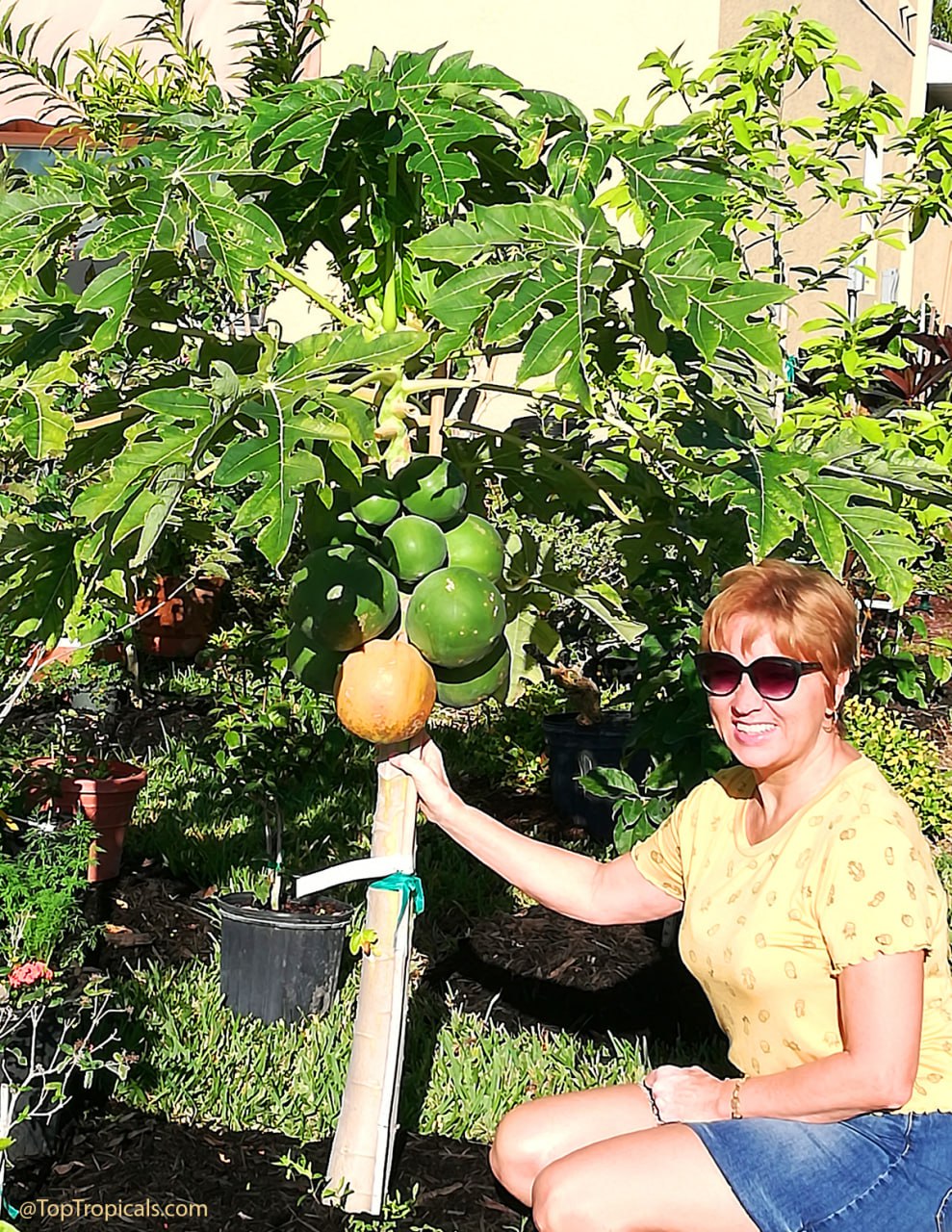
How to grow papaya from seed without killing it, Part 3: containers, sunlight, and 11 common mistakes

Dwarf Papaya tree

Dwarf Papaya tree

🍊 How to grow papaya from seed without killing it, Part 3: containers, sunlight, and 11 common mistakes


Getting papaya to sprout (see part 1 and part 2) is only half the battle. How you handle containers, sun, water, and root disturbance determines whether your plant reaches fruiting size or slowly declines. In this final part, we cover practical container growing, light requirements, and the mistakes that stop papaya from ever producing fruit.
  • 🍊 Transplanting papaya - what most people get wrong


    The one thing papaya roots hate (and most growers ignore)

    Choosing the right container is critical.
    Rule of thumb: papayas hate transplanting. Their roots do not like to be disturbed.

    Because of this:

🟡Reduce transplanting as much as possible
  • 🟡Choose a container that will last longer once seedlings leave starter pots
  • 🟡Avoid stepping up pot sizes too frequently

  • Watering matters just as much:
  • 🟡Larger pots stay wet longer
  • 🟡Papaya roots dislike constant moisture
  • 🟡Always reduce watering when moving into a bigger container


🍊 Container growing guide for papaya


Grow papaya anywhere - but only if you do this right
  • 🟡Start seeds in small cells (1–2 seeds per cell) or small pots (4–8 seeds per pot, spaced far apart)
  • 🟡Transplant carefully when seedlings reach about 2 inches
  • 🟡Once a 4-inch pot is outgrown, move directly to 1-gallon or even 3-gallon containers
  • 🟡Reduce watering when containers are much larger than the root system
  • 🟡Protect young plants from heavy rain until roots fill the pot
  • 🟡Stake plants with bamboo
  • 🟡Papayas grow fast, and the stem often outpaces root development. Even light wind can knock them over


🍊 Sunlight requirements for papaya


Papaya grows fast, but one mistake stops it cold

Papayas need full sun and prefer to stay on the drier side once established.

In shade:
  • 🟡Plants become leggy and overly tall
  • 🟡Flowering may stop completely
  • 🟡Fruit production may be reduced or zero

  • Shade also keeps soil wet longer:
  • 🟡Soil dries slowly
  • 🟡Excess moisture can kill roots, even on mature plants


🍊 11 most common mistakes when growing papaya from seed


From seed to fruit in under a year - if you avoid these papaya mistakes
  • · 1. Leaving pulp or slime on seeds - prevents germination and causes rot
  • · 2. Soil too wet during germination - keep damp, not soggy
  • · 3. Overwatering seedlings - young plants rot easily
  • · 4. Disturbing roots during transplanting - papayas hate it
  • · 5. Not enough sun - papaya hates shade and will not produce in low light
  • · 6. Too much water once established - prefers drier conditions
  • · 7. Planting in low spots in the ground - poor drainage leads to root rot
  • · 8. Using heavy soil - waterlogging kills roots
  • · 9. Giving up too early - seeds can take weeks to sprout
  • · 10. Not fertilizing - papaya is a heavy feeder. Poor soil means no fruit. Remember, it is a giant grass.
  • · 11. Do not trim papaya. Trimming may cause side shoots, but it ruins the natural tropical form. If you need a ladder to harvest fruit, the solution is not pruning - it is growing a dwarf variety.

Papaya rewards growers who understand its quirks. Treat it like the fast-growing, shallow-rooted plant it is, and it will produce quickly and generously. Ignore those basics, and it will struggle no matter how much care you give it.

If you found this helpful, bookmark all 3 parts - papaya grows fast, and timing matters
:

How to grow papaya from seed without killing it:
Part 1: Papaya basics
Part 2: Seeds germination
Part 3: Containers, sunlight, and common mistakes

🛒 Explore Papaya varieties

📚 Learn more:

Plant Facts

Carica papaya
Papaya
USDA Zone: 9-11
Small tree 10-20 ftFull sunDry conditionsModerate waterYellow, orange flowersWhite, off-white flowersEdible plantEthnomedical plant.
Plants marked as ethnomedical and/or described as medicinal, are not offered as medicine but rather as ornamentals or plant collectibles.
Ethnomedical statements / products have not been evaluated by the FDA and are not intended to diagnose, treat, cure, or prevent any disease. We urge all customers to consult a physician before using any supplements, herbals or medicines advertised here or elsewhere.Subtropical plant. Mature plant cold hardy at least to 30s F for a short time

· Carica papaya in Plant Encyclopedia

#Food_Forest #How_to #Papaya

🟢 Join 👉 TopTropicals

Date: 20 Jan 2026

Smokey and Sunshine

Anthropomorphic
Sunshine: Newsletter?
Smokey: Yes.
Sunshine: Another article?
Smokey: No.
Sunshine: Advice?
Smokey: Also no.
Sunshine: Just plants?
Smokey: Just plants. New arrivals and top picks by our horticulturist
Sunshine: Perfect. I just enjoy the plants and coffee. Hope everyone reading does too.

Shop new arrivals

Date: 23 Jan 2026

A leaf you grow, not a pill you buy

Insulin Ginger (Chamaecostus cuspidatus)

Insulin Ginger (Chamaecostus cuspidatus)

❣️ A leaf you grow, not a pill you buy: Insulin ginger - the plant people actually use
  • ❣️ Costus igneus (Chamaecostus cuspidatus) - Insulin Ginger, Fiery Costus or Spiral Flag - I love this plant! And that’s not something I say lightly.
  • ❣️ Customers often ask me about medicinal plants that may help with diabetes, and Insulin Ginger always comes up - for a good reason. This is one of those plants people grow on purpose, not just because it looks nice. Imagine stepping into your garden and picking a leaf instead of opening a pill bottle. That idea alone makes people pause.
  • ❣️ In everyday use, Insulin Ginger is valued for supporting healthy blood sugar and helping the body respond better to insulin. It’s also packed with antioxidants, which gardeners like to think of as quiet helpers for organs that get stressed when sugar balance is off. No lab talk, no big claims - just a plant people have trusted and used for a long time.
  • ❣️ From a gardener’s point of view, it’s hard not to love. You can harvest leaves year-round, and the more you pick, the better it grows. One plant quickly turns into many, which means you’ll have enough for yourself and extras to share with friends and family.
  • ❣️ It’s one of those plants people don’t regret planting. Easy to grow. Easy to share. Easy to use.


🛒 Add Insulin Ginger to your medicinal herb garden

📚 Learn more:

Plant Facts

Costus igneus, Chamaecostus cuspidatus
Insulin Plant, Fiery Costus, Spiral Flag
USDA Zone: 9-11
Large shrub 5-10 ft tallSmall plant 2-5 ftSemi-shadeShadeRegular waterYellow, orange flowersEdible plantSpice or herb plantEthnomedical plant.
Plants marked as ethnomedical and/or described as medicinal, are not offered as medicine but rather as ornamentals or plant collectibles.
Ethnomedical statements / products have not been evaluated by the FDA and are not intended to diagnose, treat, cure, or prevent any disease. We urge all customers to consult a physician before using any supplements, herbals or medicines advertised here or elsewhere.Subtropical plant. Mature plant cold hardy at least to 30s F for a short time
  • Costus igneus (Chamaecostus cuspidatus) - Insulin Ginger in Plant Encyclopedia
  • How to make lots of Insulin Ginger plants quickly and get more health benefits
  • How to lose weight naturally with tropical fruit and plants
  • The fiery plant that fights sugar: Nature secret insulin?
  • Most interesting edible gingers

  • #Food_Forest #Remedies #Shade_Garden #Discover

    🟢 Join 👉 TopTropicals