Garden Blog - Top Tropicals

Date: 10 Jan 2017

New Video: Coffee plant

Top Tropicals Showcase: Coffee plant.

Check out this video: Top Tropicals Showcase: Coffee plant

Most people drink coffee every day but not all of them realize where this delicious drink comes from. It comes from a Coffee tree!
Coffee is the best gift plant and perfect container fruit tree. It grows into a beautiful dark green shrub or small tree. Coffee tree prefers filtered light which makes this plant a perfect house plant.
The white, fragrant, star-shaped flowers are clustered and resemble gardenias to which they are related. The whole fruit is edible, it is a small fleshy berry changing in color from green to yellow to red. The seeds are the actual "coffee beans" as they called, and can easily be dried, roasted and ground at home. The most common coffee is Coffea arabica; related species are Coffea robusta (Robusta Coffee) and Coffea liberica (Liberian Coffee).

Get a Coffee tree and it will keep you happy with the favorite beverage at all times!
Enjoy this video and your morning coffee.


Stay updated with TopTropicals Videos by subscribing to our channel at YouTube.com/TopTropicals and get our latest video news of what's fruiting and blooming!

Date: 31 Aug 2016

Hardy avocados

Q: I intend to gift three avocados, at least one type A and one type B, to a friend who lives in an area where the temperature never goes below 25F. The idea is to give them a ripening season as long as possible. Which combinations do you suggest, and which are the A and B?

A: When talking about "A" type and "B" type in Avocados, it is referring to the flowers. An avocado will produce both male and female flowers on the same plant. "A" type means that the flowers are female in the morning and male at afternoon. "B" type means that the flowers are male in the morning and female in the afternoon. If you plant to start a commercial growth, then it's important to create a proper mix of both types. However, in hot and humid climate a single tree produces flowers of both types, so it is not necessary to have both A- and B- types planted together in backyard. Even a single tree produces enough fruits for home gardener.

It is also important to know that while there are more cold hardy avocados, it refers to a full grown established tree. They will still need protection from the cold until they are bigger and more established. One can not expect a small tree, which was planted in June, to survive the first winter. It'll take few years until the tree is "harden" enough.

Wurtz Avocado: Fruits from May to Sept. Dwarf hybrid. It is very compact and slow growing, reaching only about 8-12 feet at maturity. Distinctive weeping growth habit. Suited for planters, containers, patios, greenhouse use. Great for dooryard or container growing. The tree can handle temperatures to 25(F) degrees. Production is good and it is a consistent bearer.

Day Avocado: Fruits July to Sept. Day avocado is green, smooth skin and is shaped like a club. The fruit is of very good quality and has a nice buttery consistency. The slender tree is relatively cold tolerant and produces July through September.

Fuerte Avocado: Fruits Nov to June. Relatively cold hardy variety. Green fruit, elongated,flavor excellent, buttery. Vigorous compact tree with decidedly alternate year bearing habit. Ripens November to June.

These three will provide you with fruit ripening during the whole warm season. For the most cold hardy avocado varieties, see this info sheet.

Date: 15 May 2024

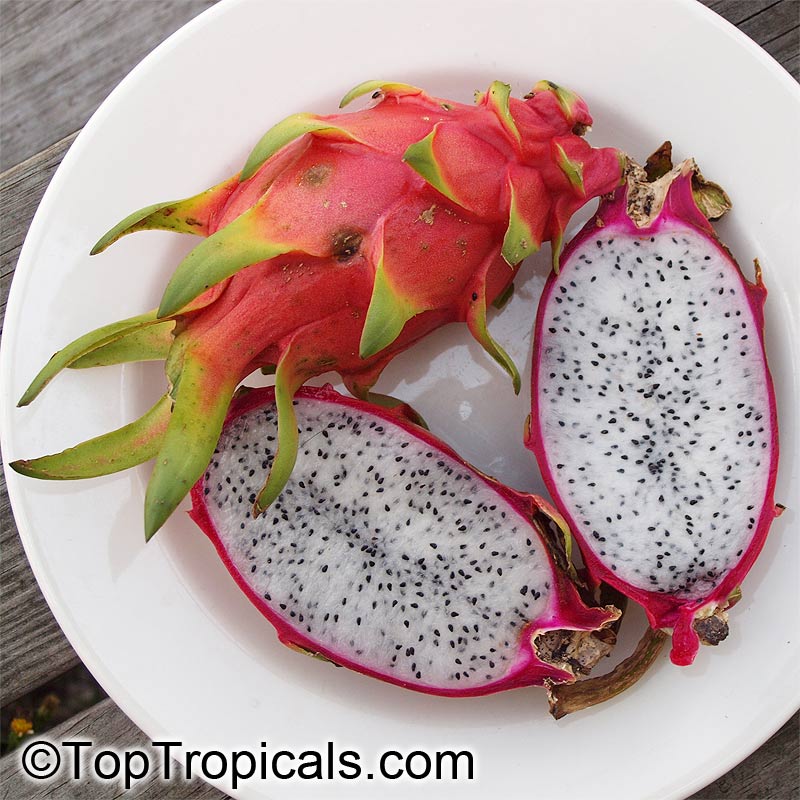
What does a dragon taste like? Does Dragon Fruit come from a monster cactus? Learn why you need to grow your own

Hylocereus and Selenicereus Dragon Fruit or Pitaya

Hylocereus and Selenicereus Dragon Fruit or Pitaya

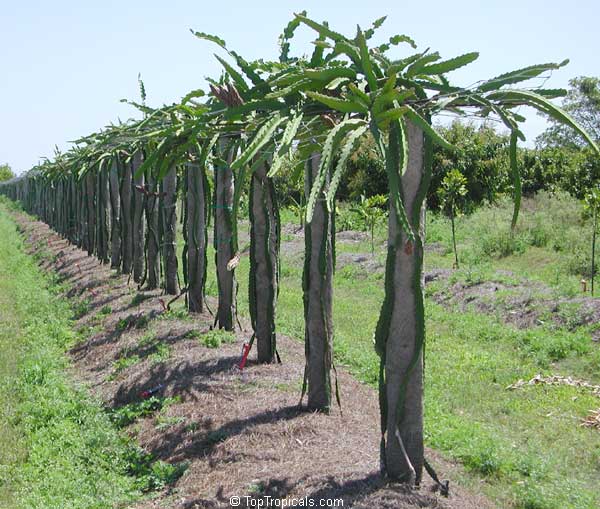
Hylocereus and Selenicereus Dragon Fruit or Pitaya trees on trellis

Hylocereus and Selenicereus Dragon Fruit or Pitaya trees on trellis

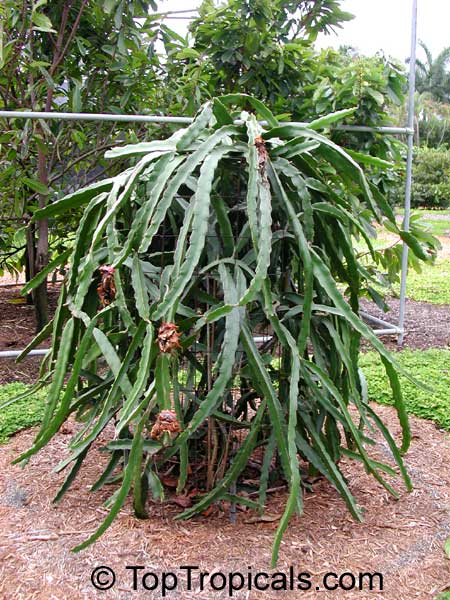
Hylocereus and Selenicereus Dragon Fruit or Pitaya on trellis

Hylocereus and Selenicereus Dragon Fruit or Pitaya on trellis

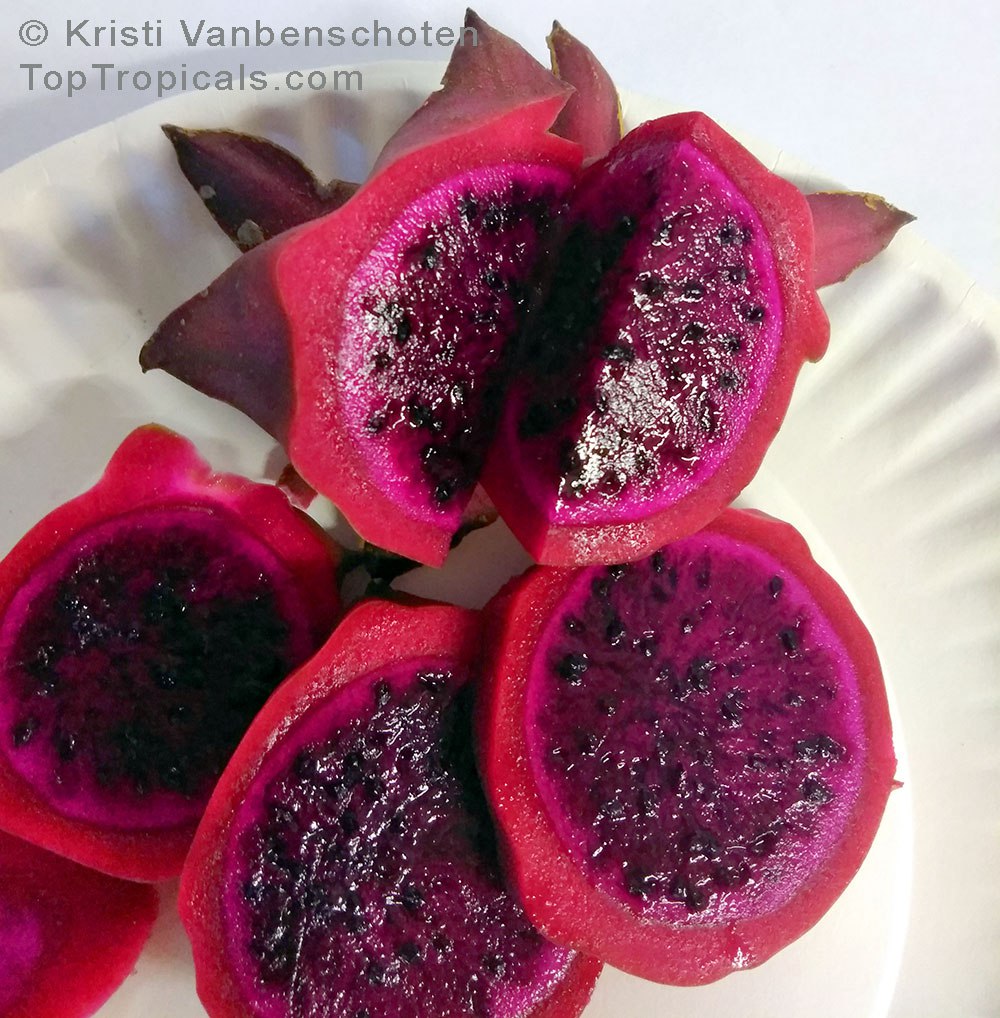
Hylocereus and Selenicereus Dragon Fruit or Pitaya red fruit

Hylocereus and Selenicereus Dragon Fruit or Pitaya red fruit

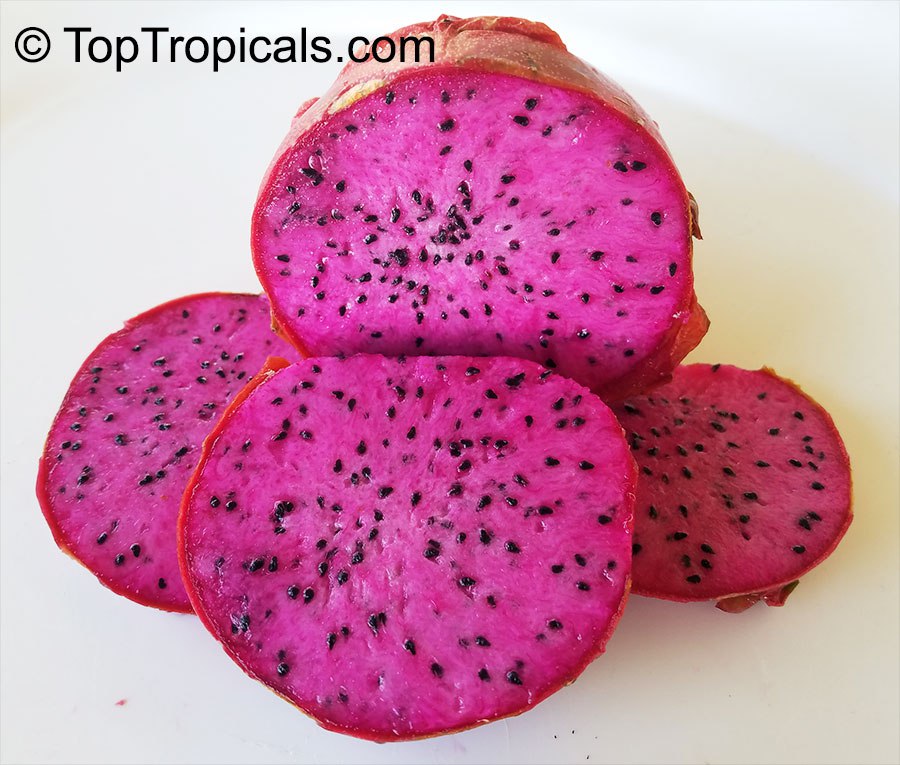
Hylocereus and Selenicereus Dragon Fruit or Pitaya purple fruit

Hylocereus and Selenicereus Dragon Fruit or Pitaya purple fruit

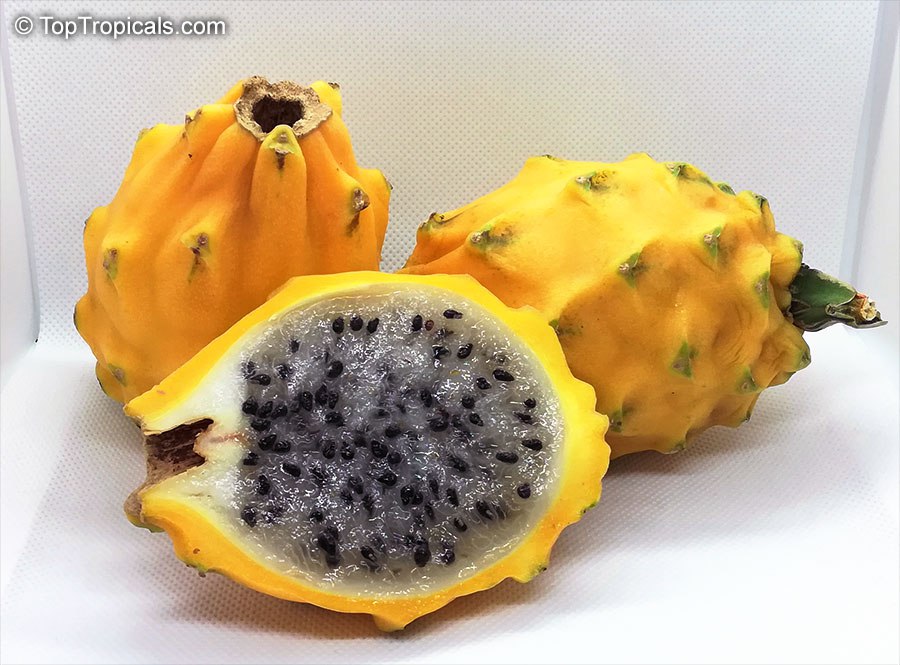
Hylocereus and Selenicereus Dragon Fruit or Pitaya Yellow Parlora

Hylocereus and Selenicereus Dragon Fruit or Pitaya Yellow Parlora

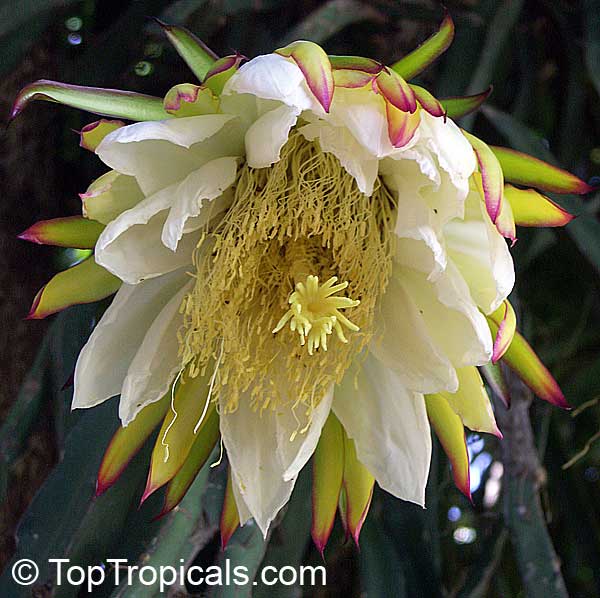
Hylocereus and Selenicereus Dragon Fruit or Pitaya flower

Hylocereus and Selenicereus Dragon Fruit or Pitaya flower

🐲 What does a dragon taste like? Does Dragon Fruit come from a monster cactus? Learn why you need to grow your own. 🌵
  • 🔴 You may have tried a Dragon fruit from the store l, but do you know how it grows? On a cactus tree!
  • 🔴 Names: varieties of Hylocereus and Selenicereus - these fruit bearing cactus plants are also called Dragon Fruit or Pitaya.
  • 🔴 Commercially grown fruit sold in a grocery store may be tasteless. You need to grow your own good variety to have tasty, sweet, flavorful fruit!
  • 🔴 Dragon fruit comes in many varieties. Colors of flesh differ: white, pink, dark red and even purple. The outside of the fruit can be red/pink or yellow.
  • 🔴 In commercial groves, Pitayas grow like cactus trees, over a strong support - big "umbrella frames" ☂️
  • 🔴 It is an easy plant, with low water needs, takes both sun and semi-shade.
  • 🔴 Our favorite variety is Yellow Dragon Fruit Palora, (Selenicereus megalanthus). It is the sweetest and has the most flavor of all. We shared some recipes earlier.
  • 🔴 Can be grown in container with a wooden trellis. And the flower is beautiful, too!


📚 Learn more about Dragon Fruit
🍹 Recipe: What to do with a Dragon fruit?

🛒Grow your own Tasty Dragon Fruits

#Food_Forest #Recipes #Nature_Wonders

🏵 TopTropicals

Date: 20 Apr 2025

How to tell the difference between Jasmine Sambac Varieties

Jasminum Sambac varieties

⏳ How to tell the difference between Jasmine Sambac Varieties

  • 💮 Jasminum Sambac is hands down the most fragrant jasmine in existence - and the most popular among tropical gardeners and plant collectors.
  • 💮 Native to India, it's the source of jasmine perfume oil and the signature ingredient in jasmine tea.
  • 💮 This plant comes in several varieties, each with unique flower size, shape, and growth habit - ranging from compact shrubs to vigorous bushes and climbing vines. It takes both sun and shade and makes a perfect container plant and indoor plant favorite.
  • 💮 All varieties of Sambac are equally fragrant. To get more flowers, just use Sunshine Pikake plant booster and enjoy the perfume all day long!
  • 💮 At Top Tropicals, we grow every known variety of Jasminum sambac in cultivation:

Arabian Nights - compact slow growing shrub with small delicate flowers

Belle of India - compact vine with long elegant petals, shade lover

Grand Duke of Tuscany - the most popular, vigorous bush with carnation-like flowers

Grand Duke Supreme - bigger, more vigorous version of Grand Duke with larger flowers

Gundu Malli - new hybrid between Arabian Nights and Grand Duke

Little Duke - more compact version of the Grand Duke

Maid of Orleans - vigorous full sun climber, great for hedges and fences

Mali Chat - very delicate, rare variety, with miniature 3-tier flowers, not easy to establish, shade lover

Mysore Mulli - vigorous vining shrub for sunny or semi-shade locations

🛒 Smell the Difference – Shop Sambac varieties

Learn more:
📚 Jasminum Sambac Absolute Flower - book download
#Perfume_Plants #Hedges_with_benefits #How_to #Discover

🔴 Join 👉 TopTropicals

Date: 3 Apr 2026

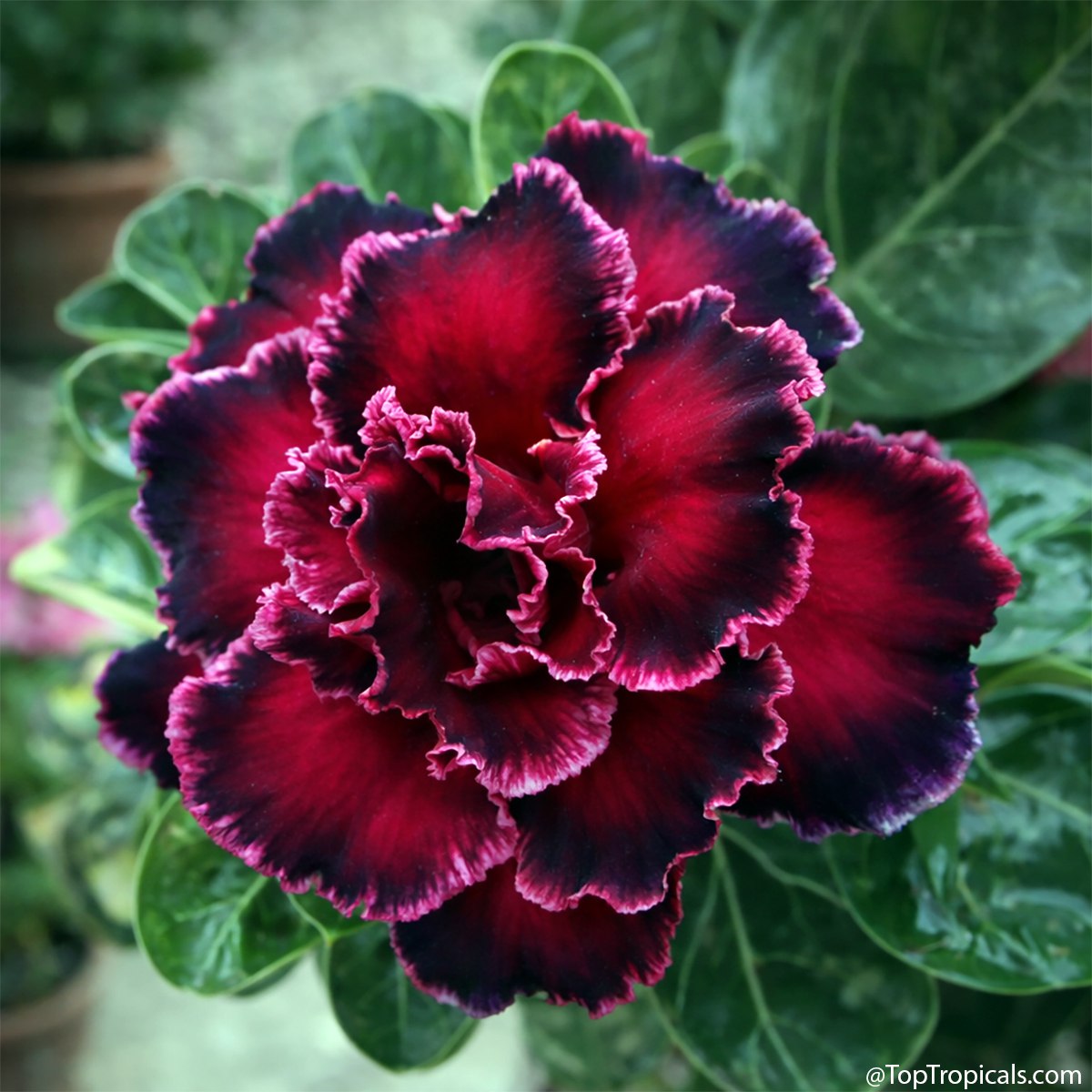
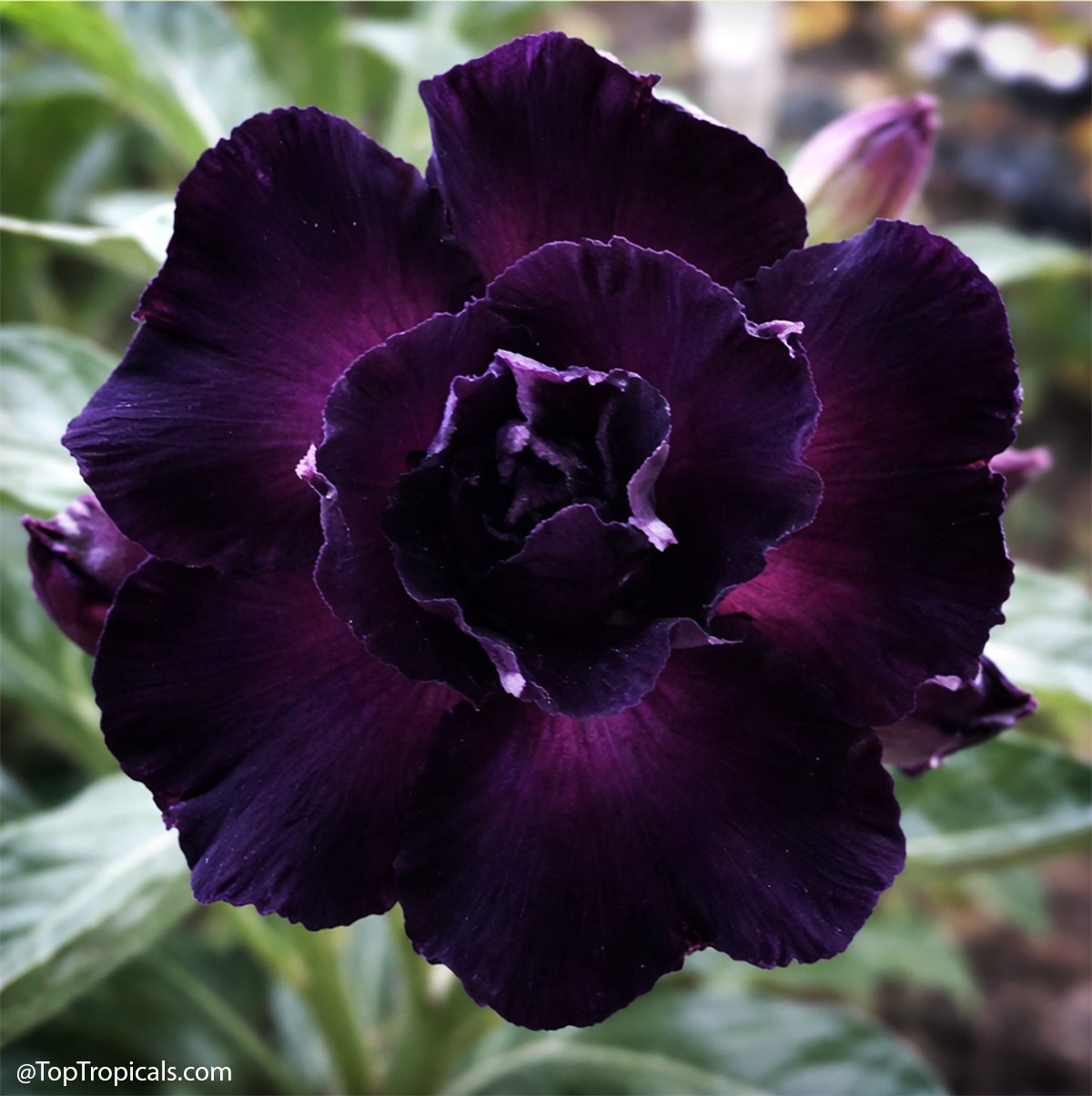
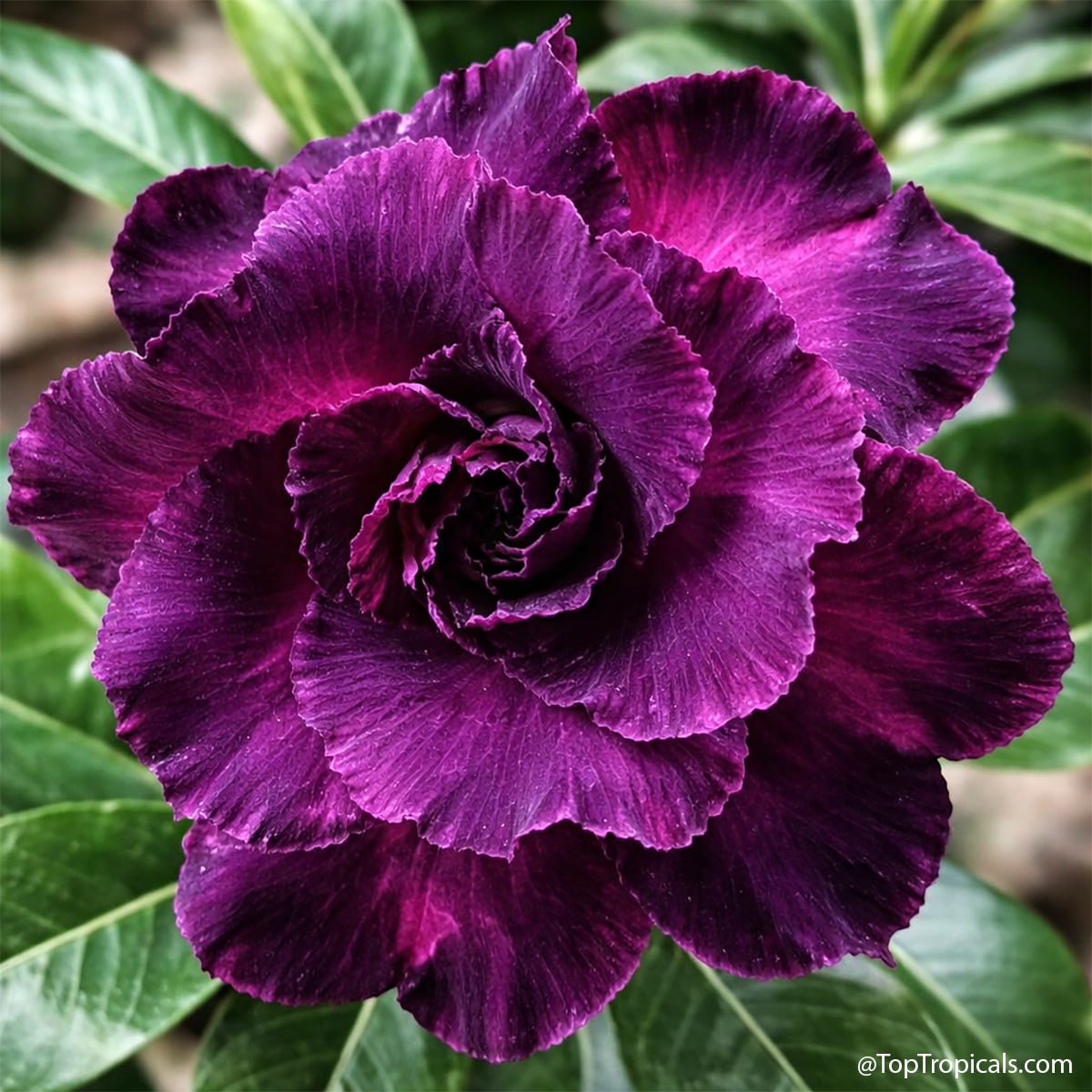
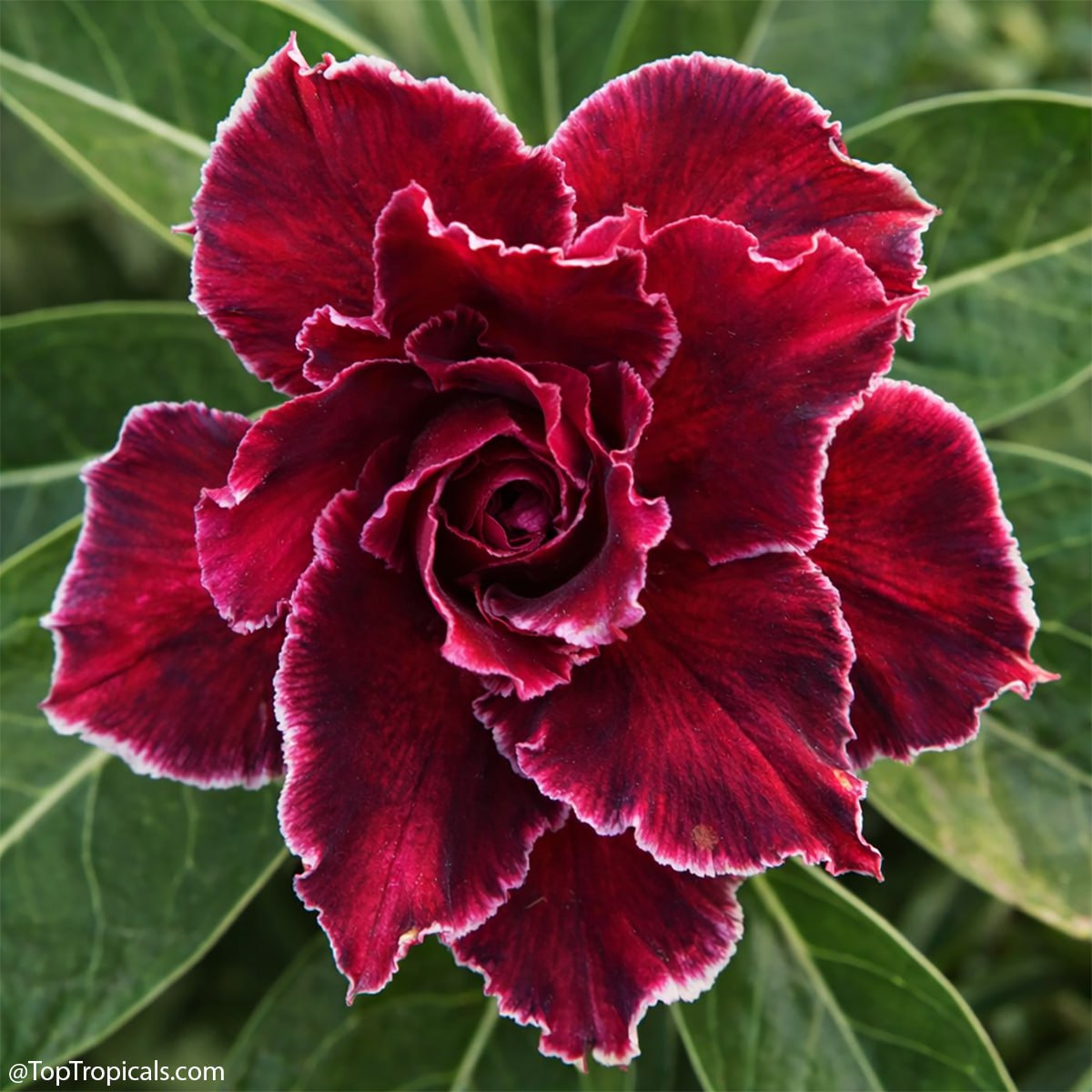
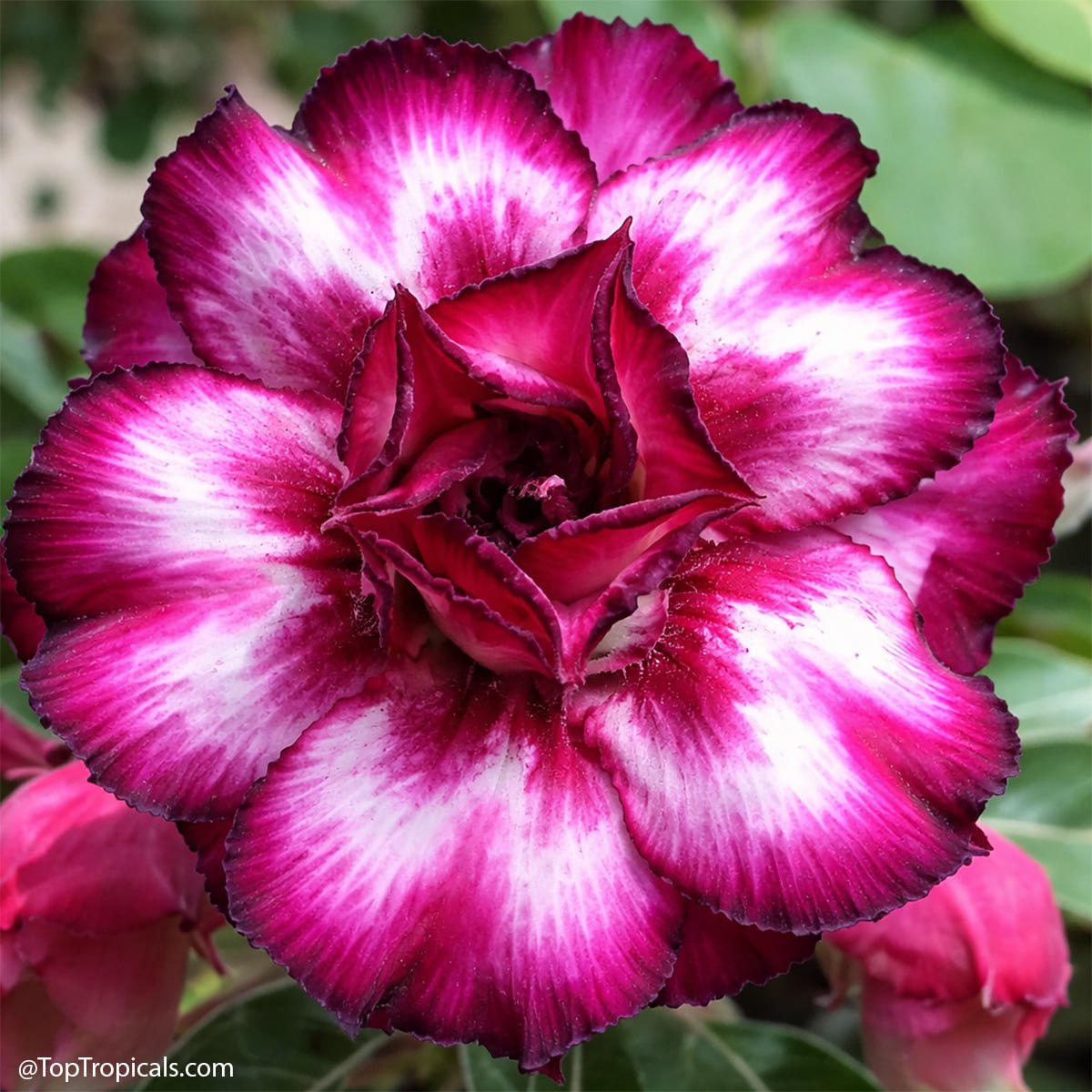
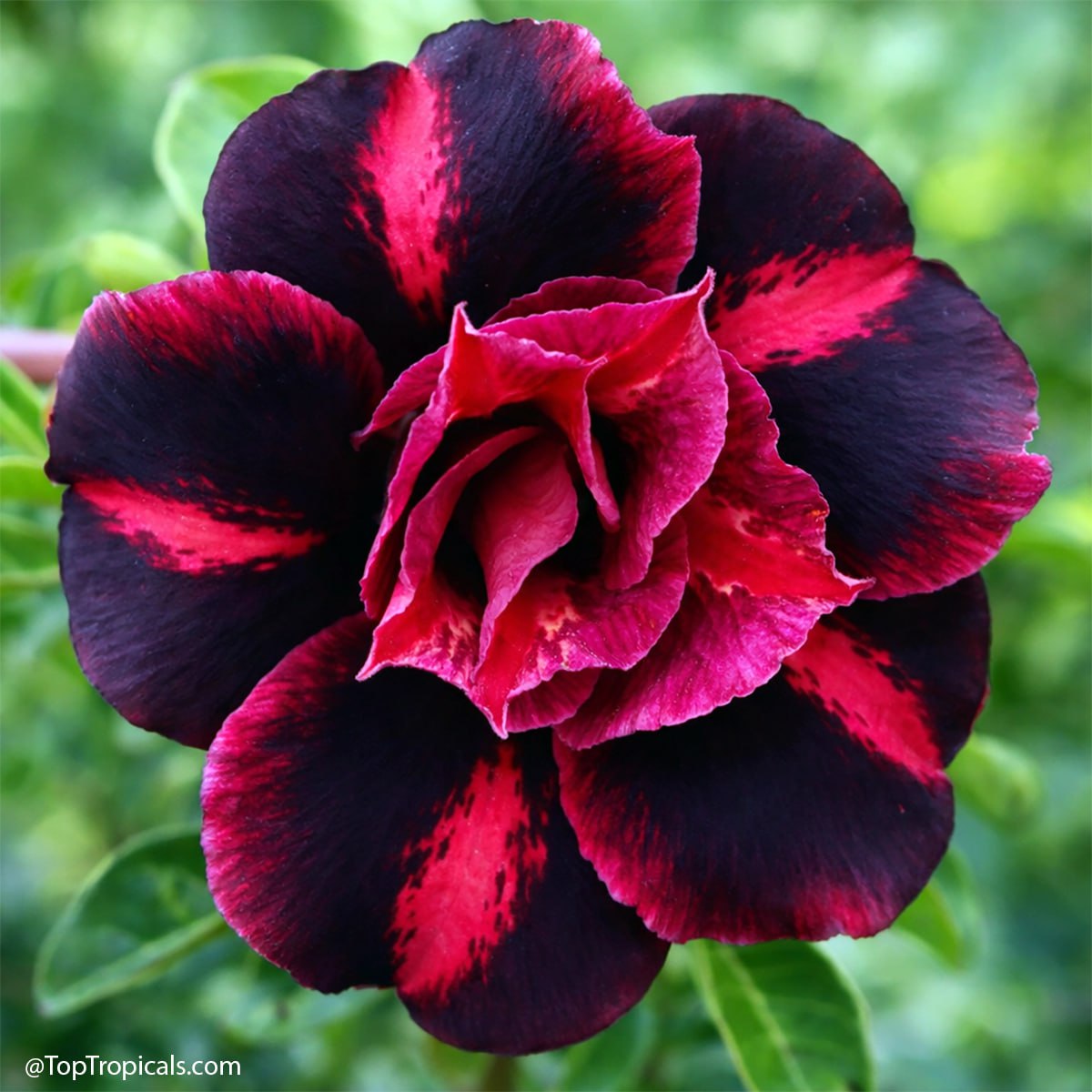
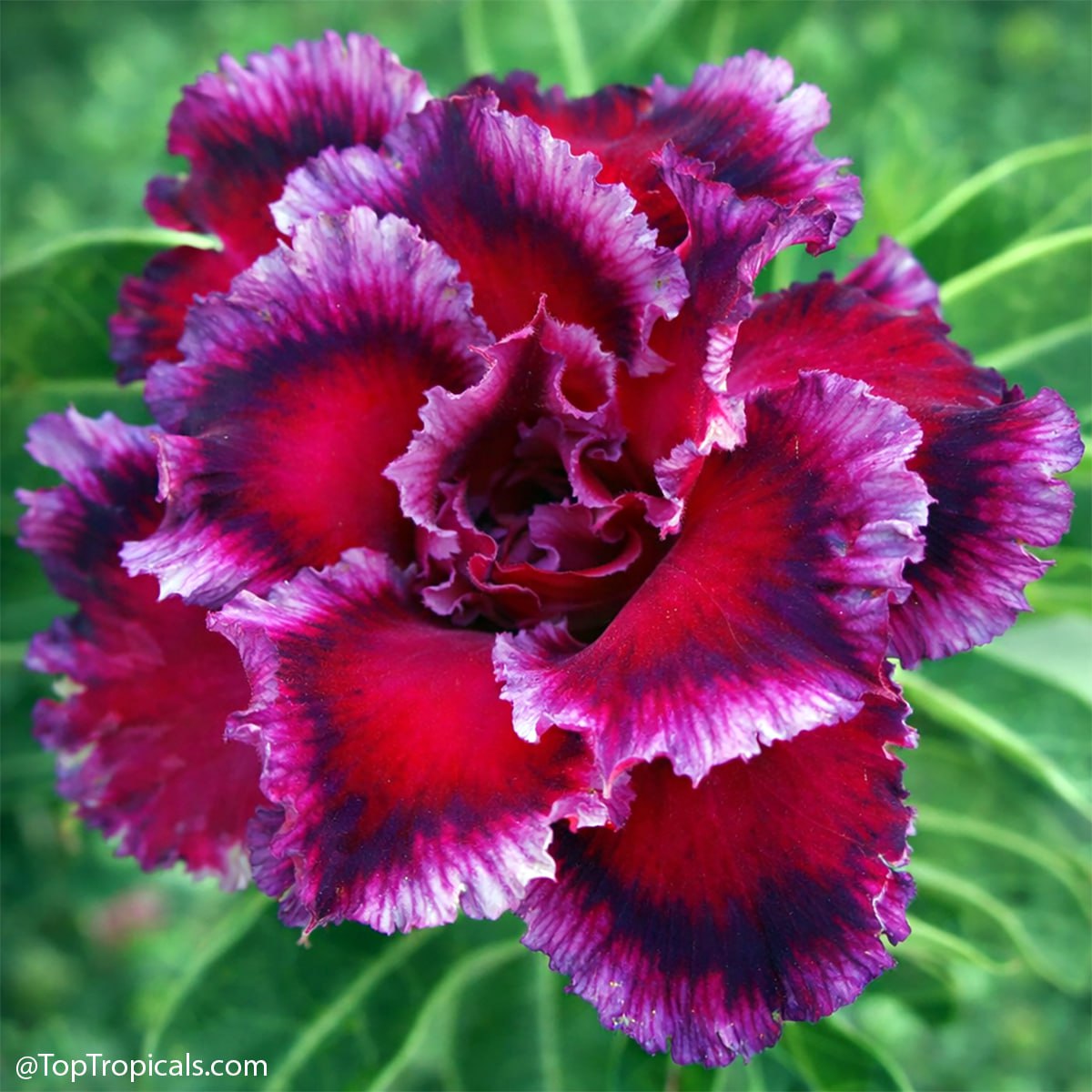
Adenium rainbow: 9 dark tones that dont look real

Adenium Blue Diamond

Adenium Blue Diamond

Adenium Musk

Adenium Musk

Adenium Hong Hern

Adenium Hong Hern

Adenium Mad Lady
Twisted, expressive petals with a wild, unpredictable look.

Adenium Mad Lady Twisted, expressive petals with a wild, unpredictable look.

Adenium Moung VN

Adenium Moung VN

Adenium Petch Pratum

Adenium Petch Pratum

Adenium Maneenate

Adenium Maneenate

Adenium Ramruay

Adenium Ramruay

Adenium Swan and Dragon

Adenium Swan and Dragon

Adenium rainbow: 9 dark tones that don’t look real 🌈

Some adeniums are bright and cheerful.
And some look like they came from another planet.
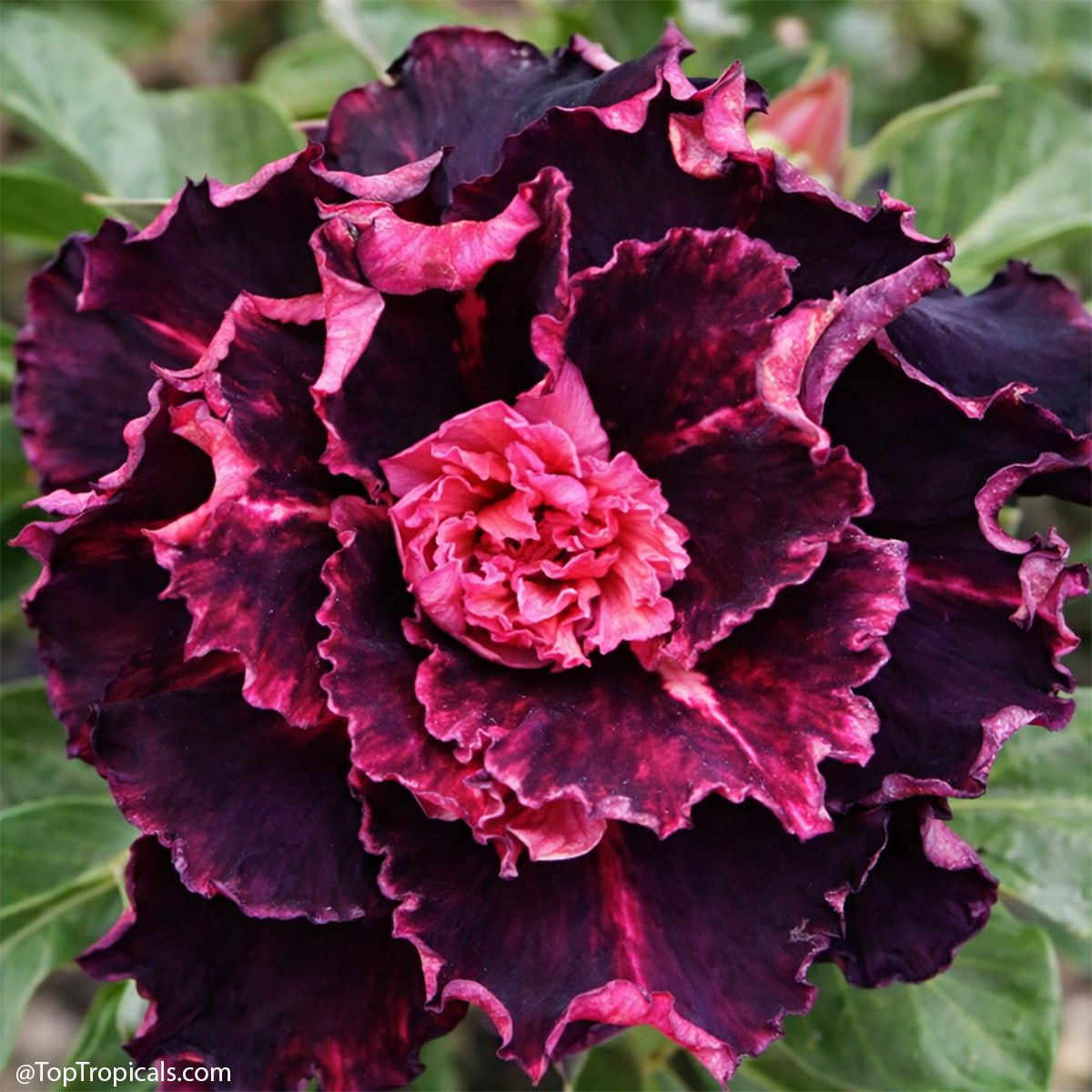
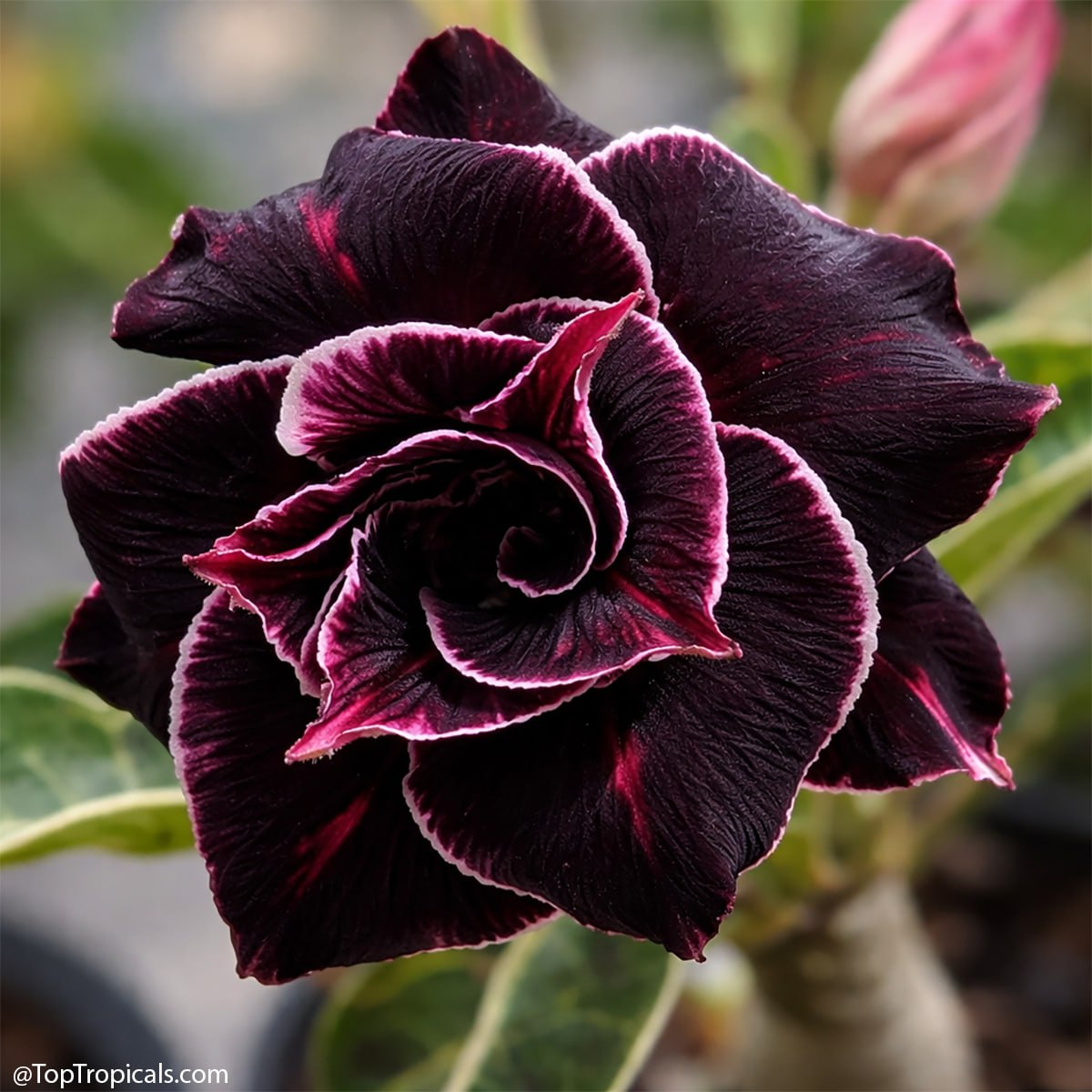
This set leans into those deep, off-purple, almost unreal shades. Every one is different, but they all share that exotic, hard-to-describe look.


💡 Container tip


Adeniums do best in shallow containers, especially unglazed clay pots.
Clay helps in a few ways:
- it dries faster than plastic
- provides better air flow to roots
- keeps the plant stable as the caudex gets heavy

Avoid oversized pots. Keep it just slightly larger than the root ball.

Secret of a Big Caudex:
When repotting, raise the caudex a little each time.
That’s the simple trick to developing that thick, exposed base everyone loves.

🌸 Today's featured adeniums

  •  ✦ Blue Diamond: Cool-toned, almost metallic shades - very unusual in color.
  •  ✦ Musk: Modern-looking bloom with a bold, unconventional feel.
  •  ✦ Hong Hern: Elegant form with deep tones and a refined structure.
  •  ✦ Mad Lady: Twisted, expressive petals - looks a bit wild and unpredictable.
  •  ✦ Moung VN: Soft purple shades with a smooth, balanced look.
  •  ✦ Petch Pratum: Rich color with a jewel-like quality - name reflects that.
  •  ✦ Maneenate: Layered bloom with a more intricate, detailed structure.
  •  ✦ Ramruay: Associated with wealth and prosperity - strong presence.
  •  ✦ Swan and Dragon: Myth-inspired look with a dramatic, flowing form.

This kind of set is where collecting gets interesting - not just colors, but personality in each plant.
And once you start noticing these darker tones - you start seeing them differently everywhere.

🛒 Explore Exotic Thai Adeniums

📚 Learn more:

Plant Facts

Adenium sp.
Adenium, Desert Rose, Impala Lily
USDA Zone: 9-11
Plant with caudexLarge shrub 5-10 ft tallSmall tree 10-20 ftFull sunDry conditionsModerate waterYellow, orange flowersRed, crimson, vinous flowersUnusual colorBlue, lavender, purple flowersWhite, off-white flowersPink flowersToxic or Poisonous

#Container_Garden #Adeniums #How_to #Discover

🟢 Join 👉 TopTropicals