Garden Blog - Top Tropicals

Date: 7 Feb 2026

How to grow an Avocado tree on your patio
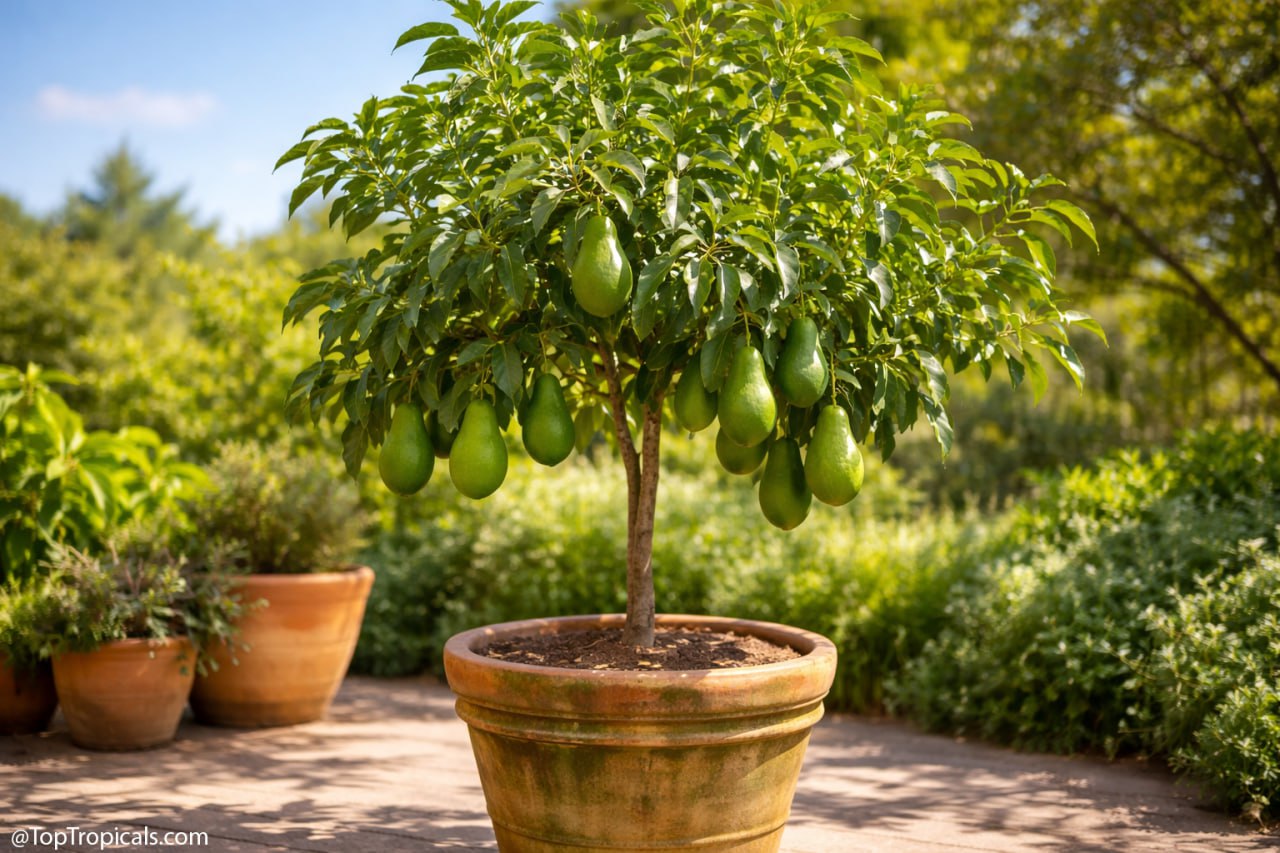
Avocado tree fruiting

Avocado tree fruiting

Yes, you can grow an Avocado tree on your patio - here is how to do it right

  • If you would love to grow your own avocado but don’t have a big yard, good news - avocado trees can grow very well in containers. Compact or dwarf varieties, often called condo avocados, are especially suited for pots, patios, balconies, and even indoor growing near a sunny window.
Growing avocados in pots is also a smart choice in cooler climates, since you can move the tree indoors when temperatures drop. With the right variety and basic care, potted avocado trees are easy to manage.
  • Pick a compact avocado variety


    Choosing the right variety is the most important step. Standard avocado trees grow very large, but condo or compact varieties stay much smaller and adapt well to containers.
    Good choices for pots include:

· Wurtz (Little Cado) - a true dwarf, perfect for containers
  • · Fuerte - a semi-dwarf that stays manageable with pruning
  • · Joey - naturally compact and easy to keep smaller
Dwarf avocado trees usually grow 6 to 10 feet tall. Fruit size is normal, but yields are smaller than on large trees.
  • Choose the right pot


    Start with a pot about 12 inches wide (around 5 gallons). This size is easier to water correctly and helps prevent root rot. Avoid planting a small tree into a very large pot too soon.
    As the tree grows, move up gradually. A mature potted avocado will need an 18- to 24-inch container. Repot every couple of years when roots show through drainage holes.
    Always use a pot with excellent drainage.
  • Use well-draining soil


    Avocados love water but hate wet feet. Use a loose, fast-draining mix, such as Abundance Professional Soilless Mix. You can improve drainage by adding perlite or coarse sand. Avoid heavy garden soil.
    Water deeply, but not too often.
    Water thoroughly, then let the soil dry before watering again. Always check moisture first. In summer, watering may be needed once or twice a week; in cooler weather, much less.
    Overwatering is the fastest way to kill a potted avocado.
  • Give plenty of sun


    Avocado trees need at least 6 to 8 hours of full sun daily. Outdoors is best, but indoors place the tree near a bright south- or west-facing window. Grow lights can help if light is limited.
  • Fertilize and prune


    Feed during the growing season with a balanced fertilizer such as Green Magic (every 6 months) or liquid Sunshine Boosters (safe to use with every watering, year-around). Prune lightly to keep the tree compact and well-shaped.
  • Protect from cold


    Most Avocados are sensitive to hard freeze. When temperatures drop below 35F, move the pot indoors or into a protected space. Reduce watering in winter as growth slows.
    Cold hardy varieties can take cooler temperatures down to 18F once established. For example, Joey is both cold hardy and dwarf - perfect choice.
  • Final thoughts


    Growing an avocado tree in a pot is practical and rewarding. With good drainage, sun, careful watering, and the right variety, you can enjoy homegrown avocados even without a yard.
    Small space? No problem. Just think condo avocado. According to Southern Living, Lemons can be grown in pots - and so can Avocados!


✔️ Check out
Avocado Variety Guide interactive chart. Sort them by flower type A or B, tree habit, fruit shape and quality, cold hardiness, origin, season and more!

🛒 Explore Avocado varieties and Dwarf Avocado

📖 Our Book: Avocado Variety Guide, Snack or Guacamole?

📚 Learn more:

Plant Facts

Persea americana, Persea gratissima
Avocado, Alligator Pear, Aguacate, Abacate
USDA Zone: 9-11
Large tree taller than 20 ftSmall tree 10-20 ftFull sunRegular waterEdible plantSubtropical plant. Mature plant cold hardy at least to 30s F for a short time


🎥 What is a Dwarf Condo Avocado that fruits at 3 ft tall? 📱

#Food_Forest #Avocado

🟢 Join 👉 TopTropicals
Date: 22 Feb 2026

How to grow Papaya from seed, step-by step - FAQ

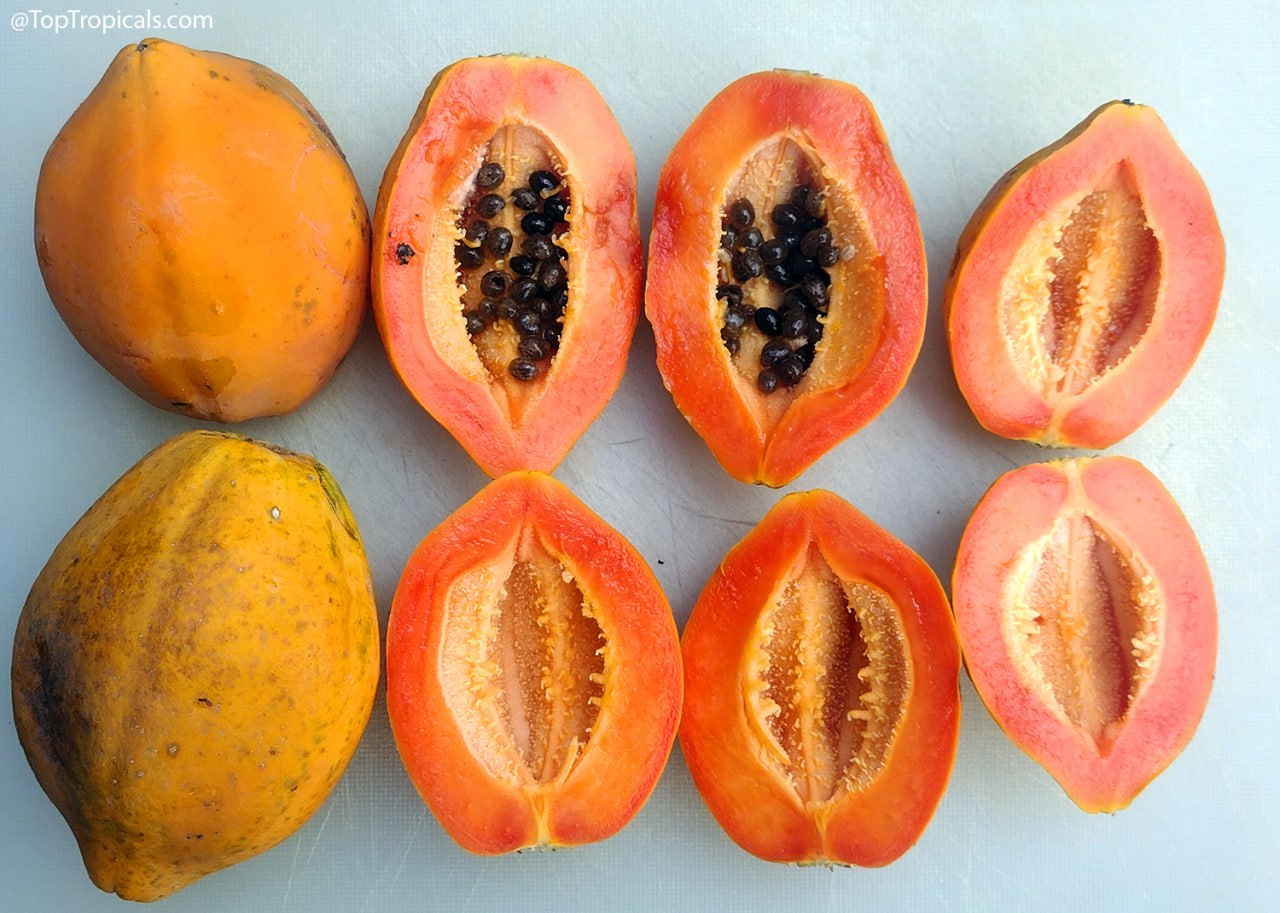
Carica papaya - Papaya fruit

Carica papaya - Papaya fruit

🍊 How to grow Papaya from seed, step-by step - FAQ

  • 💚 Is papaya a tree?


    No. Papaya is a herbaceous plant with a hollow trunk. Treating it like a tree is one of the most common mistakes growers make.
  • 💚 How fast does papaya grow from seed?


    Very fast. Papaya can start producing fruit in 10–15 months when grown in warm conditions.
  • 💚 Can papaya be grown in containers?


    Yes. Dwarf papaya varieties stay under 4–5 ft tall in containers and still produce full-size fruit.
  • 💚 Will seeds from grocery store papaya work?


    They will germinate, but the variety is unknown and usually not dwarf. If you want a compact plant, use seeds from a known dwarf variety.
  • 💚 Do papaya plants come true from seed?


    Yes. When the seed source is known, papaya grows true to type.
  • 💚 How long do papaya seeds take to germinate?


    Fresh seeds usually germinate in 2–3 weeks with warmth. Stored dry seeds can take 8–10 weeks.
  • 💚 What temperature do papaya seeds need?


    Above 70F, ideally 85–90F. Bottom heat greatly improves success.
  • 💚 Do papaya seeds need to be cleaned before planting?


    Yes. The slimy coating must be removed or seeds may rot instead of sprouting.
  • 💚 What soil is best for papaya seedlings?


    A well-draining mix or coconut fiber. Soil should be moist, never soggy.
  • 💚 Why do papaya seedlings rot so easily?


    Overwatering and poor drainage are the main causes. Young papaya roots are very sensitive to excess moisture.
  • 💚 Do papayas like transplanting?


    No. Papayas hate root disturbance. Reduce transplanting and move into larger containers sooner rather than stepping up gradually.
  • 💚 How big should the container be?


    After a 4-inch pot, move directly into a 1-gallon or even 3-gallon container to minimize root disturbance.
  • 💚 Does papaya need staking?


    Yes. Papaya grows fast, and the stem can outpace root development. Even light wind can knock it over.
  • 💚 How much sun does papaya need?


    Full sun. Shade causes leggy growth, poor flowering, and little to no fruit.
  • 💚 Should papaya be watered heavily?


    No. Once established, papaya prefers drier conditions. Large plants tolerate rain better than young ones.
  • 💚 Can papaya be planted in the ground?


    Yes, but only in well-drained soil and elevated spots. Low areas with standing water will kill it.
  • 💚 Is fertilizer important for papaya?


    Yes. Papaya is a heavy feeder. Poor soil means poor growth and little or no fruit. Use Green Magic once every 6 months or Sunshine Boosters C-Cibus with every watering.
  • 💚 Should papaya be pruned to control height?


    No. Pruning ruins its natural form. If height is an issue, grow a dwarf variety instead.


🛒 Explore Papaya varieties

📚 Learn more:

Plant Facts

Carica papaya
Papaya
USDA Zone: 9-11
Small tree 10-20 ftFull sunDry conditionsModerate waterYellow, orange flowersWhite, off-white flowersEdible plantEthnomedical plant.
Plants marked as ethnomedical and/or described as medicinal, are not offered as medicine but rather as ornamentals or plant collectibles.
Ethnomedical statements / products have not been evaluated by the FDA and are not intended to diagnose, treat, cure, or prevent any disease. We urge all customers to consult a physician before using any supplements, herbals or medicines advertised here or elsewhere.Subtropical plant. Mature plant cold hardy at least to 30s F for a short time


🎥 Nobel Prize goes to this pregnant male papaya

#Food_Forest #How_to #Papaya #Discover

🟢 Join 👉 TopTropicals

Date: 22 Oct 2025

Which dry fertilizer to use - slow release or controlled release?

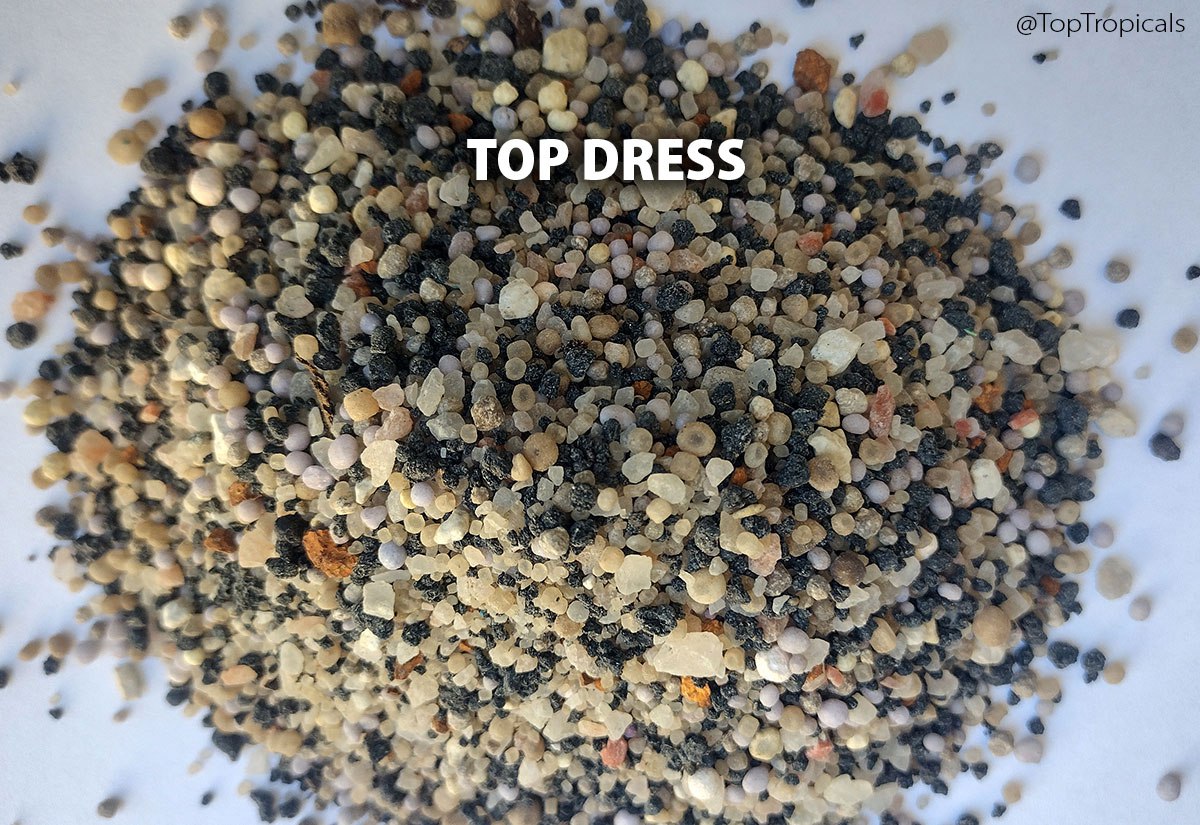
dry top dress fertilizer

dry top dress fertilizer

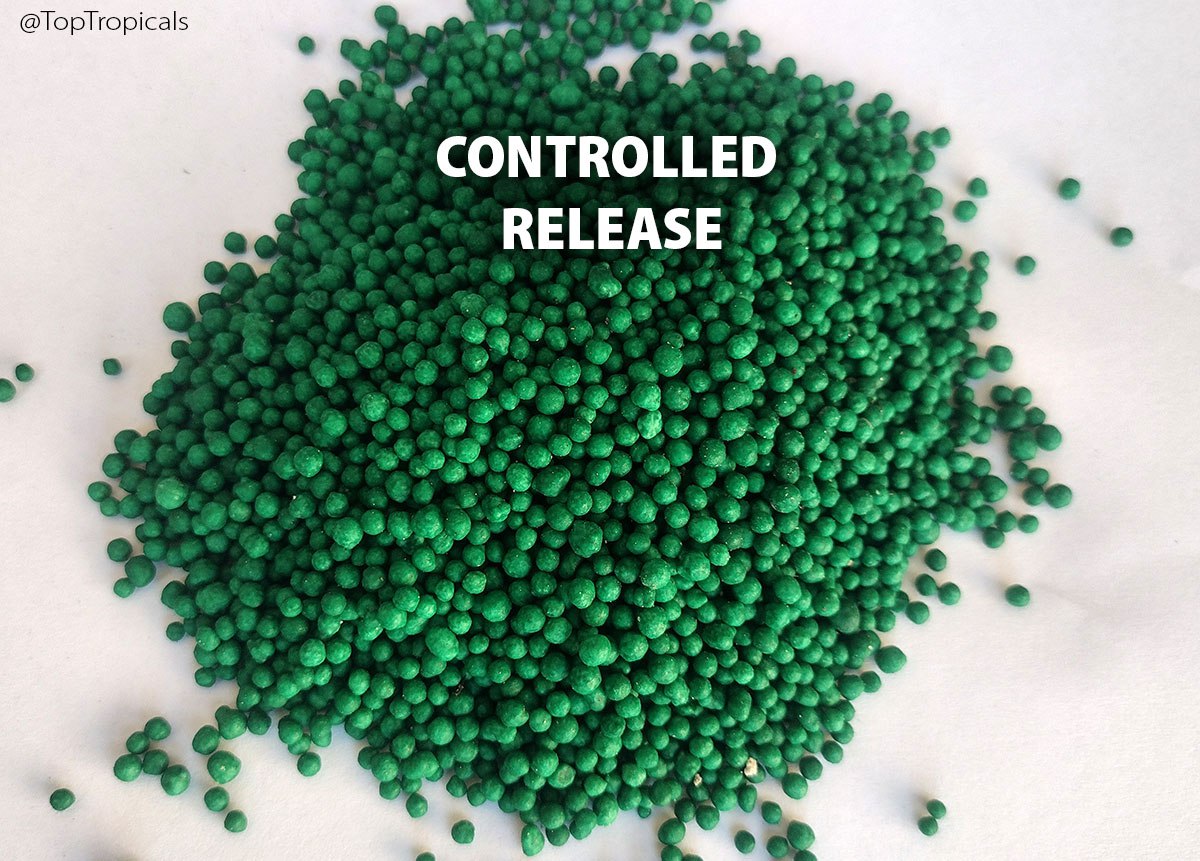
controlled release fertilizer Green Magic

controlled release fertilizer Green Magic

🌳 Which dry fertilizer to use - slow release or controlled release?


Q: You offer two kinds of dry fertilizers - Slow Release Trop Dress and Controlled Release Green Magic. What is the difference, and which one should I use? I used your water-diluted Sunshine Boosters with every watering, but now that I’ll be away for a few months, I just want to give my garden a long-lasting fertilizer.
  • ✔️ A: Top Dress Slow Release Fertilizer is used for quick greening-up. Although it’s called “slow release,” the nutrients become available fairly fast. It contains soluble nitrogen (N), phosphorus (P), and potassium (K) that dissolve with rain or irrigation, acting within a week or a few weeks depending on temperature and rainfall. It’s great for giving your plants a quick boost of “fast food.”
  • We use Top Dress mainly for in-ground plants. It can be used in pots only during warm weather and active growth, but not in cooler months, as it may burn roots. Since we introduced Green Magic, we mostly use Top Dress only for garden beds and landscapes.
  • ✔️ Green Magic Controlled Release Fertilizer is a true long-term, controlled-release fertilizer. Thanks to its PolyOn Technology coating, it provides steady, consistent feeding for 5-6 months. Unlike regular dry fertilizers that dump all nutrients at once, Green Magic releases them gradually - no burn, no guesswork, just steady nutrition.
Green Magic ideal for potted fruit trees, ornamentals, and houseplants. One handful keeps your plants fed for half a year. We use it for all container plants when potting up or refreshing soil every six months. It can also be used for in-ground plants if you want the best, most consistent results. Green Magic: try it out! (Sample here)

🛒 Shop Plant Food & More

📚 Learn more:


#Fertilizers #How_to
🟢 Join 👉 TopTropicals

Date: 24 Jun 2018

Cold hardy tropical fruit trees for Luisiana

Q: I've just moved to Louisiana and have been wondering whether it would make sense to plant some tropical fruit trees in our garden. Average lows in New Orleans are 41 deg F in January and February, although we did hit 25 once with the Arctic vortex. I'm interested in litchi, longan, rambutans, and persimmons. Do you have varieties that can tolerate Louisiana's temperature range? I'd love mangosteen but I don't suppose they will survive. Do you have any suggestions on tropical fruit trees that I could try?

A: Average temperatures are for statistics only; it is actual temperatures that may hurt your cold sensitive plant. This is what you should keep in mind when starting your tropical fruit collection:
1) Ultra-tropical plants like Rambutan can not survive winters below 45-50F. However, they can be successfully grown in containers in a greenhouse or moved indoors into a sun room during cold periods.
2) Tropical plants like Litchi and Longan may take some light frost once established. Still, for areas with freeze our advice is - keep them in pots and move inside in case of cold.
3) There is a number of subtropical fruit trees that are hardy enough to take some freeze. Persimmon, Feijoa, Fig, Cattley Guava, Jujube, Kiwi, some Eugenias and others. Please refer to our Tropical Fruit Sensitivity Chart.
4) Remember that plant's ability to survive winter depends on several factors, not only temperature itself. Important factors are: wind protection (chill wind kills rather than low temperature itself), exposure, how close the tree is planted to the house, plant maturity and its overall strength and health. If a plant had received good nutrients during summer, has well established root system, planted in enclosed area protected from winds and has plenty of bright sunlight - it has better chances to survive than a weak plant in warmer conditions.
5) Use SUNSHINE plant boosters for improving cold tolerance of your tropical plant. It only takes a few drops, and only costs $5!

Date: 18 Jan 2017

10 plants that can make you happy.
3D garden ideas.

3D garden ideas.
Q:
Can you make my yard bigger and prevent it from freezing?

A: Yes, we can make your backyard bigger by adding a 3rd dimension - trees as a upper level, shrubs as a second level, vines in between, low growing perennials below them. Add ground covers and potted plants as separate specimens in between in-ground planted trees and shrubs. One more separate dimension is orchids and other epiphytes that happily grow on the trees. This multi-level structure will allow you not only collect so many plants, but also maintain them in a natural environment, similar to how they grow in a wild.

As far as preventing from freezing - it depends. You can use greenhouse, cover plants, create microclimate under large canopies, etc. Some tropical plants are tolerant to light frost, once established. If it gets below freezing in your area for more than a few hours, and especially if you have numerous nights with frost throughout winter, we recommend to keep plants in pots (BTW, this way you save space and can collect even more!). Pots can be moved to protected area during cold nights. The more established the tree, the more chances to survive colder temperatures. You may also use propane heaters during cold nights.
We also use plant booster SUNSHINE boosters to increase plants cold tolerance.
Cold protection is a lengthy subject. Here is some more information on cold protection. Also, we recommend to check out our magazine Tropical Treasures (about pushing the limits of tropical gardening) for a detailed article on cold protection.
These are specific articles on Zone-Pushing in different issue #s regarding dealing with cold. See downloadable issues:
(#1) Growing Tropicals in Nontropical Climate, Three Freezing Nights in Southwest Florida
(#2) Temperature drops - an alert or a rehearsal?
(#5) Dealing with cold snaps, Cold hardy beauties
(#7) When winter is around the corner, Growing exotic Cordyline in colder climate
(#8) When the weather outside is frightful
(#9) Winter champions
(#11) Ready-for-winter checklist for in-ground plants
(#13) Winter checklist
(#18) Dealing with cold damaged plants
You may also order hard copies.
If temperatures drop below freezing in your area, remember to add Heat Pack to your order!


10 plants that will make you happy.

Everyone wants to be happy. Did you know that growing plants is not only fun but can also make you happy? In our new series we will introduce to you 10 plants for your tropical collection that will make you happy.
Visit our Facebook, YouTube Channel and stay happy!

Check out this video: 10 plants that will make you happy. Plant # 1 - Rose Apple.

Stay updated with TopTropicals Videos by subscribing to our channel at YouTube.com/TopTropicals and get our latest video news of what's fruiting and blooming!