Garden Blog - Top Tropicals

Date: 22 Aug 2022

What tree will fruit indoors?

Fruit  trees  for  indoor  containers

Q: I love your tropical fruit selection and I wish I lived in a warmer climate. Is there any fruit tree that can be happy indoors during winter and have fruit? I am not expecting a big crop but it would be fun to have a small piece of tropics at home. I don't have much gardening experience, can you suggest something easy for a start?

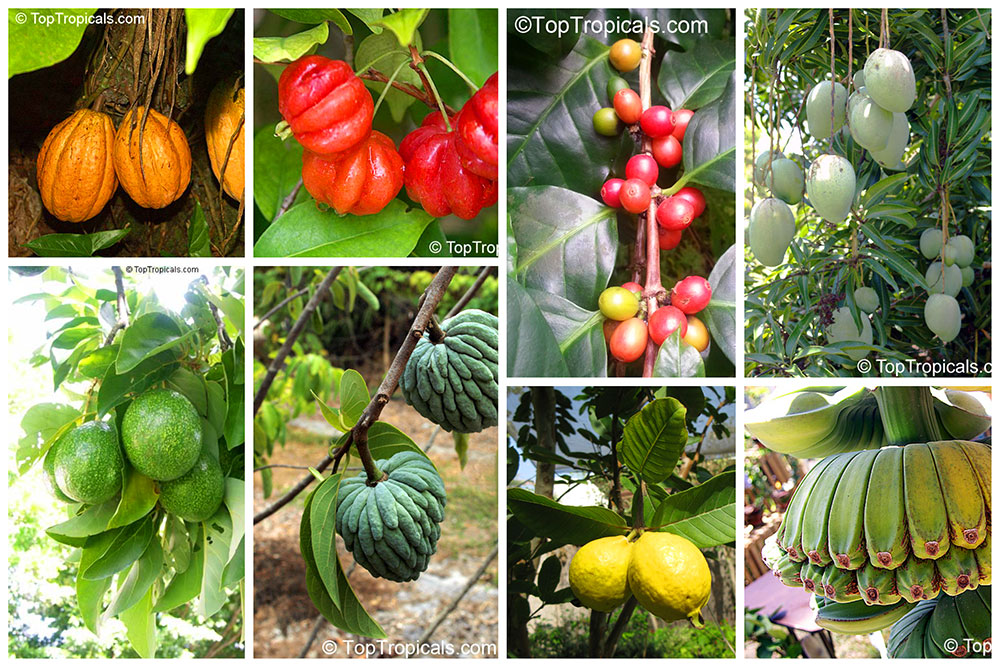
A: Several tropical fruit trees can be grown indoors, in pots, providing bright light that is necessary for flowering and setting fruit. Among them are many varieties of Bananas, Guavas, Annonas and tropical Cherries - these can be easily maintained in containers. Even dwarf varieties of Avocado and Mango are good candidates for indoor culture. You can bring containers indoors for winter and take outside into full sun during warm months so your plants can store lots of energy in Summer.
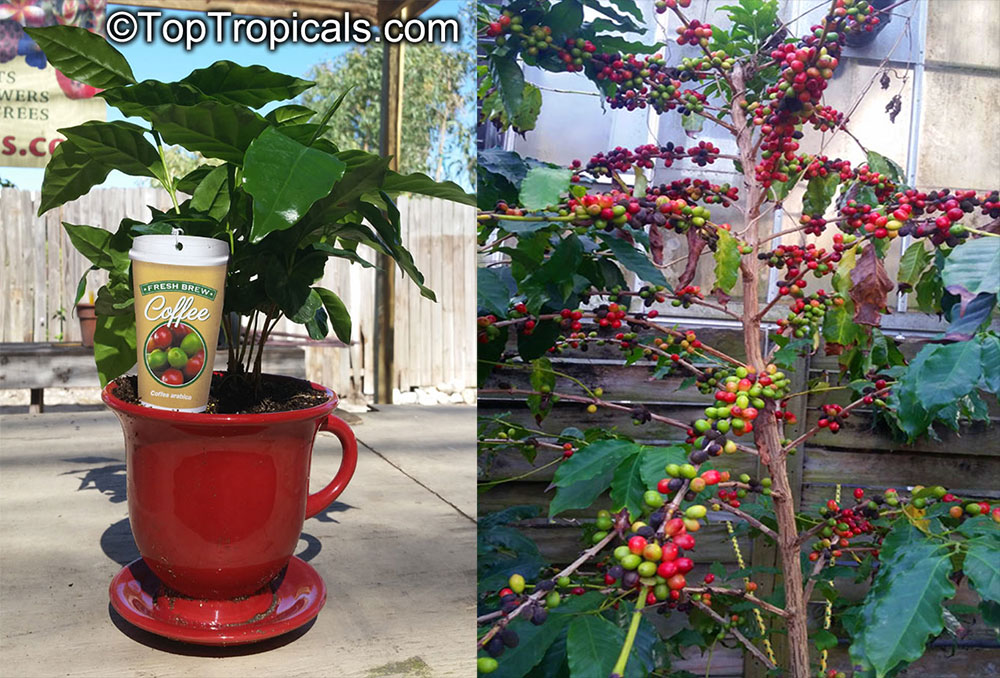
The easiest fruit tree for indoor culture that doesn't require bright light and can be grown indoors year around is a Coffee tree. Start with it, it is on sale today! Once you gain some experience, you can upgrade to a Chocolate tree!
Remember, all container grown plants need balanced nutrition program. It can be easily provided with Sunshine Boosters your around. For fruit trees, just add some Sunshine C-Cibus Crop Booster to your cart.

Coffee  video

Date: 24 Jun 2018

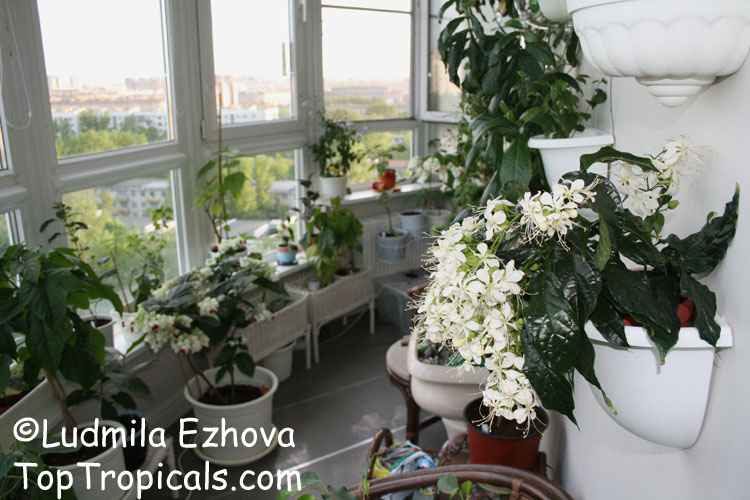
Overwintering tropicals indoors and air humidity

Q: My rainforest plant collection thrived outdoors in our humid summer (I live in Maryland) but of course I had to bring them indoors for winter and now with snow outside they are suffering. Some leaves dried and fell of. Please advise how not to lose my babies over winter!

A: When overwintering tropical plants indoors, think about 3 factors: light, temperature, and humidity.
Light. Providing bright light is obvious, and all indoor gardeners are doing their best to have as much well-lit spots for their plants as possible.
TemperatureTropical plants, especially those from rainforest, do not enjoy significant fluctuations in temperature, so avoid following places: - neat hear register (or air conditioning vent) - in drafts - on a windowsill behind curtains at night
Humidity. Most tropical plants need more humidity than is available in the average, centrally heated home, but some rooms, such as bathrooms and kitchens, are more humid than others. To created humidity, fill a tray that is the same width as a plant, with pebbles or gravel. Pour in water, keeping the level at just below the top of the pebbles, then place your plant on top. The water will produce humidity as it evaporates. Alternatively, mist the leaves using a hand mister in the morning, so leaves dry before night. If you have hard water, use distilled or rain water. Grouping plants together will also increase humidity.

Date: 7 Aug 2025

Blackberry Jam Fruit - the sweetest surprise

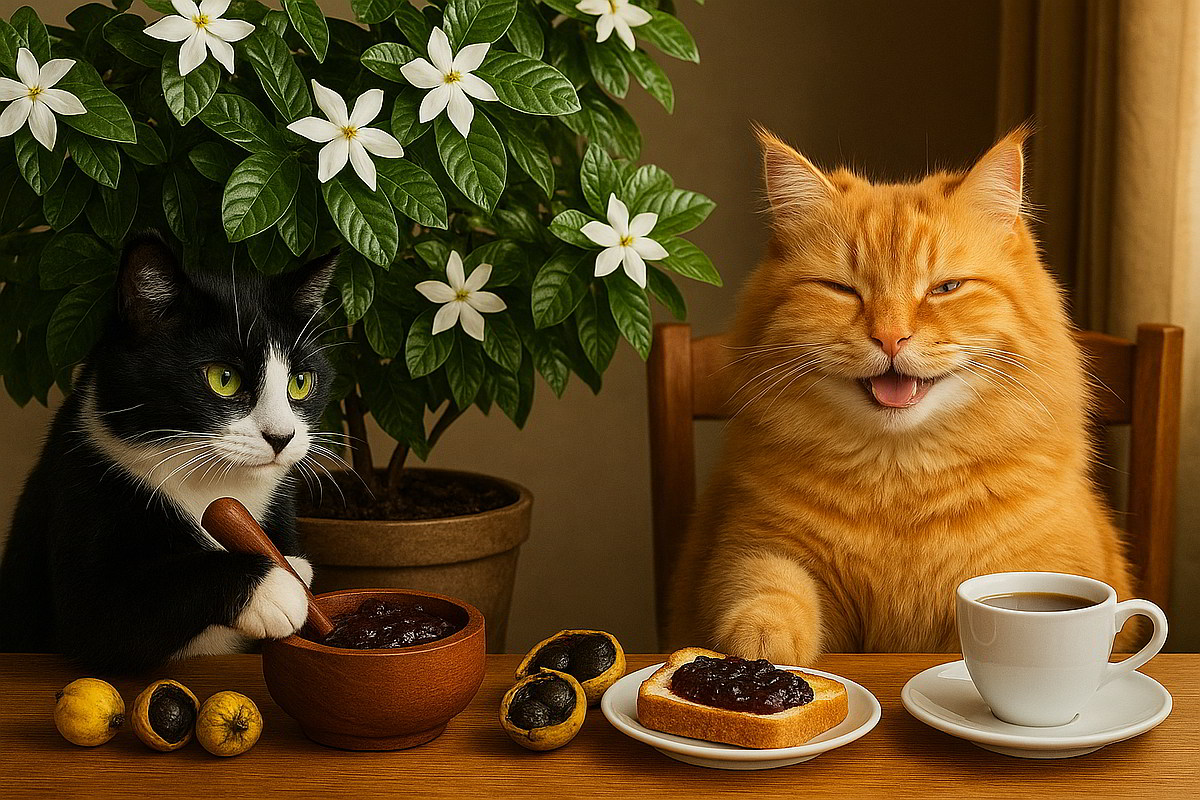
A  tuxedo  cat  making  jam  from  Blackberry  Jam  Fruit  (Randia  formosa)  while  an  orange  cat  smiles  in  a  chair,  sipping  tea  beside  a  large  flowering  Randia  plant  in  a  cozy,  sunlit  room.

Tea and Jam with the PeopleCats – A Tropical Afternoon Beneath the Randia

Meet the cats behind the jam! The tuxedo cat is none other than Google-the-cat - our beloved elder and one of the original cat-fathers of Top Tropicals PeopleCats.garden. At 18 years old, he’s still sharp, curious, and very much in charge. The orange fluffball? He represents the universal image of cat joy - and we’ve got a few real-life orange sunshine residents just like him.

Why do you include cats in a plant newsletter?

Because they’re part of the garden. Our rescued PeopleCats live among the plants, nap under the mango trees, inspect new arrivals, and occasionally steal a sunspot meant for seedlings. They’re not mascots — they’re part of our team. Sharing their presence is like showing a part of the soul of our space.🐈

Are the cat images real or AI-generated?

All our cats are real! We take lots of pictures and videos. And a few images are AI-generated illustrations inspired by our real PeopleCats.garden residents. While not literal photographs, they are creative interpretations that capture the spirit of our tropical home and its furry citizens.🐾

Are the stories about the cats true?

Mostly! The jam-making, tea-drinking, and greenhouse meetings are creative interpretations - but inspired by real personalities. We use AI scenes to bring their spirit to life. Real cats. Real plants. Imagined adventures.🐱

Watch Top Tropicals videos about PeopleCats

Shop Blackberry Jam Plants

Date: 28 Sep 2016

Helping plants to survive winter:
SUNSHINE BOOSTERS - FROM SUNSHINE STATE

A magic plant hormone so wanted by gardeners, is finally here! When people purchase plants and trees either on-line, or from their local nursery, expectation and anticipation for their new find is high. Many times, however, disappointment is encountered due to a variety of reasons. These reasons include changes in light, temperature, water, soil conditions and transportation; just to name a few. So how can the stress on newly transported and transplanted plants be mitigated? Easy! There are plant stimulators able to reduce the shock encountered.

One such plant stimulator, produced at TT Laboratories is SUNSHINE, a revolutionary, broad spectrum, plant stress reliever. Extracted initially from plant pollen, SUNSHINE can bring back and keep the vigor to stressed plants in both the home and garden. Sunshine is indeed a plant stimulator on the cutting edge of plant care technology. Reasonably priced, and easy to use, SUNSHINE will be your plants' best friend, next to yourself, of course.

SUNSHINE will help your plants:
- recover from stress
- dramatically increase growth rate
- get profuse flowering and fruiting
- improve disease resistance, cold hardiness, and heat resistance
- promote seed germination and root cuttings easily

Great for indoor plants and improving cold tolerance!

Line of products:
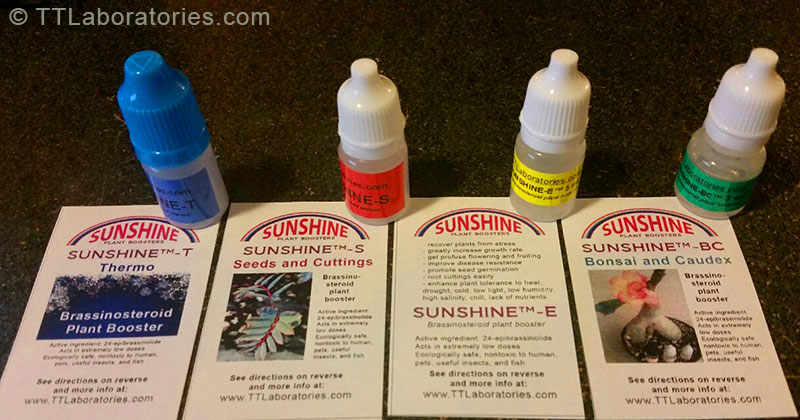
SUNSHINE-E - general plant booster, growth stimulator and immune booster
SUNSHINE-BC - Bonsai and Caudex developer
SUNSHINE-S - seeds and cuttings pre-treatment
SUNSHINE-T - Thermo-protection for overwintering tropical plants
SUNSHINE-Micro - ultimate micro-element mix from TT Laboratories

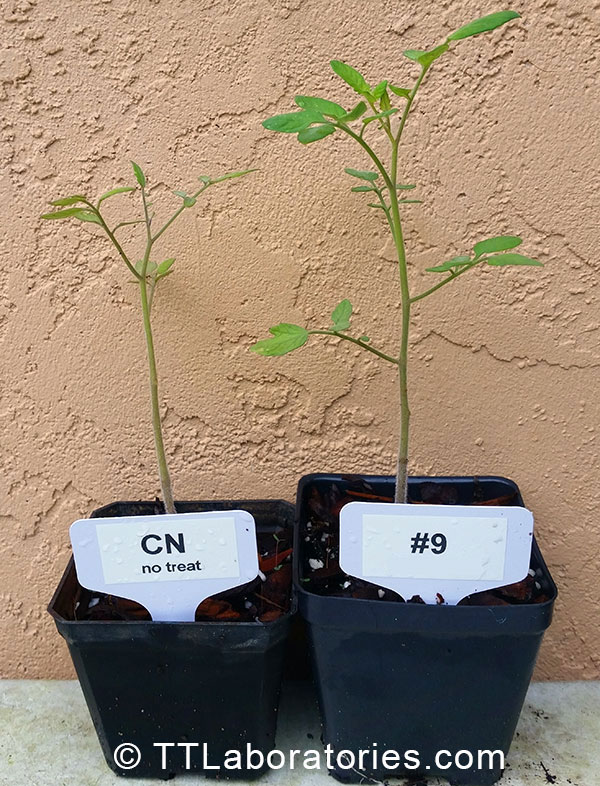
On the photo: Tomato seedlings, with and without Sunshine-E treatment; 1 week after treatment, 09-01-2016. Continue reading...

Order online

Date: 20 May 2026

Why in Thailand Wrightia religiosa is near all temples and homes

Wrightia religiosa - Sacred Buddhist, plant
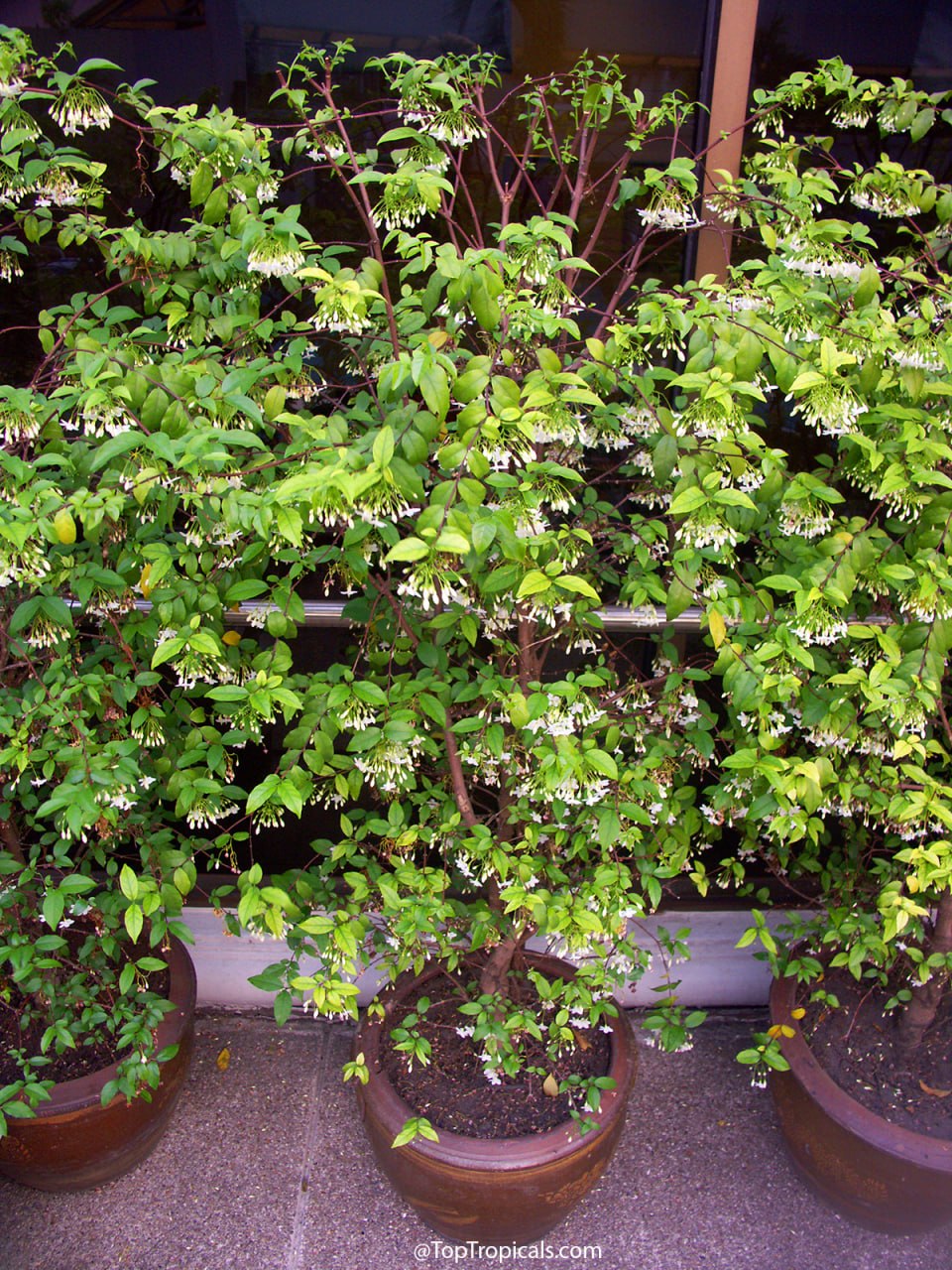
Wrightia religiosa - Sacred Buddhist, plant

Wrightia religiosa - Sacred Buddhist, flowers
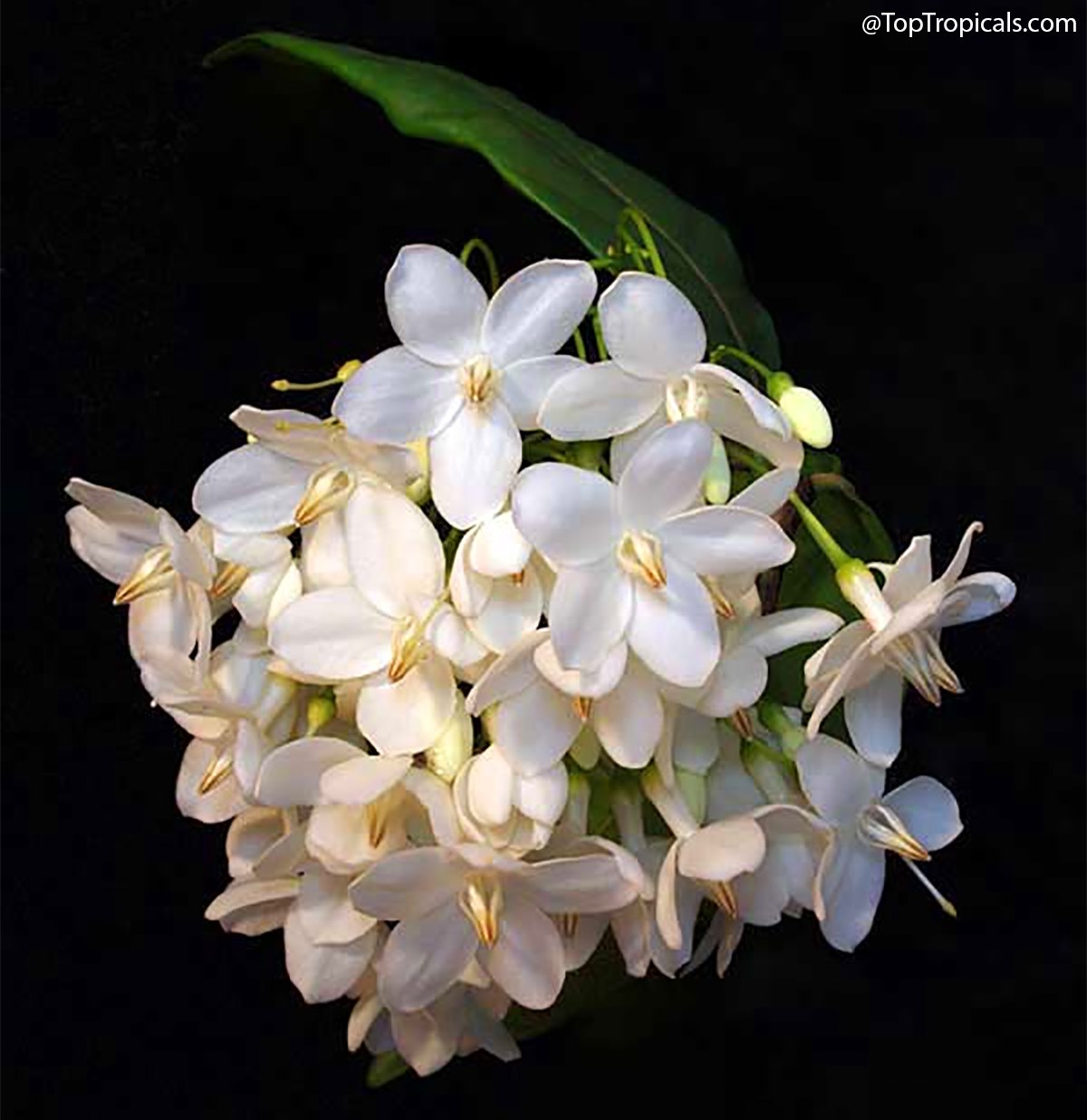
Wrightia religiosa - Sacred Buddhist, flowers

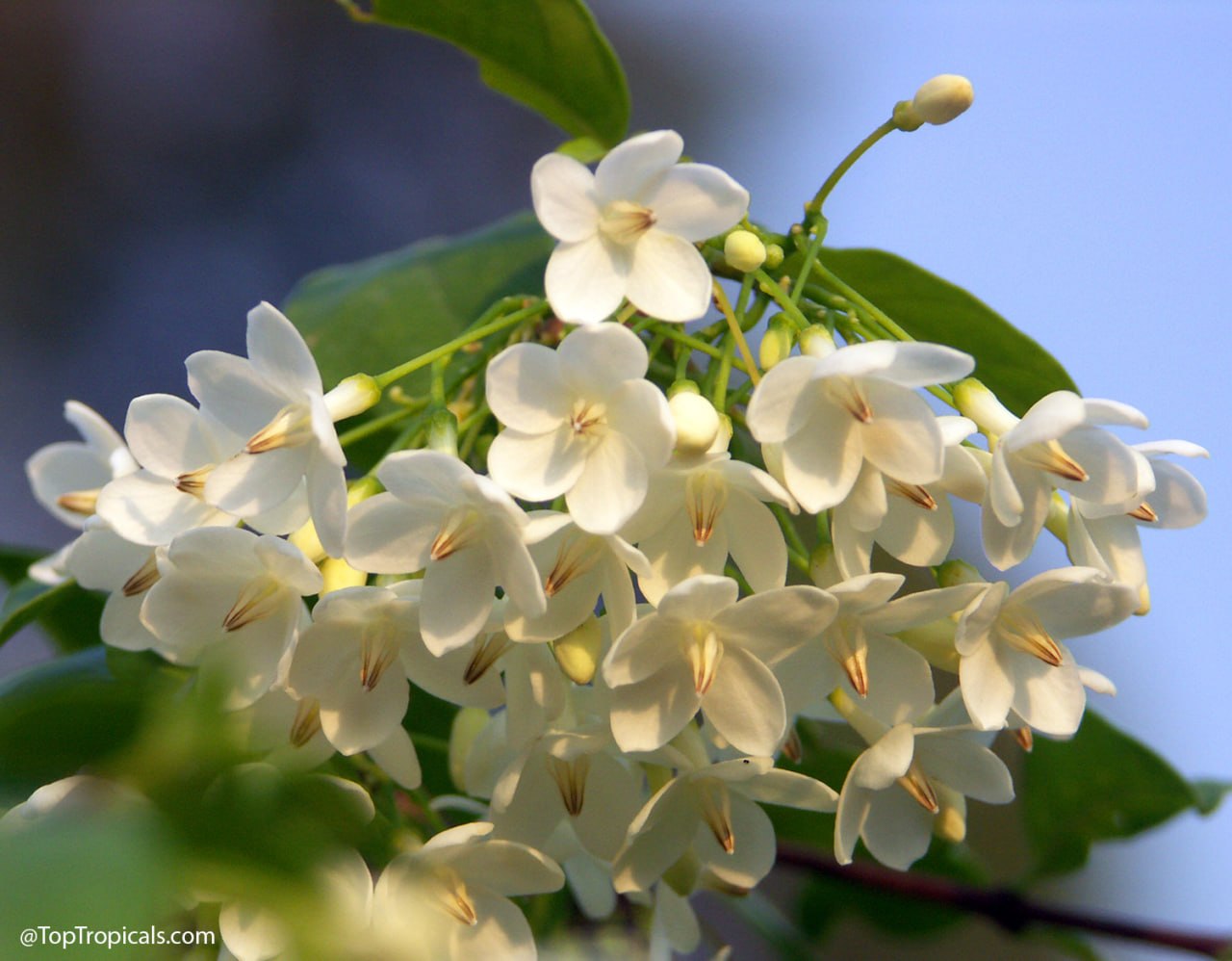
Wrightia religiosa - Sacred Buddhist, flower close up

Wrightia religiosa - Sacred Buddhist, flower close up

🏯 Why in Thailand Wrightia religiosa is near all temples and homes


In Thailand, you will smell the Water Jasmine before you see it. Trace that soft, fruity, jasmine-like fragrance and you'll find Wrightia religiosa - an unassuming tropical shrub with tiny white flowers hanging like pendants. Also called Sacred Buddhist, this beloved plant is everywhere in Southeast Asia, cherished for its rich cultural history and old-world charm rather than loud colors.

Sacred Buddhist Plant Facts

Botanical name: Wrightia religiosa, Echites religiosa
Also known as: Sacred Buddhist, Wondrous Wrightia, Wild Water Plum, Water Jasmine
USDA Zone: 9 - 10
Highligths Plant used for bonsaiLarge shrub 5-10 ft tallSmall tree 10-20 ftSmall plant 2-5 ftSemi-shadeFull sunWatering: Regular. Let topsoil dry slightlyWhite, off-white flowersPlant attracts butterflies, hummingbirdsEthnomedical plant.
Plants marked as ethnomedical and/or described as medicinal, are not offered as medicine but rather as ornamentals or plant collectibles.
Ethnomedical statements / products have not been evaluated by the FDA and are not intended to diagnose, treat, cure, or prevent any disease. We urge all customers to consult a physician before using any supplements, herbals or medicines advertised here or elsewhere.Fragrant plantSubtropical plant. Mature plant cold hardy at least to 30s F for a short timeFlood tolerant plantSeaside, salt tolerant plant
Get personalized tips for your region


💮 The Shrub of Buddhist Symbolism that Thai Temples Have Been Planting for Centuries

The species name religiosa is no accident. It literally refers to the plant’s long association with religious, spiritual, and cultural traditions across Thailand, Vietnam, Malaysia, and Singapore.

While the flowers themselves are visually simple, their unique growth habit has inspired generations of Buddhist symbolism. Unlike many flowers that point proudly toward the sky, the blooms of the Water Jasmine hang downward. In Thai culture, this downward-facing habit became a beautiful symbol of modesty and humility - a physical representation of bowing down rather than standing in pride.

Furthermore, many gardeners and monks associate the flower’s five distinct petals with foundational Buddhist virtues: wisdom, compassion, patience, kindness, and generosity. Whether ancient legend or folk interpretation, this cultural meaning has earned the plant a reputation as something sacred, making it a staple near homes and temple grounds.

💮 The Fragrance People Fall in Love With


Visually, Wrightia religiosa does not try to dazzle you with giant petals or wild, neon colors. Instead, its magic lies entirely in its scent.

The perfume it throws into the air is the real reason people become obsessed with it. It is a clean, intoxicating fragrance that drifts gracefully through the evening air. For anyone living in a warm climate, the best part is that the Water Jasmine is not a "one-and-done" bloomer. When the plant is happy, it flowers repeatedly and almost continuously throughout the year, meaning that incredible scent becomes a permanent fixture in your garden.

💮 From Temple Gardens to Bonsai Pots


Part of what makes Wrightia religiosa so widespread is its sheer versatility. It is an incredibly agreeable plant that adapts beautifully to whatever form a gardener desires. In Southeast Asia, you will see it styled as:
· A standalone specimen shrub
· A dense, fragrant privacy hedge
· A patio accent in containers
· A small, sculptural tree

It has also become an absolute classic in the tropical bonsai world. Because its branches are flexible, fast-growing, and highly responsive to pruning, even beginners can easily wire and shape young plants into twisted, artistic forms. Left to grow naturally, older plants develop a graceful, twiggy, and airy structure that looks naturally sculptural.

💮 The Fake-Dead Winter Quirk


Wrightia is easy to care for with standard sun and water, but it hates the cold (although survives it well). Below 65F, it abruptly drops all its leaves and looks completely dead. Many gardeners panic and throw it away - but it’s just resting. Simply bring container plants indoors for the winter. Once the warmth returns, it wakes up, flushes green, and resumes blooming.

💮 Subtle Beauty with Deep Roots


Some tropical plants impress with sheer size, but Wrightia religiosa does the opposite. Its beauty is quiet - thin branches, dangling white pendants, light green foliage, and a fragrance that gently fills a yard.

It is a plant with a few centuries of cultural history carried in its branches, and it is one of those rare garden gems you cannot truly appreciate until you experience its scent in person.

🛒 Plant the Sacred Buddhist and enjoy the magical aroma

📚 Learn more:


Wrightia religiosa and other wrightias in Plant Encyclopedia

#Discover #Perfume_Plants

🟢 Join 👉 TopTropicals