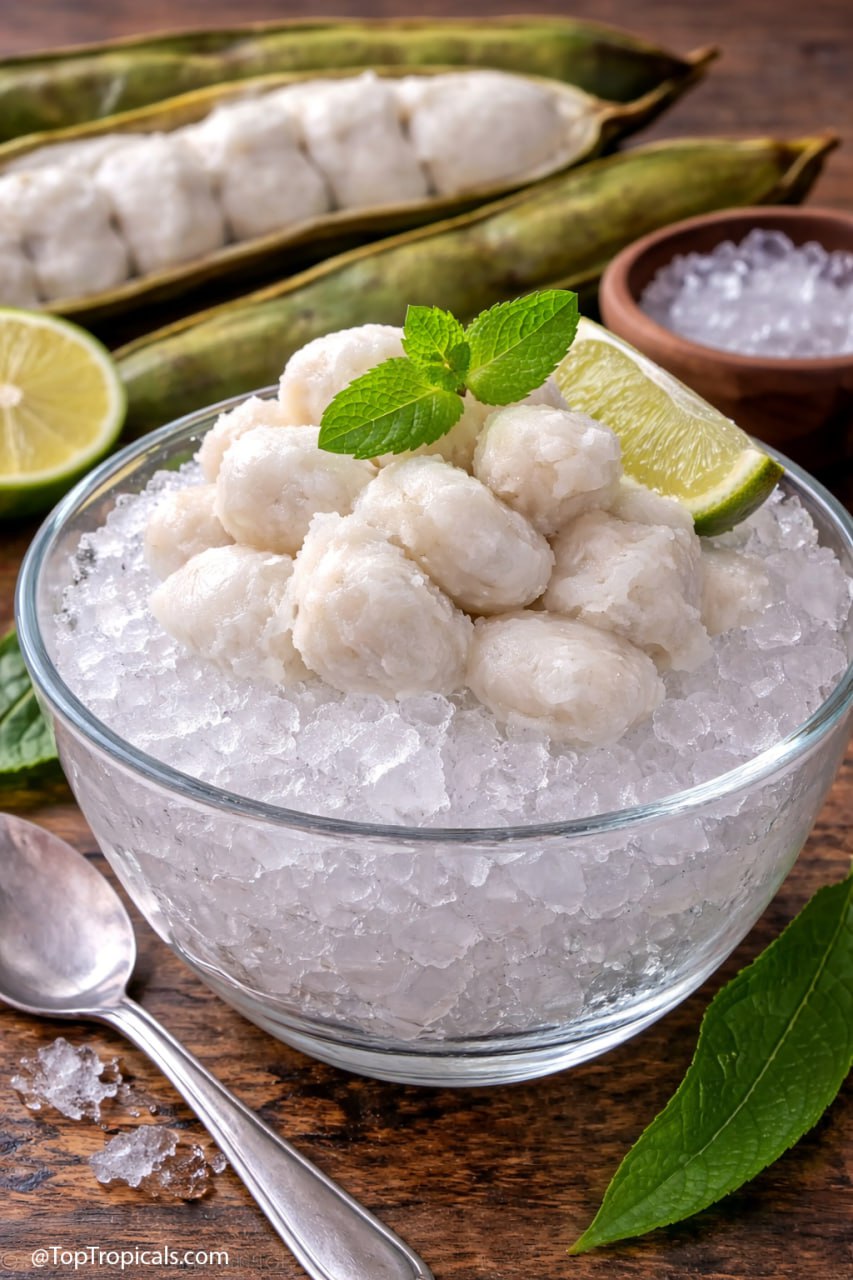
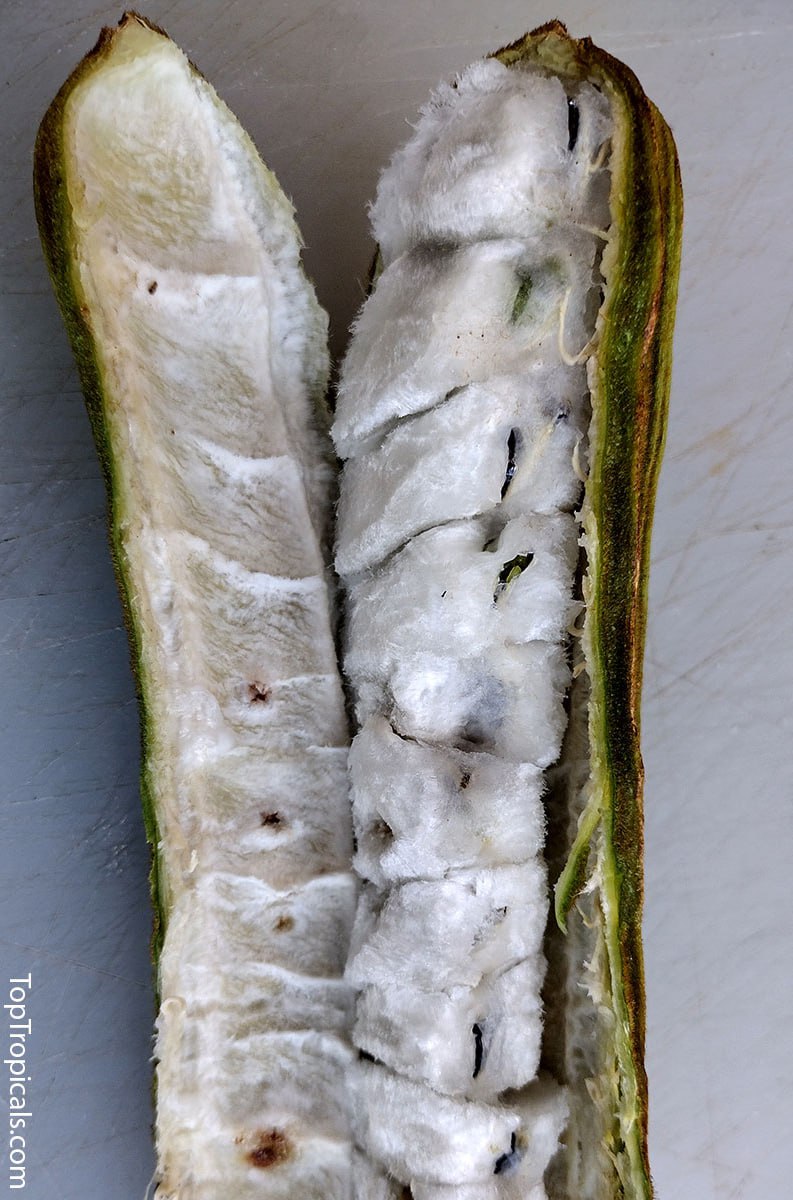
Open ripe Ice Cream Bean pods and scoop out the sweet white pulp.
Remove and save the seeds if you want to plant more Ice Cream Bean trees.
Chill the pulp for 20 to 30 minutes.
Serve the chilled pulp over crushed ice as a natural shaved-ice dessert.
🌿 About the plant:
Ice cream bean (Inga edulis) produces long pods filled with sweet, cottony white pulp surrounding dark seeds. The flavor is mild, vanilla-like, and naturally creamy. The pulp is eaten fresh and used as a natural dessert across South and Central America.
Ice Cream Bean Plant Facts
Botanical name: Inga edulis, Inga feuilleei Also known as: Ice Cream Bean, Inga, Guama, Guaba
USDA Zone: 9 - 11
Highligths
🌱 In the garden:
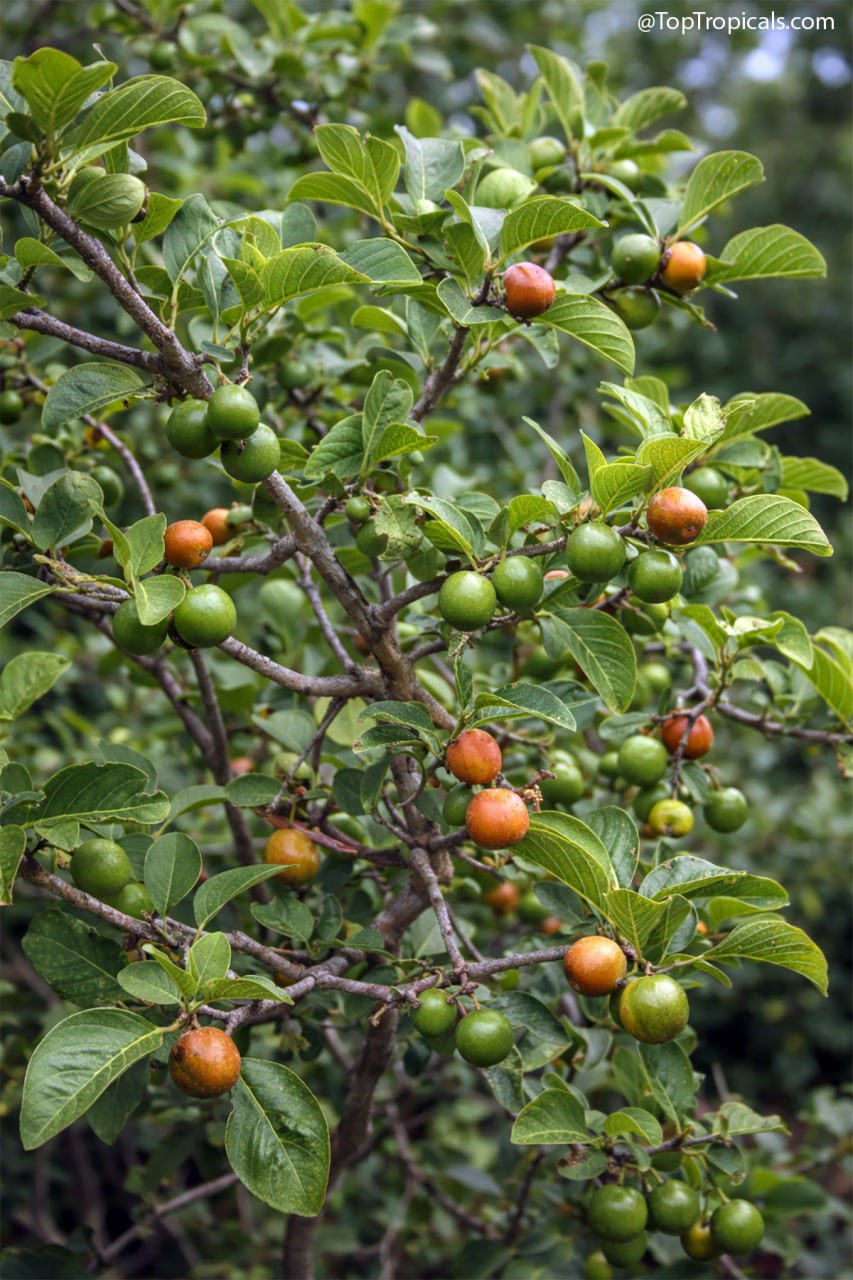
Inga edulis is a fast-growing tropical tree with lush foliage and nitrogen-fixing roots that improve soil health. It is a perfect tree for a quick shade solution in just one season. While large in the ground, it can be managed with pruning in home orchards.
🍊 7 steps for a care-free Spanish Tamarind - the easiest rare fruit to grow
Yes, it can handle light frost - Vangueria infausta (Spanish Tamarind, Wild Medlar) - we just discovered it can handle cold snaps! After a few cold nights in January, our young tree planted just a few months ago, still looks happy and strong!
Wild Medlar Plant Facts
Botanical name: Vangueria infausta Also known as: Wild Medlar, Spanish Tamarind
USDA Zone: 9 - 11
Highligths
If you are looking for a tough little fruit tree that thrives on neglect but gives you something truly special in return - try this rare, compact fruit tree. Spanish Tamarind is native to southern Africa, it is drought-tolerant, pest-resistant, and surprisingly cold-hardy once established - making it a great choice even for gardeners in borderline zones.
🔥 Burbidgea schizocheila - Voodoo Flame Ginger is one of those gingers that quietly surprises you. This ginger looks fake - but it blooms like this in real life! Compact, upright, and rarely seen in cultivation, it sends up glowing golden-orange flower cones that look almost unreal against its dark green leaves and deep maroon stems. Blooms appear on and off throughout the year, and each cone slowly opens individual flowers that can last up to two weeks, giving you a long-lasting show instead of a one-day flash.
Golden Brush Plant Facts
Botanical name: Burbidgea schizocheila Also known as: Golden Brush, Dwarf Orange Ginger, Voodoo Flame Ginger
USDA Zone: 9 - 11
Highligths
🔥 What makes this plant especially intriguing is how different it is from typical gingers. It grows more like a sculptural accent than a spreading clump, staying neat and vertical. Even more unusual - it behaves partly like an epiphyte. The rhizome prefers to sit above the soil surface, with only the roots buried, much like orchids or staghorn ferns. Bury the rhizome and the plant will sulk.
🔥 Voodoo Flame Ginger thrives in bright shade, warm temperatures, and high humidity, making it a natural choice for indoor growing or protected patios. Direct sun will scorch the leaves, and cold temperatures are not tolerated, so it is best kept in containers and brought inside when nights cool down. Slow-growing, tidy, and dramatic without being flashy, this is a true collector ginger - strange, elegant, and quietly mesmerizing.
The secret Brain Food growing in my backyard (and it tastes like green peas!)
Tropical Asparagus (Sauropus androgynus)
🏆 The secret Brain Food growing in my backyard (and it tastes like green peas!)
🌿 Katuk, or Tropical Asparagus (Sauropus androgynus), is one of the most underrated edible plants you can grow. This leafy tropical shrub is a superfood in disguise. It grows fast, looks lush, and its tender young shoots taste just like green peas.
🌿 Native to Southeast Asia, Katuk is a kitchen staple in places like Vietnam, Malaysia, and Thailand. The leaves and shoots are used in soups, stews, and stir-fries with egg or seafood. It’s not only delicious but also incredibly nutritious - rich in nutrients linked to improved memory and reduced cognitive aging: folate, lutein, and especially vitamin K, which is rare in plants.
🌿 Katuk thrives in sun or partial shade, needs little care, and grows into a dense, bushy plant that gives you edible greens all year round. If you want something that feeds both your garden and your health, this one’s a winner!
The easy orchid that blooms like a tropical sunrise: Epidendrum
Orange Reed Ground Orchid or Sunrise Orchid - Epidendrum
🌅 The easy orchid that blooms like a tropical sunrise: Epidendrum
Most people think orchids are fussy plants that belong in greenhouses or on windowsills. Epidendrum radicans - also known as Orange Reed Ground Orchid or Sunrise Orchid - proves otherwise. This colorful orchid grows in the ground, tolerates heat and humidity, multiplies easily, and can bloom for months with very little care.
🔥 Not your typical orchid
Unlike many orchids that grow on trees, Epidendrum radicans is a terrestrial orchid native to Mexico, Central America, and northern South America. It naturally grows on the ground and even among rocks.
Its upright reed-like stems are topped by clusters of brilliant orange flowers with golden-yellow highlights. A single mature stem can carry dozens of blooms, and large plantings resemble patches of miniature tropical sunrises.
🔥 Easy to grow, easy to share
Epidendrum thrives in Florida's heat and humidity and performs best in bright light and well-drained soil. In warm climates it often blooms throughout the year.
One reason gardeners love it is its ability to spread. The stems naturally produce roots along their length, making division and propagation remarkably easy. A single plant can eventually develop into a large, colorful colony.
🔥 A pollinator favorite
The vivid orange flowers attract butterflies and hummingbirds and stand out brightly against green foliage. This makes Epidendrum a valuable addition to pollinator gardens and tropical landscapes.
🔥 Better than a flowering annual
Unlike annual flowers that must be replaced each season, Epidendrum returns year after year and gradually expands into larger clumps. It works well along walkways, patios, entryways, borders, and mixed tropical beds where its upright growth adds height and color.
🔥 The orchid that deserves more attention
Some plants become famous because they are difficult or rare. Epidendrum radicans deserves attention for the opposite reason.
It is colorful, dependable, beginner-friendly, and generous with flowers. Give it sunshine, good drainage, and a place to grow, and it will reward you with months of vibrant blooms that bring the warmth and energy of a tropical sunrise into your garden. 👉 More...
📌 The common name "Crucifix Orchid" comes from the tiny cross-shaped structure in the center of each flower. 📌 Unlike many orchids, it naturally produces roots along its stems, which is one reason it spreads and propagates so easily. 📌 In Florida, it's often used as a landscape orchid rather than a houseplant.
📚 Learn more:
Bamboo Orchid Plant Facts
Botanical name: Arundina graminifolia, Arundina affinis, Bletia graminifolia Also known as: Bamboo Orchid, Bird Orchid