🌸 Thai flower names often sound like characters from a legend - golden spirits, celestial jewels, or lucky guardians of the garden. In Thailand, plants are not always named in a purely botanical way. Instead, breeders often choose names that carry meaning, symbolism, and a little imagination.
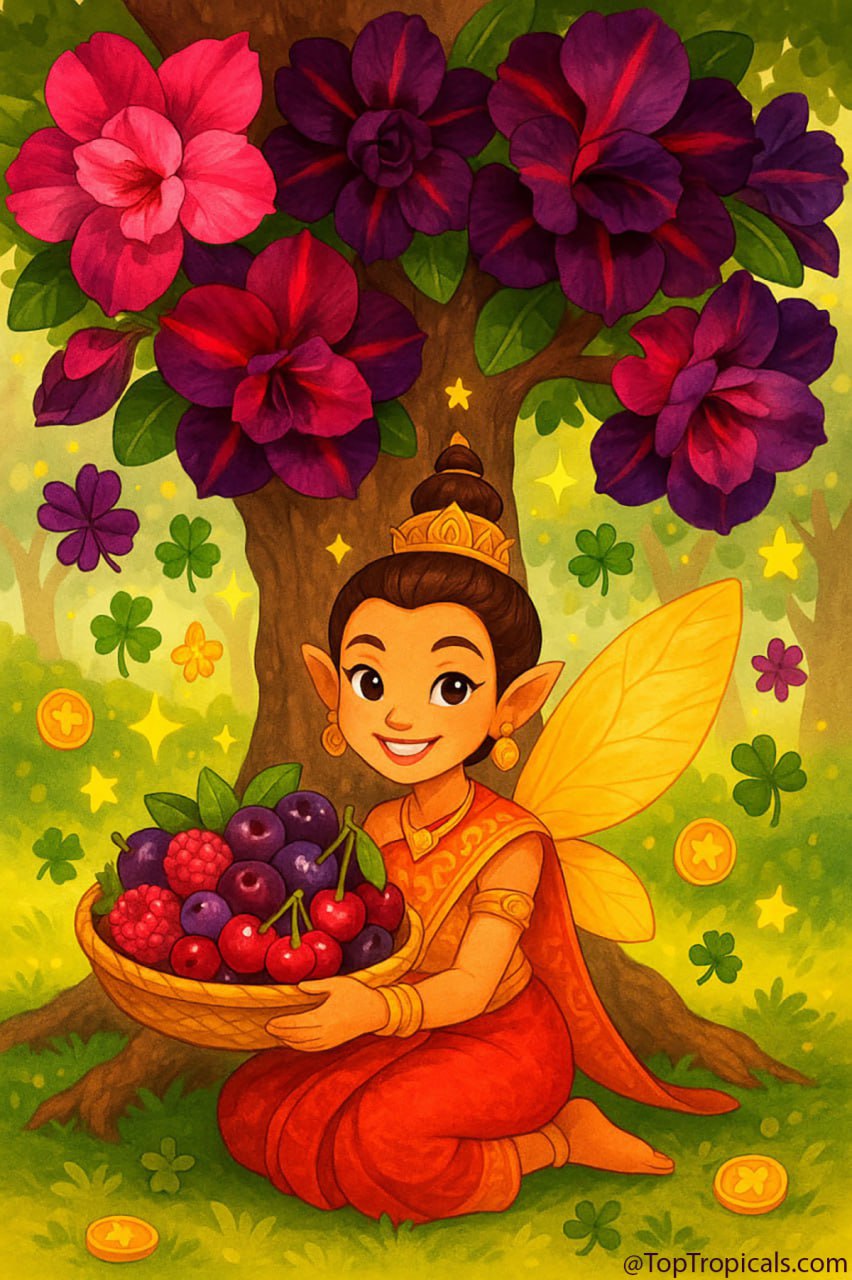
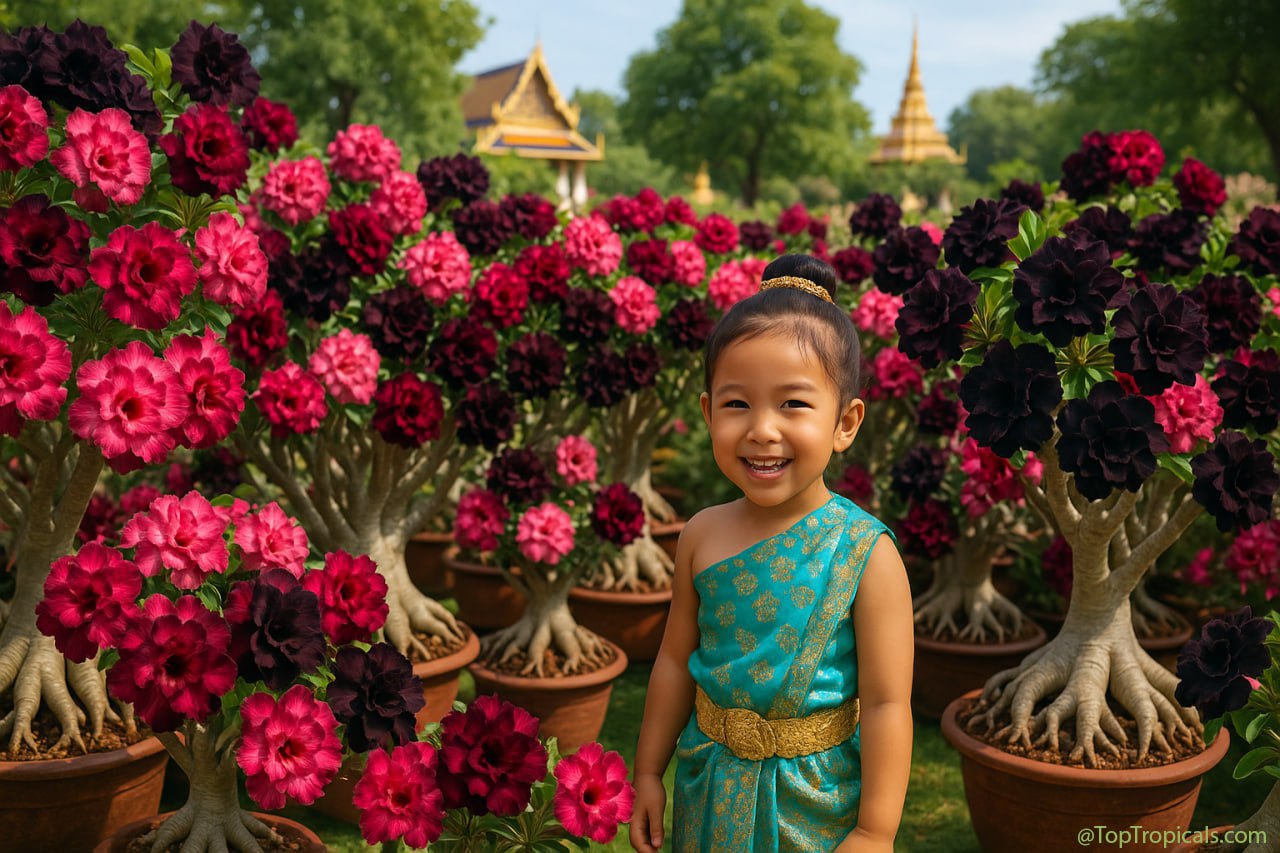
🌸 Looking at Adeniums through this lens feels almost magical. A flower can become a jewel, a lotus from heaven, or a golden treasure. The whimsical scenes below capture that spirit - a world where Adeniums bloom like treasures, garden fairies dance among flowers, and every name tells a story waiting to be discovered.
Adenium Plant Facts
Botanical name: Adenium sp. Also known as: Adenium, Desert Rose, Impala Lily
How to learn the secret meanings behind Thai flower names
Cats Smokey and Sunshine in Thai Adenoium garden
How to learn the secret meanings behind Thai flower names 🔮
If you have ever looked at names of Adeniums or Plumerias from Thailand, you may have noticed something interesting. Many of them sound poetic, mysterious, or even magical. That is not accidental.
Adenium Plant Facts
Botanical name: Adenium sp. Also known as: Adenium, Desert Rose, Impala Lily
USDA Zone: 9 - 10
Highligths
Plumeria Plant Facts
Botanical name: Plumeria sp. Also known as: Plumeria, Frangipani
USDA Zone: 9 - 11
Highligths
Thai plant breeders often give their hybrids meaningful names connected to jewels, wealth, beauty, and mythology. Instead of simple numbers or codes, the plants receive names that sound like something from a legend - Jade Swan, Golden Lotus, Rainbow Diamond.
Once you learn a few common Thai words, these names suddenly start to make sense. It is almost like decoding a secret language of flowers.
Below are some of the most common words you will see in Thai plant names.
🔠 Glossary of common Thai words used in plant names
Gems and precious stones 💎
Anyamanee - precious jewel or rare gem. Gaew / Kaew - crystal or glass-like jewel. Manee - jewel or gemstone. A classic word in elegant Thai names. Noppakao - nine gems, a symbol of royal power and prosperity. Petch - diamond. Symbol of brilliance and beauty. Ploy - gem or precious stone. Often used for plants considered rare or jewel-like. Yok - jade.
Wealth, luck, and prosperity 💰
Boon - merit, blessing, good karma. Chok - luck or good fortune. Kanjana / Kanjamapon - golden or noble. Mongkol - auspicious or lucky. Paruay / Pa Ruay - to become wealthy or prosperous. Ramruay - to become rich or prosperous. Sap / Sab - wealth or treasure. Sedthee - wealthy person. Tawee / Taweechok - to increase or multiply. Thong - gold. Yod - the best, the peak, or the finest.
Mythology and cultural symbolism 🐉
Bua - lotus. Chai / Chai Lai - victory or triumph. Hassadee - derived from the mythical Hatsadiling, an elephant-bird creature in Thai mythology. Hong - mythical swan or phoenix. Jai - heart or spirit. Maha - great or grand. Moradok - heritage, treasure, or legacy. Orathai - heart of Thailand or beloved Thai. Pratum / Pratuma - lotus blossom. Siam - Thailand, the historic name of the country.
Colors and visual descriptions 🎨
Chompoo - pink color. Lai - patterned or striped. Lueng - yellow. Moung / Muang - purple color.
Nature and poetic imagery
Chaba - hibiscus flower. Dao - star. Doung - heart, soul, or central essence. Fah - sky. Example: Sai Fah - sky-colored. Nam - water. Namwhan - sweet water or sweetness. Natee - river or flowing water. Sai - thread, line, or ray. Sairung - rainbow. Sang Aroon - dawn or sunrise. Suree - sun or sunlight.
🌸 Examples of plant names built from these words
Once you know the meanings, the names start to read like short poems.
Hong Yok - Jade Swan Ploy Nappan - Celestial Jewel Thong Hassadee - Golden Mythical Elephant Ped Sairung - Rainbow Diamond Som Paruay - Golden Prosperity Sai Fah - Sky Blue Pratum Thong - Golden Lotus Ramruay - Becoming Rich Chok Dee - Good Luck Thong Yod - Peak of Gold
You will see these words frequently in the names of Thai-bred Adeniums, Plumerias, Orchids, and other tropical flowers. Once you recognize them, plant names become much easier - and more fun - to understand.
Dont Wait Years: 8 Fruit Plants You Can Harvest the Same Season
Don't wait years for fruit! Harvest papayas, berries, figs, and more in the very same season you plant them with these fast-growing varieties.
Don't Wait Years: 8 Fruit Plants You Can Harvest the Same Season 🍒
Growing fruit at home usually requires years of patience. Most gardeners view fruit trees as a long-term investment that may not pay off for a decade.
But you don't have to wait.
Certain tropical and subtropical plants are "fast-track" growers. In warm climates like Florida, choosing the right varieties means you can see flowers and fruit within months of planting - often in the very same season.
If you want a backyard harvest without the wait, here are the fastest-producing fruits you can plant today.
A compact shrub perfect for containers. It produces star-shaped flowers and dark purple fruit that tastes exactly like blackberry preserves. Established plants often fruit in their first season.
Blackberry Jam Fruit Plant Facts
Botanical name: Randia formosa, Mussaenda formosa, Randia mussaenda, Rosenbergiodendron formosum Also known as: Blackberry Jam Fruit, Jasmin de rosa
This fast-growing large shrub produces orange pulp with the uncanny flavor and texture of peanut butter. Expect flowers and bright red berries within months of planting in warm conditions.
The "giant herb" of the fruit world. Papayas are legendary for their speed, often flowering just months after planting and providing sweet, vitamin-rich fruit within the same year.
Papaya Plant Facts
Botanical name: Carica papaya Also known as: Papaya
The 'Lolita' cultivar is a game-changer. It grows quickly as an edible hedge and produces nearly black, resin-free fruit that is significantly sweeter than the common red varieties.
Surinam Cherry Plant Facts
Botanical name: Eugenia uniflora, Eugenia michelii Also known as: Surinam Cherry, Pitanga, Brazilian Cherry
Unlike traditional berries that require chill hours, these Rubus species thrive in the heat. Their vigorous canes grow rapidly, often fruiting the same season they hit the soil.
Holy Bramble Plant Facts
Botanical name: Rubus sanctus, Rubus ulmifolius subsp. sanctus Also known as: Holy Bramble, Burning Bush of the Bible
Mulberries are incredibly generous. Everbearing varieties produce sweet berries over an extended window and often begin fruiting the very first year they are planted.
Figs are the champions of container gardening. They are highly drought-tolerant and famous for setting honey-sweet fruit even at a very young age—often just months after being established.
Fig Tree Plant Facts
Botanical name: Ficus carica Also known as: Fig Tree, Brevo
Growing in containers?Fig trees are the drought-tolerant champions.
👉 Tips for Faster Results
• Start Large: Buy "nursery-established" plants rather than seeds. • Feed the Need: Use high-quality organic fertilizer to support rapid growth. • Sun is Fuel: Most of these varieties require at least 6-8 hours of direct sunlight to trigger flowering.
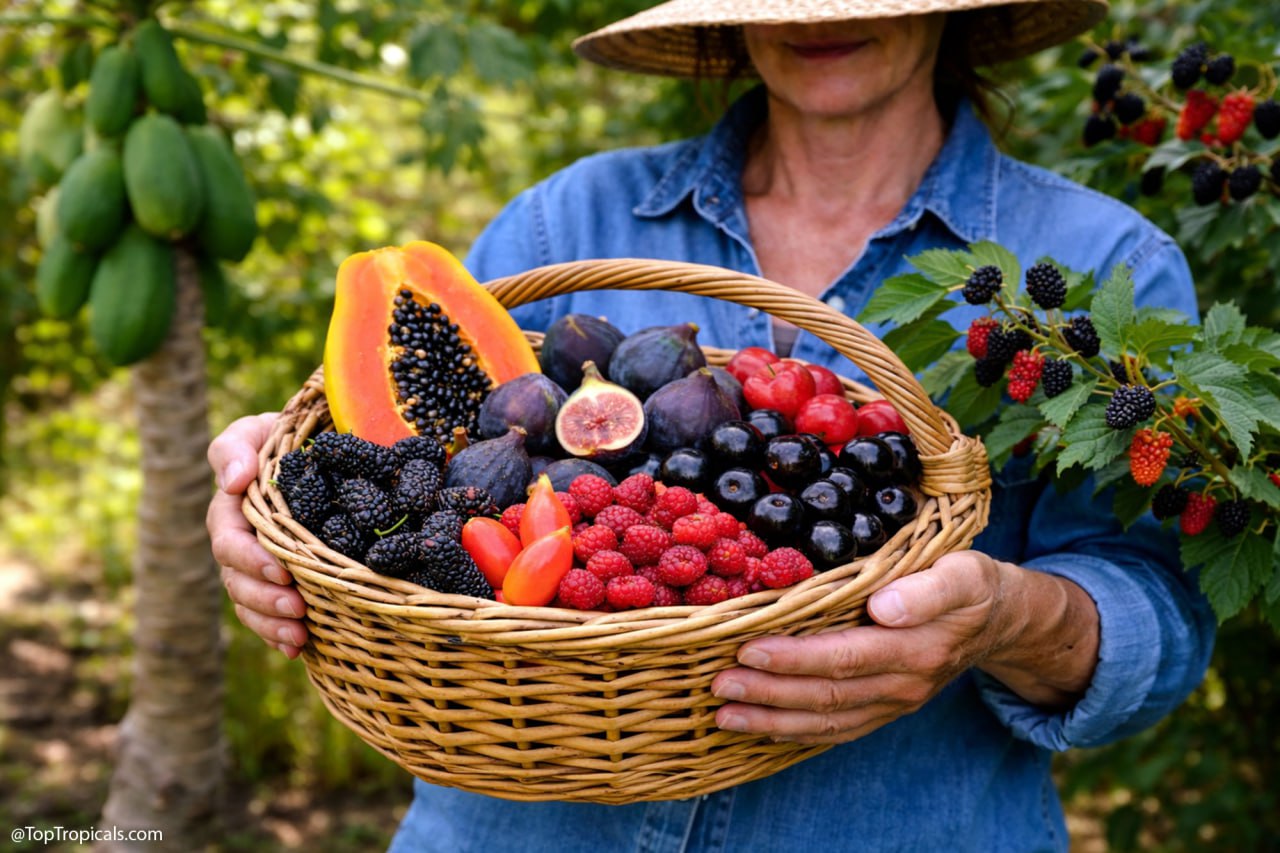
📷 Freshly picked tropical fruit bounty: don't wait years for fruit! Harvest papayas, berries, figs, and more in the very same season you plant them with these fast-growing varieties.
The Magic Number 65: when tropicals finally wake and the 7-Day Rule you should know
Champaka tree new growth sprouts
A Champaka tree (Joy Perfume Tree) first fresh sprouts
The Magic Number 65: when tropicals finally wake and the 7-Day Rule you should know 🌱
Discover the "Magic 65" rule for waking up your garden and the exact time to start fertilizing for maximum growth. Learn the specific temperature threshold that signals your tropicals to wake up and how to handle spring cold snaps.
🌿 If you’ve been staring at your dormant trees and shrubs wondering if they survived the winter, you aren't alone. The most frequent question every spring is: "When will my tropical plants start sprouting?"
🌿 While the calendar might say spring, tropical plants don’t use a watch - they use a thermometer. If you want to see green shoots and active growth, there is one "Magic Number" you need to watch: 65F 🌡
🌿 The 7-Day Rule for Tropical Growth
The gold standard for the tropical world is simple: plants generally wake up when minimum nighttime temperatures remain at or above 65F for at least one full week.
🌿 Why 65°F?
Tropical species are biologically programmed to stay dormant to protect their cell structure from cold damage. A single warm day won't fool them, but seven consecutive nights of 65F+ signals that the "growing season" has officially arrived. Once you hit that 7-day mark, you’ll see buds pushing and fresh leaves finally sprouting.
🌿 Can You Force Them to Wake Up Faster?
Patience is a virtue, but if you’re looking to "push" your plants, focus on two things: 🌞 Sun Exposure: Ensure they are in the brightest spot possible to warm the soil. ♨️ Heat Retention: Use dark mulch or move potted plants onto concrete surfaces that retain daytime heat.
🌿 When to Start Fertilizing
❌ Don’t reach for the fertilizer until you see that active growth. Feeding a dormant plant can lead to root rot or wasted nutrients. 👉 The Signal: After that first week of 65F nights. ✅ The Action: Once you see green tips, start your fertilization routine. This is when the plant actually has the metabolic "engine" running to use those nutrients.
🌿 Watch Out for the "False Spring"
Before you go all-in, ensure the risk of a hard freeze has passed. A minor cold snap - a few nights in the 50s - won't kill your progress, but it will act as a "pause" button. If cool weather persists, tropicals may "lock up" and return to dormancy. If that happens, simply reset your clock and wait for the next stretch of 65F nights.
🌿 Ready for the Wake-Up Call? Fuel Your Tropical Growth!
Don’t get caught empty-handed when that 7th day of 65F hits. Stock up now so you can feed them the moment they wake up. Using the right nutrients during the active growth phase is key to lush blooms. Check out our curated selection of professional-grade fertilizers:
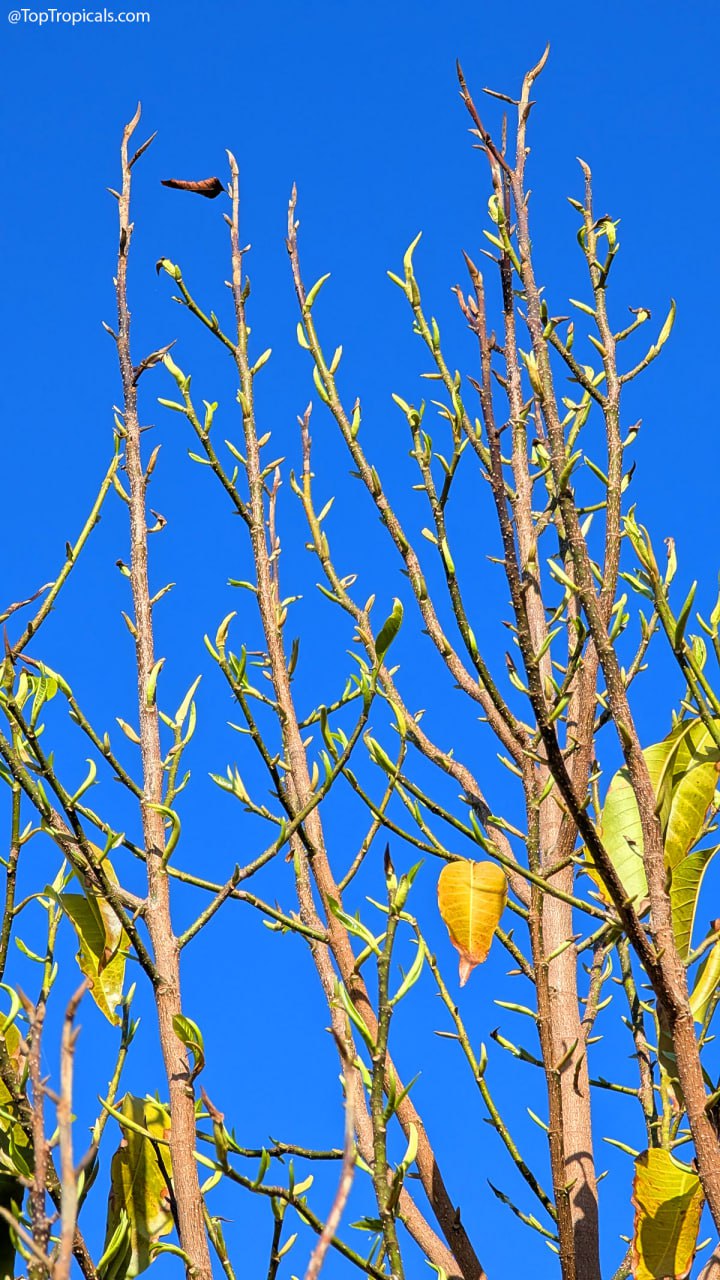
📷 Recovery in Action: The Joy Perfume Tree - Champaka showing off its first fresh sprouts in March after a chilly Florida winter. This is exactly what happens once you hit that 7-day streak of 65F nights! 📚 Learn more: ✦ Why is my Champaka Tree dropping leaves?
Beyond fruit: how this African tree supports wildlife and garden health
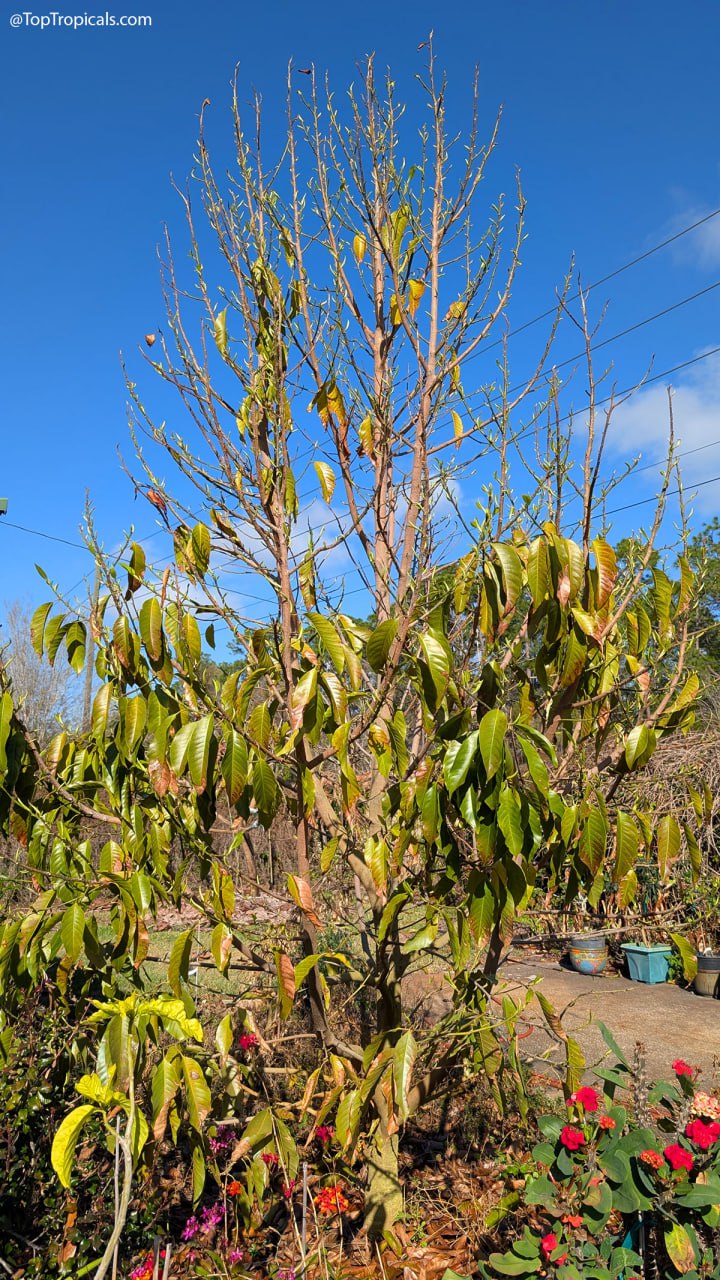
Vangueria infausta - Spanish Tamarind
Beyond fruit: how this African tree supports wildlife and garden health: Wild Medlar in the ecological food forest 🍊
Vangueria infausta (Spanish Tamarind, Wild Medlar) might win your heart for its sweet-tart fruit and folk medicine magic - but did you know it’s also a quiet hero in the ecosystem? Whether you’re planting a full-blown food forest or just a mixed backyard garden, Vangueria infausta brings more than fruit to the table. It brings balance, beauty, and biodiversity.
Wild Medlar Plant Facts
Botanical name: Vangueria infausta Also known as: Wild Medlar, Spanish Tamarind
USDA Zone: 9 - 11
Highligths
🐝 Pollinator power
When in bloom, this tree produces nectar-rich flowers that attract bees, butterflies, and other pollinators. These beneficial insects don’t just help the Wild Medlar fruit - they boost productivity in your entire garden.
If you grow mangos, citrus, guava, or veggies nearby, Spanish Tamarind helps keep the pollinator traffic moving.
🐦 Bird magnet
Birds are big fans of this tree. They nest in its dense branching, snack on overripe fruit, and help spread seeds. In return, they’ll help keep down pests like caterpillars and beetles.
Even in a small garden, one Wild Medlar can be a micro-habitat for birds, insects, and other helpful wildlife.
🌱 Soil stabilizer
With its deep roots and drought-hardy nature, Wild Medlar helps hold soil in place, especially on slopes or rocky patches. It improves drainage and reduces erosion, which makes it a great addition to food forests in challenging spots.
🍂 Natural mulch & green cleanup
The tree drops a modest amount of leaf litter, which breaks down into soft, rich mulch. In a diverse planting, that means fewer weeds, better soil structure, and less watering needed.
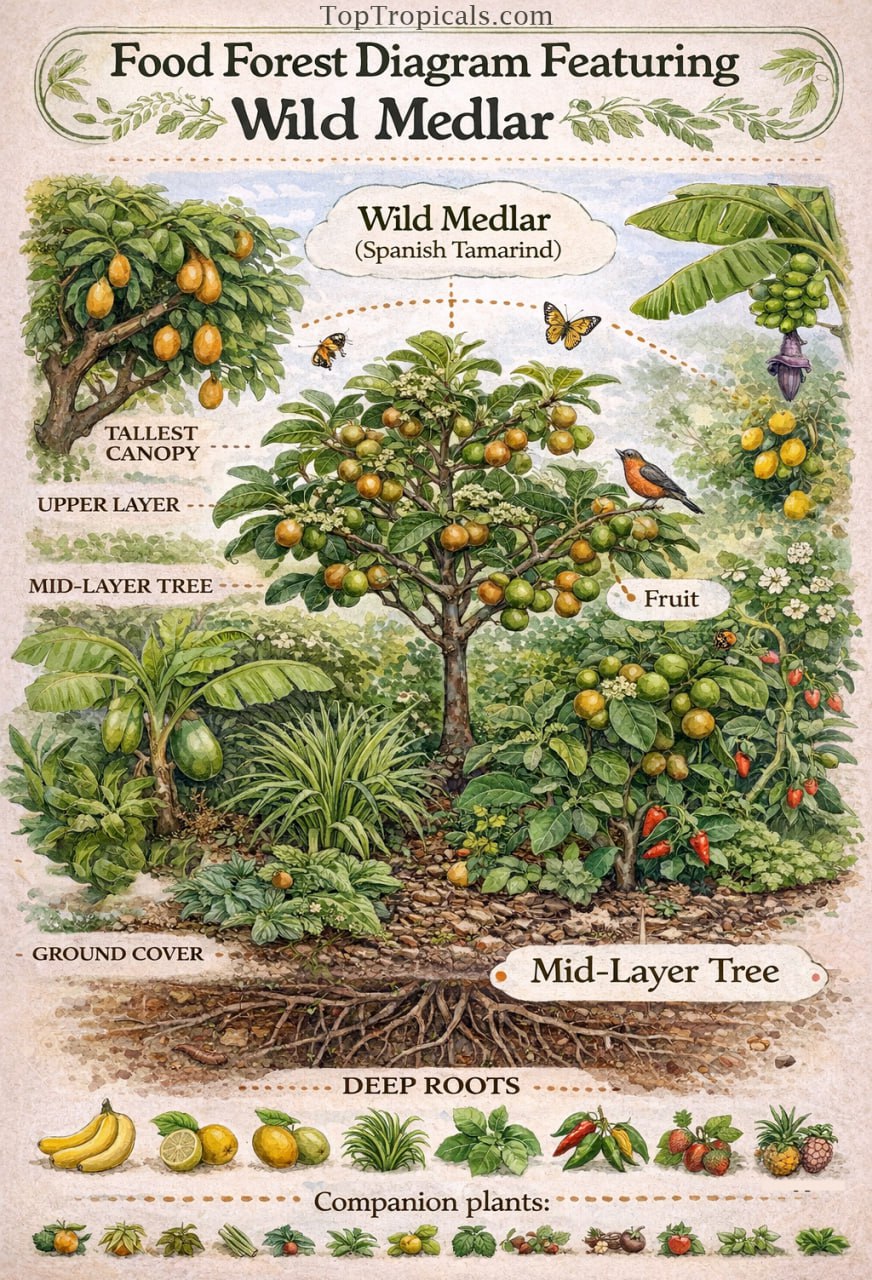
🌿 Companion planting & food forest stacking · Works great as a mid-layer tree in multi-tiered systems · Provides light shade for herbs or smaller fruiting plants · Plays well with bananas, papaya, guava, lemongrass, and ground covers
In zones 9-11, it can live happily in a mixed border or permaculture guild. In colder zones, just keep it potted and move it around as needed - it still offers many of the same benefits.
🛡 Pest and disease resistant
One more bonus: Spanish Tamarind is incredibly low-maintenance. It resists most common pests and doesn’t suffer from fungal issues like many tropical fruit trees do. That means fewer chemicals and more harmony in your garden ecosystem.
✍️ Ready to plant something that gives back?
Think you need more than just another fruit tree? More life. More movement. More meaning in your garden?
Grow Wild Medlar for the fruit - but keep it for everything else it brings. The pollinators. The shade. The quiet medicine. The steady presence that makes your space feel alive.
If you’re building a food forest - or simply want a tree that earns its place every single season - this one doesn’t just sit there. It contributes.