Date: 9 Dec 2023
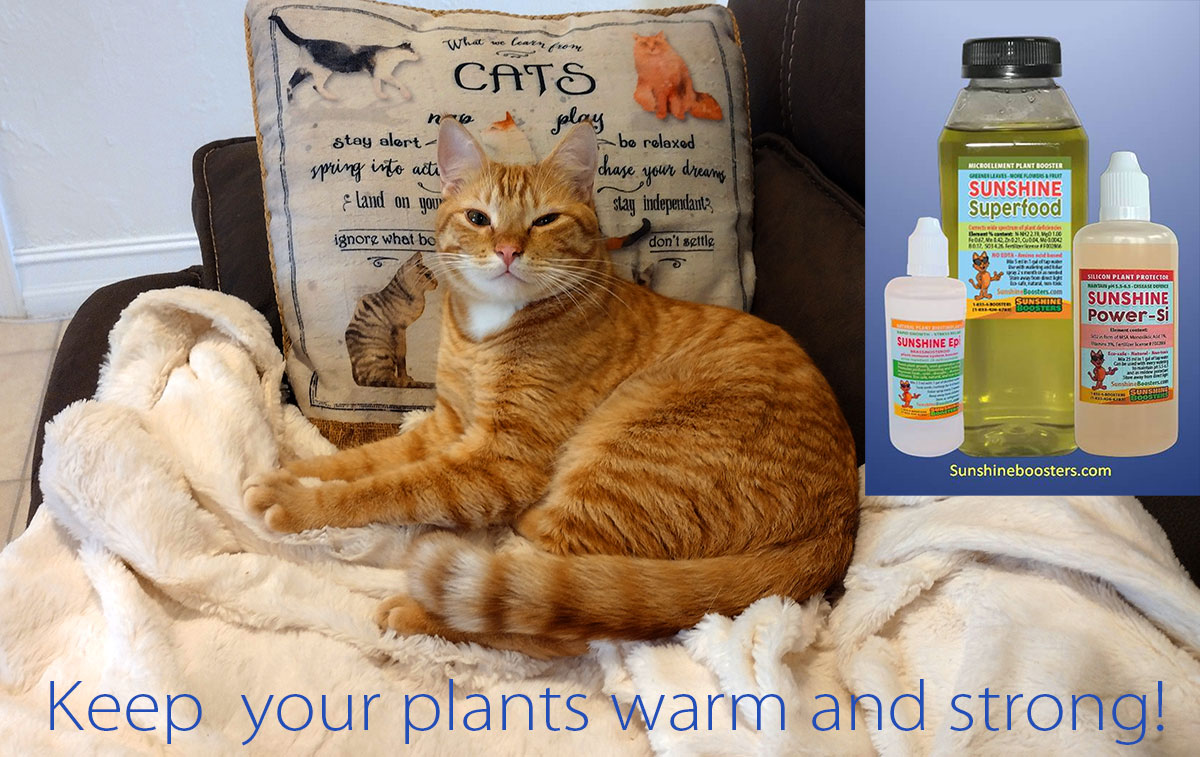
Sunshine supplement kit for cold hardiness
Video by Scott Riddle
Discover the cool story of Scott Riddle, a well-known plant enthusiast with a
popular YouTube channel dedicated to his tropical plant collection. In this video, Scott shares his firsthand experience with our Sunshine micro-element kit, designed to enhance the cold hardiness of
plants.
Living in the unpredictable climate of the California mountains, where he
cultivates tropical plants in a zone higher than recommended, Scott faced the challenge of unexpected freezes. The boosters hopefully will
be a game-changer for him, reinforcing his plants for the winter season. This insightful and
detailed video is a valuable resource for anyone engaged in zone-pushing, aiming
to fortify their tropical plants against the rigors of challenging weather conditions.
Here at Top Tropicals, we have already applied two pre-winter treatments of Sunshine Power-Si formula, in combination with the bio-stimulant Sunshine Epi and micro-elements. One in November, the second one in the beginning of December. So far, after a couple of cold nights, the plants still look happy. Stay warm and get prepared!"
Date: 15 Aug 2021
Plants and Trips...
Where are all the tropicals?
By Kristi, the Florida girl...
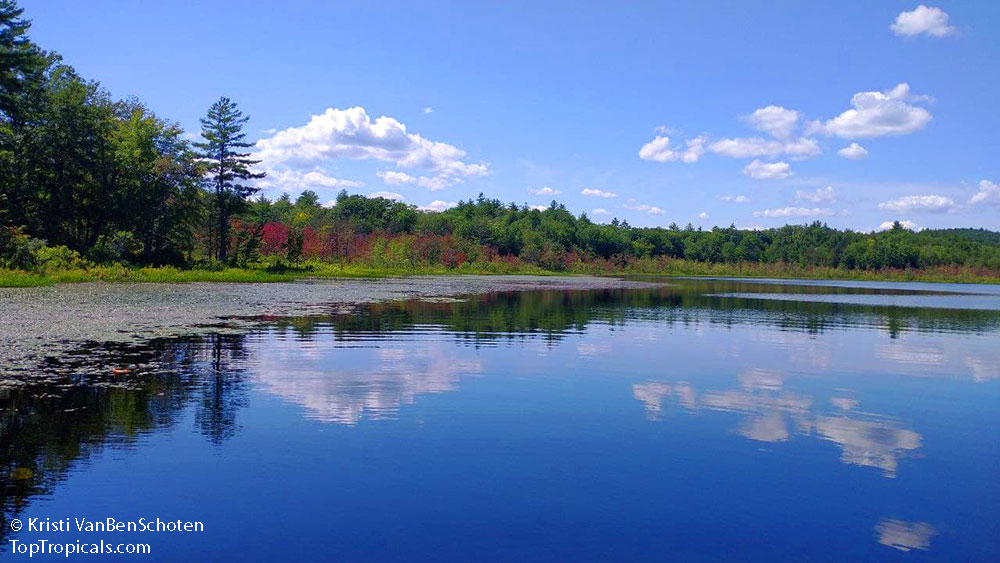
...Jamie and I recently took our first real vacation in four years! Yep, that's right, we packed our bags and loaded the Challenger for a two-day drive from Florida to New Hampshire. I know what you are asking "Are you crazy? That's a long drive!" Yes, yes, it is a long drive. One this Florida born and raised girl didn't realize would be as long as it was...
...As we got into the driving, the world as I knew it began to change. All of a sudden, the roads started twisting and turning. The streets were no longer palm tree lined but in their place were huge jetting rocks and cliffs. I was like a kid at Disney! I have never seen anything like this, there were Christmas trees growing out of the ground! Right up out of the ground!..
CONTINUE READING
Date: 18 Feb 2021
Red Stopper Cherry
Rare plant from Key West
by Mark Hooten, the Garden Doc
Eugenia rhombea, commonly known in Florida as "Red Stopper", is one of four
species of Eugenia native to North America. It is a beautiful small tree,
bearing small shiny deep green leaves which are pinkish-orange-red when young,
giving them the appearance of a flowering tree at a distance when flushing out
new growth a number of times a year.
Its native range includes Florida, Bahamas, Cuba, Hispaniola and part of
Eastern Central America. However, here in Florida, it is federally listed as an
endangered species, only known from the lowermost Everglades and Keys, where
even there it is rare.
These elegant little trees grow to perhaps 12 or so feet tall, developing
an elegant, umbrella shaped canopy. At a distance, they rather resemble Ficus
benjamina, yet with a more orderly and refined appearance. In addition, they
develop fluffy white flowers with a delightful fragrance, followed by
holly-like long lasting red berries which are relished by wonderful song birds.
Although appearing delicate, this tropical species is surprisingly hardy,
and would likely even make striking, a one-of-a-kind houseplant in the
North.
These very few plants were grown from seeds collected near Royal Palm
Hammock in the Everglades, and and may not be available again for some time...
Date: 31 Oct 2018
Featured Plant. Flacourtia indica - Governors plum
Flacourtia indica - Governors plum
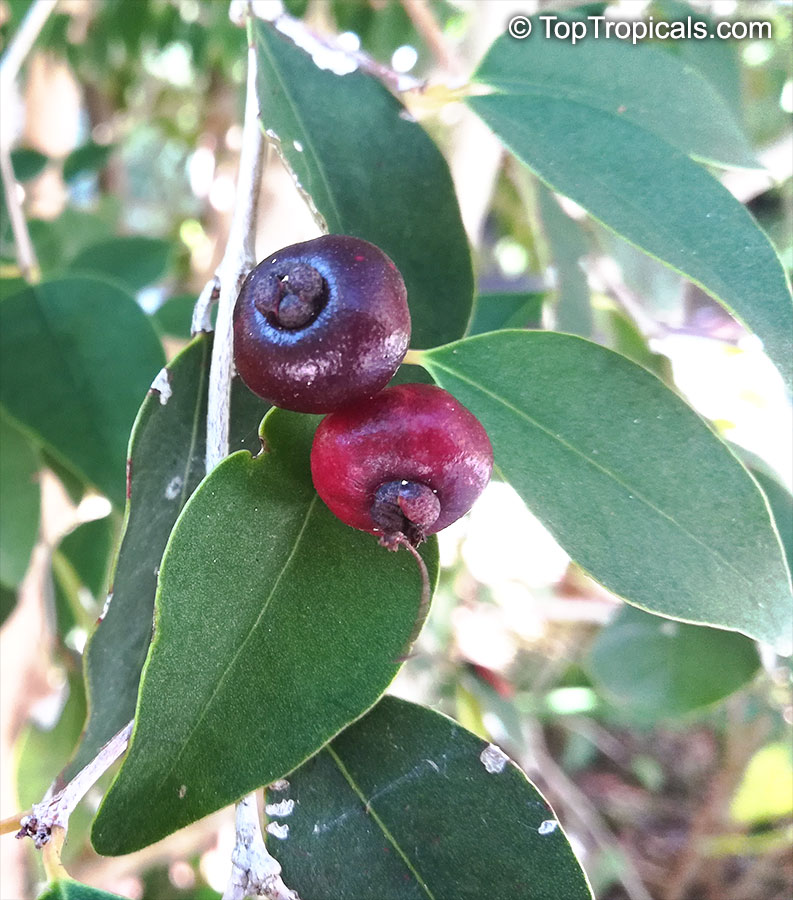
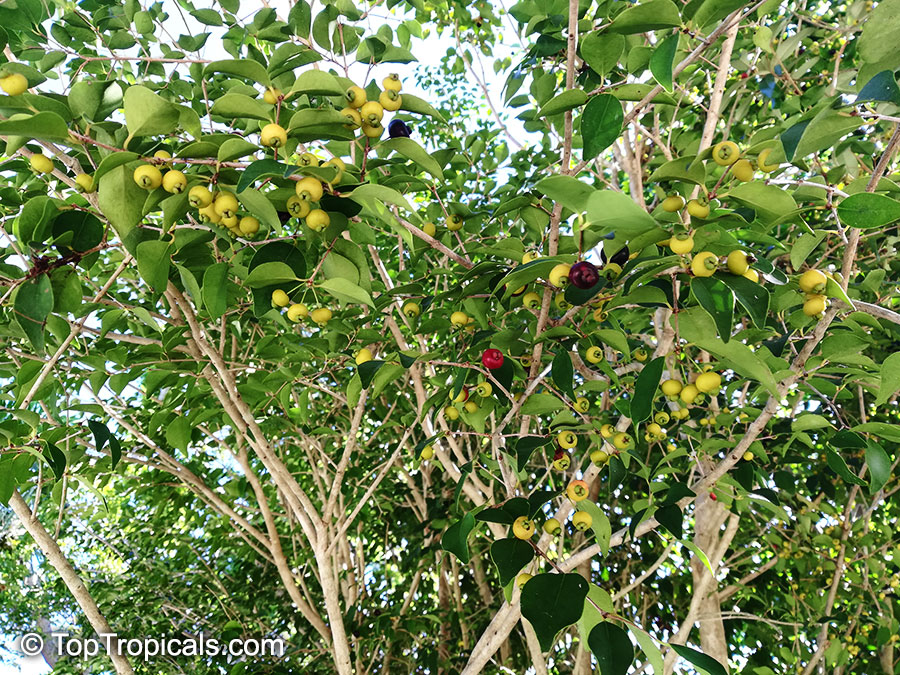
Governors plum, Madagascar Plum, Batoko palm - is a tropical or
subtropical small shrubby tree. It is cultivated in tropical regions as a hedge plant
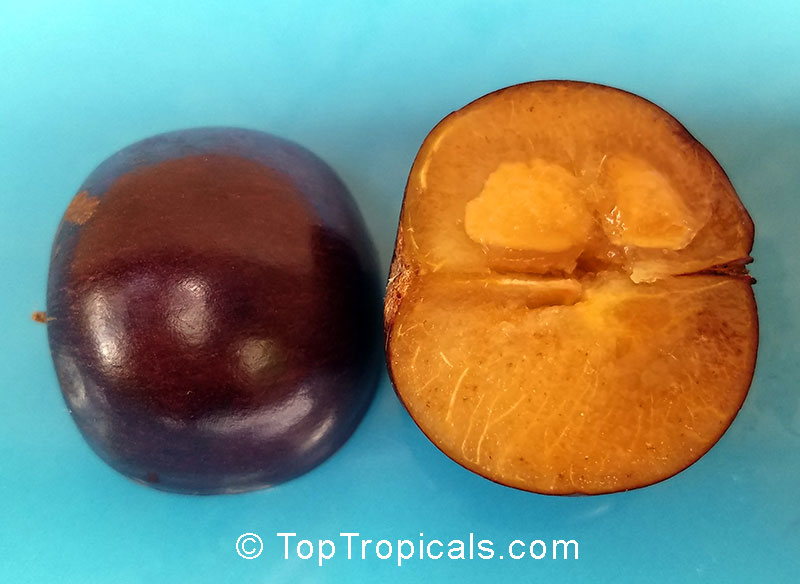
and for its deep red acid fruits resembling small plums. The fruits are
about one inch wide and can be eaten fresh or made into preserves. They are sweet
and sour, with a texture and flavor similar to a plum. Fruits mature after
one to two months from flowering.
The tree is easy to grow, self-fertile and doesn't require much care,
not fussy about soil and very forgiving if you forget to water it.
Seeds germinate readily, but it takes a while until the seedling is
ready to be transplanted into a big pot or in the ground. If you plant them now,
by spring you have a chance to get the little tree ready to go!
Date: 24 Jun 2018
Plant Horoscope. Virgo Zodiac lucky plants: Crape Myrtle and Laurus nobilis
Virgo - 8/23-9/22. Virgo is an EARTH sign ruled by the planet Mercury, which also rules Gemini. Virgo is traditionally the Goddess of the Grain, and is associated with autumn. Her plants often have finely divided leaves or stems, subtle odors, or small, brightly-colored flowers. The most beneficial plants for Virgo are high in potassium and help to calm the nerves. In its rulership of Virgo, Mercury governs the abdomen and the lower intestinal tract and the entire digestive process. Herbs associated with Virgo assist in digestion (as do Cancer herbs) and help to reduce flatulence. The relaxing, calming scents help Virgo release stress and worries.
Virgo
Zodiac lucky plants: Amorphophallus, Dill,
Barringtonia, Bolusanthus, Dioscorea, Grewia asiatica
(Falsa), Hibiscus Karkade, Iboza riparia, Lagerstroemia
Queens Crape Myrtle, Laurus nobilis (Bay Leaf), Lippia,
Melissa, Catnip, Mint, Arugula, Piper betle, Piper
sarmentosum, Psychotria, Clove, Banisteriopsis, Papaya,
Mesua ferrea (Ironwood), Assai Palm, Jacaranda, Pimenta
dioica (Allspice), Petrea, Plumbago, Clitoria, Eranthemum,
Litchi, Cashew, Pecan, Nut trees, Cherries, Lavender,
Sansiveria, Aloe vera, Blackberry, Honey suckle, Satureja,
Vitex, Mulberry, Elaeocarpus, Feronia elephantum (Bel
Fruit). On the photo: Sauromatum venosum - Voodoo Lily.
For links to these plants and other signs information, see
full Plant Horoscope