Date: 24 Jun 2018
Plant Horoscope. Gemini Zodiac lucky plants: Ferns and Aralias
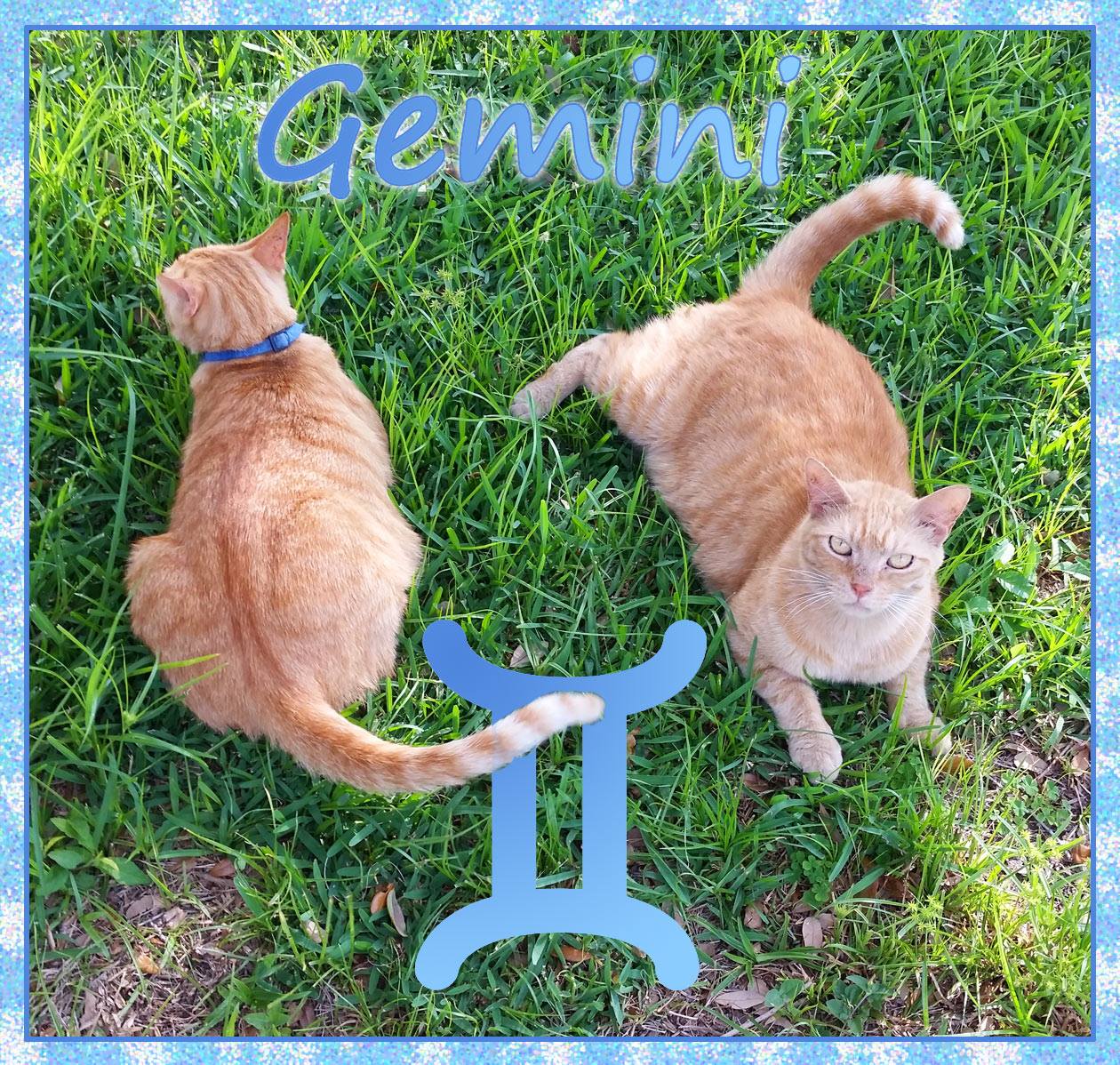
Gemini
- 5/21-6/20. Ruled by the mutable, changeable
planet Mercury (also patron of the art of medicine),
Gemini is an AIR sign. Plants ruled by Mercury tend to
have ferny or highly-divided leaves or stems (like the
bronchi of lungs), hairy or fuzzy leaves (related to the
cilia in the lungs), or subtle odors.
Gemini rules the lungs, shoulders, arms, and hands. Its
plants help to strengthen the lungs and respiratory
system, relax the nervous system, strengthen ears and
hearing, the tongue and speaking, the vocal cords, lungs
and thyroid, as well as the shoulders, arms, and hands.
Gemini has so much going on mentally that they may need a
little help to digest all the information they're
constantly absorbing. Herbs that have clean, pure flavor
not only help physical digestion, but assist spiritual and
mental intake as well.
Gemini Zodiac lucky plants: Ferns, Blechnum, Tree ferns and Cyatheas, Fern Tree, Aralias, Jackfruit and Breadfruit, Paulownia, Anthurium, Philodendron, Philadelphus, Clerodendrums, Anise, Lavender, Myrtle, Nut trees, Macadamia, Ficus, Piggyback plant - Tolmiea menziesii, Aloe vera, Fig , Honeysuckle, Azalea, Mint Tree Satureja, Vitex, Ironwood, Mulberry, Osmoxylon, Acalypha, Allamanda, Aphelandra, Iboza, Ruda, Kiwi, Caesalpinia, Cyphomandra, Monstera, Kalanchoe , Magnolia, Oregano, Ocimum, Naranjilla, Zamia, Delionix, Acacias, Calliandra, Patchoili, Palms, Geranium, Grevillea, Eucalyptus.
For other signs information, see full Plant Horoscope
Date: 31 Oct 2025
👻 When plants grow wings...
🌴 Twilight in the garden. Smokey is holding a glowing pumpkin. Sunshine is sipping cocoa.
Sunshine: "Smokey, why does that plant look like it wants to fly away?"
Smokey: "That’s the Bat Lily - Tacca. It’s rare, it’s
weird, and it’s in bloom just in time for Halloween."
Sunshine: "Figures. You always find the spooky ones."
Meet the Bat Lily (Tacca)
Tacca is also called the Bat Lily or Devil Flower. This tropical wonder grows bat-shaped wings and foot-long whiskers. The black form (Tacca chantrieri) looks straight out of a gothic dream, while the white one (Tacca nivea) is ghost-like and elegant.
Some of our plants are blooming right now in the nursery — true Halloween magic! Blooms are delicate and may not travel, but the plants are strong and will flower again soon in your care.
Black Bat Lily (Tacca chantrieri) with dark maroon wings and long whiskers
White Bat Lily (Tacca nivea) in bloom with wide ivory wings
"The White Bat Lily (Tacca nivea) is bold and sculptural, with oversized
ivory wings that command attention. Its pale bracts stretch wide above
clusters
of deep maroon flowers, and long, silvery whiskers spill gracefully through
the foliage. In filtered light, the plant seems to glow from within —
elegant, crisp, and perfectly balanced between the strange and the
beautiful.
If I could pick, I’d go with the White Tacca. It feels more
architectural, more balanced — those oversized wings catch light in a
way that
shows off every vein and curve. It looks engineered by nature, almost like
an
alien design prototype that actually works.
The Black Bat Lily (Tacca chantrieri) feels alive with shadow. Its dark
maroon wings and wiry whiskers make it look like something that fluttered
out of
the jungle at dusk. The bloom’s layered structure and near-black sheen
give it a quiet power — mysterious, understated, but impossible to
ignore. But if I were designing mood lighting for a greenhouse at night, the
Black Tacca wins. It’s subtle, mysterious, like a secret only visible
up
close. Together, they’re perfect opposites — yin and yang of the
tropical underworld: white for daylight, black for moonlight." — says
Tatiana Anderson, Top Tropicals Plant Expert
Special Offer: Discounts on Rare Tacca Plants
Grow your own Bat Lilies — White or Black — at a special Halloween price!
Get 25% OFF Tacca plants with code
TACCA2025
Min order $25 (excluding S/H), valid online only, cannot be combined with other offers.
Hurry, offer expires November 03, 2025!
🎃 Storewide Halloween Sale – For Everything Beyond Tacca
Not into spooky plants? Enjoy savings on all other tropical plants across the store!
Get 15% OFF tropical plants with code
HALLOWEEN2025
Min order $100 (excluding S/H), valid online only, cannot be combined with other offers.
Hurry, offer expires November 03 2025!
👉 Collect Tacca plants:
Date: 5 Jan 2026
How to grow papaya from seed without killing it
Papaya (Carica papaya) is one of the fastest and most rewarding fruit plants you can grow from seed - but it is also one of the easiest to lose early if you treat it like a regular tree. In this guide, we start at the very beginning: what papaya really is, how to choose and prepare seeds, and what it actually takes to get strong, healthy seedlings off to a good start.
🍊 Papaya basics - what kind of plant it really is
Papaya is not a tree - and that changes how you should grow it
- 🟡 Papaya is technically not a tree. It is a herbaceous plant with a hollow trunk - often jokingly called a giant grass.
- 🟡Papaya grows extremely fast from seed and usually starts producing fruit within 10–15 months. It has a palm-like look, with a large canopy of leaves at the top. Flowers and fruit form directly under that canopy, right on the trunk.
- 🟡In the ground, papaya can grow 10–15 ft tall, but there are dwarf varieties that stay under 4–5 ft in containers while still producing full-size fruit.
- 🟡Papayas are very productive and are one of the best exotic fruit plants to grow even outside the tropics, especially because they perform so well in containers.
🍊 Growing papaya from seed - what to know first
What grocery store papaya seeds don’t tell you
Papaya is easy to grow from seed, but one detail matters more than most people realize:
- 🟡Seeds from store-bought fruit come from unknown varieties
- 🟡Most will not be dwarf
- 🟡If you want a compact plant, start with a known dwarf variety or seeds from one
- 🟡The good news: papaya comes true from seed, so when the source is known, the result is reliable.
Now that you understand what papaya is - and what grocery store seeds don’t tell you - it is time to move on to the most misunderstood stage of all: germination. In Part 2, we break down exactly how papaya seeds sprout, what they need, how long they really take, and why so many people give up too early.
- 👉 Coming up next: Part 2 - Papaya seed germination, step by step
🛒 Explore Papaya varieties
📚Learn more:
- · Carica papaya in Plant Encyclopedia
- · How to grow papaya from seed without killing it: Part 1: Papaya basics
- · Carefree Garden: How Easy Is It to Grow a Papaya Tree?
- · Male papaya produces fruit!
- · Top 10 fast-fruiting trees: #6. Papaya
- · How to have fresh Papaya fruit year around
- · The truth about Papaya
- · Papayas contain a secret enzyme
Part 2: Seeds germination
Part 3: Containers, sunlight, and common mistakes
🎥 Nobel Prize goes to this pregnant male papaya
#Food_Forest #How_to #Papaya 🟢 Join 👉 TopTropicals
Date: 22 Oct 2025
Which dry fertilizer to use - slow release or controlled release?
🌳 Which dry fertilizer to use - slow release or controlled release?
❓ Q: You offer two kinds of dry fertilizers - Slow Release Trop Dress and Controlled Release Green Magic. What is the difference, and which one should I use? I used your water-diluted Sunshine Boosters with every watering, but now that I’ll be away for a few months, I just want to give my garden a long-lasting fertilizer.
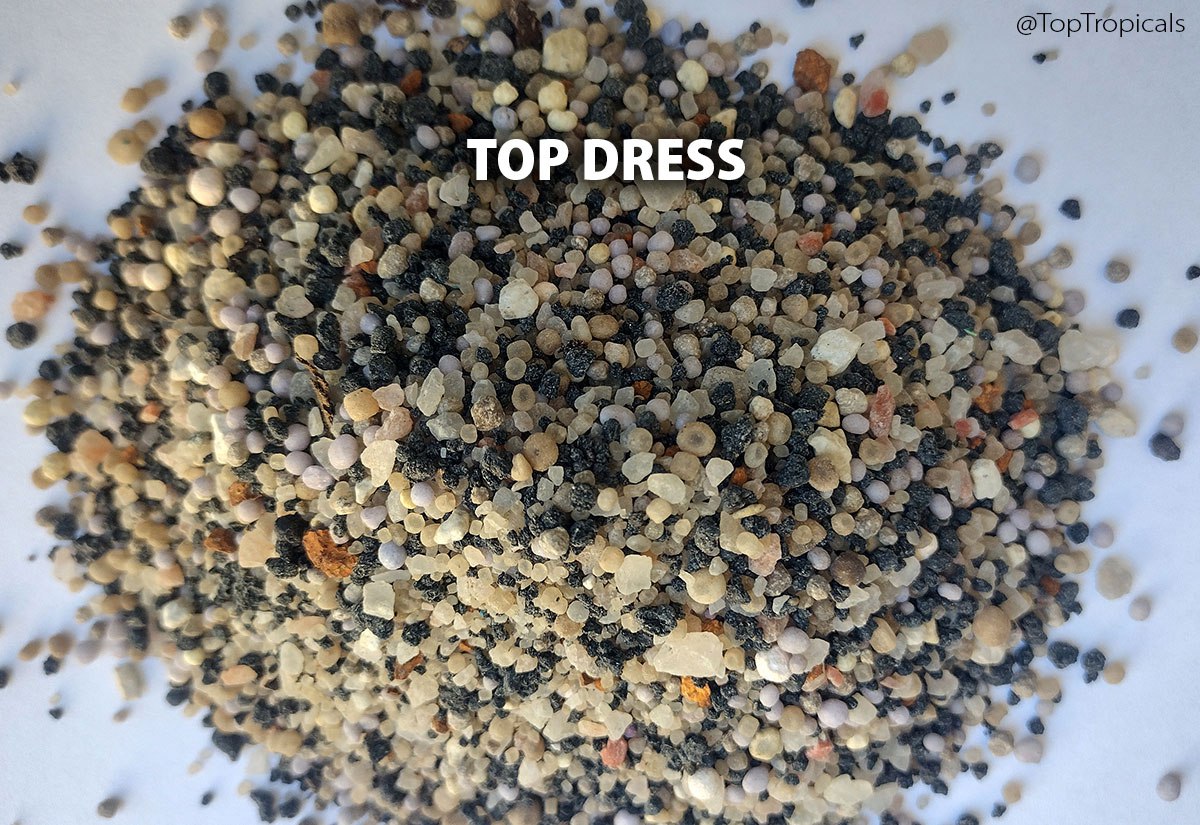
- ✔️ A: Top Dress Slow Release Fertilizer is used for quick greening-up. Although it’s called “slow release,” the nutrients become available fairly fast. It contains soluble nitrogen (N), phosphorus (P), and potassium (K) that dissolve with rain or irrigation, acting within a week or a few weeks depending on temperature and rainfall. It’s great for giving your plants a quick boost of “fast food.” We use Top Dress mainly for in-ground plants. It can be used in pots only during warm weather and active growth, but not in cooler months, as it may burn roots. Since we introduced Green Magic, we mostly use Top Dress only for garden beds and landscapes.
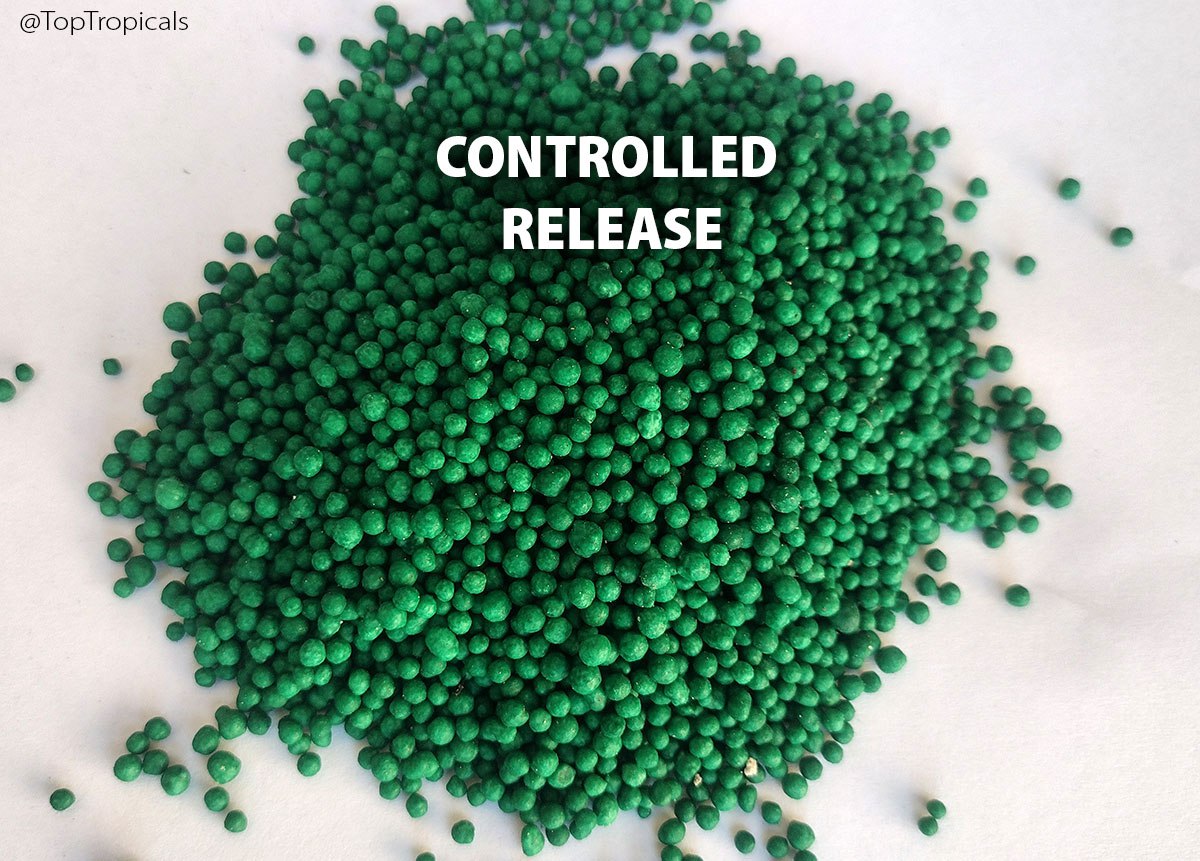
- ✔️ Green Magic Controlled Release Fertilizer is a true long-term, controlled-release fertilizer. Thanks to its PolyOn Technology coating, it provides steady, consistent feeding for 5-6 months. Unlike regular dry fertilizers that dump all nutrients at once, Green Magic releases them gradually - no burn, no guesswork, just steady nutrition.
🛒 Shop Plant Food & More
📚 Learn more:
- Green Magic effect: before and after
- The SECRET growers never tell you: simple trick how to bring plants back to life and keep green
- Give your plants their magic treat
- How to make plants green quickly: Green Magic - the fertilizer that truly works like magic!
- How to to make leaves green
- What Fertilizer to Use Now and How? Part 1, Part 2, Part 3
- Why my plant turned yellow and why plants need Micronutrients?
- Why Should I Use Sunshine Boosters
- Why is my palm tree turning yellow?
- Which fertilizer to use: Organic or Inorganic?
- How to make plants green
- The Truth about fertilizers
#Fertilizers #How_to
🟢 Join 👉 TopTropicals
Date: 24 Aug 2016
More useful information on Grow Lights!
By Michael Aiton, FL: When I was taking classes at Palm Beach State College for my AA degree in Horticulture, what we used in the lab for 'grow lights' was a combination of incandescent and florescent lights to get the full spectrum of red/blue/green light. I saw it as a tried and true method, and cheaper than going out and buying 'grow lights', although they are making incandescent lights harder and harder to get anymore...
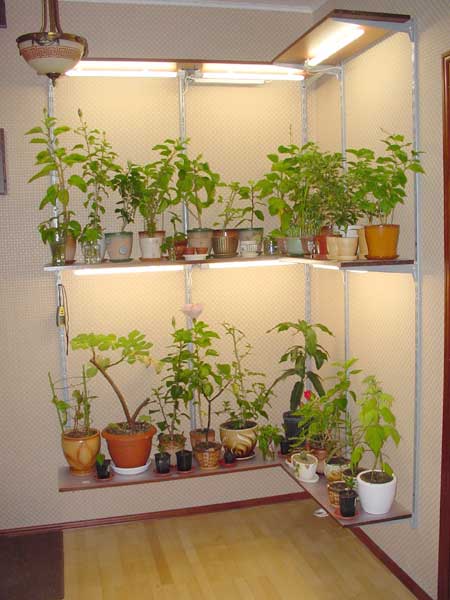
Fluorescent lights are by far the most economical and easy choice for houseplants. They come in tubes or compact bulbs (CFL) that screw into regular lamp sockets, and they're cool enough to put close to plant foliage. Generic fluorescent tubes and bulbs are higher in blue wavelengths, so look for “full-spectrum†or include a mix of "cool" and "warm" bulbs. When in doubt, buy "cool white" products, since white light contains the full spectrum of wavelengths. For maximum effect, position fluorescents about a foot away from plant foliage.
Incandescent lights give off a lot of heat and should be placed farther away from plant foliage. Incandescent bulbs give off more red wavelengths, so they can be used to supplement fluorescent light and balance out the spectrum, especially if you're trying to encourage plants to bloom. If you want to mix the two, try using a ratio of about one-third incandescent and two-thirds fluorescent by wattage.