Date: 6 Dec 2025
🌿 Bring the Jungle Inside: Winter Survival Guide Part 2.Temperature. ❄️
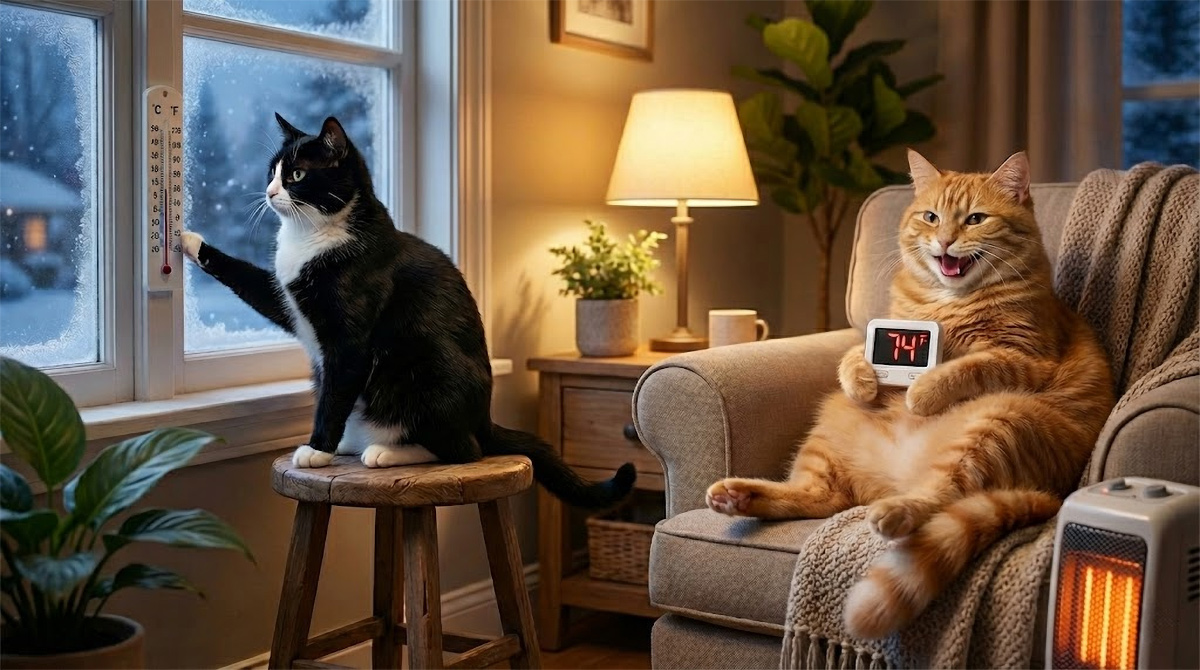
Smokey: Too cold. We need more heaters so the plants feel comfortable.
Sunshine: I feel comfortable.
Smokey: You are not part of my plant collection, but I am glad you are comfortable.
🌡️ TEMPERATURE: THE TROPICAL DORMANCY LINE
In Part 1 (Winter Survival Guide: Temperature) we covered the foundation: light, placement, and acclimation. That is the survival layer.
Most tropicals stop growing below 70 to 75 F. They stay green, but their engine shuts down.
Below 70F:
- Water intake drops.
- Roots slow down.
- Fertilizing becomes risky.
- Root root becomes easy.
If you WANT your plants to grow in winter, you must take care of everything: Warmth, light, humidity, water. It all works together.
- Aim for 75 F with bright light. Water lightly. No fertilizer.
- Watch out for drafts. Cold windows. Door blasts. Garage entryways. Even one gust can trigger leaf drop.
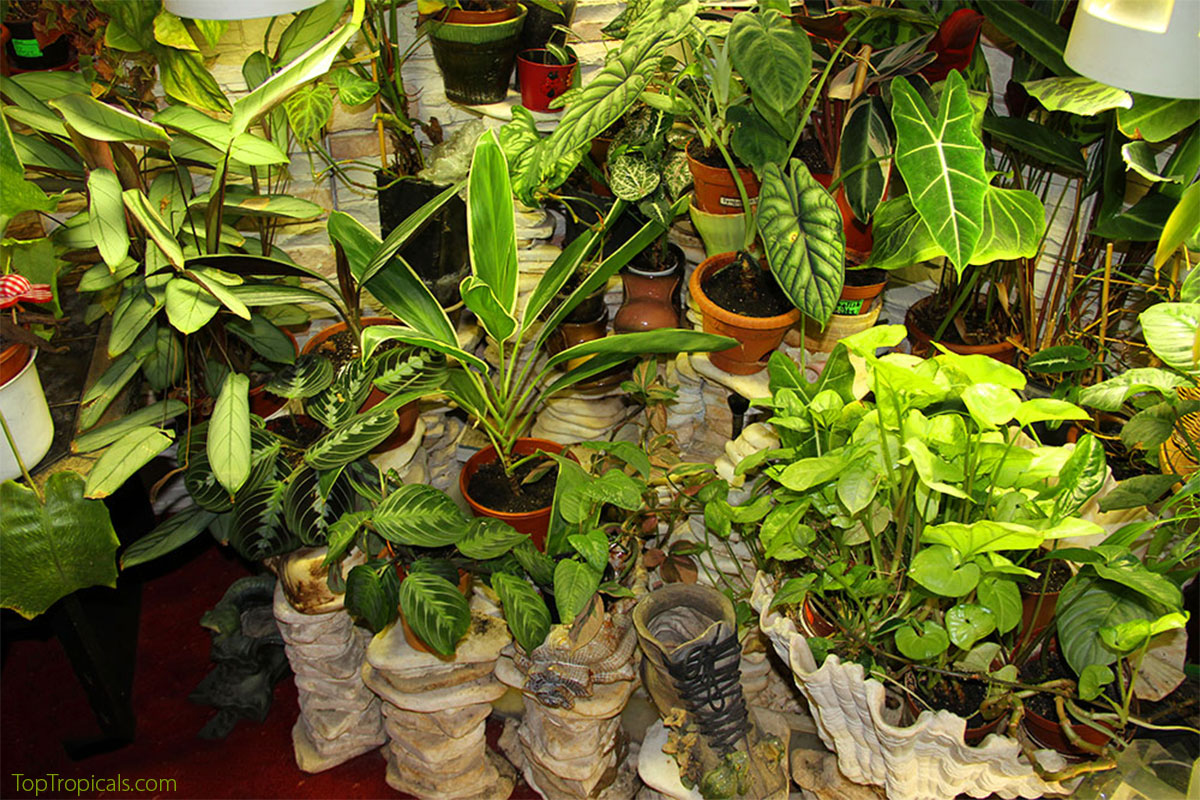
- Vents are the opposite problem: hot, dry, dusty air. That gives you crispy edges and mites. Root zone temperature matters just as much as room air. Your thermostat may say 72 F, but your pot on a tile floor may be sitting at 55 F. Fix this by elevating pots on boards or stands. Use Styrofoam. Never keep pots directly on cold tile o windowsill
- Extra winter heat: Space heaters are fine if used smartly. Do not blow hot air directly on plants. Keep heaters away from cords, trays, and water. Oil filled radiators are the safest option for plant rooms.
- Use a humidifier if you want growth or want to prevent spider mites. But do not blow mist directly onto leaves. Always place the unit lower than the plant canopy.
- Grouping helps. Put tropical plants close together to share humidity. Do not mix succulents with humidity lovers.
- Cats and dogs love to knock over lights and stands. Secure your fixtures. Trust us.
- Airflow: Light airflow is healthy. Direct fan blast is not. Still, dry corners invite mites.
- A mild night drop is OK. A big one below 55 F will stop growth completely.
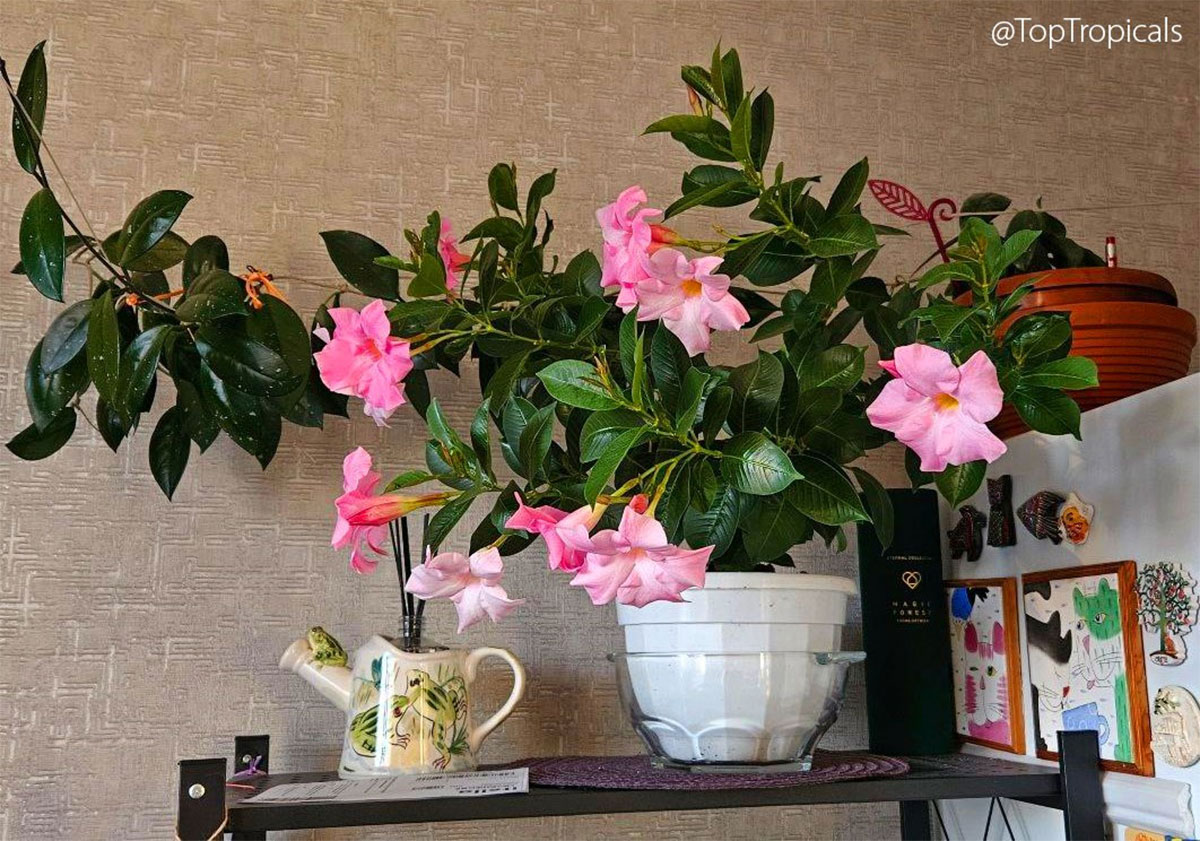
A mandevilla thriving indoors with bright pink blooms and glossy green leaves.
☂️ PLACEMENT: MICROCLIMATES RULE EVERYTHING
Indoors is one big tradeoff: light but cold near windows, warm but dim away from them. The winning combo is a warm room with supplemental light.
Best zones to keep plants in winter:
- South or east windows with additional light
- Warm living spaces
- Bright bathrooms for natural humidity
Worst zones to keep plants in winter:
- Behind curtains
- Directly on windowsills
- Near heaters or vents
- Against cold exterior walls
- Dark corners without supplemental lighting
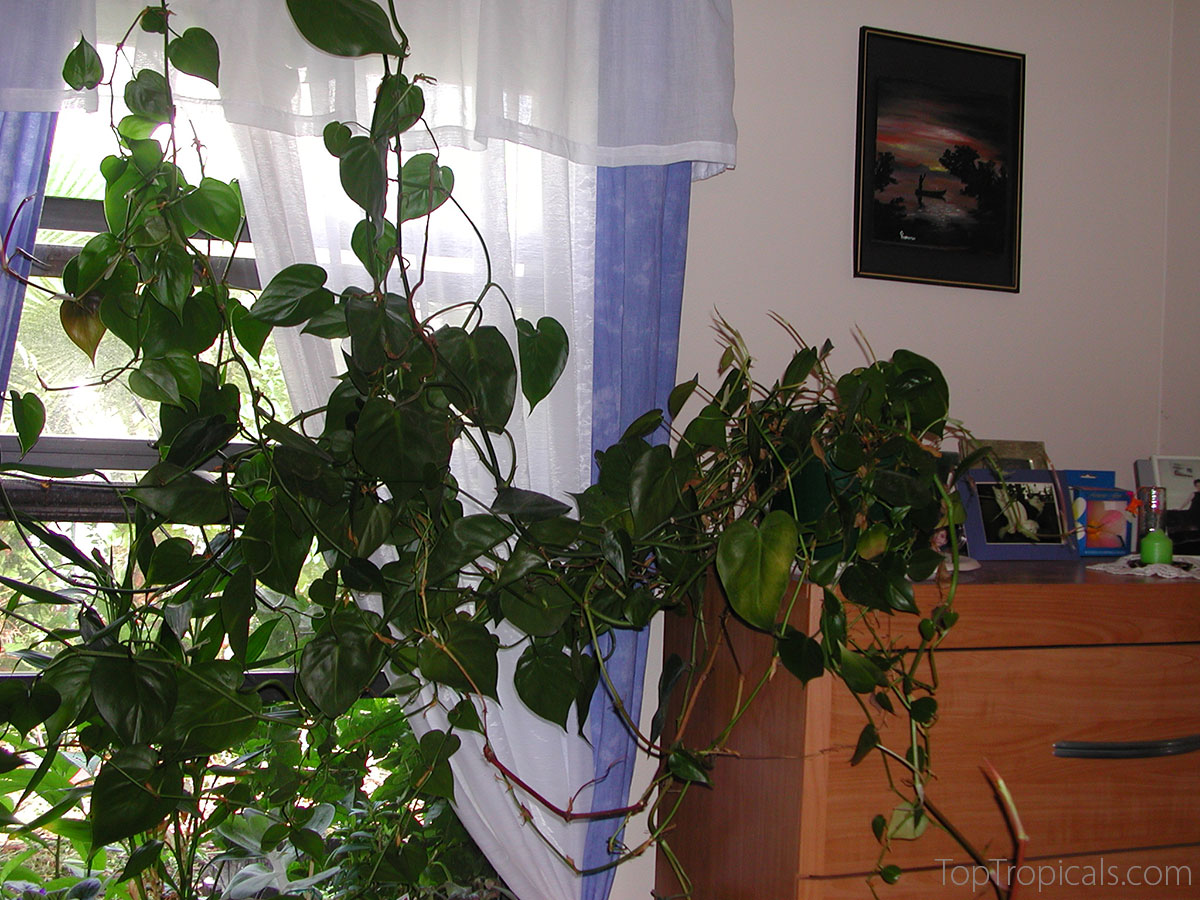
A vigorous indoor philodendron stretching across the window.
💨 ACCLIMATION
Moving a plant from outdoors to indoors is a shock. Light drops. Humidity drops. Airflow stops. Soil cools. Even healthy plants may drop some leaves for a few weeks. That is normal.
Before you bring them inside:
- Rinse foliage to remove dust and pests. We recommend Sunshine NoBug - and organic, safe solution.
- Check for ants.
- Trim weak branches.
- Treat soil if fungus gnats are present.
Try to bring plants inside before the first cold front, not after. If you are reading this too late, do the prep now and expect a little leaf drop.
If you nail light and temperature, winter becomes simple. In the next mail-list we will cover watering, fertilizer timing, humidity, and other indoor tricks that keep tropicals happy till spring. Stay tuned.
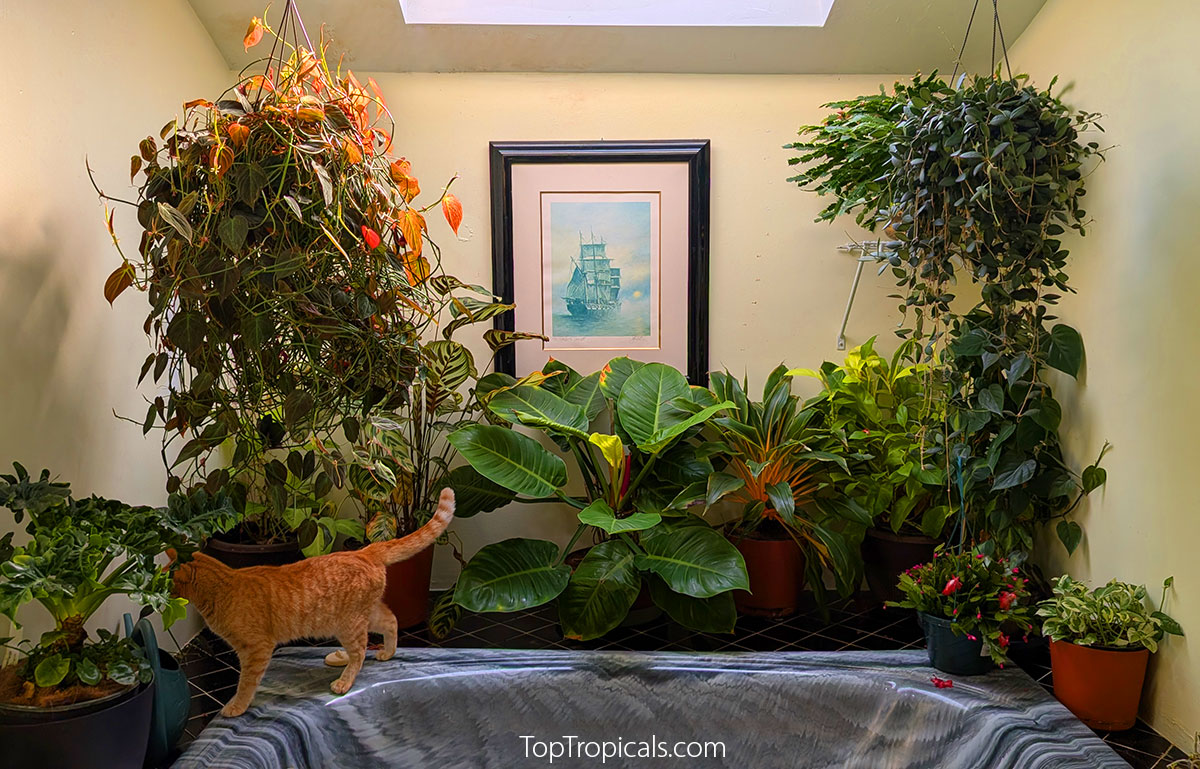
Cat Bob is inspecting his indoor garden around the tub with a bright skylight
✔️ WINTER INDOOR FAQ: TEMPERATURE AND PLACEMENT
Q: Why are leaves dropping only on the window side?
A: Cold glass. The room may be warm, but the glass surface can be much colder.
Q: Is a cold room OK for tropicals?
A: They may survive, but they will not grow below about 65F to 75F. When nights stay below 65F for a week, many plants enter dormancy.
Q: My room feels warm. Why is my plant still not growing?
A: Check the soil temperature. Pots on cold tile can be 10 to 20F colder than the air.
Q: Can plants sit directly on the floor?
A: Not on cold tile. Always elevate them on boards, stands, or trays.
Q: Is it OK to keep plants near a heater or vent?
A: No. Vents and heaters blast hot, dry air and cause crispy leaves and mites.
Q: My plant is dropping leaves after coming indoors. Why?
A: Normal acclimation to reduced light and humidity right after the move.
Q: Can I keep plants in a bright bathroom?
A: Yes. Bathrooms can have good humidity. Just keep pots off cold tile.
Q: Do I need a humidifier?
A: Not for survival. Yes if you want better growth and fewer pests like spider mites.
Q: Do I need a grow tent?
A: No. A bright LED plus a warm room is enough for winter holding.
Q: Should I fertilize in winter?
A: Not now. Winter fertilizer rules will be covered in the next mail-list.
Q: Should I water the same as in summer?
A: No. Indoor plants need much less water in winter. Watering rules also coming soon.
📚 Learn more:
- Bring the Jungle Inside: Winter Survival Guide Part 1: Lighting
- SUNSHINE NoBug - Natural Plant Protector
- How to overwinter tropical plants indoors
- Feeding indoor plants
- Overwintering Adeniums outside of tropics
Date: 6 Dec 2025
🌿 Bring the Jungle Inside: Winter Survival Guide Part 1: Lighting ❄️

Smokey: "Winter lighting must be precise. I need this light exactly at 14
inches."
Sunshine: "Sure. I am holding this… little number thing."
Smokey: "It reads humidity. Your main job is to look cute."
🌞 LIGHT, TEMPERATURE, PLACEMENT
Winter indoors is a different kind of battlefield. Dark rooms. Dry air. Cold windows. Random drafts. Weak light. Sad plants. We've been talking about keeping your tropicals alive outdoors previously. But some of you have no choice this time of year. You have to bring the jungle inside.
If that is you, then this is your plant survival guide.
☀️ LIGHT: THE WINTER LIFELINE
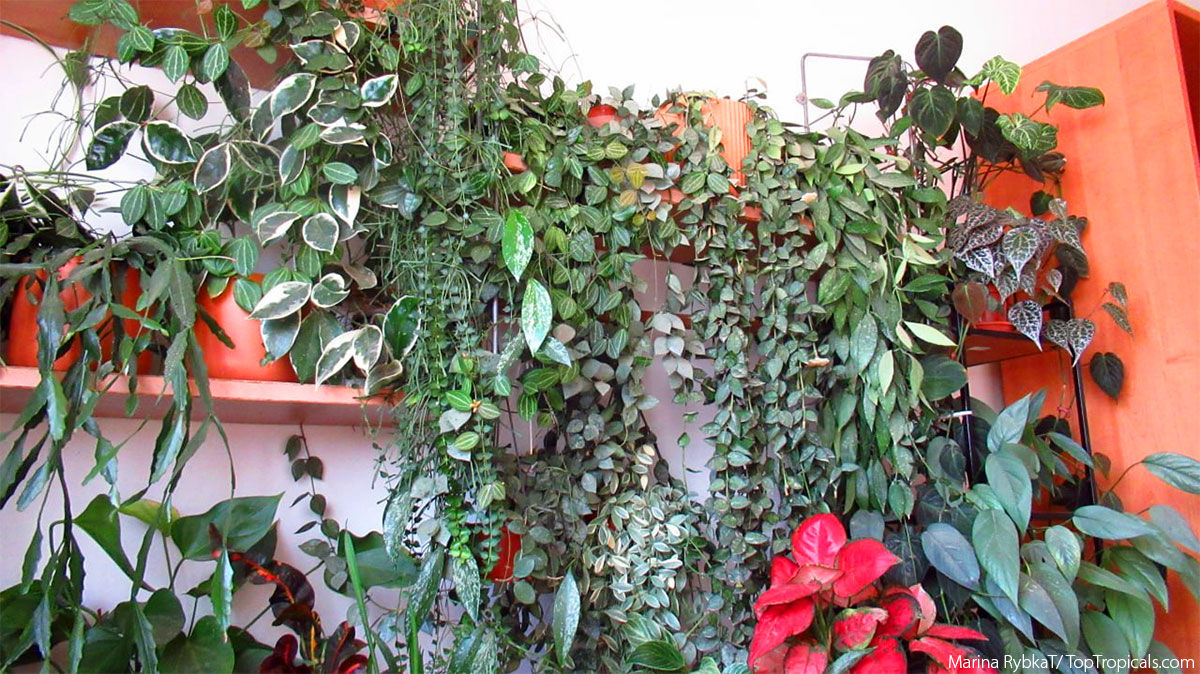
Light advice here comes straight from our in-house expert, Michael Dubinovsky, a high-tech lighting engineer with over 30 years of hands-on experience. If he says brightness beats hours, trust him.
Here is the truth: Indoor light in winter is 10 to 50 times weaker than outdoors. Short days. Low-angle sun. Windows filtering half the useful light. It all adds up.
Tropicals need 10 to 12 hours of real brightness. Winter sun cannot do that on its own. Not even in a big window. So we help them.
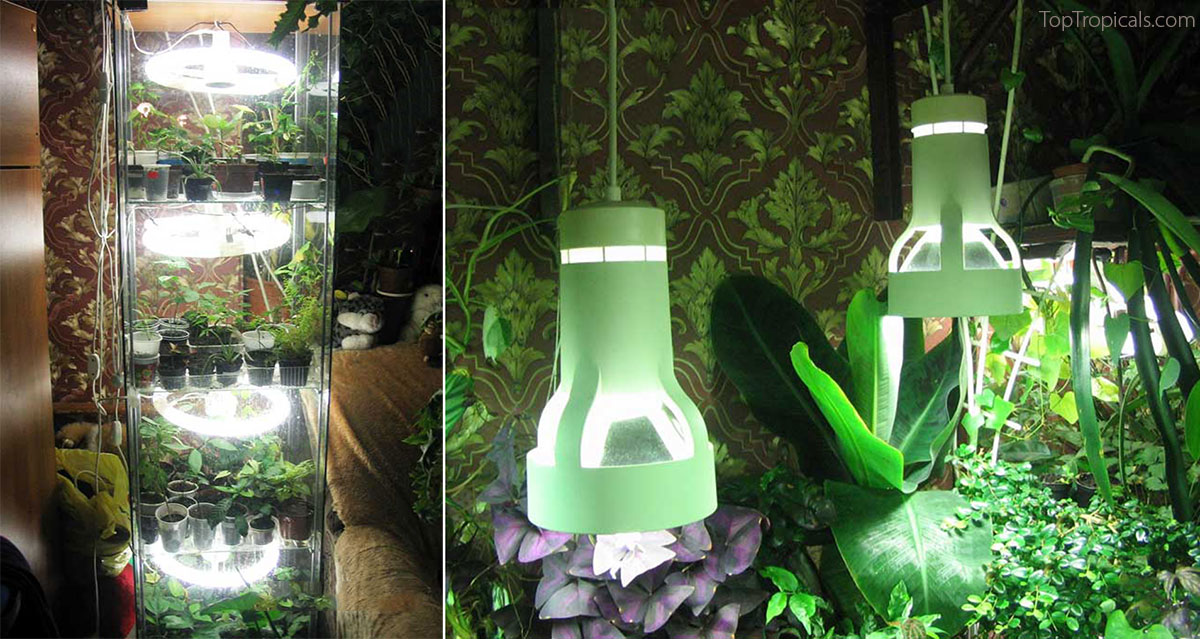
Use bright LED shop lights or utility lights. 5000K to 6500K CCT. High lumen output. Skip decorative bulbs. Skip purple grow fancy toy lights. If you want a single plant light, even a clamp lamp is fine if you screw in a bright daylight LED bulb.
Panels work best for plant clusters. Bars for shelves. Bulbs for single plants. And grouping plants under one bright panel always beats spreading them out.
Distance matters: keep LEDs about 12 to 18 inches above the leaves. Too close: leaf burn. Too far: stretching, weak stems.
Leaves reaching up? Light is too high or too weak. Leaves curling down? Light is too close.
If you want a reality check, download any smartphone lux meter app. Most indoor corners are 50 to 200 lux without supplemental light. Tropicals want much more
And a quick tip about windows: winter sun comes in sideways. A spot that looks bright at noon can go dull by 2 PM. Don't count of window light
Bright light or long hours
People try to fix weak light by running it for 16 or 18 hours. That does not work. Plants care more about light intensity. A few hours of strong light beats all-day dim light. If the light is weak, adding more hours will not change anything except your electric bill.
Simple rule: Short duration but bright is always better than long duration but weak. - by Michael, Top Tropicals lighting expert
No need for fancy horticultural panels
You do not need purple grow lights. You do not need special horticultural fixtures. You do not need expensive panels unless you want real winter growth.
For winter plant holding till spring, the inexpensive solution works great:
- Bright LED daylight bulbs (5000K to 6500K) from hardware store
- High lumen output
- Inexpensive clamp lamps
- Aim directly at the plant from 12 to 18 inches
This setup keeps tropicals happy until spring without buying anything fancy. Save the money for soil, pots, or your next plant.
Indoor plant lighting safety note:
- Use timers. Keep cords dry. Do not overload outlets.
- Do not hang lights over humidifiers.
- And do not put fixtures on piles of books to raise them. People do this.
✔️ WINTER INDOOR FAQ: TEMPERATURE AND PLACEMENT
Q: I am in Home Depot. Which light do I buy?
A: LED shop light, daylight color (5000K to 6500K), high lumens. Skip fancy plant bulbs.
Q: Can I use clamp lamps or floor lamps for plants?
A: Yes. Clamp lamps with a bright daylight LED bulb work great for winter holding.
Q: Do I need special horticultural grow lights?
A: No. A bright LED daylight bulb works fine for winter. Save the fancy lights for real growth projects.
Q: How far should the light be from the plant?
A: About 12 to 18 inches above the leaves. Too close burns. Too far stretches.
Q: Can I run weak lights for 18 hours to compensate?
A: No. Weak light plus long hours still equals a weak plant. Brightness matters more than hours.
Q: How do I know if a spot is bright enough?
A: Use a free phone lux app. Most indoor corners are much too dim for tropicals.
Q: I have a huge window. Why do I still need LEDs?
A: Indoor winter light is weak, short, and filtered by glass. Plants want intensity, not just a big window.
Q: My window faces north. Now what?
A: North windows are decorative only. Use supplemental lighting or move the plant.
📚 Learn more:
Date: 27 Nov 2025
🎃 Thanksgiving Weekend Deal
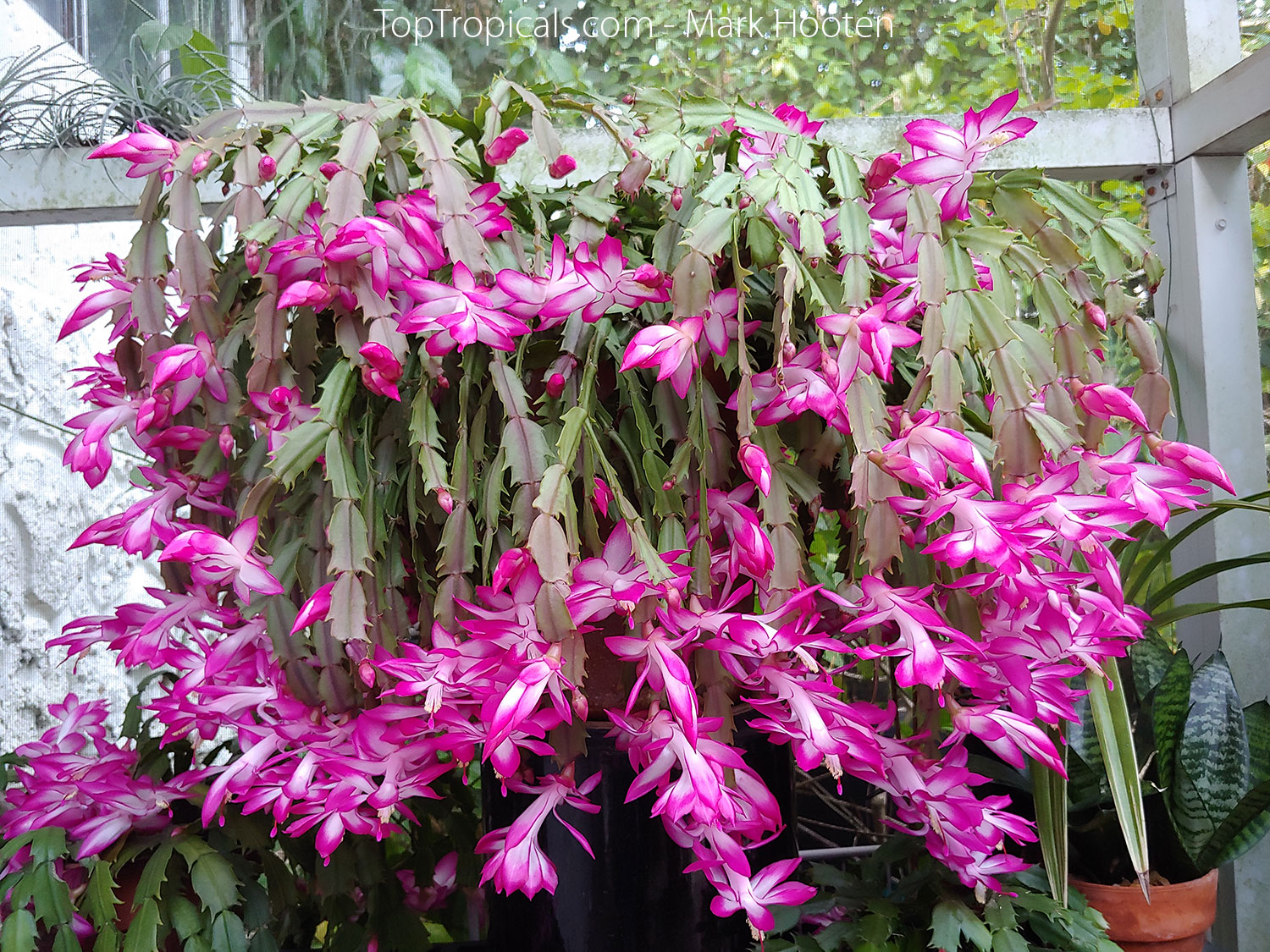
Photo above: A long-blooming holiday classic, Schlumbergera New Deal, an heirloom Thanksgiving-to-Christmas cactus with cascades of oversized pink flowers. Blooms from Thanksgiving through Easter!
As our way of saying thank you for growing with us all year long, here is your exclusive holiday code. Use it for 15% off any order over $100 (excluding shipping and handling):
THANKS2025
Ends November 30th, 2025 (Sunday) at midnight.
Min order $100 (exculuding S/H).
One use per customer.
Cannot be combined with other discounts.
Cannot be applied to previous orders.
Check out our specials below - hand-picked by our horticulturist for size, beauty, and vigor! These are the biggest, fullest plants you'll see all year! Take advantage of this Holiday discount code and get them now at their best and fullest point!

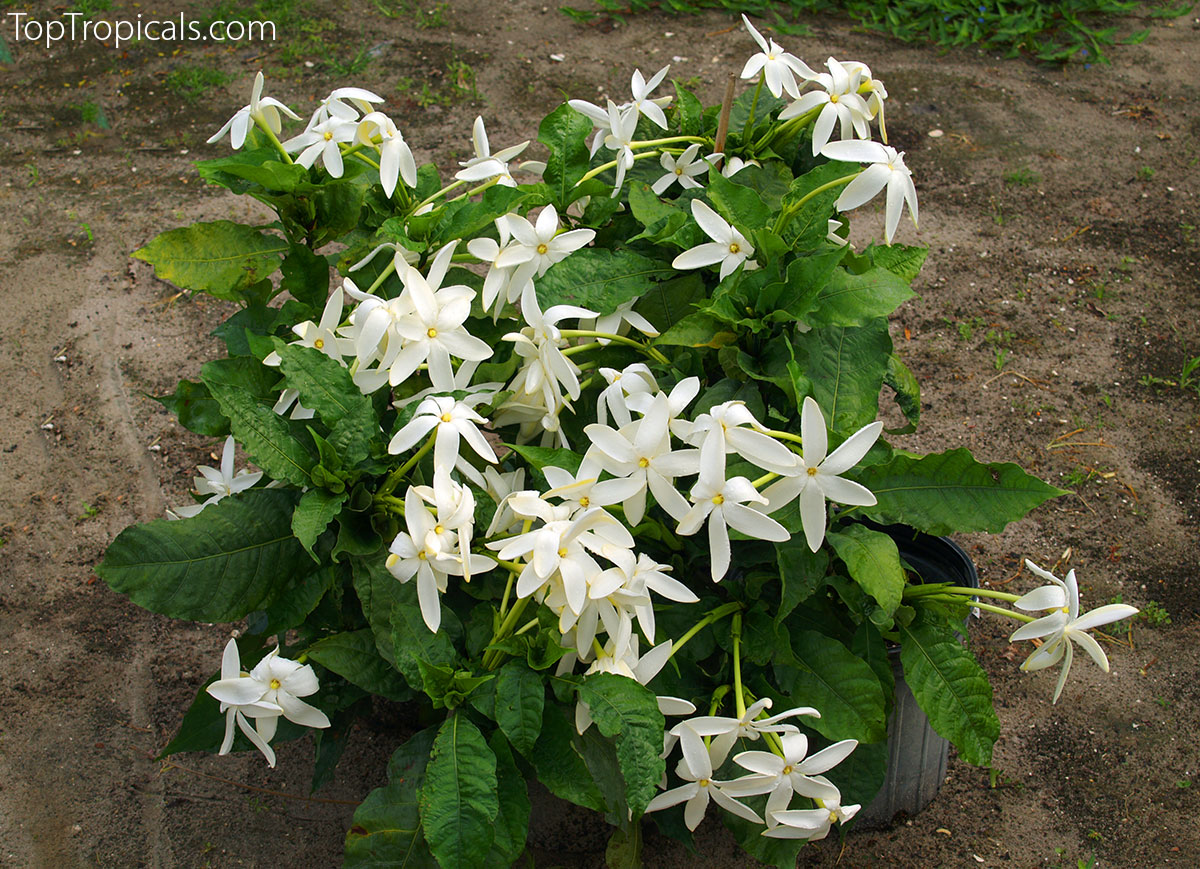
Gloxinia sylvatica - Bolivian Sunset. A perfect fall-winter standout: it bursts with glowing blooms and makes a great holiday gift as a flowering start.
Date: 27 Nov 2025
Happy Thanksgiving from all of us at Top Tropicals!
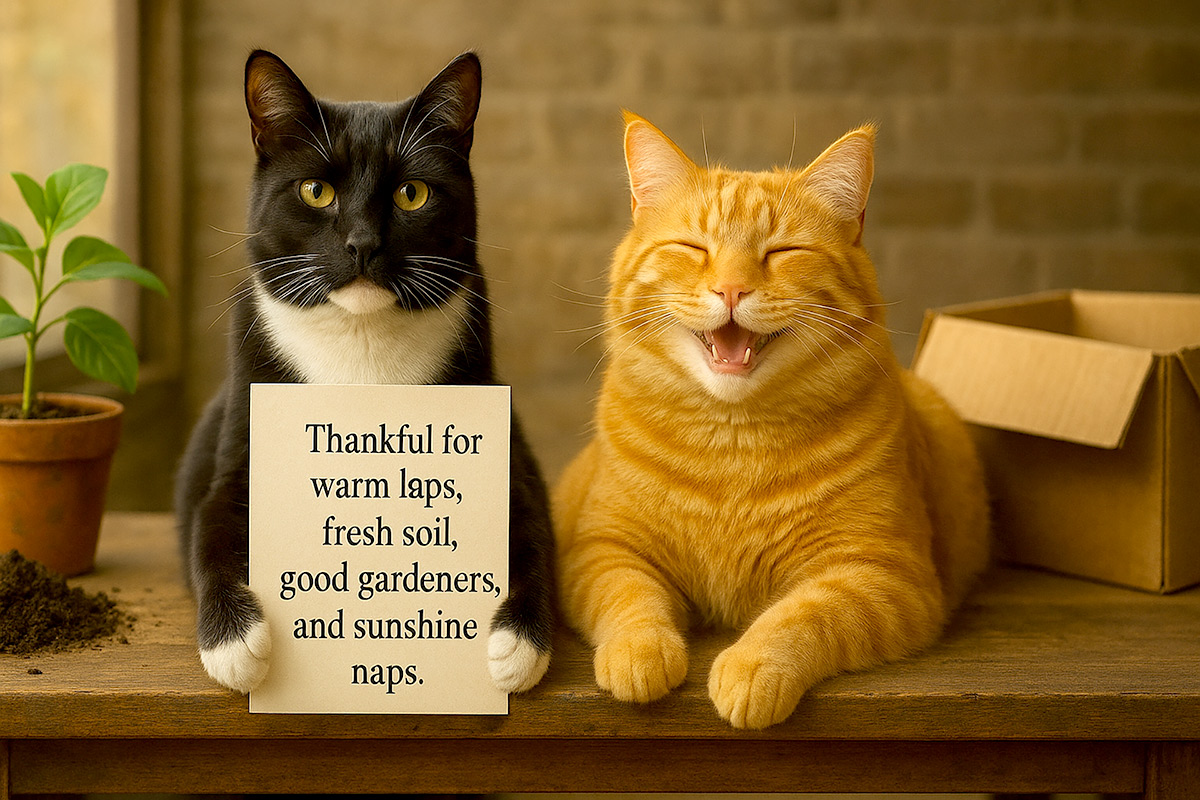
Smokey: "We made a list of everything we are thankful for this year."
Sunshine: "I helped. Mostly by napping next to it."
Smokey: "And that is exactly why sunshine naps are on the list."
Smokey and Sunshine wanted to share a short Gardener Thanksgiving Message about what they are thankful for this year:
"We are thankful for warm laps during cold mornings.
Thankful for every gardener who stopped to scratch our heads between loading
carts.
Thankful for the smell of fresh soil, new plants, and boxes that make
perfect cat forts.
Thankful for mango season (even though humans never let us eat the
fruit).
Thankful for sunshine naps on potting tables and shade naps under
benches.
Thankful for all the tiny moments when gardens and people slow down
together.
And thankful that we get to share this tropical adventure with you."
From the whole Top Tropicals Team and PeopleCats, we wish you a warm, peaceful, plant-filled Thanksgiving 🙏 ♥️
Date: 23 Nov 2025
🏡 To Use Your Garden Or Be Used By It

Smokey and Sunshine November Planting.
Smokey: Winter roots make spring easy. Keep that plant straight.
Sunshine: I am keeping it straight by not touching it at all.
Smokey: That is exactly what I was afraid of.
November is the month when the garden finally stops yelling at you. The heat backs off, the bugs calm down, and the weeds take a breath. This is when we get to take control again. And as gardeners, we know the truth: Either you use your garden, or your garden will use you in spring. Let me walk you through this, gardener to gardener.
"November is when the garden finally listens. Give it a little direction now, shape it, guide it, and prepare it for spring. It will reward you all year." - Tatiana Anderson, Top Tropicals Plant Expert
🌴 When The Garden Uses You
We have all lived this scene:
- March weeds appear, and two days later it looks like a jungle.
- One missed watering turns into five wilted plants and a full week of recovery.
- A skipped feeding shows up as yellow leaves and panic searching online.
- Bugs return fast, and suddenly you are washing leaves every other day.
- Random plant purchases fill your yard with chaos and mismatched care needs.
- When the garden takes control, spring feels like hard work, not joy.
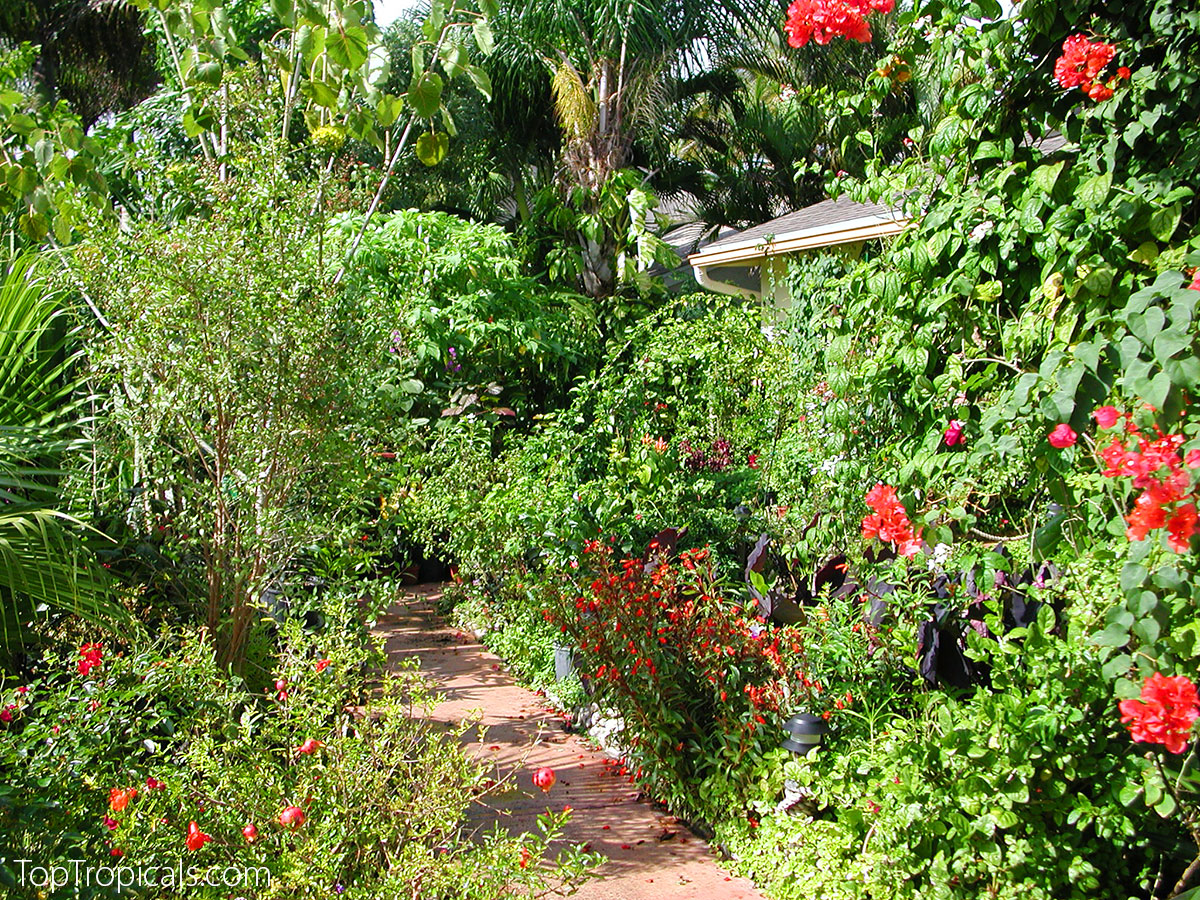
Overgrown Tropical Garden Showing How a Garden Can Use You
📊 When You Use Your Garden
November flips the script. Plants slow down. Soil stays warm. This is the safest month to experiment, move plants, fix mistakes, and redesign.
What you do now pays off huge in March.
- You map out sun zones and shade zones.
- You mulch now so weeds do not explode later.
- You move plants to better positions without heat stress.
- You remove the high-drama plants before they start another season of complaints.
- You pick what you want for next year instead of letting impulse buys rule you.
Spring becomes smooth instead of overwhelming. And honestly? It feels good to walk outside in March and see order instead of chaos.

In the photo: Every garden starts in small steps. Biquinho Pepper (front) in the garden.
What Benefit Do You Get Personally?
- Less watering.
- Fewer bugs.
- Bigger fruit.
- Better flowering.
- Less money wasted.
- Less time fixing problems you could have prevented now.
This is why experienced tropical gardeners adore November.

In the photo: Organized Tropical Garden. Firebush (lemon gold variety) and Cordylines (Ti Leaf) make colorful spots in the garden.
🐭 Start With Something Small Today (5 Minutes)
Pick one:
- Add mulch to the driest spot in your yard.
- Cut one dead branch from any tree.
- Move one pot to a better sun angle.
- Pull three weeds from the worst area.
- Water deeply once this week.
Small steps now save hours later.
⭐ One Short Story
Last year we planted a Star Fruit in November. By March, it was already covered in flowers, and have been harvesting fruit non-stop since then! That is what winter planning does: it gives plants a head start you can actually see.

🐍 Plants That Will Use You If You Let Them
These are great plants, but only if you plan before planting them:
- Banana (thirsty)
- Hibiscus (hungry)
- Brugmansia (sensitive)
- Passion vine (takes over anything it touches)
Place them wrong, and they become full-time jobs.

In the photo: Passion Vine taking over the swing.
🐰 Plants That Work For You
These feel like free upgrades to the yard:
- Moringa - grows almost on autopilot
- Star Fruit - continuous production
- Dragon Fruit - minimal effort for big results
- Cattley Guava - cold hardy, compact and fruitful
- Loquat - fast fruiting and hardy
- Mulberry - very cold hardy with fruit abundance
- Tabebuia - spectacular winter colors
- Brunfelsia - reliable night fragrance in shade
- Adenium - perfect container showstopper
- Jasmine - instant fragrance
- Mexican Flame Vine - fast growing yet controllable vine
- Wiri Wiri and Biquinho Peppers - always available for your kitchen
- Firebush, Hamelia - everblooming and hardy butterfly native
- Cordyline Ti Leaf - instant leaf colors
- Megaskepasma Brazilian plume - lush tropical foliage with red blooms in shade or sun
- Iris - hardy easy low-growing native for any soil
- Champaka, Joy Perfume Tree - legendary perfume tree that blooms almost year round
- Olive tree - maintenance-free source of olives
- Plumeria - instant Hawaiian perfume flowers all summer
- Dombeya - spectacular hydrangea-like blooms all winter
- Insulin Ginger - instant nature remedy
- Eugenia Cherries and Barbados Cherry - immediate fruit, compact trees for small gardens or pots
- Peanut Butter tree - exotic sweet fruit like peanut butter, compact tree
- Blackberry Jam fruit - exotic fruit like blackberry jam, very small tree
- Colocasia - instant tropical look with Elephant ears
- Strawberry tree - sweet cotton-candy fruit year around
- Papaya - fits any yard, delicious fruit and natural digestive remedy
Pick even one of these and your garden starts giving back.

In the photo: Cattley Guava brings not only tasty fruit but also a wonderful character with its amazing multi-color twisted trunk.
🌡️ November Advantage
You cannot ruin anything in November. This is the safest, calmest month to shape your garden the way you want. If you act now, spring becomes a victory lap. If you wait, spring becomes a rescue mission.

In the photo: Adenium is a colorful accent in the garden.
💐 Thanksgiving Tie-In
This is the season to reset, breathe, and be thankful for your outdoor space. A garden that works for you is one of the best gifts you can give yourself going into the new year.
Start your November plan today. Use your garden. Do not let it use you.

In the photo: Megaskepasma, Iris, Colocasia, Crotons, Dracaena and Ti Leaf bring instant tropical look to your garden.