Orchids have a mystique that sets them apart — elegant, exotic,
almost unreal in their perfection. But let’s be honest, not everyone
has
luck with the fancy ones that cling to trees or need greenhouse tricks.
Ground orchids are different. They grow in regular garden soil, bloom in
sun or shade, and come in all sorts of shapes and colors. They’re the
orchids you don’t have to fuss over.
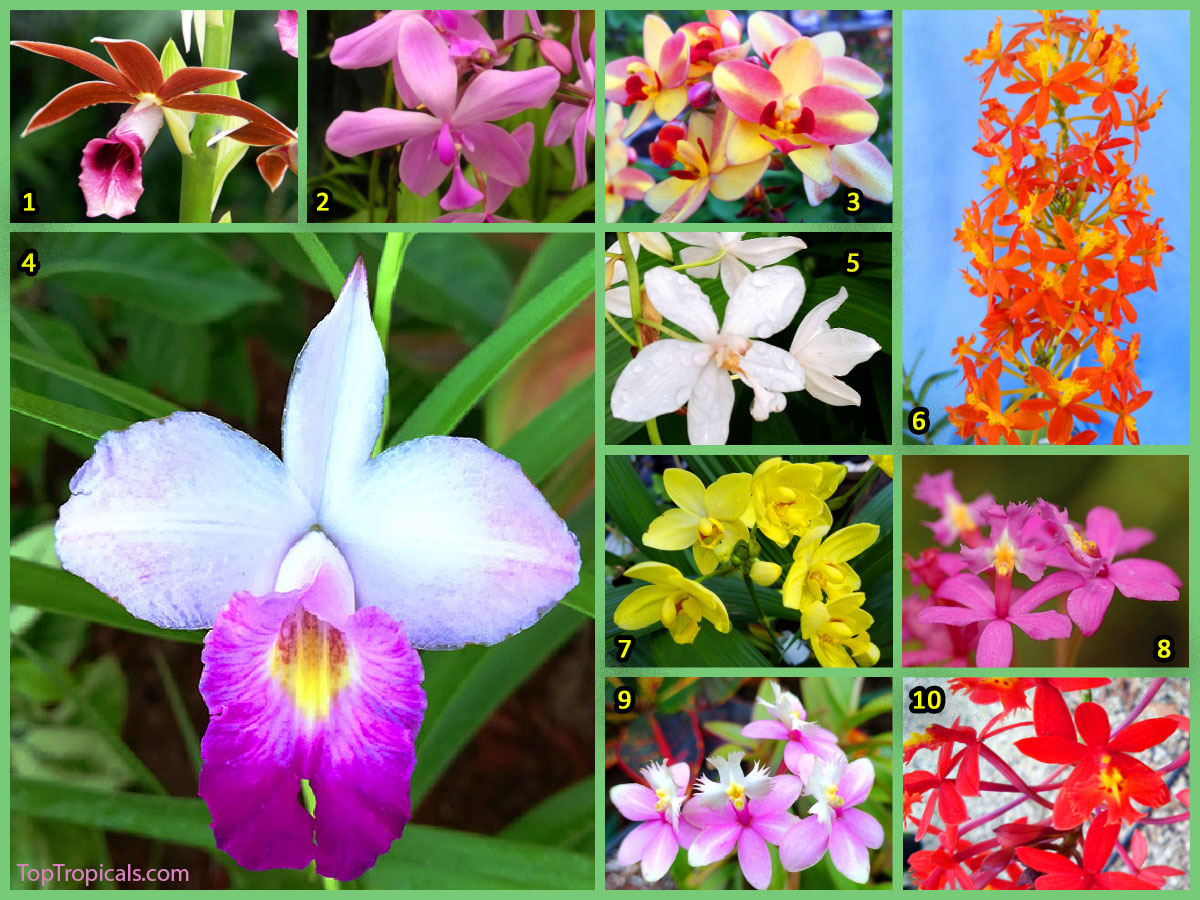
Nun Orchid
(Phaius tankervilleae) – Ever wonder why it’s called the
Nun
Orchid? The flowers really do look like the white veil and brown habit nuns
used to wear. The plants send up spikes 3–4 ft tall with 10–20
fragrant blooms that open one after another for weeks. I like them best
tucked
under trees where they just keep spreading year after year.
Spathoglottis – The nonstop bloomer – If you want flowers
that
just don’t quit, this one’s it. Spathoglottis clumps up and
throws
spikes of purple, pink, or yellow that last for weeks, then keep coming back
through the summer. In warm spots they’ll bloom almost year-round.
Honestly, it’s one of the easiest orchids you’ll ever grow.
💲
Special Offer – 20% off Ground Orchids!
Get 20% OFF ground orchids with code
ORCHID2025
Min order $100. Excluding S/H, valid online only,
cannot be combined with other offers.
The adenium colors everyone is talking about right now: Adenium rainbow
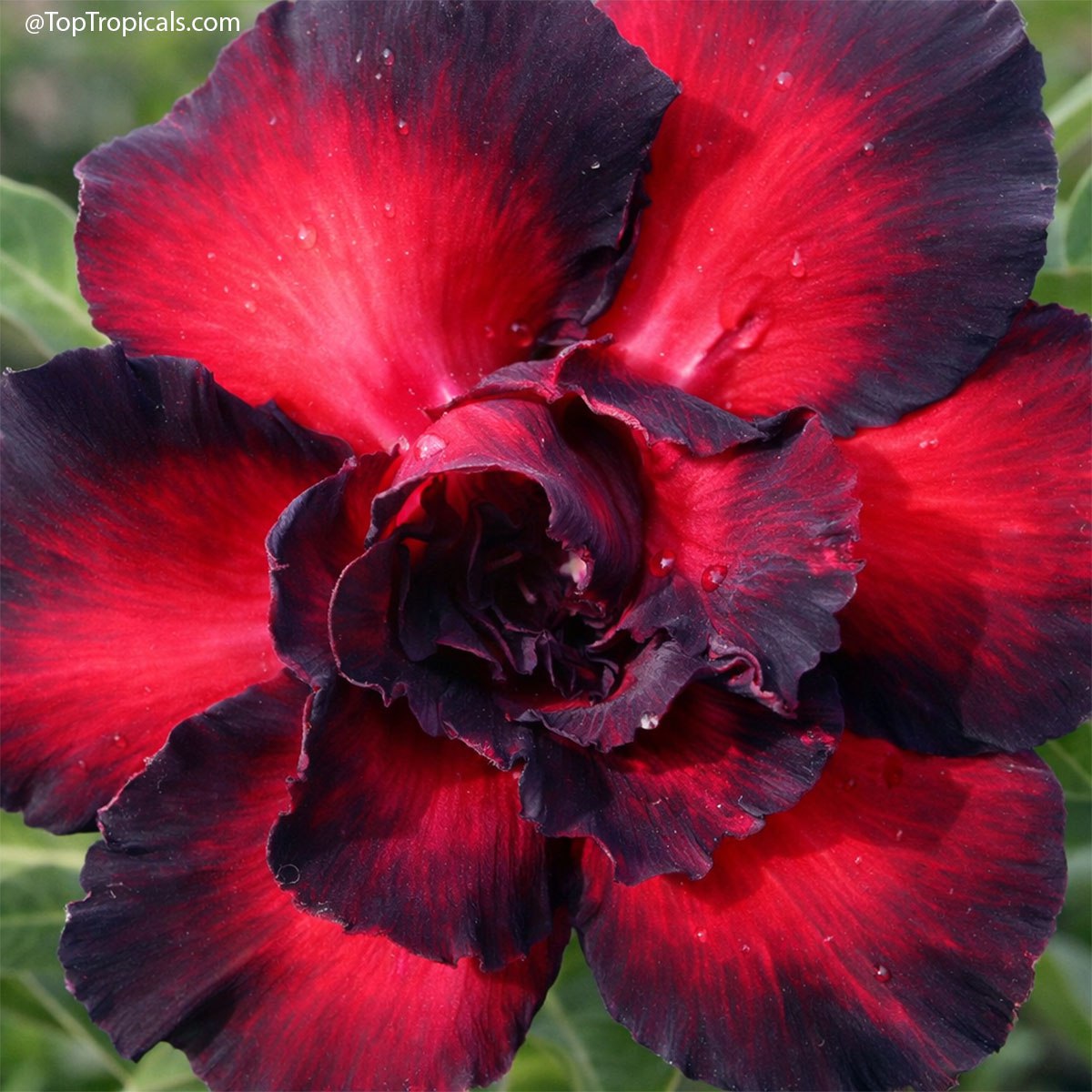
Adenium Black Rahu
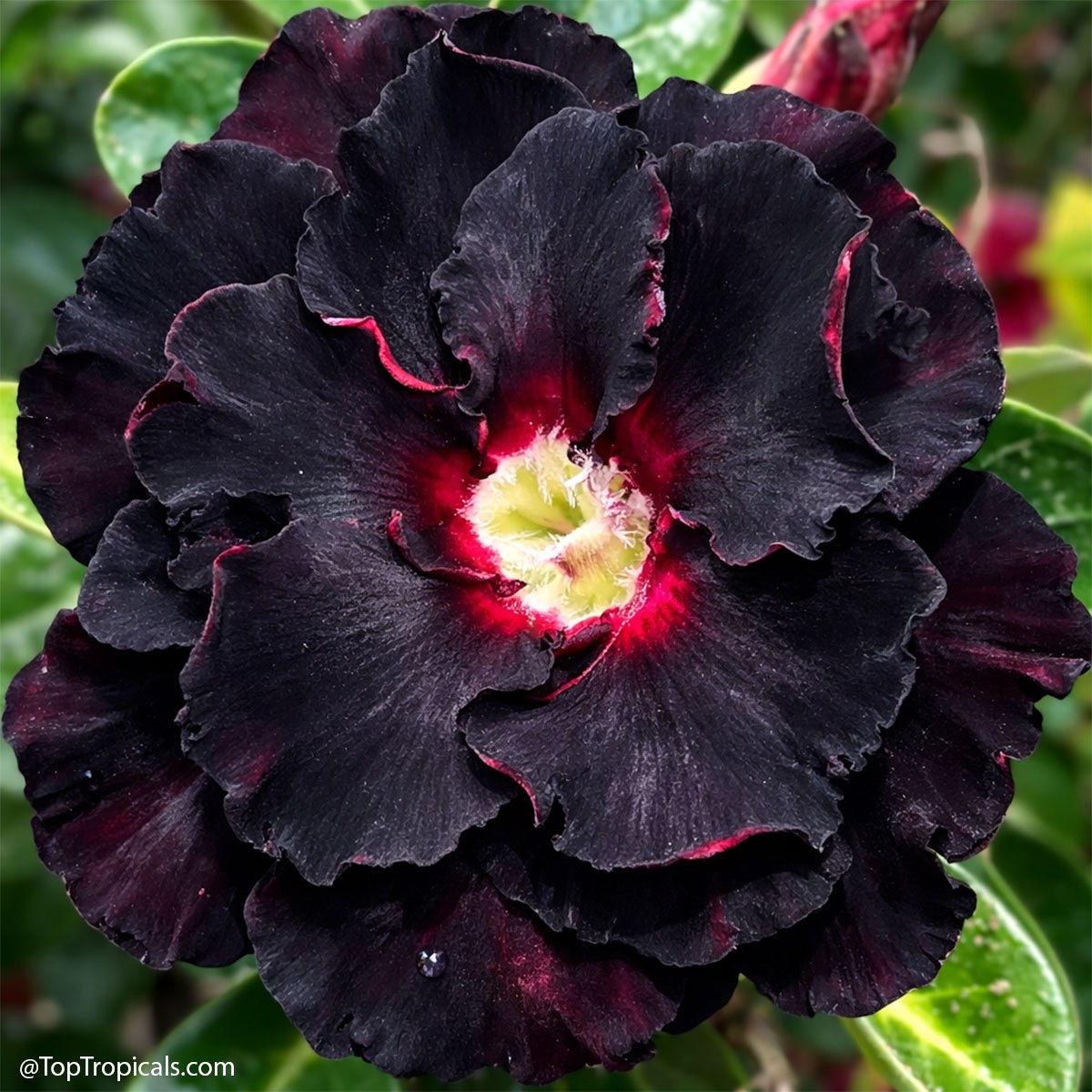
Adenium Black Swan
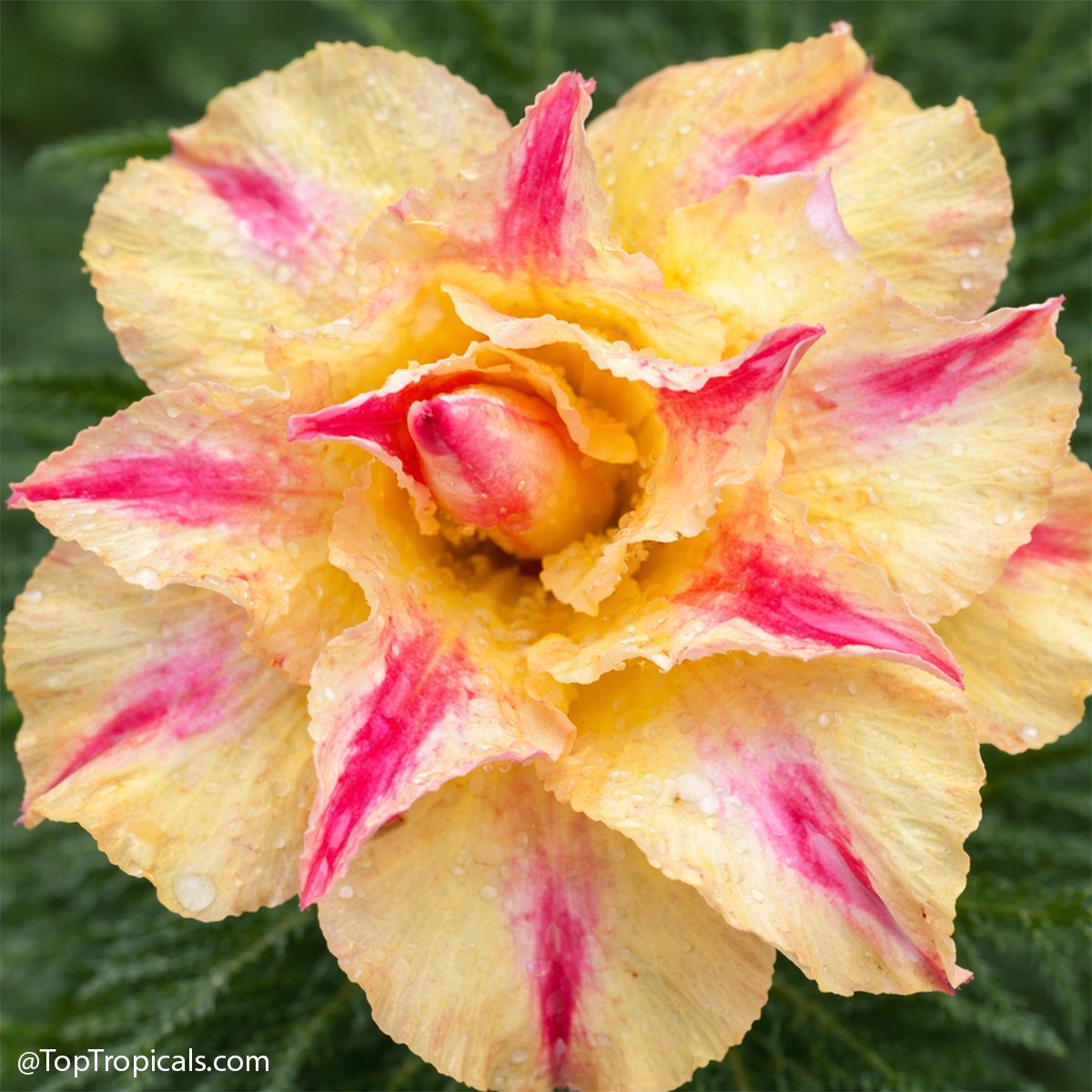
Adenium Carnation
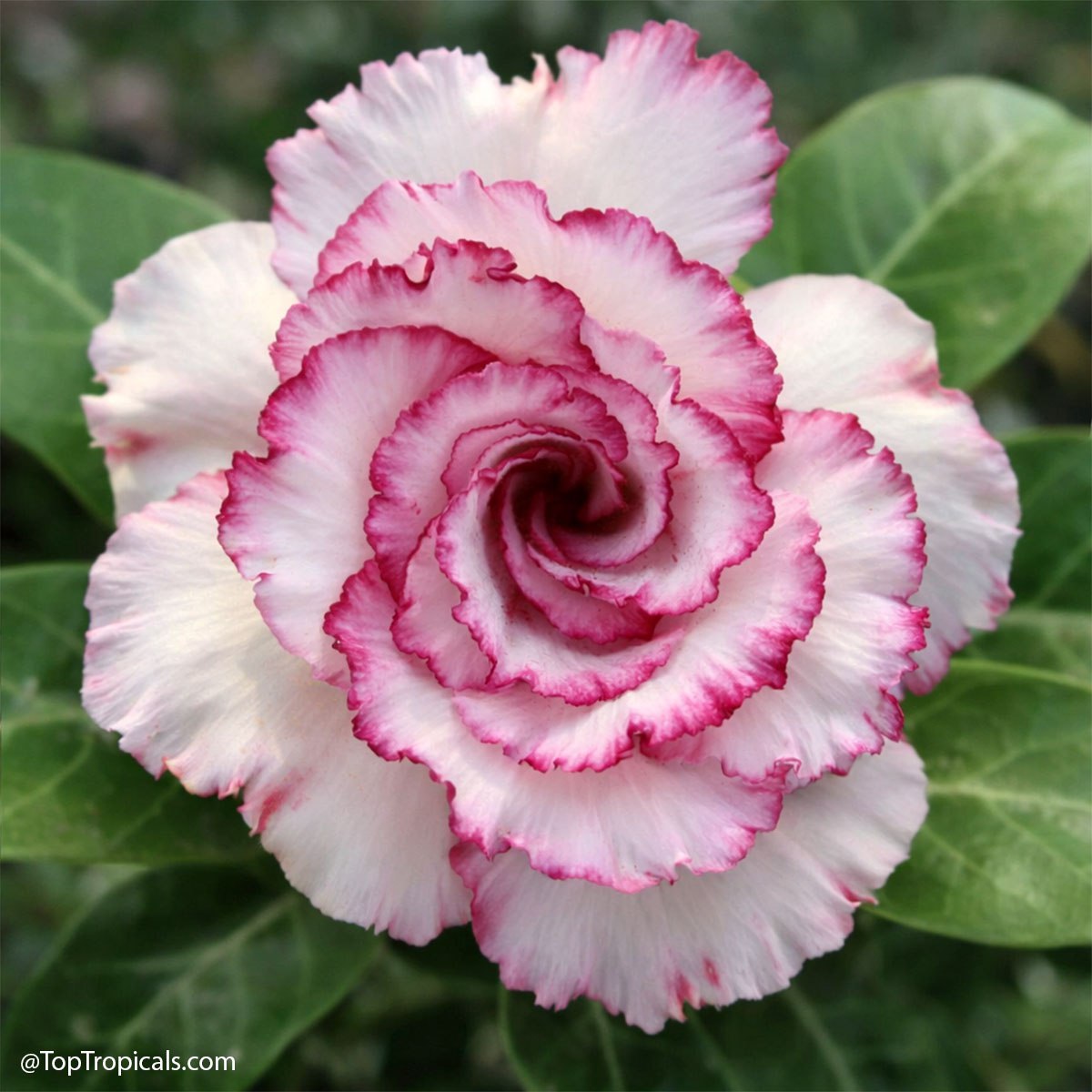
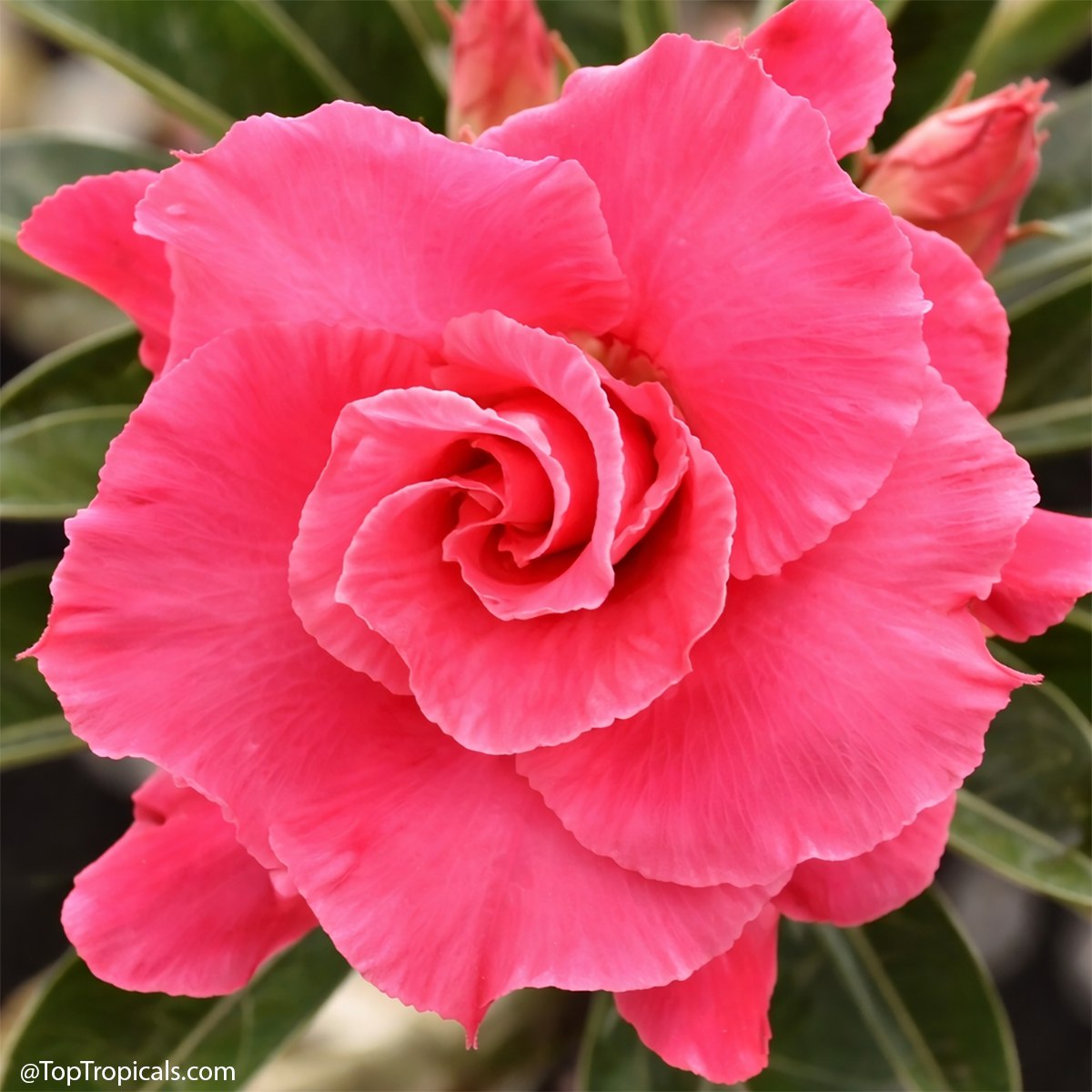
Adenium Camellia
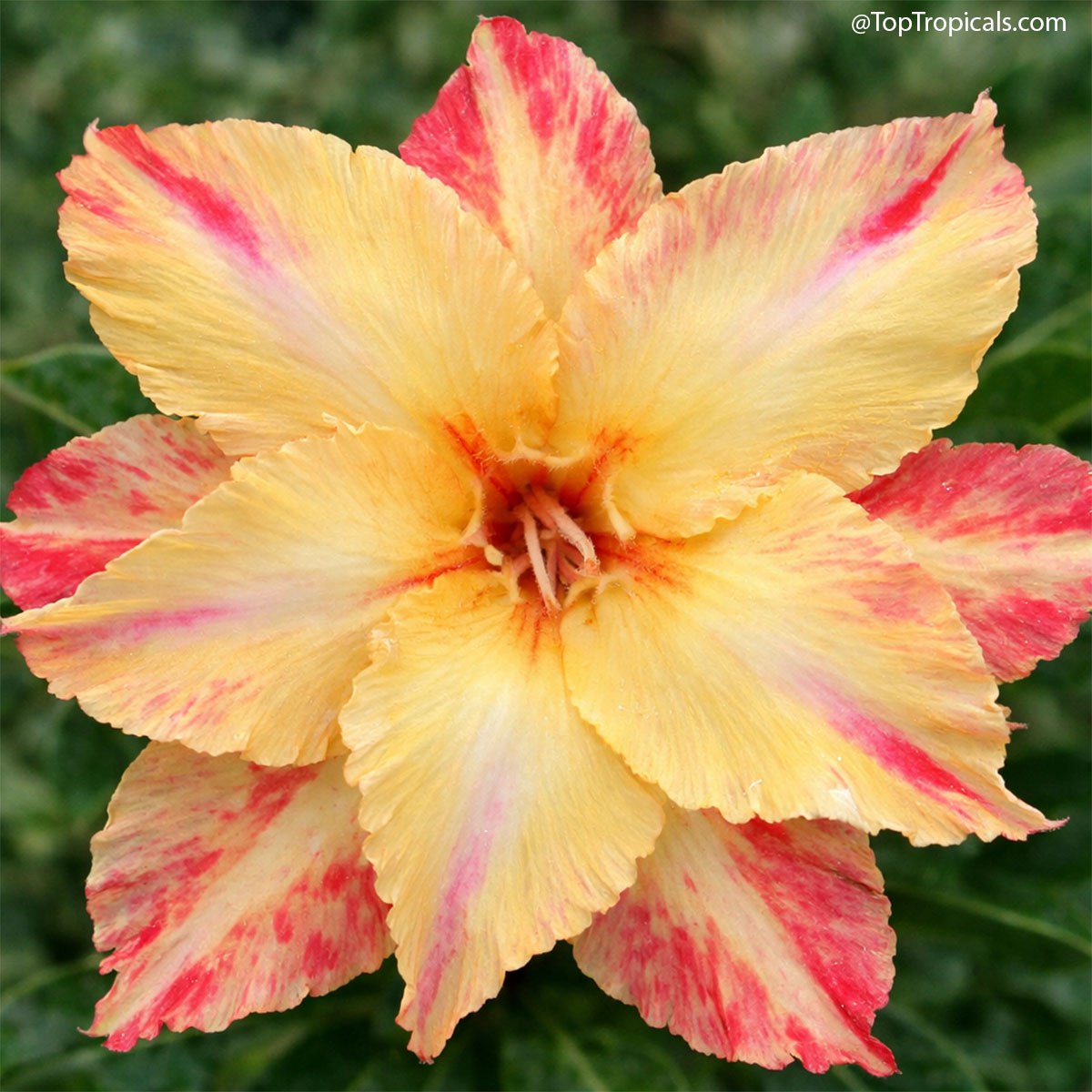
Adenium Golden Millionaire
Adenium Golden Star
The adenium colors everyone is talking about right now: Adenium rainbow 🌈
Adenium Plant Facts
Botanical name: Adenium sp. Also known as: Adenium, Desert Rose, Impala Lily
USDA Zone: 9 - 10
Highligths
Some adeniums pull you in with color. Others with shape.
And a few… just look different from anything else on the bench.
This set leans into contrast - deep tones, bright golds, and a few forms that don’t quite follow the rules.
💡 Light tip for hot climates
In places like Florida, South California, or Texas, full sun can actually be too intense for adeniums.
They grow just fine in bright, filtered light - even indoors - which makes them surprisingly good houseplants.
In extreme heat: 🔸 Keep them in filtered light to protect leaves and extend bloom life. Flowers last longer and won’t burn. 🔸 Bright light is important, but avoid harsh midday sun. 🔸 Deep shade is too much and will reduce flowering. 🔸 Dry air is not a problem - adeniums actually prefer it.
🌸 Today's featured adeniums
✦ Black Rahu: Dark, intense tones with a bold presence - one of the more striking “black” types. ✦ Black Swan: Elegant shape with deep coloring - feels refined and a bit dramatic without trying. ✦ Carnation: Layered, ruffled petals that give it a fuller, almost classic flower look. ✦ Camellia: Full, layered petals in a soft rosette form - looks more like a classic garden flower than a typical adenium. ✦ Golden Millionaire: Rich golden tones with a strong, bright look - warm and eye-catching. ✦ Golden Star: Clean yellow blooms with a crisp form - simple, bright, and very balanced.
A mix like this gives you contrast right away - dark next to gold, simple next to unusual.
That’s what makes a collection interesting: not just how many you have, but how different they feel side by side.
Do Fruit Trees Increase Property Value? Tropical Plants That Pay Off
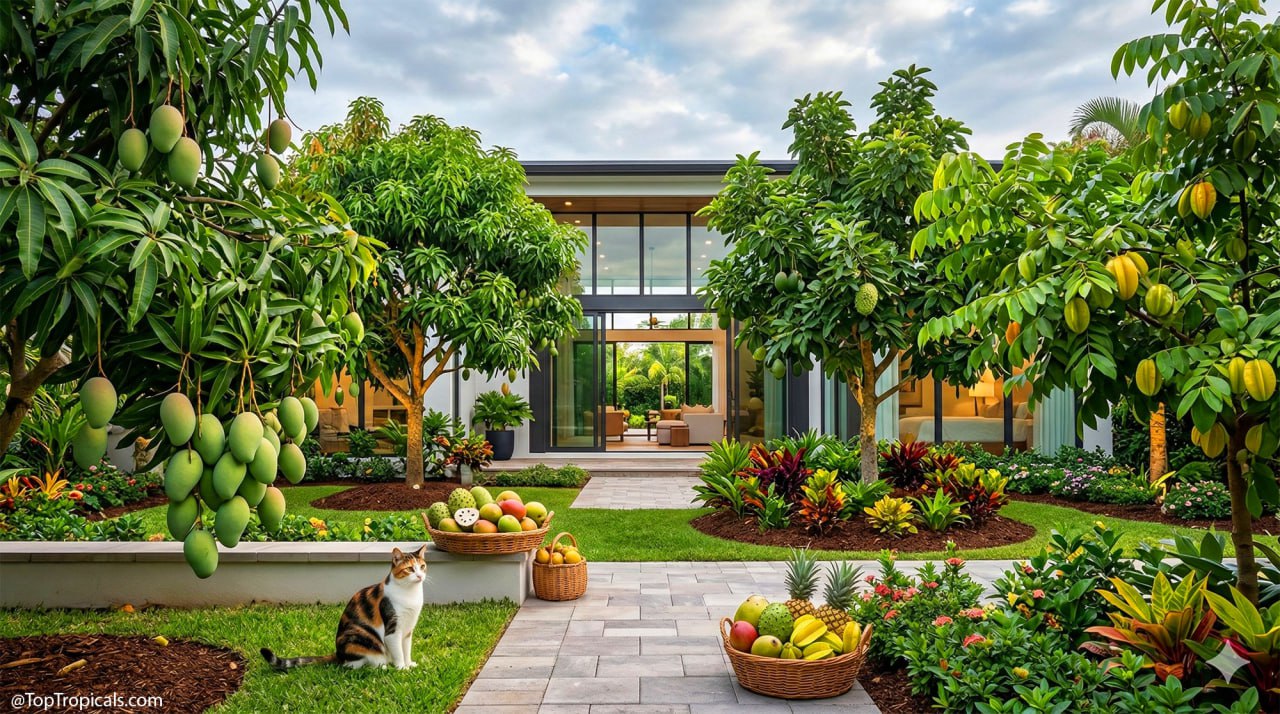
Yard with fruiting tropical trees
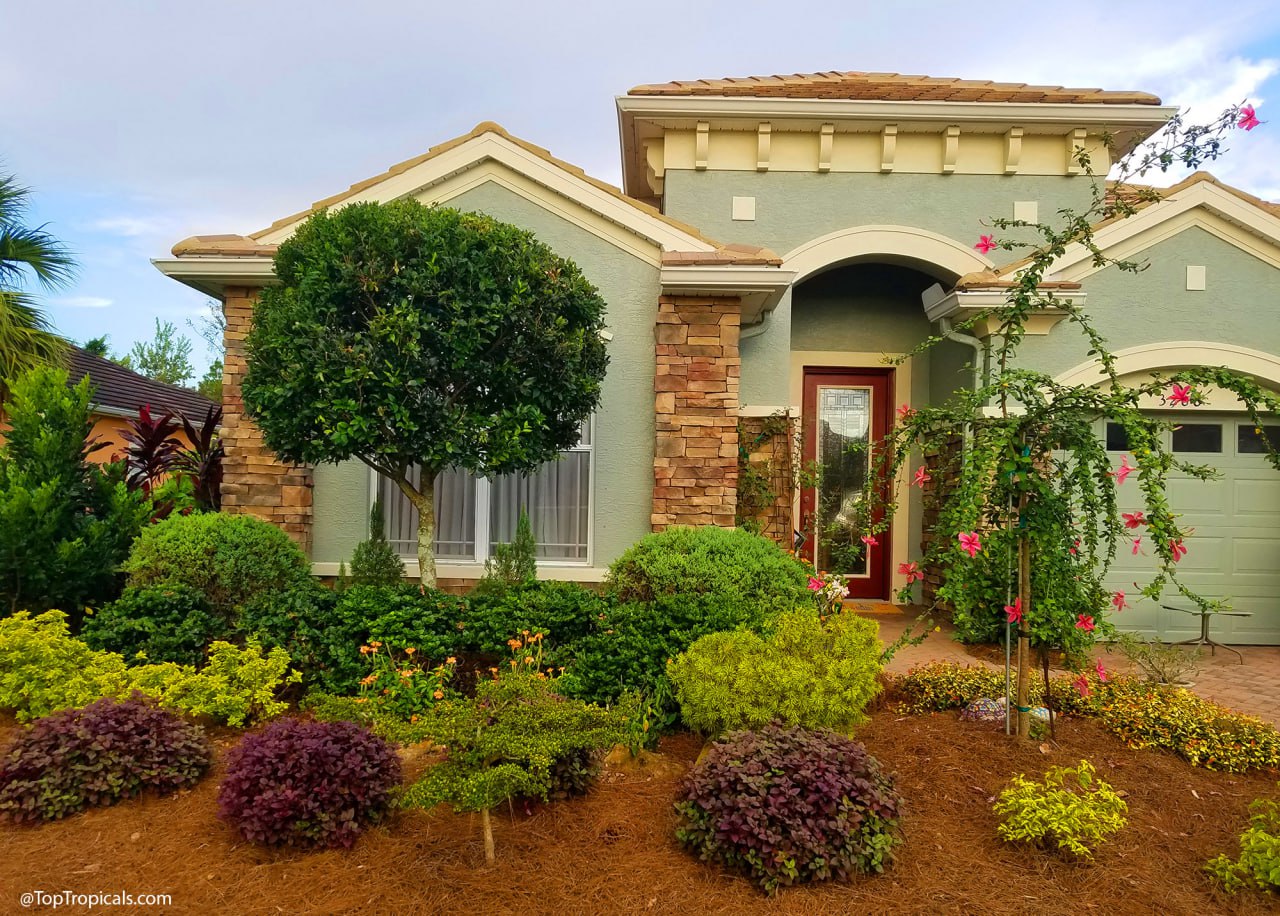
Landscaped yard in Florida
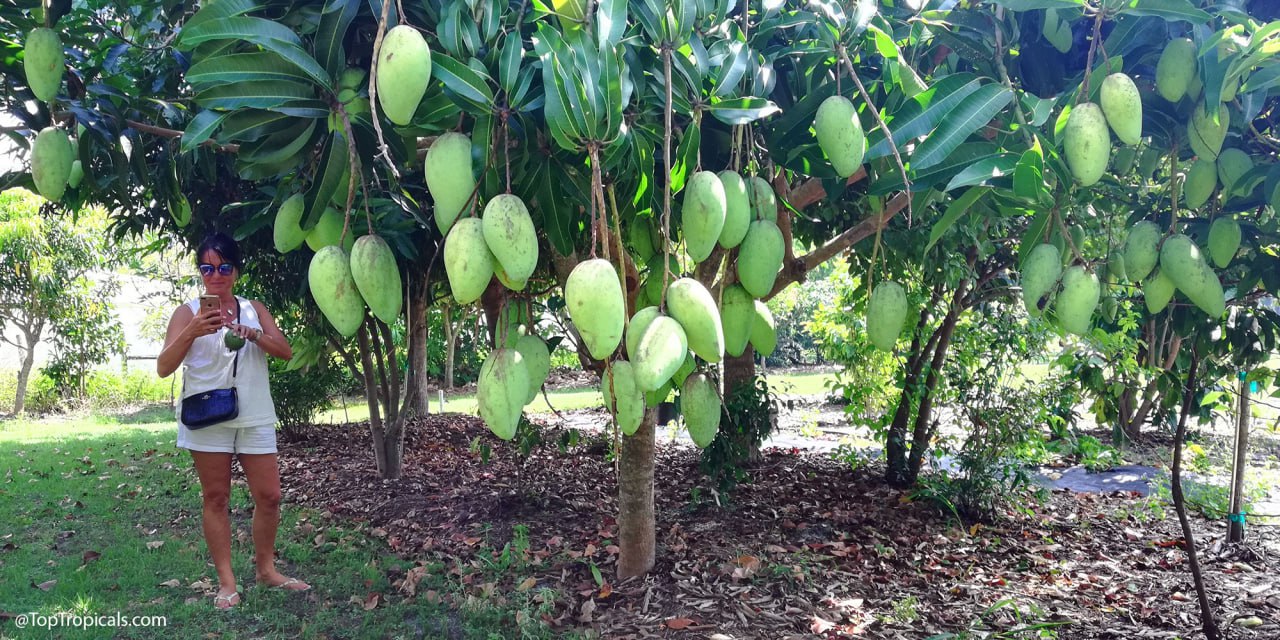
Mango tree fruiting in the garden
Do Fruit Trees Increase Property Value? Tropical Plants That Pay Off 🏡
Can your backyard pay for itself? Learn which 12 tropical fruit trees real estate experts say are the smartest investment for your landscape. Discover how tropical fruit trees like mango and avocado add "edible equity" and curb appeal to your property, making it more desirable to future buyers. Turn your yard into a private paradise that lowers grocery bills and boosts home value.
In warm climates like Florida, a mango tree isn't just landscaping - it’s a food-producing asset. Mature tropical fruit trees offer "edible equity," saving homeowners hundreds in grocery bills while creating a unique, memorable aesthetic for buyers.
Mango Plant Facts
Botanical name: Mangifera indica Also known as: Mango
USDA Zone: 9 - 11
Highligths
🥭 1. Focus on "Instant Recognition" Favorites
Trees buyers already know and love provide the strongest ROI. They signal that the yard is already productive - something new builds can’t offer.
• Top Picks: Mango, Avocado, Papaya, Banana, Guava, and Loquat.
Avocado Plant Facts
Botanical name: Persea americana, Persea gratissima Also known as: Avocado, Alligator Pear, Aguacate, Abacate
USDA Zone: 9 - 11
Highligths
• The Value: A single mature avocado or mango tree can yield hundreds of pounds of fruit annually.
🥭 2. Create a "Memorable Discovery" with Exotic Varieties
Unusual fruits turn a standard yard into a tropical orchard, acting as a conversation piece during home tours.
• The Exotic List: Jackfruit, Sugar Apple, Soursop, Sapodilla, Ice Cream Bean, and Star Fruit.
🥭 3. Strategic Placement for Energy Savings
Large-canopy trees like jackfruit or mango do more than provide food; they act as natural insulation.
• Natural Cooling: Strategic planting reduces afternoon sun exposure and lowers AC costs. • Indoor/Outdoor Flow: Use trees to frame window views, block neighbors, and create private "outdoor rooms."
🥭 4. The Power of the "Mini Orchard"
A collection of 3–5 trees creates a stronger emotional pull than a lone plant. Buyers begin to visualize a lifestyle of smoothies and harvests.
• Winning Combos: Mango + Avocado + Papaya or Guava + Star Fruit + Banana.
🥭 5. Maintenance: Health Equals Value
Fruit trees only add value if they look manageable. A neglected tree suggests a neglected home.
• Pre-Sale Prep: Prune for tidiness, mulch the base, and clear fallen fruit. • Spacing Matters: Avoid overcrowding; ensure buyers can walk comfortably through the yard without feeling "closed in."
🥭 The Long-Term Play
Unlike decorative plants that may need frequent replacement, fruit trees appreciate over time. Because a mango tree takes years to reach peak production, the best time to plant for future resale value is now. By the time you list, your yard will offer shade, privacy, and a harvest that buyers find hard to resist.
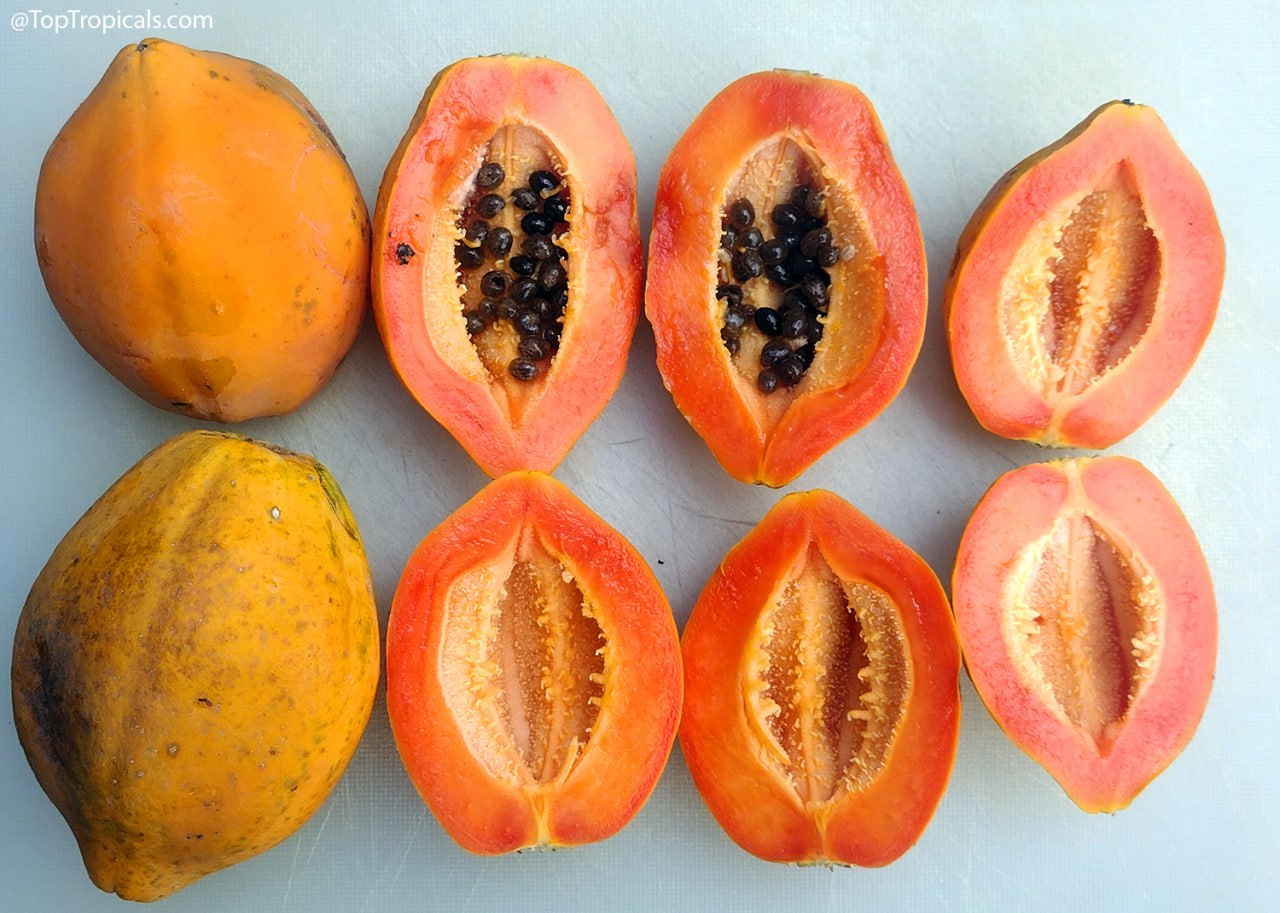
💚 Do papaya seeds need to be cleaned before planting?
Yes. The slimy coating must be removed or seeds may rot instead of sprouting.
💚 What soil is best for papaya seedlings?
A well-draining mix or coconut fiber. Soil should be moist, never soggy.
💚 Why do papaya seedlings rot so easily?
Overwatering and poor drainage are the main causes. Young papaya roots are very sensitive to excess moisture.
💚 Do papayas like transplanting?
No. Papayas hate root disturbance. Reduce transplanting and move into larger containers sooner rather than stepping up gradually.
💚 How big should the container be?
After a 4-inch pot, move directly into a 1-gallon or even 3-gallon container to minimize root disturbance.
💚 Does papaya need staking?
Yes. Papaya grows fast, and the stem can outpace root development. Even light wind can knock it over.
💚 How much sun does papaya need?
Full sun. Shade causes leggy growth, poor flowering, and little to no fruit.
💚 Should papaya be watered heavily?
No. Once established, papaya prefers drier conditions. Large plants tolerate rain better than young ones.
💚 Can papaya be planted in the ground?
Yes, but only in well-drained soil and elevated spots. Low areas with standing water will kill it.
💚 Is fertilizer important for papaya?
Yes. Papaya is a heavy feeder. Poor soil means poor growth and little or no fruit. Use Green Magic once every 6 months or Sunshine Boosters C-Cibus with every watering.
💚 Should papaya be pruned to control height?
No. Pruning ruins its natural form. If height is an issue, grow a dwarf variety instead.
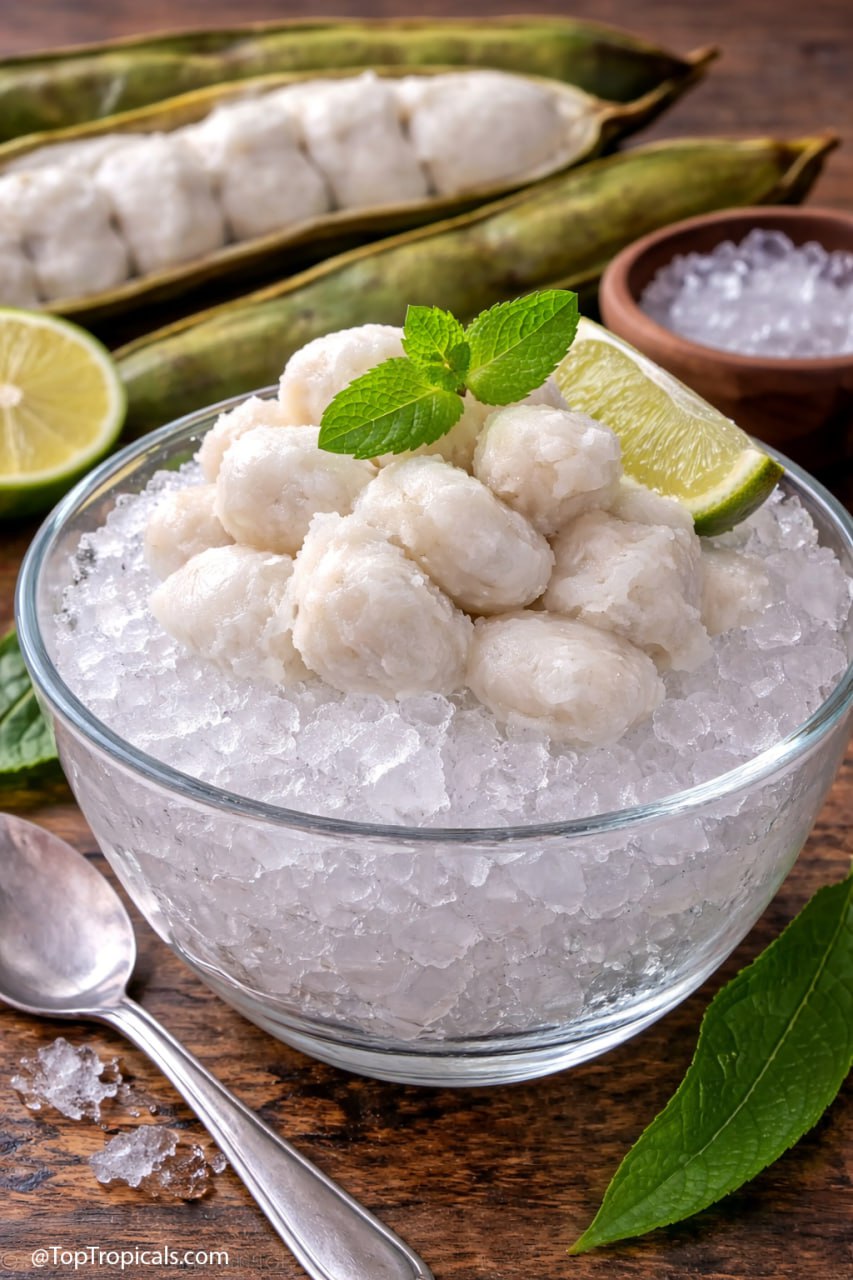
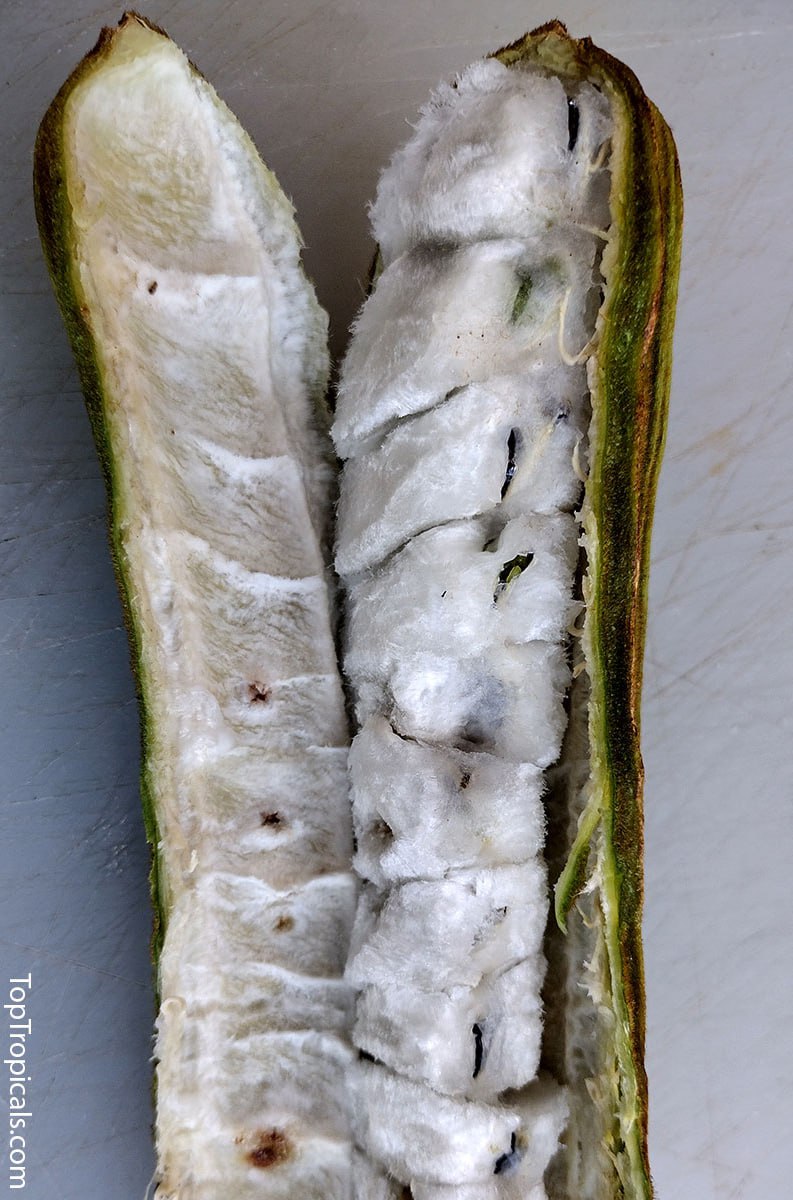
Open ripe Ice Cream Bean pods and scoop out the sweet white pulp.
Remove and save the seeds if you want to plant more Ice Cream Bean trees.
Chill the pulp for 20 to 30 minutes.
Serve the chilled pulp over crushed ice as a natural shaved-ice dessert.
🌿 About the plant:
Ice cream bean (Inga edulis) produces long pods filled with sweet, cottony white pulp surrounding dark seeds. The flavor is mild, vanilla-like, and naturally creamy. The pulp is eaten fresh and used as a natural dessert across South and Central America.
Ice Cream Bean Plant Facts
Botanical name: Inga edulis, Inga feuilleei Also known as: Ice Cream Bean, Inga, Guama, Guaba
USDA Zone: 9 - 11
Highligths
🌱 In the garden:
Inga edulis is a fast-growing tropical tree with lush foliage and nitrogen-fixing roots that improve soil health. It is a perfect tree for a quick shade solution in just one season. While large in the ground, it can be managed with pruning in home orchards.