Garden Blog - Top Tropicals

Date: 17 Jan 2026

Ti plant leaf color meaning
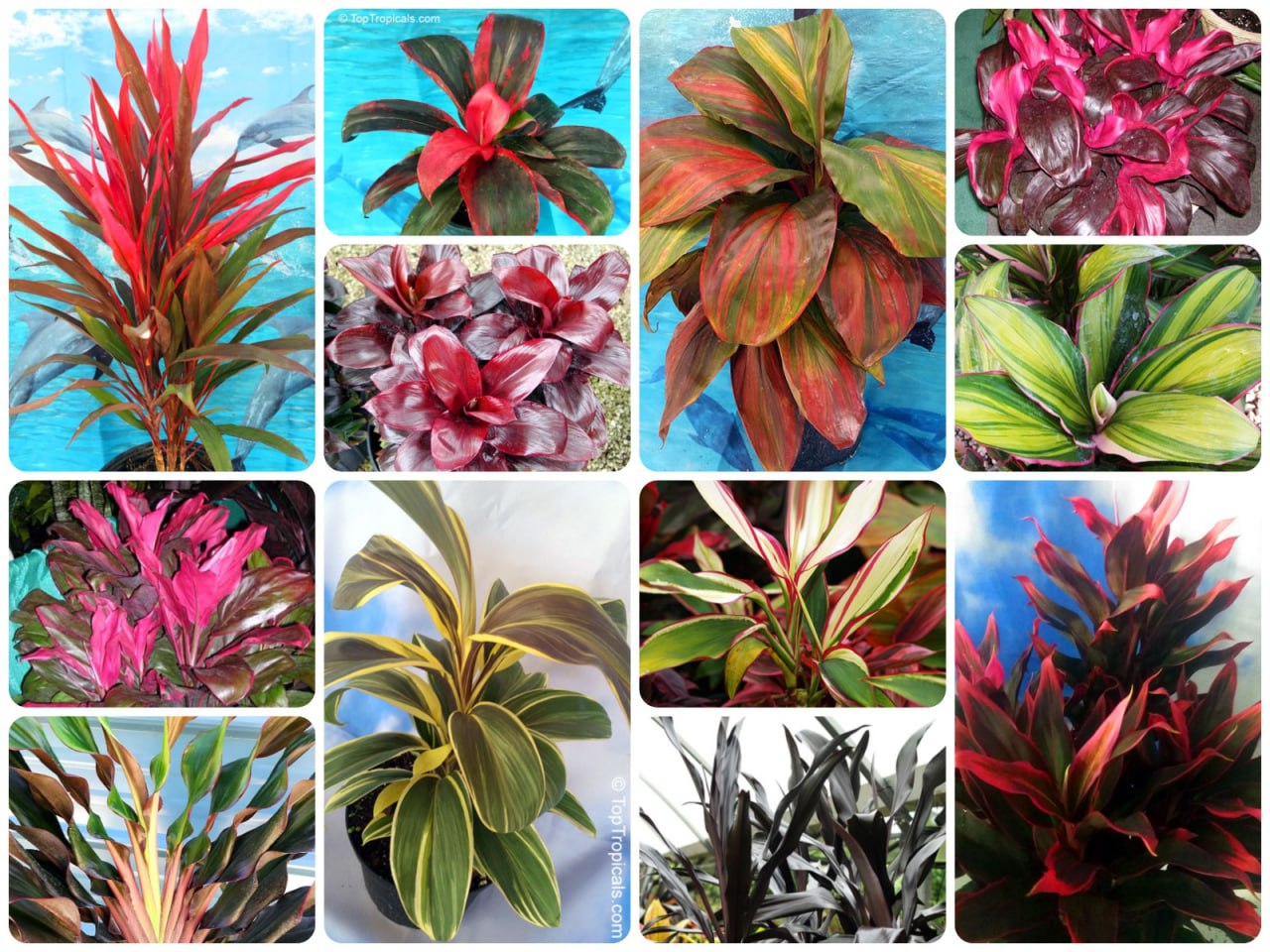
Hawaiian Ti plant (Cordyline fruticosa)

Hawaiian Ti plant (Cordyline fruticosa)

🌈 Ti plant leaf color meaning


The Hawaiian Ti plant (Cordyline fruticosa) is more than just a colorful tropical accent. Across Polynesian, Hawaiian, and Southeast Asian cultures, the color of ti plant leaves has long been associated with different meanings, moods, and uses - both symbolic and practical.
  • 🌈 Green leaves
  • Green ti plants are linked to peace, balance, and steady growth. Traditionally, they were planted around homes for protection and good fortune. In the garden, green varieties are usually the toughest and most shade-tolerant.
  • 🌈 Red and deep burgundy leaves
  • Red ti plants are associated with strength, power, and protection. In Hawaiian tradition, red ti leaves were believed to ward off negative energy and were often used in ceremonies. Garden-wise, deeper reds usually mean more sun exposure and stronger pigmentation.
  • 🌈 Pink, magenta, and multicolor leaves
  • These colorful ti plants symbolize joy, celebration, and creativity. They are often used as ornamental focal points and in festive plantings. Variegated and pink types tend to prefer brighter light to keep their colors sharp.
  • 🌈 Purple and dark-toned leaves
  • Purple ti plants are linked to mystery, spirituality, and transformation. Their dramatic color comes from high anthocyanin levels and usually intensifies in bright light with good nutrition.
  • 🌈 Yellow or light variegation
  • Yellow tones often represent optimism and new beginnings. Plants with lighter variegation may grow a bit slower and need protection from harsh sun, but they add a softer contrast in tropical landscapes.
  • 🌈 One practical note
Leaf color is influenced not just by variety, but also by light, temperature, and nutrition. Fading color usually means too little light or depleted soil, while rich, bold tones signal a happy plant.

Ti plant colors tell a story - part cultural tradition, part plant health, and part personal style in your garden.

🛒 Ti plants rainbow: collect them all

📚 Learn more:


#Container_Garden #Hedges_with_benefits #Shade_Garden #Discover #Horoscope

🟢 Join 👉 TopTropicals
Date: 17 Feb 2026

Lunar New Year starts today - welcome the Year of the Fire Horse 2026 with Jasmines

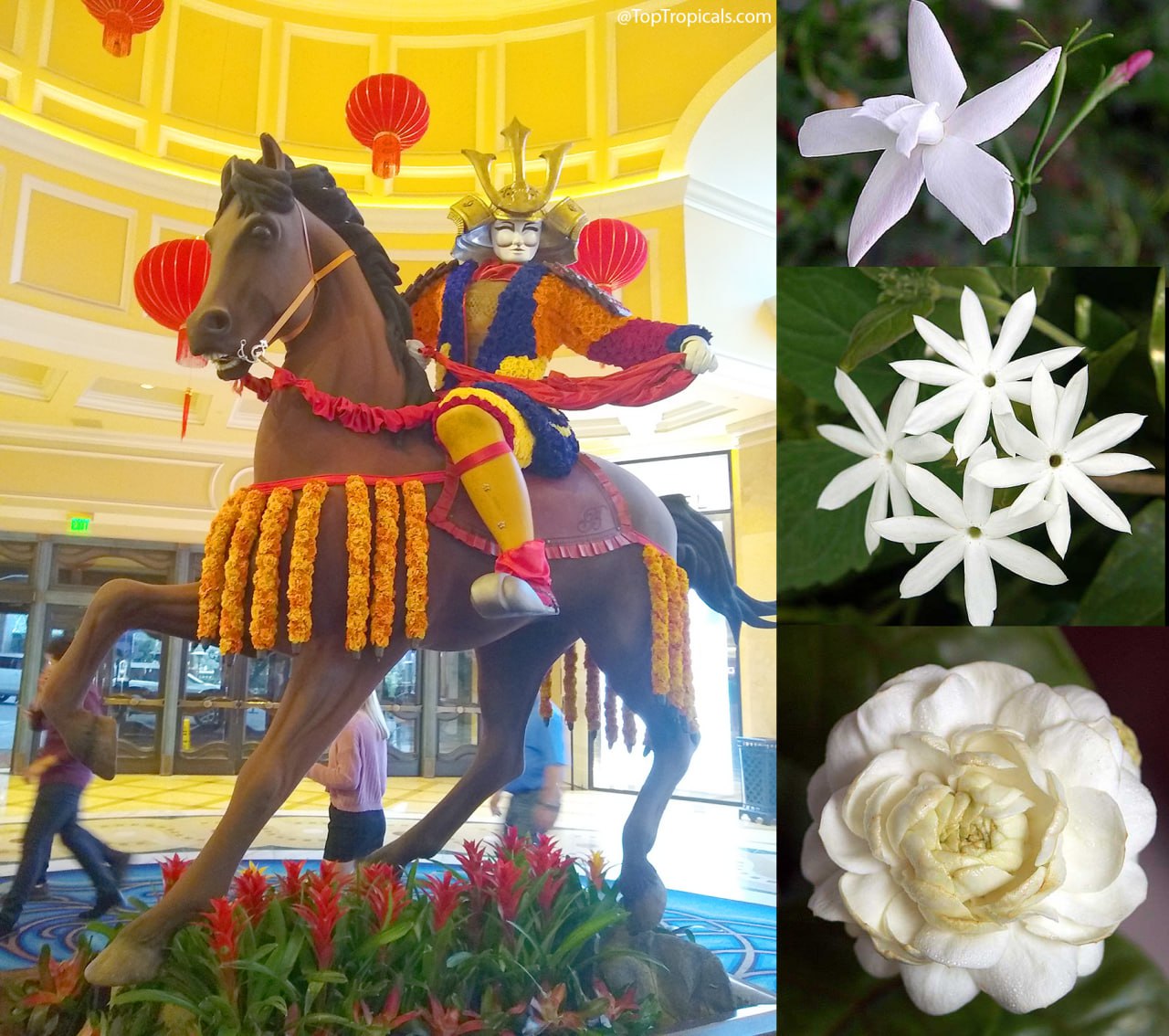
Year of the Fire Horse 2026 with its lucky plants Jasmines

Year of the Fire Horse 2026 with its lucky plants Jasmines

🔥 Lunar New Year starts today - welcome the Year of the Fire Horse 2026 with Jasmines

  • 💮 One of the luckiest plants for 2026 is Jasmine. Today, February 17, 2026, the Lunar New Year begins, welcoming the energetic and passionate Year of the Fire Horse.
  • 💮 If you’ve been feeling restless, ready for movement, or craving something fresh in your life - that’s Horse energy. This year is about action, authenticity, and doing things your way. And in Chinese tradition, certain plants help align your space with that powerful momentum.
  • 💮 Why Jasmine is especially lucky this year


    Jasmine symbolizes love, luck, and beauty - three themes closely connected to the Fire Horse’s vibrant spirit. Horses are social, expressive, and affectionate. Jasmine’s sweet fragrance supports harmony, romance, and positive energy in your home.
    In Feng Shui traditions, fragrant flowering plants help soften intense Fire energy. Jasmine does exactly that - it balances passion with calm.
  • 💮 How to use Jasmine for good fortune in 2026


· Grow jasmine near entrances or windows to invite good luck into your home
  • · Place it in patios or garden walkways where its scent can circulate
  • · Use jasmine oil or candles in bedrooms to enhance relaxation and romantic harmony


💮 RReady for momentum?


Ready to feel bold, inspired, and a little unstoppable? The Year of the Fire Horse moves fast - and it rewards those who move with it. Think you need more clarity, more spark, more direction? Jasmine anchors that fire with calm confidence. It keeps the passion high and the chaos low.
If you’re stepping into 2026 with purpose, don’t just make resolutions. Plant something living. Let jasmine bloom beside you - and grow into the year you’ve been waiting for.

🛒 Discover lucky Jasmine plants

📚 Learn more:
#Horoscope #Perfume_Plants #Discover

🟢 Join 👉 TopTropicals

Date: 3 Feb 2026

Four popular plants of friendship, appreciation, and shared connection

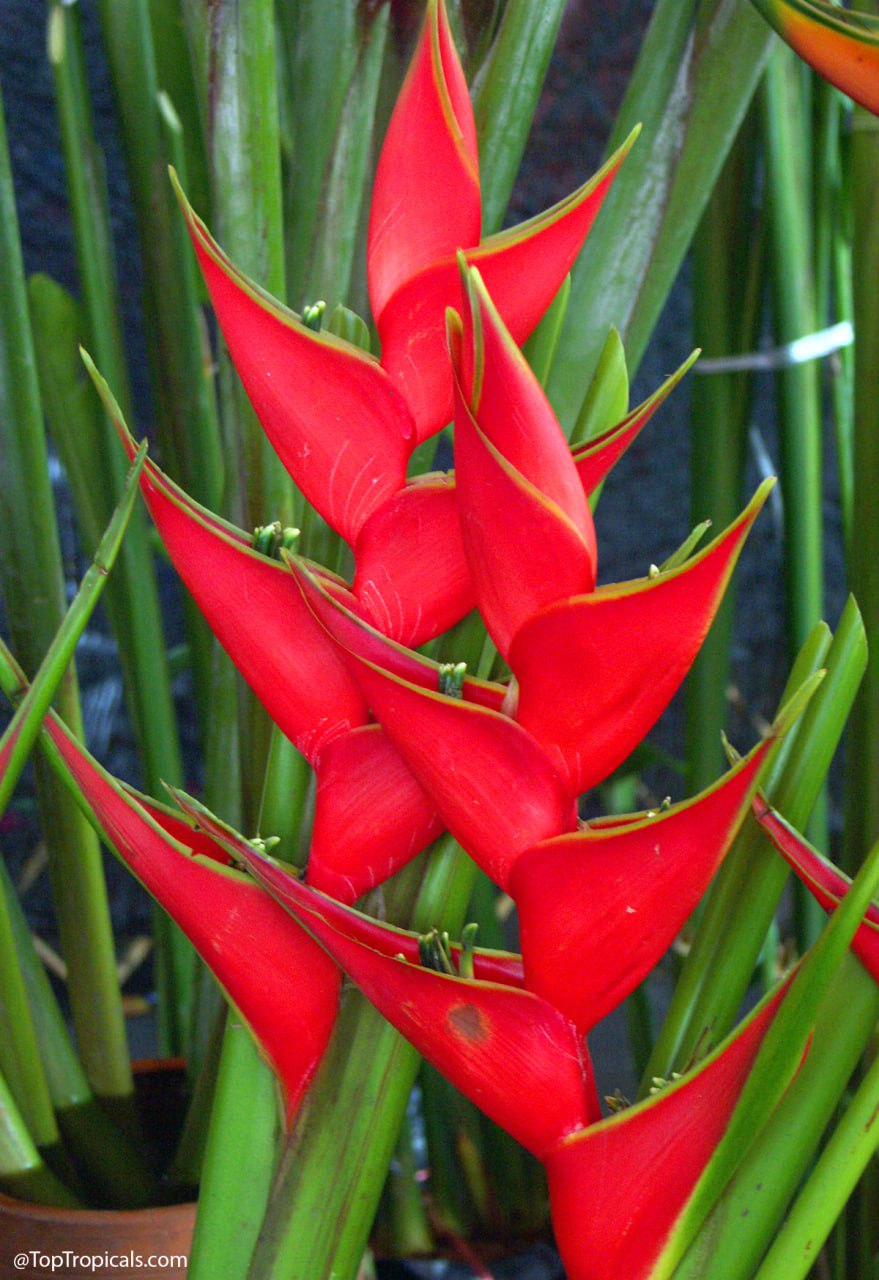
Heliconia flower

Heliconia flower

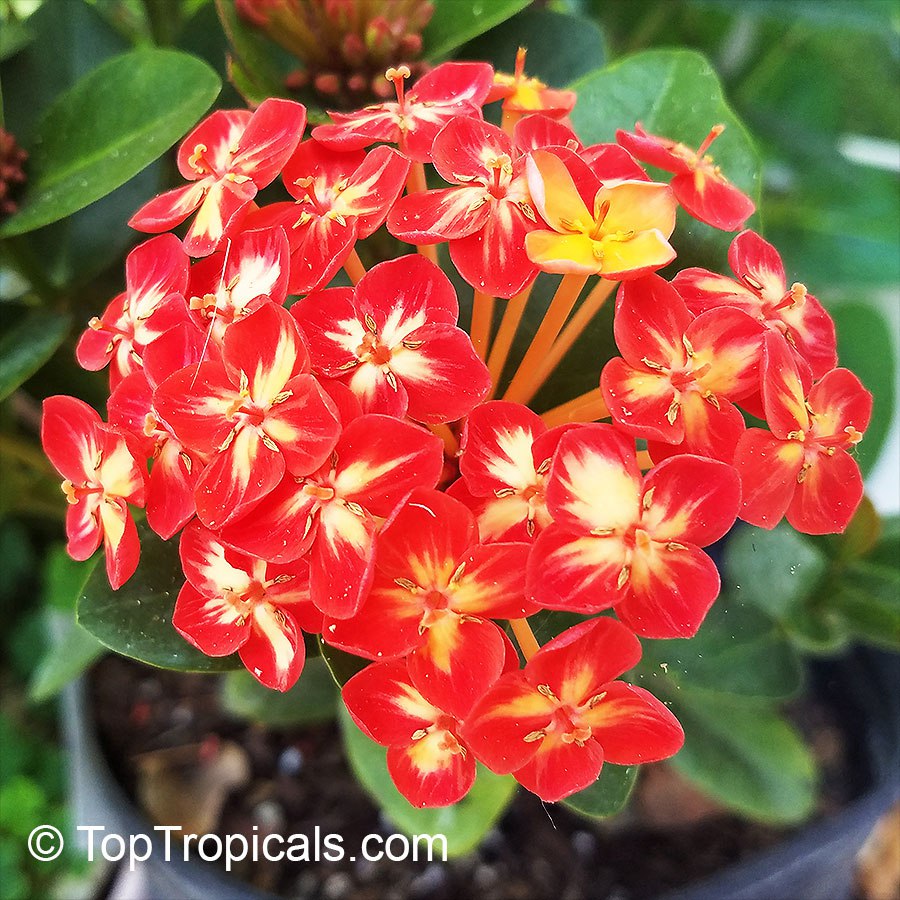
Ixora flower

Ixora flower

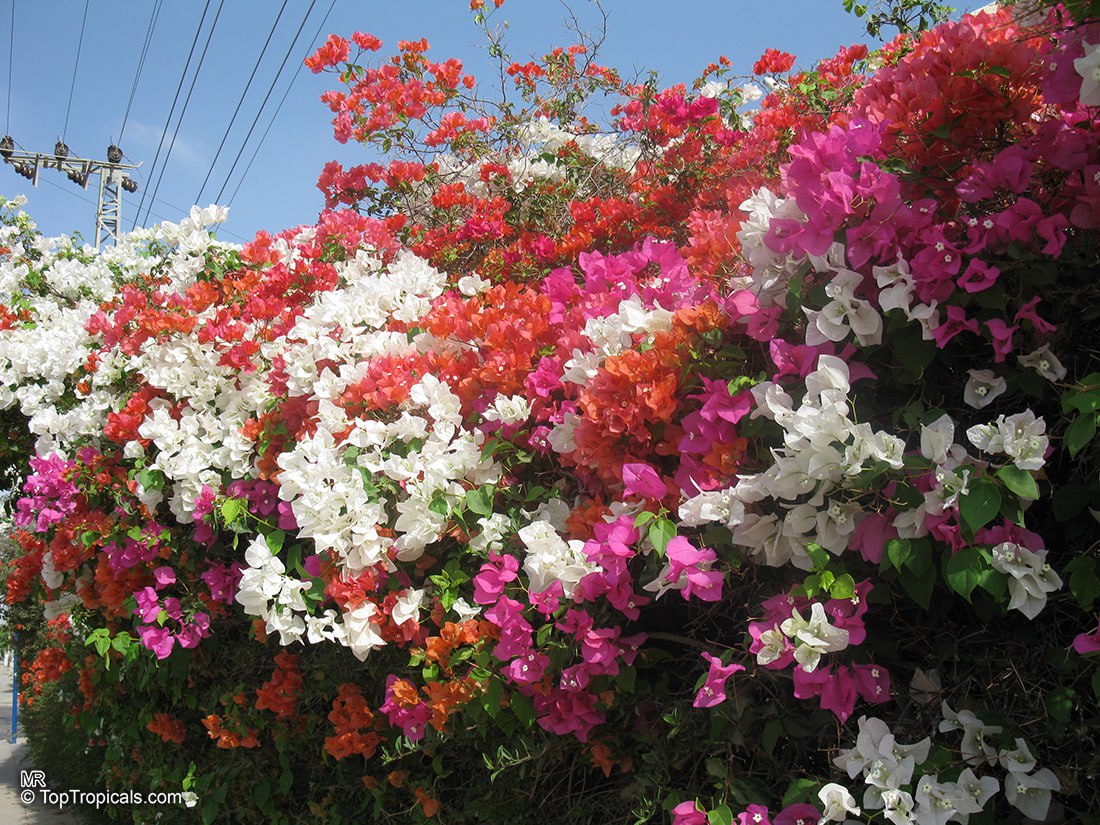
Bougainvillea flower

Bougainvillea flower

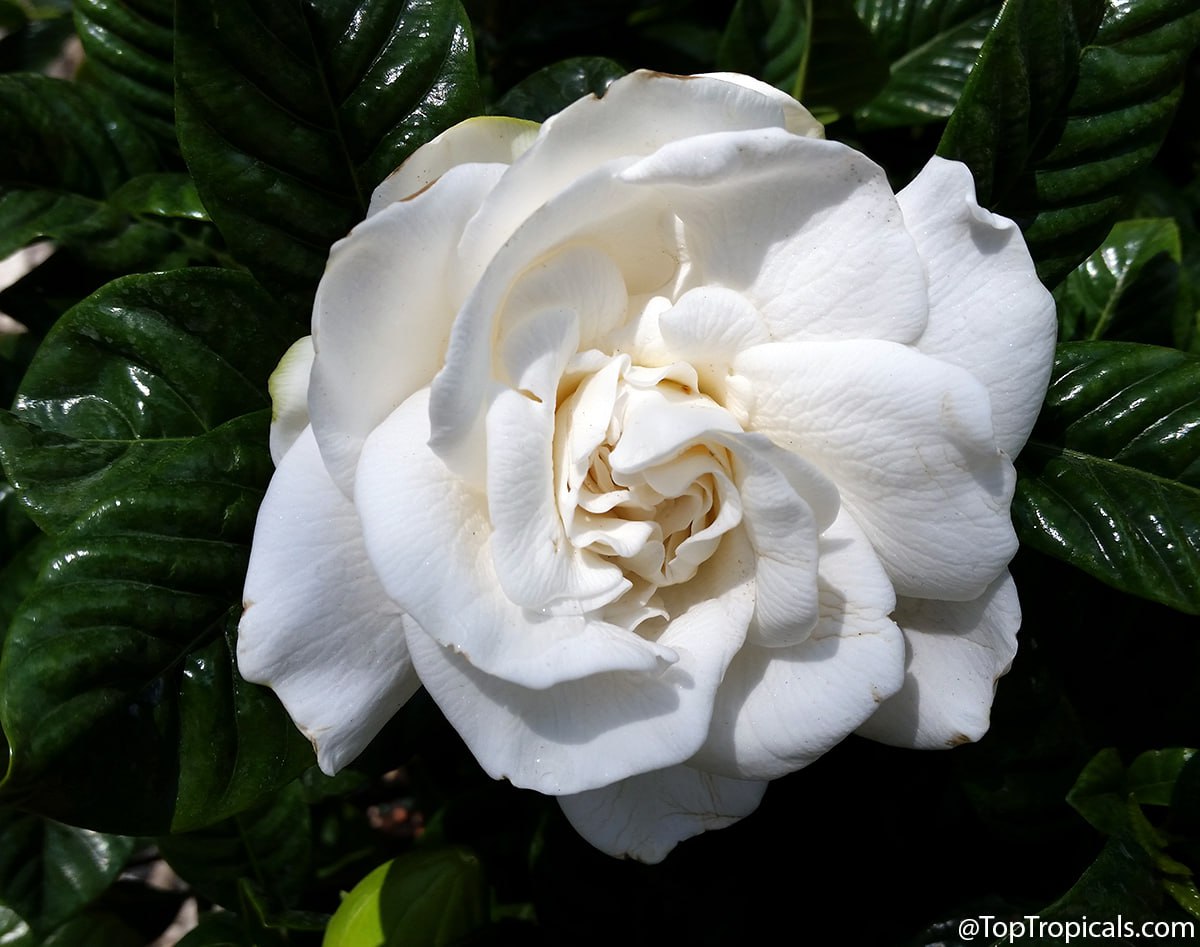
Gardenia flower

Gardenia flower

💕 Four popular plants of friendship, appreciation, and shared connection


Not all love is romantic. Many tropical plants symbolize warmth, friendship, hospitality, and human connection.
  • ❣️ 1. Gardenia


    Gardenia symbolizes quiet devotion, gratitude, and unspoken affection. It is often given to express deep appreciation rather than dramatic romance.

👉 Gardenia gift
  • ❣️ 2. Heliconia


    With its interlocking bracts, heliconia represents unity, partnership, and celebration. It is often linked to joyful relationships and togetherness and is widely used as a long-lasting cut flower in tropical arrangements.

👉 Heliconia gift
  • ❣️ 3. Bougainvillea


    Bougainvillea symbolizes enduring love and protection - beauty supported by strength. It is often associated with commitment and resilience in relationships.

👉 Bougainvillea gift

❣️ 4. Ixora


Known in parts of Asia as the "flower of love", Ixora represents friendship, emotional closeness, and community bonds.

🛒 Explore gift plants
🎁 Get a Gift Card

📚 Learn more:


#Shade_Garden #Container_Garden

🟢 Join 👉 TopTropicals

Date: 9 Mar 2026

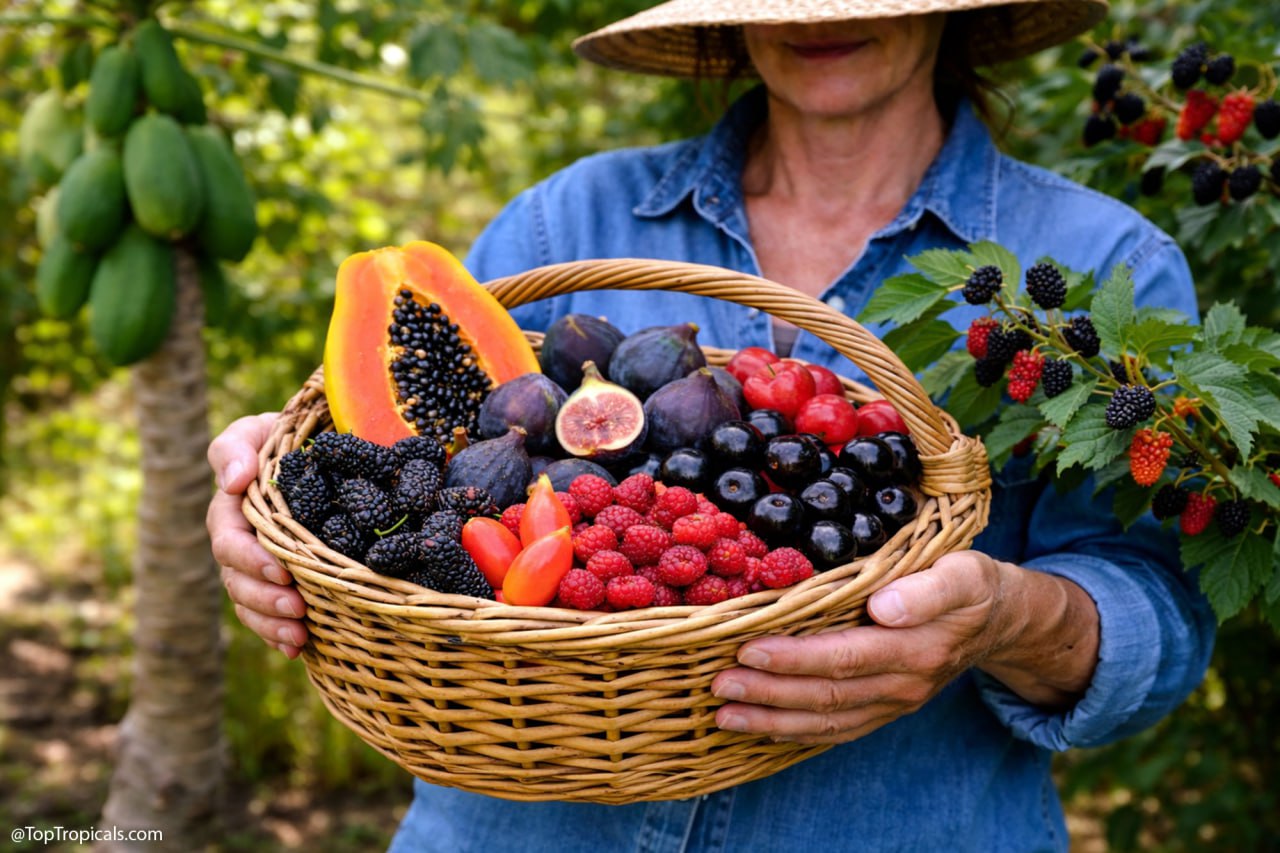
Dont Wait Years: 8 Fruit Plants You Can Harvest the Same Season

Don't wait years for fruit! Harvest papayas, berries, figs, and more in the very same season you plant them with these fast-growing varieties.

Don't wait years for fruit! Harvest papayas, berries, figs, and more in the very same season you plant them with these fast-growing varieties.

Don't Wait Years: 8 Fruit Plants You Can Harvest the Same Season 🍒

Growing fruit at home usually requires years of patience. Most gardeners view fruit trees as a long-term investment that may not pay off for a decade.
But you don't have to wait.
Certain tropical and subtropical plants are "fast-track" growers. In warm climates like Florida, choosing the right varieties means you can see flowers and fruit within months of planting - often in the very same season.
If you want a backyard harvest without the wait, here are the fastest-producing fruits you can plant today.
  • 🍓 1. Blackberry Jam Fruit (Randia formosa)


    A compact shrub perfect for containers. It produces star-shaped flowers and dark purple fruit that tastes exactly like blackberry preserves. Established plants often fruit in their first season.
  • 🍓 2. Peanut Butter Fruit (Bunchosia)


    This fast-growing large shrub produces orange pulp with the uncanny flavor and texture of peanut butter. Expect flowers and bright red berries within months of planting in warm conditions.
  • 🍓 3. Papaya (Carica papaya)


    The "giant herb" of the fruit world. Papayas are legendary for their speed, often flowering just months after planting and providing sweet, vitamin-rich fruit within the same year.
  • 🍓 4. Grumichama Cherry (Eugenia brasiliensis)


    A stunning Brazilian evergreen. Grafted plants can fruit the same season they are planted, offering glossy, dark cherries with a sweet, mild finish.
  • 🍓 5. Black Surinam Cherry (Eugenia uniflora var. Lolita)


    The 'Lolita' cultivar is a game-changer. It grows quickly as an edible hedge and produces nearly black, resin-free fruit that is significantly sweeter than the common red varieties.
  • 🍓 6. Mysore Raspberry and Tropical Blackberries (Rubus sp.)


    Unlike traditional berries that require chill hours, these Rubus species thrive in the heat. Their vigorous canes grow rapidly, often fruiting the same season they hit the soil.
  • 🍓 7. Everbearing Mulberry (Morus sp.)


    Mulberries are incredibly generous. Everbearing varieties produce sweet berries over an extended window and often begin fruiting the very first year they are planted.
  • 🍓 8. Fig Trees (Ficus carica)


    Figs are the champions of container gardening. They are highly drought-tolerant and famous for setting honey-sweet fruit even at a very young age—often just months after being established.


🏡 Where to plant them?
  • 👉 Tips for Faster Results


  • •  Start Large: Buy "nursery-established" plants rather than seeds.
  • •  Feed the Need: Use high-quality organic fertilizer to support rapid growth.
  • •  Sun is Fuel: Most of these varieties require at least 6-8 hours of direct sunlight to trigger flowering.


🛒 Plant these fruits now - some can produce within months

📷 Freshly picked tropical fruit bounty: don't wait years for fruit! Harvest papayas, berries, figs, and more in the very same season you plant them with these fast-growing varieties.

#Food_forest #How_to #Discover

🟢 Join 👉 TopTropicals

Date: 28 Sep 2025

Guava Tree Plant Care

Tips from Top Tropicals Plant Expert - Tatiana Anderson

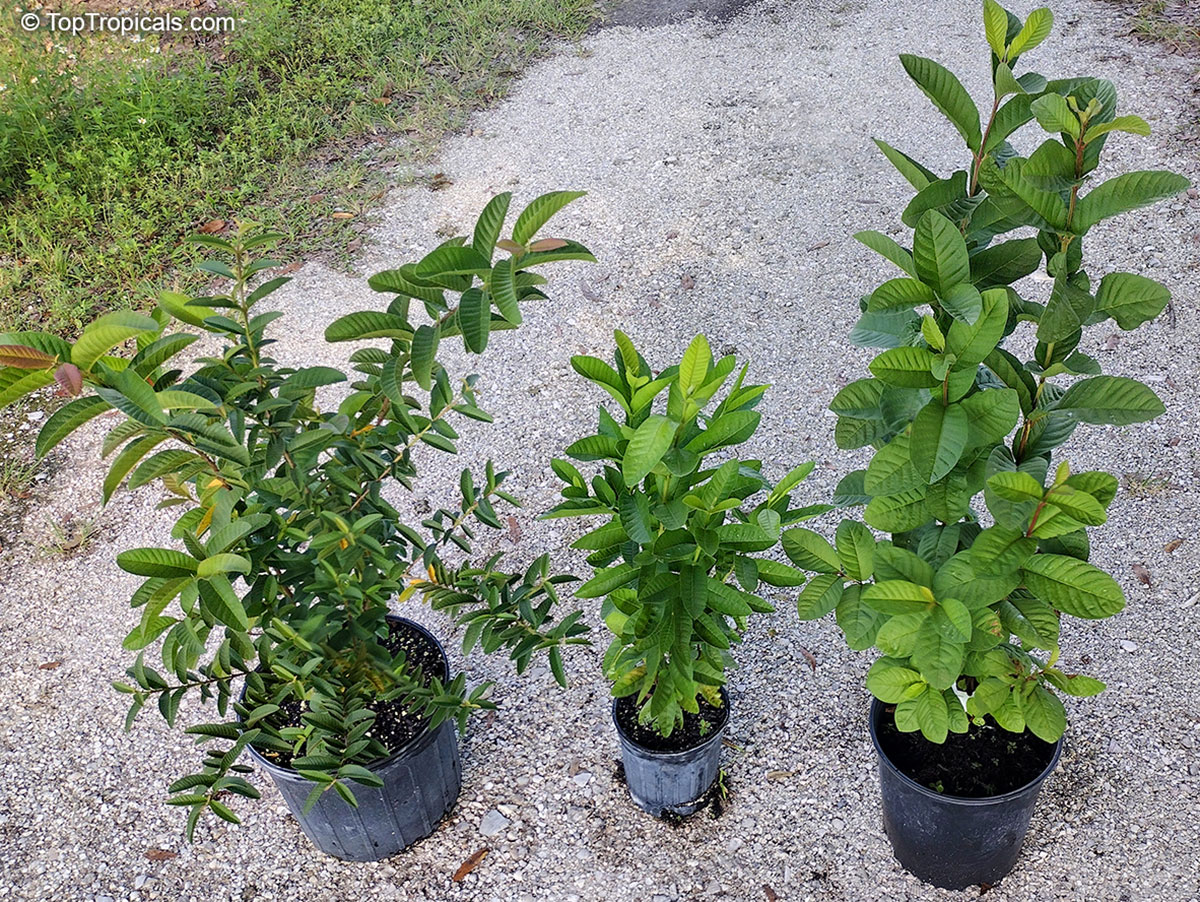
Guava  trees  for  sale  in  3-gallon  nursery  pots,  healthy  young  plants 
 with  green 
 foliage.

Where to Plant Outdoors

Guavas love full sun — aim for 6–8 hours of direct light. They’re adaptable to many soils but do best in well-drained, organic-enriched mixes. Plant them in a spot where you can water easily; guavas are thirsty trees during fruiting.

Container & Indoor Growing

Don’t have space or live in a cooler climate? Guavas thrive in large pots. Use well-drained potting mix. LINK TO OUR SOIL Keep them on a sunny patio during warm months and bring them indoors when nights dip below freezing. Compact varieties like Dwarf Hawaiian Rainbow or Tikal are especially good for pots.

Winter Care

Mature guavas can handle a light frost (down into the high 20s F), but young plants need protection. If planted outdoors, cover them with frost cloth on cold nights. Container guavas can be wheeled into a garage, greenhouse, or bright indoor window until the weather warms.

Watering and Fertilizing

Water deeply once or twice a week, more often in hot weather or when fruit is developing. They don’t like soggy soil, but they won’t complain about short floods either. Fertilize 3–4 times a year during the growing season with a balanced fruit tree fertilizer. Guavas especially love potassium and phosphorus for strong flowering and heavy crops. We recommend liquid crop booster Sunshine C-Cibus and balanced controlled release fertilizer Green Magic.

Pruning

Prune after fruiting to keep them compact and open up airflow. Remove crossing or dead branches. In containers, trim back vigorous shoots regularly to manage size and encourage more fruiting wood.

Pests and Problems

Guavas are generally tough and pest-resistant. The main thing to watch for in humid or rainy climates is mealybugs - those cottony white clusters on leaves or stems. They're easy to manage with neem oil or a quick spray of horticultural soap.

Fruit time

Guavas fruit young - often within a year or two.

Pollination

Guavas are self-pollinating, so you'll get fruit even with a single tree. Planting more than one tree, however, often boosts harvests and gives you a longer fruiting season.

If you've ever wanted instant gratification from a fruit tree, guava is it.

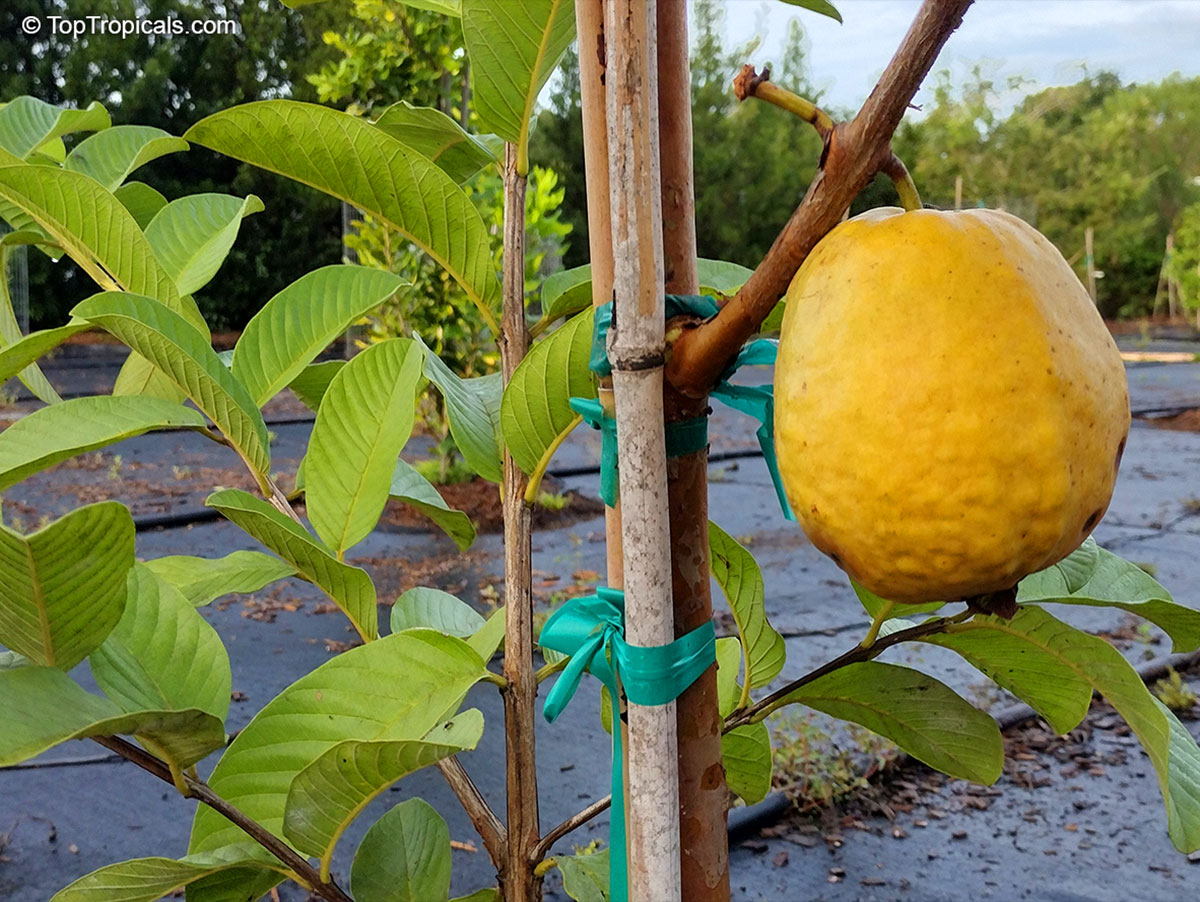
Ruby  Supreme  Guava  tree  with  a  large  ripe  yellow  fruit,  variety  known 
 for  sweet  pink  flesh  and  reliable 
 harvests.

🍴 Guava Recipes

With all that fruit, the next question is always: "What do I do with it?" Here are our favorites:

  • Cas Guava: Make Agua de Cas

    Boil halved Cas Guava fruits with sugar, simmer, strain, and bottle. Dilute with water when serving. The concentrate keeps for months in the fridge.
    Check out the recipe.

  • Hawaiian Gold: Make Drinks

    Perfect for Mojitos or Margaritas. Sweet, tangy juice pairs beautifully with lime and mint. Learn more

  • Araca Pera: Guava Wine

    Famous in Brazil, where the fruit is turned into a vibrant rosу wine. Locals say it’s the taste of summer in a glass — and yes, you can make it at home too. Learn more...

  • Quick snack: Guava Grilled Cheese

    Spread guava paste or fresh mashed fruit with cheese, grill until golden. Sweet and savory heaven. Learn more...

  • Simple Guava Juice

    Blend ripe guavas with water, ice, and a little sugar if you like. Instant refreshment.

✅Ready to Grow? Whether you want fresh juice, sweet fruit, or even your own guava wine, we’ve got the best varieties in stock right now. Your future self, sipping guava juice on a hot summer afternoon, will thank you.

👉 Order your guava tree today

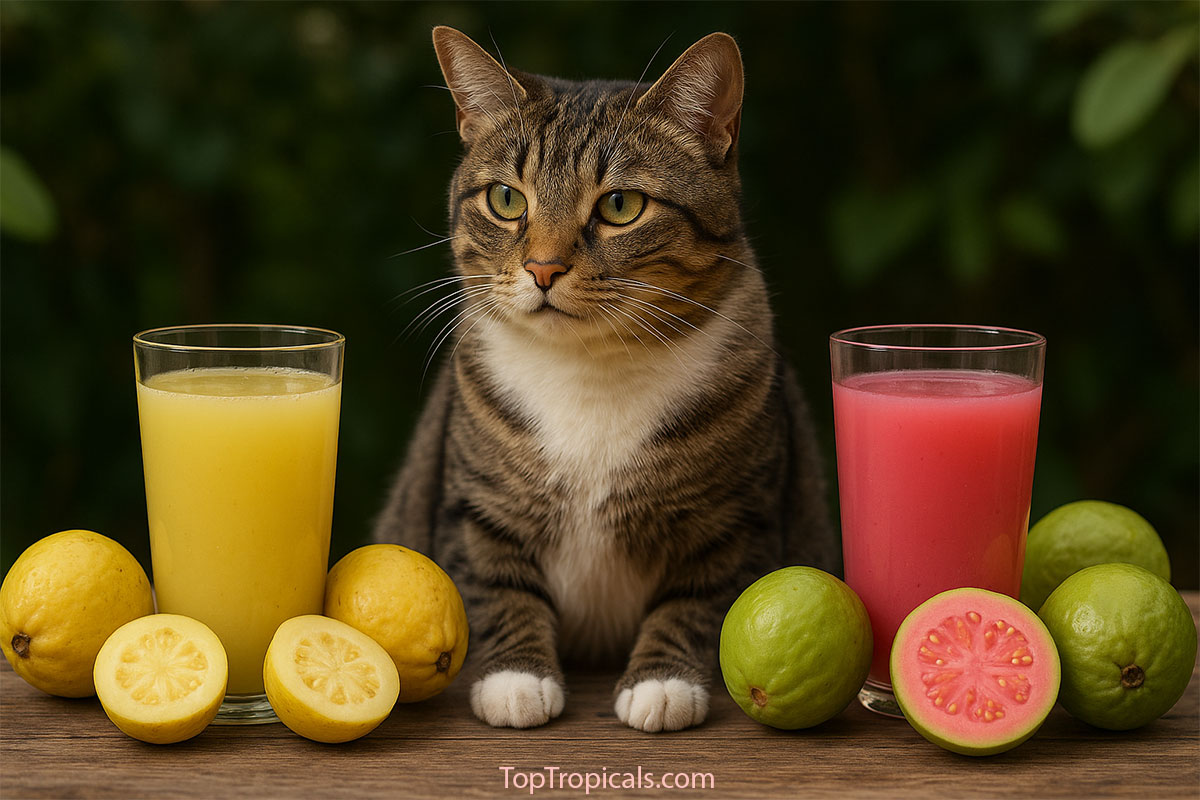
Tabby  cat  sitting  between  a  glass  of  yellow  guava  juice  with  white 
 guavas  and  a  glass  of  pink  guava  juice  with  green  guavas  and  cut  pink  guava 
 fruit.