Garden Blog - Top Tropicals

Date: 10 Oct 2025

Why this Elephant Ear is breaking the internet: the hottest houseplant of the year

Alocasia macrorrhiza Variegata - Variegated Elephant Ears

Why this Elephant Ear is breaking the internet: the hottest houseplant of the year

  • 🍀 This is Alocasia macrorrhiza Variegata - Variegated Elephant Ears - the tropical showstopper that collectors can’t stop talking about.
  • 🍀 One look at those giant leaves splashed with creamy white and deep green, and you'll see why it's always sold out. Every leaf is different - some half white, some marbled like abstract art. Some leaves can be completely white!
  • 🍀 Unlike most elephant ears, this one stays a bit more compact, which makes it perfect for a big decorative pot on a patio or shady corner. It still has that bold, jungle look but behaves better in containers.
  • 🍀 Give it bright, filtered light, warmth, and humidity. Keep the soil moist but never soggy. The white parts of the leaves can burn easily, so skip harsh direct sun.
  • 🍀 Here's a tip: if you see a solid green shoot, cut it off - it can take over and make the plant lose its variegation. That’s because this plant’s variegation is a chimera, meaning it can shift from leaf to leaf.
  • 🍀 Feed it lightly during the growing season. The white parts can’t make food for the plant, so it relies on the green sections to do all the work. A little boost with Sunshine Robusta or Green Magic controlled release fertilizer help it stay balanced without overloading the roots.
  • 🍀 This plant’s got everything: beauty, rarity, and a bit of mystery. No wonder it’s the one everyone wants to show off!


🛒 Get yours before it’s gone or add to wishlist

📚 Learn more:


#Shade_Garden #Container_Garden

🟢 Join 👉 TopTropicals

Date: 13 Oct 2025

How long does it take for a mango tree to bear fruit?

How long does it take for a mango tree to bear fruit? How long does it take for a mango tree to bear fruit? How long does it take for a mango tree to bear fruit? How long does it take for a mango tree to bear fruit?
🥭 How long does it take for a mango tree to bear fruit?

  • 🥭 A Mango tree (Mangifera indica) grown from seed can take anywhere from 7 to 10 years to start fruiting, depending on conditions. Doesn’t sound too exciting, ah? Besides such a long wait, you never know how good the fruit will be – most likely it'll taste fibrous and not very sweet. Unless your cross-pollination was perfectly set between some top-notch parent cultivars, it's a gamble. Seedling results are always hit or miss.

  • 🥭 That's why you need a grafted tree – it fruits soon (in the ground or in a large container) and guarantees the quality of the fruit. There are hundreds of cultivated varieties to choose from: juicy, sweet, and flavorful. Some taste like pina colada, pineapple, or lemon meringue pie, others like peach sherbet or even guava! The mango flavor spectrum is broader than that of apples!

  • 🥭 So, you’ve got yourself a nice mango tree in a container and can’t wait for your first harvest. How soon?
  • Mango trees start flowering from early winter (early cultivars like Nam Doc Mai) to early spring (late cultivars like Keitt). One little tree can produce hundreds, even thousands of tiny flowers, but not all will set fruit. The younger the tree, the fewer fruits it can hold. Expect just a few the first year. Even if your mango sets a lot, don’t keep them all - let the young tree focus on establishing roots and strong growth. Leave 1-2 fruits and remove the rest. Your tree will thank you and grow fast and sturdy.

  • 🥭 By the second year, you can let your tree keep a bit more fruit. Young trees usually know their limits and will naturally drop any extra fruit they can’t support. Within 2–3 years, you’ll be harvesting good crops – enough to enjoy yourself and share with friends!

  • 🥭 Remember, a strong, healthy tree produces sooner and more. Feed it with Sunshine Mango Tango liquid booster or Green Magic controlled-release fertilizer, and protect it from frost, especially while young. Once established, your mango will reward you with reliable, abundant harvests year after year.


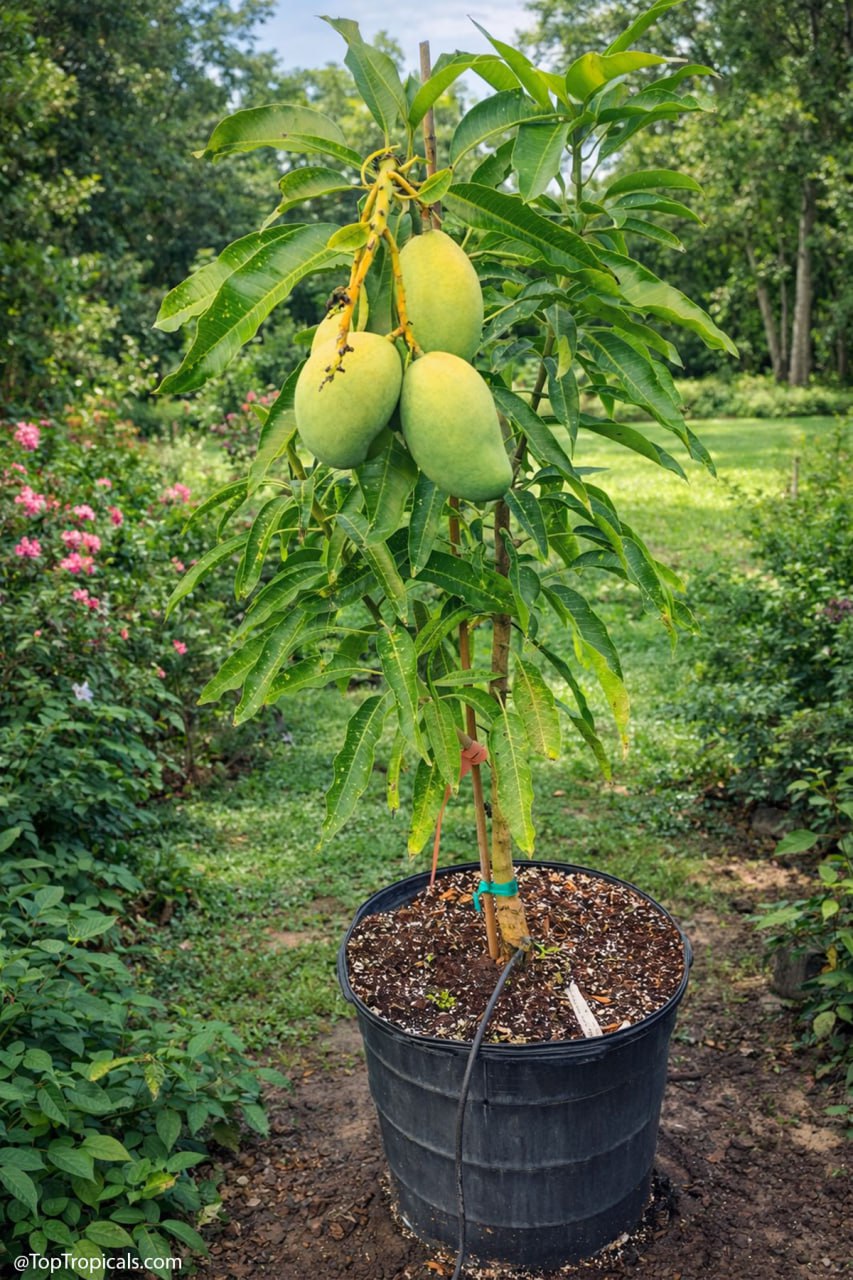
📸 In the photos: the trees in 7 gal pots are 2 years from grafting, and the trees in the ground are 1 year from the time of planting and 3 years from grafting.

🛒 Shop Mango varieties

📚 Learn more about #Mango and different varieties: #Mango_Rainbow

#Food_Forest #Mango

🟢 Join 👉 TopTropicals

Date: 9 Apr 2024

How to start a tropical garden?

Lagerstroemia

Photo above: Lagerstroemia speciosa - Queen Crape Myrtle. Gorgeous flowering tree with cascades of lilac flowers. One of the most popular trees in Southern gardens.

Q: It's spring, finally! I can't wait to plant my paradise garden with lots of tropical flowers. We moved into a nice new house but the yard has nothing but grass. Where do I start?

A: When you start your garden from scratch, you need to plant your trees first. It's a perfect timing!
Getting tropical flowering trees now is really important for making your garden strong and beautiful. Trees are like the bones of your garden, giving it shape and shade. If you plant them in spring, they have enough time to grow strong roots before winter. This helps them survive better.
Trees also give shade to other plants so they can grow well too. It's like building a house - you need to start with the frame before adding other parts. So, it's a good idea to get those trees now before moving on to shrubs and vines.
Remember to provide regular fertilizing program which is the most important during season of active growth. The more food your tree gets, the stronger and faster it grows! For flowering trees, we recommend Sunshine Boosters Megaflor formula.

Royal  poinciana,  Flamboyant  tree,  Delonix  regia

Photo above: Royal poinciana

Date: 27 Jan 2024

Valentine Sweetheart Hoya:
a must gift for your Valentine

Hoya  kerrii  -  Sweetheart,  Valentine  Hoya

Q: What plant can you recommend for a Valentines Day present?

A: There is a perfect plant specifically for Valentine's Day! When it comes to finding the ideal plant for an occasion, it doesn't get better than this one. The Sweetheart Hoya, also known as Valentine Hoya or Hoya kerrii, is not only easy to grow but also easy-ship, making it the most user-friendly of all houseplants. Its popularity has soared in recent years, thanks to its unique and quirky "heart" shaped leaves that appeal to everyone and bring smiles to faces. In addition to these charming leaves, the Sweetheart Hoya produces fragrant, beautiful flowers resembling tiny red stars. These flowers are not only stunning but also waxy, durable, and long-lasting.

Caring for the Sweetheart Hoya is a breeze, requiring only minimal attention. It can likely thrive with just one good watering a month - that's how hardy it is. While this plant prefers a reasonably well-lit room for optimal growth, it can still fare well in shadier spots, making it a versatile addition to any home or office. Don't wait till the last moment, get your Valentine's present now - the best one ever!

We have large developed plants, ready to bloom!
Buy one (for her/him) - get one free, for yourself!

Hoya  kerrii  -  Sweetheart,  Valentine  Hoya

Don't forget some plant food for it!

SUNSHINE Bombino - Young Plant Vigor Booster

SUNSHINE  Bombino  -  Young  Plant  Vigor  Booster

Date: 24 Oct 2023

Calathea Zebrina: Nature's Zebra Striped Star

Calathea  Zebrina  -  Zebra  Plant

Q: Can you recommend a showy houseplant for a living room that doesn't need much care?

A: Meet the Calathea Zebrina - Zebra Plant, the zebra-striped sensation straight from the Brazilian rainforests. This charismatic plant is like a piece of living art for your home! The Calathea Zebrina isn't just a houseplant; it's a conversation starter and a slice of jungle magic right in your living room. Get ready to embrace the zebra-stripes and let your home's wild side shine!

Calathea  Zebrina  -  Zebra  Plant

Zebra Stripes with a Twist:
With its bold dark green stripes on a velvety light green canvas, the Zebra Plant adds a touch of nature's whimsy to any room. It's like having a zebra with a green thumb as your housemate. The underside of the leaves are purple and not always visible because leaves grow horizontally (although some will curve or grow more upright).

Low-Light Lover:
Not only is it easy on the eyes, but it's also easy to care for. The Zebra Plant thrives in low light conditions, so you don't need to rearrange your whole house just to keep it happy. It even tolerates a little over-watering which all of us tend to do with house plants.

Green with Envy:
This plant may make your other houseplants a bit envious with its captivating appearance. Its zebra stripes aren't just a fashion statement; they're a botanical masterpiece. Keep it even greener with Sunshine Robusta plant food - safe to use year around!

A Slice of Serenity:
In a world that's always in a hurry, the Zebra Plant is a gentle reminder to slow down, appreciate nature's beauty, and bring a touch of tranquility to your space.

Calathea  Zebrina  -  Zebra  Plant