Can you name all the fruits on this tray? One of them will stump you!
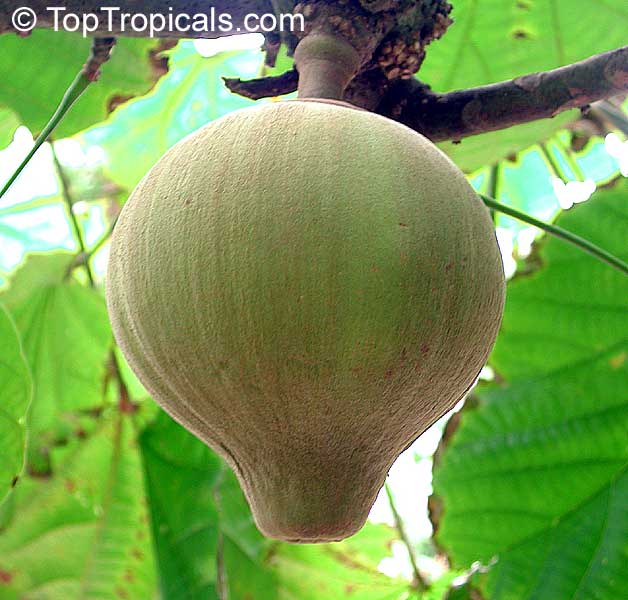
Papaya, Avocado, Egyptian guava and Cas guava, Barbados cherry, Peanut butter fruit
Can you name all the fruits on this tray? One of them will stump you!
🥭 This morning I walked the garden and came back with a tray of fruits! That’s the joy of living in Florida with your own tropical garden: something new is always in season.
How long does it take for a mango tree to bear fruit?
🥭 How long does it take for a mango tree to bear fruit?
🥭 A Mango tree (Mangifera indica) grown from seed can take anywhere from 7 to 10 years to start fruiting, depending on conditions. Doesn’t sound too exciting, ah? Besides such a long wait, you never know how good the fruit will be – most likely it'll taste fibrous and not very sweet. Unless your cross-pollination was perfectly set between some top-notch parent cultivars, it's a gamble. Seedling results are always hit or miss.
🥭 That's why you need a grafted tree – it fruits soon (in the ground or in a large container) and guarantees the quality of the fruit. There are hundreds of cultivated varieties to choose from: juicy, sweet, and flavorful. Some taste like pina colada, pineapple, or lemon meringue pie, others like peach sherbet or even guava! The mango flavor spectrum is broader than that of apples!
🥭 So, you’ve got yourself a nice mango tree in a container and can’t wait for your first harvest. How soon?
Mango trees start flowering from early winter (early cultivars like Nam Doc Mai) to early spring (late cultivars like Keitt). One little tree can produce hundreds, even thousands of tiny flowers, but not all will set fruit. The younger the tree, the fewer fruits it can hold. Expect just a few the first year. Even if your mango sets a lot, don’t keep them all - let the young tree focus on establishing roots and strong growth. Leave 1-2 fruits and remove the rest. Your tree will thank you and grow fast and sturdy.
🥭 By the second year, you can let your tree keep a bit more fruit. Young trees usually know their limits and will naturally drop any extra fruit they can’t support. Within 2–3 years, you’ll be harvesting good crops – enough to enjoy yourself and share with friends!
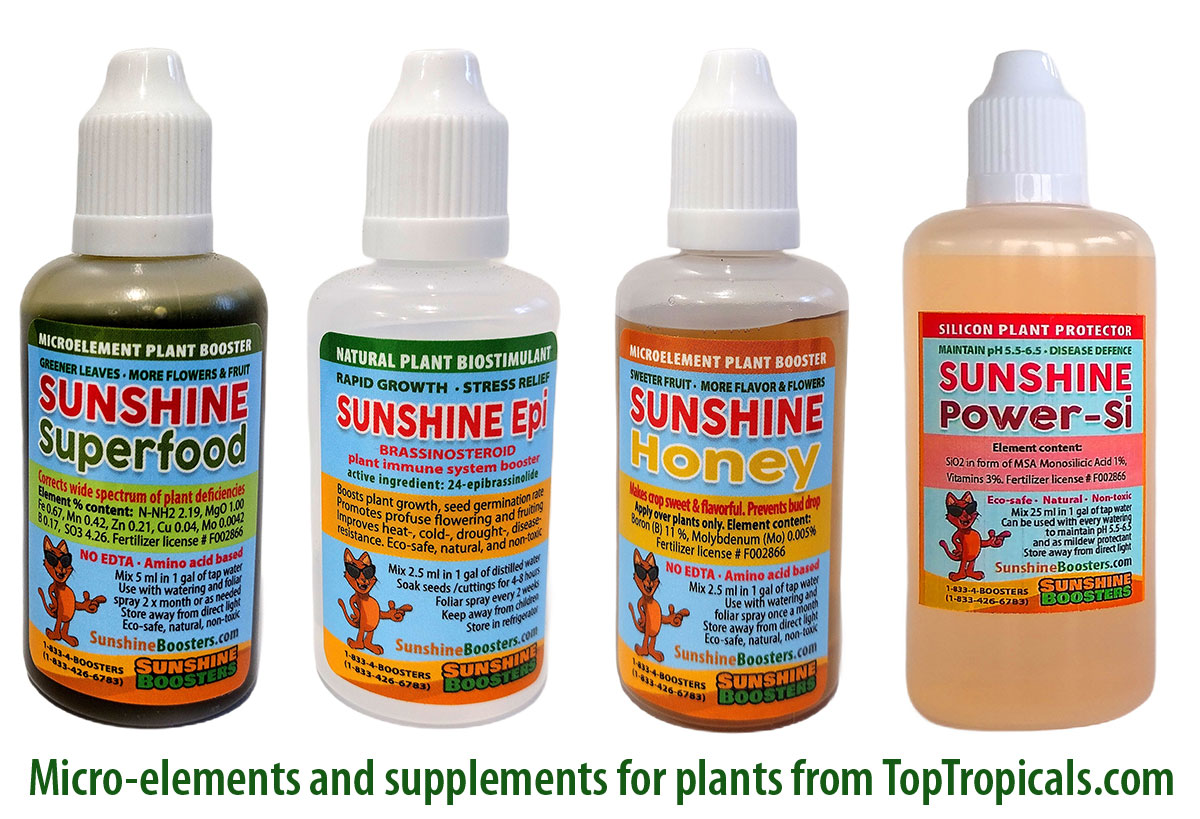
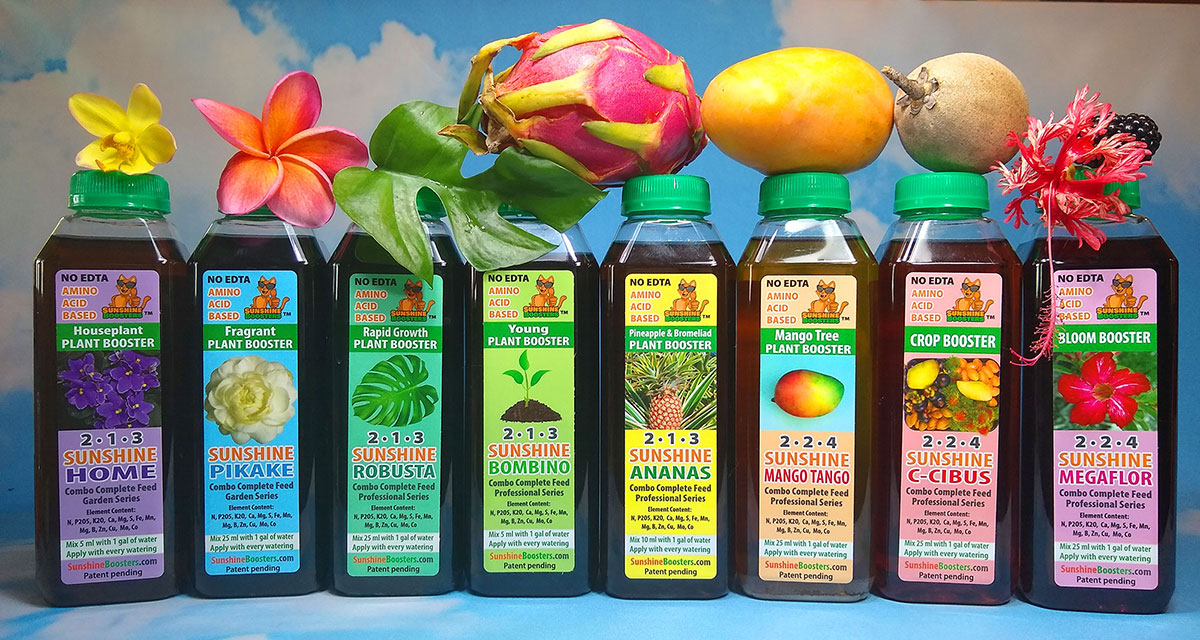
🥭 Remember, a strong, healthy tree produces sooner and more. Feed it with Sunshine Mango Tango liquid booster or Green Magic controlled-release fertilizer, and protect it from frost, especially while young. Once established, your mango will reward you with reliable, abundant harvests year after year.
📸 In the photos: the trees in 7 gal pots are 2 years from grafting, and the trees in the ground are 1 year from the time of planting and 3 years from grafting.
Q:
I was curious about indoor fruiting mango trees.
I live in upstate New York and was thinking about trying to grow an indoor
tree for fruit. I have a small heated greenhouse. Is there a variety that can
be grown from seed that would suit my purposes and if not what is the most
economical way I could obtain a cutting or small grafted plant? I keep my
greenhouse around 60F in the winter and have no supplemental lighting. Are there
any varieties that may work in a sunroom or other well lit indoor
location?
A:
There are many dwarf varieties of mango suitable for container culture. They
are called "condo mangoes".
The most popular condo varieties are: Carrie, Cogshall, Cushman, Fairchild,
Graham, Ice Cream, Julie
, Mallika, Nam Doc Mai,
Pickering. You may read more about them in our online
catalog. You may also look into variety
Lancetilla which is also a compact tree, and produces one of the biggest size
fruit, up to 5 pounds. If you want some rare variety that hardly anyone else has -
try Baptiste, an exotic Haitian dessert
mango.
Your greenhouse should work for the winter time. Mango trees can take
as low as mid 40s during winter and even lower as long as that cold is
occasional. If you keep the temperature around 60, this should work well for over
wintering. Just make sure to reduce watering to a minimum, because cool
temperatures, low light and wet soil - is a bad combination for tropical plants,
especially for mango trees which prefer to be kept on a dry side.
Many indoor gardeners have fruiting mango trees in their collection. However,
keep in mind that the most important requirement for a mango is full sun.
While you may over winter the plant for a few months in a low light conditions,
in order for it to flower and produce fruit it needs lots of light. If moving
the tree into full sun your yard during the summer is possible, this would
be the best solution.
We always recommend
SUNSHINE boosters for both over wintering tropical plants in colder
climates, and for indoor gardening. SUNSHINE applications will help your tree to
cope with cool temperatures and low light conditions. This will also
dramatically increase flowering and fruiting performance. Another important factor for
keeping your container plant healthy is quality of your potting soil. We
offer a special
professional mix that contains lots of good stuff: coconut fiber, peat moss, pine
bark, and perlite. Fertilizing potted plants
is also very important during the warm season, because this is the only way
for them to get nutrients (which in the ground can be reached by spreading
root system).
As far as seedlings vs. grafting - the only way to
have a nicely fruiting mango tree is to plant a grafted variety. Seedlings start
producing only after 8-15 years, and the quality of such fruit may be
questionable. Only grafted plants can guarantee the desired taste of a variety.
Besides, grafted mangoes start producing immediately - you may see fruit forming
on plants as small as 3 ft, in 3 gal containers. However, during the first
1-2 years you will need to remove extra fruit and leave only 1-2 fruit so the
plant doesn't get exhausted and has enough energy to establish strong root
system.
For fun stories about growing mango, check out our Radio
Show recording YO Tango Mango!
Date: 6 Jan 2017
6 easiest fruit trees and 5 spices to grow in containers indoors
Q: This is why I want to move so that I can grow absolutely anything I want from your catalogue. Prefered Puerto Rico. Right now I live in New York and there is absolutely nothing I can grow there.
A: Of course living in Puerto Rico brings more opportunities to grow tropical species. However, you can create your unique tropical paradise even living in New York. We have many customers from up North who successfully grow tropical species (and get them to flower and fruit) in greenhouses, and even indoors.
Here are a few suggestions of tropical fruit trees that adapt well for container/indoor culture - for both beginners and advanced gardeners.
Top 6 fruit trees great for indoors / container culture / beginners 1. Mango (Mangifera indica). Select from one of smaller mango varieties 2. Sugar Apple (Annona squamosa)
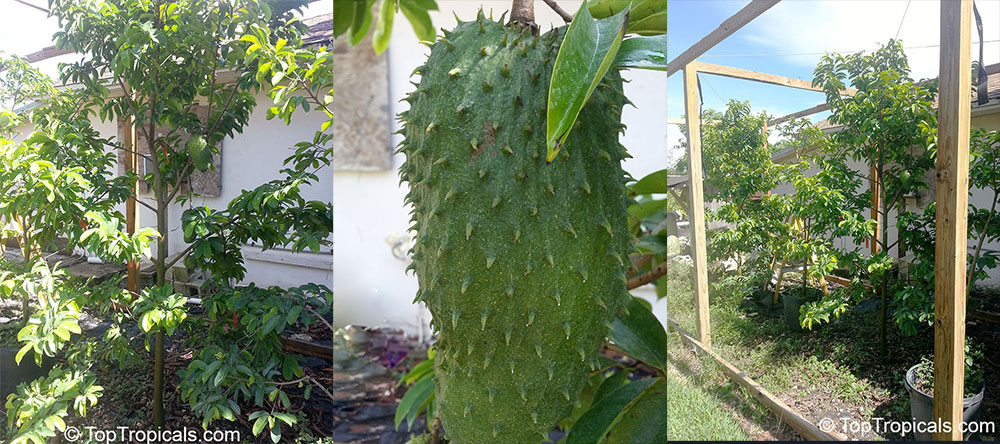
3. Guanabana, Soursop (Annona muricata)
4. Miracle Fruit (Synsepalum dulcificum)
5. June Plum (Spondias cytherea)
6. Guava (Psidium guajava)
Q: I am interested in buying some Barbados cherry
plants. Could you please advise if these can be grown in containers
indefinitely or it's still better for them to be planted in ground for nutrients
etc?
Barbados cherry grows into a dense bush, demands minimal pruning, and
begins bearing fruit at a young age. Our plants, which are propagated from
cuttings, initiate the flowering and fruiting process in the very same year. They
produce fruit almost year around. This year we've had three big crops:
April, July and October (still fruiting now!) besides sporadic fruiting throughout
the warm season.
You can cultivate Barbados cherry in a pot, commencing with a 1-3 gallon
container and gradually increasing the size each year. Below is a photo of a
fully developed tree in the ground, for reference. This tree is approaching
its third year of growth. When grown in a container, it maintains a more
compact size, with the largest container needed likely being between 7 to 15
gallons. Regular pruning can be employed to keep it smaller.
Photo above: Barbados Cherry bush in the ground
Barbados cherry (Malpighia) possesses a distinct growth pattern that
sets it apart from other tropical cherry varieties - Eugenias. Malpighia's branches can assume peculiar shapes, even at
angles of up to 90 degrees. Therefore, pruning to achieve the desired shape is
advantageous.
Additionally, you may want to explore the Dwarf Barbados cherry, a miniature cherry variety ideal for container
cultivation, with cascading growth habit. Although its fruits are slightly
smaller than those of the regular variety, they are notably sweeter.
Photo above: Dwarf Barbados Cherry fruit
When it comes to ensuring the health and vitality of your potted
Barbados cherry plants, maintaining a consistent nutrient supply is crucial.
Implementing a regular fertilization regimen is essential to promote robust growth,
consistent flowering, and bountiful fruit production. For optimal results, we
recommend using Sunshine Boosters, which are specially formulated to enhance
the development of fruits and edibles. These boosters are derived from
organic amino acids, making them environmentally friendly and safe for year-round
use. By incorporating Sunshine Boosters C-Cibus into your plant care routine, you can ensure
that your container-grown Barbados cherry plants receive the essential
nutrients they need to thrive and flourish.