Botanical name: Mangifera indica Also known as: Mango
USDA Zone: 9 - 11
Highligths
Groundhog said long winter… and it sure felt like it. But now it is
finally over, and balconies and patios are waking up again.
Easter is here, and with it comes that fresh start feeling - time to open
the doors, bring plants back out, and start growing.
We made it through the cold. For northern gardeners, that is every year;
for borderline zones, it is a reminder that freezes happen. That is exactly
why
growing in pots makes sense - you stay flexible.
Container growing is not just about pots - it is about choosing the right
plants. The best options stay manageable, produce well, and handle being
moved.
Let's look at what works. Start with plants that naturally stay compact and
adapt well to containers. These are the ones that won’t outgrow your
space and will reward you quickly. These are proven performers in containers
-
compact, productive, and easy to manage:
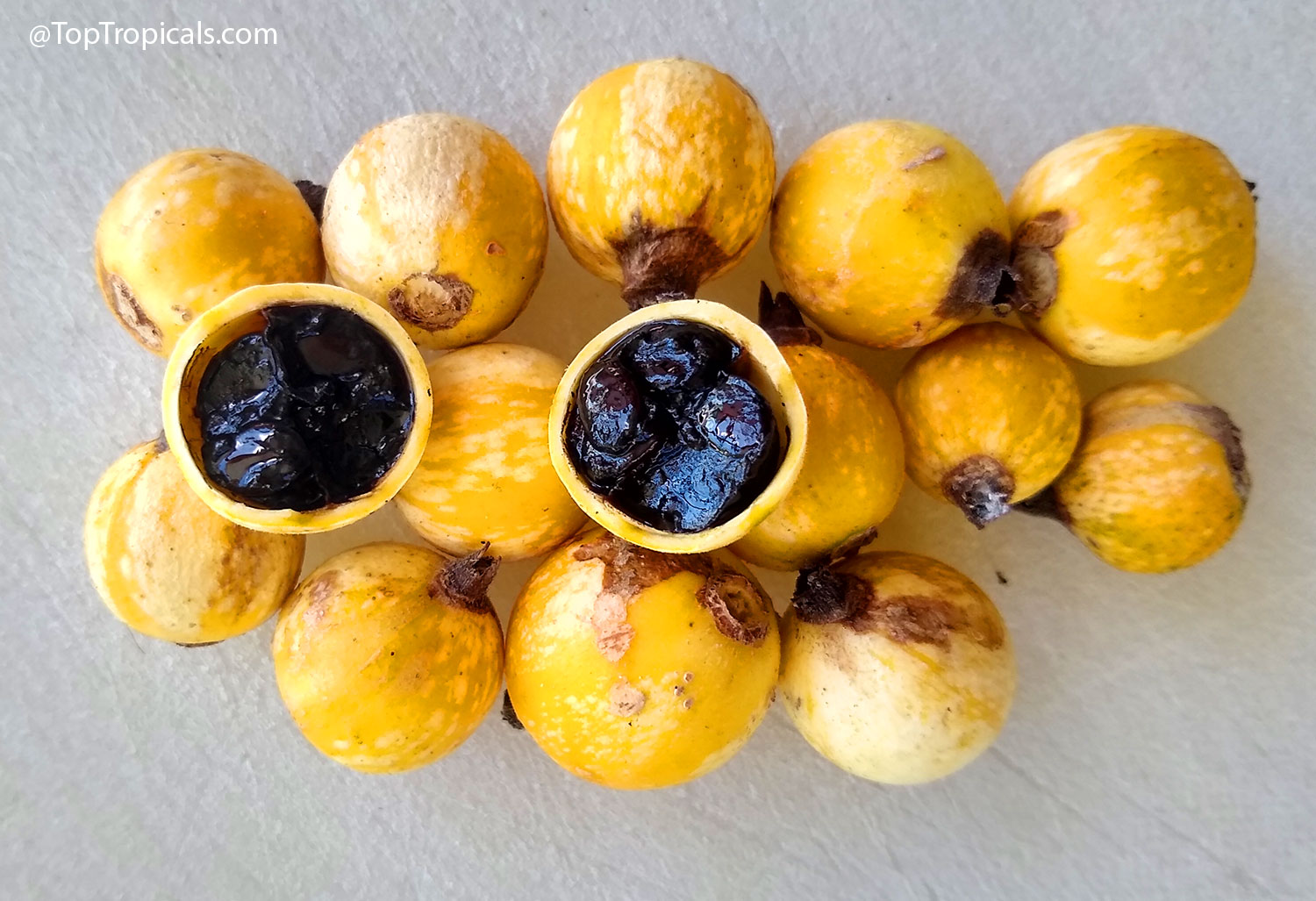
Botanical name: Randia formosa, Mussaenda formosa, Randia mussaenda, Rosenbergiodendron formosum Also known as: Blackberry Jam Fruit, Jasmin de rosa
USDA Zone: 9 - 11
Highligths
Fig Tree Plant Facts
Botanical name: Ficus carica Also known as: Fig Tree, Brevo
USDA Zone: 7 - 10
Highligths
Simple rule: if it stays compact and handles pruning, it
works in a container.
Skip the egg hunt this year - go on a plant hunt instead.
Start with one or two plants this Easter - not ten. Get them established,
learn how they grow, and then expand.
Container basics (keep it simple):
Pot size: start with 3–7 gallon, upgrade as
plant grows
Soil: fast-draining mix (never heavy garden soil)
Water: soak well, then let top inch dry
Feeding: consistent light feeding works better than
heavy doses
Sun: most tropicals want full sun (6+ hours)
🐣 Browse our Easter Container Collection
Randia formosa - Blackberry Jam Fruit
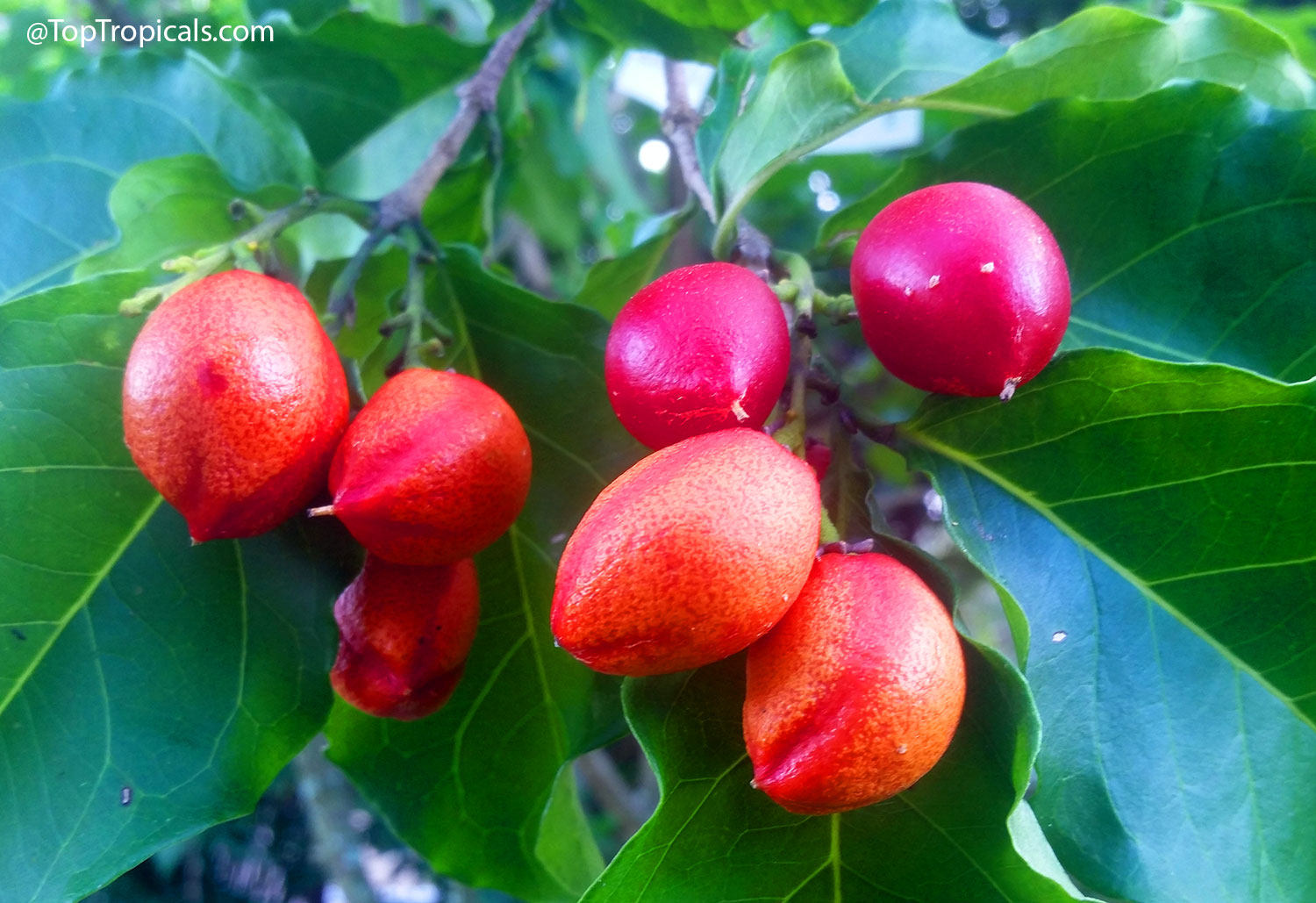
Bunchosia argentea - Peanut Butter Fruit
Peanut Butter Fruit Tree Plant Facts
Botanical name: Bunchosia argentea, Bunchosia armeniaca Also known as: Peanut Butter Fruit Tree, Ciruela Del Monte
USDA Zone: 9 - 11
Highligths
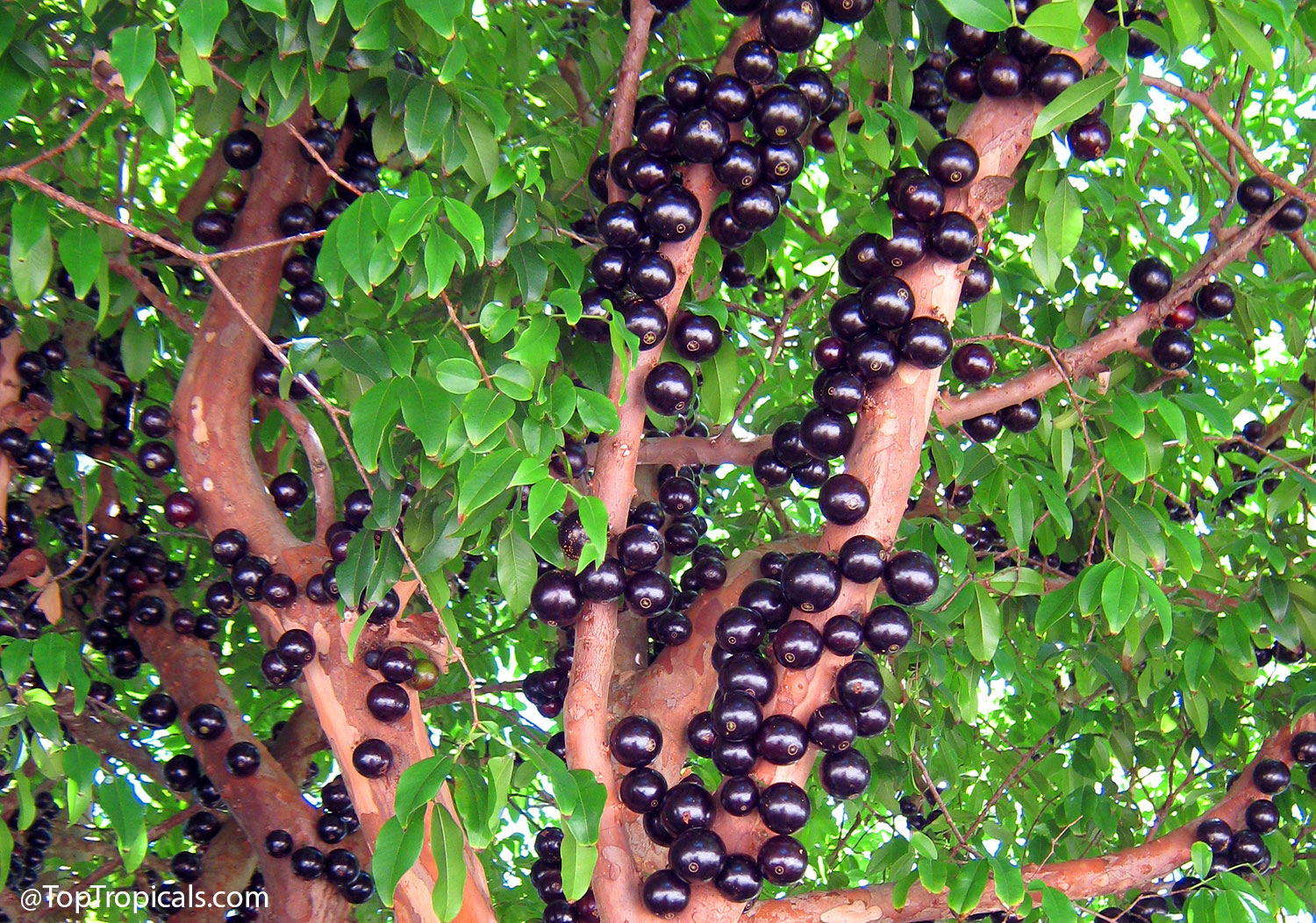
Myrciaria cauliflora - Jaboticaba
Jaboticaba Plant Facts
Botanical name: Myrciaria cauliflora, Plinia cauliflora, Eugenia cauliflora Also known as: Jaboticaba, Duhat
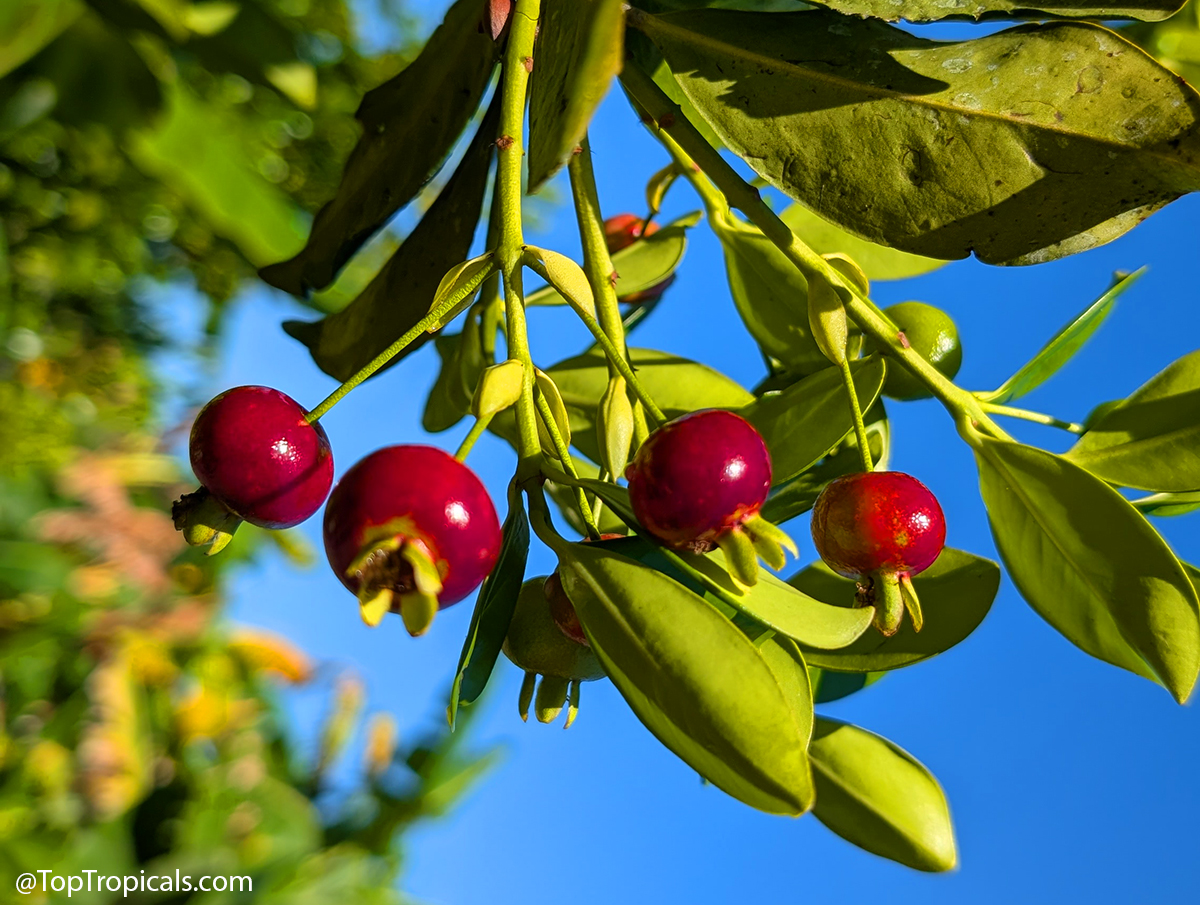
Botanical name: Eugenia brasiliensis, Eugenia dombeyi Also known as: Grumichama, Brazilian Cherry
USDA Zone: 9 - 11
Highligths
Date: 2 Jun 2022
Plant Horoscope - Gemini
What is your lucky Zodiac
plant?
By Alex Butova, the Witch of Herbs and Cats
... Gemini are very fond of plants, especially flowers. They are able to
devote their lives to favorite plants, selecting new varieties, planting
gardens, parks and arboretums.
In addition, the planet-ruler Mercury gives them with business ability -
Gemini are excellent flower merchants of any level: from flower growers who
sell their plants to everyone, to wholesalers who supply their delicate fragrant
goods around the world.
In their house, Gemini do not keep too many plants, they have enough of
those that grow outside in their nursery and garden. However, among those who
nevertheless became piece of the family (exactly this way Gemini perceive their
house plants), preference is given to graceful forms, pubescent and curly,
like Farfugium, Monstrous epyphyllum, often carved leaves (Monstera) and plants with
aroma. All these properties not only improve the physical well-being of Gemini,
but also helps save the spiritual and mental balance of their contradictory
but all while tender and romantic nature. Gemini don't care about common
spices, they love unusual plants and especially those with a sweet scent. Their
favorite aroma is rose and similar, like fragrances of Clerodendrums, Jasmines, Gardenias, Plumeria, and Brunfelsia. At critical moments sweet scents awaken them into the
life!..
Wake up to the smell of Coffee...
New Video:
Grow your own Coffee plant - Free Coffee
Everyday!
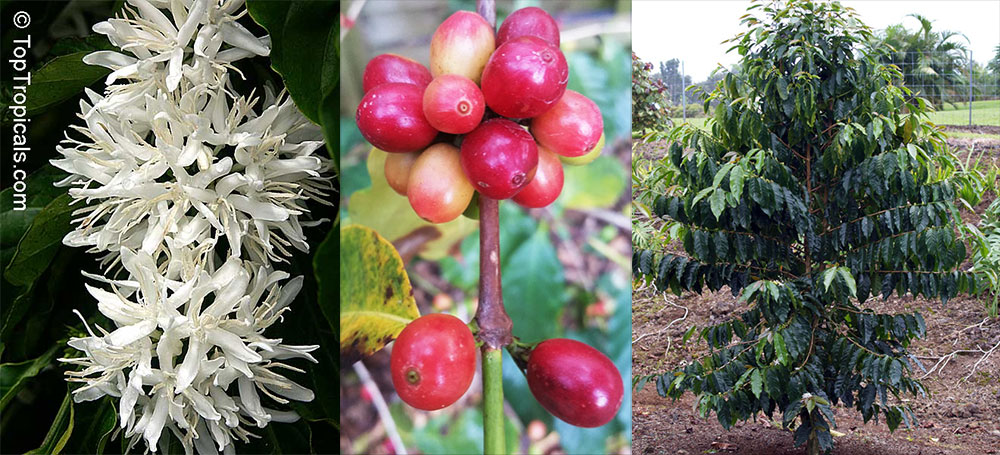
In this video we talk about growing Coffee easily in your own yard.
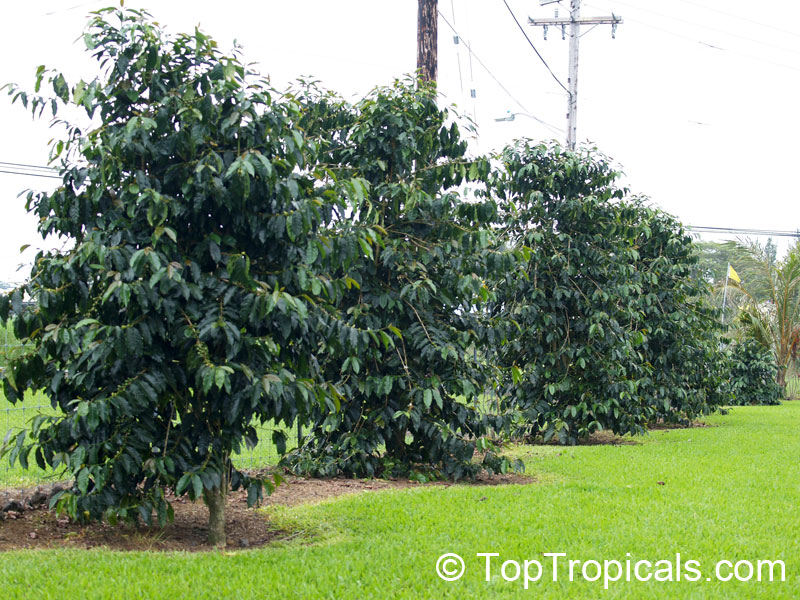
Coffee is the best gift plant and perfect house plant or container
fruit tree. The white, fragrant, star-shaped flowers are clustered and resemble
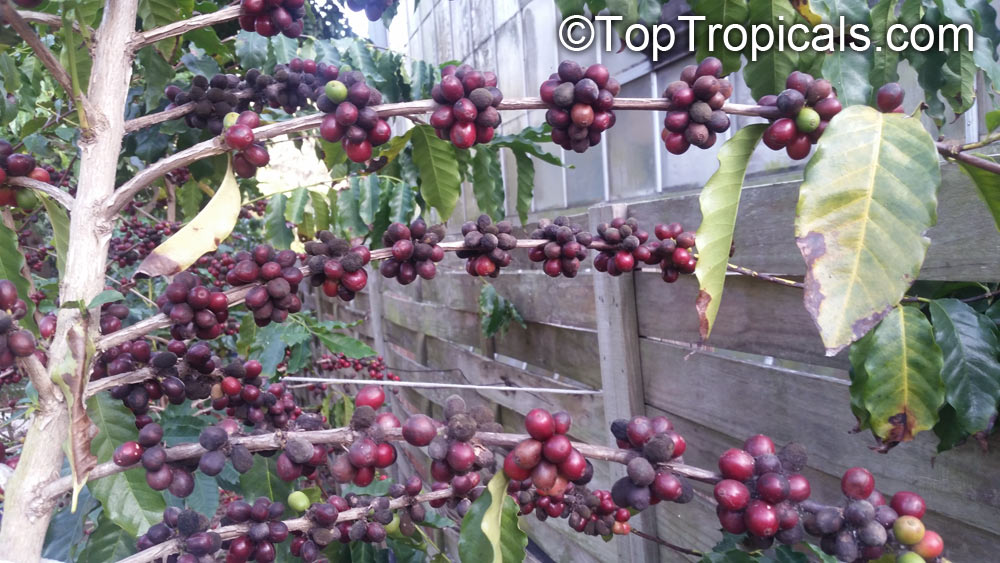
gardenias to which they are related. The whole fruit is edible, it is a small
fleshy berry changing in color from green to yellow to red. The seeds are the
actual "coffee beans" as they called, they can easily be dried, roasted and
ground at home. The most common coffee is Coffea arabica; other varieties
include Coffea catura - Dwarf Coffee Nanico and Coffea Kona - Hawaiian Coffee
Tree Mauna Loa.
Stay updated with TopTropicals Videos by subscribing to our channel at
YouTube.com/TopTropicals
and get our latest video news of what is fruiting and blooming!
Date: 17 Sep 2021
Mango Talk: How to prune mango trees for best shape and
production
by Ed Jones, the Booster Guy
...Why should you prune your mango trees? There are a few reasons.
First, a good foundation is the key to strong growth and a shapely tree.
Second, if you get your mango tree started off on the right foot with a
strong foundation, it becomes much easier to keep it shaped nicely.
And third - it will be forced to produce more branches allowing for more
places for fruit production...
...We received our Mango tree in late February of 2020 as a relatively
small plant in 3 gal pot...
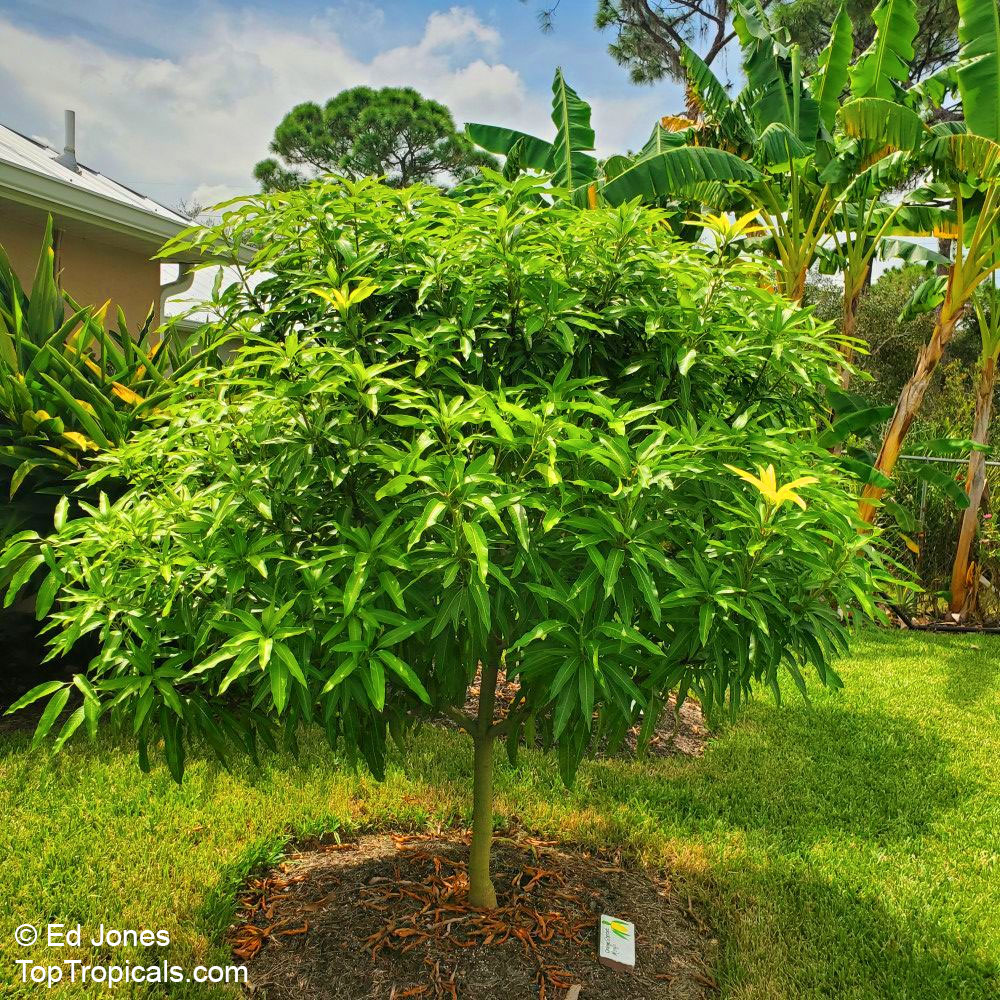
...The opening photo was taken just last week and you can see that as she
grows, her shape is very nice...
...She is now about 7' tall and just as wide. She has a great foundation
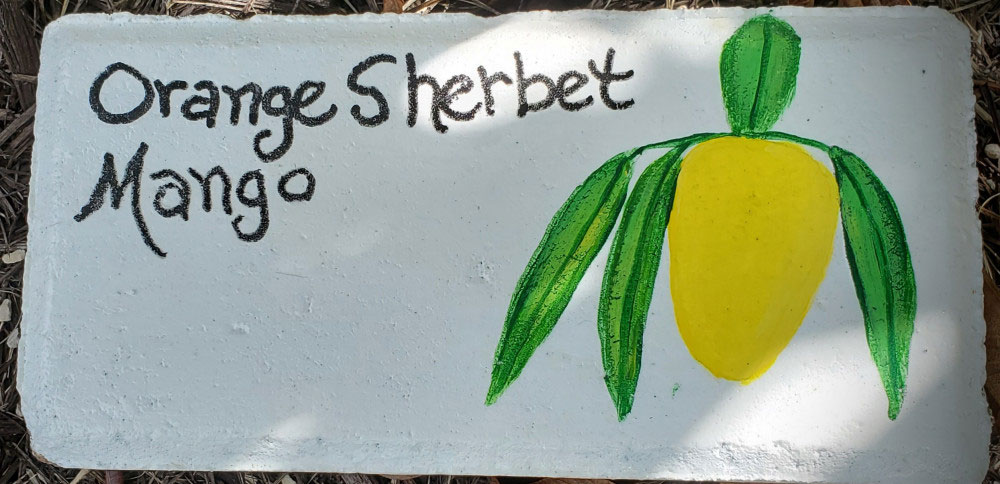
and a lot of branches. We also have less grass to mow. She also got her very
own marker painted on a brick:
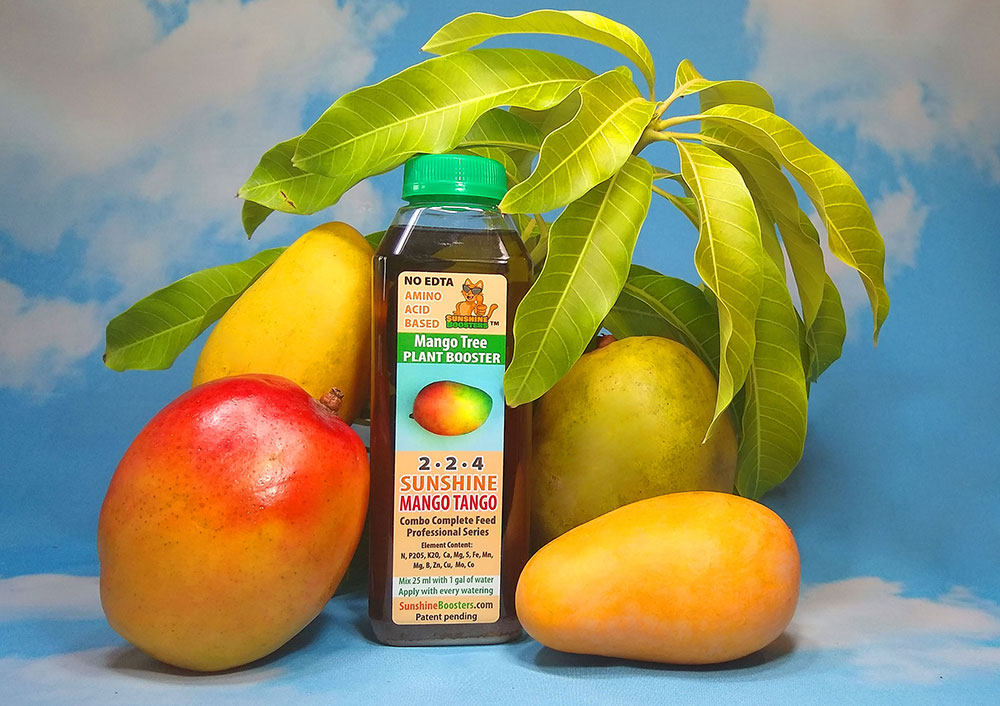
...We have also enlarged the circle of mulched area under the tree to
allow it to be able to get nutrients from it's SUNSHINE Boosters Mango Tango without having to compete with the grass.
This is one mistake that I see frequently in my neighborhood with all
trees...
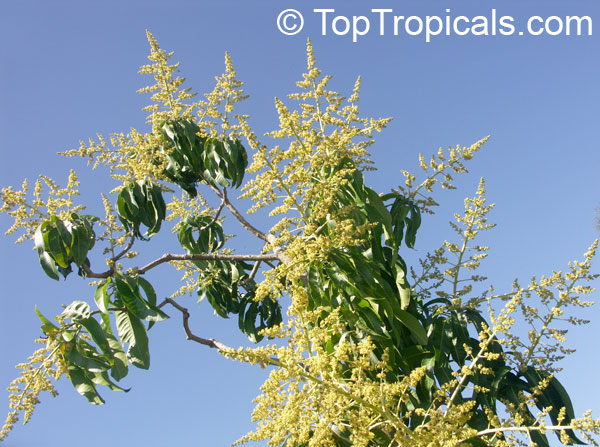
Q:The mango blossoms my tree had in February have blown off due
to weather conditions. Do you know what I can do to prevent this from
happening again in the future?
A: The only "guarantee" to protect mango flowers from cold
weather damage here in Florida is to plant a LATE flowering variety. Generally,
mango trees are winter bloomers. Those varieties called "early season" start
flowering in January (for example, Nam Doc Mai), and of course very often they
get affected by cold, so they drop. Some varieties are so called "late season"
- for example Venus. They start flowering in spring when the weather conditions are
more favorable.
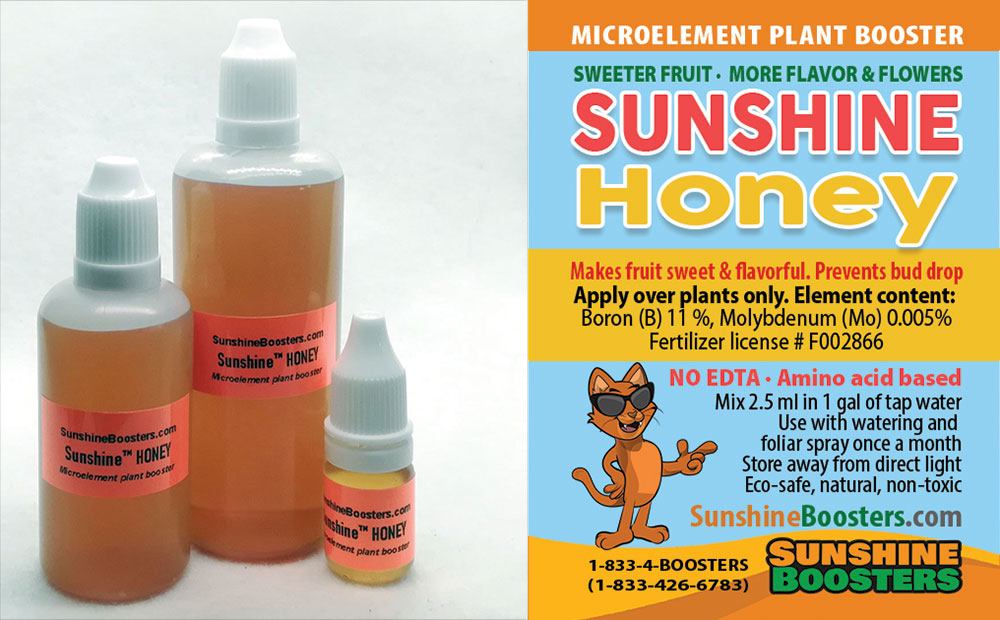
Another thing that may help you with mango flower drop is applying plant
micro-element supplement Sunshine-Honey - it contains Molybdenum and Boron, which help flower
and fruit development/strength and prevent their drop.