Garden Blog - Top Tropicals

Date: 22 Apr 2016

Plant Horoscope. Taurus Zodiac lucky plants: Fragrant Cananga odorata and Chonemorpha

Taurus - 4/20-5/20. Taurus is an EARTH sign ruled by the planet Venus. Venus is the planet that represents desire and beauty, regarded as the female embodiment of sexual love and human appetite, so Taurus plants often have gorgeous flowers and enticing fragrances and, occasionally, red fruit. It rules the internal sexual organs, the nose and sense of smell.

Because Taurus rules the throat and ears, the best plants for the Bull are often soothing to the throat, or may calm the digestive system after overindulging in the finest foods. Taurus is related to those things we want and value. It harmonizes various body systems, and influences the complexion and facial appearance. Also under Venus's dominion are the abdomen, kidney, thymus, and breasts. Venus-governed herbs are soothing and help to regulate the body's metabolism through the endocrine system. Taurus herbs are traditionally used to attract money and resources. Earthy Taurus sign is all about building a stable and comfortable foundation and can help you generate greater abundance and prosperity in your life.

Taurus Zodiac lucky plants - Aglaia, Cananga odorata (Ylang-Ylang), Artabotrys (Climbing Ylang-Ylang), Cerbera, Night blooming jasmine, Chonemorpha, Erblichia, Euodia, Hiptage, Iboza (Musk Bush), Anise, Lavender, Lonchocarpus Lilac Tree, Nutmeg, Parijat, Camphor Basil, Osmanthus, Funeral tree, Quisqualis, Satureja (Kama Sutra Mint Tree), Viburnum, Carissa, Murraya, Curry Leaf, Bunchosia (Peanut butter fruit), Eucalyptus, Lily, Vitex agnus castus (Blue Chaste Tree), Alstonia scholaris (Sapthaparni), Papaya, Maple, Jasmine, Guaiacum, Camellia, Ephedra, Fuchsia, Geranium, Spider lily, Gardenia, Magnolia, Plumeria, Paeonia,  Verbena, Clerodendrums, Apple, Pear, Apricot, Peach, Plantain, Olive, Grape, Pomegranate, Mango, Neem Tree, Cherry, Cypresses, all Berries, Raspberry, Asparagus, Mint, Clove, Roses, Stagshorn fern, Catnip.

For other signs information, see full Plant Horoscope.

April 22 Earth Day discount - 15% off fragrant plants! Earth Day is more than just a single day â€"April 22, 2016. It's bigger than attending a rally and taking a stand. Plant one tree at a time to make our Planet better! This Earth Day and beyond, let's make big stuff happen. - See more at: www.earthday.org

Check out our Fragrant Plants for 15% off! 1-day deal only!
Date: 29 Nov 2020

Cold protection of tropical container plants

Q: I am long time customer of yours, I live in San Diego California and while the summer and Fall temperatures are warm to mild, the winter temperatures dip to a point where some tropicals die off. We are experimenting with different variations of way to heat and insulate the pots we have the tropicals planted in as a way to keep them alive during the colder winter months. I was wondering if you knew of the ideal soil temperature for these tropical in order to look their best year round. All of the heaters we have installed have thermostats and temperature adjustments so we can now keep the soil anywhere between a range of between 65-75 degrees. Any advise you can provide would be greatly appreciated.

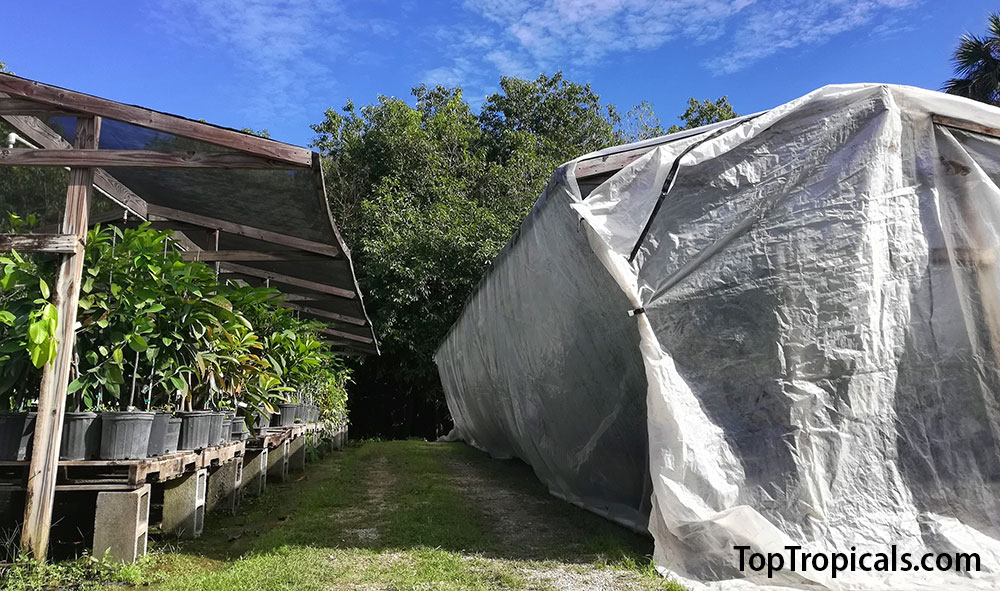
A: This is a very interesting concept you are working with. Indeed, keeping pots/roots warm, may help a lot! We've been experimenting with cold protection for a long time - for the above-ground plant parts. For sure keeping roots protected (even with a thick layer of mulch) will benefit tropical plants during winter. In case with container plants, this may help dramatically.
The guideline is, tropical plants slow down or stop their metabolism at 65F. As long as you can keep soil above that temperature - this should work great. Of course, the higher the better.
Optimum temperature for growing tropical plants in general - 70-85F. Above 90F, metabolism stops too, unless it's a heat tolerant, desert plant.

More information on winter cold protection of tropical plants and zone pushing:

Greenhouse in Virginia
Plumeria cold protection
Ghost Cold Protection
Seven rules of cold protection for tropicals
About Cold Protection
Cold protection - winter action for your plant collection
Tropical Treasures articles on zone pushing.

Date: 18 Feb 2026

⭐️ Choosing the Right Variety of Jasmine Sambac

By Tatiana Anderson, Horticulture Expert at Top Tropicals

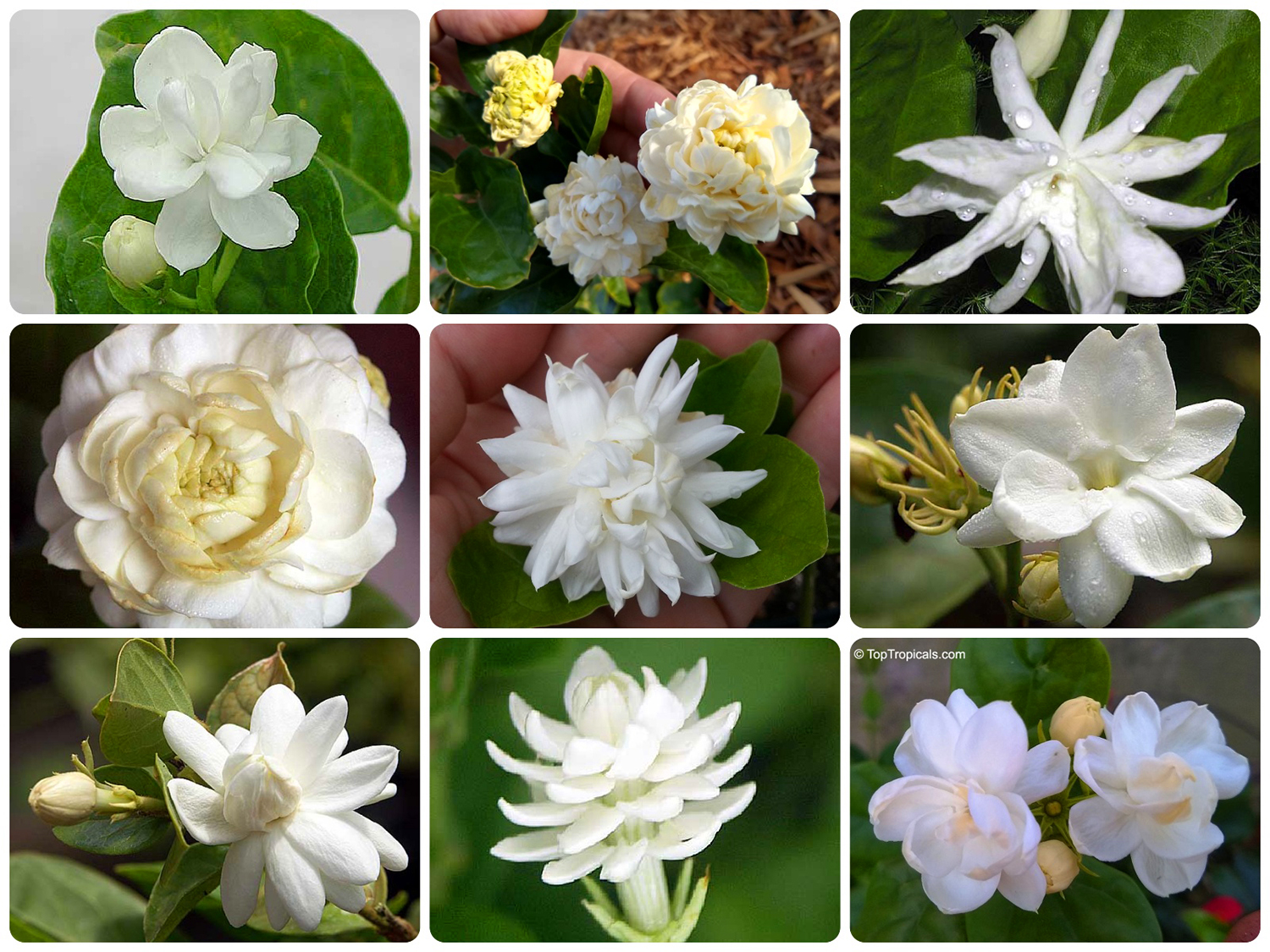
Jasmine  Sambac  varieties  collage  showing  single,  double,  and 
 multi-layered  white  fragrant  flowers  including  Belle  of  India,  Grand  Duke, 
 Arabian  Nights,  and  other 
 forms.

Jasmine Sambac varieties: Arabian Nights, Little Duke, Belle of India, Grand Duke, Duke Supreme, Maid of Orleans, Mysore Mulli, Malichat, Gundu Mallii

One of the reasons Jasmine Sambac is so fascinating is that it does not come in just one form. Each variety has its own personality.

If you want a compact patio plant, Arabian Nights or Little Duke are excellent choices. They stay tidy, bloom generously, and are easy to manage in containers.

If you prefer elegant, elongated petals and a refined look, Belle of India is a favorite. It can be grown as a small bush or trained lightly as a vine.

For those who love full, carnation-like double flowers, Grand Duke of Tuscany and Grand Duke Supreme are classic selections. They are vigorous and make impressive shrubs in warm climates.

If you need a stronger climber for fences or hedges, Maid of Orleans performs beautifully in full sun while Mysore Mulli prefers semi-shade.

Collectors often enjoy rare forms like Mali Chat or newer hybrids such as Gundu Malli, which combine traits from different lines.

How to Grow Jasmine Sambac Successfully
Sambac is not difficult, but it responds best to consistency.

Light: Full sun produces the most flowers. In very hot climates, light afternoon shade is acceptable. Indoors, place it in the brightest window available.

Soil: Use a well-draining potting mix such as Sunshine Abundance. Sambac does not like heavy, constantly wet soil.

Water: Water thoroughly, then allow the top layer to dry slightly before watering again. Reduce watering during cooler months.

Pruning: Light trimming after a bloom cycle encourages branching. More branches mean more flower buds.

Feeding: Sambac is a heavy bloomer, and fragrance takes energy. During active growth, feed regularly with a balanced fertilizer that supports flowering such as Green Magic (controlled release every 6 months) or liquid Sunshine Boosters Pikake (formulated especially for fragrant flowers) - with every watering. I prefer formulas slightly higher in potassium to encourage stronger bud formation and richer bloom cycles. Consistent feeding during warm months makes a visible difference in both flower count and intensity of scent.

With proper care, Jasmine Sambac will reward you not just with flowers, but with perfume that changes the atmosphere of your entire garden.

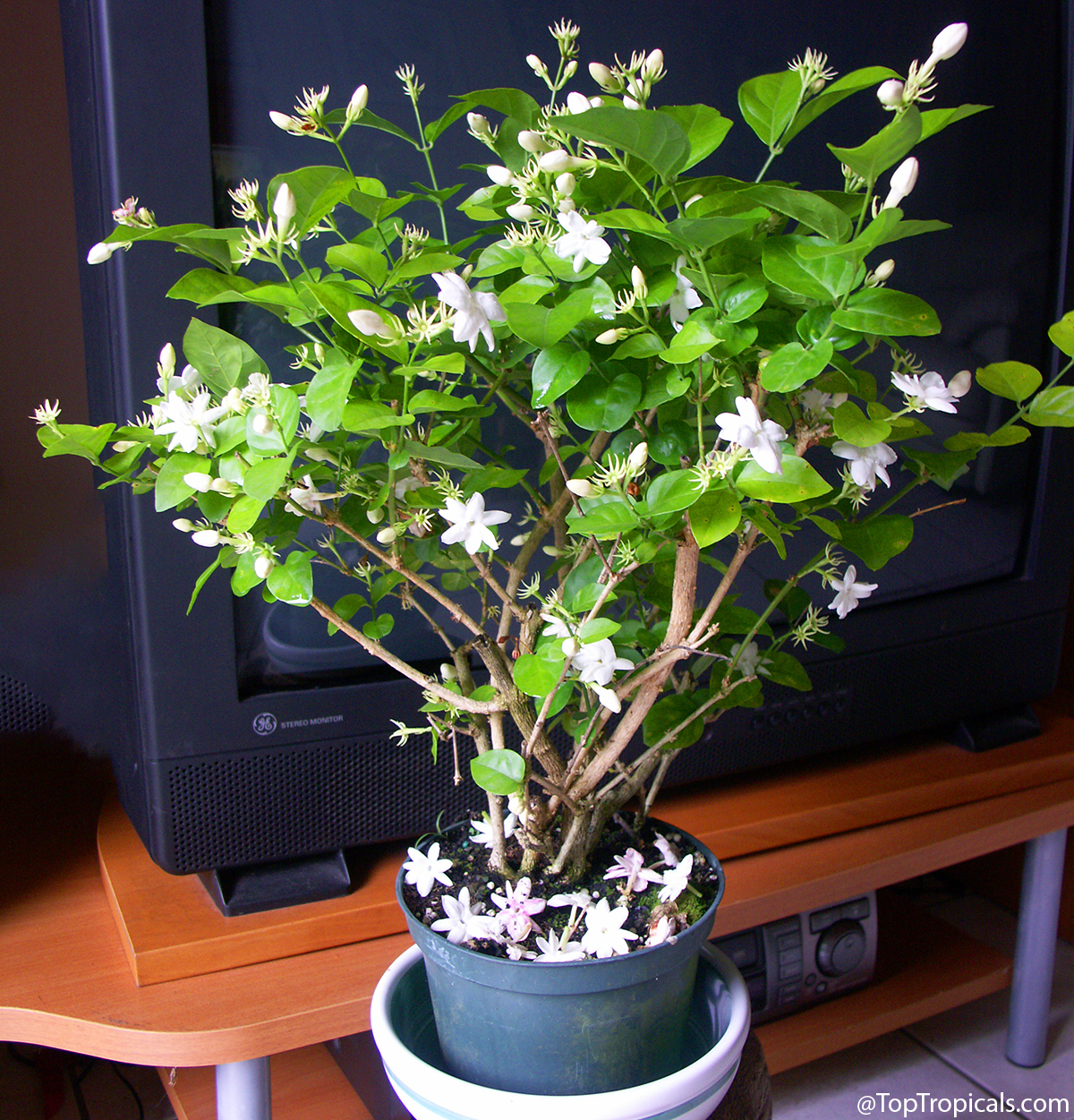
Jasmine  Sambac  Maid  of  Orleans  blooming  indoors  in  a  container  with 
 numerous  white  star-shaped  flowers  and  glossy  green 
 leaves.

Jasmine Sambac Maid of Orleans flowering indoors in a container under bright light.

❓Frequently Asked Questions About Jasmine Sambac

  • Does Jasmine Sambac need full sun?
    It flowers best in full sun. In very hot climates, light afternoon shade is acceptable. Indoors, give it the brightest window possible.
  • Can I grow it in a pot?
    Yes. Sambac performs beautifully in containers. Many gardeners prefer pots because it is easier to control size and move during cold weather.
  • How often does it bloom?
    With proper light and feeding, it blooms in cycles throughout the warm season. Consistency in care makes flowering more reliable.
  • Why is my plant not blooming?
    The most common reasons are insufficient light or irregular feeding. Increase light first, then review your fertilizing routine.
  • Is it difficult to grow indoors?
    Not if you provide strong light and good air circulation. Compact varieties adapt especially well.
  • Is it frost tolerant?
    No. Jasmine Sambac is tropical. Protect it from temperatures below 40F and bring it indoors before frost.

🌸 Year of the Horse Special – Jasmine Bonus

Celebrate 2026 with the fragrance of Jasmine plants. For a limited time, enjoy special savings when you grow one of the most wanted perfume plants in cultivation.

Jasmine Sale - 15% Off
Save 15% on all Jasmine plants. Discount is already applied in the online store - no code needed.
Offer valid through 02/28/2026.

🛒 Explore varieties of Sambac

Date: 12 May 2026

The strange tropical plant that eats bugs - and gardeners cant stop collecting

The strange tropical plant that eats bugs - and gardeners cant stop collecting The strange tropical plant that eats bugs - and gardeners cant stop collecting The strange tropical plant that eats bugs - and gardeners cant stop collecting

🐸 The strange tropical plant that eats bugs - and gardeners can't stop collecting


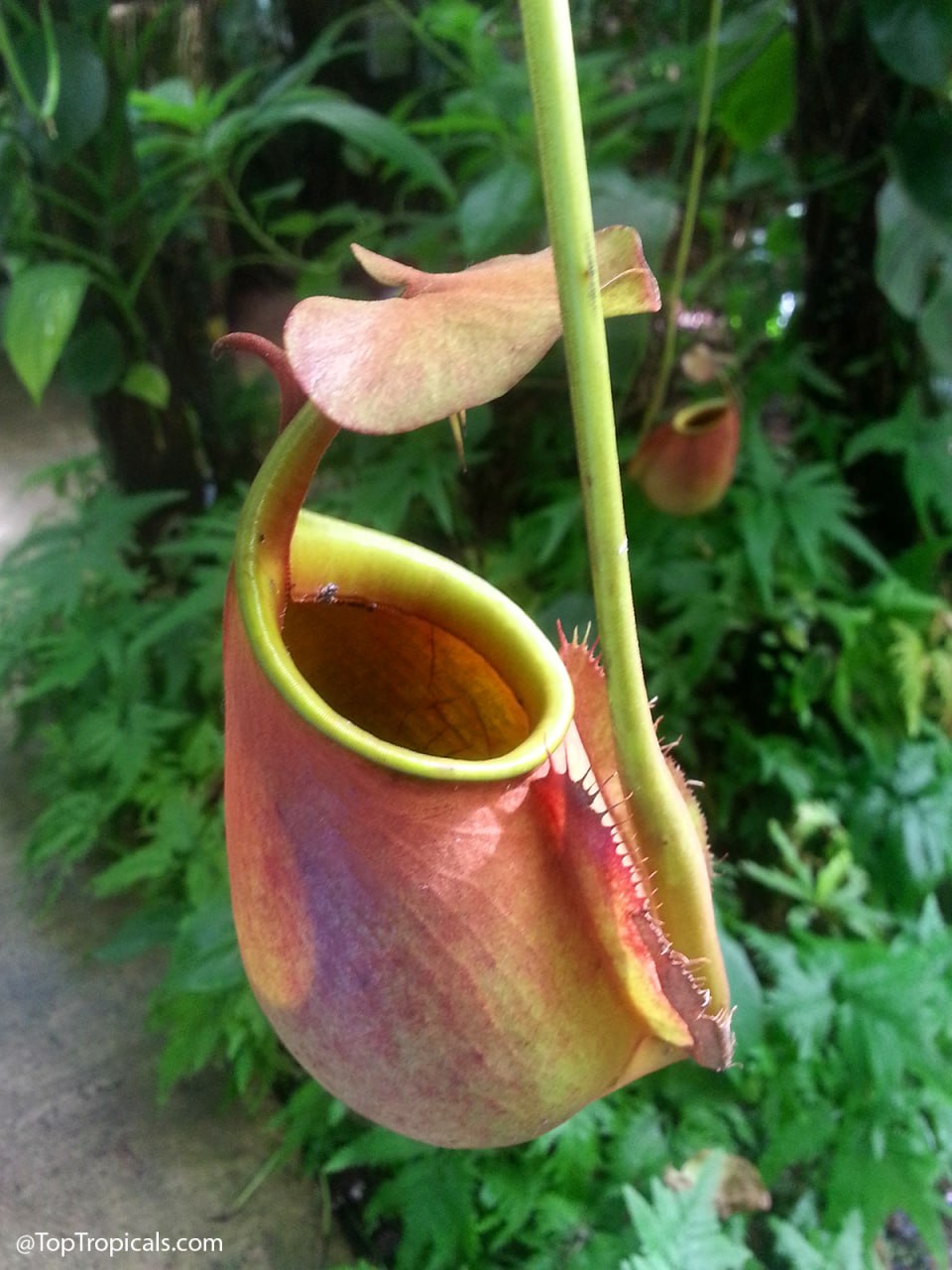
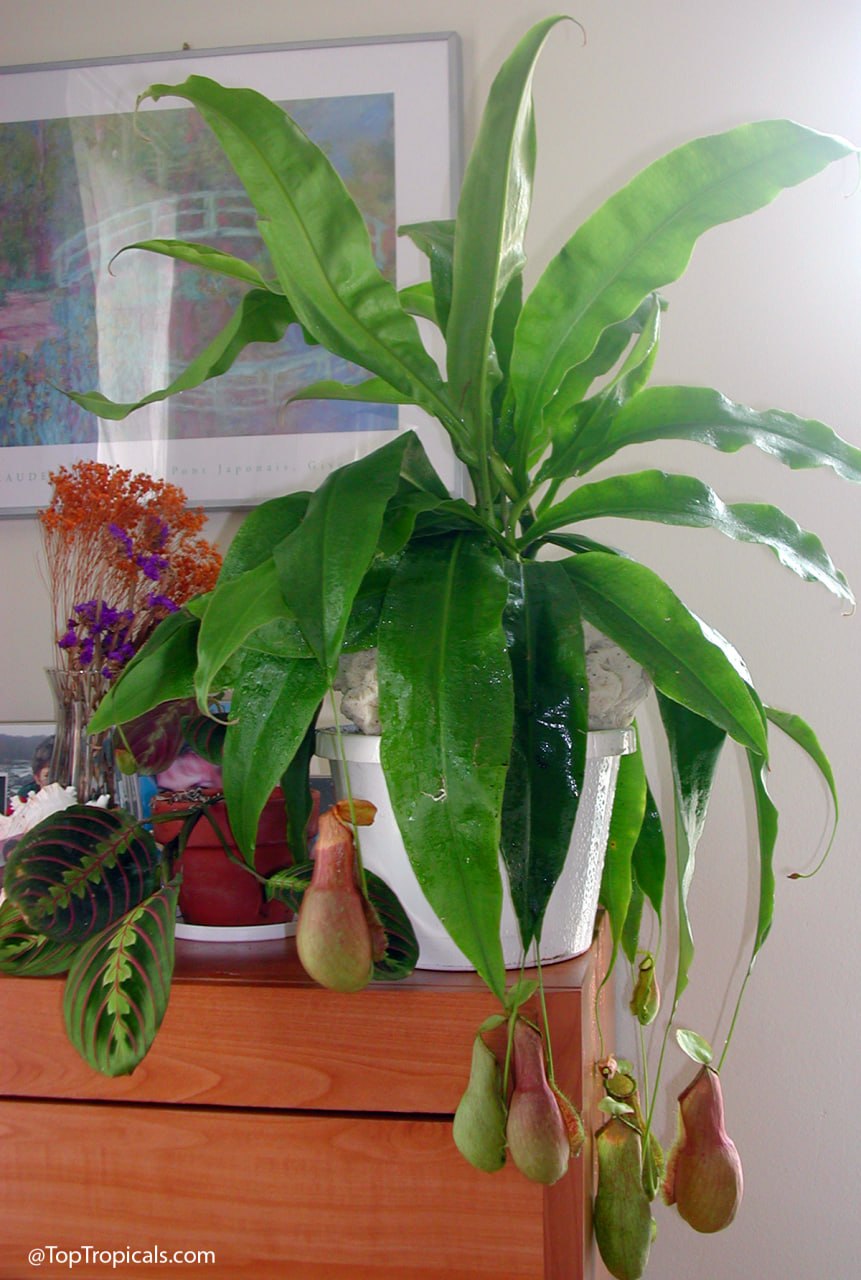
Nepenthes - tropical Pitcher Plants - look almost fake. Long vines and shiny leaves give way to colorful pitchers resembling exotic lanterns or sci-fi creatures. But these aren't flowers; they are sophisticated traps. Among the world's most fascinating carnivores, they lure insects into fluid-filled vessels to digest them for nutrients. Giant species can even trap small frogs or mice! 🐸🐭

  • 🐱 Why pitcher plants look so unreal


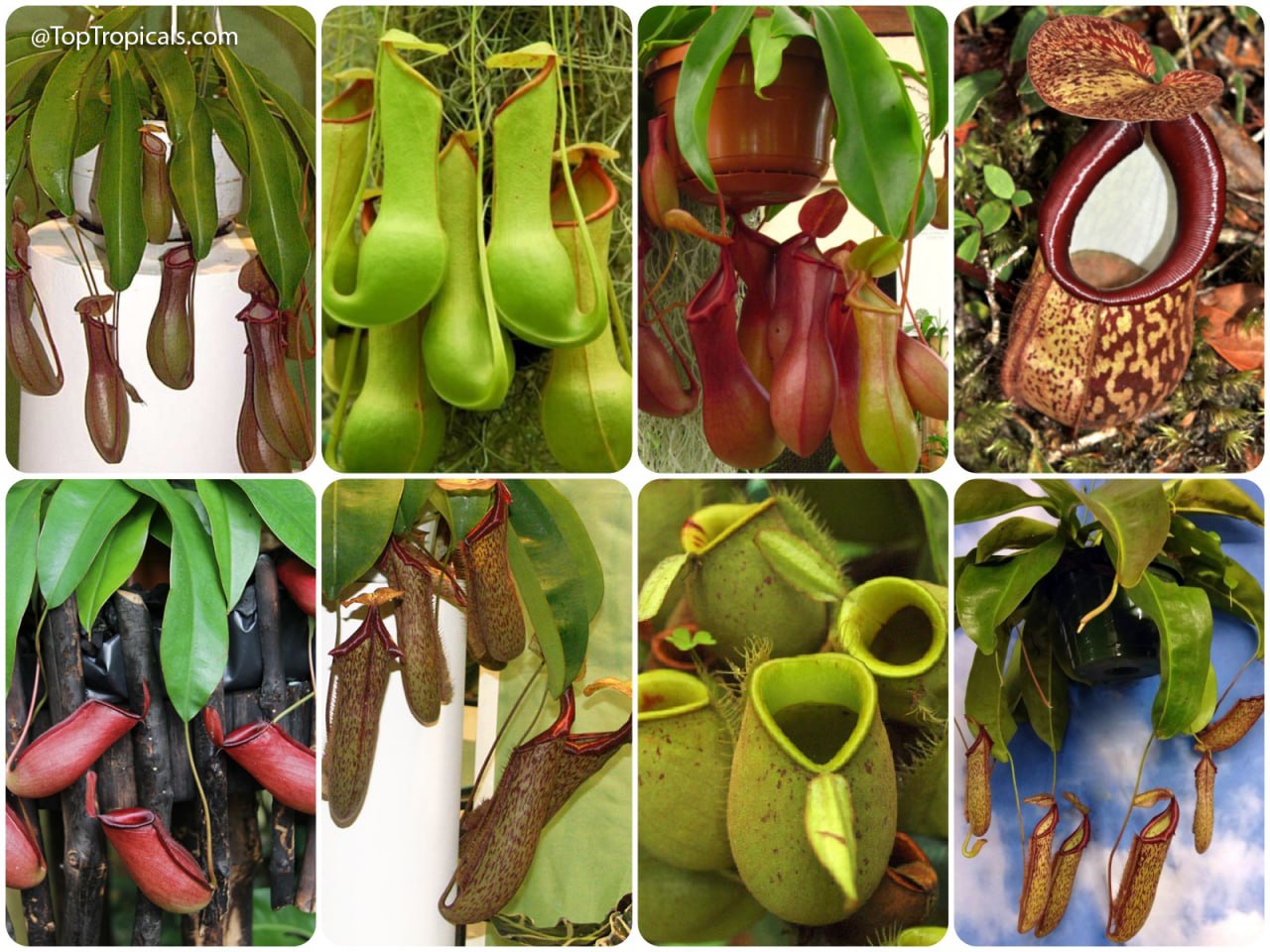
Pitchers are modified leaves designed to attract prey with vibrant colors and nectar. Many feature dramatic stripes or flared, sculpted rims. The diversity is immense: compact species fit on windowsills, while jungle giants produce foot-long traps. Some thrive in steamy lowlands, others in misty mountains. Their digestive fluid can even become sticky and elastic, making escape impossible.

  • 🐱 The plant that inspired engineering


These plants have inspired more than just gardeners. Their slippery surfaces led to "liquid-infused" materials used in anti-fogging and water-repelling tech. Engineers study them as nature’s original biological pitfall trap, a masterclass in biomimetic design.

  • 🐱 Why collectors become obsessed with Pitcher plants


What starts as a curiosity often becomes an obsession. With hundreds of species and hybrids, pitchers can resemble cobra heads, wine goblets, or alien pods. Under bright light, they develop stunning hues of burgundy, orange, or candy-stripes. Because of their popularity, ethical hobbyists emphasize buying nursery-propagated plants to protect wild populations from poaching.

  • 🐱 Surprisingly easier than people think


Despite their reputation, many hybrids thrive indoors with basic care. They need bright indirect light, high humidity, and excellent drainage. Crucially, they require mineral-free water (distilled or rainwater) and airy media like sphagnum moss. Regular potting soil or tap water can be fatal to these sensitive plants.

🐱 The pitchers are temporary - and that's normal


It is normal for old pitchers to dry up as the plant grows. Healthy Nepenthes constantly replace traps, often changing shape and color as they mature. This shape-shifting behavior makes them addictive to watch - one month it’s an ordinary vine, the next it’s a living rainforest documentary.

🛒 Ready to go carnivorous? Feed your curiosity - get one for your collection

📚 Learn more:

Winged Nepenthes Plant Facts

Nepenthes alata, Nepenthes graciliflora
Winged Nepenthes, Pitcher Plant
USDA Zone: 9-11
Vine or creeper plantSmall plant 2-5 ftSemi-shadeRegular waterEpiphyte plantUnusual color

#Container_Garden #Nature_Wonders

🟢 Join 👉 TopTropicals

Date: 25 Sep 2025

How do we ship plants? Part 1: prepare the plant

How do we ship plants? Part 1: prepare the plant.

🚚 How do we ship plants? Part 1: prepare the plant.

  • 📦 We hear it all the time: "You guys ship plants? Wow! How do you ship a plant? It's... live!"
  • 📦 Well, we've been doing it for almost 25 years now - that's a quarter of a century! Top Tropicals was one of the first nurseries to figure out plant shipping, long before Amazon and all the big online platforms where today you can order just about anything.
  • 📦 After so many years, our Team worked it to perfection. Want to see how it's done?
  • 📦 Like they say, it's better to see once than hear a hundred times. In this video, we'll show you the tricks that keep plants safe on their journey from our nursery to your doorstep.


🎥 Part 1 covers how we prepare the plant before it goes into the box.

❗️Stay tuned for the next step in our upcoming video!

🛒 Shop plants online

📚 Learn more:


Shipping information page

#How_to

🟢 Join 👉 TopTropicals