Chill out and relax by planting a tree! We just watched the most exciting Super Bowl ever... What a game! It was the greatest comeback in Super Bowl in history. Now it is time to let Top Tropicals help give your garden a great comeback too. Relax, have some peaceful happy time, and nothing can be better than planting a tree!
The best tree ever, by many features is a Mango tree. Here at least 5 reasons why:
1. Mango tree is good for beginners since it has low maintenance requirements, including low water needs.
2. Mango tree is easy to ship.
3. Mango tree is a great present.
4. Mango tree is a rewarding fruit tree that will produce fruit for you the same or next year - all our varieties are grafted and ready to bloom.
5. Mango tree produces the most delicious fruit in the world. The sweetest, flavorful, fiberless varieties can be only tasted from home gardens - they simply are not available from grocery stores due to transportation reasons (only fiborous low quality fruit can be safely shipped and stored).
Happy planting, end enjoy your fruit soon! See all varieties (for backorder items, add to your wishlist and you will be notified when available, very soon!)
Hurry up, WHILE THE STOCK LASTS! Offer is valid 2 days only, and expires February 9. Offer not valid for previous purchases.
Date: 6 Dec 2018
Seven rules of cold protection for tropicals
Q: I was
always wondering how you guys manage to grow true tropical trees in Florida? I
live in Puerto Rico and we have Breadfruit trees growing here in a wild... but my sister lives not far
away from you, in Orlando, which is much colder, and I wonder if I can get
her a
Breadfruit tree for Christmas?
A: Your
sister can grow a Breadfruit tree in Orlando either in a pot (and bring it indoors during
cold periods) or in the ground inside a structure (an elclosed conservatory
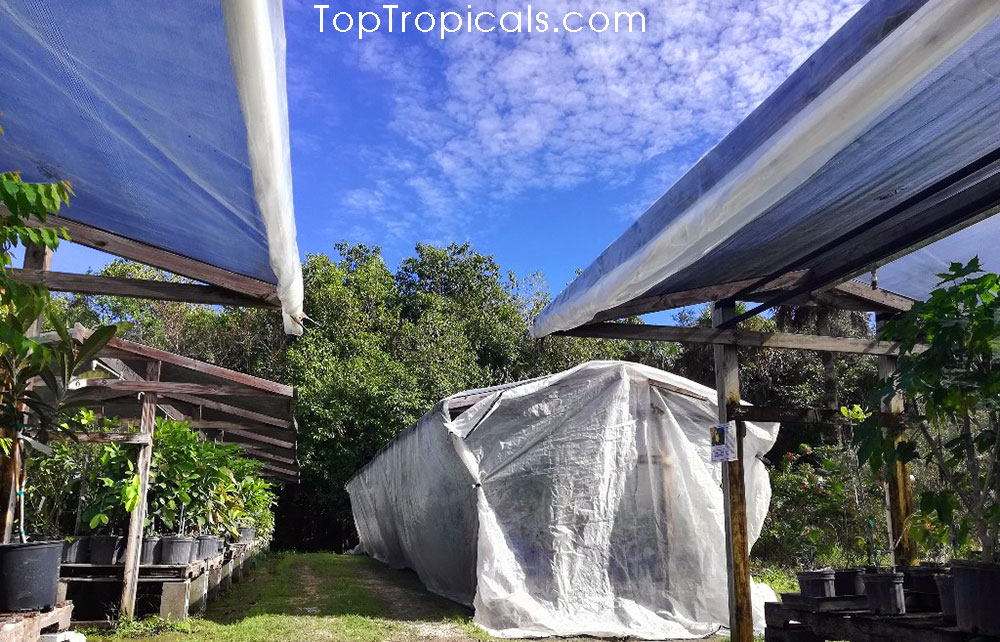
with heating system). See our customer's Greenhouse in Virginia. Cold protection of tropical plants is a lengthy
subject and we have many interesting publications about it in our managine
Tropical
Treasures and on the website. In a nutshell, when growing tropicals outside of
tropical climate, you need to follow these 7 rules:
1. Cut watering to a minimum. Cold+wet kills tropical roots.
2. Water thirsty plants before a cold night. Jucy leaves have fewer
chances to be cold-zapped.
3. Wind protection is more important than a temperature drop. Plant
tropicals close to a house or surrounded by other trees.
4. Duration of a cold period is more critical than the cold itself. If
expecting long cold hours, bring up all available protection resources.
Christmas lights or propane heaters - as long as there is a heat source,
everything helps!
5. Remove plastic covers during the daytime so plants don't get
"cooked" in the sun. Fabric covers are better than plastic.
6. Grow ultra-tropicals in containers and bring them inside the garage
or even indoors during the cold.
7. Use SUNSHINE plant boosters and feed your plants well during Summer to improve cold hardiness.
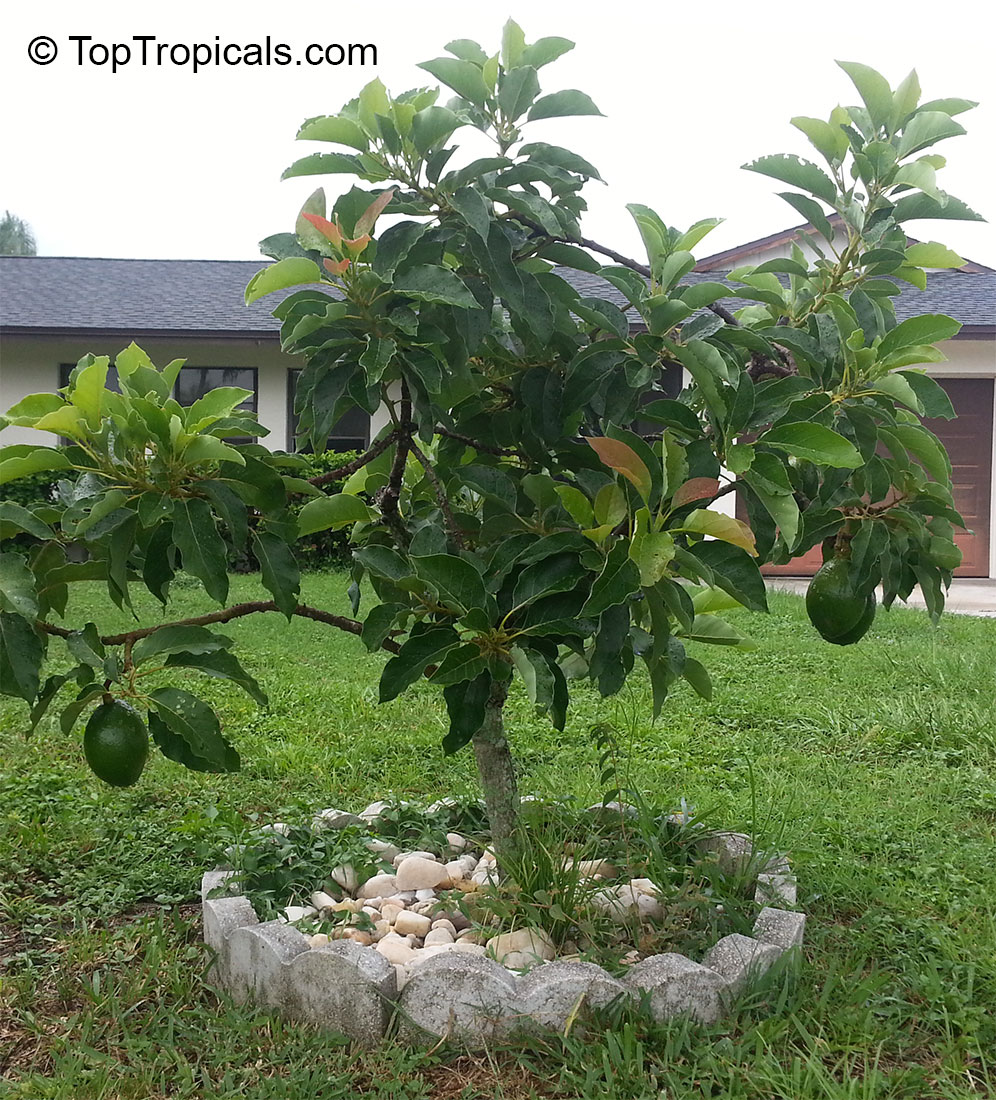
Grafted trees, including Mango and Avocado, will start flowering and fruiting right away
Q: It would be easier for us buyers, if we could search for
plants that produce fruit in 2 years or less... I don't have the patience to wait
longer than that for fruit. I'm trying to buy for a fairly good sized garden
but want some fast growers and fruit produced in 2 yrs. Can you help me
out?
A: Fruiting time depends on many factors (growing conditions,
fertilizing, and even specific variety), this is why we can not just put a
simple icon "will fruit within 2 years".
However, most grafted and air-layered fruit trees, including all Mango, Avocado, Loquat, Sapote, Sapodilla, Longan, Peaches and Nectarines - will fruit right away. If you see in our store "grafted" or "air-layered" in plant description
- these trees will fruit soon. Some of them are already flowering and
fruiting!
Some non-grafted trees will fruit within a couple of years or even
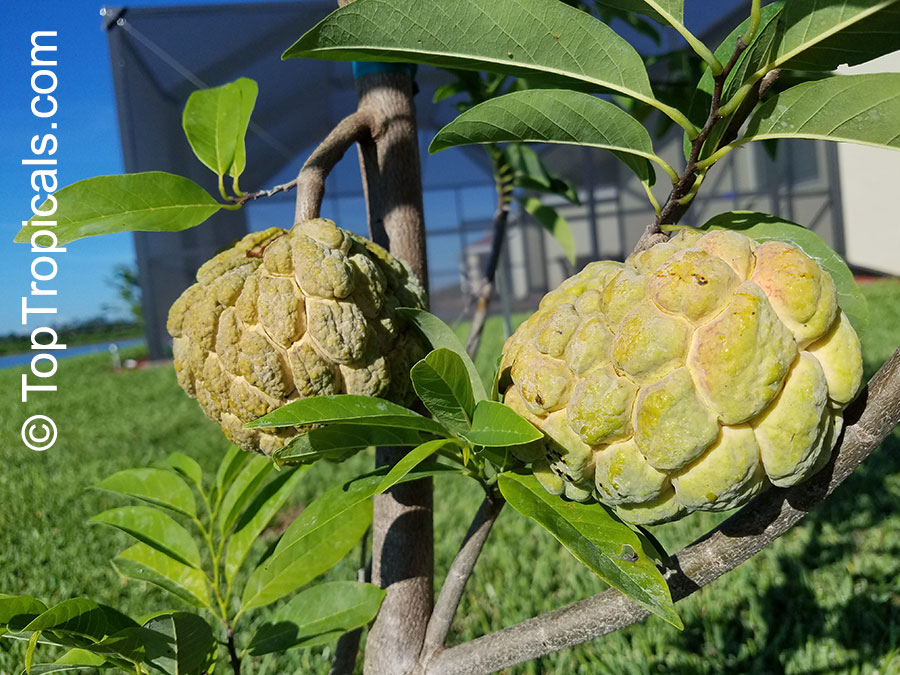
sooner (those from cuttings, root division or even seedlings) - such as: Annona, Artocarpus (Jackfruit), Eugenia, Guava, Banana, Dragon fruit, Mulberry, Blackberry/Raspberry. Banana, Mulberry, Dragon fruit,
Blackberry-Raspberry - usually fruit within a year. You may refer to our store directory page for fruit specials.
Annonas start fruiting within 3 years from seed and are the most
popular fruit trees for both container culture and small gardens.
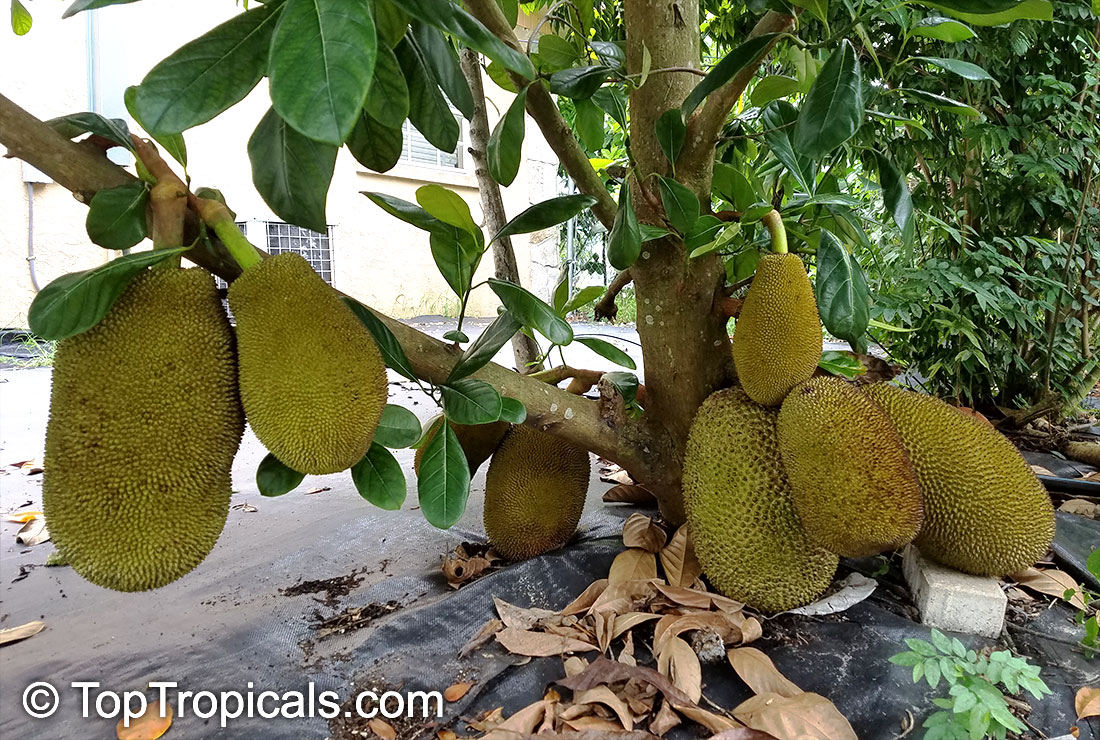
This Jackfruit started fruiting on the second year after planting in the
ground.
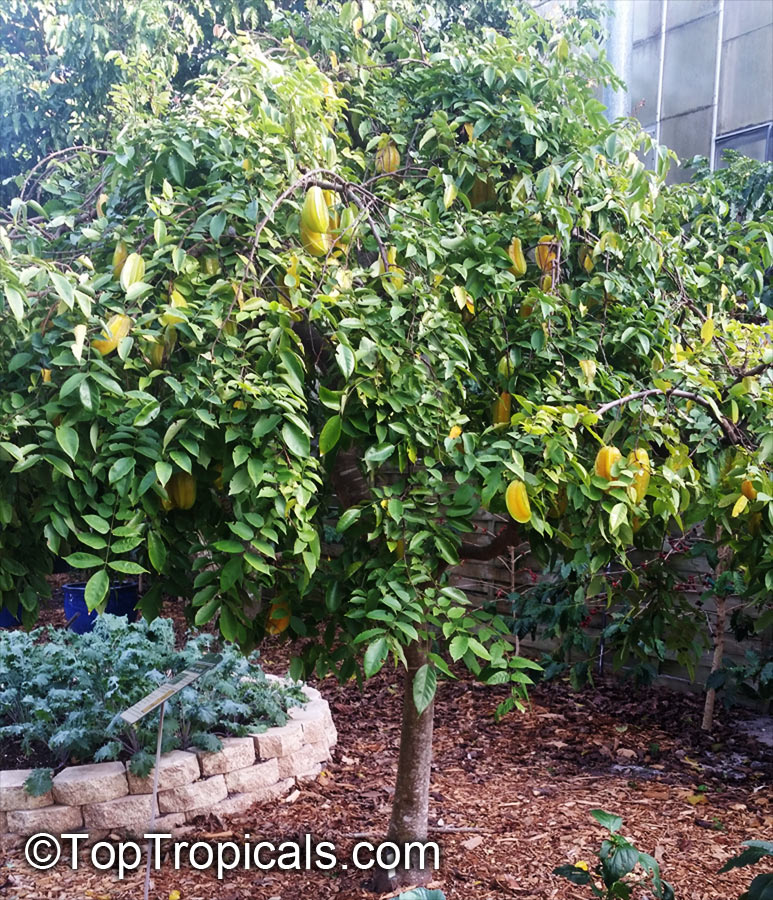
Carambola - Start Fruit - will start producing fruit the same year or
next year. We have them fruiting in pots, sometimes as small as 1 gal pots!
Date: 9 Aug 2021
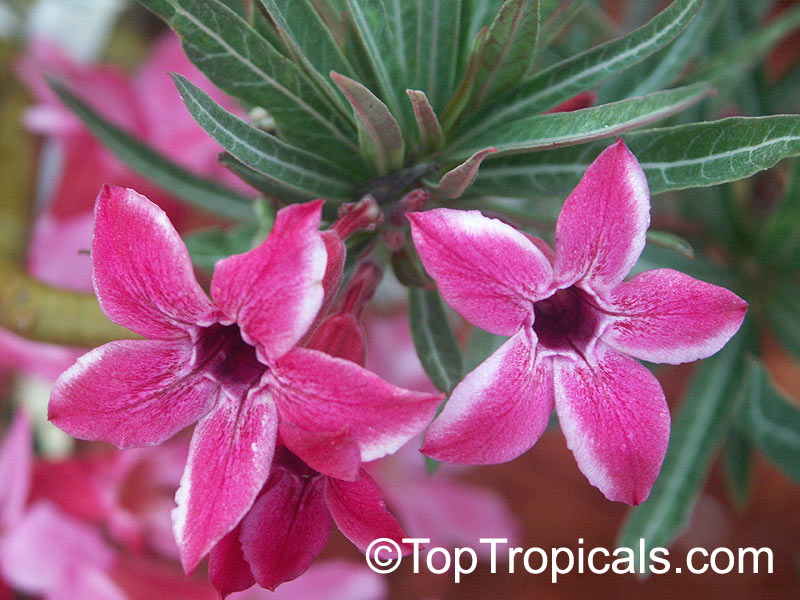
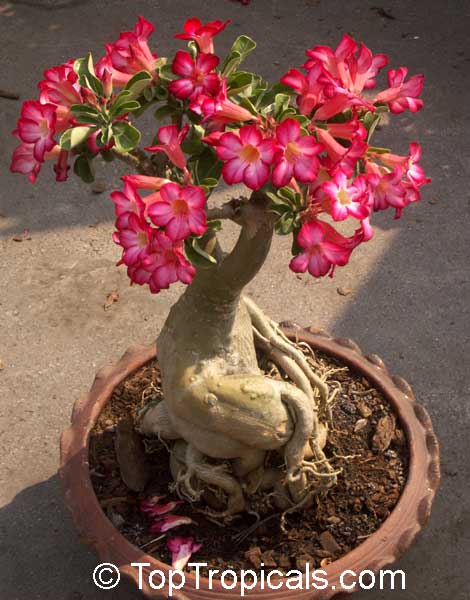
Care of Desert Roses
Q: I am looking forward to my three desert roses I just ordered from you and I am wondering how to take
care of them, especially during winter time. Should I put the pots in full sun
or shade? What kind of soil do they like? How often should I water them? When
it gets cooler, should I bring them inside? We do have occasional frost here
during winter.
A: Here are a few tips for your desert roses:
1. When received Adenium from mail-order, unpack carefully; branches are
fragile. Plant in well-drained potting mix. Cactus mix will do, but we
recommend special Adenium mix. If using regular acidic peat-based potting mix, you may
add sea-shells on top of soil to neutralize acidity: adeniums prefer alkaline
soils. Using clay pots is beneficial. Water once and do not water again until
soil gets dry. Place in bright shade until new leaves sprout, then the plant
can be moved to full sun.
2. Adenium is a succulent, but not a cactus. It needs watering, however
let soil dry before waterings. Reduce watering during cool season and
discontinue when plant gets dormant (drops all leaves in winter).
3. Bright light is the best for profuse flowering. However, adeniums
look much healthier in slightly filtered light rather than in all-day full
sun.
4. Fertilize and spray leaves with liquid fertilizer SUNSHINE Megaflor - Nutrition Bloom Booster. Phosphorous is responsible
both for flowering and caudex development. Avoid caudex, spray over foliage
only. Dry fertilizer can be used only during hot months.
5. Watch for spider mites during hot and dry season.
6. Give plants a break during winter dormant season. Keep in bright
shade and reduce watering to 1-2 per month or stop watering if temperature is
below 65F.
Guavas love full sun — aim for 6–8 hours of direct light.
They’re adaptable to many soils but do best in well-drained, organic-enriched
mixes. Plant them in a spot where you can water
easily; guavas are thirsty trees during fruiting.
Container & Indoor Growing
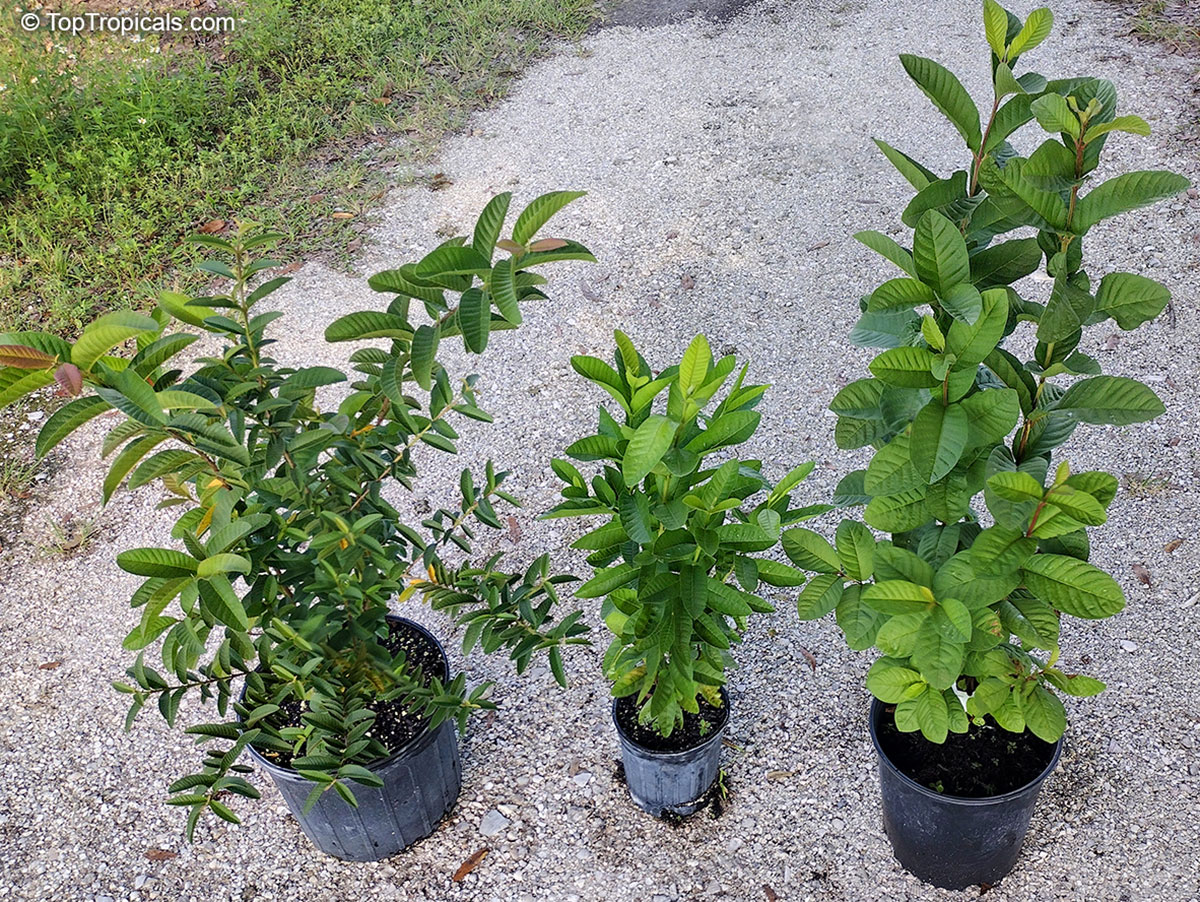
Don’t have space or live in a cooler climate? Guavas thrive in
large pots. Use well-drained potting mix. LINK TO OUR SOIL Keep them on a
sunny
patio during warm months and bring them indoors when nights dip below
freezing. Compact varieties like Dwarf Hawaiian
Rainbow or Tikal are especially
good for pots.
Winter Care
Mature guavas can handle a light frost (down into the high 20s F), but
young plants need protection. If planted outdoors, cover them with frost
cloth
on cold nights. Container guavas can be wheeled into a garage, greenhouse,
or bright indoor window until the weather warms.
Watering and Fertilizing
Water deeply once or twice a week, more often in hot weather or when
fruit is developing. They don’t like soggy soil, but they won’t
complain about short floods either. Fertilize 3–4 times a year during
the
growing season with a balanced fruit tree fertilizer. Guavas especially love
potassium and phosphorus for strong flowering and heavy crops. We recommend
liquid crop booster Sunshine
C-Cibus and balanced controlled release fertilizer Green
Magic.
Pruning
Prune after fruiting to keep them compact and open up airflow. Remove
crossing or dead branches. In containers, trim back vigorous shoots
regularly
to manage size and encourage more fruiting wood.
Pests and Problems
Guavas are generally tough and pest-resistant. The main thing to watch
for in humid or rainy climates is mealybugs - those cottony white clusters
on
leaves or stems. They're easy to manage with neem oil or a quick spray of
horticultural soap.
Fruit time
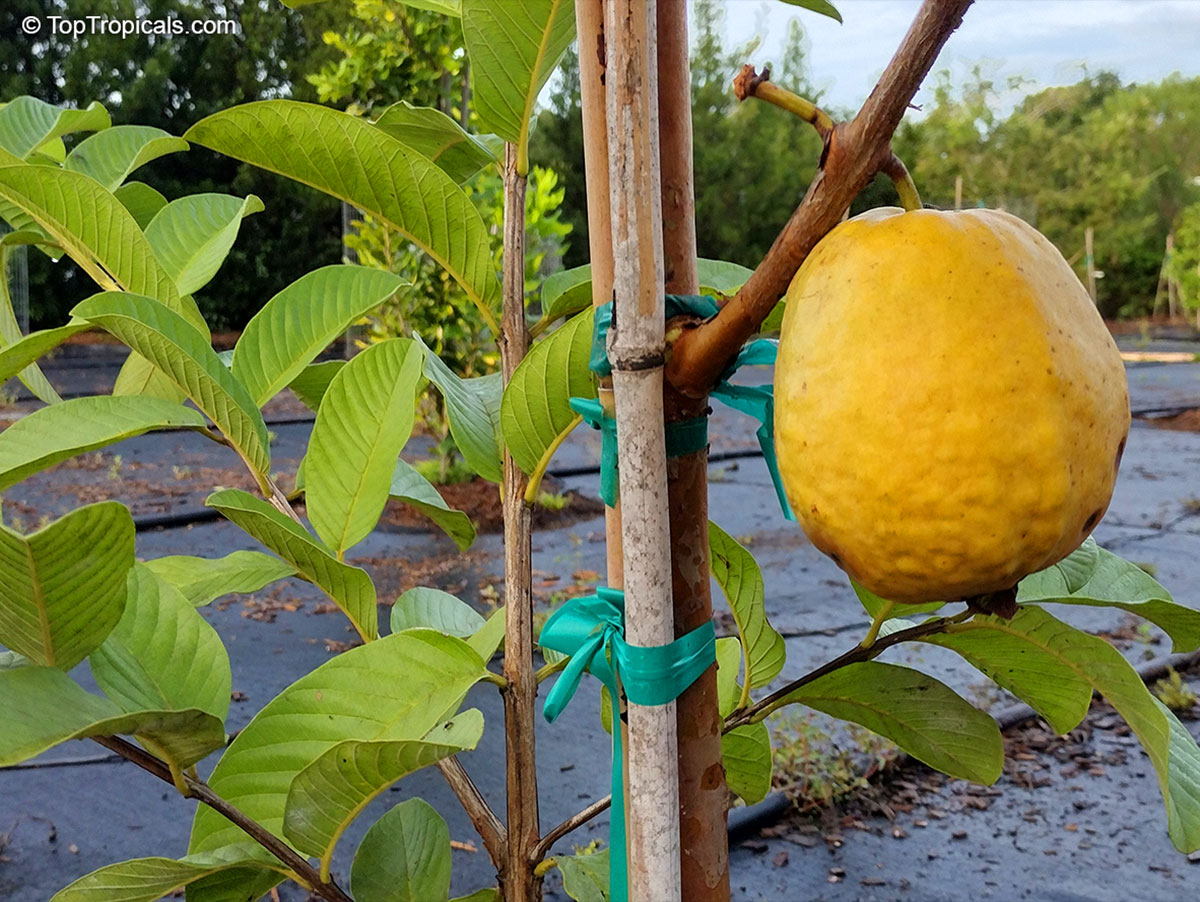
Guavas fruit young - often within a year or two.
Pollination
Guavas are self-pollinating, so you'll get fruit even with a single
tree. Planting more than one tree, however, often boosts harvests and gives
you a
longer fruiting season.
If you've ever wanted instant gratification from a fruit tree, guava is
it.
🍴
Guava Recipes
With all that fruit, the next question is always: "What do I do with
it?" Here are our favorites:
Cas Guava: Make Agua de Cas
Boil halved Cas Guava fruits with sugar, simmer, strain, and bottle.
Dilute with water when serving. The concentrate keeps for months in the
fridge.
Check out the recipe.
Hawaiian Gold: Make Drinks
Perfect for Mojitos or Margaritas. Sweet, tangy juice pairs beautifully
with lime and mint. Learn more
Araca Pera: Guava Wine
Famous in Brazil, where the fruit is turned into a vibrant rosу wine.
Locals say it’s the taste of summer in a glass — and yes, you
can make it at home too. Learn more...
Quick snack: Guava Grilled Cheese
Spread guava paste or fresh mashed fruit with cheese, grill until
golden. Sweet and savory heaven. Learn more...
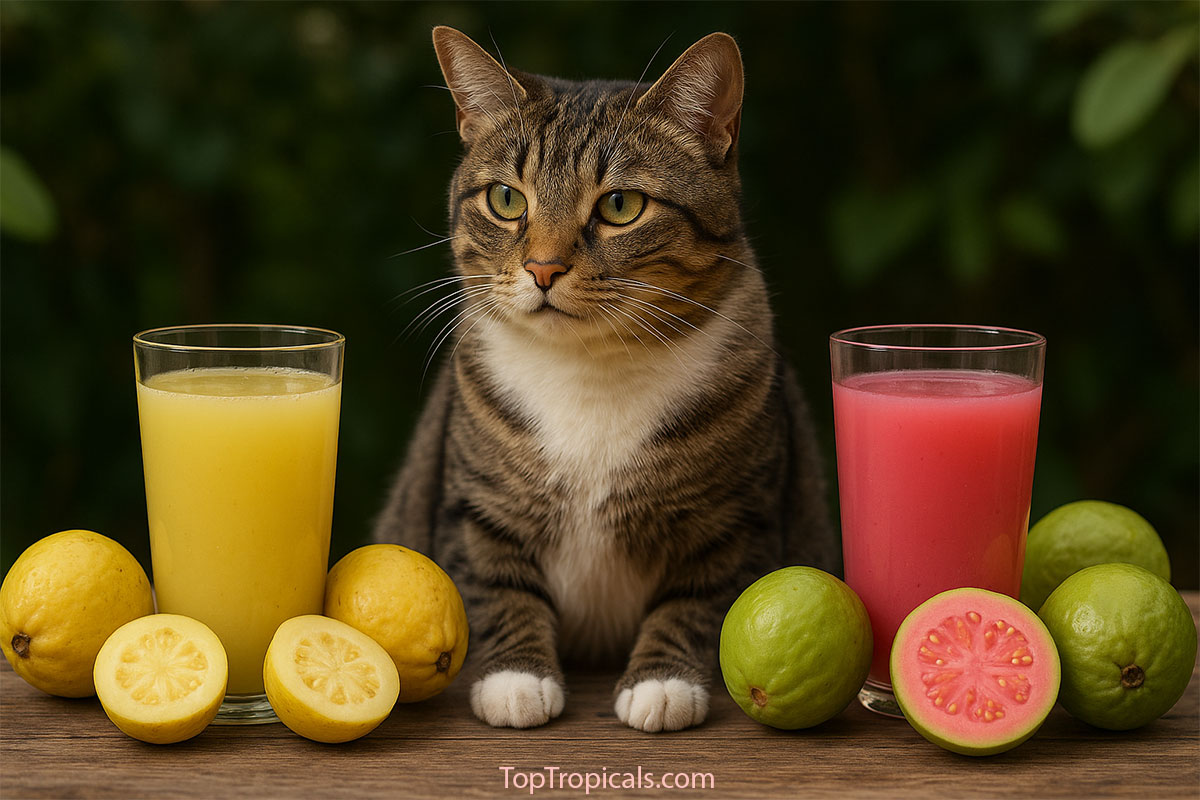
Simple Guava Juice
Blend ripe guavas with water, ice, and a little sugar if you like. Instant
refreshment.
✅Ready to Grow? Whether you want fresh juice, sweet fruit,
or even your own guava wine, we’ve got the best varieties in stock
right now. Your future self, sipping guava juice on a hot summer afternoon,
will
thank you.