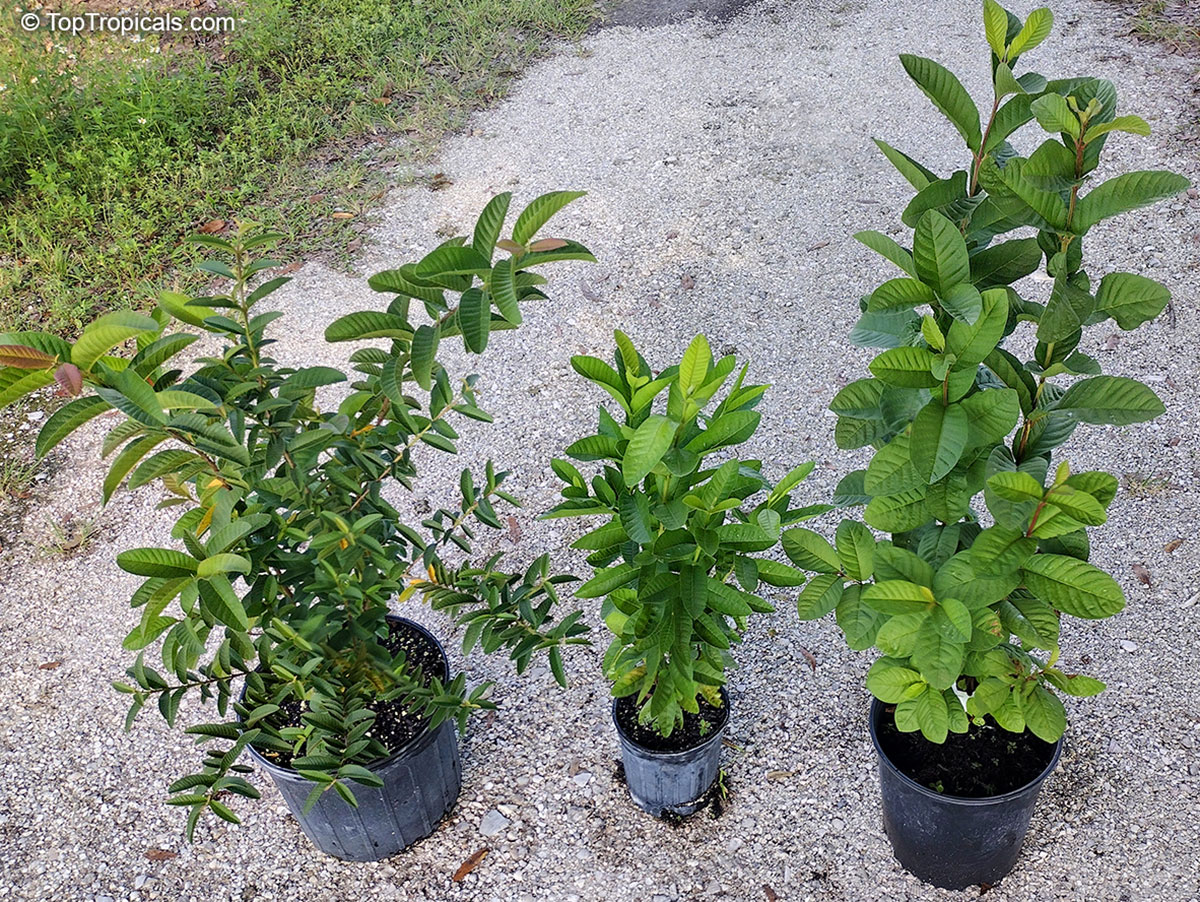
Guavas love full sun — aim for 6–8 hours of direct light.
They’re adaptable to many soils but do best in well-drained, organic-enriched
mixes. Plant them in a spot where you can water
easily; guavas are thirsty trees during fruiting.
Container & Indoor Growing
Don’t have space or live in a cooler climate? Guavas thrive in
large pots. Use well-drained potting mix. LINK TO OUR SOIL Keep them on a
sunny
patio during warm months and bring them indoors when nights dip below
freezing. Compact varieties like Dwarf Hawaiian
Rainbow or Tikal are especially
good for pots.
Winter Care
Mature guavas can handle a light frost (down into the high 20s F), but
young plants need protection. If planted outdoors, cover them with frost
cloth
on cold nights. Container guavas can be wheeled into a garage, greenhouse,
or bright indoor window until the weather warms.
Watering and Fertilizing
Water deeply once or twice a week, more often in hot weather or when
fruit is developing. They don’t like soggy soil, but they won’t
complain about short floods either. Fertilize 3–4 times a year during
the
growing season with a balanced fruit tree fertilizer. Guavas especially love
potassium and phosphorus for strong flowering and heavy crops. We recommend
liquid crop booster Sunshine
C-Cibus and balanced controlled release fertilizer Green
Magic.
Pruning
Prune after fruiting to keep them compact and open up airflow. Remove
crossing or dead branches. In containers, trim back vigorous shoots
regularly
to manage size and encourage more fruiting wood.
Pests and Problems
Guavas are generally tough and pest-resistant. The main thing to watch
for in humid or rainy climates is mealybugs - those cottony white clusters
on
leaves or stems. They're easy to manage with neem oil or a quick spray of
horticultural soap.
Fruit time
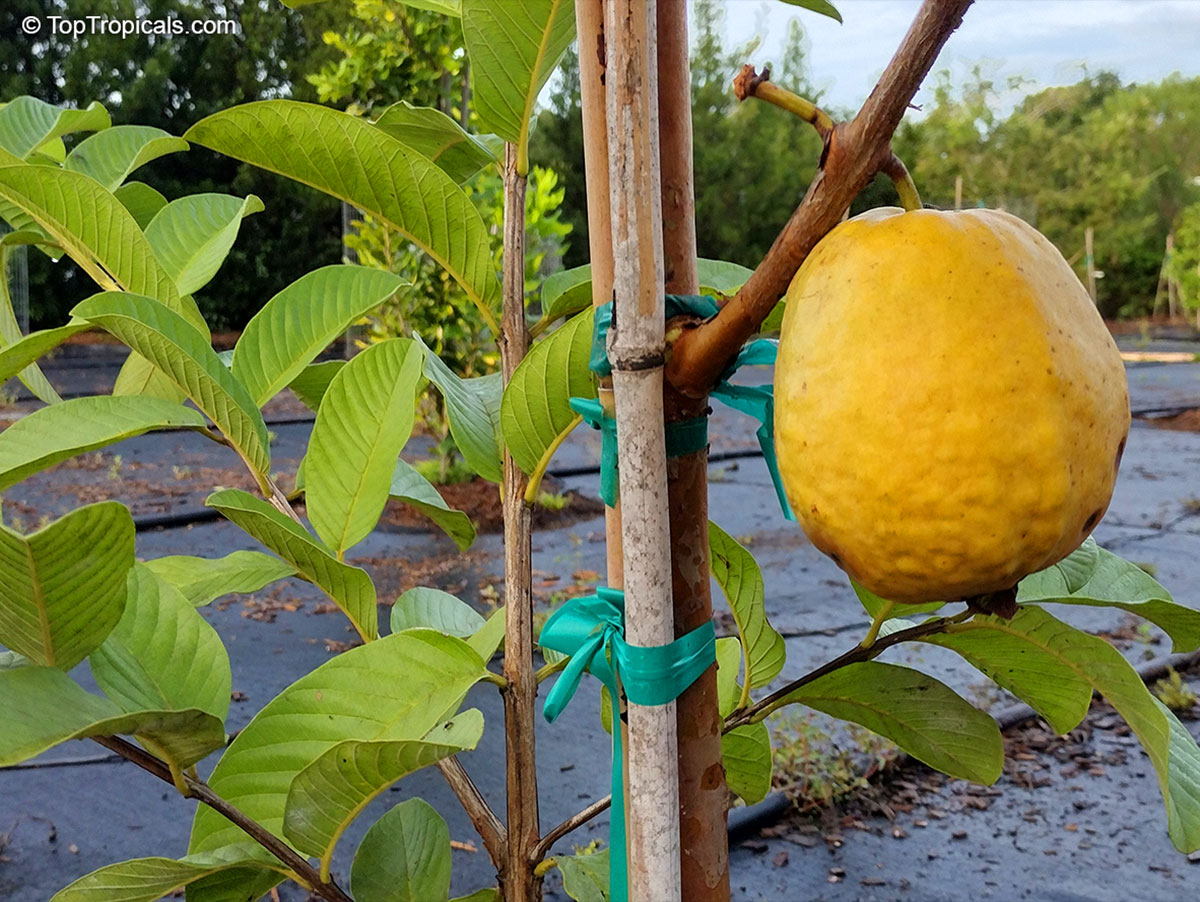
Guavas fruit young - often within a year or two.
Pollination
Guavas are self-pollinating, so you'll get fruit even with a single
tree. Planting more than one tree, however, often boosts harvests and gives
you a
longer fruiting season.
If you've ever wanted instant gratification from a fruit tree, guava is
it.
🍴
Guava Recipes
With all that fruit, the next question is always: "What do I do with
it?" Here are our favorites:
Cas Guava: Make Agua de Cas
Boil halved Cas Guava fruits with sugar, simmer, strain, and bottle.
Dilute with water when serving. The concentrate keeps for months in the
fridge.
Check out the recipe.
Hawaiian Gold: Make Drinks
Perfect for Mojitos or Margaritas. Sweet, tangy juice pairs beautifully
with lime and mint. Learn more
Araca Pera: Guava Wine
Famous in Brazil, where the fruit is turned into a vibrant rosу wine.
Locals say it’s the taste of summer in a glass — and yes, you
can make it at home too. Learn more...
Quick snack: Guava Grilled Cheese
Spread guava paste or fresh mashed fruit with cheese, grill until
golden. Sweet and savory heaven. Learn more...
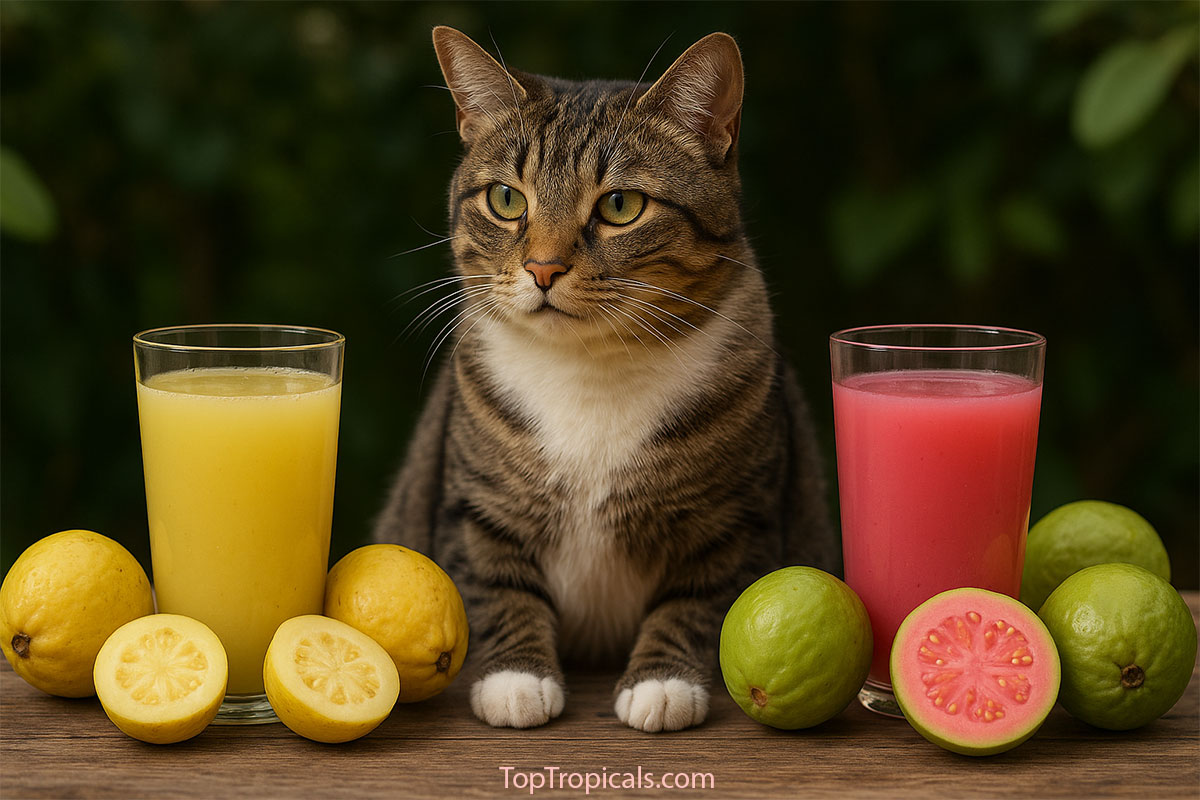
Simple Guava Juice
Blend ripe guavas with water, ice, and a little sugar if you like. Instant
refreshment.
✅Ready to Grow? Whether you want fresh juice, sweet fruit,
or even your own guava wine, we’ve got the best varieties in stock
right now. Your future self, sipping guava juice on a hot summer afternoon,
will
thank you.
5 fruits to eat when you have a cough or cold - backed by research
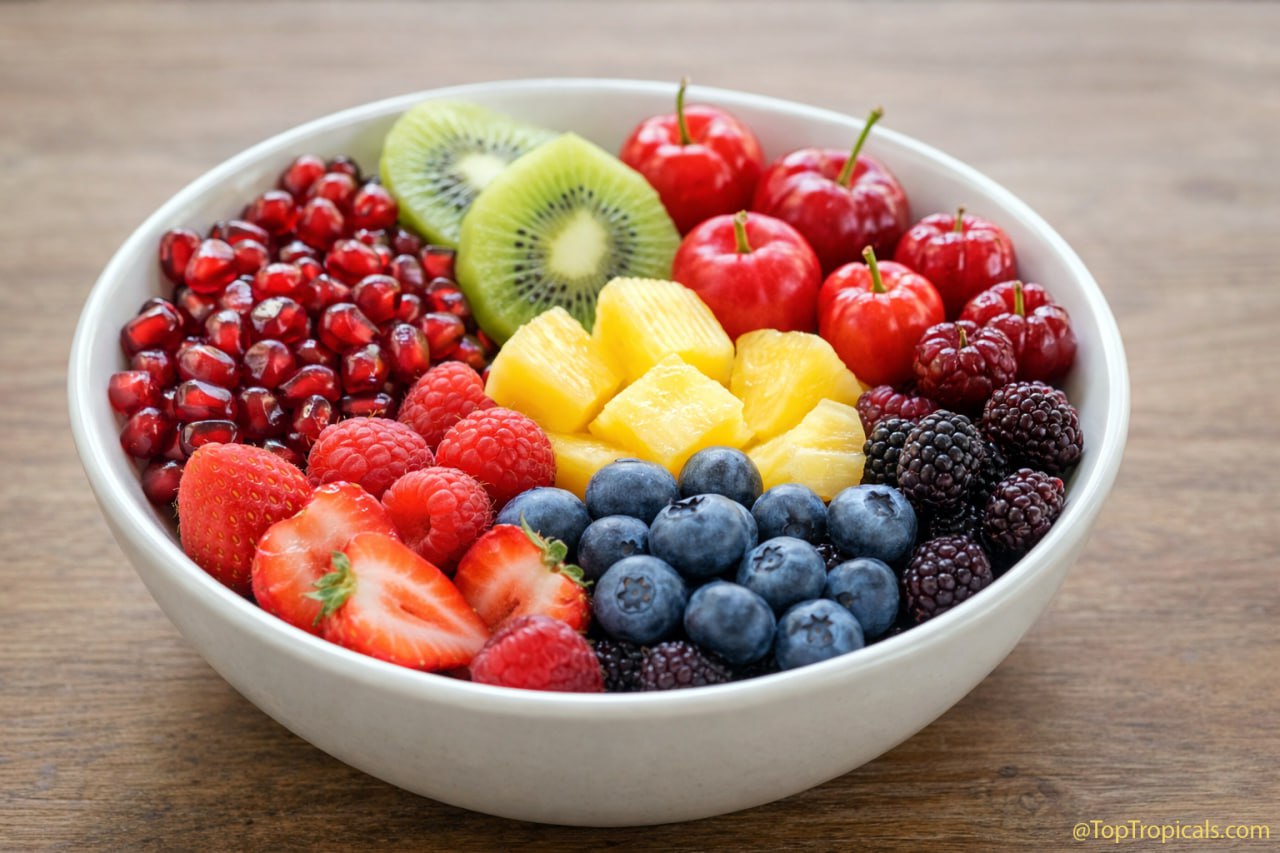
When you are fighting a cough or cold, your immune system works overtime. While no fruit can cure a viral infection, certain fruits contain nutrients and bioactive compounds that may help reduce inflammation, support immune defenses, and ease respiratory discomfort.
Here are five fruits supported by nutrition research that may help during cold season.
1. Pomegranate 🍅
Pomegranate is rich in polyphenols, especially punicalagin, known for antiviral activity.
Pomegranate Plant Facts
Botanical name: Punica granatum Also known as: Pomegranate, Granada, Grenade, Pomegranate, Granada, Anar, Granaatappel, Pomo Granato, Romeira, Melo Grano
USDA Zone: 8 - 11
Highligths
According to a study published in PubMed, pomegranate polyphenol extract suppressed replication of influenza A virus in cultured cells and showed direct virucidal effects. Researchers identified punicalagin as a key compound involved in blocking viral RNA replication. These findings suggest pomegranate extracts may help reduce viral load during respiratory infections.
2. Kiwi
Kiwi is exceptionally high in vitamin C, a nutrient closely linked to immune function and respiratory health. A study published in Antioxidants (MDPI) found that consuming two SunGold kiwifruit daily for six weeks restored adequate plasma vitamin C levels in adults with a history of severe respiratory infections. Researchers concluded that kiwi consumption can directly support antioxidant defenses during respiratory illness.
3. Tropical cherries 🍒
Instead of traditional lemon, consider tropical cherries such as Malpighia (acerola cherry) and Eugenia (Surinam cherry). Acerola (Malpighia glabra - Barbados Cherry) is one of the richest natural sources of vitamin C. Clinical research shows that adequate vitamin C intake is associated with reduced duration and severity of common cold symptoms. Vitamin C supports immune cell function and helps maintain the respiratory tract's protective barrier.
Barbados Cherry Plant Facts
Botanical name: Malpighia glabra Also known as: Barbados Cherry, Acerola, Malphigia, Cerejeira
USDA Zone: 9 - 11
Highligths
Eugenia species (Tropical Cherries) contain anthocyanins and phenolic compounds with antioxidant and anti-inflammatory properties, which may help reduce oxidative stress during illness.
4. Pineapple🍍
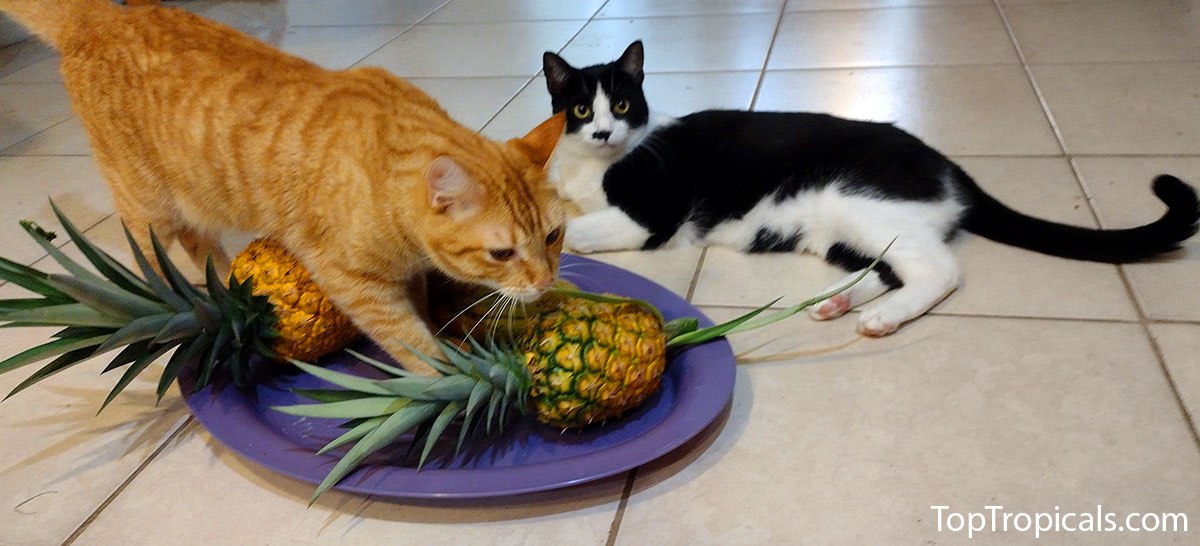
Pineapple contains bromelain, a group of proteolytic enzymes known for anti-inflammatory effects.
Pineapple Plant Facts
Botanical name: Ananas comosus Also known as: Pineapple, Pina
USDA Zone: 9 - 11
Highligths
According to a study published in PubMed, bromelain significantly reduced inflammatory cell infiltration in the lungs in a mouse model of airway inflammation. These findings suggest bromelain may help ease airway inflammation and congestion.
5. Berries and including mulberries
Strawberries, blueberries, raspberries, blackberries and mulberries are rich in flavonoids and vitamin C.
Although direct clinical trials on berries for colds are limited, nutrition reviews highlight their immunomodulatory potential. Flavonoids such as quercetin, anthocyanins, and catechins have demonstrated antioxidant effects and possible antiviral activity in laboratory studies. Mulberries provide additional anthocyanins and resveratrol-like compounds, offering strong antioxidant support during illness.
Practical tips when you are unwell ❤️�
🔻Choose room-temperature or lightly warmed fruit to avoid throat irritation. 🔻Prefer whole fruit over juice to retain fiber and stabilize blood sugar. 🔻Pair fruit with warm herbal tea or honey if appropriate. 🔻Rotate fruits to benefit from diverse phytonutrients. 🔻If symptoms persist, worsen, or include high fever or breathing difficulty, seek medical care.
Q: I have purchased a Sugar Loaf Pineapple from you a few months ago, it is growing well and
producing little babies around the main plant! I am so excited to have my own
Pineapple plantation! How soon will they fruit and is there anything I can
do to make them fruit faster? Can I give extra fertilizer just like I do for
other garden plants?
A: It takes a year or two until a pineapple plant gains enough
energy to be ready to fruit. However the total time depends on growing
conditions and availability of all necessary nutrients.
Pineapples, like all other plants from Bromeliaceae family require very
delicate fertilizer; traditional fertilizers, if overdosed, can harm Bromeliads
and even kill them. At the same time, Pineapples require extra Magnesium for
good production, and not every fertilizer has it, or contains it in
well-accessible compounds / proper proportions.
Sunshine Ananas Booster is a scientifically formulated, mild fertilizer,
designed especially for tender Bromeliads, containing Magnesium just in perfect
concentration. Its amino-acid based ingredients are natural and work perfectly
for edibles and organic gardens. Just follow the label instructions and speed
up the fruit production 3-4 times!
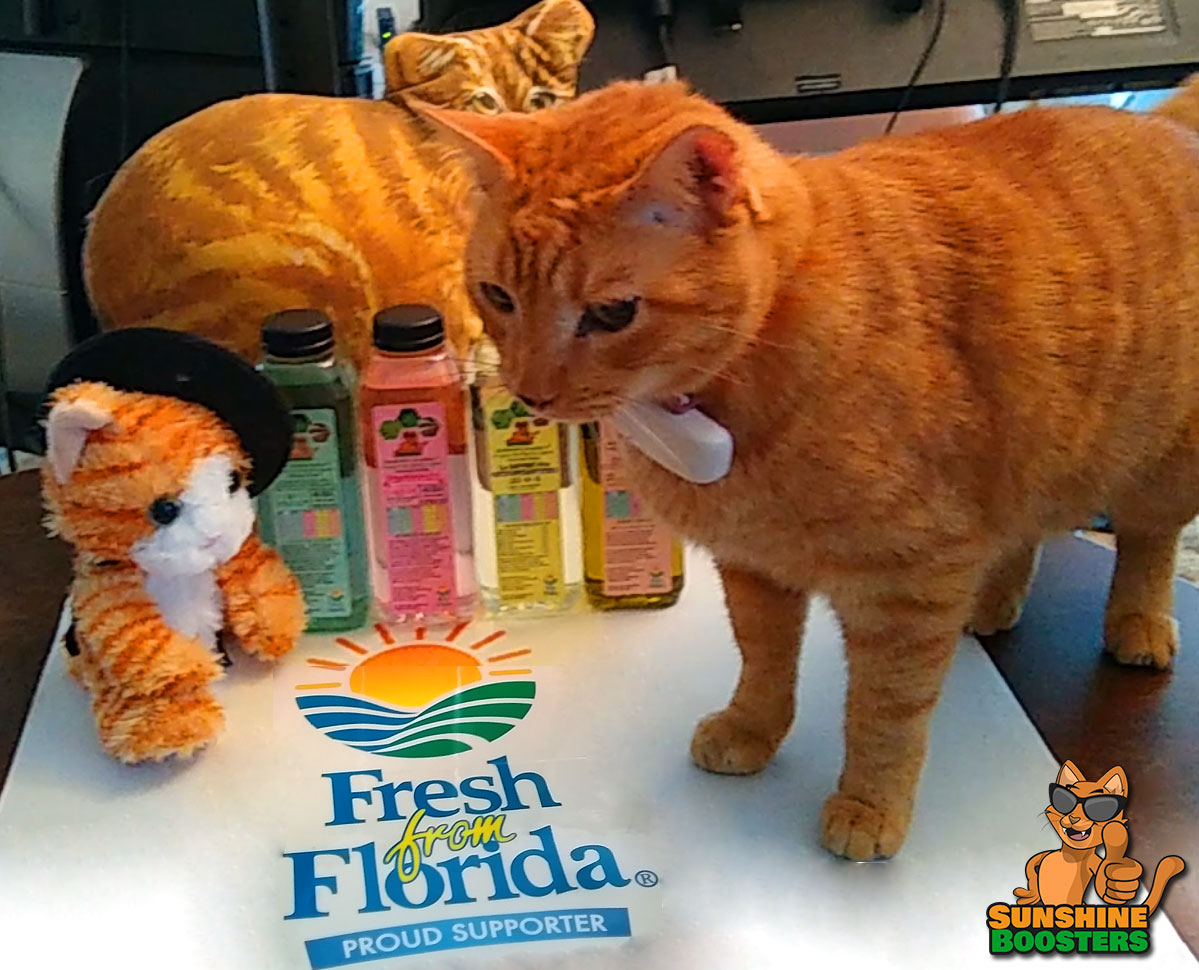
In the photo: Mr B checking his Sunshine Boosters inventory before shipping to his Good Customers.
Golden Sugar Apple and Jackedak Cheena
50% OFF and MORE!
We've combined the exotic fruit of this rare Annona from Costa Rica - Golden
Sugar Apple with the sweet, crunchy and excellent flavor of the Jackedak Cheena. Both rare and unique plants can be yours at
considerable savings, but don't delay as there are limited quantities in
stock.
Rare Fruit Collection:
two Jackfruit-textured rare fruit!
For this Easy Sunday we have priced these at incredible savings:
The
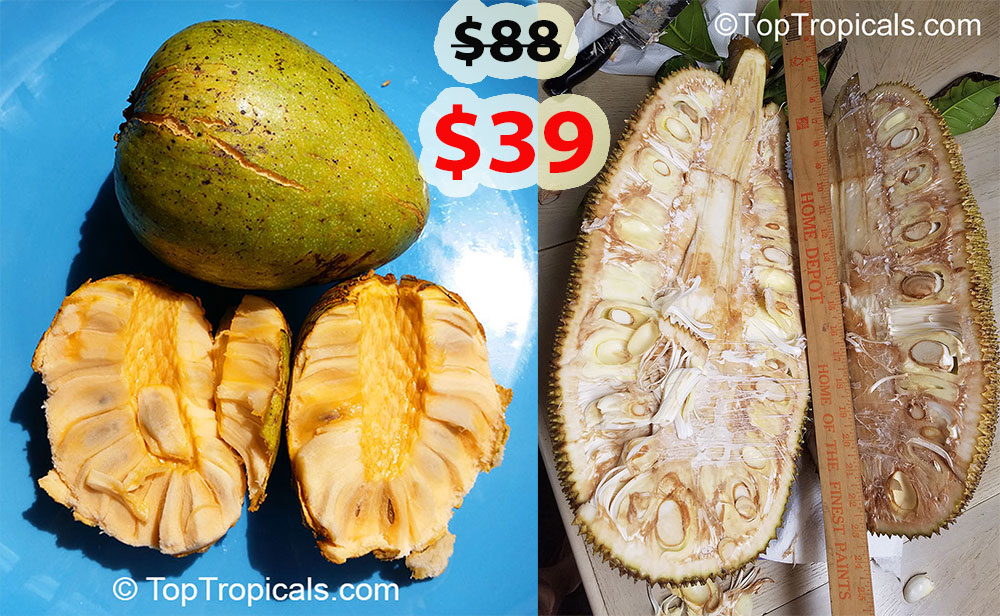
Golden Sugar Apple regularly $39, is on Easy Sunday sale for only $19
The
Jackedak Cheena, regularly $49, is on Easy Sunday Sale for only $24
.
Combine the two for your own Rare Fruit Collection and save even more, only $39 for the set!
Jackedak Cheena
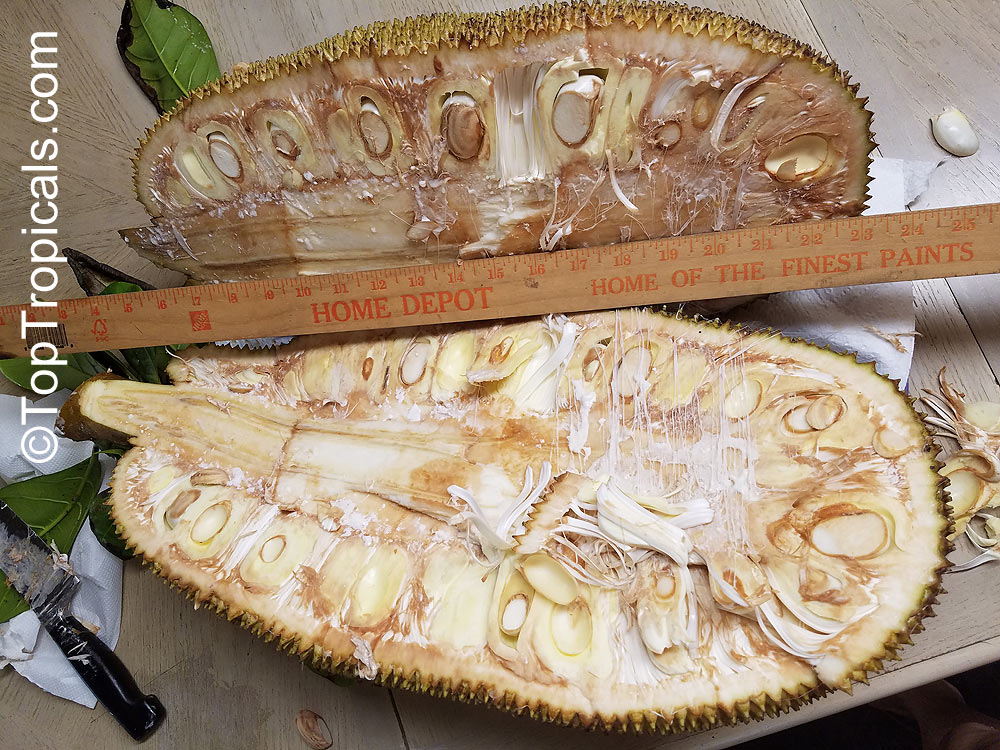
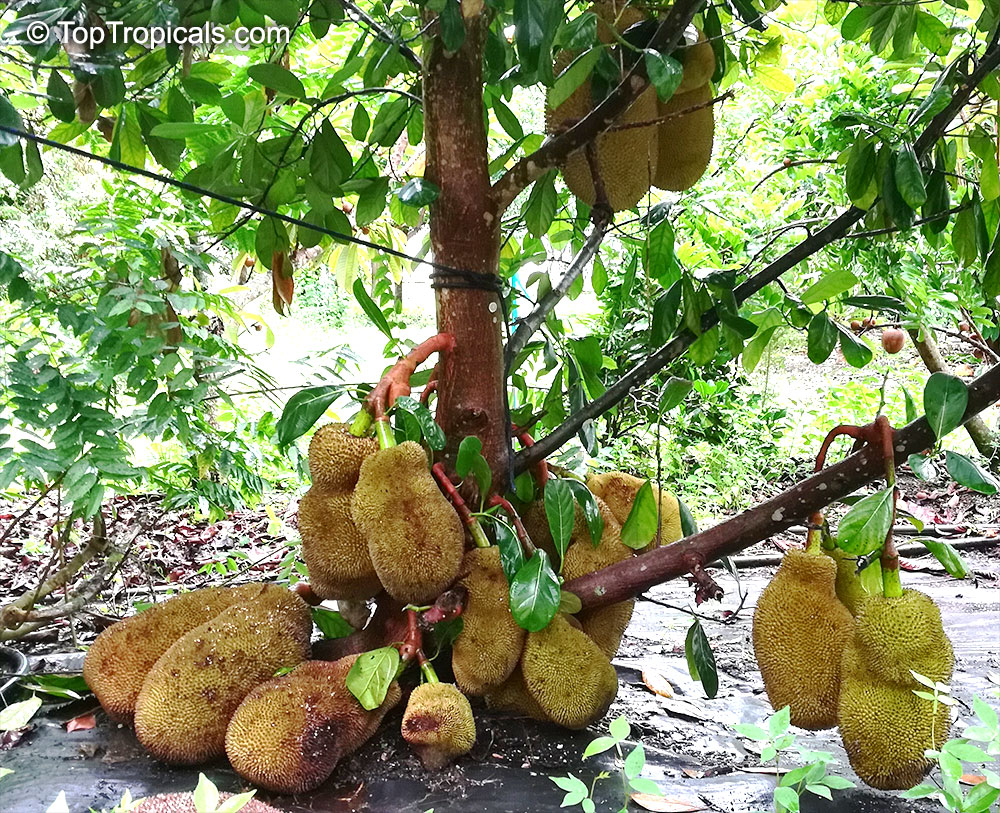
Artocarpus x integer (Jackfruit x Chempedak) - Jackedak Cheena has been
grown in TopTropicals garden from a seedling and fruited within 3 years from
planting. The fruit is the best we ever tasted! It is super sweet, crunchy, with
a rich, excellent flavor, with very little latex which makes it easy to
handle when cutting up. Our tree survived light frosts as well as 48 hours of 3 ft
flooding, with no damage! Cheena is a natural hybrid between Jackfruit and
Chempedak with low and spreading growth habit, can be maintained at 8 ft with
annual pruning.
Picture of 3 y.o. Cheena at Top Tropicals garden,
loaded with fruit:
Golden Sugar Apple
The
Golden Sugar Apple or Pineapple Annona originally was brought to us by our customer from Costa Rica. We believe it to be a natural hybrid between A. muricata and A.
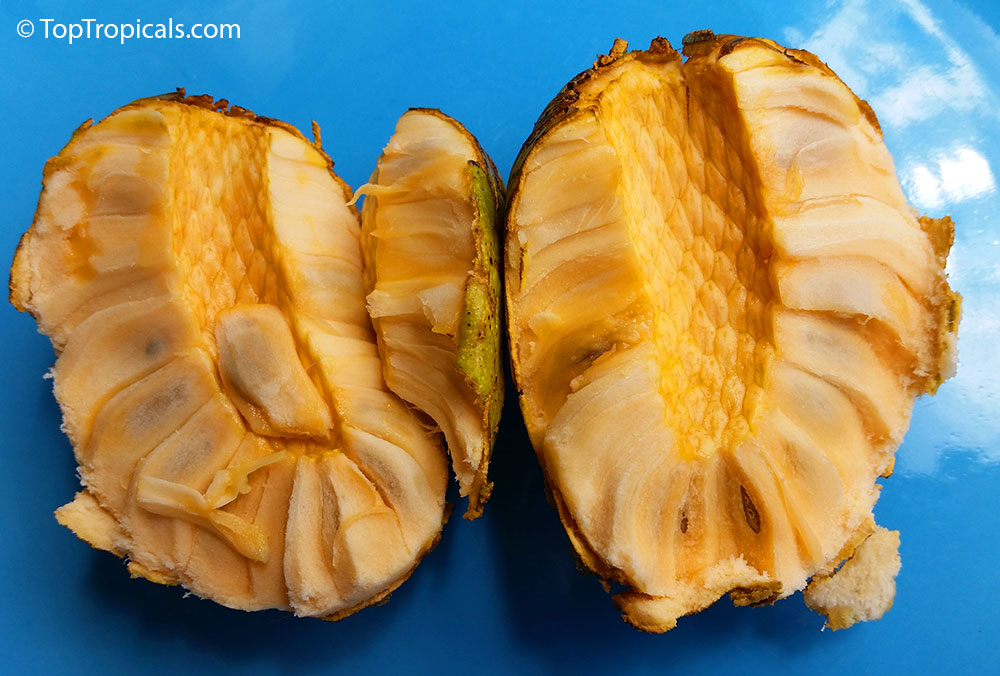
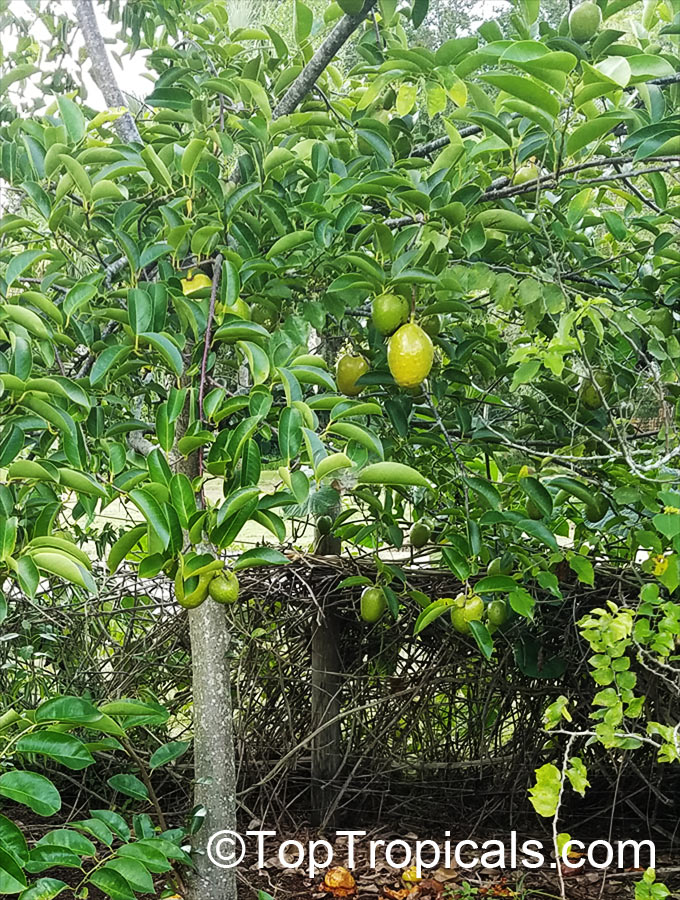
glabra. It is a very ornamental small tree similar in growth habit to A. muricata, A. montana or Rollinia. Fast growing, forms nice bushy specimen. Fruit is very large, up to 1 lb, golden to orange when ripe, with strong Pineapple scent, and resembling Jackfruit in texture, with pineapple, papaya, apricot and melon overtones. The tree tolerates flooding and is cold hardy at least to upper
20's. Very interesting for rare fruit collectors as much more hardy and water
tolerant alternative to its sensitive relatives Soursop and Rollinia.
Picture of 3 y.o. tree full of fruit:
Remember, the Easy Sunday special has been extended through Wednesday, December 15th. Limited availability, hurry up! All orders
over $75 (excluding S&H) are eligible for 20% off!
For 20% off - use code YEAREND20
Min. order $75 (excluding S&H). Good through December 15th
Enjoy your Holiday Tropical Fruit!
Photo above: Jim is Holiday decorating with super-sweet tropical fruit balls - Pom-Poms!
 Guava Tree Plant Care