A colorful mix of mango varieties - different shapes,
colors, and flavors all in one harvest.
Mango Practical Growing Tips (Keep It
Simple)
Sun: Full sun is key. 6–8+ hours daily for best
growth and fruiting.
Soil: Excellent drainage is critical. In pots, use
well-draining mix with added perlite or sand. Mango does not like wet
roots.
Watering: Water deeply, then let soil dry slightly
before watering again. Avoid constantly wet soil.
Containers: Excellent for pots. Condo mango varieties
stay compact and are easy to manage on patios.
Feeding: Light but consistent feeding during active
growth makes a big difference. Use controlled-release Green
Magic for steady nutrition, and supplement
with liquid Sunshine
Boosters Mango Tango during warm months to push growth and
fruiting.
USDA Zones: Best suited for Zones 9b–11. In Zone
9b, choose a warm, protected microclimate (south-facing wall, patio, or near
structures) and be prepared to protect during cold snaps. In Zones
10–11, mango grows reliably in-ground. If you live in colder zones,
grow in a pot so you can
move the tree indoors or protect it during cold weather.
Cold Protection: Protect young trees during cold
nights. Use cover or place near a wall or warm microclimate. Mature trees
are more tolerant.
Airflow: Good airflow helps prevent disease and keeps
growth clean.
Spacing: Give the tree room for light and airflow. Even
compact trees benefit from space.
A fruiting mango tree Van Dyke in the grove, heavy
with developing mangoes and enjoying full sun.
Mango Winter Care (Very Important)
Mango is not a truly cold-hardy plant. It performs best in USDA Zone 9b
and warmer, where freezes are rare and short. In borderline areas, winter
protection becomes part of the routine. Mango trees should be covered during
cold nights, and planting near a south-facing wall helps protect from cold
winds. That small microclimate can make a real difference. If your winters
are less predictable, growing mango in a container becomes the simplest
solution. It gives you full control — you can move the tree to a
protected space when temperatures drop, and bring it back into the sun when
conditions improve.
That is where condo mango varieties make the most sense. They are
naturally compact, easier to manage in pots, and still produce full-size,
high-quality fruit. You get all the benefits of a mango tree
without needing a large yard or perfect climate — just sun, a
container, and a bit of seasonal movement when needed.
Young mango tree in a container, already holding fruit
and thriving in a sunny garden setting.
Growing mango in a container is one of the easiest ways to control size,
soil, and winter protection. Condo mango varieties stay naturally compact
and adapt well to pots, making them ideal for patios, small spaces, or
colder climates. You get full flexibility — move the tree when needed,
manage its growth, and still enjoy real tree-ripened fruit.
Pot size: Start with 3–7 gallon, move up to
15–25 gallon as the tree grows.
Climate Flexibility: Can be grown in any USDA zone when
kept in a container. Simply move indoors or to a protected area during cold
weather to keep the tree safe.
Pruning: Light pruning keeps the tree compact and
productive.
Once you taste a real mango from your own tree, everything changes. It is
no longer something you buy — it is something you grow, wait for, and
look
forward to every season. What felt like hype suddenly makes sense. The
passion people have for mango is not exaggerated — it just comes from
a completely different experience.
And for people who have never tasted a fresh, juicy mango warmed by the sun,
that moment comes as a surprise — the first time they realize what
mango is actually supposed to taste like.
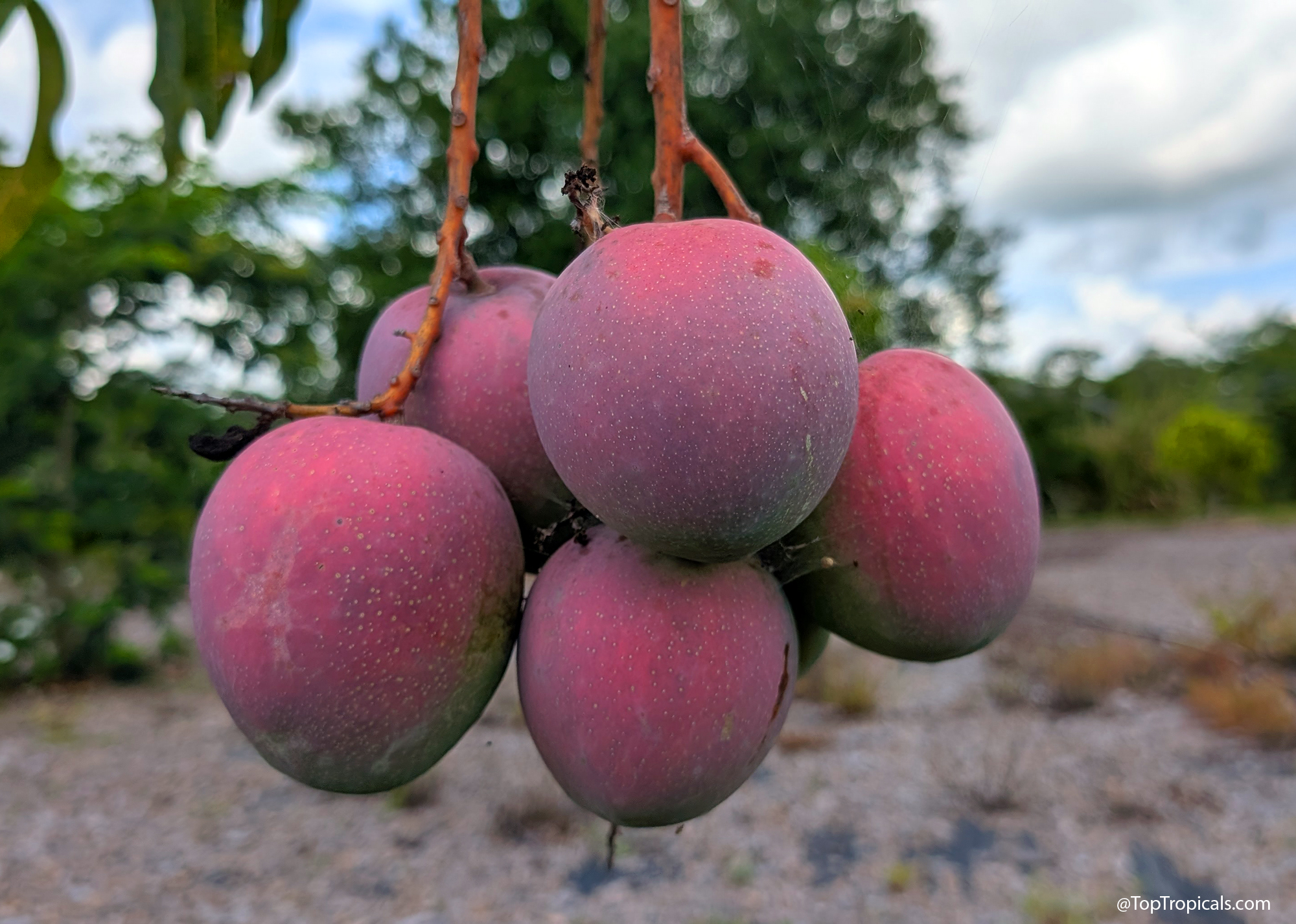
Cluster of ripening mangoes developing rich color on
the tree just before harvest.
Taste the Mango Difference - Save 10%
Once you taste a real mango from your own tree, everything changes. Now you
know. Get 10% off with coupon code
MANGO2026 on 3 gal mango trees.
Offer valid through 04/28/2026.
Discount applies to 3 gal plants only. Not valid on previous purchases and
cannot be combined with other promotions or discounts. Offer subject to
change without notice.
Date: 22 Sep 2025
🐲 The taste you will never forget
If you only know dragon fruit from the grocery store, you probably think
it looks pretty but tastes bland. That is because most commercial fruit is
picked early, shipped far, and loses its sweetness. The truth? Homegrown
dragon fruit is juicy, sweet, and full of flavor. The best of all is the
yellow
variety, Palora
(Selenicereus megalanthus), a cactus fruit from Ecuador that bursts
with tropical taste.
🌵 Pitaya or Dragon fruit – what is the difference?
Both names describe the same climbing cactus. In Latin America it is
called Pitaya, while Asia and English speakers say Dragon fruit. There are
three
main kinds:
Some hybrids give purple or magenta flesh. All are beautiful, all are
easy to grow at home.
⚡️ Do
red, white, and yellow taste different?
Yes. White types are mild and refreshing. Reds are sweeter and juicier.
Yellows are the sweetest of all.
⚡️
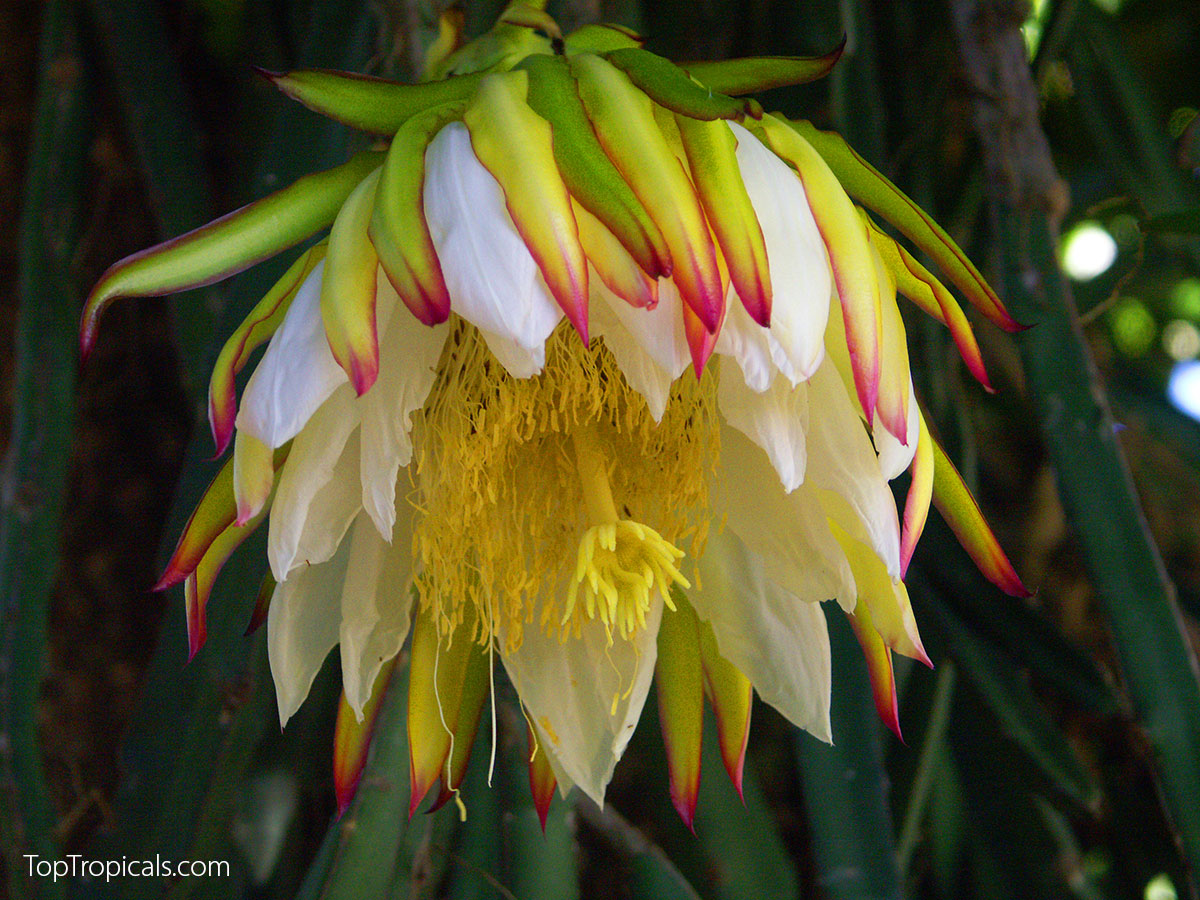
Flowers from a fairy tale
Dragon fruit flowers are among the most spectacular in the plant world.
They open at night, glowing under moonlight, with pale petals and a sweet
fragrance. Each flower can be a foot wide. Seeing one bloom feels like
stepping
into another world.
⚡️ Top
Dragon Fruit Health Benefits
High in fiber for digestion and gut health
Low in calories but full of vitamins
Great for weight management
Adds color and freshness to smoothies and salads
🍹
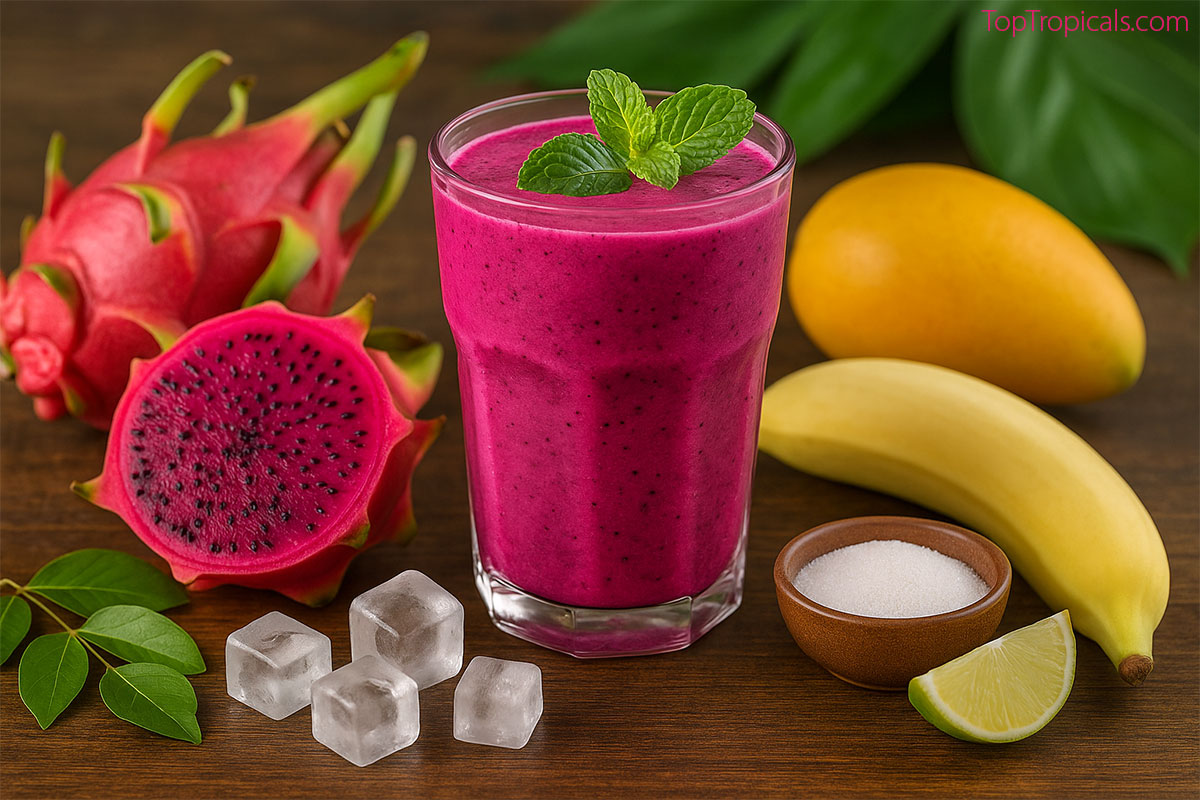
Dragon Fruit Smoothie recipe
Blend together:
2 dragon fruits, peeled
1/2 cup mango pulp
1 banana
1 cup milk of your choice
2 tbsp sugar
1/2 tsp lime juice
Ice cubes to taste
Top with mint for a refreshing tropical treat.
Watch
Dragon Fruit short videos:
💲
Special Offer – 25% off Dragon Fruit Pitaya Plants!
Get 25% OFF Pitaya plants with code
DRAGON2025
Min order $100. Excluding S/H, valid online only,
cannot be combined with other offers.
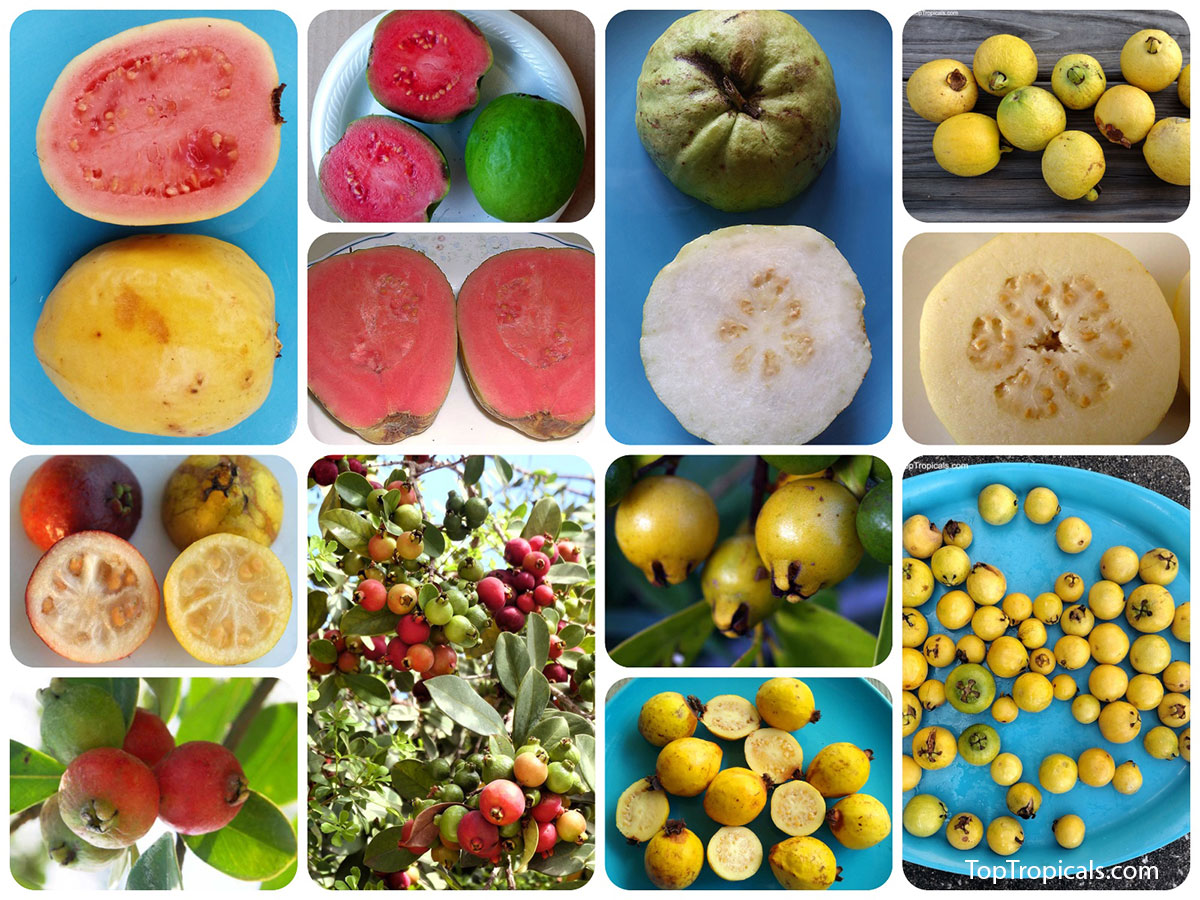
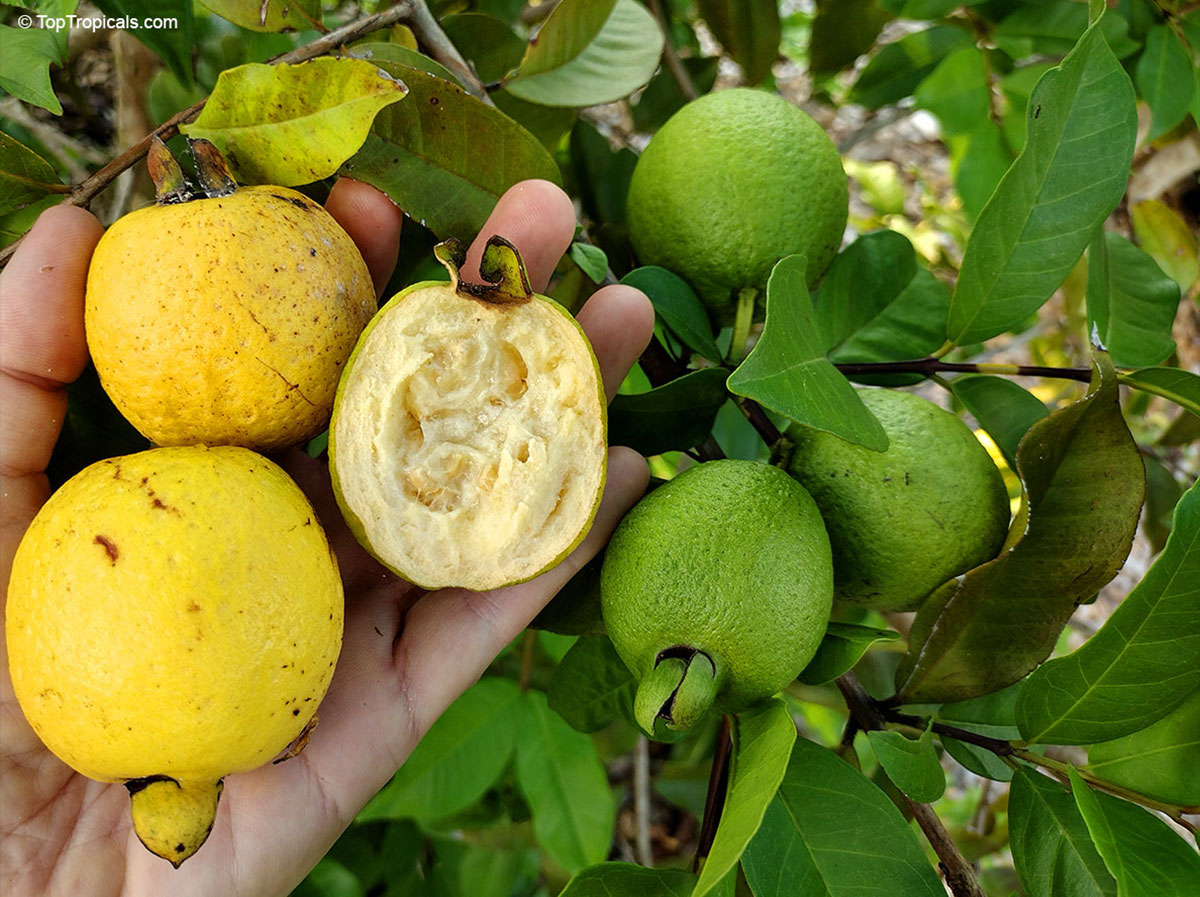
Guava varieties: Pink flesh (upper left quarter), White flesh and Cas
(upper right quarter), Red Cattley Guava (bottom left quarter) and Golden
Cattley (bottom right quarter).
Let’s talk Guava. Few fruits check as many boxes: flavor,
productivity, health, and adaptability. We’ve grown guava trees at Top
Tropicals for years here in Florida, and it never fails to surprise people
with how
easy it is — and how quickly it rewards you.
🌿 Health Benefits
We know the first question:"Why guava in addition to all the other
fruit trees I could plant?"Because guava is one of the healthiest tropical
fruits you can eat and grow — and it produces faster than almost
anything
else.
Vitamin C powerhouse — guava has four times more vitamin C than
oranges. One fruit covers your daily needs and then some.
Potassium and fiber — good for balancing blood pressure and
keeping your heart strong.
Antioxidants like lycopene and vitamin C — these keep your skin
glowing and help protect your cells from damage.
Dietary fiber — aids digestion and helps keep blood sugar
steady.
Guava is a true"food as medicine"tree you can plant right in your
backyard or in pot.
♥️ Our Favorite Varieties are Available Now
We currently have a DOZEN excellent guava varieties in stock selected by
our plant expert Tatiana Anderson — something special for every
garden. Our top picks are:
Pink Guavas
Barbie Pink
– Yellow pear-shaped fruit with thick pink flesh, sweet and juicy.
Cold
hardy for a tropical fruit. The best seller.
Hong Kong
– Large, round, smooth pink fruit. Sweet flavor, very few seeds, and
very
productive.
Tikal
– Our top pick. Fast-growing, disease-resistant, and produces the
sweetest
pink guavas with very few seeds.
White Guavas
Indonesian White
– Aromatic, classic white-fleshed guava with an excellent
tropical flavor.
Kilo White
– Giant fruit up to 2 lbs (1 kilo) each! Few seeds, creamy white
flesh,
and fruits even in containers.
Brazilian Araca
Pera – Rare hybrid used for Guava Wine in Brazil. Tart,
concentrated juice makes excellent wine, sorbet, or jelly. Learn more...
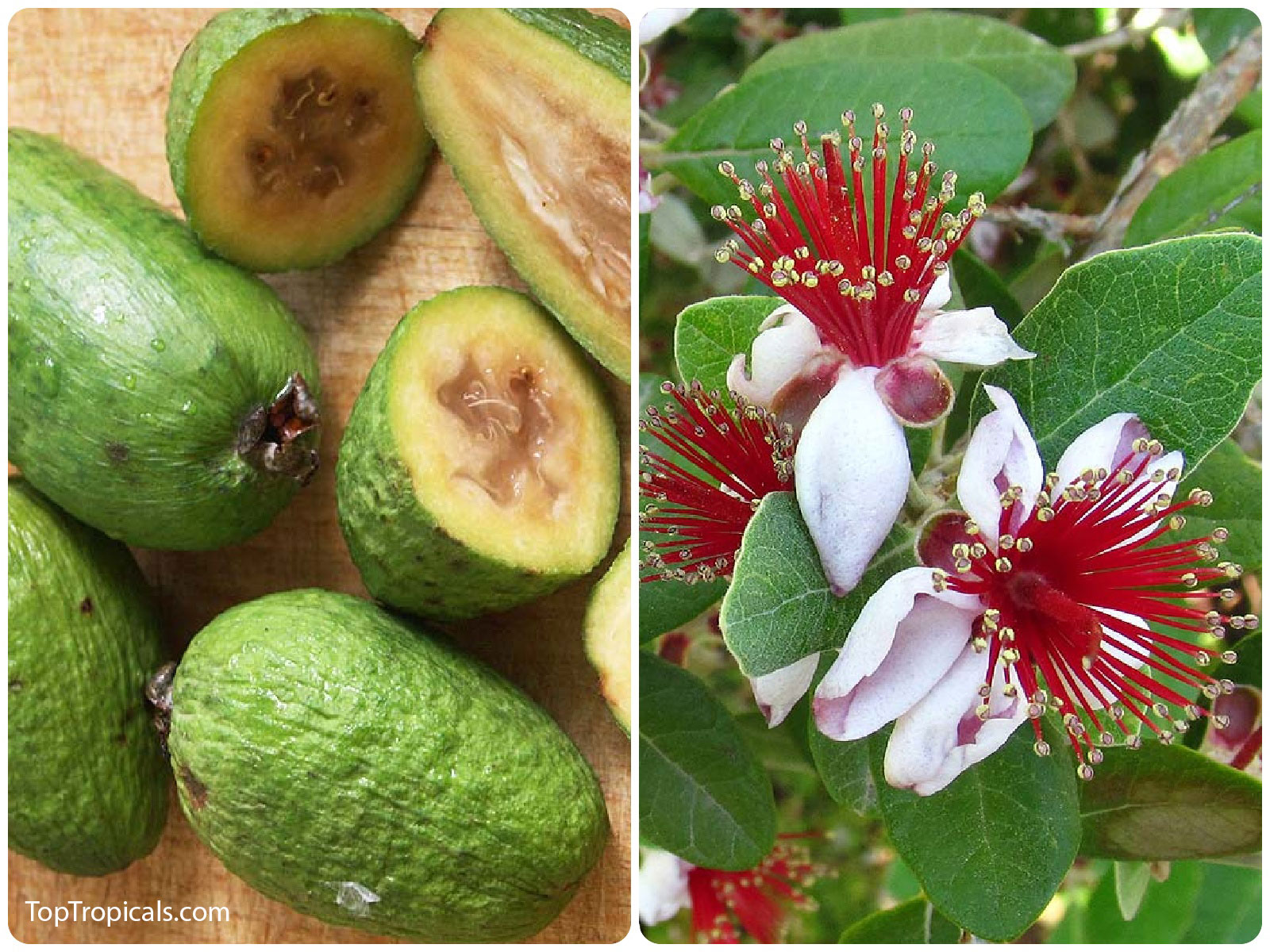
Pineapple Guava,
Guavasteen – Feijoa sellowiana. Strongly perfumed fruit, best
enjoyed when the pulp is mixed with sugar – like forest strawberries.
Cold-hardy, tolerates freeze, and doubles as a great windbreak. Learn more...
9 tough trees for hot, dry spots that actually thrive
☀️ 9 tough trees for hot, dry spots that actually thrive
Why that one brutal spot in your yard never works? There’s always that one place - blazing sun, sandy or rocky soil, dries out fast, and everything you plant there struggles. In Florida, Arizona, and California, this isn’t rare - it’s the norm. The good news? Some trees don’t just tolerate it - they prefer it. Once established, these picks handle heat, drought, and neglect far better than typical landscape plants. What makes these trees different? These are survivors. Many store water, have deep root systems, or evolved in dry climates. Translation - less watering, fewer losses, and a lot less frustration.
🔥 9 best trees for hot, dry spots
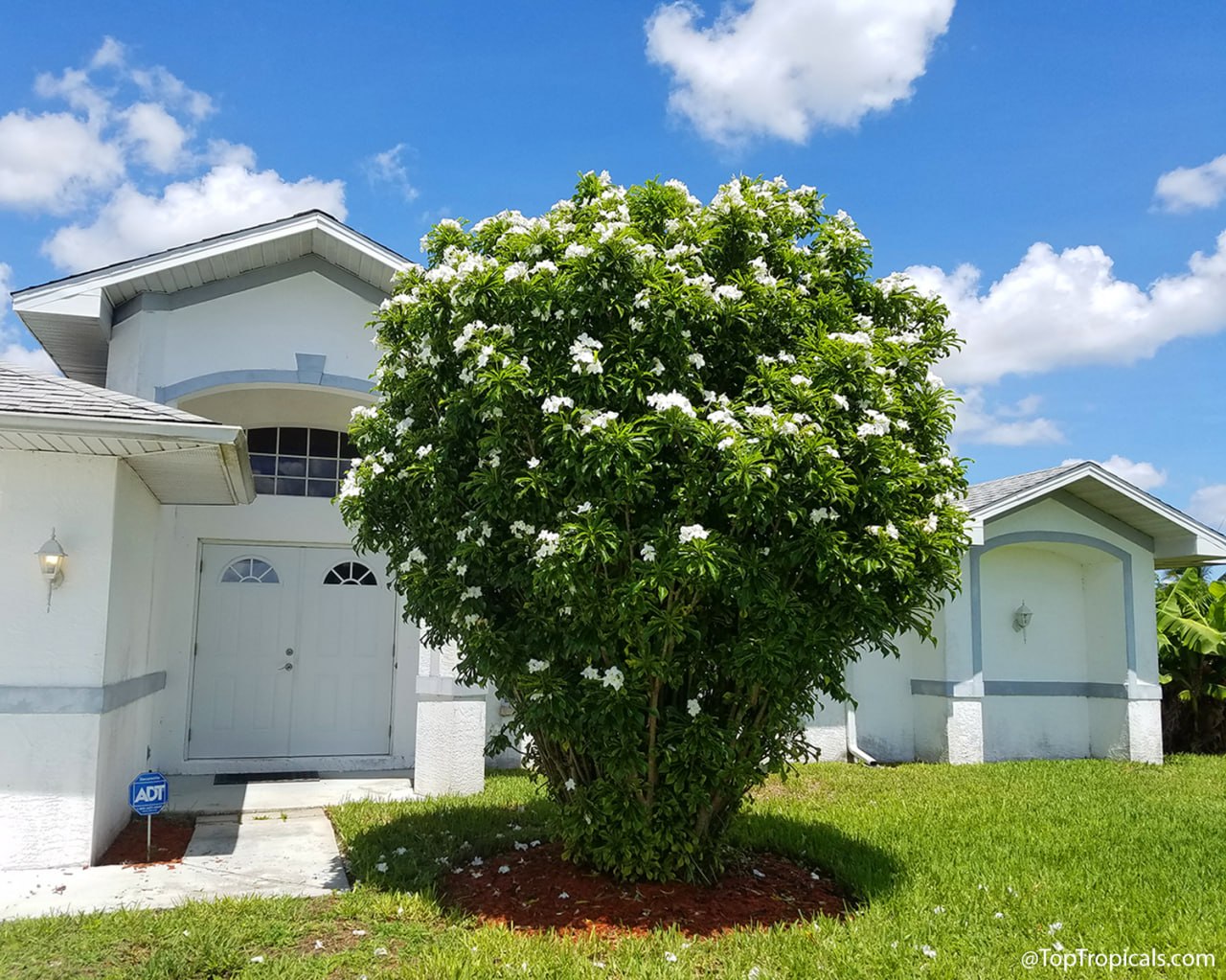
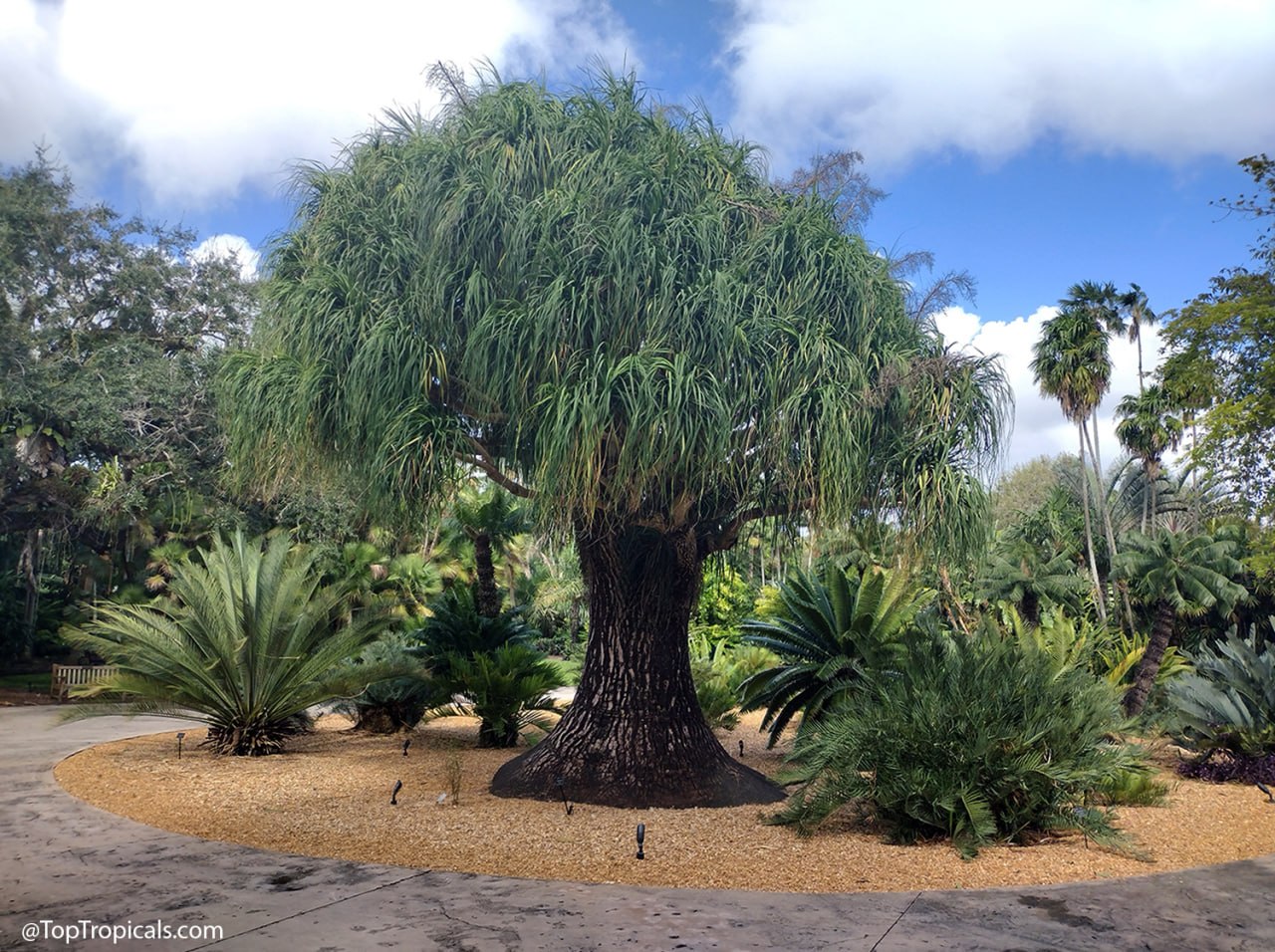
☀️ 1. Pony Tail Palm - Beaucarnea recurvata 📸
Not a true palm - it stores water in its showy, swollen trunk, making it incredibly drought tolerant and perfect for harsh, dry areas.
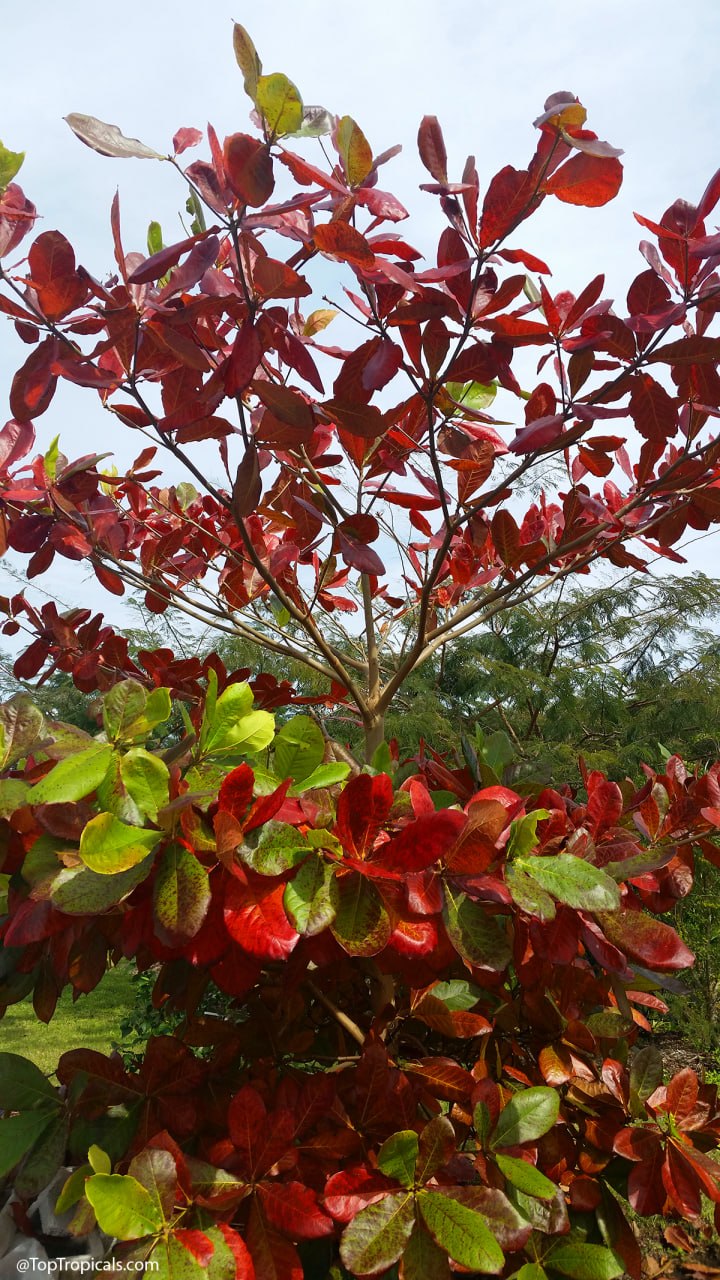
☀️ 9. Tropical Almond - Terminalia catappa 📸 A classic coastal shade tree that thrives in heat, wind, and dry sandy soil once established. Its broad, layered canopy provides excellent shade, and the large leaves turn striking shades of red and orange before dropping - a rare bonus color show for hot-climate landscapes. Plus almond nuts as extra bonus!
Tropical Almond Plant Facts
Terminalia catappa Tropical Almond, Badamier, Java Almond, Indian Almond, Malabar Almond, Singapore Almond, Ketapang, Huu Kwang, Pacific Almond

 Mango Practical Growing Tips (Keep It
Simple)
Mango Practical Growing Tips (Keep It
Simple)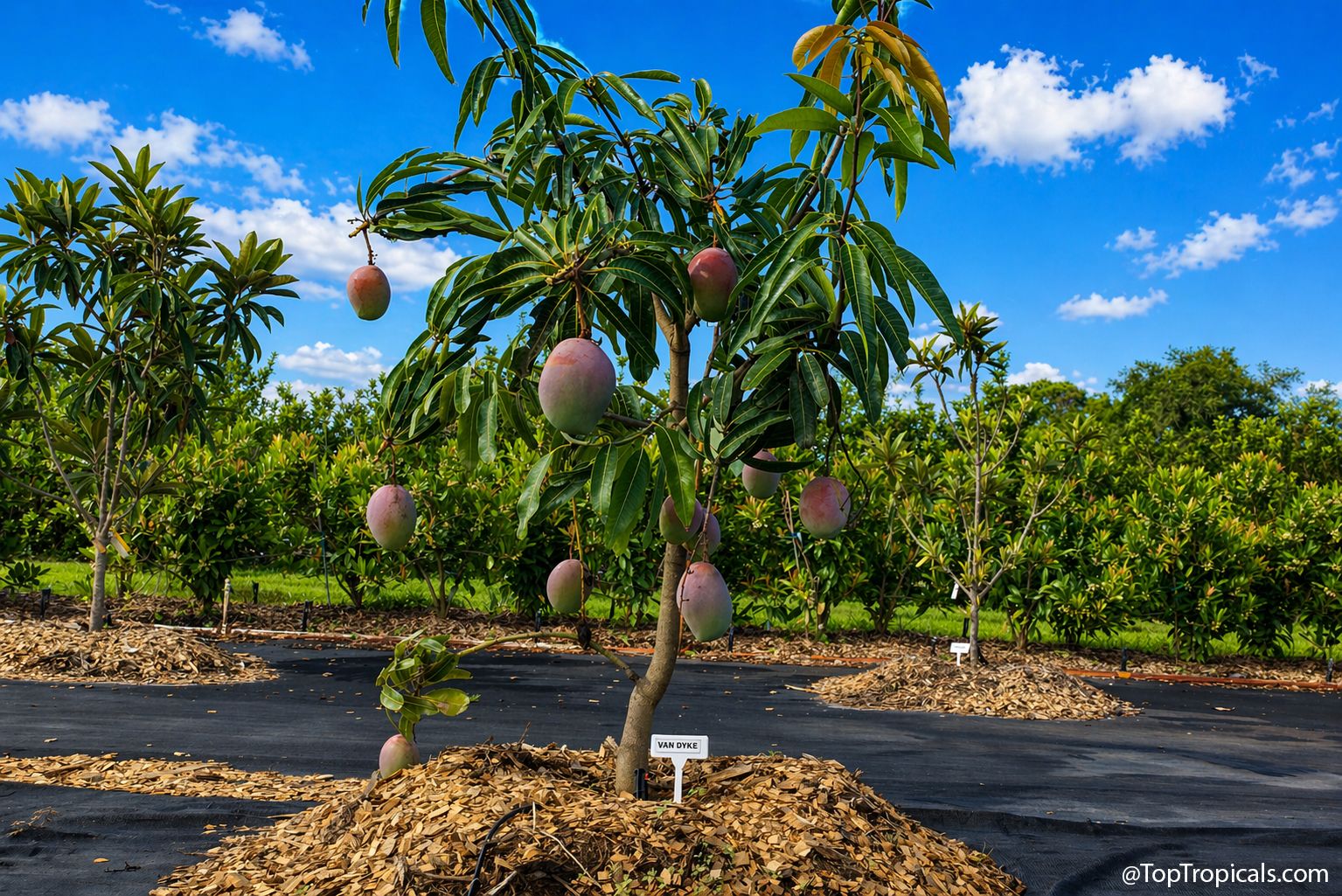
 Mango Winter Care (Very Important)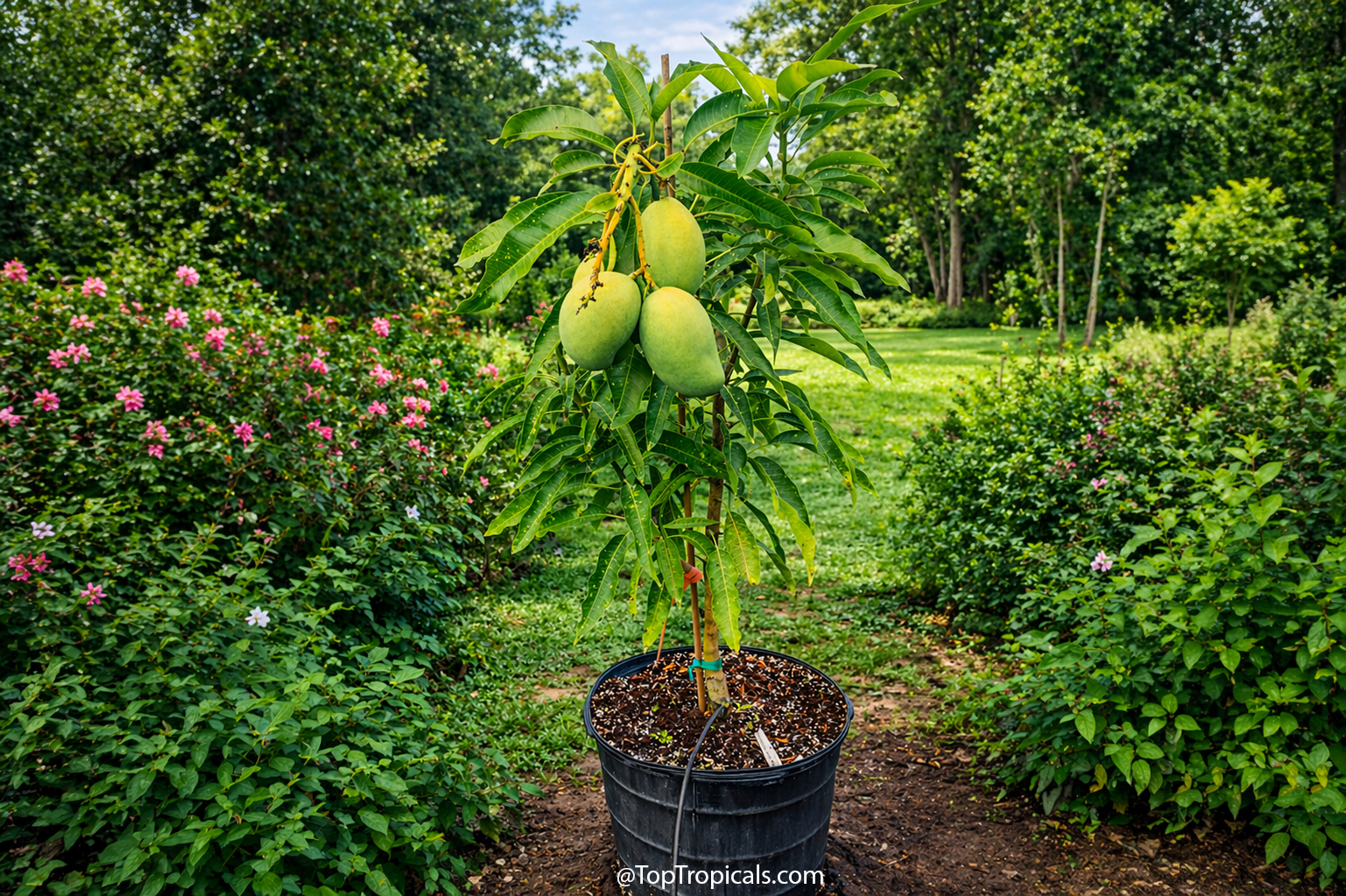
 Taste the Mango Difference - Save 10%