Date: 29 Oct 2020
Healthy Plants. Q&A from Mr Booster: How to get Ylang Ylang to flowering
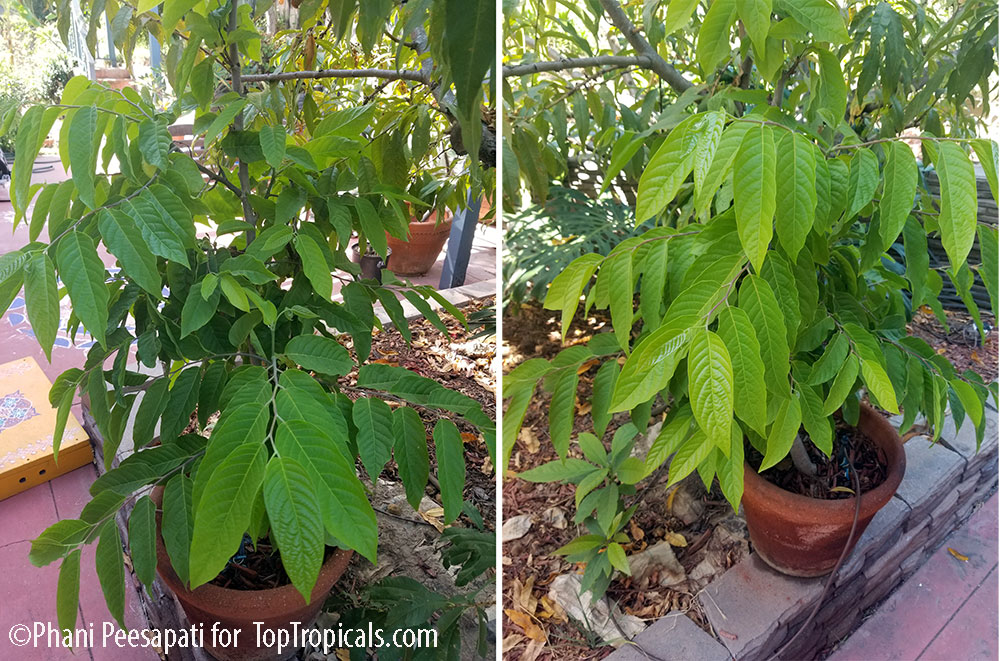
Q: I am writing in reference to my Ylang ylang tree. I purchased this from top tropicals a few years ago and although the plant is doing well, I don't see any flowers yet. Can you tell me when it will flower? Do I need to do something special for it to flower?
A: Cananga odorata, Ylany Ylang tree, takes a few years until it
starts flowering, hopefully it will bloom for you any time soon.
However, keep in mind that it may be a bit challenging for a potted plant.
In natural conditions, this is a large tree that requires lots of room not
only for the tree itself, but also for the root system. It is still possible to
get Cananga odorata to bloom in container, considering the plant has all
necessary nutrients for flowering. Here is the trick.
When grown in the ground, root system can reach out to all necessary elements in surrounding soil (considering soils are not too poor on necessary elements). In a pot, a supply of nutrients can be exhausted very quickly, so a quality fertilizer program is very important. Fertilizer must include all necessary nutrients in easy accessible (soluble) form, and a plant must have their constant supply for proper development.
SOLUTION:
prescribe Ylang Ylang tree the following combination of plant food:
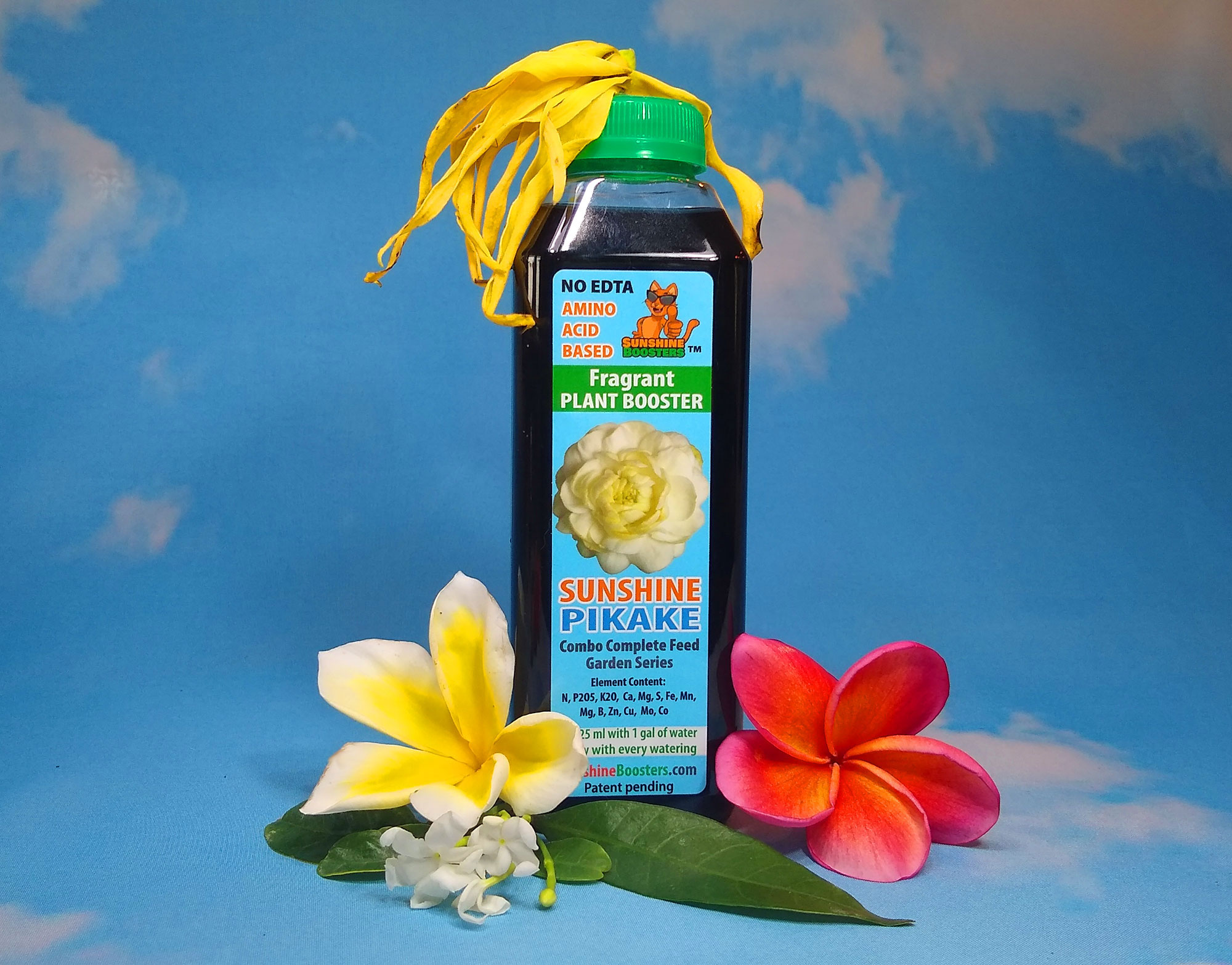
- SUNSHINE Pikake - Fragrant Flower Booster
It will provide well-balanced amounts of high absorption Phosphorus (P) and
Nitrogen (N), as well as Potassium (K) - to provide enough flowering energy
to the tree, plus a combination of all necessary micro-elements. It is safe
to apply this fertilizer as frequent as with every watering, including winter
time.
- SUNSHINE-Honey - sugar booster This supplement has a high content of elements Mo and B - once the tree starts getting them on regular basis (a few times a year, according to the label), it will trigger flower production.
You may also consider getting dwarf varieties of Ylang Ylang that starts
flowering in container right away:
Cananga fruticosa - Dwarf Ylang-Ylang
Currently these high demand plants are sold out, but new plants are
establishing and will be ready for sale within couple months. You may add your email
to wishlist ("Notify me when available") to get notification as soon as we
have it back in stock.
Ylang Ylang vines also start flowering within a year.

Date: 12 Sep 2019
Helping Citrus and other fruit trees with Nutritional Supplements
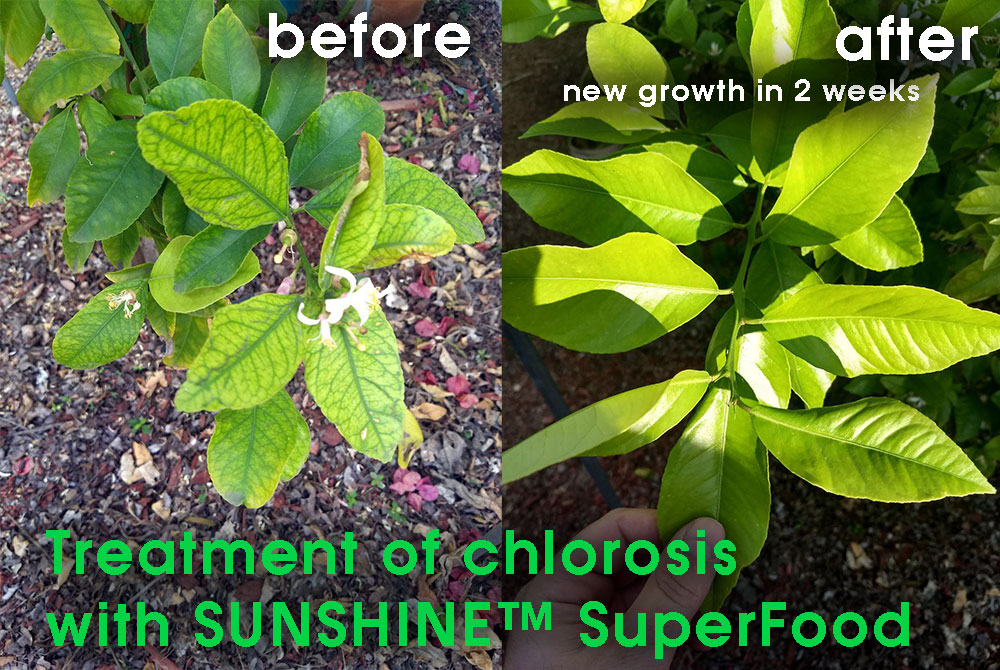
Q: Can you recommended a product to help with my citrus? Combating greening and chlorosis.
A: Citrus greening is spread by an insect called the Asian citrus psyllid. The psyllid feeds on the stems and leaves of the trees, infecting the trees with the bacteria that causes citrus greening. Florida Citrus growers dedicated the last decade to researching citrus greening. Officially, currently there is still no cure, however, some Nutritional solutions have shown promising results. To slow the progression of citrus greening in infected trees, nutrients are applied to the leaves and to the roots. Providing better nutrition helps trees fight against citrus greening and enables them to continue to produce quality fruit.
We recommend the following products for use on regular basis:
SUNSHINE Epi is a natural Brassinosteroid plant hormone and a bio-stimulant that may be very effective as citrus greening treatment. It works through plant's immune system and shows amazing results of recovery of weak and sick plants.
SUNSHINE Superfood, a complex micro-element supplement, maintains plant's health and provides vigorous growth.
SUNSHINE-Honey is a basic nutritional complement, it contains essential plant micronutrients Boron (B) and Molybdenum (Mo). These elements are essential to vegetative and reproductive growth, cell expansion, tissue growth, and fertility. A very common problem for most unimproved garden soils is lack of Molybdenum and Boron as soil micro-component. This results in underdeveloped / low quality fruit and/or premature fruit drop. Applying SUNSHINE Honey on your fruit trees will fill that gap and help a fruit tree to form a healthy fruit.
Macro-nutrients should be applied in combination with micro-nutrients on regular basis:
Mango-Food - Smart Release Fruit Tree Booster (works great for all
tropical fruit trees)
Fruit Festival Plant Food - Ideal blend designed to improve fruit trees
health and vigor, and increase crop yield.
See SUNSHINE Boosters page for the complete list of plant boosters.
Date: 15 Mar 2019
Save Coffee from extinct!
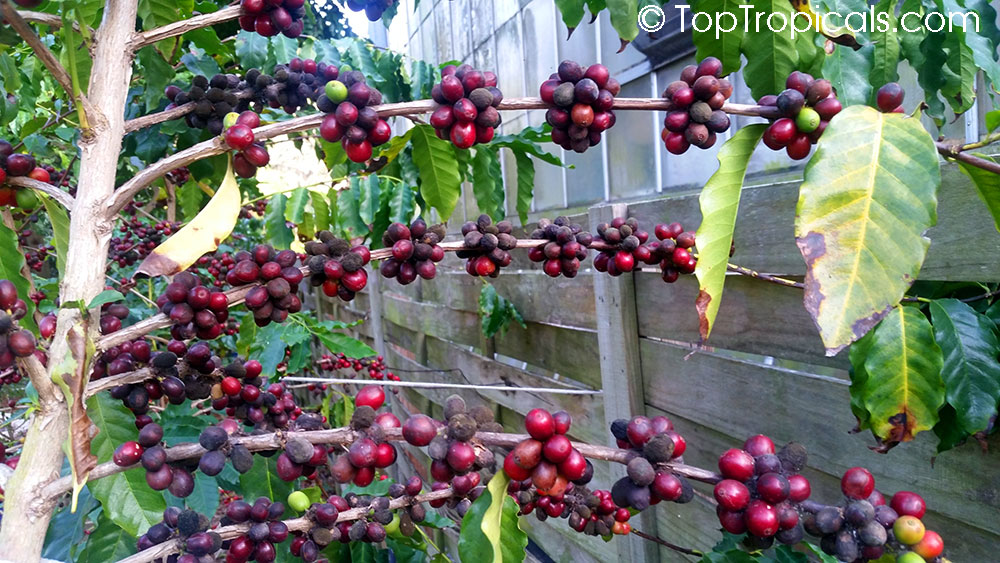
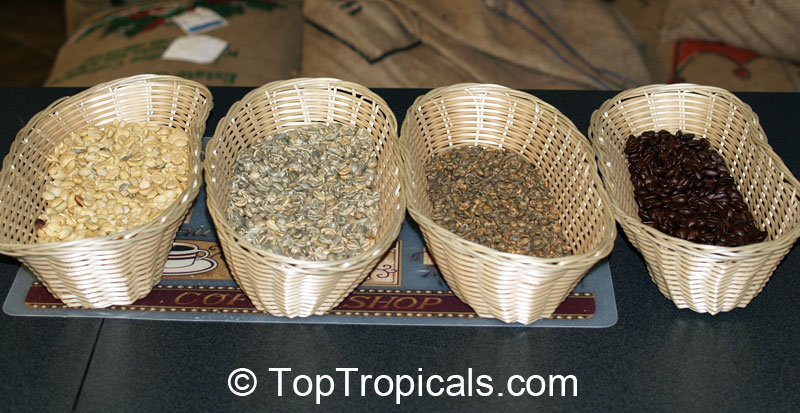
The most popular kind of coffee for commercial production, Coffea arabica, is already on the endangered species list. According to research, Coffea arabica plant could become extinct in as little as 60 years.
Coffee requires a forest habitat for its survival. With so much deforestation going on around the world, wild coffee species are being impacted at an alarming rate. Coffee plants grow in very specific natural habitats, so rising temperatures and increased rainfall brought by climate change can make coffee impossible to grow in places the plants once thrived.
Read the whole article
See video: Top Tropicals Showcase: Coffee plant
To reserve a cup of coffee for yourself and your children, plant the Coffee tree now!

Date: 20 Dec 2020
Mango ID and ripeness

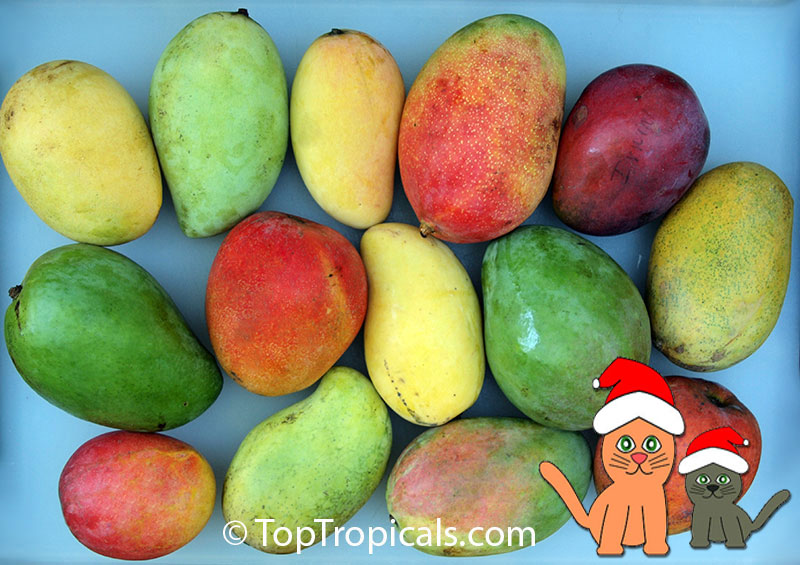
Q: As the World's Leading Authority on Tropical Plants, I hope you can help us out. We obtained a mango tree from a City giveaway, and planted it a few years ago. This is the 1st year it has produced fruit. They are almost all green color, & range from 6-7 inches in length. Attached are a few photos of the tree & its fruit. Please help to identify the type, and how to determine when they would be ready to pick. Or should we just wait until they fall off of the tree?
A: If the tree is grafted, it normally starts flowering within a year after planting. If
the tree is over 6 years old and just now started fruiting - chances are, this is a seedling (possible at giveaways)
without specific variety. However the fruit looks pretty good size and shape, hopefully it tastes great. You will find out soon!
Based on the pictures, there maybe a few possible choices, including
varieties (or their seedlings) Keitt, Rosigold, it can be even Lancetilla if fruit grows bigger than 7" long. The next step would be, wait until the fruit get some color, then it will be easier to narrow down the variety.
Also see if there is a lot of fiber or no fiber.
You may wait until at least one fruit ripens on the tree and let it fall naturally - that
will be the color (can be all green, but in your case it looks like it's turning yellow blush). After that, you may pick full size fruit before they fall and let them
ripen on a kitchen table. Usually once the fruit starts showing color, it is close to ripening. For all-green varieties, just wait till fruit grows to maximum full
size. You may also check if the fruit gets softer to touch, then it's ready.
Date: 11 Sep 2020
The best Loquat varieties with big, sweet fruit
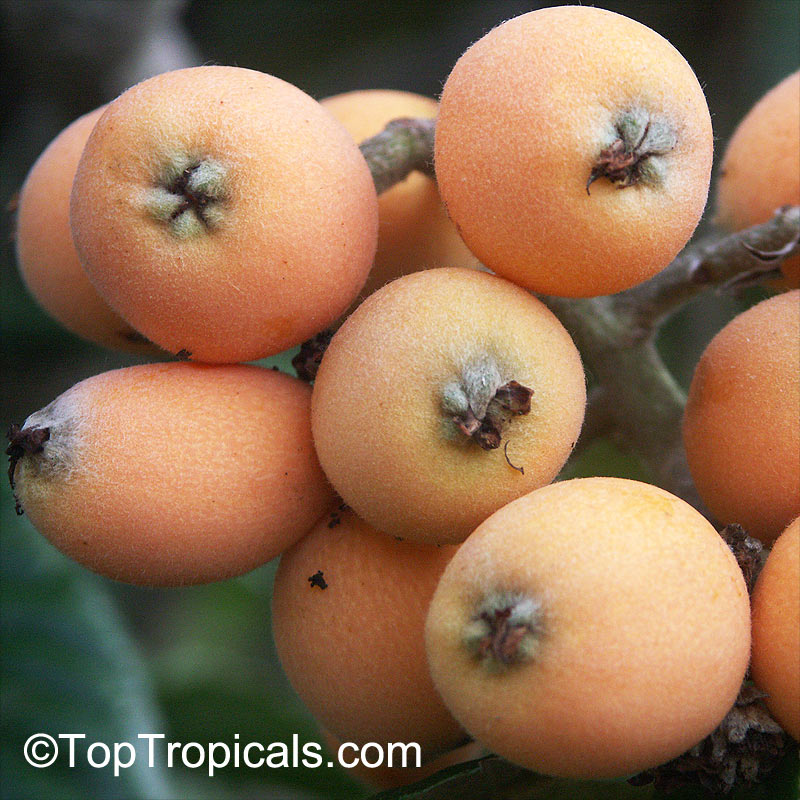
Q: I'm interested in loquat and read through the varieties you offer but wanted your recommendation. I'm looking for a variety that is big, sweet (not tart) with 1 seed. Of the varieties you offer... Which variety would you recommend?
A: From our experience, the most popular Loquat variety is Christmas.
It is an early ripening type hence the name Christmas. Fruits are very large
for a loquat, they are bright yellow with a tangy apricot flavor.
Another good variety we recommend is Yehuda - it has a large fruit and very small seed
Also, variety Oliver for many years has been considered the best loquat for South
Florida. The fruiting season is March to May. It has medium to large fruit. The
fruit is very sweet with only one-two seeds.
Loquats are very cold hardy tropical fruit trees, easy to grow, drought
tolerant, fast growing. Fruit is great for eating fresh or making jam.