Date: 15 Aug 2021
How to grow Cerbera and make it flower
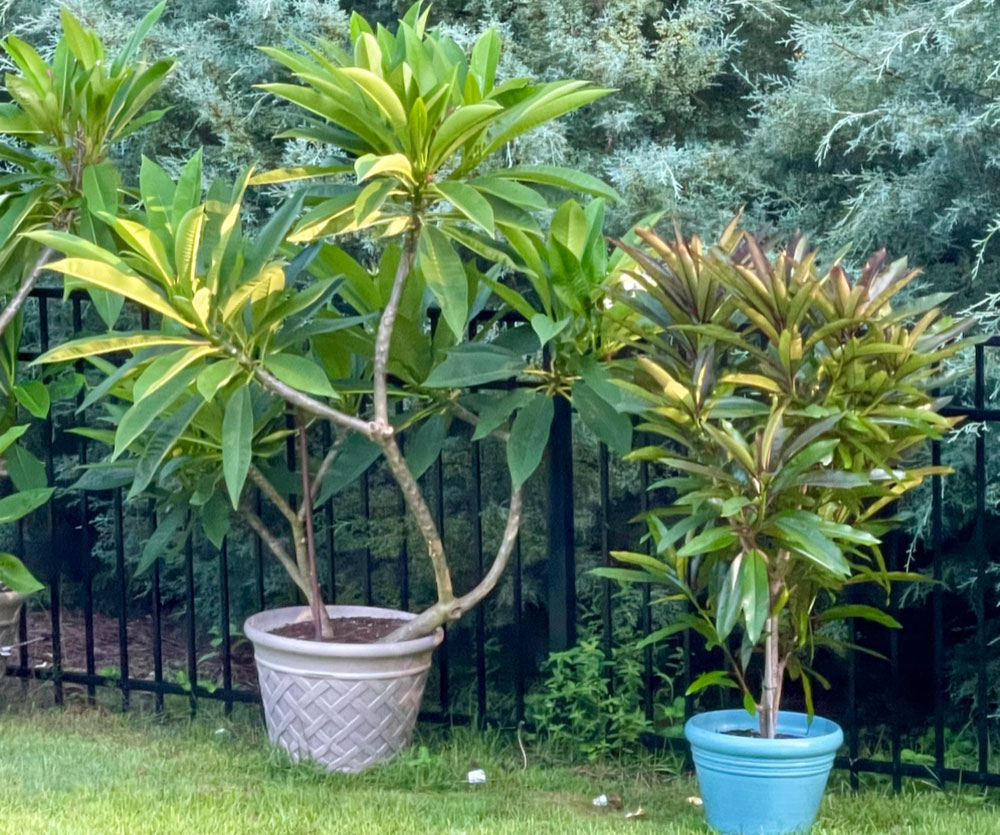
Q: I purchased Cerbera manghas - Enchanted Incense a year ago. As you see from the photo, it's doing great however, no blooms. I fertilize properly and very often and use worm castings for micronutrients. Yes it's not "your" fertilizer, but my plumerias, that are also in pots they are over 5 feet tall and blooming like crazy. I don't see any inflows coming on the Cerbera at all and it is hot and humid here in North Carolina, so it's happy but no sign of blooming. What is your advice?
A: Top Tropicals first brought Cerbera manghas into the US plant market a few years ago, it was recommended to us by our friend, plant taxonomist John Mood who visited Thailand, and among other exotic plants noted this fragrant beauty. Since then we've been successfully growing this plant, it has become one of everybody's favorites.
Generally speaking, Cerbera culture is very similar to Plumerias. These plants are closely related. So if you know how to grow Plumeria, you sure will succeed with Cerbera. Hot and sunny location, well-drained mix, moderate water and bloom boom fertilizer will do the trick. However, we have noticed a few distinctive features that make this plant somewhat challenging at times.
1) Flowers
For past years, we've been studying what triggers its flowering.
Sometimes these plants start flowering in 1 gal pot, 1 ft tall. Other times a large
developed tree 5-6 ft tall, in 5-7 gal pot, grows beautiful foliage with no
signs of flowers. Eventually all of them bloom, no matter how stubborn they
are, it's just some individual plants start flowering sooner than others, all
grown in the same conditions.
One of our plants in the ground, a well-branched tree, was covered with
flowers for a few months, but only on the 3d year after planting. Before that,
it only produced a few random blooms. Others bloomed in pots at very young
age.
The following factors benefit to Cerbera flowering:
- full sun at least 10 hours a day
- hot temperatures above 85F
- regular water but not heavy rains
- regular fertilizer - Bloom Booster type
- very good drainage and drying out before waterings. If root ball stays
moist, the plant may look healthy but won't set flower buds. Keeping on a dry
side will encourage flowering. Very similar to Jasmines: they bloom like crazy
in April while it's hot and dry in Florida, but once our summer rainy season
starts, they reduce blooming.
We highly recommend using Sunshine Megaflor bloom booster or SUNSHINE Pikake in combination with micro-element supplements Sunshine Honey (B-Mo) and Sunshine Superfood (complex micro) that induce flowering. Dry and granulated fertilizers may not supply exactly what a plant needs: certain elements that trigger flowering may be missing. Sunshine Boosters formulas are scientifically balanced, they contain precise amounts of nutrients needed for setting flowers. Besides, excessive salts from regular dry fertilizers create nutrient lock up that may retard plant metabolism; with liquid amino-acid based Sunshine boosters, plants consume the whole menu of elements without building them up in the soil.
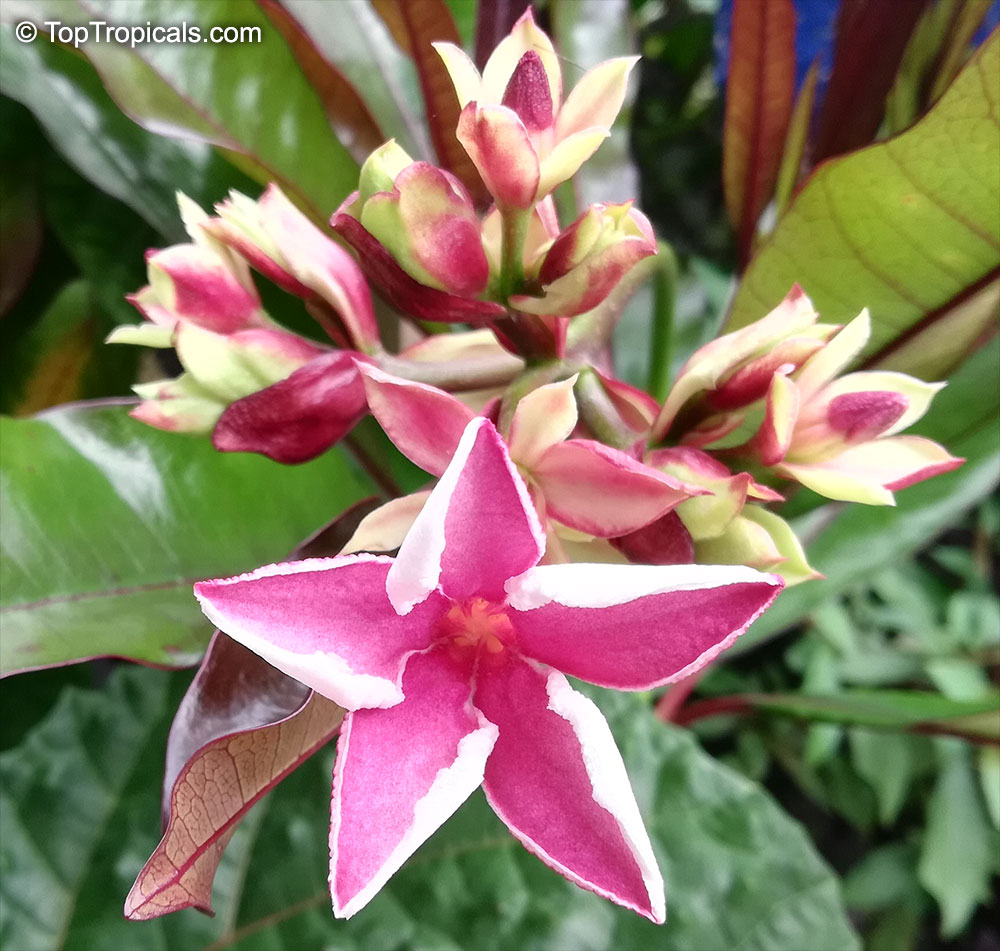
2) Fruit
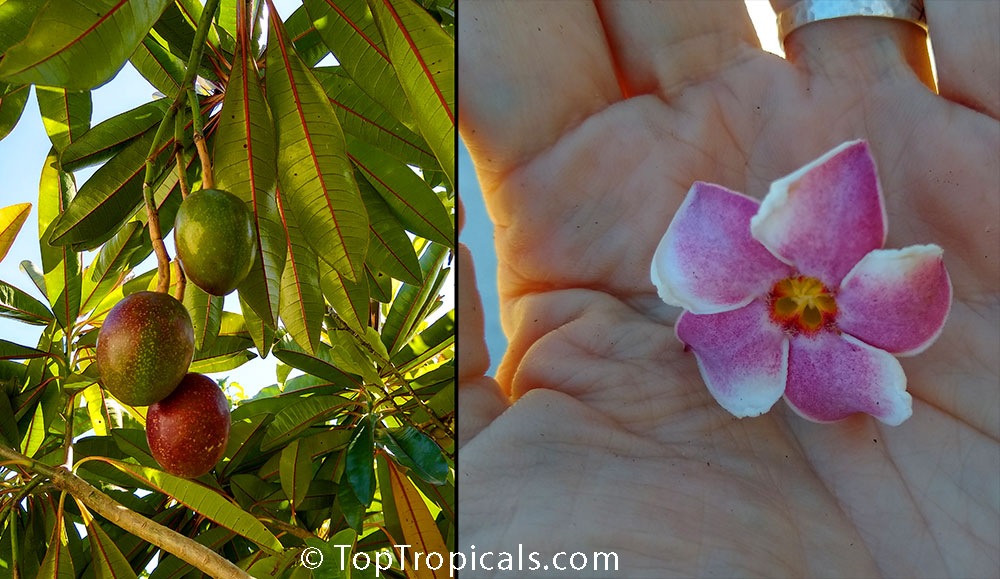
Fruit of Cerbera are very pretty and cover the tree after profuse flowering. To inexperienced eye they may look very much like small mango or avocado fruit - so make sure kids or visitors don't try to eat them! Cerbera seeds are extremely poisonous.
3) Leaves
If you ever grew Passiflora or Milkweed, you know how leaves can be
eaten by caterpillars overnight. This may happen to Cerbera too, as we
discovered. In Florida environment this exotic plant doesn't have natural predators for
protection from certain insect species that may feed on it. So watch out and
if noticed first signs of leaves damage - its time for insect control.
Other than that, Cerbera foliage is usually beautiful and colorful, here in
Florida it looks much healthier than that of Plumerias often affected with
rusty residue during high humidity months.
Hope this helps. The Cerbera fragrance is enchanting, it is worth the efforts and waiting!

Date: 13 Apr 2021

Healthy Plants: Q&A from Mr Booster
Why my Avocado is not flowering?
Q: I have 5 avocados. Three of your cold hardy varieties and two others that have all flowered and set fruit in the past. The last two years including this year, not a single one of them has put out any flowers. I am getting lots of new growth like one would expect on a tree too young to flower. The last two years have been very mild with out any damaging frost where in previous years they lost all their leaves due to frost yet started putting out flowers once winter was over. I am confused because they have all flowered and set fruit previous years. Any ideas would be appreciated.
A: From information you provided, and considering the trees get
lots of full sun and cold was not an issue, the only explanation is - lack of
nutrients. Here is an example.
Very common situation: you get a small 2-3 ft Avocado or Mango tree in 3
gal pot (or even smaller) from a nursery, full of flowers, and sometimes even a
small fruit. You bring it home, plant it in the ground or a bigger pot, it
looks happy and grows like crazy. Then next year - oops, no fruit, sometimes
not even flowers. What happened?
When the tree lived in a nursery, it was provided with all necessary
nutrients through the injector systems (continuous feed); or some nurseries may use
top dress smart release on regular schedule. Regardless of fertilizer type,
professional grower's set up delivers plant food non-stop, on regular basis, with balanced formulas. Plants are not only growing fast but also ready to produce, since nutrients are always available for a full growth cycle.
When you plant a tree in the ground (or larger pot), conditions change.
They may be beneficial for the plant: lots of room for roots to establish, hence
lots of vegetative growth. Even if you planted it using good quality fertile
soil, this soil may contain mostly nutrients responsible for vegetative
growth (branches and leaves). Chances are, your soil may be rich in Nitrogen
(good for green growth), but poor in other elements responsible for flowering and
fruiting (Phosphorous, Potassium, and many important micro-elements such as
Molybdenum, Boron, Iron, etc.). Besides, existing soil gets exhausted
quickly, and within a year a two, if you don't add fertilizer, flowering and fruiting may be reduced or even stopped.
This is why fertilizing program is very important for fruit trees that are expected to bring a crop soon.
We recommend:
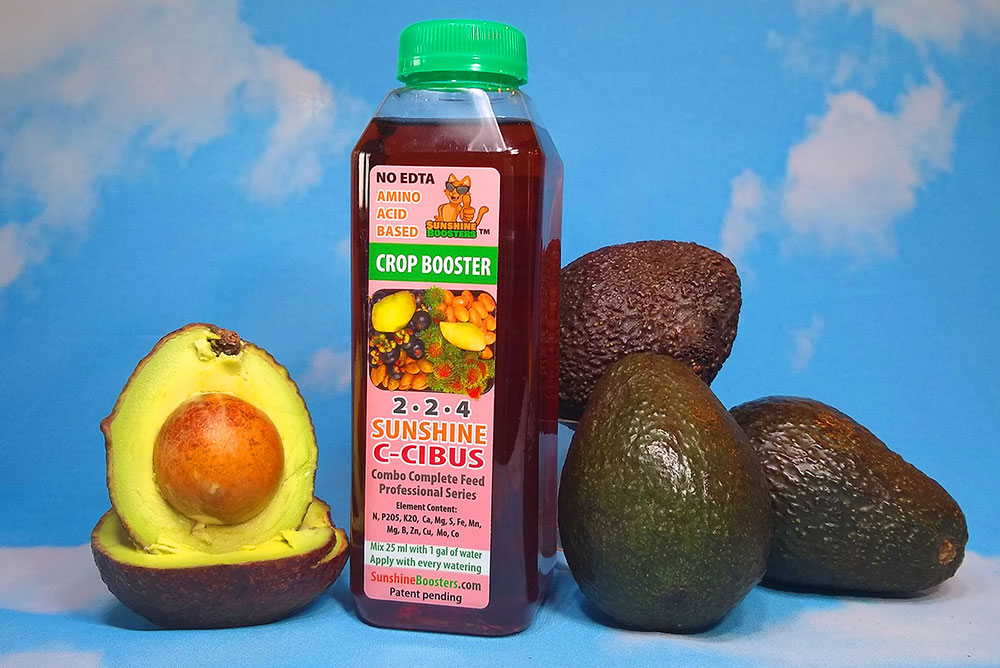
- SUNSHINE C-Cibus - Crop Nutrition Booster - balanced food for fruit
trees
- SUNSHINE-Honey - sugar booster - promotes more efficient blossoming and
pollination, makes flowers bigger and reduces bud drop
- SUNSHINE SuperFood - for improving fruit trees production
Also keep in mind that some fruit trees have a habit of "skipping" a year and may either produce less or not produce at all every other year. In any case, balanced nutrition program can help to fix this "bad habit".
Date: 19 Jul 2019
How to grow Soursop in a pot
Q: Is it possible to grow soursop in a large pot for life?
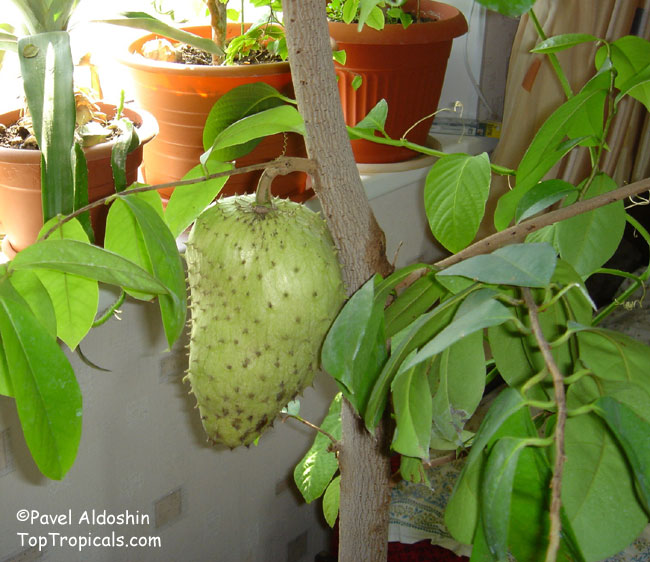
A: Soursop, or Guanabana - Annona muricata - is actually one of those tropicals fruit trees that
can be easily cultivated in a container. Most plants of genus Annona have compact nature, and these fruit trees usually start
production at a young age, as early as 3 years from seed. Annona muricata
seedlings take a little longer to fruit, this is why we offer grafted trees, which can start producing right away.
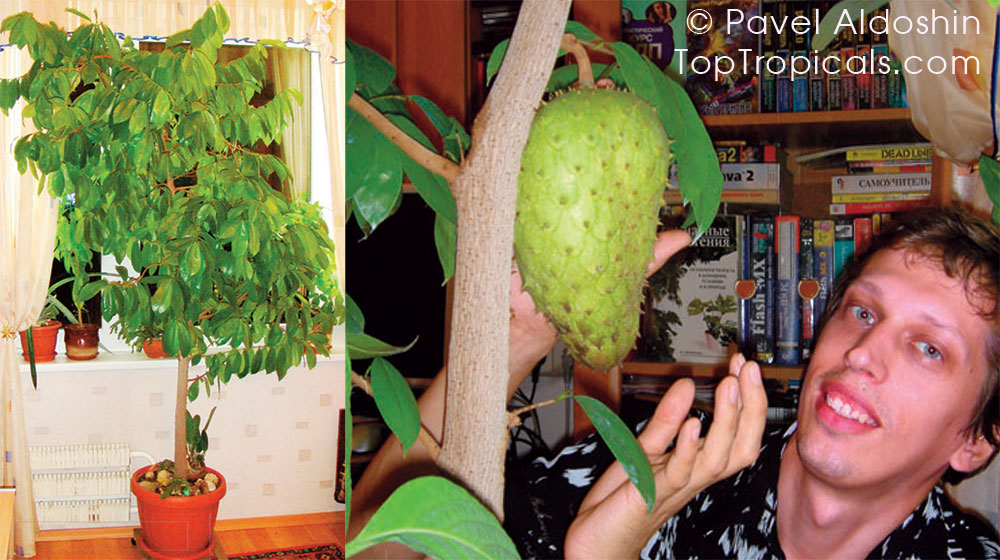
We have a very interesting article about growing Soursop in an
apartment. The article was written by an indoor gardener who lives in a very small
apartment in Moscow, Russia. He grew this tree from seed and after years of
cultivation fun, he finally got several large delicious fruit! It is an amazing
story. We have it published in our Tropical Treasures magazine, download the whole issue #7, get a hard copy, or you may download PDF file of the single article.
Recommended fertilizers and supplements:
Fruit Festival Plant Food - Super Crop Booster
Mango-Food - Smart Release Fruit Tree Booster
SUNSHINE-Honey - sugar booster

Date: 8 Jun 2019
Chosing a good avocado tree
Q: I'm in coastal Broward County. I'm putting together an order on your web site, and one thing that I would like is an avocado tree. I'd like to have something as close to true "Hass" as possible. Which cultivar does well here in SE Florida, and is most like Hass in texture, creaminess, and flavor? I'm not a big fan of the yellow watery Florida avocados.
A: Mexican type of Avocado have dark skin and buttery texture,
while Florida green fruit types (West Indian type, with smooth skin), have lots
of delicious melting pulp, so it is a matter of preference.
In coastal Broward county you can grow a wide range of varieties since
your climate is very mild, so you don't have select cold-hardy varieties like
Winter Mexican, Brazos Belle or Joey, etc. Yet there are many interesting varieties that rare and much
more exclusive than Hass, with the same, or even better, quality buttery
fruit.
One of the most popular varieties - Brogdon, with red-purple colored pear-shaped fruit, very thin skin, and yellow buttery flesh. It is also very cold hardy.
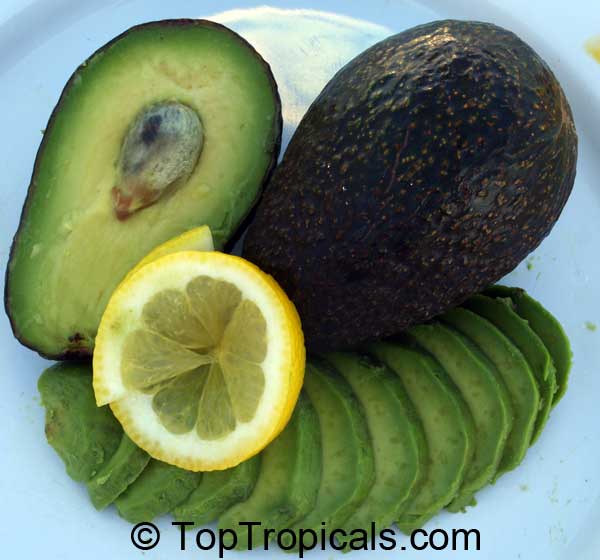
Very interesting exotic avocado is Kampong - Sushi Avocado - see photo above. The flavor of this fruit very nice, oily, creamy, nutty, reminds of almonds. At the same time, it has solid consistency and if you cut a square it remains a shape of the square. It is the best Sushi Avocado! It tastes great as an appetizer when cut in squares with some shrimp cocktail sauce.
Three collectible varieties:
Anise - leaves that smell like Anise, very rare, the fruit is of excellent
quality, creamy and buttery.
Bacon - a large Mexican variety with dark-skinned medium-sized fruits, and
a rich creamy flavor. It has exceptional fruit that ripen in late fall and
into spring, they are easy to peel and have a light, subtle flavor. Another
outstanding feature of the Bacon avocado tree is its angelic sweeping branches
which helps keep the tree shorter and easier to pick its fruit.
Nishikawa is a very hot seller! Oval fruit somewhat resembles Hass, but
larger, and has very high oil content.
See all Avocado trees from our store
Recommended fertilizers:
Fruit Festival Plant Food - Super Crop Booster
Mango-Food - Smart Release Fruit Tree Booster
Date: 23 Apr 2019
Fruit tree size and production
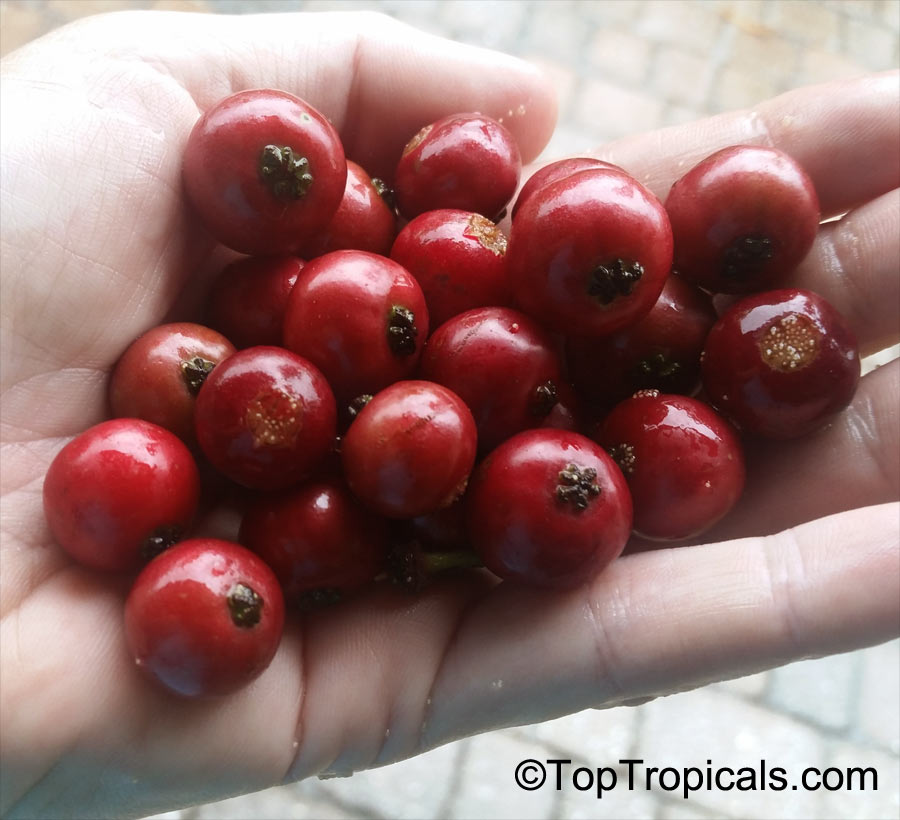
Q: I am interested in a Strawberry Tree... does this tree produce fruit while still small or do I have to wait until it is large before it produces? Should I fertilize it so it produces sooner? I ask because my garden is not large and I prefer to keep my fruit growing trees in a smaller size. Also, how big is the fruit and does it have a seed?
A: Strawberry Tree, Muntingia Calabura, is one of those fascinating fruit trees that starts
flowering and fruiting in small size. We have plants growing in 1 gal
containers that already have flowers. This tree is nearly year-round producer
providing warm conditions. It is a fast grower, although a compact tree when
mature, and can be trimmed to desirable size without affecting production.
Muntingia fruit is one of our favorites. It is super sweet and juicy,
and the seeds are tiny small, not bigger than the strawberry seeds, so you
don't have to spit them out. The fruit size normally about 1/2 inch, but we have
a tree in our garden that produces almost cherry-size fruit! See picture
above. The secret is, good watering and using fruit booster - SUNSHINE honey micro-element supplement. We also fertilize our fruit
trees using Fruit Festival and Mango-Food fertilizers.