Date: 6 Oct 2021
Top Tropicals Top House Plants
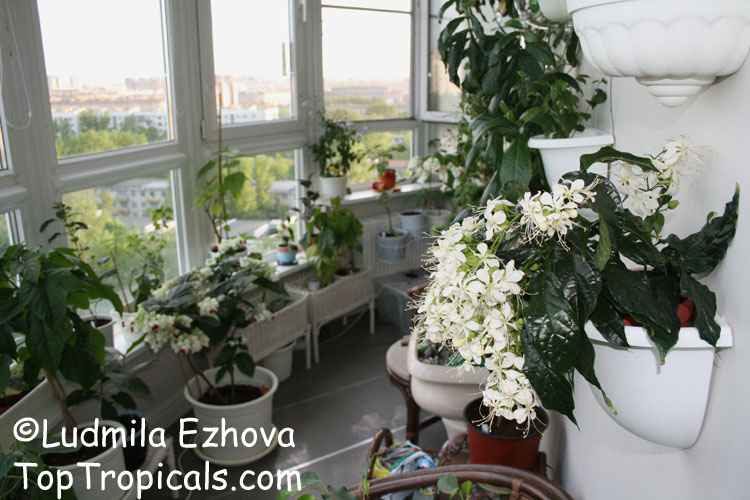
Photo above: Clerodendrum indoor garden of Ludmila Ezhova, St Petersburg, Russia.
Enjoy the Tropics Year round!
Bring them inside...
Q: I just discovered your amazing website and spent hours browsing your beautiful tropical plants! I wish I could have them all! But it's getting cold here (I live in Chicago area), too late? Can you recommend something of a small size, colorful, that I can easily overwinter indoors? Thanks for bringing this beauty into our lives!
A: Don't get discouraged even in colder climates. Yes, you can grow tropical plants indoors! Remember that all traditional houseplants are in fact tropical plants that grow in tropics in a wild habitat. Humans didn't invent them as indoor plants, they originally collected them from the rain forests and jungles! Most of tropical plants, including trees and fruit trees, can be grown in containers and even indoors. It's just a matter of space limitations and amount of time you are willing to spend caring of your exotic babies. Many gardeners up North are very successful with their tropical plant collections.
Below are a few suggestions of compact growing, easy species for your
indoor collection. Enjoy the Tropics Year round!
See more plants well-suitable for indoor culture and our specials at the end of this newsletter.

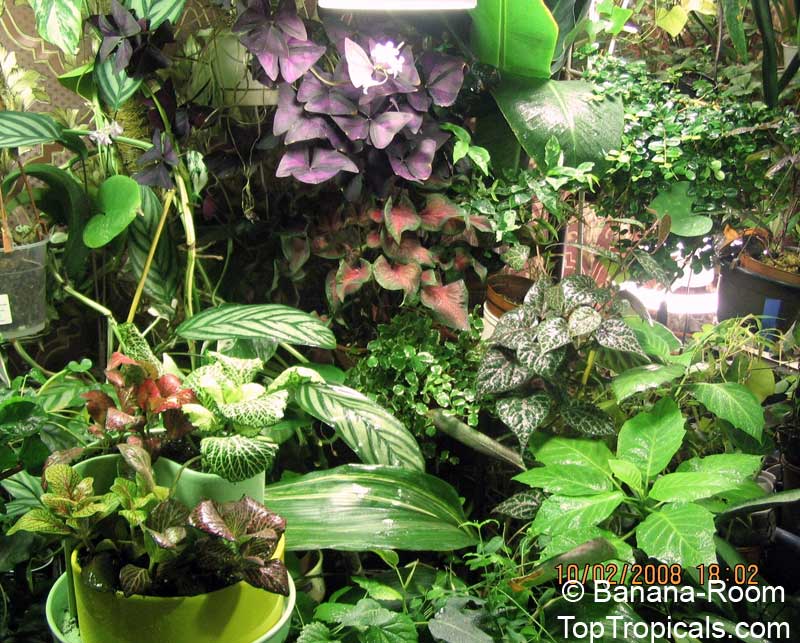
Photo above: small tropical indoor garden of Julia Nikolayeva
Date: 24 Nov 2020

Healthy Plants: Q&A from Mr Booster
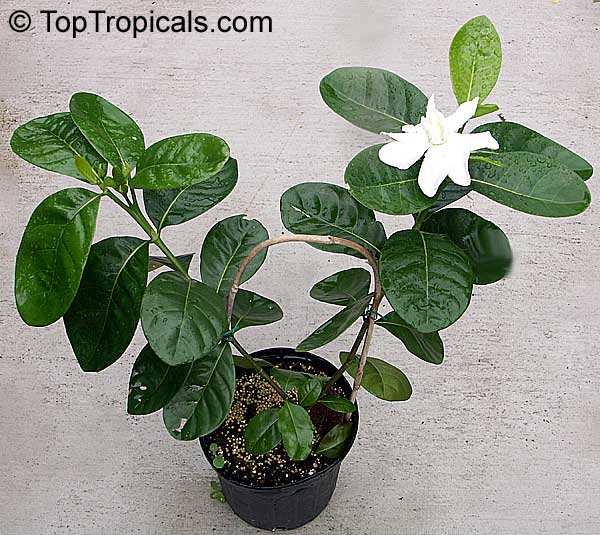
How not to kill gardenias?

Q: I have tried to grow gardenia in pots for years and never keep them alive. When i look on camellia websites they say fertilize potted plants twice a year. I'm confused as I tend to kill them with kindness haha. Also, if our tap water has high cal/mag and that stops the gardenia getting other nutrients why would I make up the feed with tap water? So confusing and online is mixed messages...
A: Gardenias are not the easiest plants to grow, however, they are easier in pots than in the ground: they prefer acidic soils, and in many areas soils are alkaline. The most important factor is balanced and sufficient nutrients. In the ground, plants have no limits to reach out to different elements by spreading their root system. In a pot, once all the good stuff is consumed, plants start suffering nutrient deficiency. This is why a balanced feeding program is important.
Generally speaking, Cal/Mag in tap water cannot be bad, because they are
essential elements, good for plants (in proper amounts). However, just
Cal/Mag is not enough. This is why you need a balanced liquid fertilizer for plants that prefer acidic soil.
Excessive Cal/Mag alone can create nutrient lock up, especially if they are chelated
with EDTA like in dry fertilizers, which are not fully accessible for
plants.
We recommend natural, Amino-Acid based fertilizers that are completely
consumed by a plant and are safe to use with EVERY watering, even in Winter. They
are scientifically formulated and cover all plant needs.
For your gardenias, you should use SUNSHINE Pikake - Fragrant Flower Booster.
Another important factor is proper watering. Gardenias like regular water
but don't like wet feet = well drained potting mix is a must, similar to Abundance professional growing mix.
Date: 5 Sep 2019
How to get Jasmines to flower
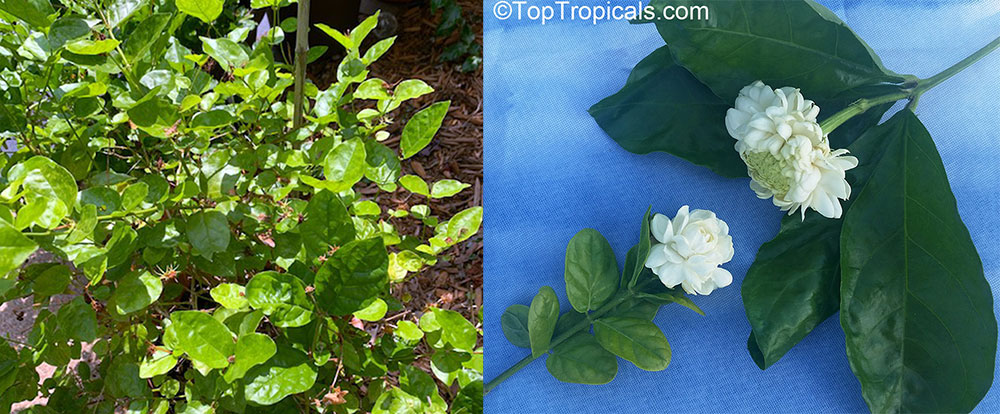
Q: On the picture, these are a few of the jasmine plants that I have from Top Tropicals. I have bought so many plants from you over the years, not just jasmine. I have several varieties of jasmine. They were all doing very well. However this year I didn't get a single flower. There are a lot of buds... But before the buds open they become brown and withered. I bought fertilizer from you. Fertilized the plants once a month like I always do. I water the plants once a week. I repotted the plants hoping that would take care of this problem. Some of the jasmine plants I pruned... the plants came back vigorous growth with a lot of buds... BUT it is the same problem! Please help.
A: One of the possible reasons why they have flower issues is - maybe they don't have enough sunlight. They need to be in full sun all day long for profuse blooming and proper flower forming. However since the buds are forming, there may be just enough light. In this case, dropping buds may be a sign of overwatering.
Important steps - how to make Jasmine Sambac flower:
1. Soil. Use only well-drained soil
2. Water. Keep plants on a dry side and never over water. If the top of the soil is still moist, do not water.
3. Sun. Keep in full sun all day long. The more sun, the more flowers.
4. Bloom booster. Use Flower booster fertilizers:
Pink N Good Daily Plant Food - Flower Booster
Fragrant Plant Special booster, this 90-day Smart-Release container
plant food:
Plumeria Top Dress - Smart-Release Booster
Do not use fertilizers with high Nitrogen (1st number in NPK formula)
- those will promote more leaves instead of flowers.
5. Micro-elements. Use Apply micro-elements, they will help the
plant to develop healthy and long-lasting flowers:
SUNSHINE SuperFood - plant booster
Here is more information on growing Jasmine
Date: 4 Nov 2024
10 key tips for successful overwintering of tropical plants indoors
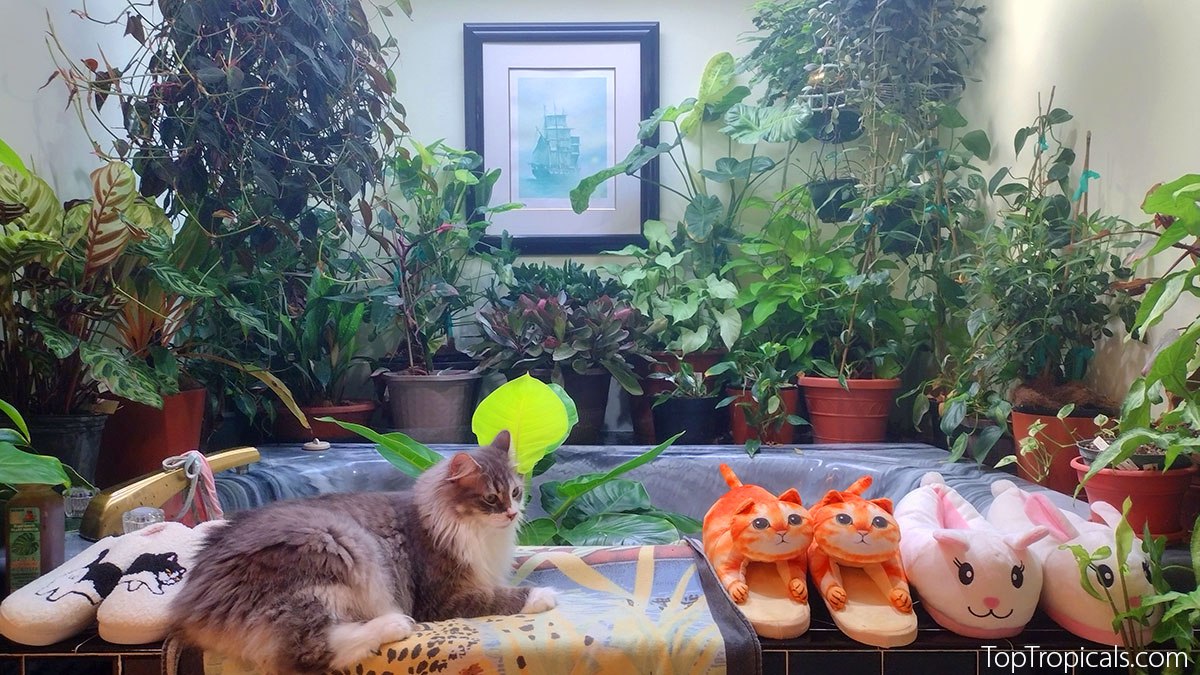
10 key tips for successful overwintering of tropical plants indoors
1. Maximize Light: The more light, the better. There's no such thing as too much indoor light. If windows aren't enough, use LED grow lights, which stay cool and won't dry the air. Rotate plants every few days to prevent uneven leaf loss.
2. Reduce Watering: Less light and cooler temperatures mean plants need less water. Allow the soil to dry between waterings, and avoid overwatering - combination of cold + wet is especially harmful.
3. Maintain Moderate Temperatures: Most tropicals are happy with daytime temperatures around 75F and nights at 50-60F. In sunrooms or greenhouses, some can handle 45F if watering is kept to a minimum.
4. Boost Humidity: Avoid placing plants near heaters or vents that dry the air. Misting daily helps, or place pots on trays filled with water and pebbles to raise humidity around them.
5. Monitor for Pests: Check leaves weekly to catch insect problems early, as pests can cause serious damage or even kill the plant indoors.
6. Fertilize Smart: Use ONLY liquid, amino-acid-based fertilizers like Sunshine Boosters throughout winter; they won't burn roots since their dosage adjusts with reduced watering. Avoid dry, granulated, and EDTA-based fertilizers during winter and dormancy.
7. Use Micro-Nutrients: Along with macro-elements (fertilizers), supplement with micro-elements like Sunshine Superfood and bio-stimulants such as Sunshine Epi to build strong plants with robust immune systems, better able to withstand unfavorable conditions and resist diseases.
8. Hold Off on Pruning: Leaf drop and leggy growth are normal responses to winter. Wait until spring to prune, when new growth starts, to encourage branching and healthy foliage.
9. Don't Repot Yet: During dormancy, roots slow their growth. Repotting too soon risks root rot. Wait until spring when new growth appears to transplant into a larger container. Typically, roots grow in proportion to the above-ground parts.
10. Let Them Rest: Winter is a natural resting period. Avoid forcing growth - your plants will reward your patience with vibrant leaves and flowers when spring returns.
🛒 Shop Indoor plants
#How_to
🔴 Join 👉 TopTropicals
Date: 25 Mar 2017
Plant Horoscope. Aries Zodiac lucky plants: Pomegranate and Chilli peppers

Radio Top
Tropicals Live Webcast upcoming event: Saturday March 25, at 11 am EST.
Topic: You need a brown thumb TO BE A GREAT GROWER!Manure,
Sheeeeeee........it , Fertilizer, What ever you call it. Proper understanding of nutrient plant
needs will give YOU great returns. At Top Tropicals, we know our Sheee.....
uh, fertilizer. Our Host Robert Riefer - Internationally Certified Crop
Adviser and Weed Scientist - answering all your gardening questions.
Listen to Radio Top
Tropicals, every Saturday, at 11 am EST! You may use our website radio player DURING AIR TIME. To ask
questions using live chat, you need to log in at Mixlr.com or simply call our office 239-887-3323 during air time!
If you missed a live webcast, you may listen to recording by following Showreel item link.
Check out our upcoming
radio shows and get your gardening questions ready!
Aries Zodiac lucky plants

Aries - 3/21-4/19. Aries is a FIRE sign ruled by the planet Mars. Plants associated with this element and planet very often have thorns or prickles. They can be also spicy or bitter in flavor, or red in color. Because Aries rules the head, eyes and face, the plants for Aries purify the blood, stimulate the adrenal glands, and/or are high in iron (Mars rules the mineral iron). Mars-ruled Aries is assertive, energetic and fearless. Mars rules the red blood cells, the muscles, and metabolic processes, as well as the motor nerves and the head. These plants help you when you want more get-up-and-go and the courage to take on the world.
Aries Zodiac lucky plants:
Governors plum, Hibiscus Karkade, Tapioca, Mamey Sapote, Ruda, Baobab, Euphorbia, Acanthus, Aloe, Caesalpinia,
Erythrina, Opuntia, Dragon Fruit, Pachypodium, Pomegranate,Chilli peppers, Syngonium, Begonia, Geranium, Red Sandalwood, Jamiaca pepper (Pimenta, Allspice), Camphor, Jujube,
Anise, Red Roses, Tiger Lily, Impatiens, Calendula, Tarragon, Ginger, Coriander, Basil,Ruda, Amaryllis, Wild Indigo, Gooseberries, Sesbania, Campsis, Red Oleander, Maple, Schotia
brachypetala, Momordica, Coffee, Amla , Ephedra, Red Kapok.
For links to these plants and other signs information, see full Plant Horoscope