Garden Blog - Top Tropicals

Date: 24 Jun 2026

The Flower of God That Outsmarts Summer Heat: Why Your Garden Needs Queens Wreath

The Flower of God That Outsmarts Summer Heat: Why Your Garden Needs Queens Wreath

🔮 The "Flower of God" That Outsmarts Summer Heat: Why Your Garden Needs Queen's Wreath


Since April, one tropical climber has completely stolen the spotlight: Petrea volubilis, commonly known as Queen’s Wreath or Sandpaper Vine. Also called Fleur de Dieu ("Flower of God"), this fast-growing woody vine looks like a tropical wisteria but boasts a clever trick for surviving the heat.

💟 The Illusion of the Everlasting Bloom


Queen's Wreath produces massive, 12-inch cascading clusters of vibrant purple flower sprays. While the true flowers - small, deep purple velvet gems - drop after a few days, the star-like, pale blue-mauve calyxes remain on the vine for weeks. This botanical illusion creates a spectacular, continuous flowering display that draws in butterflies and hummingbirds all season.

Named for 18th-century plant collector Lord Petre, this Caribbean favorite is famous for its large, dull-green leaves. True to its nickname, the foliage feels exactly like rough sandpaper - even new leaves emerge stiff and resilient, giving the vine a striking texture year-round.

💟 Fast-Growing, Tough, and Low-Maintenance


Don't let the delicate look fool you; Petrea is exceptionally hardy and pest-resilient:

Growth: A vigorous climber that rapidly covers arbors, fences, or trellises. Without support, it naturally twines around itself to form a rounded landscape shrub. It also thrives in patio containers and hanging baskets.
Care: Best in full sun to part shade. It prefers moist soil but becomes highly drought-tolerant once established. If your soil is alkaline, use mulch and an acid-loving plant fertilizer such as Sunshine Booster Megaflor.
Cold Hardy: Tolerant down into the high 20s Fahrenheit.
💡 Pro Tip: For indoor arrangements, do not cut the woody stems, or the blooms will droop. Instead, snip just the individual flower sprays and float them in a shallow bowl to keep them fresh for days.

💟 The Master Pruning Schedule for Maximum Blooms


Because Queen’s Wreath blooms on new growth, strategic pruning is the key to maximizing its purple sprays:

Late Winter / Early Spring: Perform your major clean-up before spring growth begins. Cut unruly trailing stems back by one-third and thin out crowded areas to maximize sunlight and airflow.
Mid-to-Late Summer: Give the vine a light trim after the main flowering flush. Snipping off old flower stem tips triggers an immediate wave of fresh growth, forcing a heavy secondary bloom cycle for autumn.
The Technique: Always use sharp, sterile bypass pruners. Make your cuts at a 45-degree angle roughly 1/4 inch above a leaf node; this forces the branch to split into two flowering shoots instead of one.
👉 More...

🛒 Claim Your "Flower of God"

📚 Learn more:

Queen's Wreath Plant Facts

Botanical name: Petrea volubilis, Petrea kohautiana, Petrea racemosa
Also known as: Queen's Wreath, Sandpaper Vine, Tropical Wisteria
USDA Zone: 9 - 11
Highligths Vine or creeper plantSemi-shadeFull sunWatering: Moderate. Water when top soil feels dryBlue, lavender, purple flowersWhite, off-white flowersPlant attracts butterflies, hummingbirdsSubtropical plant. Mature plant cold hardy at least to 30s F for a short timeSeaside, salt tolerant plant
Get personalized tips for your region

· Petrea volubilis in Plant Encyclopedia
· Petrea volubilis, Queen's Wreath - stunning purple profusion from a Caribbean Garden
· You can't get enough of this purple: Queen's Wreath
· The Royal Snow White that everyone loves
· Want a Fence Covered in Royal Blooms?
· Top irresistible vines for a hummingbird haven

#Butterfly_Plants #Hedges_with_benefits #Discover

🟢 Join 👉 TopTropicals
Date: 29 Oct 2024

How can you use Elephant Ears?

🐘 How can you use Elephant Ears?


🟢 Alocasias and Colocasias, or Elephant Ears, are both remarkable and popular plants that can bring a touch of tropical elegance to any garden.
  • 🟢 Striking Foliage: large, lush foliage. The leaves can be enormous, resembling the shape of elephant ears, hence the common name. The foliage is usually rich green, but there are also varieties with hues of purple, black, or variegated patterns. These vibrant leaves create a dramatic focal point.
  • 🟢 Tropical Aesthetic: large, architectural leaves add a sense of drama and create a stunning backdrop for other plants.
  • 🟢 Versatility: work well in containers, making them suitable for patio gardens. In larger landscapes, colocasias and alocasias can be planted directly in the ground, either as standalone specimens or as part of mixed border plantings. They can also be utilized around water features or in bog gardens since they enjoy moist conditions.
  • 🟢 Low Maintenance: thrive in full to partial shade. Regular watering and occasional fertilization will help them grow vigorously.
  • 🟢 Impressive Size: Some varieties can grow several feet tall, creating a stunning vertical element in the garden.


📸 Colocasia esculenta Jacks Giant: This astonishing elephant ear is well-named, it really does look like something that would grow for the giant! The foliage is absolutely massive, many feet long and wide, with a glossy texture, prominent ribbing, and a rich blue-green cast that lightens to chartreuse around the edges.

📚 Learn more from previous posts:


What to plant by the pond?
Pharaoh Mask with stunning 3D effect
Mojito Elephant Ears
Colocasia vs Alocasia - what is the difference?

🛒 Shop Colocasias

#Shade_Garden

🔴 Join 👉 TopTropicals

Date: 19 Jul 2025

☀️ When tropical plant takes a Summer break

Tropical  landscape

Why your plants might stop growing in mid-Summer
and what to do about it

Q: Why some tropical plants stop growing when it gets too hot? Aren't they supposed to like the heat? Should I use more fertilizer during hot Summer?

You've been watching your tropical tree thrive all spring. New leaves, steady growth, maybe even a flower or two. Then July hits, and… nothing. The heat cranks up, and your once-busy plant just sits there. No new shoots, no blooms, not even a twitch. If it feels like your plant ghosted you - but don't worry! It's not dying. It's just hot!

Q: What happens to tropical plants when it gets extremely hot?

When the heat hits, plants hit pause. In the peak of summer, especially with temperatures above 90F, many tropical and subtropical plants go into heat survival mode. Growth above ground may slow down or stop entirely. It's not because you forgot to water or skipped a fertilizer dose - it's just too hot. The plant's energy shifts underground, where roots may still be growing. Think of it like a tropical version of a siesta - less margarita, more mulch. This stage might last a few weeks or longer, depending on how intense the heat gets. But the important thing is: it's normal.

Q: What NOT to do?

  • Don't drown it in extra water. That leads to root rot.
  • Don't dump dry fertilizer on it. That can burn the roots or just get flushed away. Use controlled release or liquid fertilizer dozed proportionaly to the plant's water usage.
  • Don't prune aggressively, hoping to jolt it awake.

None of that helps - in fact, it can make things worse.

Q: What you CAN do?

  • Water deeply in the early morning, and let the soil dry a bit between waterings.
  • Add mulch to help keep the root zone cool and reduce evaporation.
  • Provide temporary shade for potted plants or young trees.
  • Hold off on pruning or heavy feeding until you see new growth.

Just like you wouldn't run a marathon in a heatwave, your plant needs a break too.

Q: Why you shouldn't fertilize stressed plants with dry fertilizer?

Fertilizing seems like the obvious solution when a plant stalls, but in the heat of summer, it can backfire. When temperatures soar, roots slow down, and absorption becomes inefficient. You might pour in nutrients, but your plant can't use them - and what's worse, any tender new growth that does emerge can get scorched or sunburned before it has a chance to harden.

Feeding a plant with strong fertilizers during a heatwave is like telling someone to sprint in a sauna. It's not just unhelpful - it's risky. That's why you need a fertilizer that’s engineered for hot weather - not just any slow-release formula.

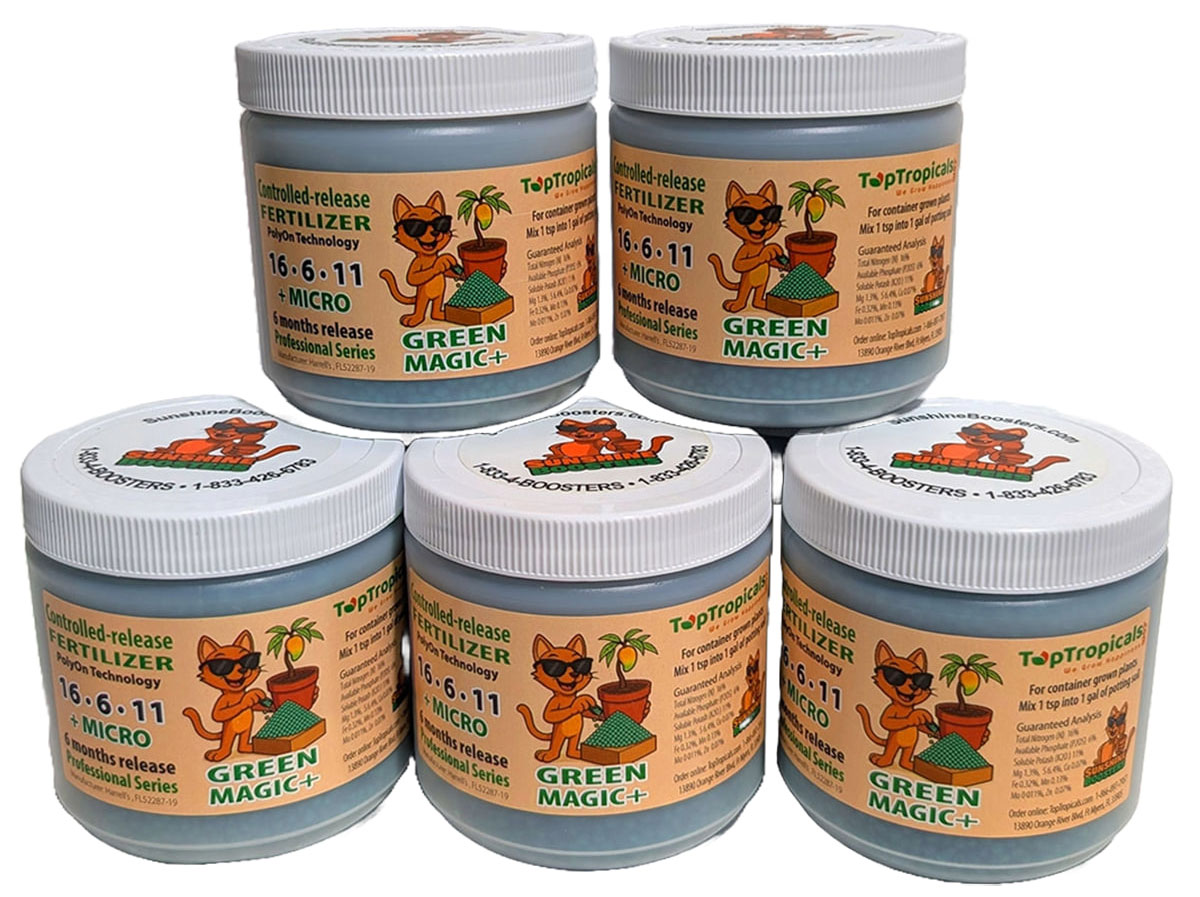
Liquid Sunshine Boosters mild formulas are safe to use year around. Controlled release fertilizer like Green Magic are safe as well, just make sure to follow directions and dosage.


Q: Why Green Magic fertilizer works in heat better that Osmocote?

Green  Magic  controlled  release  fertilizer

Not all slow-release fertilizers are built for hot summer. Some popular brands might seem like a good choice - but they’re optimized for soil temperatures around 70-75F. That's a mild Spring day in the South, but in real-world Florida or Arizona heat? Not even close.

Here's the problem: Osmocote releases nutrients based on moisture, not temperature. When it's hot and humid - or worse, when you water heavily - it can dump too many nutrients at once. That nutrient surge can:

  • Burn your plant's roots
  • Force tender new growth that gets fried in the heat
  • Leach straight out of the pot, wasting both fertilizer and money

It's unpredictable, especially in containers that heat up faster than ground soil. What you think is "slow-release" can behave more like a fertilizer bomb.

Green-Magic, by contrast, uses a temperature-sensitive polyurethane coating that responds gradually and consistently as the soil warms. That means:

  • No sudden nutrient spikes
  • No wasted runoff
  • And no risk of heat-triggered burn

It's designed to feed steadily and predictably - even when temps hit 90F and stay there. For potted tropical plants, that kind of control is the difference between stressed and thriving.

Q: How does Sunshine Boosters help with daily plant recovery in summer?

Once your plant begins to show signs of life again - maybe a new bud, or evening perkiness - it's safe to resume feeding. But skip the salts, and reach for something gentler: Sunshine Boosters.

These amino-acid based liquid fertilizers are designed for daily use, even in containers during the hottest days. They enhance nutrient uptake, even when roots are stressed or sluggish. Unlike synthetic chelators like EDTA, Sunshine Boosters won't bind nutrients or burn root system. They stay gentle, available, and effective. Learn more from this short video.

Use SUNSHINE Robusta for foliage support, or Ca-Support PRO for strong structure and recovery. It's like hydration and nutrition in one - perfect for tropical plants fighting through summer heat.

Q: How can I help my plants during extreme heat?

Don't fight the heat - work with it. If your tree looks stalled this summer, don't panic. It's following a rhythm older than all of us. Support it with smart watering, the right fertilizer combo, and a little patience. Before long, you'll see buds again - and know your plant made it through the heat.


Shop fertilizers and garden supplies


Read more plant care tips in Garden Blog

Date: 18 Aug 2023

NEW VIDEO:
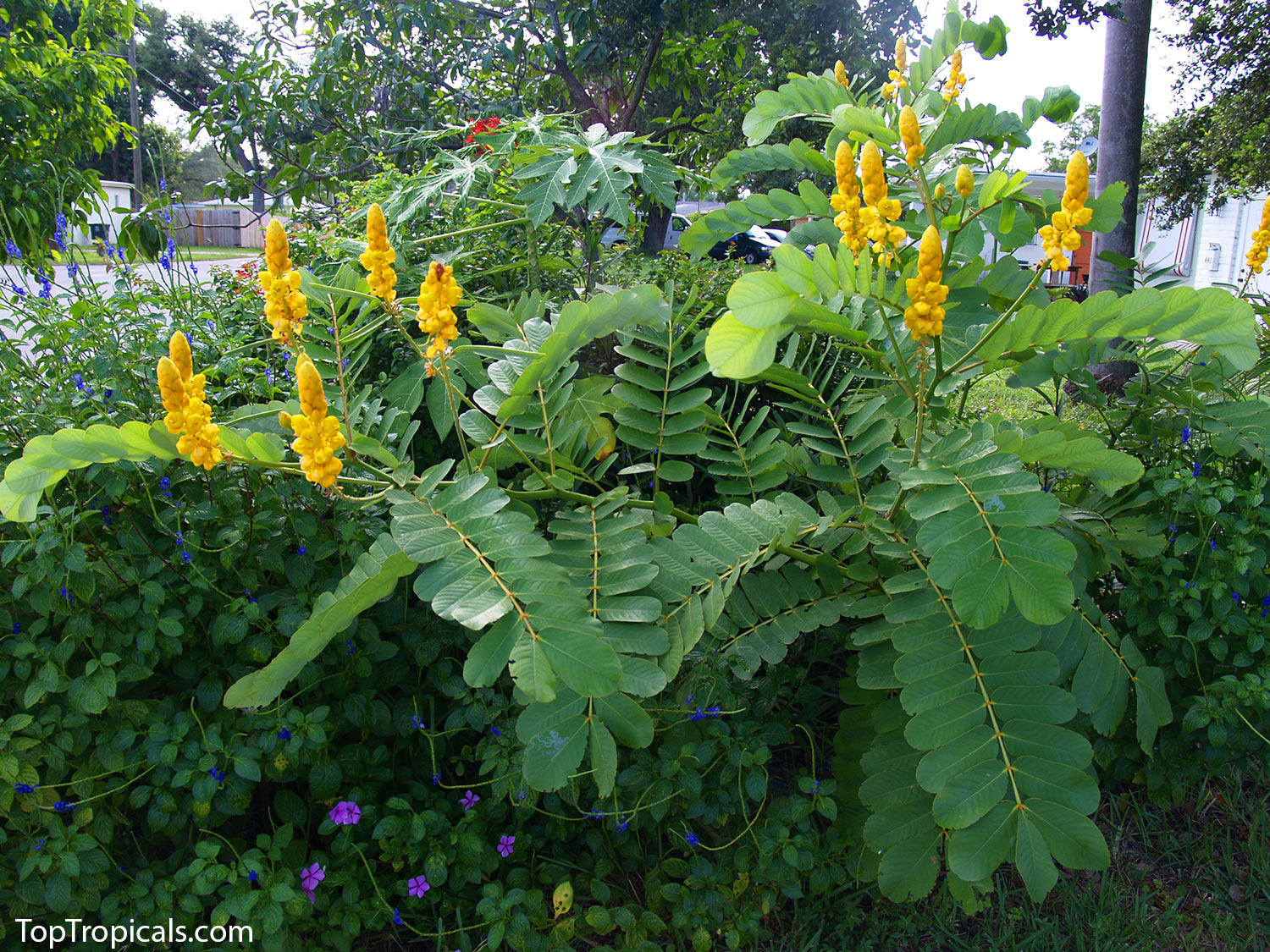
Senna alata - Empress Candle, Candelabra Plant

Need a fast growing, colorful, exotic looking solution for your garden? Here it is!
Empress Candle, or Candelabra Plant - is a true garden wonder. Imagine a plant that grows fast, almost always in bloom, and covers large spaces with its lush leaves...
Empress Candle has beautiful golden flowers resembling candles. The huge leaves create nice cool shade for many feet around it which keeps weeds away. Providing full sun and regular water Empress Candle grows up to 10 ft wide and 6-8 ft tall just in one or two seasons!

Senna  alata  -  Empress  Candle,  Candelabra  Plant

Subscribe to our Channel:

Stay updated with TopTropicals Videos by subscribing to our channel at YouTube.com/TopTropicals and get our latest video news of what is fruiting and blooming!

Date: 25 Feb 2021

Healthy Plants: Q&A from Mr Booster

Dragon Fruit Magic Tricks

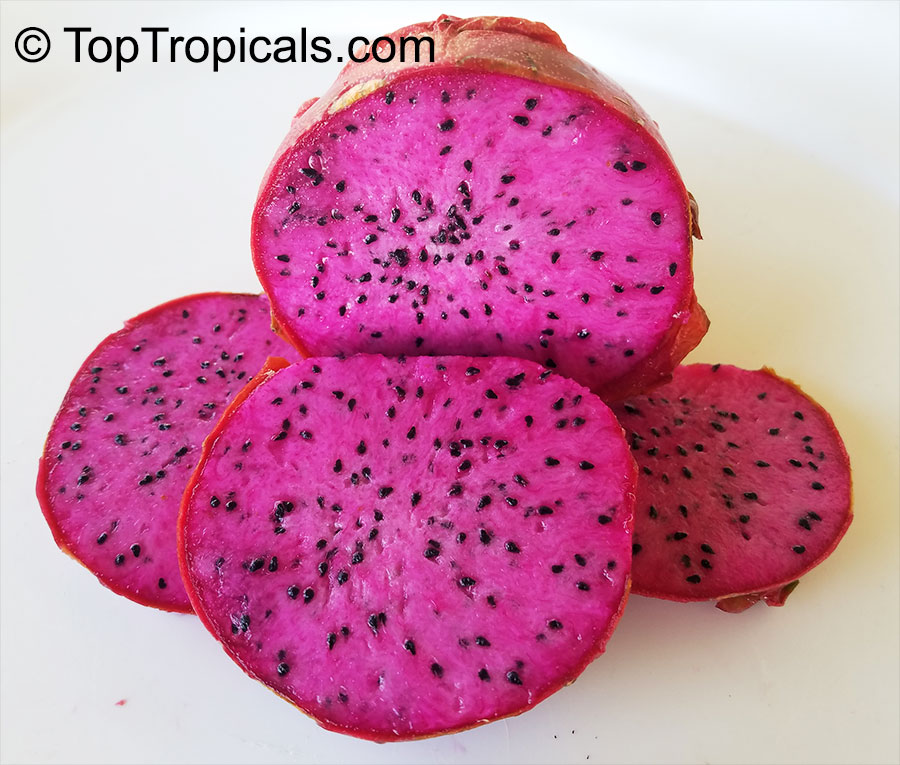
Q: I purchased two sweet red pitayas, that arrived and were planted on May 28, 2020, they were damaged but not serious. my question is this one pitaya is a beautiful green, and has grown 6or 8 "already, the other is bigger and is a grayish green and has not shown any sign of growth at all in six weeks, how long do I wait before I throw it out and buy another?

A: Being a cactus, sometimes Pitaya slows down its growth waiting for more favorable conditions. If one of your plants doesn't show any new growth, just give a it some more time and make sure the plant stays happy. To make pitaya happy, provide the following:
- Water. Unlike most cacti, Pitaya prefers regular watering (but not a wet soil). Make sure it is planted in well-drained media. Do not water again if soil remains moist, wait until it dries out on the surface. During hot weather, Pitaya enjoys light daily watering.
- Light. Unlike most cacti, Pitaya benefits from a filtered light especially while establishing. Try to create a temporary shade over the plant until it starts active growth (if grown in the ground), or move the pot in filtered light. Dull color or dry spots are signs of sun burn. Once the plant shows new growth, you may remove sun protection, or move the pot gradually into the full sun.
- Food. Pitayas are heavy feeders. Use the following fertilizer:
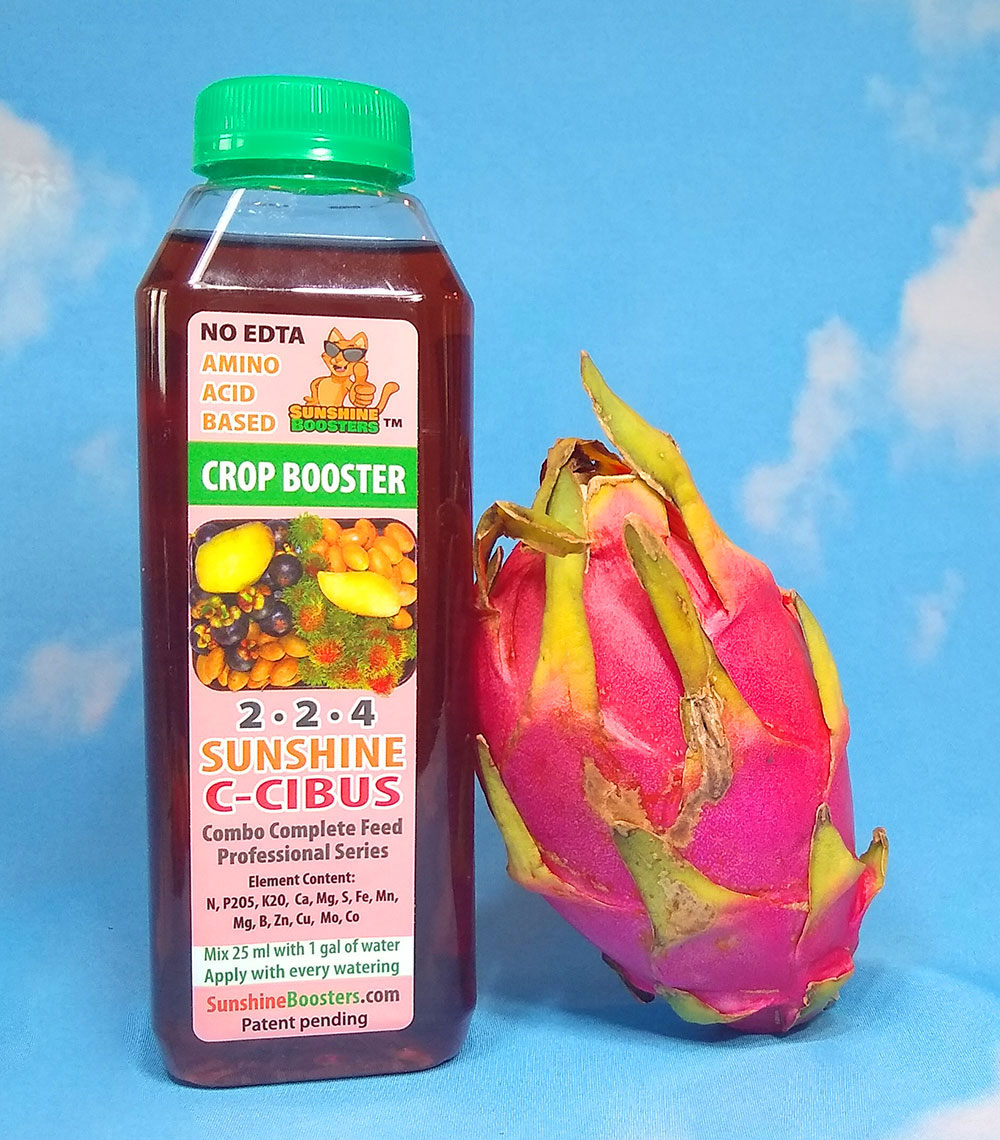
SUNSHINE C-Cibus - Crop Nutrition Booster

Q: I've been growing dragon fruit cuttings from Okinawa, Thailand and Vietnam for several years in pots and cannot get them to fruit. Any fertilizer suggestions? I live in Northern Virginia so I bring the massive pots in the garage under lights and a heater for the winter but back outside once the temperature warms up.

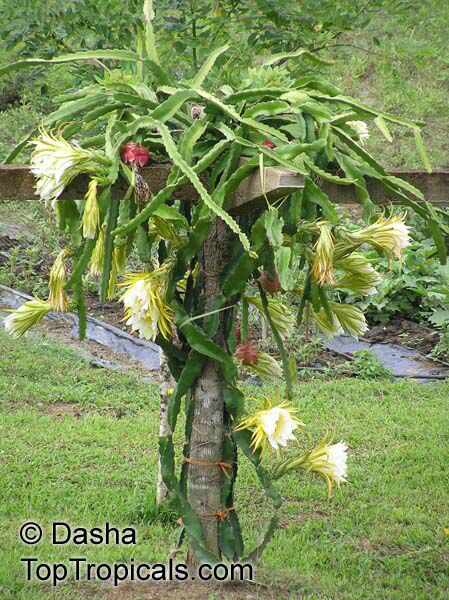
A: There is a little trick to get Dragon fruit to flowering and fruiting. This plant likes flowering when it is attached to a strong support. In commercial plantations, they use special trellises/frames made out of logs, but you can make one yourself using simple materials.
See article: Do-It-Yourself Support Structure for Dragon Fruit.
And of course, don't forget a special plant food for tropical fruit - Sunshine C-Cibus.
You can successfully get your Dragon fruits to fruit in pots, providing bright light in Summer. In Winter, keep the plants on a dry side to give them some rest and a chance to hibernate before the next fruiting season.