Date: 19 Jul 2019
How to grow Soursop in a pot
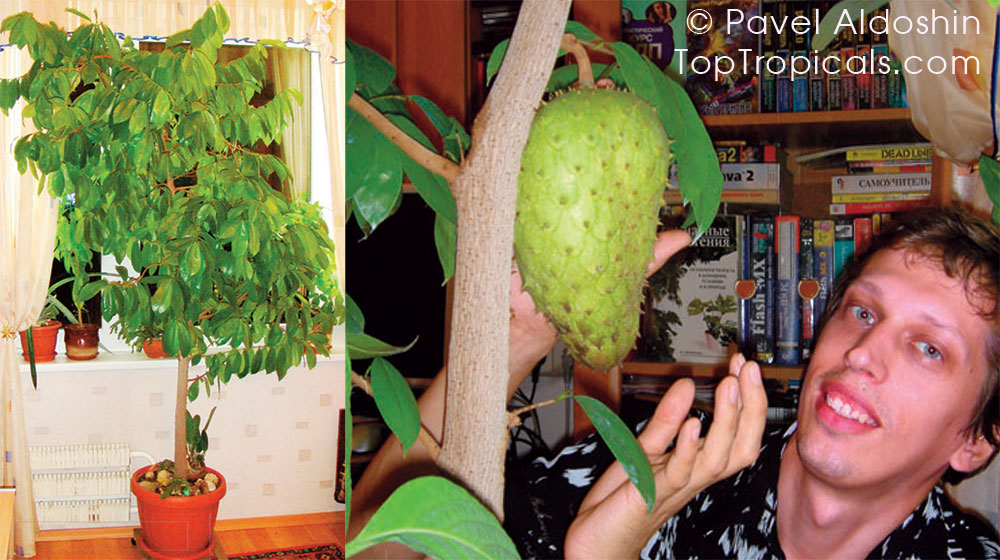
Q: Is it possible to grow soursop in a large pot for life?
A: Soursop, or Guanabana - Annona muricata - is actually one of those tropicals fruit trees that
can be easily cultivated in a container. Most plants of genus Annona have compact nature, and these fruit trees usually start
production at a young age, as early as 3 years from seed. Annona muricata
seedlings take a little longer to fruit, this is why we offer grafted trees, which can start producing right away.
We have a very interesting article about growing Soursop in an
apartment. The article was written by an indoor gardener who lives in a very small
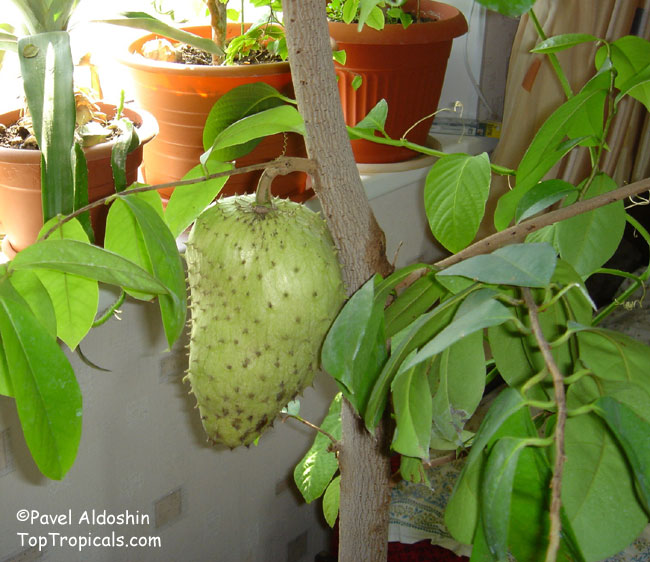
apartment in Moscow, Russia. He grew this tree from seed and after years of
cultivation fun, he finally got several large delicious fruit! It is an amazing
story. We have it published in our Tropical Treasures magazine, download the whole issue #7, get a hard copy, or you may download PDF file of the single article.
Recommended fertilizers and supplements:
Fruit Festival Plant Food - Super Crop Booster
Mango-Food - Smart Release Fruit Tree Booster
SUNSHINE-Honey - sugar booster

Date: 25 Jun 2019
How soon will Guava tree fruit?
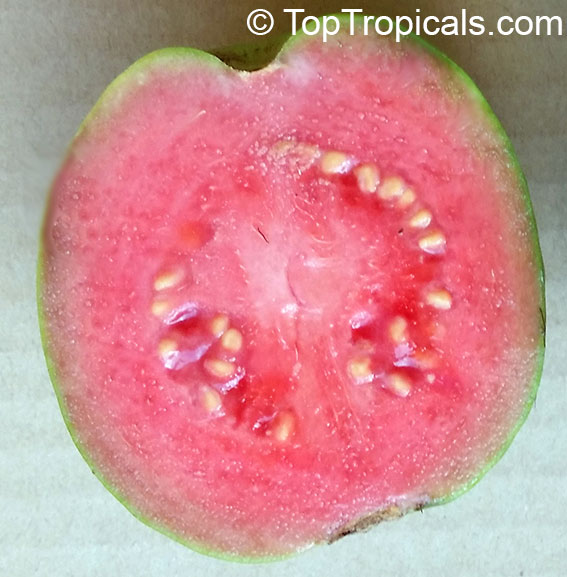
Q: Can you tell me how your Guava trees are propagated? Grown from seed vs. air grafted, etc.? I'm interested especially in the Barbie variety. In particular, I'd like to know how long it takes them to bear fruit - I live in Southern California zone 10b, with good sunlight.
A: Guavas can be propagated by seed, air layers, or grafting.
Propagation method depends on the species.
Cattley guavas - Psidium littorale - are usually grown from seeds and start flowering
and producing as early as in 2-3 years from seed. Tropical guavas, Psidium guajava - especially named varieties, are propagated usually by
air layers, and the rarest varieties like Variegated Honey Moon are often grafted, although they will come true
from seed (it's just takes them longer to fruit). Both air-layered and grafted
plants start producing right away, usually on the same year of planting or
next year, depending on growing conditions.
Barbie Pink is a superior variety, very popular among fruit lovers. It
produces large aromatic fruit with a bright pink pulp and very few seeds. This
variety is air-layered; in our nursery, these plants start flowering and
setting fruit in 3 gal containers.
Plant this tree in full sun and provide regular watering, guavas don't
like to dry out. Use fertile soil, with at least 50% of compost, and add some
soil conditioning components for better drainage: bark, sand, perlite, etc.
Mulch well, just make sure to keep mulch 2-3"away from the trunk. Follow our
detailed planting instructions that come with every plant, and you are good
to go!
Recommended fertilizers:
Fruit Festival Plant Food - Super Crop Booster
Mango-Food - Smart Release Fruit Tree Booster
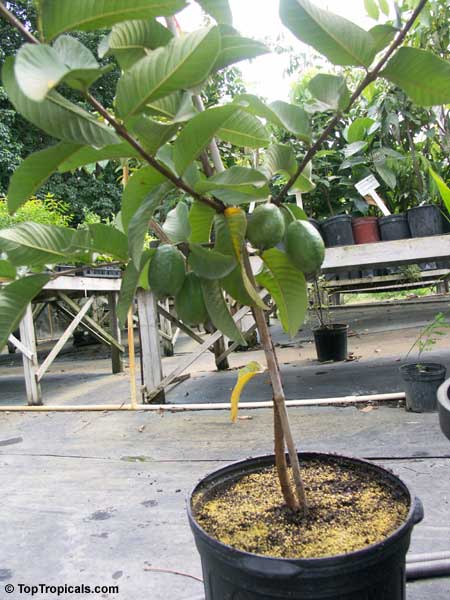
Date: 24 Jun 2018
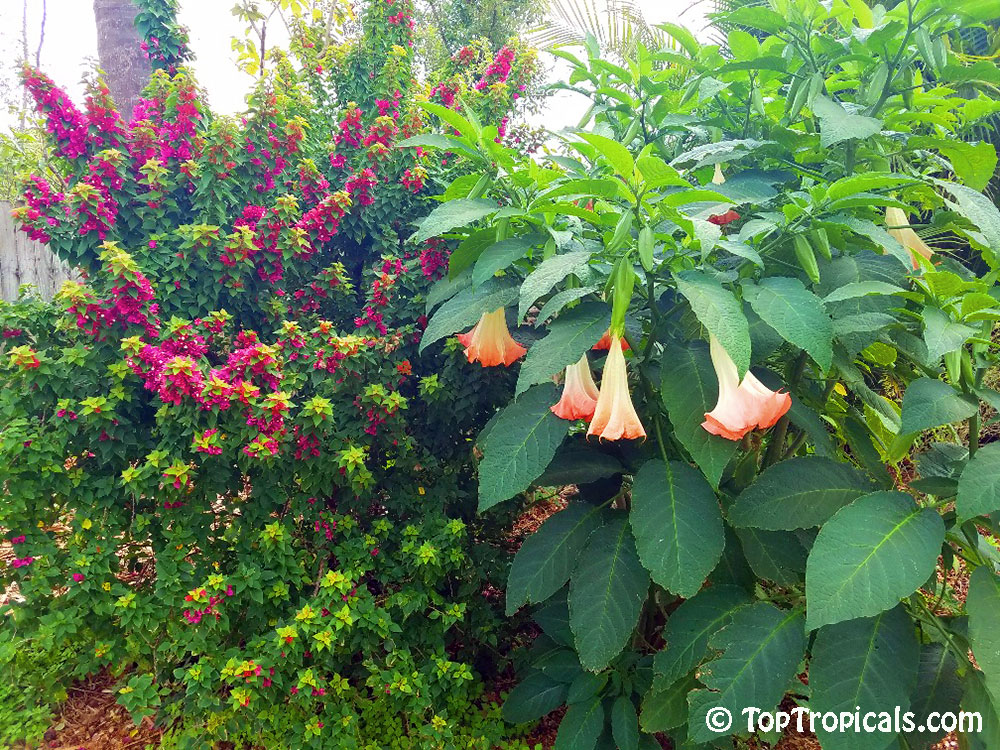
Spring is coming, plants need food! Time to fertilize...
Last winter was long and snowy in the most part of our
country. Hold on fellow gardeners up North, it is almost
over!
Here in Florida we have been blessed again with a mild
winter without serious cold snaps. Early Spring that is
already in the air. Look at this picture of flowers in our
front yard now.
If the weather is already warm in your area (low
temperatures above 55), it is time to start fertilizing.
We are sending our love and support to tropical Puerto
Rico suffered from hurricane last year, and will be happy
to help you guys to restore your lost gardens!
CHECK LIST
what
to do to give your garden a good kick start:
1. Slow release granulated food. Apply Slow Release Fertilizer and
continue once a month. 1 tsp per gallon of pot, or a
handful for in-ground plants. This will provide essential
macro elements (NPK) required for a plant growth.
2. Water soluble micro-elements. Besides
macro-elements, plants need many other elements that most
of the time missing in soil. A lack of micro-elements
causes different deficiencies, resulting in weak root
systems, slow growth, deformed leaves, leaves yellowing,
lack or no flowers/fruit. Apply these supplements as a
foliar spray once a month to induce healthy growth and
flower/fruit development. We recommend the following
micro-element products to keep your plants healthy and
vigorous year round:
a) SUNSHINE SuperFood - plant
health booster. This revolutionary new liquid complex
contains ALL microelements needed and can fix all possible
problems occuring to your tropical plants - from roots to
flowers and fruit. We have convenient dropper bottles of 5 ml for small plant
collections, 50 ml for larger gardens, and
100 ml for professional
landscape applications.
b) SUNSHINE-Micro - Microelement
booster - for common iron deficiency (pale leaves)
c) SUNSHINE-Super-Iron -
Microelement booster - for severe iron deficiency
(severe yellowing leaves)
3. SUNSHINE plant boosters -
SUNSHINE-E, -BC (caudex plants and bonsai), -H (house
plants). Apply these natural plant stimulants to
help plants recover from cold, dormancy, increase plant's
metabolism and make a plant more readily absorb both
Macro- and Micro-elements. SUNSHINE boosters also will
help plants grow vigorously, withstand Summer heat and
drought, and produce bigger and better flowers and fruit.
4. Kickstart a sweeter fruit. To get a better and
sweeter crop in Summer and Fall, you need to start first
application now. SUNSHINE Honey - is natural,
Amber-colored, honey-like liquid microelement product for
fruiting and edible plants that will make them sweeter,
tastier and more flavorful! Very effective for tropical
fruits, tubers, vegetables. Great for tropical fruit
trees: Mango, June Plum, Annonas, Tropical Cherries,
Carambola, Citrus; subtropical fruit trees: Peaches,
Apricots, Loquat and berry plants (blackberry, mulberry,
etc.)
5. SUNSHINE-S. Don't
forget to plant seeds! It's a perfect timing
now to start your tropical garden indoors even if it is
still cold outside. Soak them in SUNSHINE-S solution to
increase germination rate.
See full list of SUNSHINE boosters
Date: 18 Nov 2021
7 reasons to get an Aroid Houseplant
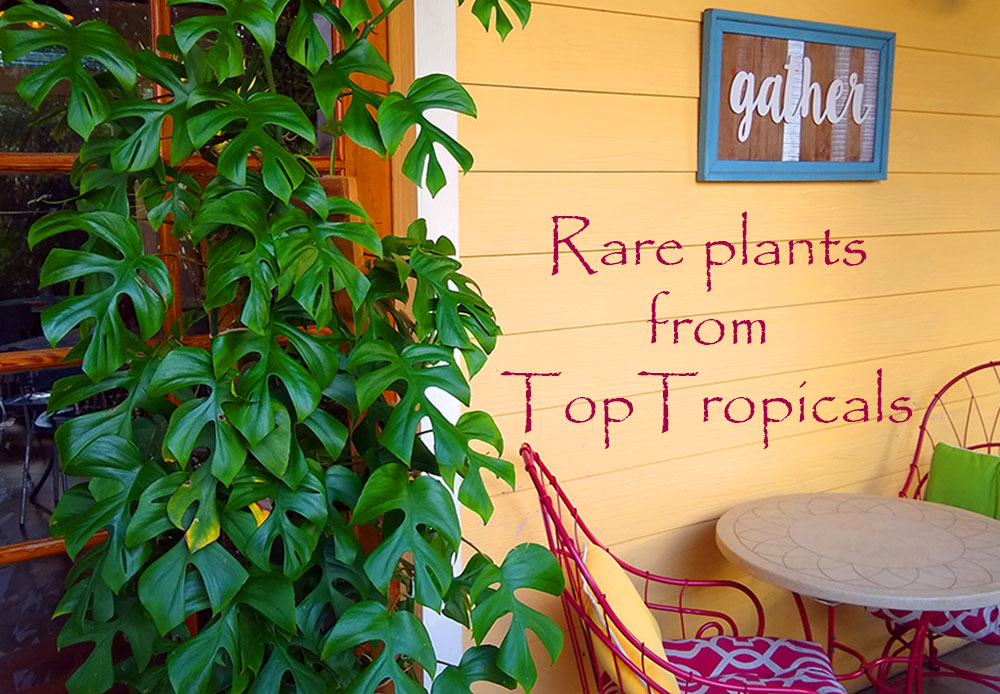
1. It's almost Winter... You need something tropical in your home! Aroids have the most tropical look!
2. Aroids tolerate low light conditions of indoors.
3. Aroids require almost no care. Care is easy because if you watch for the
signals, the plant will tell you exactly what it needs
4. Aroids adapt to wide range of conditions. Many of them thrive in neglect
and survive even in sub-optimal conditions... Unlike most tropicals, Aroids
don't experience much stress when moving from indoor to outdoor settings and adapt readily to conditions inside the home.
5. Aroids are compact and easy to manage.
6. Aroids are fast growing while still being compact.
7. They are on sale now!
Check out our Philodendrons, Monsteras, Fancy Syngoniums, Alocasias, Colocasias.


Date: 25 Feb 2021

Healthy Plants: Q&A from Mr Booster
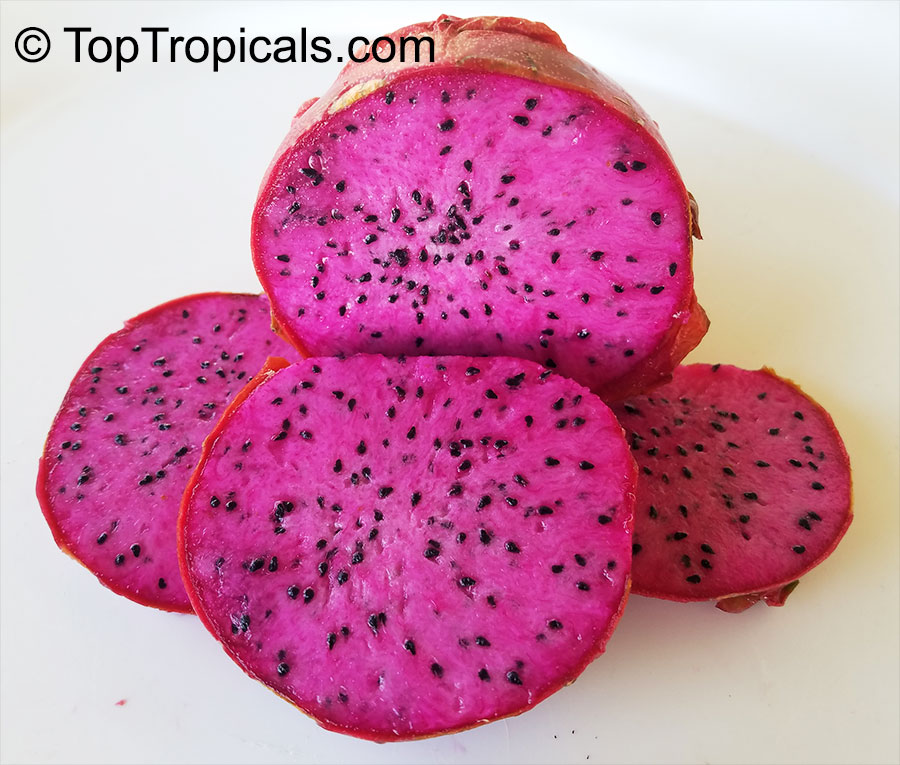
Dragon Fruit Magic Tricks
Q: I purchased two sweet red pitayas, that arrived and were planted on May 28, 2020, they were damaged but not serious. my question is this one pitaya is a beautiful green, and has grown 6or 8 "already, the other is bigger and is a grayish green and has not shown any sign of growth at all in six weeks, how long do I wait before I throw it out and buy another?
A: Being a cactus, sometimes Pitaya slows down its growth waiting
for more favorable conditions. If one of your plants doesn't show any new
growth, just give a it some more time and make sure the plant stays happy. To
make pitaya happy, provide the following:
- Water. Unlike most cacti, Pitaya prefers regular watering (but not
a wet soil). Make sure it is planted in well-drained media. Do not water
again if soil remains moist, wait until it dries out on the surface. During hot
weather, Pitaya enjoys light daily watering.
- Light. Unlike most cacti, Pitaya benefits from a filtered light
especially while establishing. Try to create a temporary shade over the plant
until it starts active growth (if grown in the ground), or move the pot in
filtered light. Dull color or dry spots are signs of sun burn. Once the plant
shows new growth, you may remove sun protection, or move the pot gradually into
the full sun.
- Food. Pitayas are heavy feeders. Use the following fertilizer:
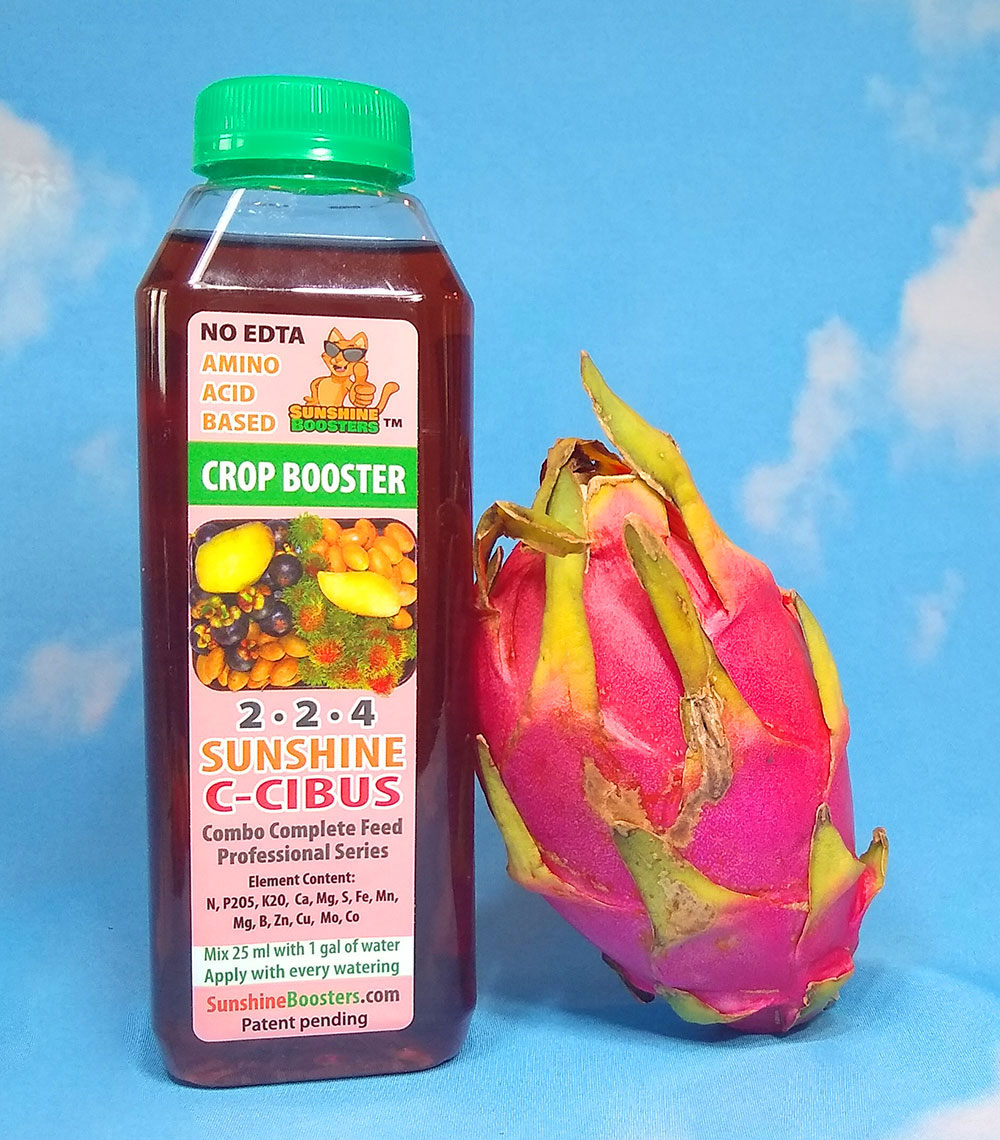
SUNSHINE C-Cibus - Crop Nutrition Booster
Q: I've been growing dragon fruit cuttings from Okinawa, Thailand and Vietnam for several years in pots and cannot get them to fruit. Any fertilizer suggestions? I live in Northern Virginia so I bring the massive pots in the garage under lights and a heater for the winter but back outside once the temperature warms up.
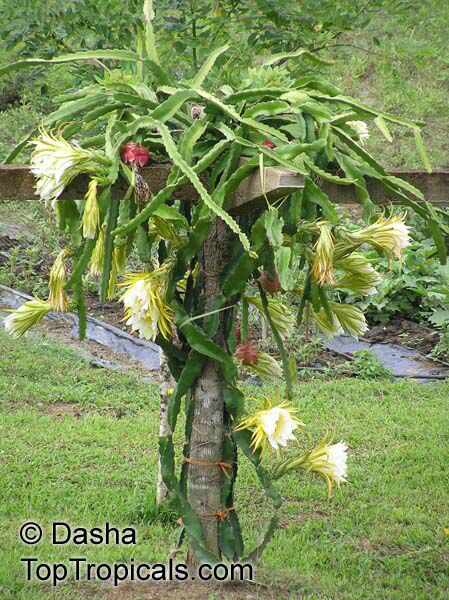
A: There is a little trick to get Dragon fruit to flowering and
fruiting. This plant likes flowering when it is attached to a strong support.
In commercial plantations, they use special trellises/frames made out of
logs, but you can make one yourself using simple materials.
See article: Do-It-Yourself Support Structure for Dragon Fruit.
And of course, don't forget a special plant food for tropical fruit - Sunshine C-Cibus.
You can successfully get your Dragon fruits to fruit in pots, providing
bright light in Summer. In Winter, keep the plants on a dry side to give them
some rest and a chance to hibernate before the next fruiting season.