Growing mangoes at home is easier than most people think.
Mango Plant Facts
Botanical name: Mangifera indica Also known as: Mango
USDA Zone: 9 - 11
Highligths
You don’t need a big yard. You don’t need perfect conditions.
You just need the right variety - and a few simple rules.
🔻Small space? Go with condo mango varieties 🔻Full sun is key 🔻Water deep, then let it dry 🔻Prune to keep trees compact and productive
Most store mangoes are picked early.
Homegrown fruit - completely different experience.
Sweeter, richer, and actually worth the wait.
Start with the basics, keep it simple, and your mango tree will reward you.
This is a simple reminder that every step counts!
You can go all in and plant a real tree, work the soil, and grow something that will last for years.
Or you can start small, with a single plant and a simple moment that gets you outside and thinking differently about your space.
Both matter.
The difference is not in the intention, but in what happens next.
A small start is fine - as long as it turns into something real.
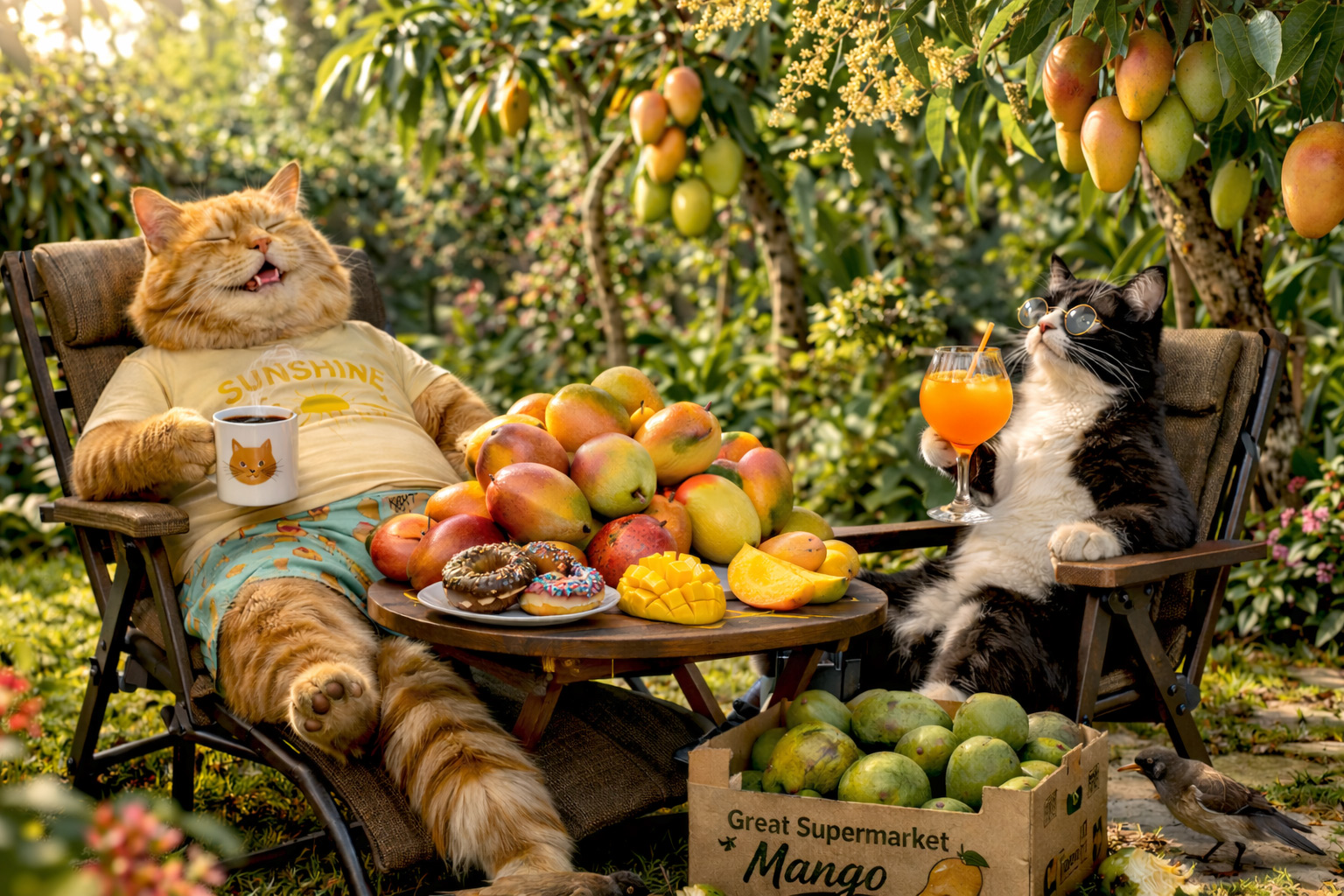
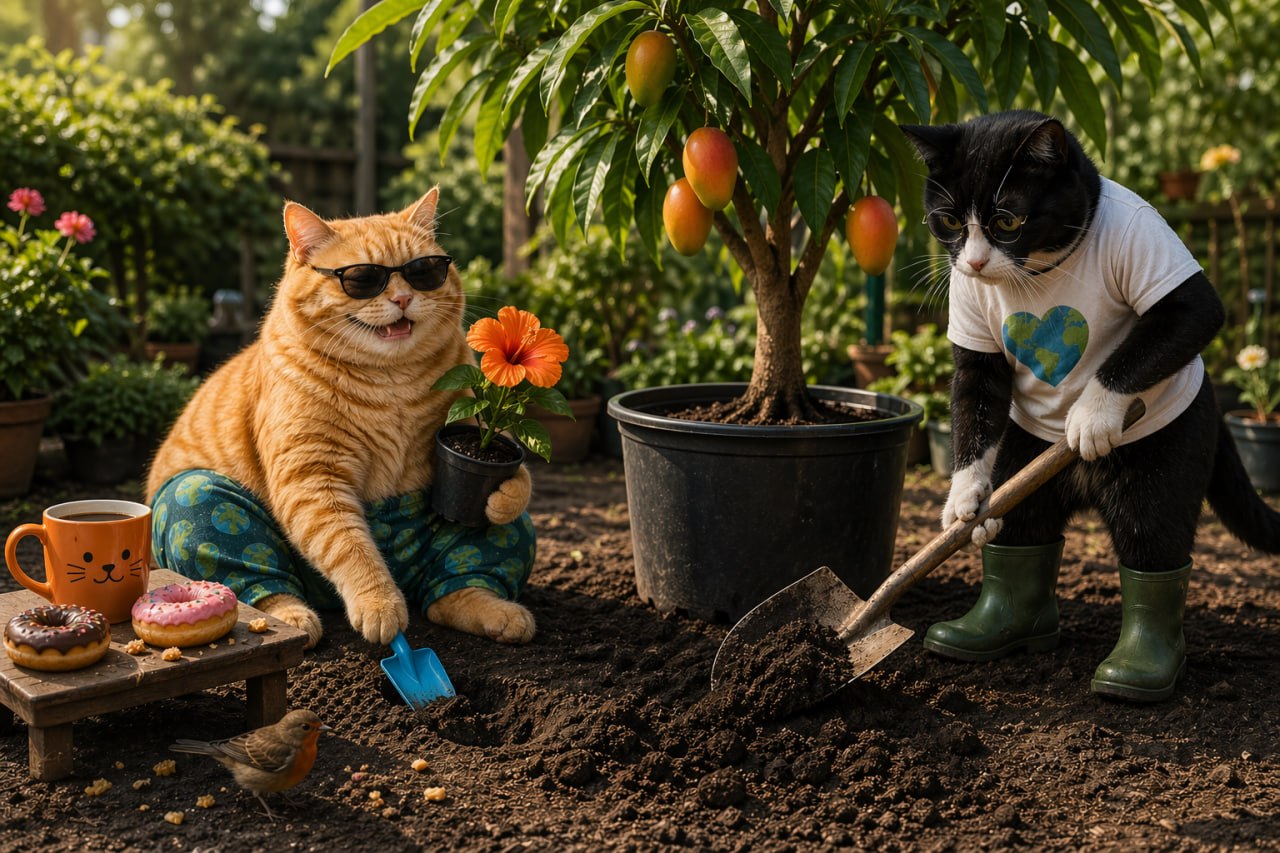
Sunshine: It’s Earth Day - this counts as planting, right? Smokey: I’m sure the Earth appreciates the thought.
A colorful mix of mango varieties - different shapes,
colors, and flavors all in one harvest.
Mango Plant Facts
Botanical name: Mangifera indica Also known as: Mango
USDA Zone: 9 - 11
Highligths
Mango Practical Growing Tips (Keep It
Simple)
Sun: Full sun is key. 6–8+ hours daily for best
growth and fruiting.
Soil: Excellent drainage is critical. In pots, use
well-draining mix with added perlite or sand. Mango does not like wet
roots.
Watering: Water deeply, then let soil dry slightly
before watering again. Avoid constantly wet soil.
Containers: Excellent for pots. Condo mango varieties
stay compact and are easy to manage on patios.
Feeding: Light but consistent feeding during active
growth makes a big difference. Use controlled-release Green
Magic for steady nutrition, and supplement
with liquid Sunshine
Boosters Mango Tango during warm months to push growth and
fruiting.
USDA Zones: Best suited for Zones 9b–11. In Zone
9b, choose a warm, protected microclimate (south-facing wall, patio, or near
structures) and be prepared to protect during cold snaps. In Zones
10–11, mango grows reliably in-ground. If you live in colder zones,
grow in a pot so you can
move the tree indoors or protect it during cold weather.
Cold Protection: Protect young trees during cold
nights. Use cover or place near a wall or warm microclimate. Mature trees
are more tolerant.
Airflow: Good airflow helps prevent disease and keeps
growth clean.
Spacing: Give the tree room for light and airflow. Even
compact trees benefit from space.
A fruiting mango tree Van Dyke in the grove, heavy
with developing mangoes and enjoying full sun.
Mango Winter Care (Very Important)
Mango is not a truly cold-hardy plant. It performs best in USDA Zone 9b
and warmer, where freezes are rare and short. In borderline areas, winter
protection becomes part of the routine. Mango trees should be covered during
cold nights, and planting near a south-facing wall helps protect from cold
winds. That small microclimate can make a real difference. If your winters
are less predictable, growing mango in a container becomes the simplest
solution. It gives you full control — you can move the tree to a
protected space when temperatures drop, and bring it back into the sun when
conditions improve.
That is where condo mango varieties make the most sense. They are
naturally compact, easier to manage in pots, and still produce full-size,
high-quality fruit. You get all the benefits of a mango tree
without needing a large yard or perfect climate — just sun, a
container, and a bit of seasonal movement when needed.
Young mango tree in a container, already holding fruit
and thriving in a sunny garden setting.
Growing mango in a container is one of the easiest ways to control size,
soil, and winter protection. Condo mango varieties stay naturally compact
and adapt well to pots, making them ideal for patios, small spaces, or
colder climates. You get full flexibility — move the tree when needed,
manage its growth, and still enjoy real tree-ripened fruit.
Pot size: Start with 3–7 gallon, move up to
15–25 gallon as the tree grows.
Climate Flexibility: Can be grown in any USDA zone when
kept in a container. Simply move indoors or to a protected area during cold
weather to keep the tree safe.
Pruning: Light pruning keeps the tree compact and
productive.
Once you taste a real mango from your own tree, everything changes. It is
no longer something you buy — it is something you grow, wait for, and
look
forward to every season. What felt like hype suddenly makes sense. The
passion people have for mango is not exaggerated — it just comes from
a completely different experience.
And for people who have never tasted a fresh, juicy mango warmed by the sun,
that moment comes as a surprise — the first time they realize what
mango is actually supposed to taste like.
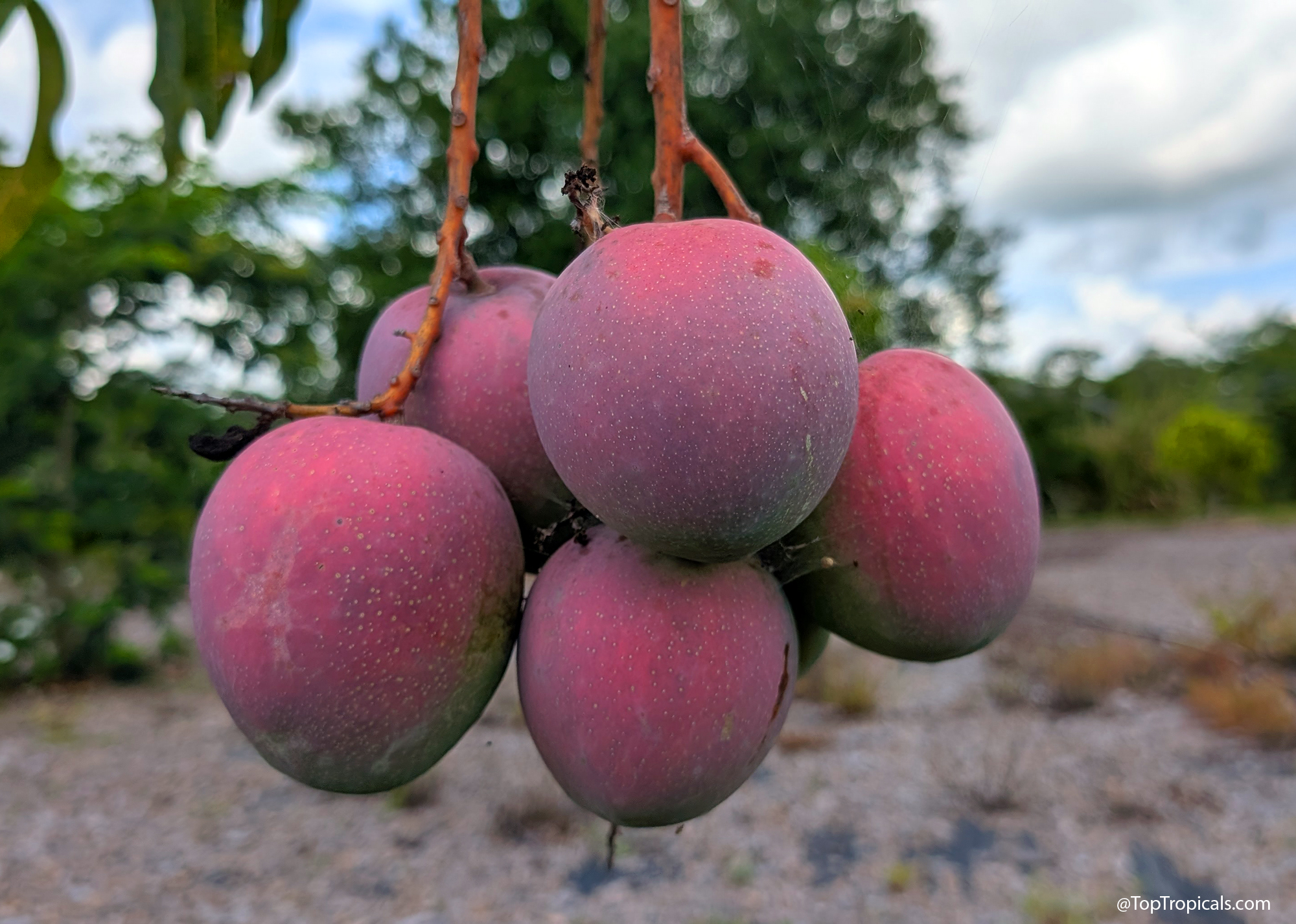
Cluster of ripening mangoes developing rich color on
the tree just before harvest.
Taste the Mango Difference - Save 10%
Once you taste a real mango from your own tree, everything changes. Now you
know. Get 10% off with coupon code
MANGO2026 on 3 gal mango trees.
Offer valid through 04/28/2026.
Discount applies to 3 gal plants only. Not valid on previous purchases and
cannot be combined with other promotions or discounts. Offer subject to
change without notice.
Date: 22 Apr 2026
When Mango Ripens on the Tree, Everything Changes
Sunshine: Never understood the passion for Mango. I tried
store Mangoes. I really tried. Just disappointment. So this is what real
Mango is supposed to taste like?
Smokey: Now you know.
There is a moment when a Mango is perfectly ripe — soft to the touch,
warm from the sun, fragrant before you even cut it open. The skin gives way,
and suddenly there is color, juice, and a sweetness that feels almost
unreal. Not sugary, but deep and layered, like something that took its time
to
become what it is. In that moment, it feels less like fruit and more like
something truly given, exactly as it should be.
Mango Plant Facts
Botanical name: Mangifera indica Also known as: Mango
USDA Zone: 9 - 11
Highligths
What you find in most supermarkets is something else entirely. Picked early
so it can survive shipping, it never gets the chance to finish ripening
process. It softens, it turns yellow, but the depth never comes. The flavor
stays
thin, and the texture often turns fibrous — strings in the flesh that
get stuck in your teeth instead of melting away. That fiber is not an
accident. It helps the fruit stay firm enough to handle transport without
damage. It
looks like a Mango, but it never becomes one.
The only way to close that gap is simple — let the fruit ripe where
it belongs. On the tree. When you grow your own Mango, you control that
moment. You pick it when it is actually ready, not when it has to survive a
truck
ride across the country. And that one difference is everything you taste.
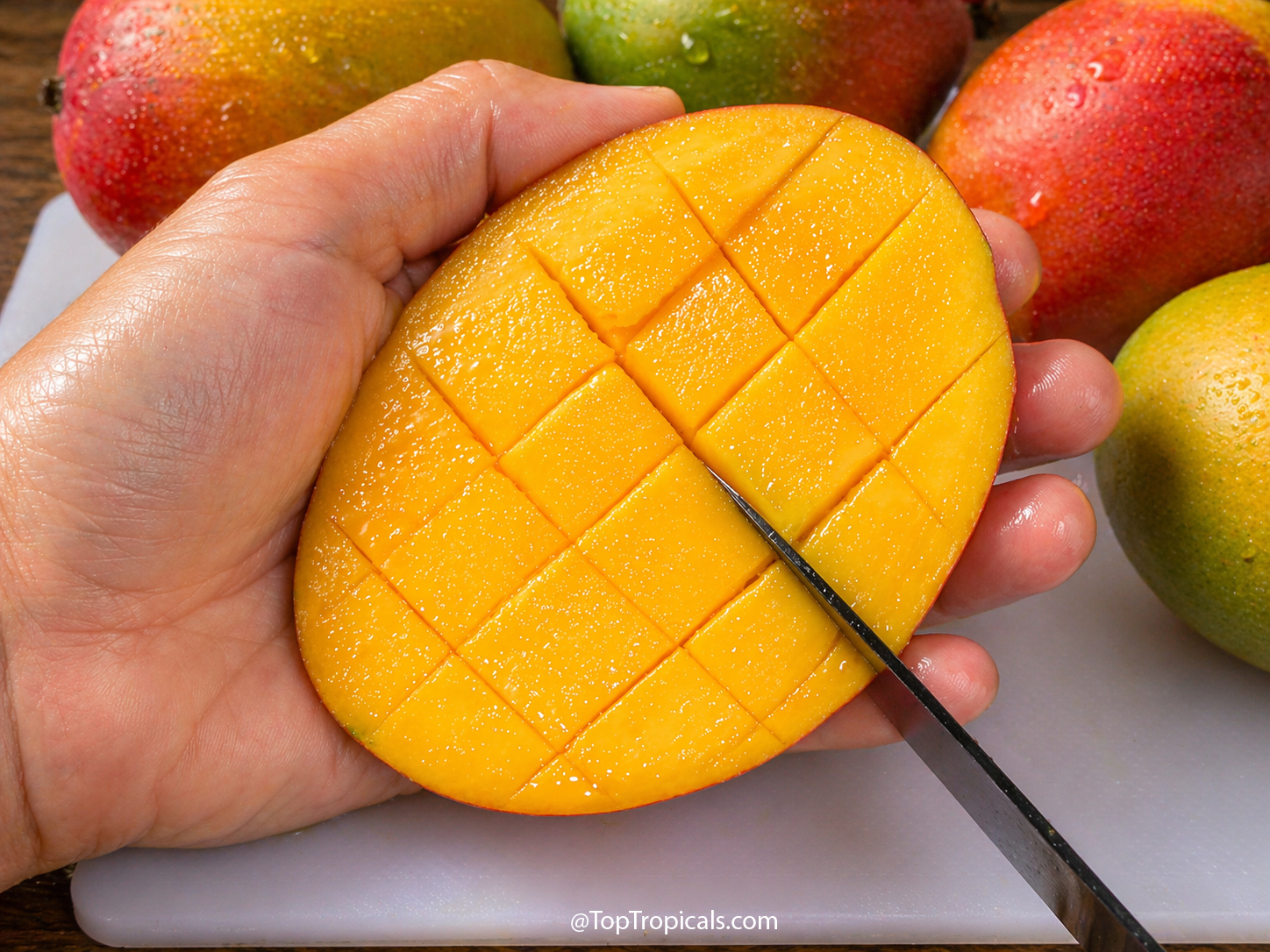
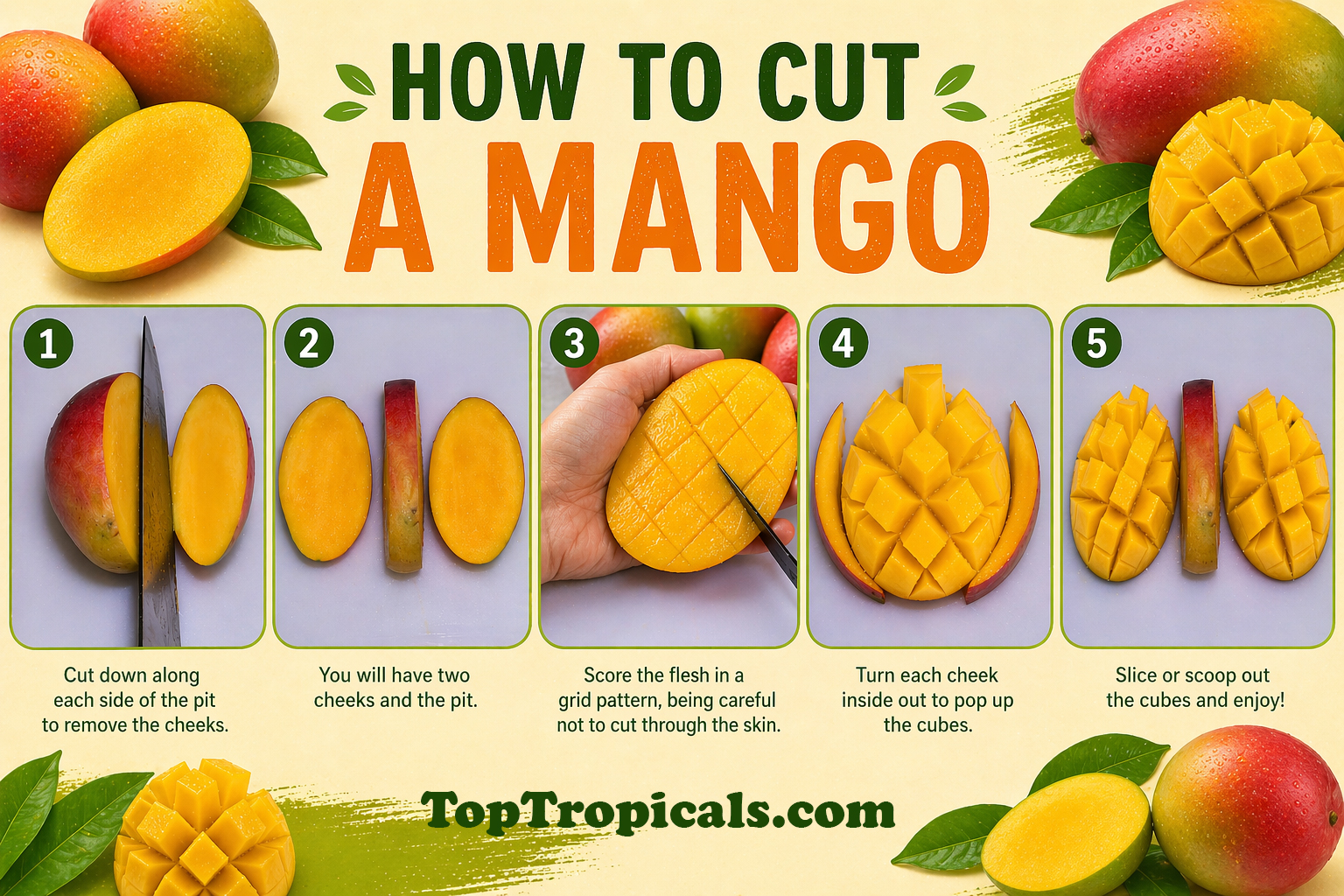
Scoring a Mango cheek into cubes - the easiest way to prepare clean,
ready-to-eat pieces.
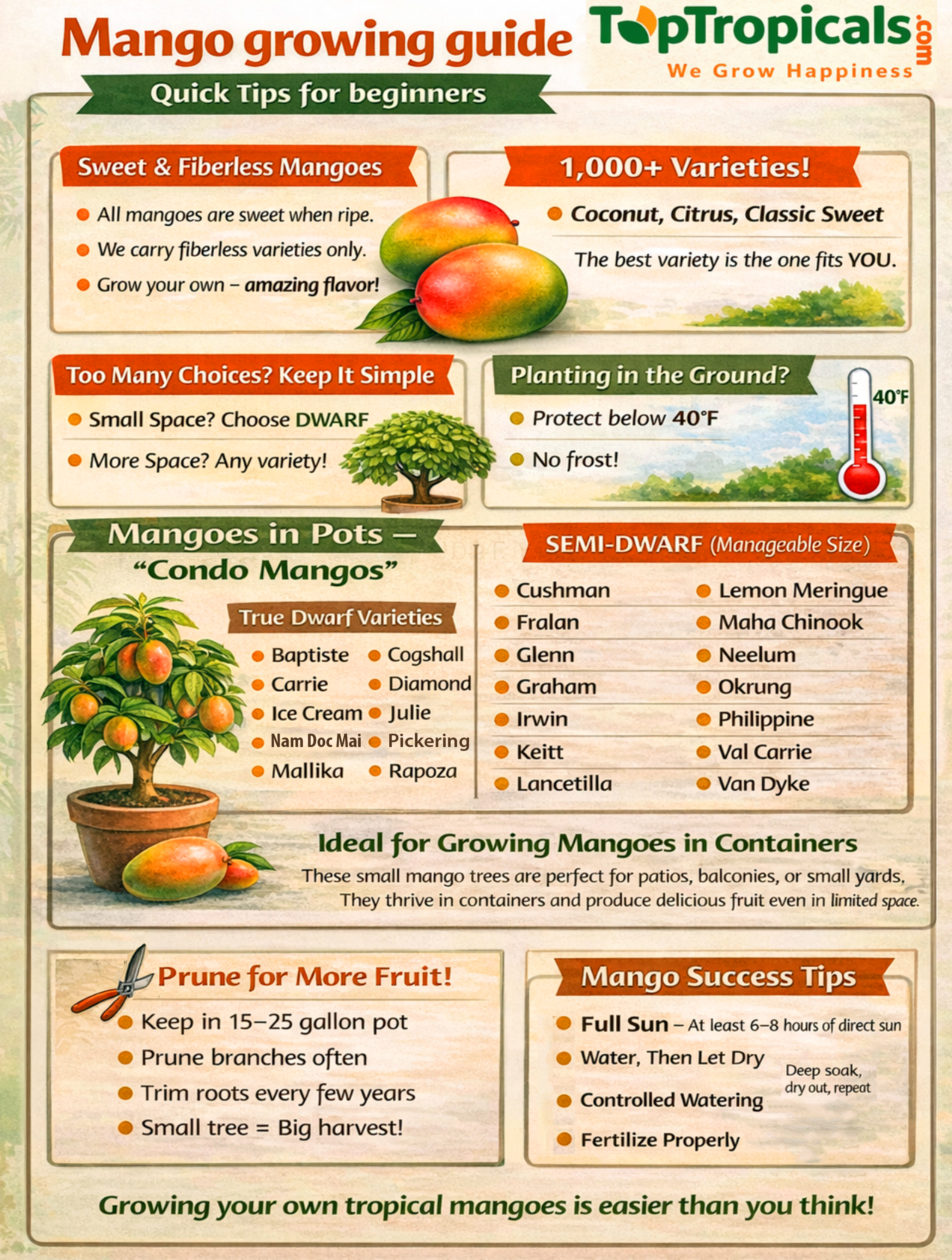
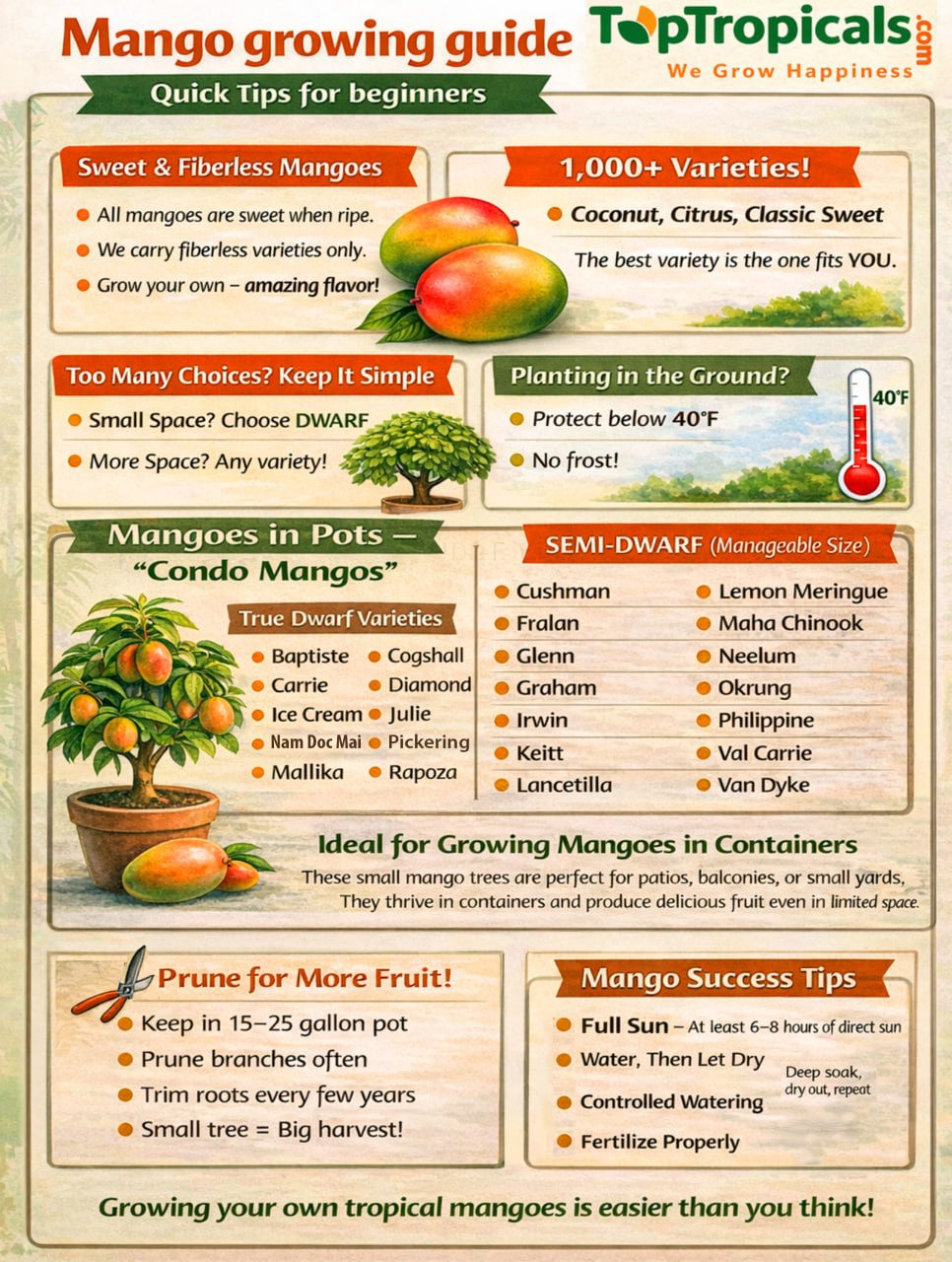
Quick beginner guide to growing Mango trees - from choosing the right
variety to pruning, watering, and container growing tips.
Date: 21 Apr 2026
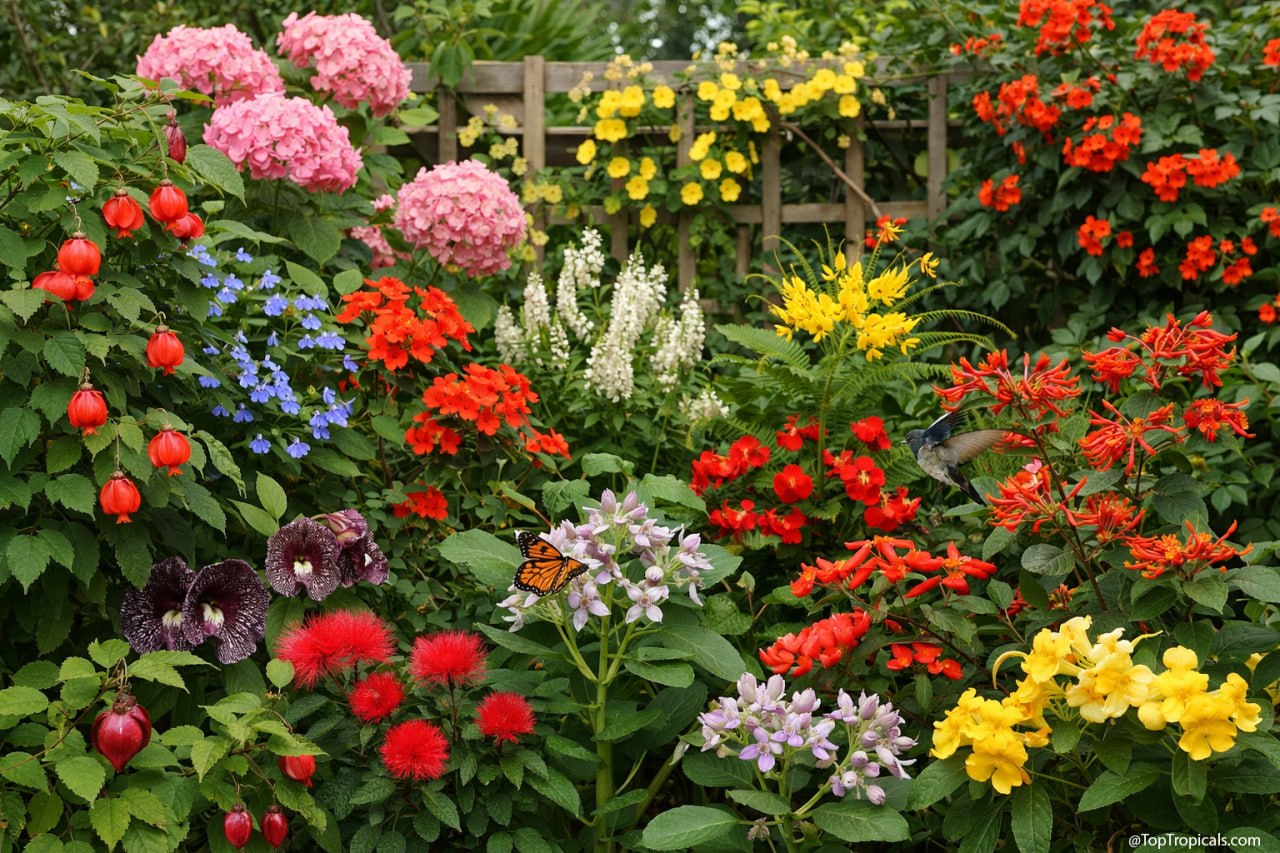
13 tropical flowers to plant in spring to attract pollinators year around
13 tropical flowers to plant in spring to attract pollinators year around: Abutilon Fireball (Abutilon darwinii x striatum), Almond Bush (Aloysia virgata), Calico Flower (Aristolochia littoralis), Pride of De Kaap (Bauhinia galpinii), Mexican Bird of Paradise (Caesalpinia mexicana), Red Tassel Flower (Calliandra tweedii With Love), Giant Milkweed (Calotropis gigantea), Blue Butterfly (Clerodendrum ugandense), Tropical Hydrangea (Dombeya wallichii), Fire Bush (Hamelia patens), Butterfly Orchid
13 tropical flowers to plant in spring to attract pollinators year around
Spring is when everything wakes up - and if you plant smart now, your garden can stay alive with butterflies, bees, and hummingbirds all year long. The key is mixing tropical bloomers that flower in waves, not all at once. These plants don’t just look good - they keep pollinators coming back season after season, turning your yard into a living, moving ecosystem.
1. Abutilon Fireball (Abutilon darwinii x striatum)
Bell-shaped flowers in warm red and orange tones hang like little lanterns. Very cold hardy, blooms on and off through the year, especially in mild climates. A steady nectar source for hummingbirds. More 👉
2. Almond Bush (Aloysia virgata)
Light, airy clusters of tiny white flowers with a strong almond scent. Bees absolutely cover this plant when it’s in bloom. Flowers repeatedly through warm months. More 👉
Sweet Almond Bush Plant Facts
Botanical name: Aloysia virgata Also known as: Sweet Almond Bush, Incense Bush
USDA Zone: 9 - 11
Highligths
3. Calico Flower (Aristolochia littoralis)
One of the most unusual flowers you can grow - patterned like fabric. More importantly, it’s a host plant for butterflies, giving them a place to lay eggs. More 👉
Elegant Dutchmans Pipe Plant Facts
Botanical name: Aristolochia littoralis, Aristolochia elegans Also known as: Elegant Dutchmans Pipe, Calico Flower
USDA Zone: 9 - 12
Highligths
4. Pride of De Kaap (Bauhinia galpinii)
Bright orange-red blooms cover this shrub for months. Tough, fast-growing, and constantly visited by butterflies and bees. More 👉
Pride of De Kaap Plant Facts
Botanical name: Bauhinia galpinii, Bauhinia punctata Also known as: Pride of De Kaap, Nasturtium Bauhinia
USDA Zone: 9 - 11
Highligths
5. Mexican Bird of Paradise (Caesalpinia mexicana)
Sunny yellow flowers with a light fragrance. Handles heat, freeze, and poor soil easily. A reliable nectar plant for bees and butterflies. More 👉
Mexican Bird of Paradise Plant Facts
Botanical name: Caesalpinia mexicana Also known as: Mexican Bird of Paradise, Dwarf Poinciana
USDA Zone: 9 - 11
Highligths
6. Red Tassel Flower (Calliandra tweedii With Love)
Very showy red-flowered powderpuff, fast-growing and spacey shrub. Cold tolerant to hard freeze, making it a strong choice for subtropical gardens. Forms a dense, many-stemmed plant with fine, feathery foliage that folds at night or by touch. Large scarlet tassel flowers bloom from spring to autumn and attract pollinators nonstop. More 👉
Red Tassel Flower Plant Facts
Botanical name: Calliandra tweedii, Inga pulcherrima Also known as: Red Tassel Flower
USDA Zone: 9 - 11
Highligths
7. Giant Milkweed (Calotropis gigantea)
A bold plant with thick leaves and waxy flowers. Important host plant for butterflies, especially monarchs. Handles heat and drought well. More 👉
Giant Milkweed Plant Facts
Botanical name: Calotropis gigantea Also known as: Giant Milkweed, Crown Flower, Giant Calotrope, Arka, Jilledu, Erukkam Madar, White Madaar
USDA Zone: 9 - 11
Highligths
8. Blue Butterfly (Clerodendrum ugandense)
Flowers really do look like little blue butterflies. Blooms frequently and attracts actual butterflies along with bees. More 👉
Butterfly Clerodendrum Plant Facts
Botanical name: Rotheca myricoides, Clerodendrum ugandense Also known as: Butterfly Clerodendrum, Blue Butterfly Bush, Blue Glory Bower, Blue Wings
USDA Zone: 9 - 11
Highligths
9. Tropical Hydrangea (Dombeya wallichii)
Large clusters of soft pink flowers appear in cooler months when little else is blooming. A major nectar source in winter. More 👉
Pink Ball Tree Plant Facts
Botanical name: Dombeya wallichii, Dombeya x cayeuxii Also known as: Pink Ball Tree, Tropical Hydrangea
USDA Zone: 9 - 11
Highligths
10. Fire Bush (Hamelia patens)
One of the best all-around pollinator plants and a tough bush - takes both cold and heat. Tubular orange-red flowers attract hummingbirds nonstop, plus butterflies and bees. More 👉
Fire Bush Plant Facts
Botanical name: Hamelia patens Also known as: Fire Bush, Firecracker Plant
USDA Zone: 8 - 11
Highligths
11. Butterfly Orchid Vine (Mascagnia macroptera)
A climbing, cold hardy vine covered in bright yellow flowers and butterfly-like seeds. Great for fences or trellises, adding vertical color and feeding pollinators. More 👉
Butterfly pea vine Plant Facts
Botanical name: Mascagnia macroptera Also known as: Butterfly pea vine, Yellow Orchid vine, Gallinita
USDA Zone: 9 - 10
Highligths
12. Mexican Flame Vine (Senecio confusus)
Fast-growing, hardy vine with intense red blooms. Flowers heavily and brings in butterflies quickly. More 👉
Mexican Flame Vine Plant Facts
Botanical name: Pseudogynoxys chenopodioides, Senecio confusus Also known as: Mexican Flame Vine, Orangeglow Vine
USDA Zone: 9 - 11
Highligths
13. Yellow Elder (Tecoma stans)
Bright yellow trumpet flowers that bloom over a long season. A dependable plant for both bees and hummingbirds. More 👉
Yellow Elder Plant Facts
Botanical name: Tecoma stans, Bignonia stans Also known as: Yellow Elder, Yellow Bells
USDA Zone: 9 - 11
Highligths
✔️ Planting a mix of these gives you something in bloom almost every month.
That’s the real trick - not just planting for spring, but building a rotation of flowers that keeps pollinators fed all year long.



 Mango Practical Growing Tips (Keep It
Simple)
Mango Practical Growing Tips (Keep It
Simple)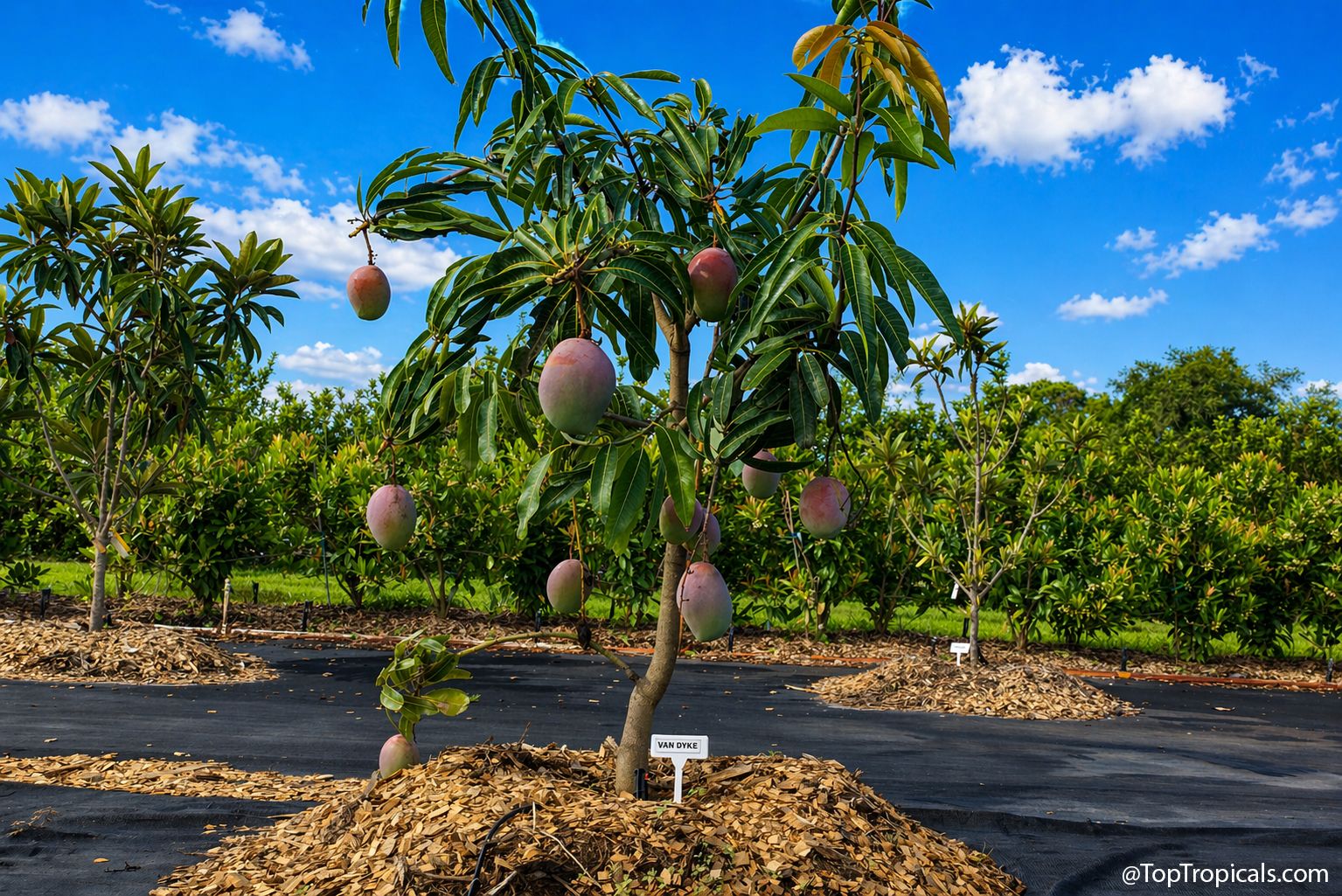
 Mango Winter Care (Very Important)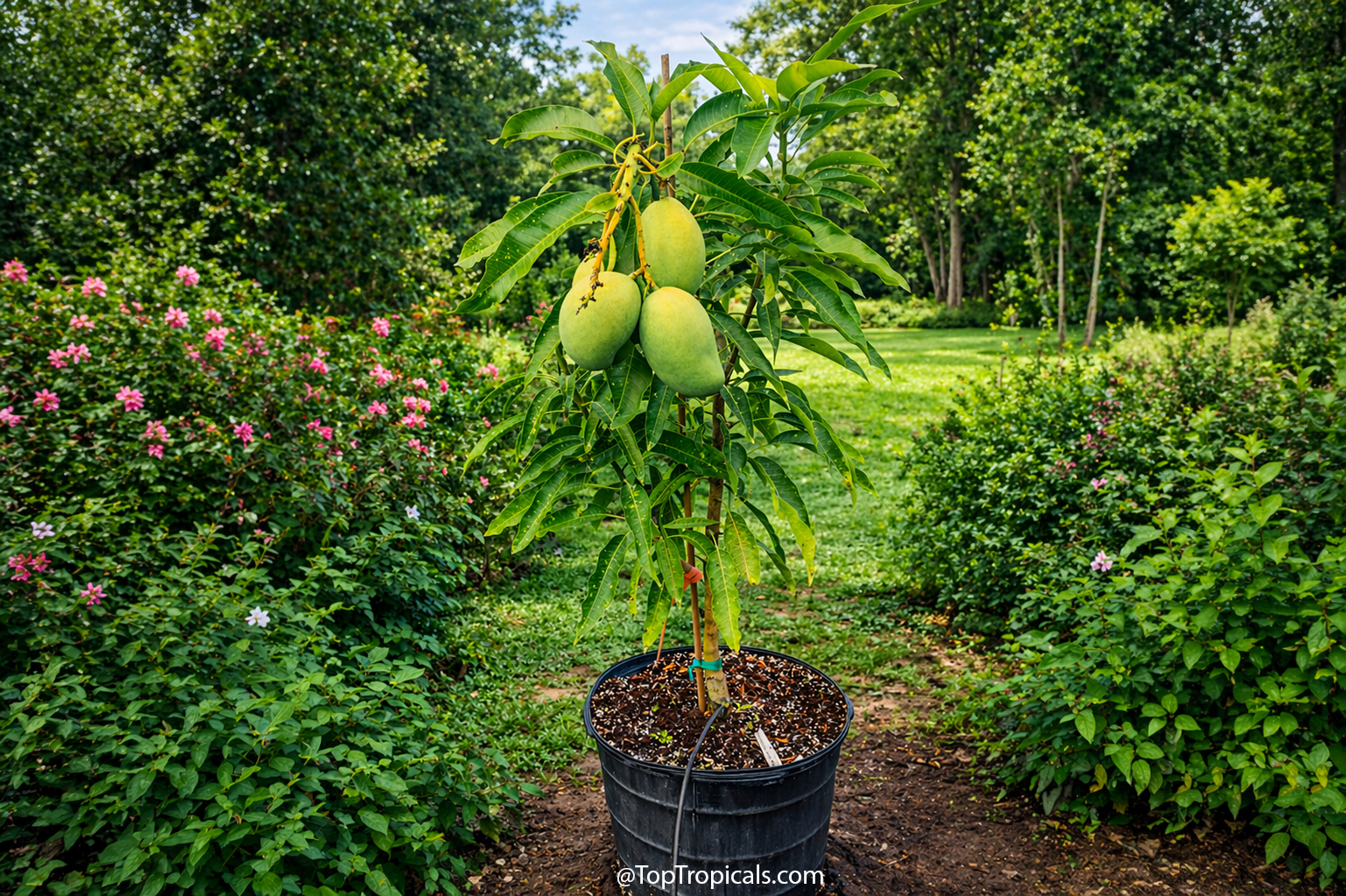
 Taste the Mango Difference - Save 10%