Garden Blog - Top Tropicals

Date: 24 Jun 2018

Plant Horoscope. Sagittarius Zodiac lucky plants: Fig and Baobab

TopTropicals

Sagittarius - 11/22 - 12/21. Sagittarius is a FIRE sign that is ruled by the large and optimistic planet Jupiter.
Archer's plants tend to be large in size and fairly conspicuous, with a pleasant odor. They may have large, or elongated leathery leaves and showy flowers.
The best plants for Sagittarius will support the body's largest glandular organ, the liver. The planet Jupiter also rules the hips, thighs, lower spine, and the autonomic nervous system, as well as the process of growth and preservation. Herbs related to Jupiter have traditionally been used to treat lower back problems (including sciatica and lumbago), arthritis, and rheumatism. Herbs with a high silica content are related to Sagittarius (they promote a positive frame of mind), as are plants with large taproots and trees that produce fruit and nuts. Illnesses of Jupiter are said to arise from immoderate consumption. Basil is an herb that's both expansive and cheerful - just like Sagittarius - and its reputation as a money attractor resonates with this sign's generous nature as well. Use this happy herb when you want to infuse your life with fun and prosperity!

Sagittarius Zodiac lucky plants: Mulberry, Ceiba, Chonemorpha, Beaumontia, Baobab, Grapefruit, Anise, Sage, Cinnamon, Blueberry, Thistles, Nut trees, Lemon, all Ficus trees, Peepal, Fig, Coleus, Basil, Banana, Mango, Ironwood Mesua ferrea, Clematis, Peony, Jasmine, Nutmeg, Mint, Tea, Date palm, Guava, Jambul, Maple, Magnolia, Teak, Bird of Paradise, Heliconia, Showy Gingers.

For other signs information, see full Plant Horoscope.

Date: 12 Jan 2026

Cherry of the Rio Grande quick compote: quick-n-fun exotic recipes

Cherry of the Rio Grande quick compote over pancakes

Cherry of the Rio Grande quick compote over pancakes

Eugenia aggregata - Cherry of the Rio Grande fruit

Eugenia aggregata - Cherry of the Rio Grande fruit

🍴 Cherry of the Rio Grande Quick Compote

This fast cherry compote is made from Cherry of the Rio Grande (Eugenia aggregata). It is tart, rich, and perfect over pancakes, waffles, toast, or warm bread.

Ingredients

  • 1 cup Cherry of the Rio Grande fruit, pitted
  • 2 to 4 tablespoons water

Instructions

  1. Place cherries and water in a small saucepan.
  2. Simmer over medium heat until the cherries soften and release juice.
  3. Mash lightly with a spoon for a chunky texture.
  4. Spoon warm compote over pancakes or bread and serve immediately.

🛒 Plant Cherry of the Rio Grande

📚 Learn more:


#Food_Forest #Recipes

🟢 Join 👉 TopTropicals

Date: 2 Mar 2026

😼😺 The Story Behind Smokey and Sunshine 🐾

Smokey  and  Sunshine  in  office  presentation  about  Cherry  of  the  Rio 


Grande  freeze  survival,  with  Sunshine  pointing  at  polar  bear  and  penguin 


marketing  poster,  coffee  and  donuts  on  table,  tropical  plants  on  shelves  in 


background.
Sunshine: You know, February 27 was International Polar Bear Day. I just learned about it and got a brilliant marketing idea. Cherry of the Rio Grande survived 25F. With wind. Real wind. That means we go north. Let them taste this magic. I even have a donut recipe with the fruit. It’s a bomb, Smokey. We expand. Trust me. Finally you can afford that new watering timer.

Smokey: Not so fast, genius. Twenty five degrees is not the North Pole. And polar bears and penguins do not share zip codes.

Sunshine: You always pour cold water on my brilliance. Fine. Where do we start?

Smokey: Well, first you go talk to Tatiana. She graduated from the Geography Department. She can explain climate zones. Cherry of the Rio Grande can grow in North Florida, Texas, and similar climates. Let’s master that before we conquer Arctic.

Sunshine: So… Phase One: Geography?

Smokey: Exactly.

Some stories are easier to tell with a little humor. Smokey and Sunshine were never just mascots. They represent the two forces behind every decision we make here: bold ideas and careful reality. One dreams big. The other checks the climate zone map. Together, they remind us that growing plants is part science, part optimism, and always personal. If you have ever wondered why they keep appearing in our newsletters, you can read their full story on the Smokey and Sunshine page. They have been with us longer than most people realize.

🐾 Learn the Story of Smoky and Sunshine

Freeze Testing of Grumichama and Cherry of Rio Grande 🍒❄️
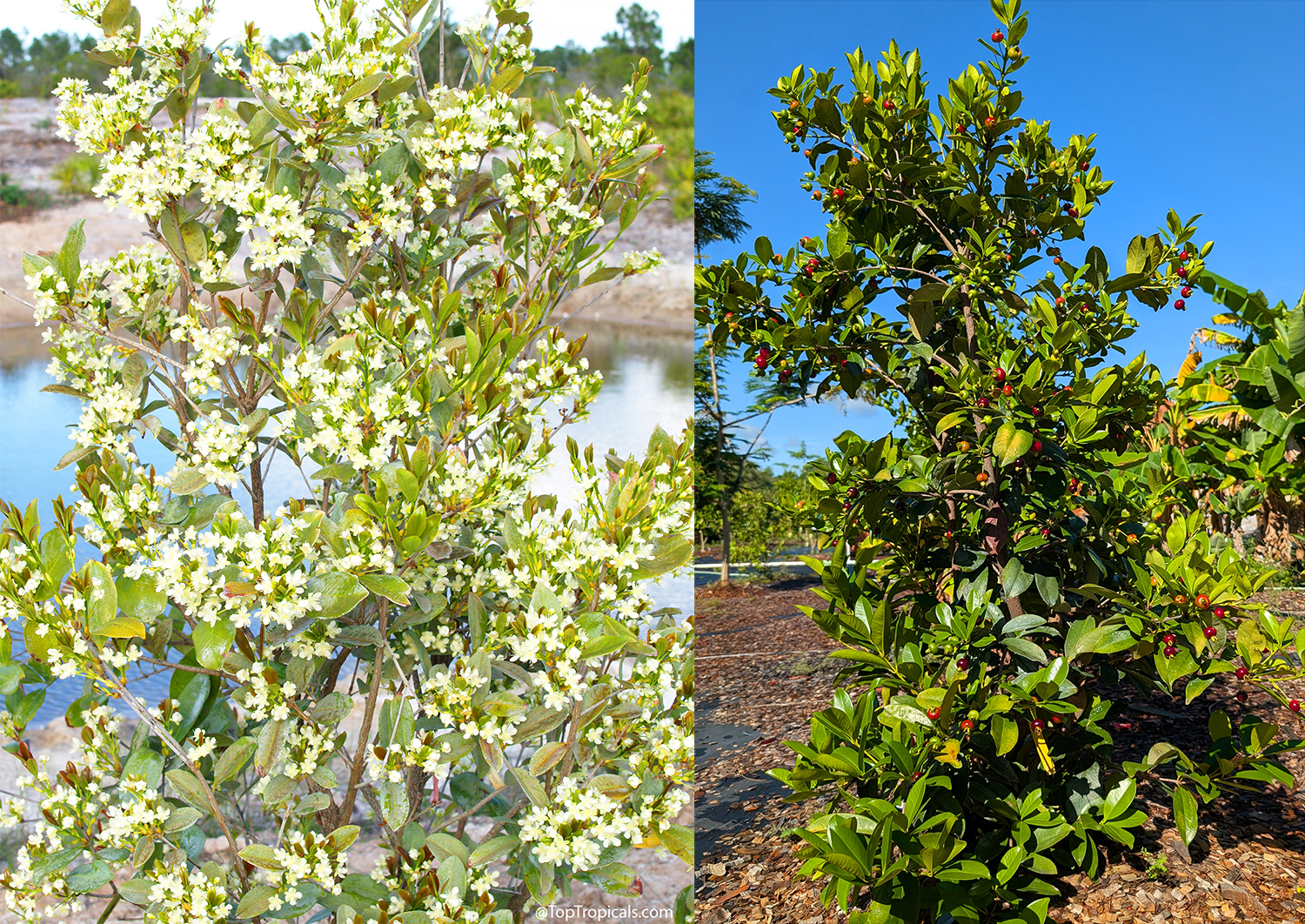
Grumichama  tree  (Eugenia  brasiliensis)  showing  white  flowers  and  ripe 


red  fruits  in  tropical  garden 


conditions

Eugenia brasiliensis - Grumichama tree flowering and fruiting

When temperatures dropped to 25F, with wind chill near 14F, winter made it clear which tropical trees were truly resilient. Some plants burned back. Tender growth collapsed. But our established Eugenia cherries stood steady. Leaves held. Branches stayed flexible. The canopy remained intact.

Cherry of the Rio Grande (Eugenia aggregata) and Grumichama (Eugenia brasiliensis) are among the most cold-hardy tropical cherries for Southern gardens. Both are native to Brazil and thrive in USDA Zones 9b–11, and even protected 9a sites.

Cherry of the Rio Grande produces dark ruby fruit that ripens almost black, with a rich, full cherry flavor. It flowers early in spring and can fruit well into summer. Mature trees can tolerate brief drops into the low 20s once established. Trees typically grow 8 to 15 feet tall, remain naturally compact, and often begin fruiting within 2 to 3 years.

Grumichama is an evergreen tree known for both beauty and productivity. In spring, it covers itself in white starburst flowers that attract pollinators. Within about four weeks, glossy purple-black fruit develops. Established trees tolerate temperatures into the upper 20s and grow well in the ground or in 5–10 gallon containers. Mature trees can produce hundreds of fruits per season.

Across the Eugenia group, strengths are consistent: early bearing, compact growth, heat tolerance, light freeze endurance, and low pest pressure. They are adaptable to different soils, need modest water once established, and perform in full sun or partial shade. Birds enjoy the fruit, but there is usually plenty to share.

Nutritionally, Eugenia cherries provide Vitamin C, fiber, antioxidants, and notable Vitamin A that supports eye health. They offer sweetness with real dietary value.

In the kitchen, they are simple and rewarding. Cherry of the Rio Grande makes an easy compote. Simmer the fruit with a small amount of water until soft, mash lightly, and spoon over pancakes or warm bread. Grumichama turns into a deep red jam with sugar and lime, or can be blended into a bright spoon drizzle over vanilla ice cream.

Even when not fruiting, both trees remain attractive year-round with glossy evergreen foliage and clean structure. They fit well into edible landscapes, small yards, and container gardens.

Winter will return. The difference lies in planting fruit trees that can handle heat, humidity, and the occasional cold snap. If you are building a food forest for lasting harvests, cold-hardy tropical cherries like Cherry of the Rio Grande and Grumichama deserve a place in your garden.
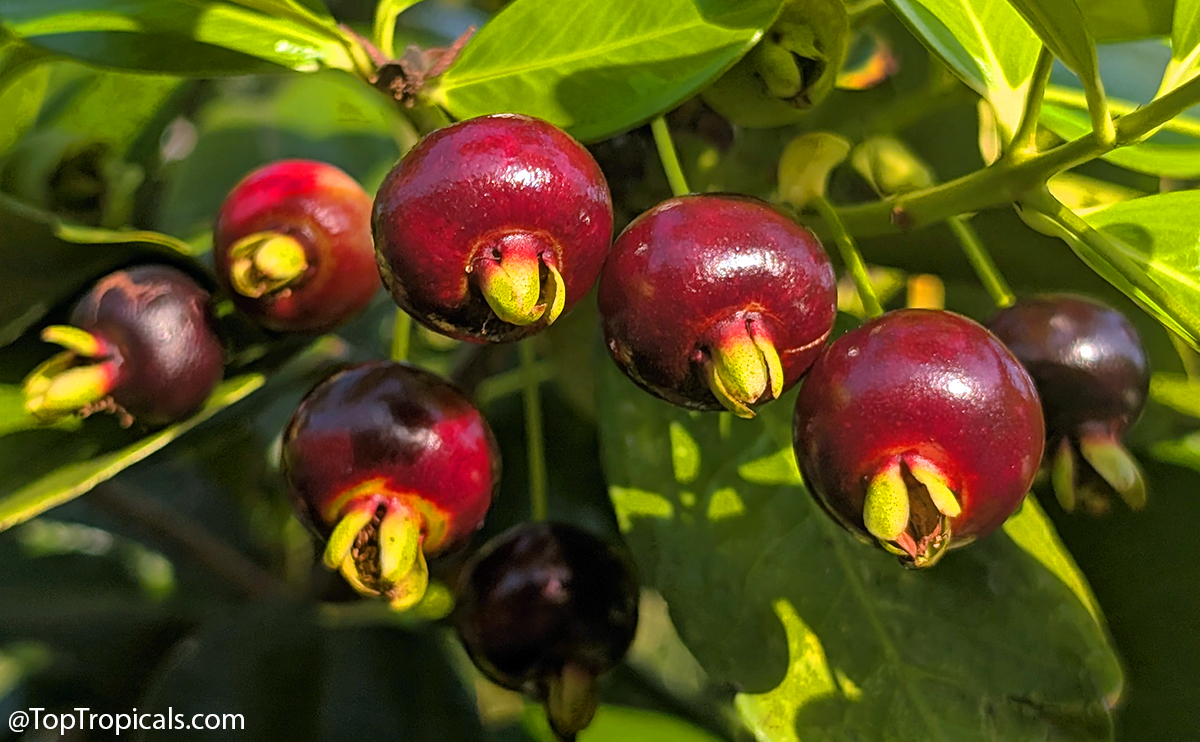
Ripe  Grumichama  fruits  (Eugenia  brasiliensis)  hanging  on  a  branch  with 


glossy 


leaves

Ripe Grumichama (Eugenia brasiliensis) fruits developing on the tree, turning deep red to nearly black when fully mature.
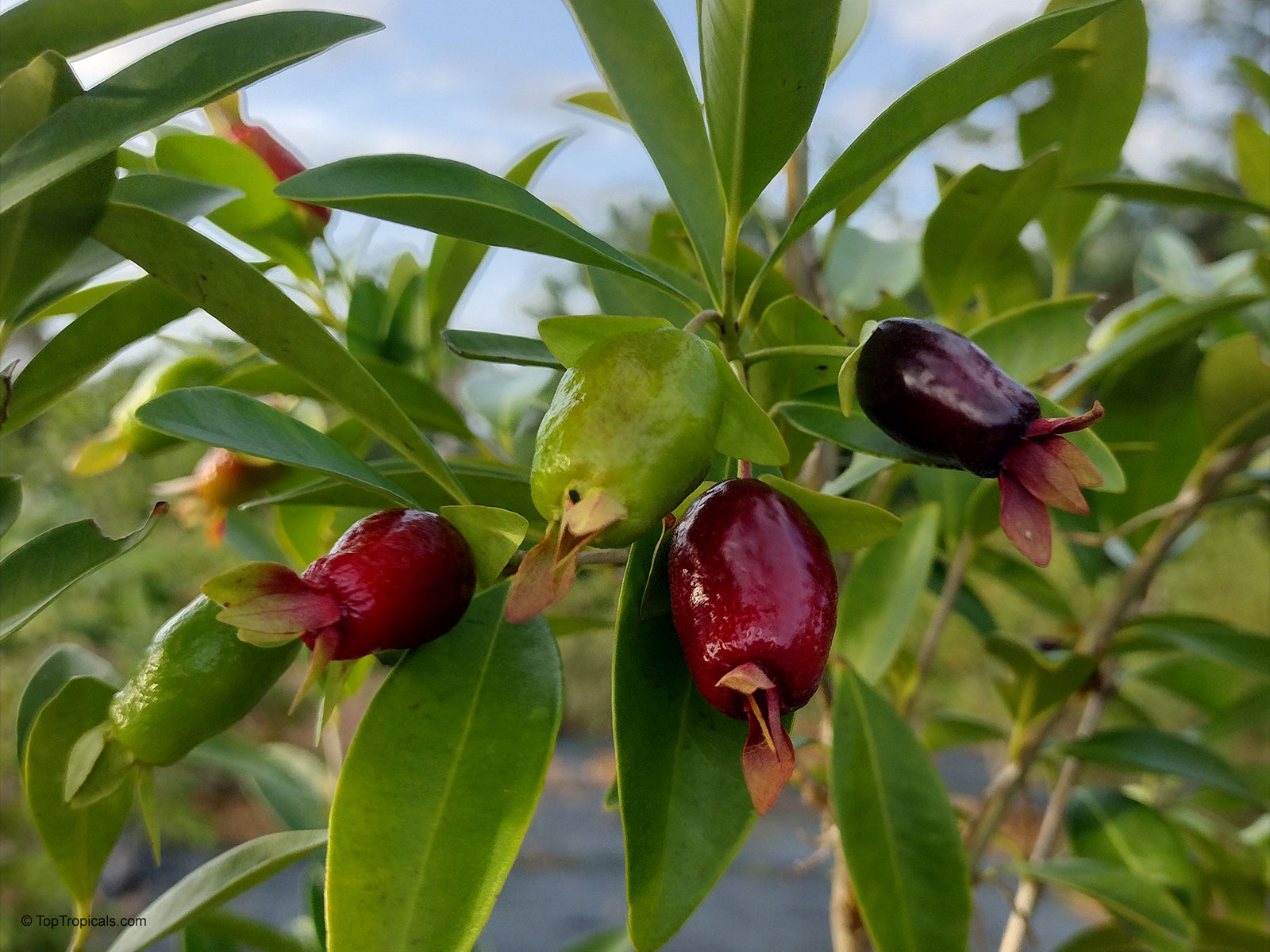
Cherry  of  the  Rio  Grande  (Eugenia  aggregata  cv.  Calycina)  fruits 


ripening  from  green  to  dark  purple  on  the 


branch

Eugenia aggregata (cv. Calycina), Cherry of the Rio Grande

🛒 Plant hardy Eugenia cherries
Date: 2 Aug 2020

Sunshine Boosters: Healthy Plant Food

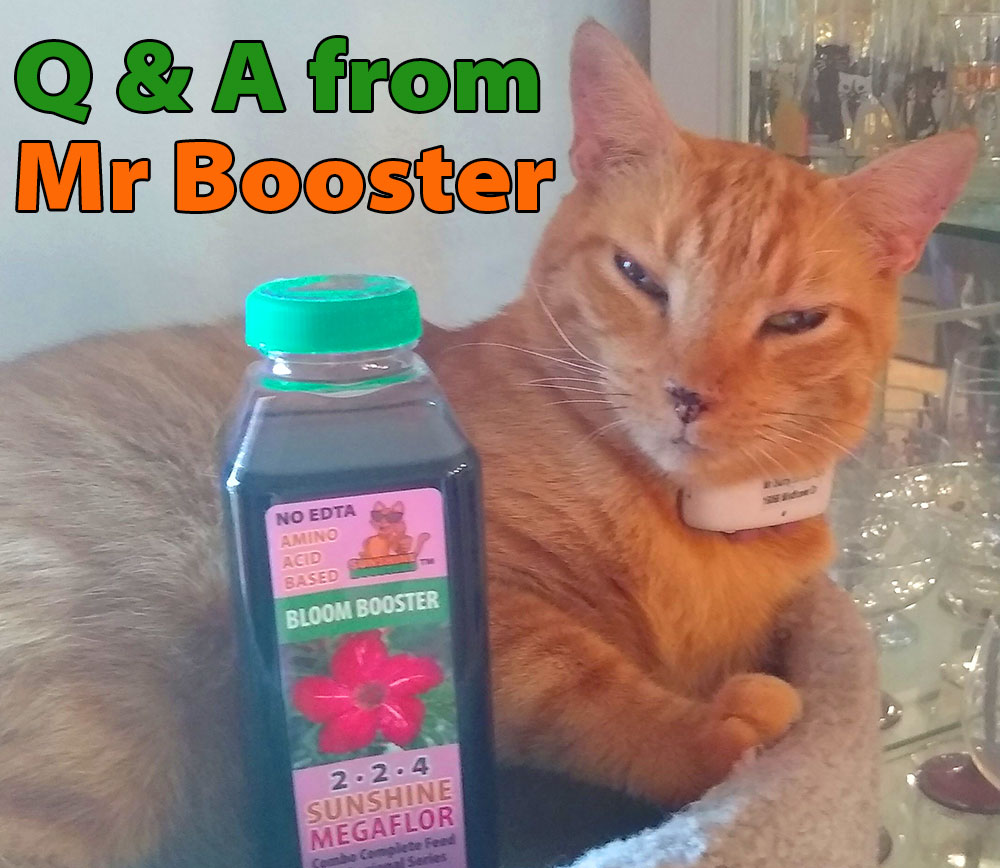
Q&A from Mr Booster

This year we introduced many new items to Sunshine Boosters selection - for all your plant needs in the garden. We receive lots of feedback and questions, so it is time now to share this information with all our customers and open this new section in our Newsletter -

From Mr Booster: Q&A

We promise that we will keep up with your favorite Cat of The Month blog as well!

Dry, liquid, or both?

Q: I have bought different plant boosters, and I am so exited to use them on my plants! I understand that Sunshine Boosters are better than traditional fertilizers, should I give up dry fertilizers all together, or can I continue using them? They are so easy, don't require any mixing...

A: We are all busy and it seems at first like a little bit of work with all the mixing, but it saves your time in a long run! And money too.
When we used dry fertilizers, every now and then a plant got killed, some looked undernourished (or over-fertilized) and unhappy. It was always a challenge to figure out which plant needs more and which needs less, and how often. It made us use more and more chemicals trying to adjust the feeding balance, and we had to worry about why a plant doesn't look happy. Sometimes we lost rare, valuable, collectible plants since we couldn't find a cure for their illnesses.

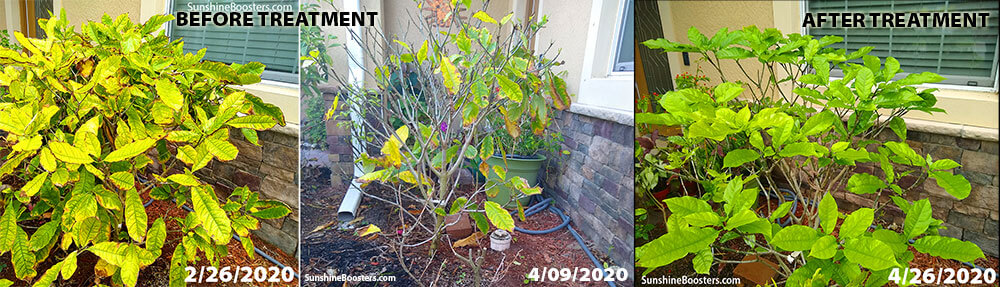
With Sunshine Boosters, those problems are gone now! See examples.

Compare using Sunshine Boosters with eating healthy, well-balanced food. You can still survive on junk food and won't die from starvation, but eventually eating junk food will take its toll and create health problems. So you will end up trying to fix them with more and more medicine... which in turn will create more side effects.
By using Sunshine Boosters, you provide all necessary elements and vitamins to plants without a risk of side effects or building up unnecessary junk/toxins in their system. No more leftovers!

According to tests, Sunshine Boosters are used up completely through plant metabolism, making them healthy, strong, and disease resistant. Sunshine Boosters are based on organic amino-acids which is the foundation of life on Earth. This helps to eliminate nutrients lock up in soil. See why Sunshine liquid fertilizers are better than dry fertilizers.

To answer your question, we recommend to switch to liquid Sunshine Boosters. It is possible to additionally use dry granulated "smart-release" fertilizers for in-ground plants, no more than once a month and only during hot season (Sunshine Boosters can be used year-round). However, some customers ran independent tests and admit that using Sunshine Boosters alone is more effective than in combination with dry fertilizers. See review from Karma Nursery.

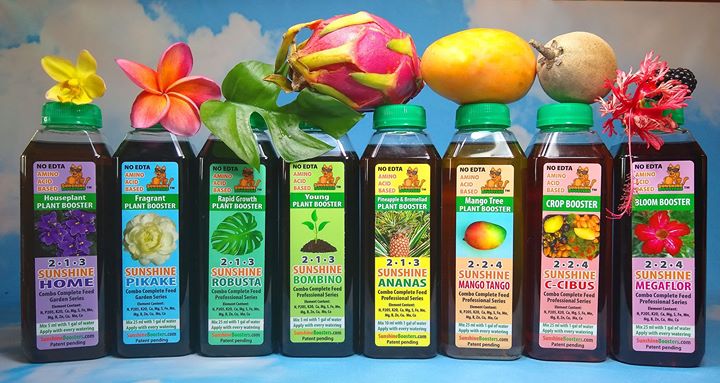
Garden Series, or Combo Total Feed Collection - all nutrients in just one bottle, for different plant types. See booster in this collection, for different types of pants.

Date: 7 Jul 2023

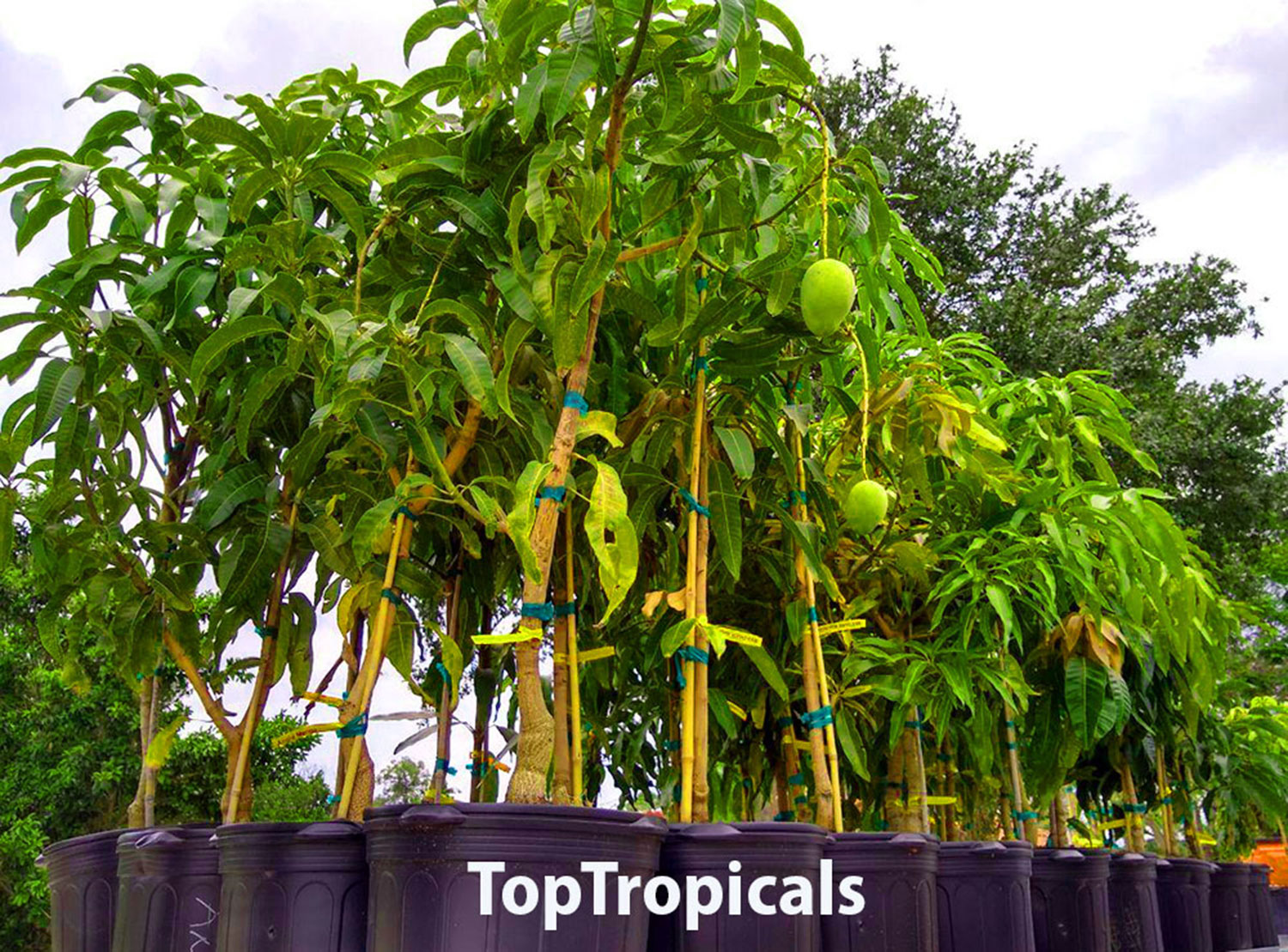
Fertilizing a Mango tree in container

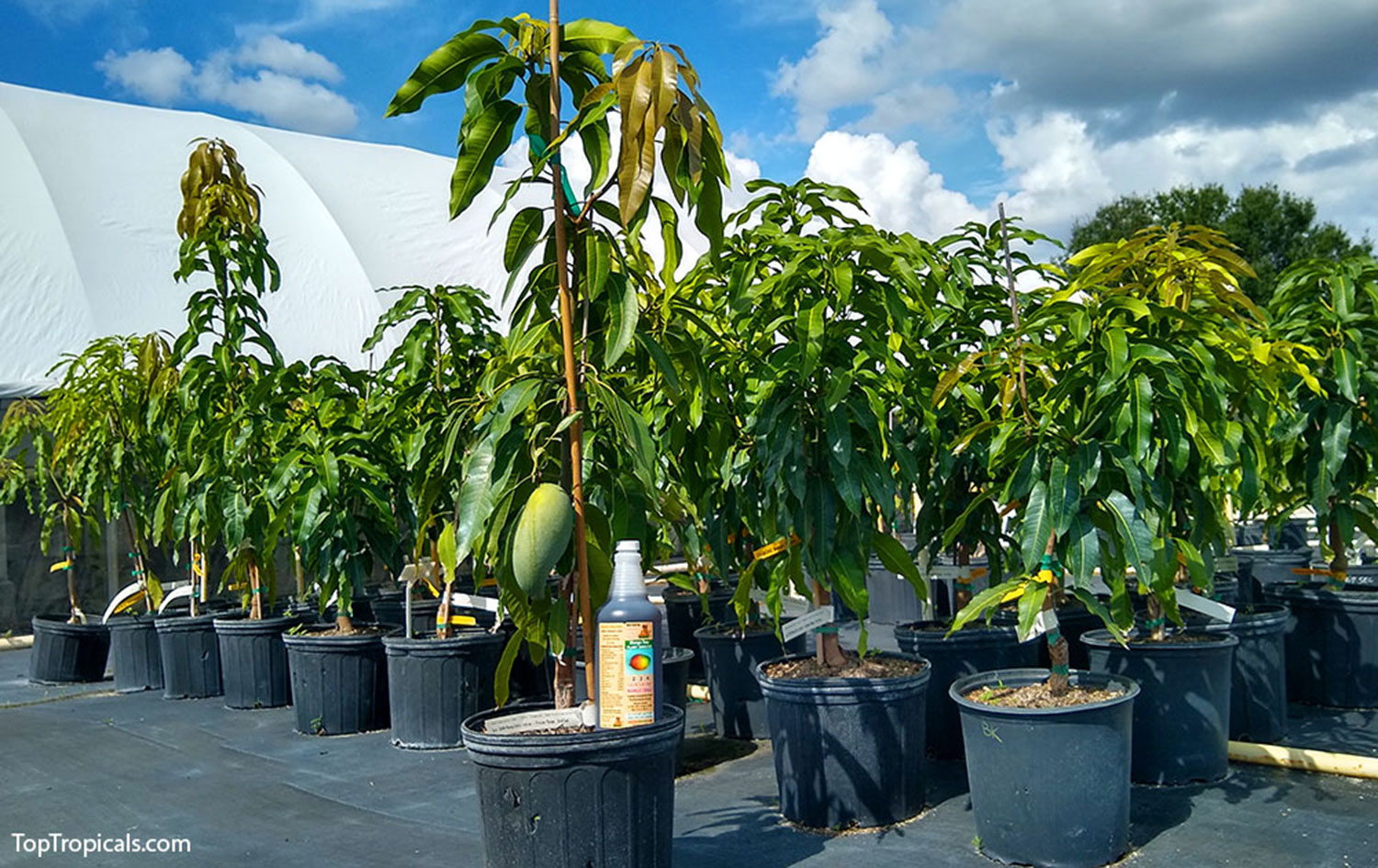
Mango  trees  in  pots  and  fertilizer

Q: I live in the area with cooler winters so I am keeping my mango tree in a pot. What fertilizer do you recommend for the best growth and fruit production?

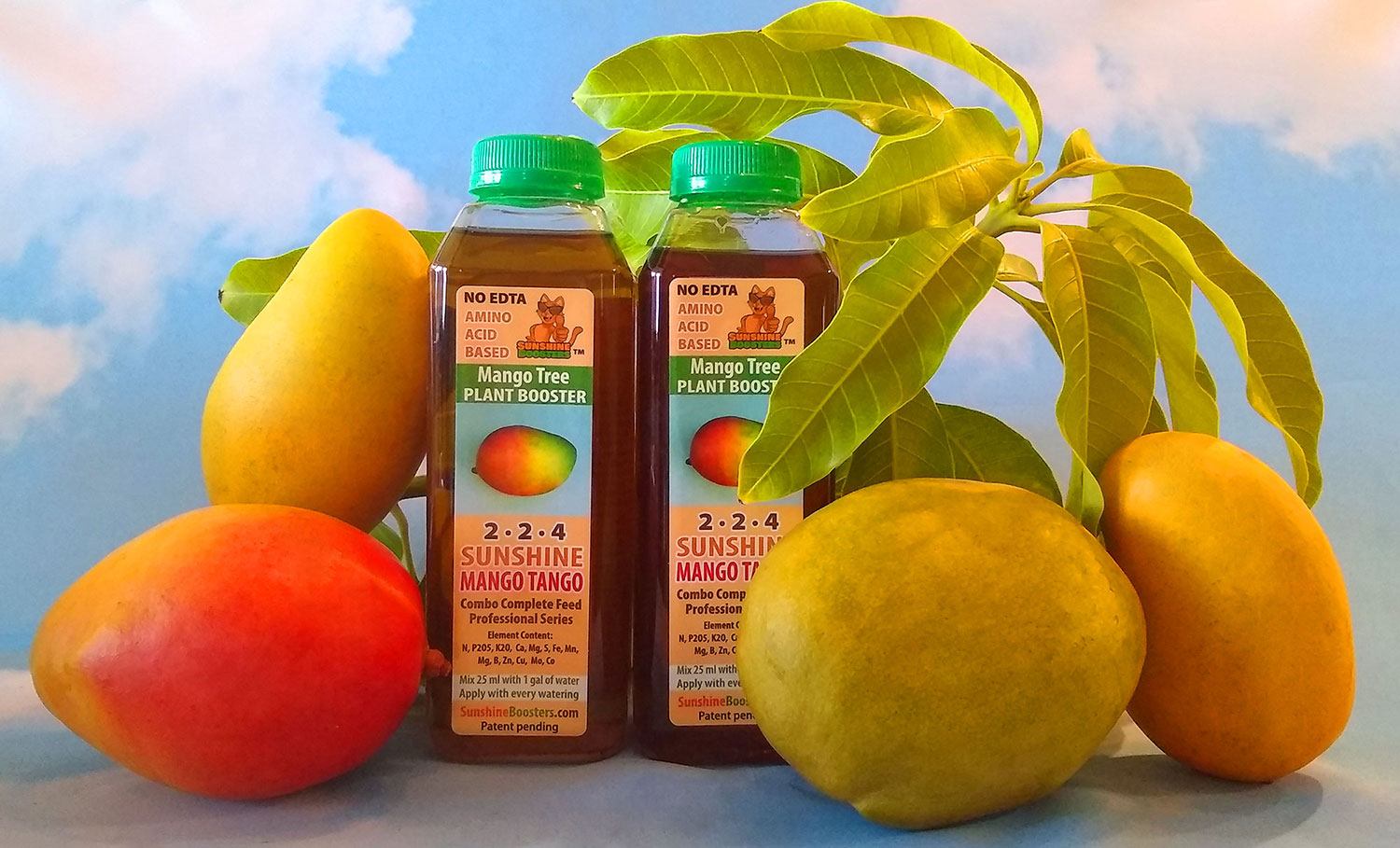
A: If you're growing fruit trees in pots, using liquid fertilizers is a great choice. And when it comes to liquid fertilizers, ones that are based on amino acids are super cool because they're natural and plants can gobble up all the good stuff without any problems. So, if you have a mango tree, the absolute star in amino acid-based fertilizers is -

Sunshine Boosters Mango Tango

Your tree will be doing a happy dance with this stuff!

Sunshine  booster  mango  tango  fertilizer

Why Sunshine Boosters liquid fertilizers are so popular?

Here are a few awesome reasons:

1. Speedy nutrients: Sunshine Boosters liquid fertilizers are like a fast pass for plants. They get absorbed by the roots super quick, giving your fruit tree a speedy delivery of all the nutrients it needs. This is especially great for potted plants with limited soil space, like those yummy fruit trees.

2. Nutrients for all: Sunshine Boosters are like the fairy godmothers of nutrients. When you pour them around the base of your tree, they spread out evenly, making sure every bit of the tree gets its fair share of the good stuff. No nutrient deficiencies allowed!

3. The power of precision: Sunshine Boosters liquid fertilizers and other cool plant supplements let you become a master mixologist for your plant. You can measure and mix them just right, giving your tree the exact nutrients it craves. It's like creating a customized cocktail for your tree's taste buds. Try adding the magic works of SUNSHINE Microelement Supplement Kit - that improves hardiness, vigor, and production.

4. Leafy goodness: Sunshine Boosters have a secret talent - they can be sprayed directly on the leaves! It's like giving your tree a refreshing nutrient-packed spa treatment. The leaves slurp up those nutrients, bypassing any soil limitations. Talk about a VIP treatment!

Remember, while liquid fertilizers are awesome, they work best when you team them up with other good plant care practices. So don't forget to water properly, keep that soil in tip-top shape, and give your tree plenty of sunshine. With this dream team, your potted mango tree will thrive and grow like a champ!

mango  trees  in  containers