Garden Blog - Top Tropicals

Date: 31 Dec 2023

Our New Year Wish to You:
Stay Young

Hugging  cats  with  plumeria  flowers

"Life is not measured by the number of breaths we take,
but by the moments that take our breath away."
- Maya Angelou -

"...Remember, spend some time with your loved ones, because they are not going to be around forever...
...Remember, say a kind word to someone who looks up to you in awe, because that little person soon will grow up and leave your side...
...Remember to give a warm hug to the one next to you, because that is the only treasure you can give with your heart and it doesn't cost a cent...
...Remember to say"I love you"to your partner and your loved ones, but most of all - mean it. A kiss and an embrace will mend hurt when it comes from deep inside of you...
...Remember to hold hands and cherish the moment for someday that person will not be there again. Give time to love, give time to speak, and give time to share the precious thoughts in your mind...
...And always remember, life is not measured by the number of breaths we take, but by the moments that take our breath away."

(A Life message from George Carlin after he lost his wife)
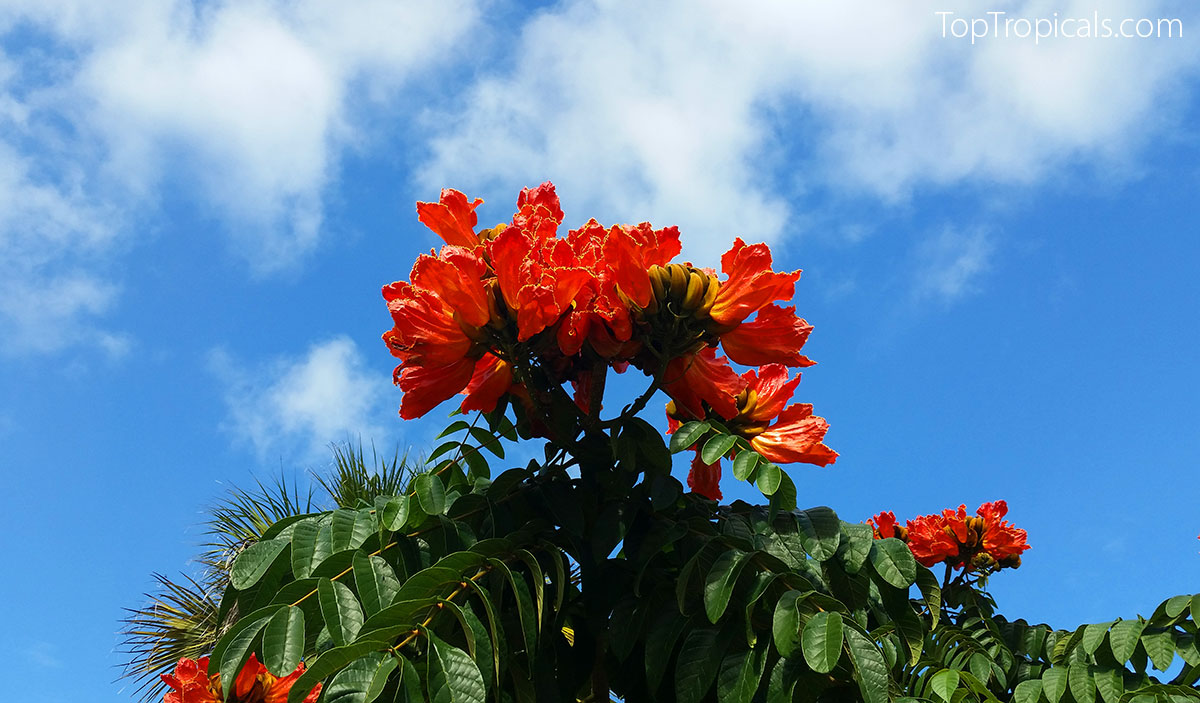
Spathodea  campanulata  -  African  Tulip  Tree

In the photo: Spathodea campanulata - African Tulip Tree

How to Stay Young

10 secrets of Eastern Wisdom

1. Throw out nonessential numbers, including age, weight and height. Let the doctor worry about them. That is why you pay them.
2. Keep only cheerful friends. The grouches pull you down.
3. Keep learning. Learn more about the computer, crafts, gardening. Never let the brain idle. "An idle mind is the devil's workshop." And the devil's name is Alzheimer's.
4. Enjoy the simple things.
5. Laugh often, long and loud. Laugh until you gasp for breath.
6. The tears happen. Endure, grieve, and move on. The only person who is with us our entire life, is ourselves. Be ALIVE while you are alive.
7. Surround yourself with what you love, whether it's family, pets, keepsakes, music, plants, hobbies. Your home is your refuge.
8. Cherish your health. If it is good, preserve it. If it is unstable, improve it. If it is beyond what you can improve, get help.
9. Don't take guilt trips. Take a trip to the mall, to the next county, to a foreign country, but NOT to where the guilt is.
10. Tell the people you love that you love them, at every opportunity.

Cat  on  keyboard  with  avocado 
 fruit

Date: 7 May 2026

3 Best Trees for a Fast-Fruit Garden

3 Best Trees for a "Fast-Fruit" Garden

3 Best Trees for a "Fast-Fruit" Garden

3 Best Trees for a "Fast-Fruit" Garden 🍒

Want fruit without the wait? These tropical powerhouses deliver a "fast-food" garden in record time.

🍓 The Top 3 Speed Demons


1. The Favorite: Papaya 🍊
If you want speed, Papaya is king. It can go from a small seedling to heavy fruit in 6-10 months. It behaves more like a giant herb than a tree: it is fast, has shallow roots, and is incredibly responsive to water and fertilizer. In warm climates, it is a plant it and watch it go legend. More details

2. The Reliable: Guava 🍉
Guava is the most forgiving fruit tree you can own. It handles heat, poor soil, and the occasional week of neglect without missing a beat. Most varieties begin producing in just 1-2 years, staying compact enough for small yards or large pots. More details

3. The Surprise: Eugenias 🍒
This family (including Surinam Cherry, Grumichama, Cherry of the Rio Grande, and Pitomba) often flies under the radar. They look like ornamental shrubs, but they establish quickly and can fruit within year two. They handle pruning beautifully, making them perfect for edible hedges. More details

🍓 The Fast-Fruit Honor Roll


🍓 Ultra-Fast (Under 1 Year)


Papaya and Banana: The heavyweight champions of speed.
Strawberry Tree (Muntingia calabura): Non-stop cotton candy berries.
Grafted Favorites: High-quality Mango, Avocado, Peach, Nectarine, and Persimmon.

Mango Plant Facts

Botanical name: Mangifera indica
Also known as: Mango
USDA Zone: 9 - 11
Highligths Large tree taller than 20 ftSmall tree 10-20 ftFull sunWatering: Moderate. Water when top soil feels dryYellow, orange flowersPink flowersEdible plantSeaside, salt tolerant plant
Get personalized tips for your region

Avocado Plant Facts

Botanical name: Persea americana, Persea gratissima
Also known as: Avocado, Alligator Pear, Aguacate, Abacate
USDA Zone: 9 - 11
Highligths Large tree taller than 20 ftSmall tree 10-20 ftFull sunWatering: Regular. Let topsoil dry slightlyEdible plantSubtropical plant. Mature plant cold hardy at least to 30s F for a short time
Get personalized tips for your region

Peach Plant Facts

Botanical name: Prunus persica, Amygdalus persica
Also known as: Peach
USDA Zone: 5 - 10
Highligths Small tree 10-20 ftFull sunWatering: Regular. Let topsoil dry slightlyWhite, off-white flowersPink flowersEdible plantDeciduous plantSubtropical plant. Mature plant cold hardy at least to 30s F for a short time
Get personalized tips for your region


🍓 Very Fast (1-2 Years)


The Berries: Mulberry (especially Everbearing), Fig, and Barbados Cherry.
The Exotics: Strawberry Guava, Loquat, and the curious Peanut Butter Tree (Bunchosia).
The Sweet Treats: Blackberry Jam Fruit (Randia formosa).

🍓 Tropical Staples (2-3 Years)


Starfruit (Carambola): A heavy producer that looks stunning in the garden.
Annona Family: Sweet Sugar Apples and creamy Atemoyas.
Macadamia Nut: A long-term investment that starts surprisingly early.

🍓 Fast Climbers and Bush Fruit


Passionfruit: Will cover a fence and fruit in a single season.
Berries: Mysore Raspberry and classic Blackberries for quick returns.

🛒 Ready to harvest? Shop the "Fast-Fruit" Collection

📚 Learn more:


· Eugenia cherries in Plant Encyclopedia
· 10 best fruit trees to grow in Florida and Southern landscapes
· Top 10 fast-fruiting trees
· 5 fast-growing fruit trees and shrubs for quick, low-effort harvests (Top Tropicals experts for Martha Stuart)

#Food_Forest #How_to #Discover

🟢 Join 👉 TopTropicals

Date: 18 Dec 2024

How to care for your mango tree in winter

❓ How to care for your mango tree in winter


🥭 If you want to enjoy mangoes like ours (in the video) next summer, protecting your tree in winter is a must! Give it the care it needs now, and you'll reap sweet rewards when the warm weather returns.
  • 🥭 Keep it cozy and protected: Mango trees love warmth, so when winter comes, they need extra care to stay happy.
  • 🥭 Temperature: Mango trees are sensitive to cold. If temperatures drop below 35F, cover the tree with frost cloth or burlap to protect it. For potted mango trees, move them indoors or to a greenhouse.
  • 🥭 Watering: Reduce watering during winter. Mango trees don’t like soggy roots in cold weather. Let the soil dry slightly between waterings.
  • 🥭 Mulching: Add a thick layer of mulch around the base of the tree to insulate the roots and retain warmth. Keep the mulch a few inches away from the trunk.
  • 🥭 No pruning: Avoid heavy pruning in winter, as it can stress the tree. Besides, pruning promotes young tender growth that may get cold damaged. Save major trimming for spring.
  • 🥭 Feeding: Stop dry fertilizer in winter. The tree slows its growth, so too much dry fertilizer can do more harm than good. You can continue using Sunshine Boosters Mango Tango year-round because it is water-soluble and natural, and the amount of food needed will adjust with reduced watering.


🛒 Shop Mango Trees

#Food_Forest #How_to #Mango

🔴 Join 👉 TopTropicals

Date: 2 Feb 2022

5 most rewarding tropical fruit trees

Top Tropicals @ Garden America Radio Show

...The most popular garden radio show Garden America is featuring Top Tropicals topic "5 most practical and rewarding fruit trees for subtropical areas".

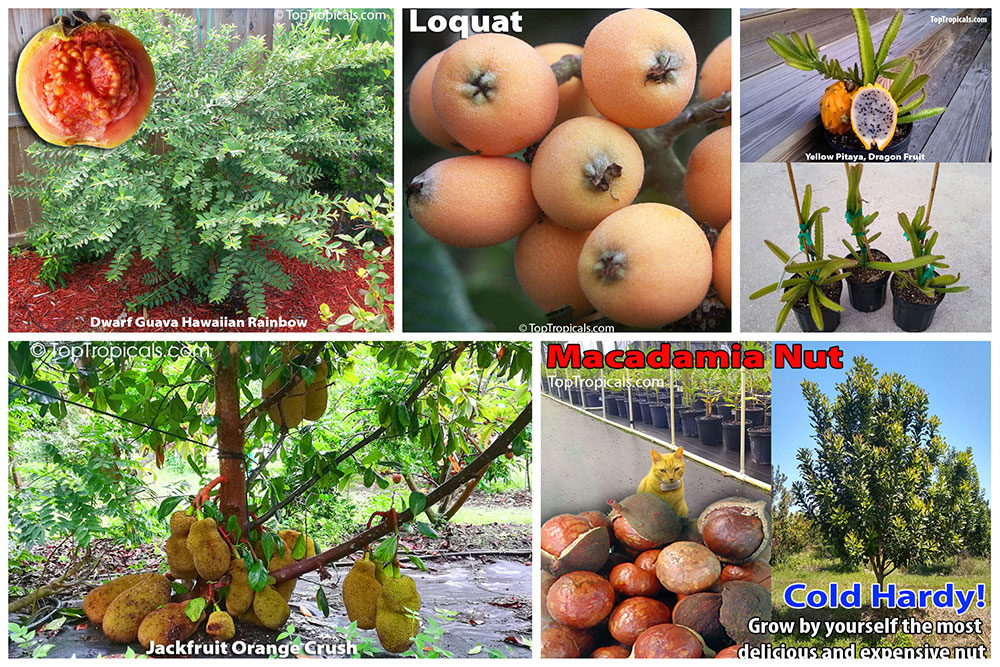
1) Jackfruit Orange Crush (Artocarpus heterophyllus)
...We recently obtained this variety and it is hands down the best Jackfruit we ever tasted. It is crunchy, sweet, aromatic, with bright orange pulp...

2) Dwarf Guava Hawaiian Rainbow (Psidium nana)
- A very small version of the favorite aromatic Guava.
- Grows only up to 5-6 ft tall with a short trunk and branching, bushy habit.

3) Yellow Pitaya, Dragon Fruit (Selenicereus megalanthus)
- This particular species of Dragon fruit is the sweetest and has great flavor unlike most pitayas
- doesn't mind regular water and rains but is also drought-tolerant

4) Loquat (Eriobotrya japonica)
- Can be kept as a very compact tree, and fruits in a pot.
- Flowers and fruits right away. The plants are covered with flowers now and setting fruit.
- Very cold hardy to upper 20's, drought tolerant, fast growing

5) Macadamia Nut (Macadamia integrifolia x tetraphylla)
- The most delicious and popular sweet nuts that are usually so expensive, can be produced in your garden!
- Cold hardy, fast growing, and very productive.

Listen to Facebook-Live Show (recording):

Date: 12 Feb 2025

How to grow a Guava Tree: Practical Guide to Growing Guava

Guava (Psidium sp.)

🍉 How to grow a Guava Tree: Practical Guide to Growing Guava


🍑 Guava Trees (Psidium sp.) are beloved for their flavorful fruit and easy-growing nature. These fast-growing trees are reliable producers and can thrive in a variety of climates, making them a favorite among home gardeners. Guavas are compact and can be grown in containers, making them suitable for small spaces and urban gardens.

🍑 Light and Soil


Guava trees thrive in full sun, requiring at least 6-8 hours of direct sunlight daily to produce the best fruit. They prefer well-draining soils rich in organic matter but are adaptable to a range of soil types, including sandy or loamy soils. Slightly acidic to neutral soil is ideal. While guavas tolerate poor soils, enriching the soil with compost or manure will improve growth and yield.

🍑 Pruning tips


Pruning is essential for maintaining the shape, size, and productivity of guava trees.
· Frequency: Prune guavas annually, ideally after the fruiting season, to encourage new growth and improve airflow.
· Remove dead, diseased, or crossing branches to maintain tree health.
· Shape the tree to allow sunlight to penetrate the canopy, which enhances fruit production.
· For container-grown guavas, keep the tree compact by trimming back vigorous shoots regularly.

🍑 Guava in containers


Guavas are well-suited to container growing. Compact varieties like the "Nana" guava are ideal for pots. Use a large container (at least 15-20 gallons) with good drainage. Fill it with a high-quality potting mix enriched with organic matter. Place the container in a sunny location and water consistently. Regular pruning helps maintain a manageable size and promotes fruiting in container-grown guavas.

🍑 Watering


· Guava trees require consistent watering, especially during dry periods and the fruiting season. While they can tolerate short periods of flooding, ensure the soil is not waterlogged. Water deeply once or twice a week, depending on your climate.
· Fertilize guavas 3-4 times a year during the growing season with a balanced fertilizer rich in potassium and phosphorus to promote flowering and fruiting. Adding organic matter like compost or manure annually boosts soil fertility and improves yields.

🍑 Harvesting


· Guava trees are quick to fruit, often producing their first harvest within a year of planting. For container-grown trees, fruiting can start in even smaller pots, such as 1-gallon containers.
· Signs of ripe guava fruit include:
- A change in color from green to yellow (depending on the variety).
- A sweet, fruity aroma.
- Slight softness when gently pressed.
· Harvest ripe guavas by hand or with pruning shears. Consume fresh or use them to make juices, jams, or desserts.

🍑 Health Benefits of Guava


· Guava is a nutrient powerhouse, offering numerous health benefits:
· Vitamin C: Boosts the immune system and helps protect against colds and infections.
· Potassium: Supports healthy blood pressure levels.
· Antioxidants: Contribute to glowing skin and may reduce the risk of cancer.
· Fiber: Aids digestion and helps regulate blood sugar levels.

🍑 Popular Varieties of Guava


· Tropical Guava (Psidium guajava): Sweet and aromatic, suitable for warmer climates.
· Cattley Guava (Psidium littorale): Cold-hardy with a slightly tart flavor.
· Cas Guava (Psidium friedrichsthalianum): Known for its sour taste, perfect for juices like Costa Rica’s traditional "Agua de Cas." Cold hardy, disease resistant and vigorous, productive variety.
· Pineapple Guava (Feijoa sellowiana): Fruity and floral, thriving in cooler climates.

🍑 Additional Tips


· Guava trees are relatively pest-resistant but may require monitoring in humid climates for mealybugs. Use neem oil if needed.
· Planting multiple guava varieties ensures a continuous supply of fruit.
· With their fast growth, compact size, and delicious fruit, guava trees are a fantastic addition to tropical garden, greenhouse or patio.

📚 More from previous posts about #Guava

🛒 Shop Guava Trees

#Food_Forest #Guava

🔴 Join 👉 TopTropicals