Garden Blog - Top Tropicals

Date: 25 Apr 2026

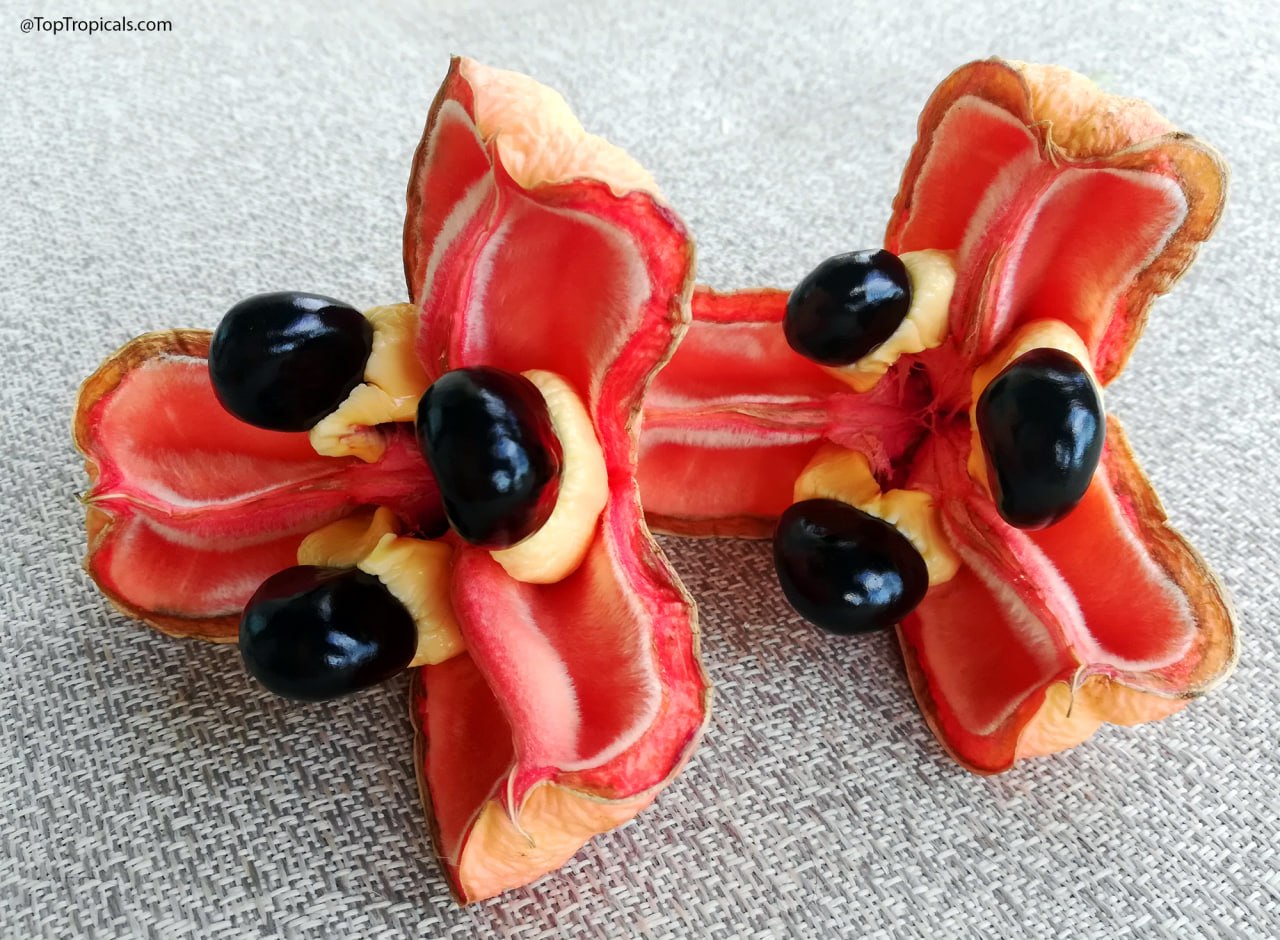
Ackee baked rice: quick-n-fun exotic recipes

Ackee baked rice: quick-n-fun exotic recipes Ackee baked rice: quick-n-fun exotic recipes

🍴 Ackee baked rice: quick-n-fun exotic recipes


  • 🔴Fold cooked ackee gently into warm, seasoned rice with a pinch of salt and a little oil or butter.
  • 🔴Spread into a baking dish and bake until the top turns lightly crisp and golden.
  • 🔴Scoop while warm - soft inside, slightly crisp on top, simple and satisfying.


🌿 About the plant:


When properly harvested and prepared, ackee has a mild, buttery texture often compared to scrambled eggs. It contains healthy fats and is a staple ingredient in Caribbean cooking.

🏡 In the garden:


Trees require consistent warmth and do not tolerate frost. Mature trees can produce generously in suitable climates with minimal intervention.

🛒 Plant Ackee tree and harvest fruit you can't get from the store!

📚 Learn more:

Plant Facts

Blighia sapida, Cupania sapida
Akee, Ackee, Seso Vegetal, Arbre a Fricasser (Haiti)
USDA Zone: 9-11
Large tree taller than 20 ftFull sunModerate waterEdible plantPlant attracts butterflies, hummingbirdsSubtropical plant. Mature plant cold hardy at least to 30s F for a short time

📱 What is Akee - Jamaica's National Fruit - and how to grow it
📱 How to cook perfect Akee?

#Food_Forest #Recipes

🟢 Join 👉 TopTropicals

Date: 27 Apr 2026

Rainbow plumerias - the wild side of color

Rainbow plumerias - the wild side of color Rainbow plumerias - the wild side of color Rainbow plumerias - the wild side of color Rainbow plumerias - the wild side of color
Rainbow plumerias - the wild side of color. Winter dormancy tip 🌈

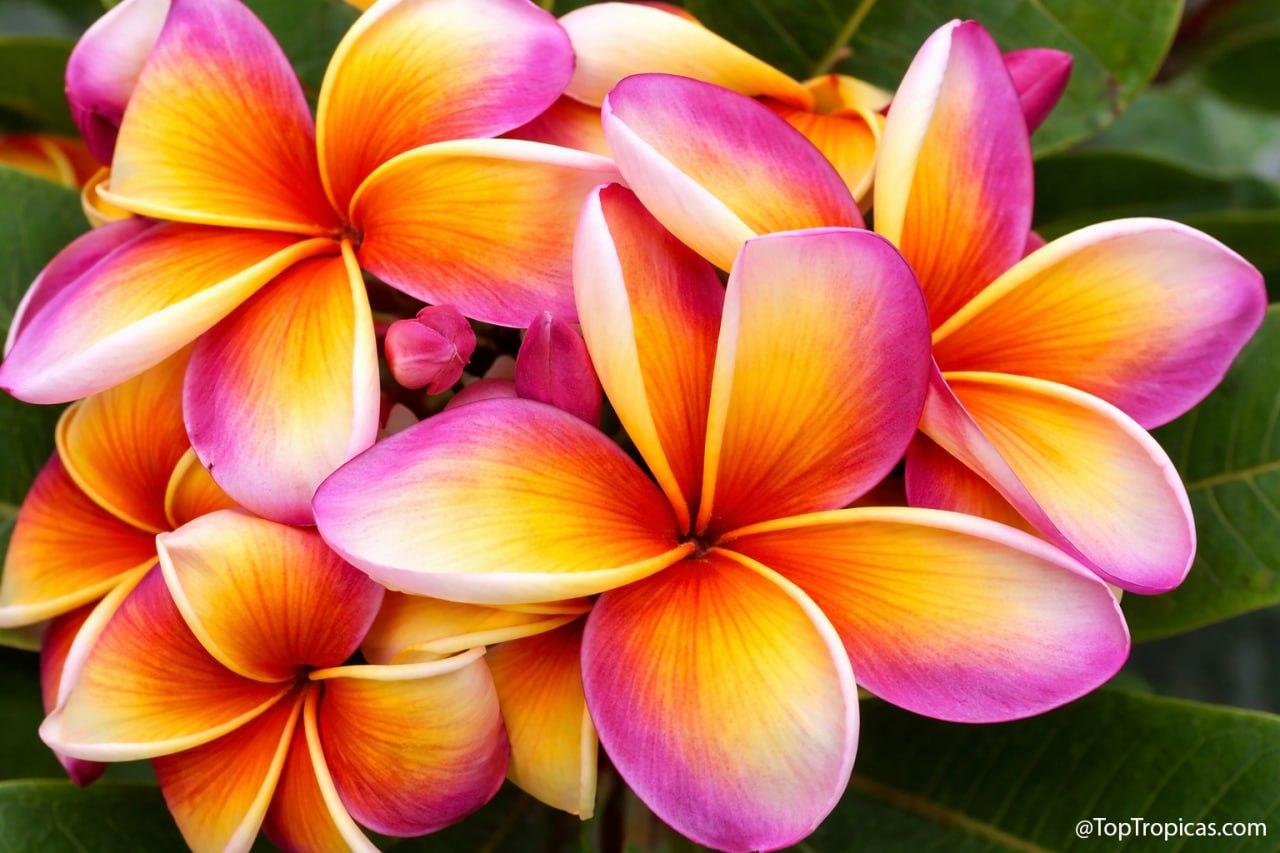
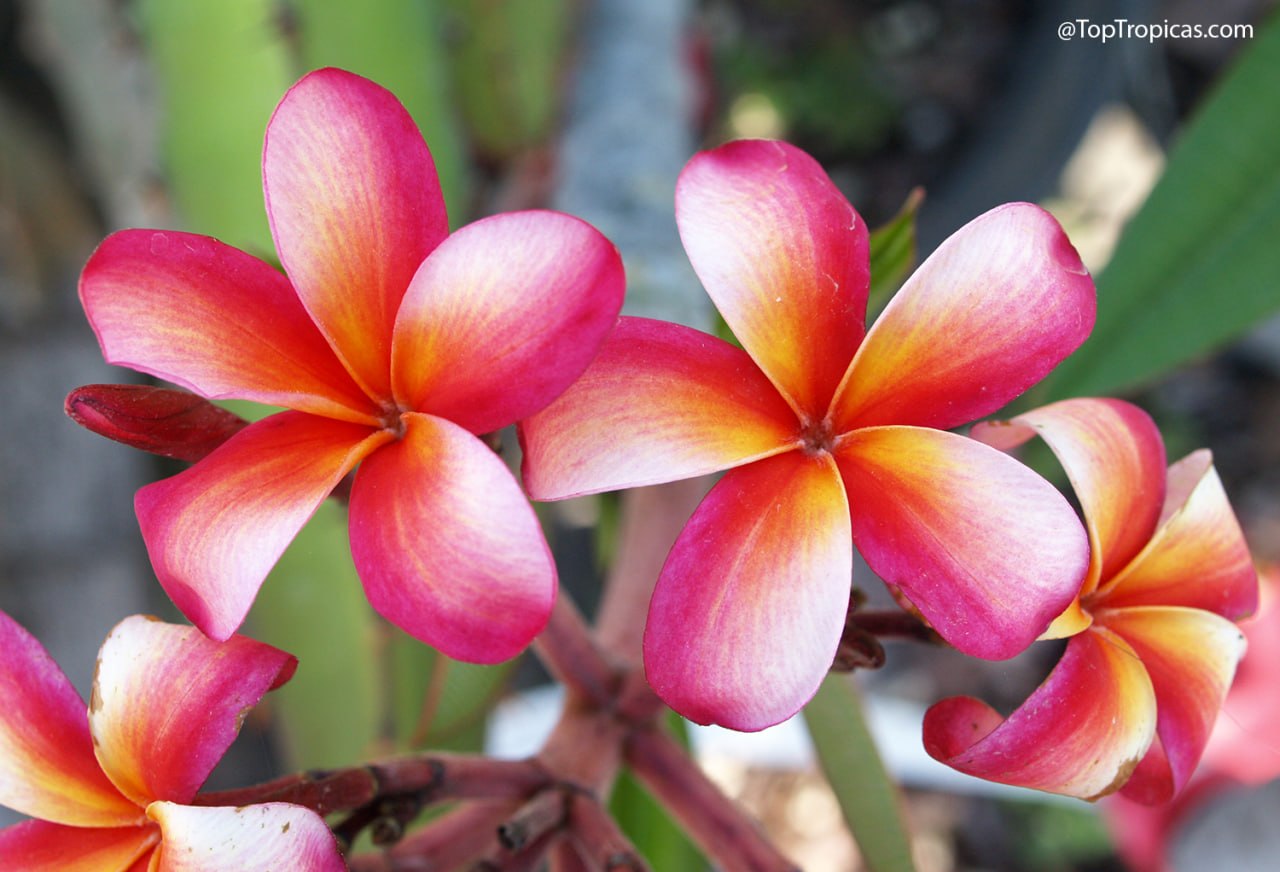
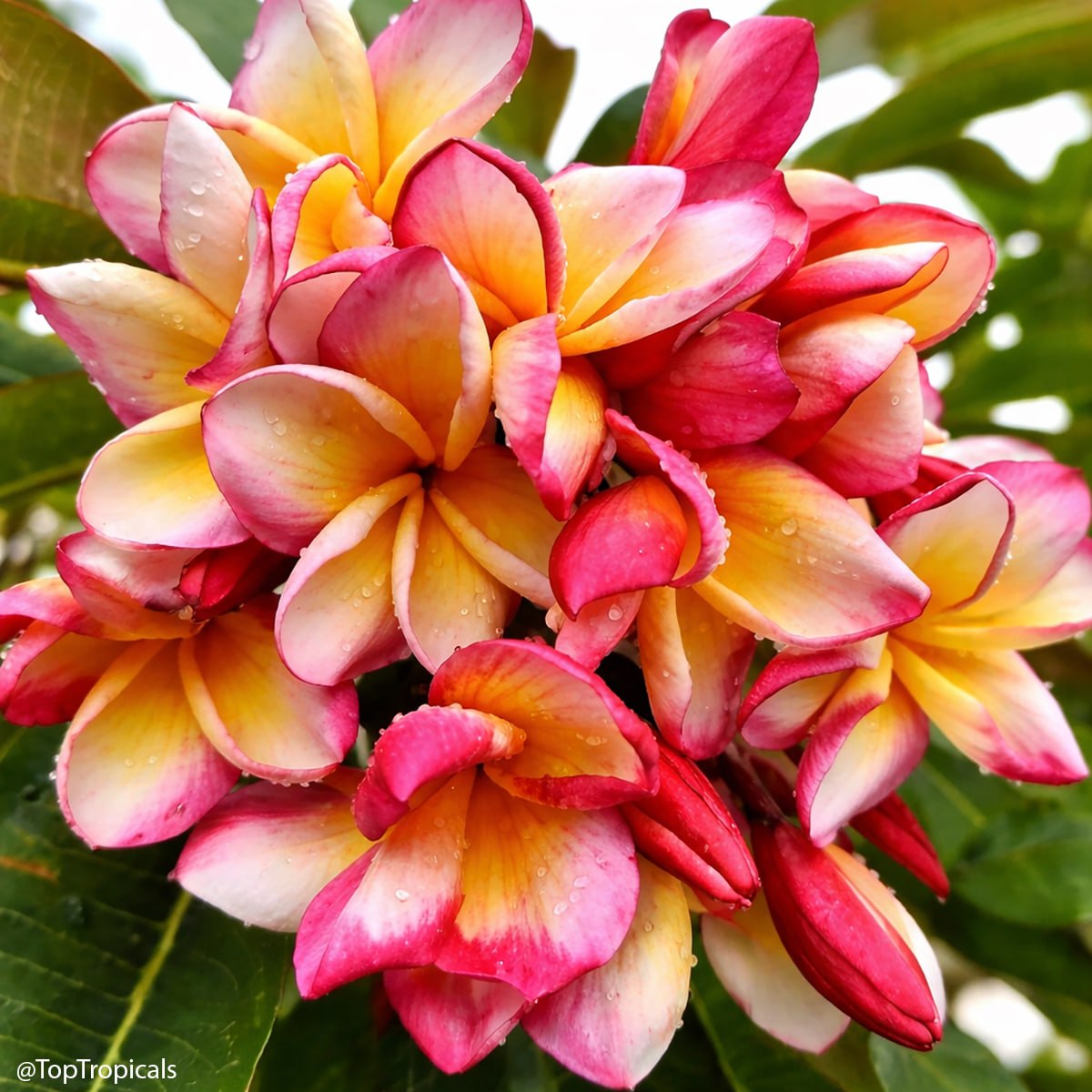
Some plumerias don’t follow rules - they mix, swirl, and splash colors all over the petals like a tropical sunset in motion. These “rainbow” types are the most playful and unpredictable, with every bloom looking a little different from the next.

🌸 Today's featured plumerias:


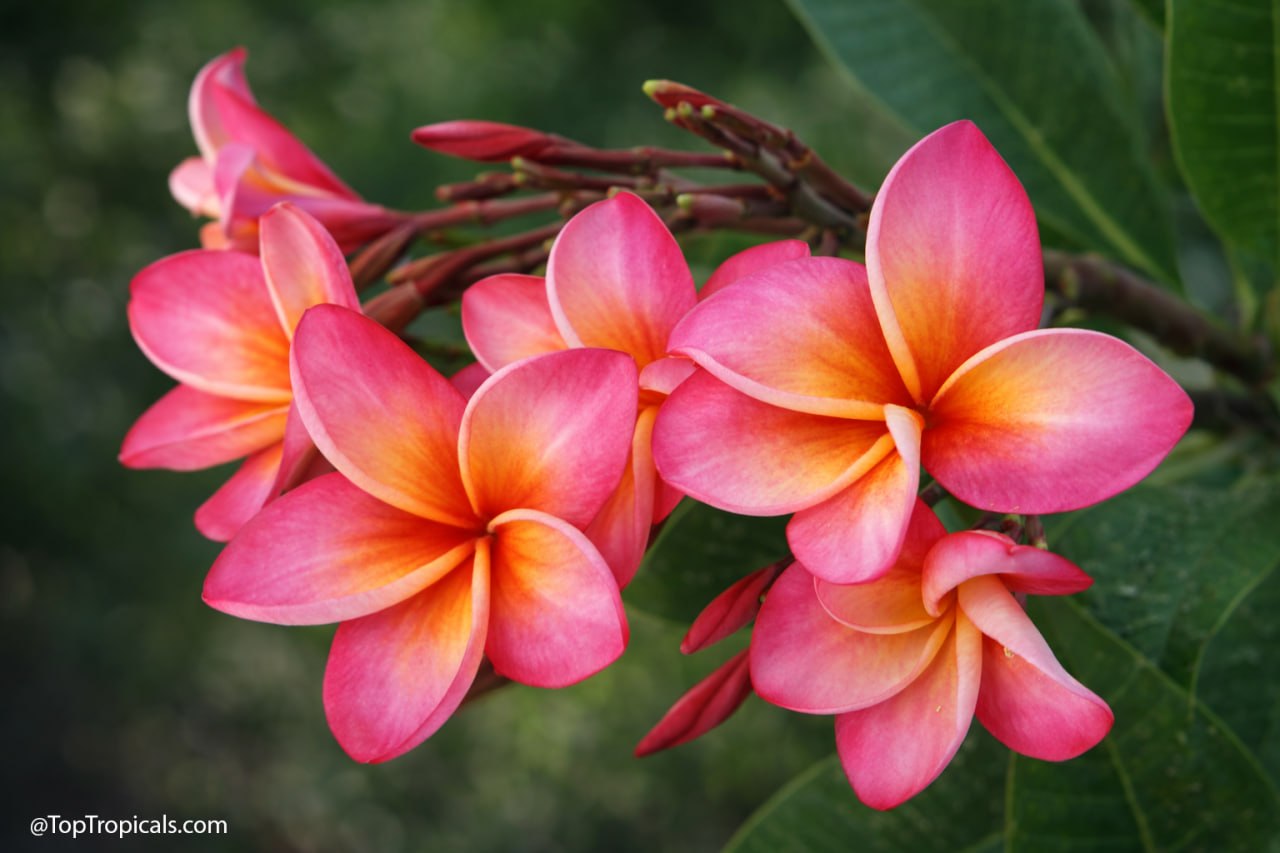
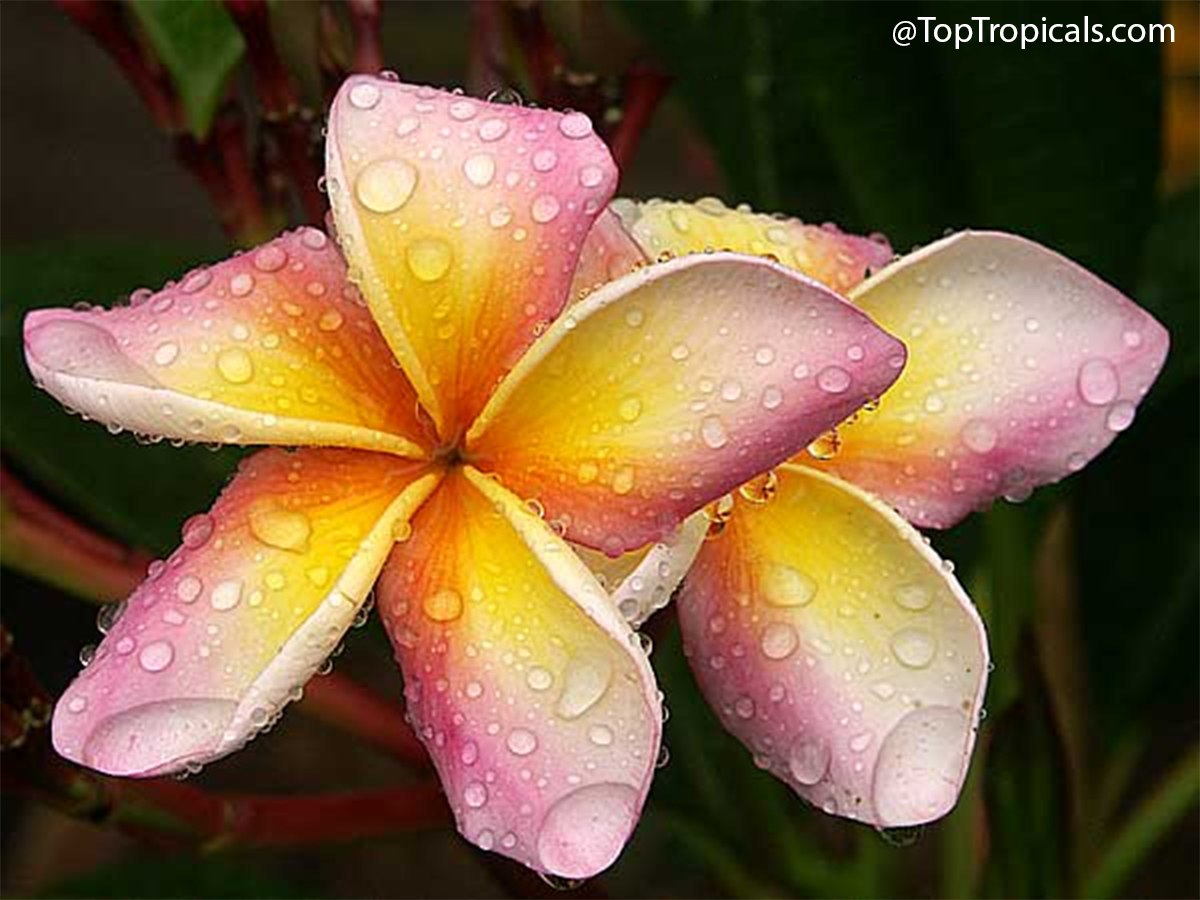
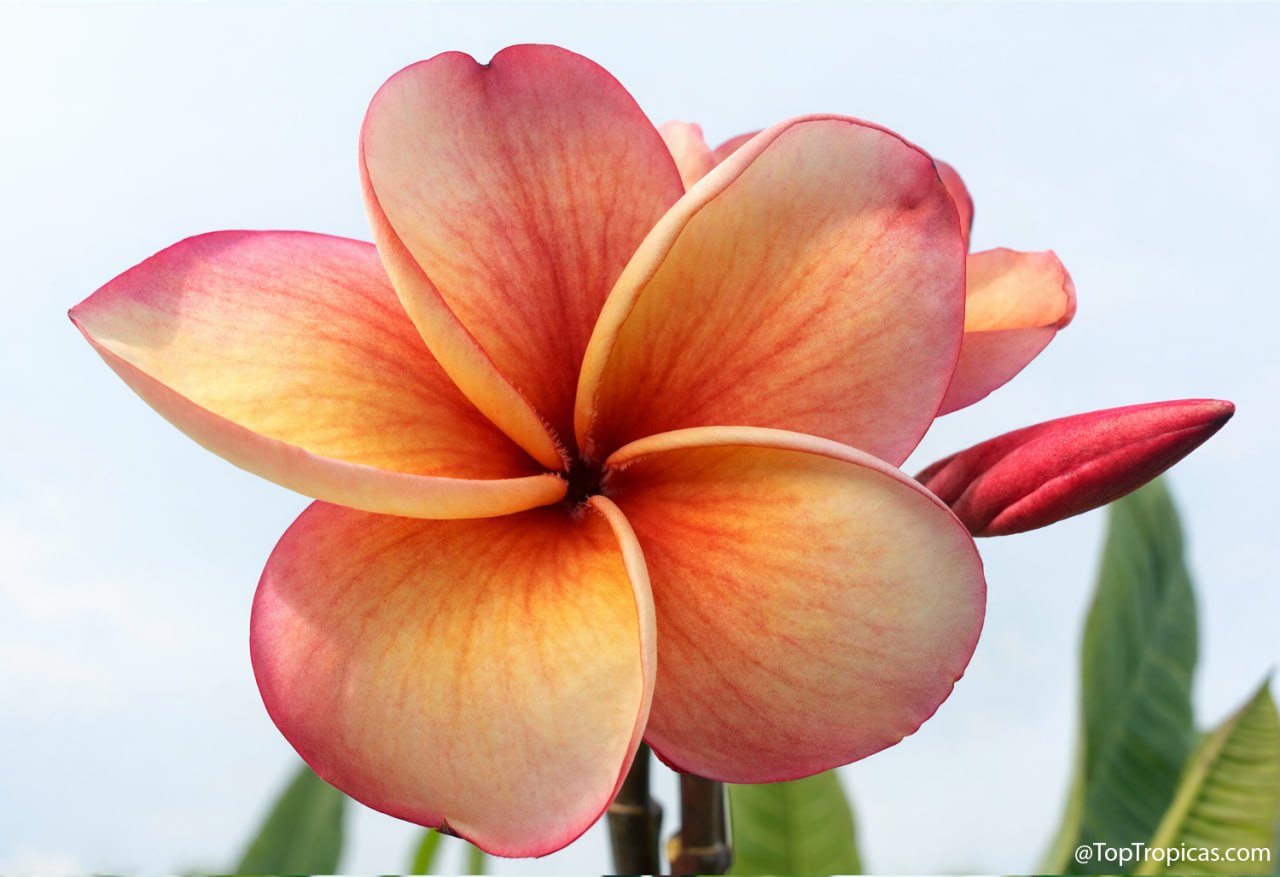
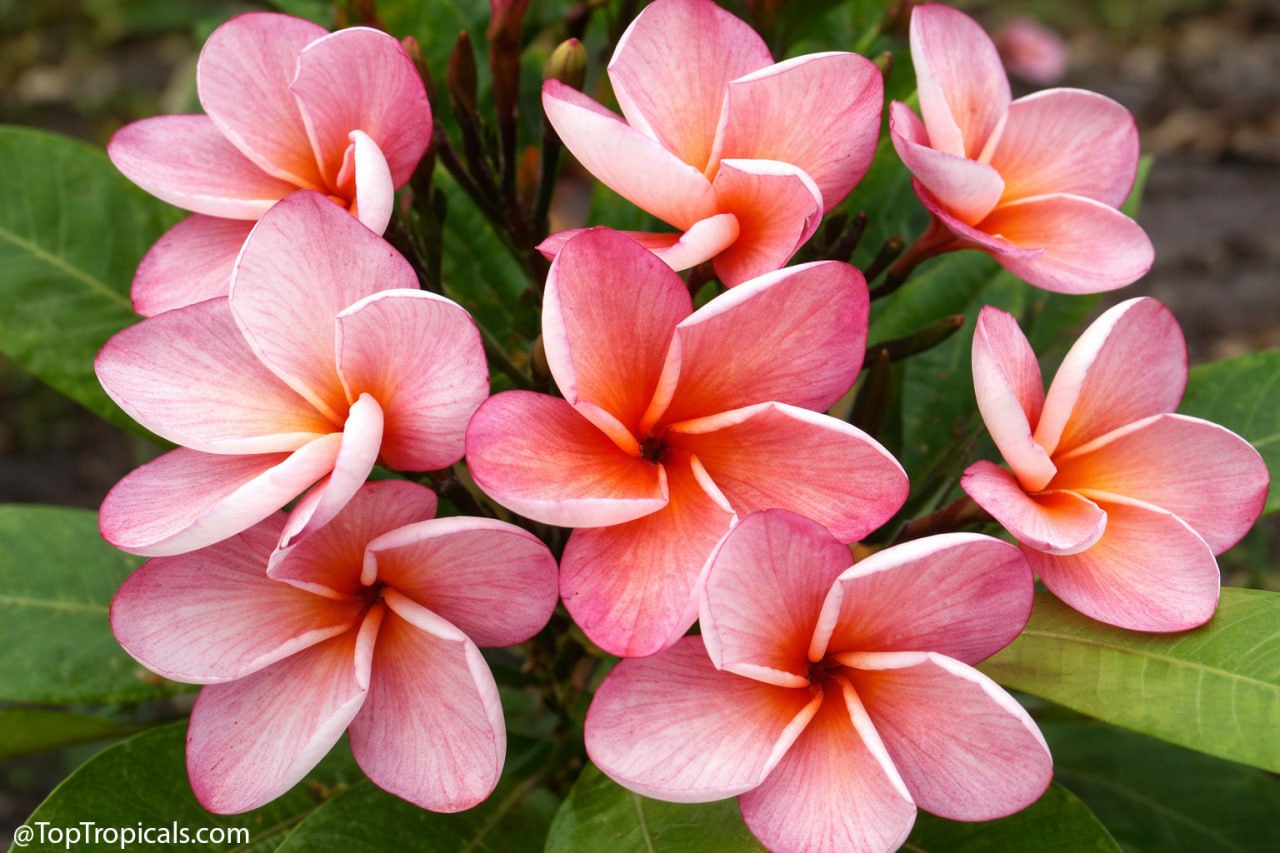
  •  ✦ Plumeria Mui Rainbow - deep orange-red center blending into golden yellow and finishing with pink to magenta edges. Bright, fiery colors with a smooth, glowing transition.
  •  ✦ Plumeria Pink Jaopraya - a bold swirl of red, white, pink, and yellow all in one flower. Complex, eye-catching, and impossible to ignore.
  •  ✦ Plumeria Sunset Symphony - creamy ivory, golden yellow, and coral-pink tones with deeper rose edges, creating a layered sunset effect that shifts from bloom to bloom.
  •  ✦ Plumeria Dook - rich pink petals melting into a glowing orange and golden center. Bright, warm, and full of tropical energy that stands out from a distance.


💡 Plumeria tip: winter dormancy


In cooler months, plumerias slow down and may drop all leaves. That’s normal.
During this rest period, cut watering way back and let the plant sleep.
Growth will restart when temperatures rise.

🛒 Shop Plumeria Collection and Enjoy the fragrant blooms

📚 Learn more:
🎥 How to get endless Plumeria Blooms

#Perfume_Plants #Container_Garden #How_to #Discover #PlumeriaRainbow

Plant Facts

Plumeria alba
Dwarf Plumeria
USDA Zone: 9-11
Large shrub 5-10 ft tallSmall tree 10-20 ftFull sunModerate waterWhite, off-white flowersFragrant plant
🟢 Join 👉 TopTropicals

Date: 29 Apr 2026

Soft peach tones - calm and glowing plumerias

Soft peach tones - calm and glowing plumerias Soft peach tones - calm and glowing plumerias Soft peach tones - calm and glowing plumerias Soft peach tones - calm and glowing plumerias
Soft peach tones - calm and glowing plumerias. Pruning tip 🌈

This set is all about warmth without intensity - soft peach, coral, and golden tones that feel calm, balanced, and easy on the eyes. These are the plumerias you enjoy up close, where the subtle color blends really shine.

🌸 Today's featured plumerias:


  •  ✦ Plumeria Morland - soft pink petals with a creamy yellow center fading into white edges. Gentle gradient with a fresh, radiant look and light fragrance.
  •  ✦ Plumeria Thong Taweechok - warm golden-yellow petals infused with orange and coral, softening into creamy edges with a light pink blush. Smooth, glowing and well-balanced.
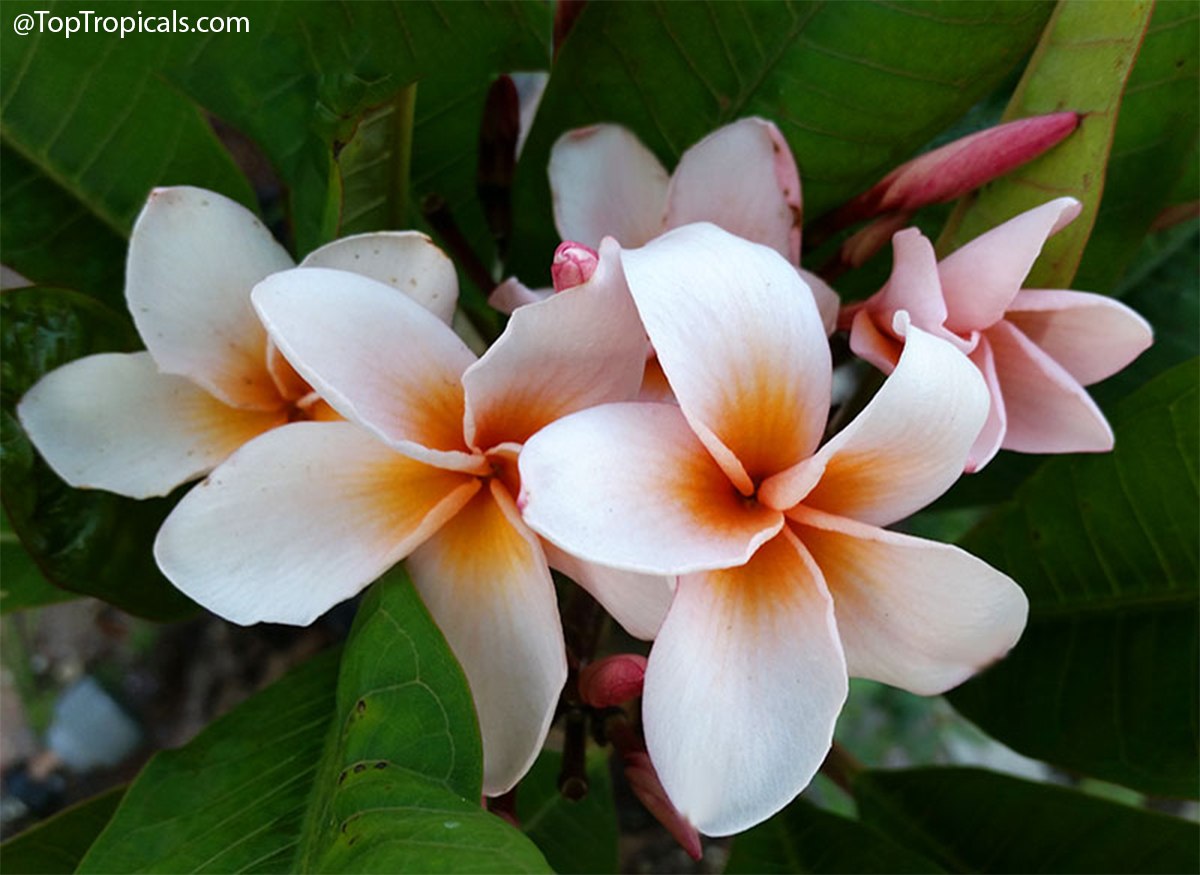
  •  ✦ Plumeria Gred Gaew - soft coral and peach tones with a glowing orange center and a clean white edge. Refined, crisp, and quietly elegant.
  •  ✦ Plumeria Moung Sangeam - creamy white to pale blush petals with a warm golden-orange center and a hint of peach at the edges. Soft, delicate, and naturally graceful.


💡 Plumeria tip: pruning for more blooms


Light pruning encourages branching - and more branches mean more flower tips. Trim after a bloom cycle or in early growing season, and your plumeria will come back fuller, bushier, and ready to produce more flowers.

🛒 Shop Plumeria Collection and Enjoy the fragrant blooms

📚 Learn more:
🎥 How to get endless Plumeria Blooms

#Perfume_Plants #Container_Garden #How_to #Discover #PlumeriaRainbow

Plant Facts

Plumeria alba
Dwarf Plumeria
USDA Zone: 9-11
Large shrub 5-10 ft tallSmall tree 10-20 ftFull sunModerate waterWhite, off-white flowersFragrant plant
🟢 Join 👉 TopTropicals

Date: 7 Oct 2025

⭐ The Winter Stars: 8 Flowering Trees That Steal the Show
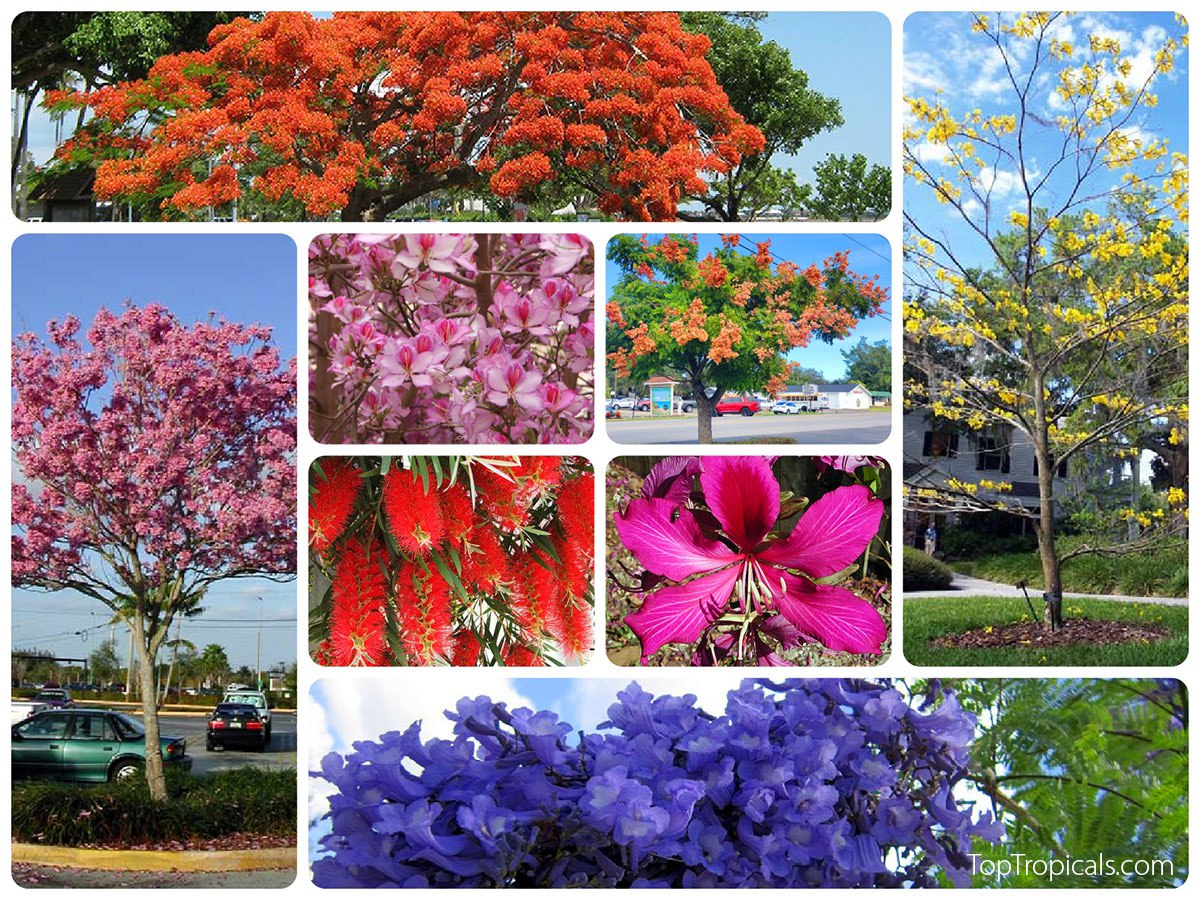
Collage  showing  eight  tropical  and  subtropical  winter-flowering  trees: 
 Royal  Poinciana  with  red-orange  canopy,  Dwarf  Pink  Tabebuia,  Dwarf  Golden 
 Tabebuia,  Pink  Butterfly  Orchid  Tree,  Golden  Rain  Tree,  Weeping  Red 
 Bottlebrush,  Hong  Kong  Orchid  Tree,  and  Jacaranda  with  purple 
 flowers.

8 Best Flowering Trees That Bloom in Winter: Royal Poinciana with red-orange canopy, Dwarf Pink Tabebuia, Dwarf Golden Tabebuia, Pink Butterfly Orchid Tree, Golden Rain Tree, Weeping Red Bottlebrush, Hong Kong Orchid Tree, and Jacaranda with purple flowers.

Royal Poinciana (Delonix regia)

The diva of tropical trees. Huge red-orange flowers blanket the branches from late winter through summer. If you’ve ever seen one in full bloom, you know — it stops traffic. Best in large yards or open spaces, but young ones do great in big pots for a few years. 🛒 Shop
Tatiana: “If you want a tree that makes people say ‘wow,’ this is it.”

Tabebuia chrysotricha – Dwarf Golden Tabebuia

Small tree, big drama. It turns solid gold just before new leaves appear. Blooms while completely bare — a stunning contrast of yellow on brown wood. Perfect for patios, courtyards, and containers. Handles cool nights down to the mid-20s F. Bright, cheerful, and forgiving — the kind of tree that always looks like it’s celebrating. 🛒 Shop

Tabebuia impetiginosa – Dwarf Pink Tabebuia (Pau D’Arco)

The Florida “cherry blossom.” Pink-lavender flowers smother the branches each winter, often before any leaves return. Thrives in sandy soil, tolerates drought, and grows beautifully in large planters or pots indoors near a sunny window. Ideal for seasonal residents or anyone who wants color when everything else is asleep. 🛒 Shop

Jacaranda mimosifolia

If color had music, this would be jazz. Soft, fern-like leaves and cascades of violet-blue trumpet flowers — airy, elegant, unforgettable. Outdoors, it makes a graceful shade tree; in containers, it stays compact with regular pruning. Jacarandas reward patience — they bloom bigger each year. 🛒 Shop

Koelreuteria paniculata – Golden Rain Tree

A favorite for its surprises — golden blooms in summer, pink paper lantern pods in fall, and bronze leaves before rest. Fast-growing, tough, and easy. Loves full sun and moderate water. Great for open lawns or patio tubs. The kind of tree that gives you something new to look at every month. 🛒 Shop

Callistemon citrinus – Bottlebrush Tree

The hummingbird magnet. Bright red, brush-shaped flowers bloom several times a year — sometimes even in cool weather. The dwarf form, ‘Little John,’ stays about 4 feet tall, perfect for pots or small borders. Trim lightly after flowering to keep it compact and colorful. 🛒 Shop
Tatiana: “If you’ve never grown a tropical tree before — start here. It’s the friendliest one.”

Bauhinia variegata – Pink Butterfly Tree

Graceful, fragrant, and forgiving. Its pink-lavender orchid-like flowers open from late winter through spring, filling the garden with color and pollinators. It’s fast-growing, drought-tolerant, and excellent for both ground and pots. Even the buds are edible — a fun bonus for adventurous gardeners. 🛒 Shop

Bauhinia blakeana – Hong Kong Orchid Tree

The queen of them all. Huge magenta-purple blooms that last for months, from fall through spring. Fragrant, clean (no messy seed pods), and perfect for patios or large decorative containers. Give it sun, a little water, and it will reward you with bloom after bloom. 🛒 Shop
Tatiana: “It’s the one tree that never lets winter win.”

A note on grafted Hong Kong Orchid Trees: Most Hong Kong Orchid Trees are grafted, and that’s actually a big advantage. Because they don’t grow from seed, grafted plants mature faster and begin blooming while still small — sometimes within the first year. That makes them perfect for patio pots or small gardens where space is limited.

Bringing the Tropics Home

Whether your garden faces the Gulf or your window faces the snow, these trees let you live in color year-round. Plant them outdoors in warm zones or grow them in pots indoors — they adapt, they bloom, they brighten every corner.

Gardening isn’t about waiting for spring — it’s about finding joy in every season. And when a tree blooms in January, that joy feels twice as sweet.

🛒 Shop Winter Flowering Plants
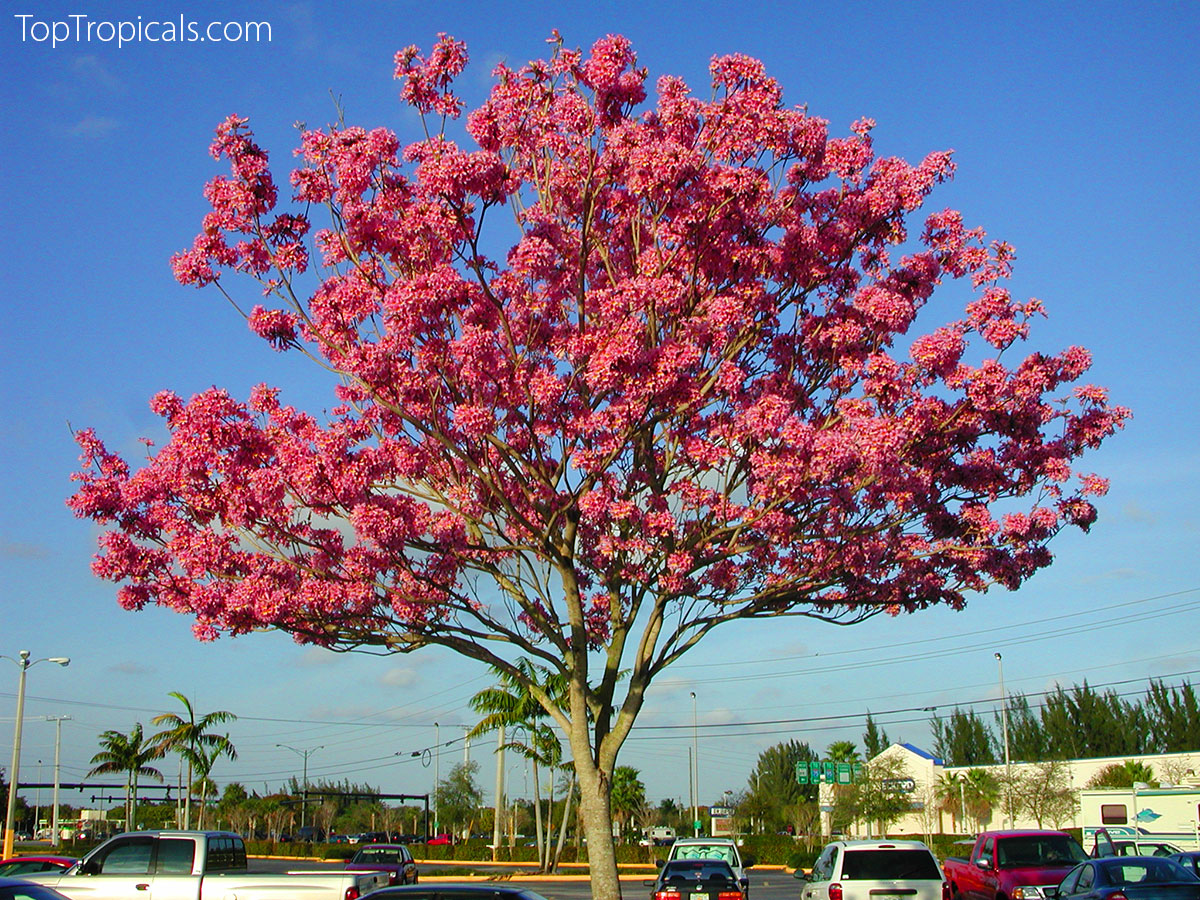
Tabebuia  impetiginosa  -  Dwarf  Pink  Tabebuia,  Pau  DArco,  Taheebo

✍️ Winter Bloomer Q&A

Q: Can these trees really bloom indoors?

Yes! Smaller species like Bottlebrush ‘Little John,’ Dwarf Tabebuias, and many Bauhinias bloom beautifully in pots with bright light or grow lamps.

Q: Do they lose their leaves in winter?

Some, like Tabebuias and Jacarandas, drop leaves right before blooming — it’s normal and part of their charm. Others, like Bottlebrush, stay evergreen.

Q: What fertilizer works best?

We use Sunshine Boosters — gentle, balanced, and perfect for tropicals. Feed every 2–3 weeks during active growth.

Q: How do I know when to water?

Touch the soil! If it’s dry an inch or two down, water deeply. Overwatering is the main mistake with tropicals.

Q: Can they handle frost?

A quick dip into the upper 20s F is fine for most mature trees. Cover young ones or move containers under shelter if colder.

Q: Which are best for beginners?

Start with Bottlebrush ‘Little John’ or Golden Tabebuia — compact, colorful, and nearly foolproof.

Q: When will they bloom?

Usually within few years if they get enough sun and warmth. Grafted plants blooms much sooner

Q: Which of these trees are best for pot growing?

For patios, balconies, or indoor sunrooms, choose the compact or grafted types:

🎥 Watch videos of Dwarf trees in bloom:

Dwarf Golden Tabebuia

Dwarf Pink Tabebuia

🛒 Shop Winter Flowering Plants

Date: 26 Mar 2026

🌸 How to Grow Adeniums Without Overthinking It

By Tatiana Anderson, Horticulture Expert at Top Tropicals with Smokey & Sunshine help

Adenium  desert  roses  blooming  in  greenhouse  during  winter  freeze,  rows 
 of  potted  plants  with  colorful 
 flowers

Adeniums blooming inside the Top Tropicals greenhouse during the record freeze of February 2026 - protected from the cold, kept above 40F, and fed with liquid Sunshine Megaflor. They responded with a spectacular, synchronized winter bloom. Quite a surprize!

✅ Simple rules that actually make them bloom and grow well

  • Light - The more light, the better the growth and flowering. Full sun is ideal, but in very hot climates, filtered bright light keeps plants looking healthier.
  • Water - Water well, then let soil dry on the surface. Sitting in wet soil damages roots, but letting plants dry out too often can push them into early dormancy.
  • Pot and shaping - Use a shallow pot with excellent drainage. To develop a sculptural caudex, lift the plant slightly each time you repot and remove some of the top soil so upper roots become exposed. Over time, this creates a thicker, more prominent base.
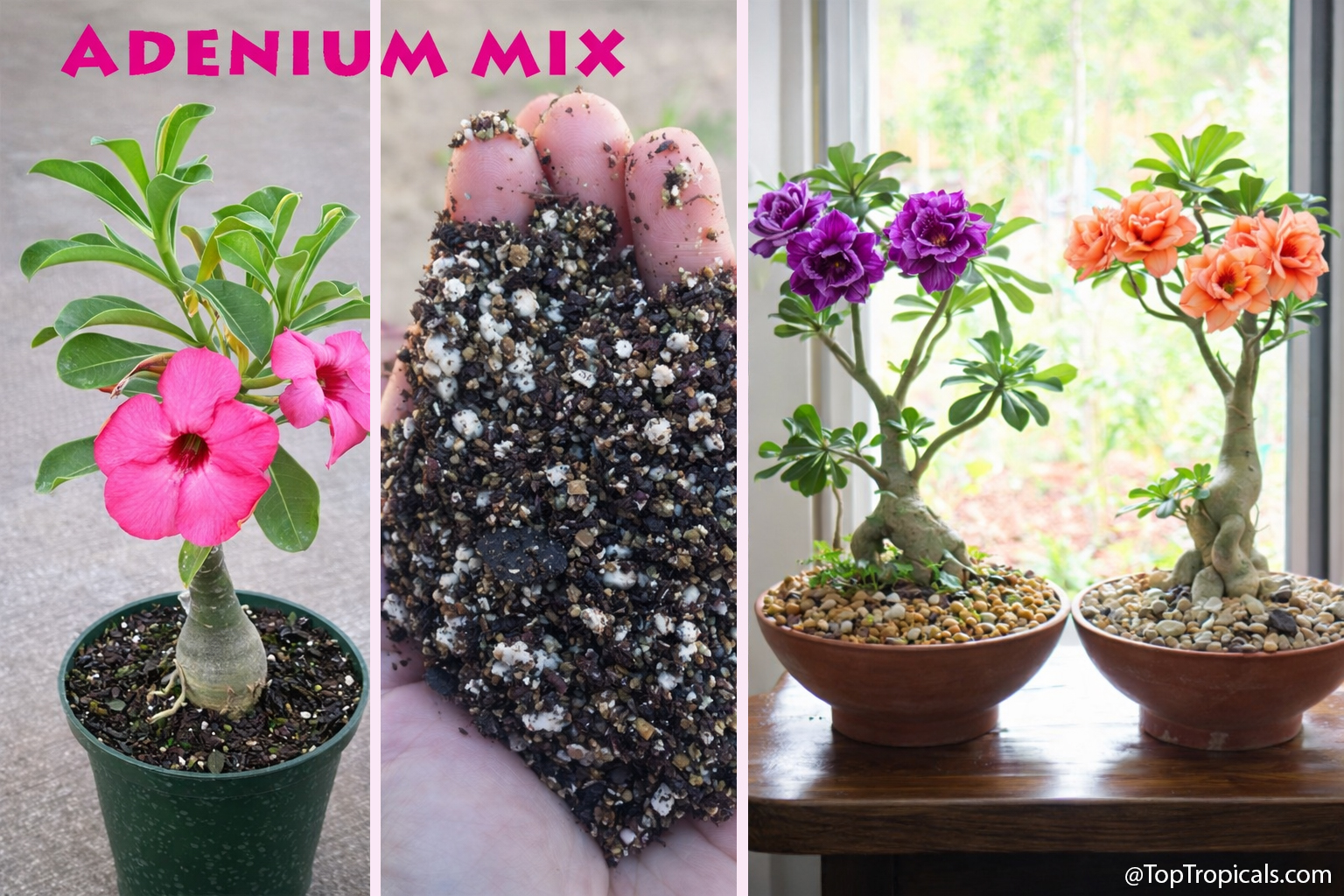
  • Soil - Use a fast-draining Adenium potting Mix.
  • Adenium  desert  rose  plant,  fast  draining  soil  mix  in  hand,  and  bonsai 
 style  adeniums  blooming  indoors

    Healthy adeniums start with the right foundation - a fast-draining soil mix and careful watering only when dry to avoid caudex rot.

  • Cold hardiness - Adeniums are tropical and do not tolerate frost. Keep above 40 F. Brief drops to mid 30s may be tolerated if dry, but cold and wet conditions can damage or kill the plant. In cooler climates, bring indoors or protect during cold nights.
  • Indoor winter care - Move plants indoors before cold nights. Place in the brightest spot possible, ideally a south-facing window. Or use additional lighting. Water very lightly and less often, as growth slows. Do not fertilize during dormancy. Some leaf drop is normal in winter.
  • Freshly  grafted  Adenium  desert  rose  plants  in  dormancy  arranged  in 
 greenhouse  rows  with  bare  branches

    Freshly grafted adeniums in dormancy - a crucial resting phase. Keep watering low (once a month) and avoid overcare; this is the time to let them rest and etablish.

  • Feeding - Adeniums respond best to liquid fertilizer. We apply Sunshine Megaflor Booster with each watering throughout the year. During dormancy, watering is reduced, so fertilizer use decreases accordingly. Consistent, light feeding promotes strong roots, a thicker caudex, and improved flowering.
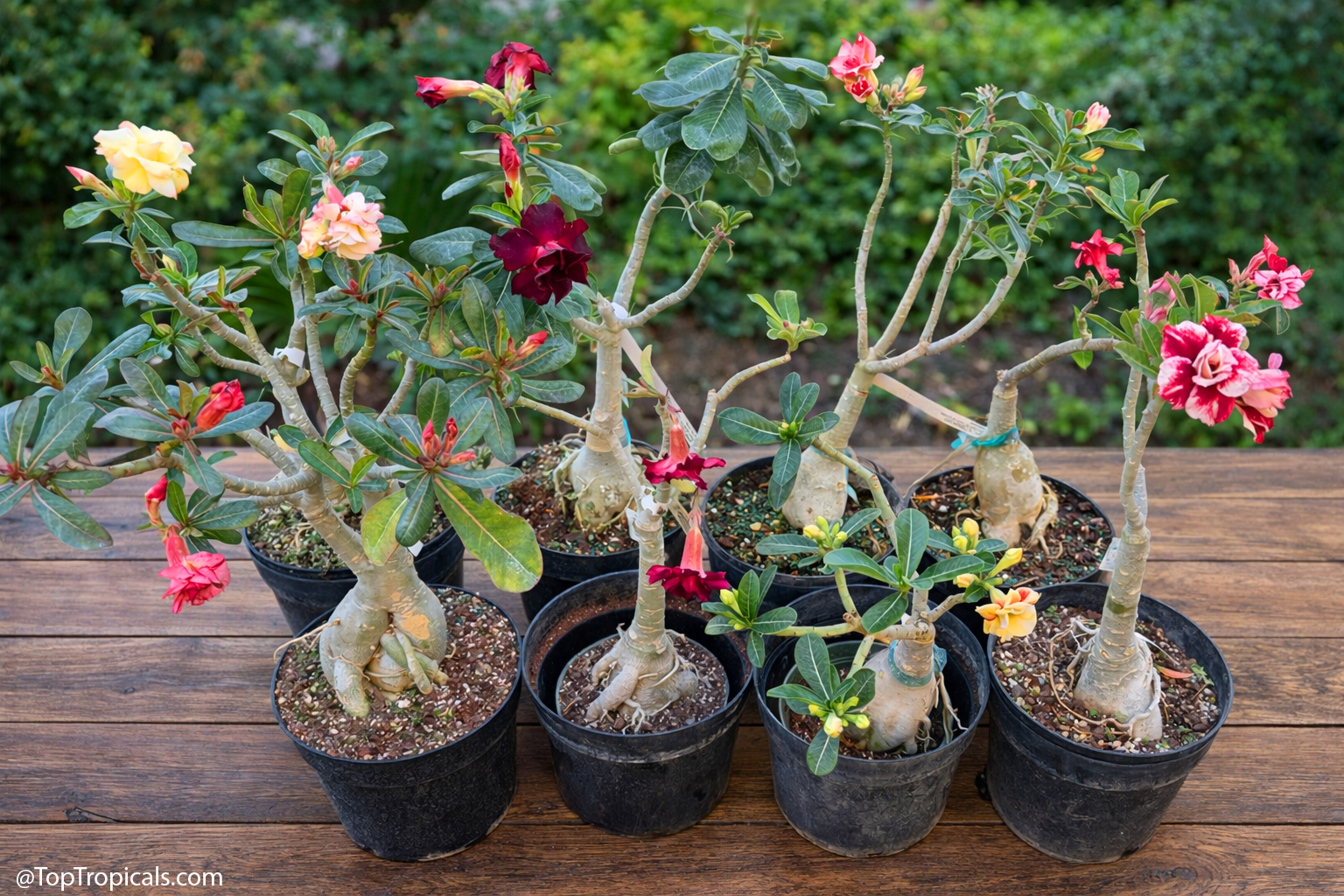
  • Pruning - For multiple blooms, regular pruning is essential. After flowering, cut back long or leggy growth to stimulate branching. Each new branch can produce more buds, leading to a much fuller bloom in the next cycle.

Pruned  and  unpruned  Adenium  desert  rose  plants  showing  difference  in 
 branching  and  flowering

Pruned vs. unpruned - the difference is clear. The four plants on the left were trimmed 6 months ago, while the two on the right were not. Same species, very different results.

✍️ Learn more about Adeniums from our Blog

🎥 Watch videos of Adenium Rainbow

Free Shipping on Adeniums
Add bold color and unique forms to your collection with no extra shipping cost.

🛒 Explore Exotic Adenium varieties

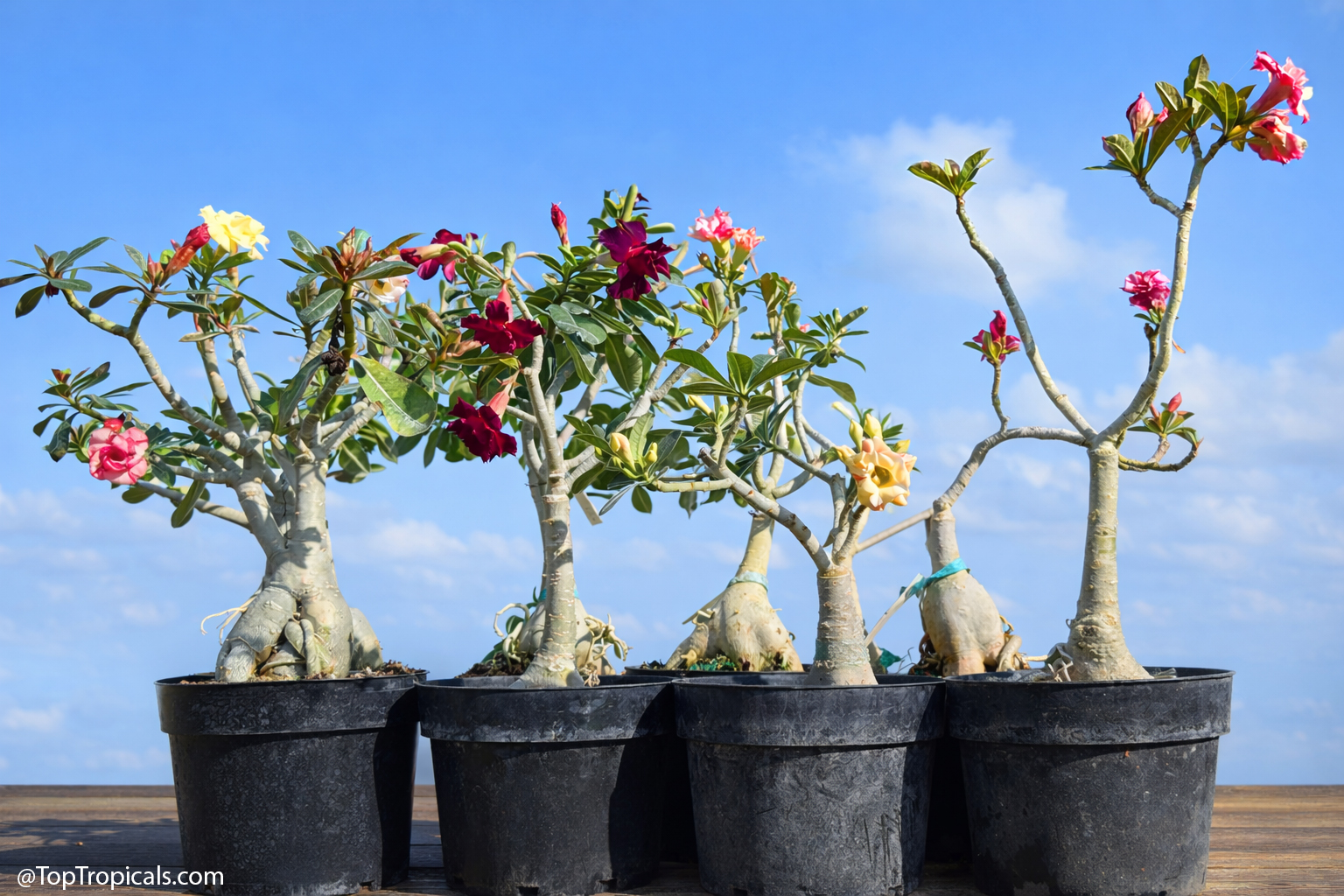
Leggy  Adenium  desert  rose  plants  with  sparse  branching  and  flowers, 
 ready  for 
 pruning

These Adeniums are screaming for pruning so they can bush out and produce more blooms