Garden Blog - Top Tropicals

Date: 28 Dec 2022

The food of the Gods:
A legend of the Guanabana
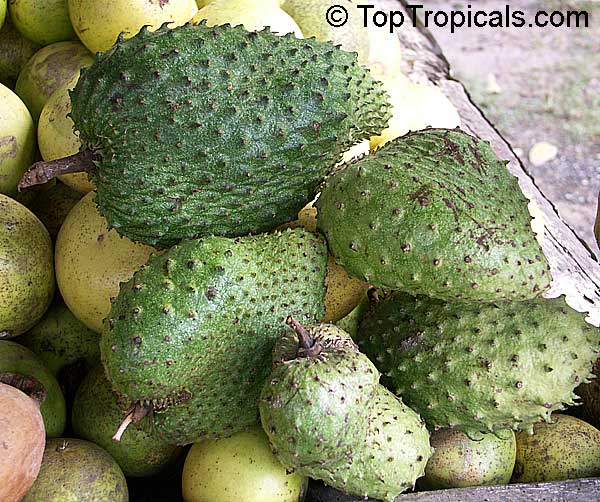
Guanabana  fruit

Grow Your Own Food

Guanabana, also known as Soursop, is a tropical fruit native to Central and South America. It is known for its sweet, juicy flesh and has a variety of medicinal properties.

According to legend, Guanabana was once a rare and coveted fruit that only grew in the highest reaches of the Andes Mountains. It was said to have mystical powers and was believed to be the food of the Gods. Those who ate the fruit were said to be blessed with good health and long life.

One day, a young shepherd boy came across a guanabana tree growing in a remote valley. He plucked a fruit from the tree and tasted it, finding it to be the most delicious thing he had ever eaten. The boy returned to his village and told everyone about the magical fruit he had discovered. Soon, word of the Guanabana spread far and wide, and people came from all over to try the fruit for themselves.
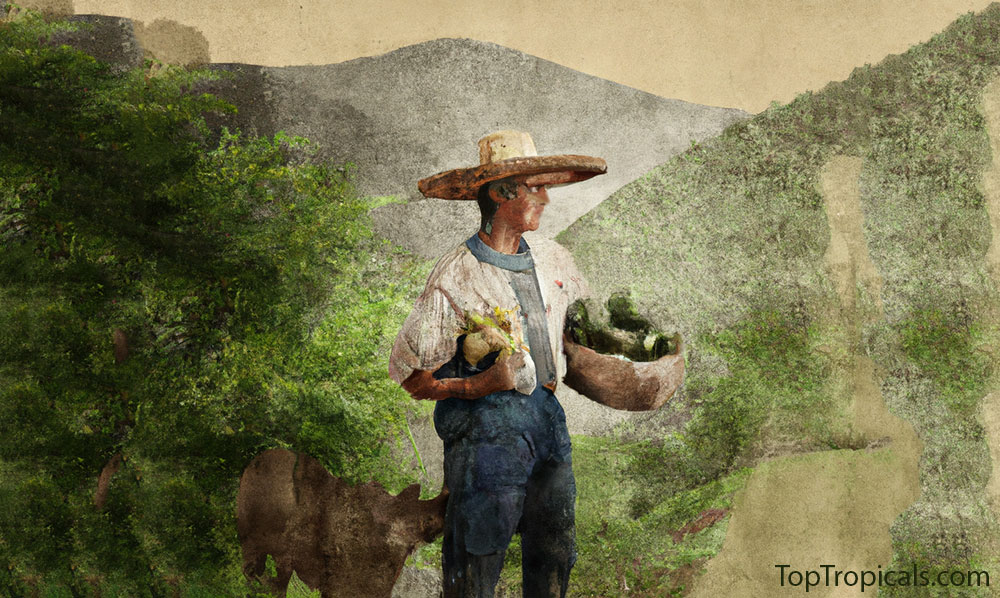
Painting  of  a  shepherd  in  a  valley  holding  guanabana  fruit

As the demand for Guanabana grew, the fruit began to be cultivated and grown in other parts of the world. Today, it is enjoyed by people all over the world and is known for its unique flavor and health benefits.

Download Article from Tropical Treasures Magazine: How to grow Guanabana indoors. Hand-pollinating and fruiting.
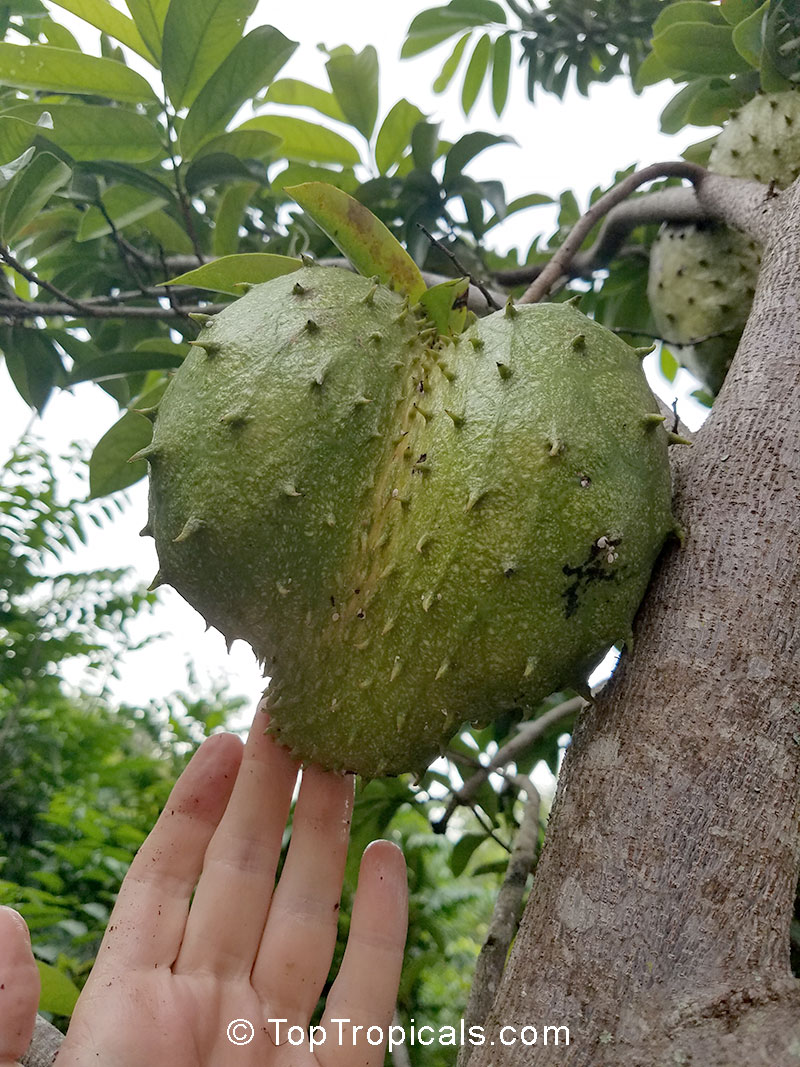
Guanabana  fruit  on  a  tree  by  a  hand

Date: 13 Apr 2021

Barbados Cherry:
equal to 65 oranges!

by Alex Butova, the Witch of Herbs and Cats

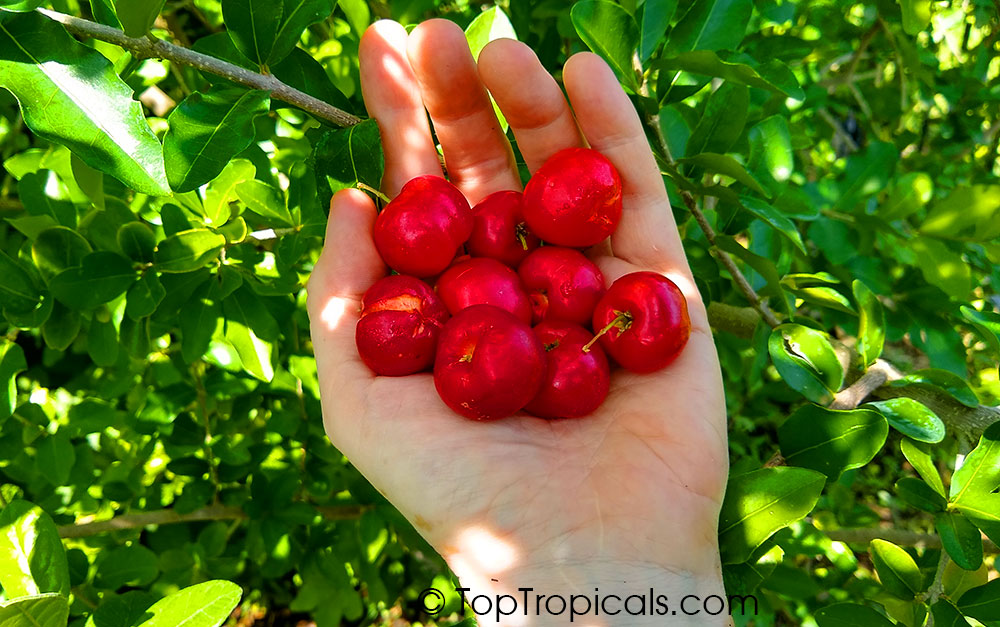
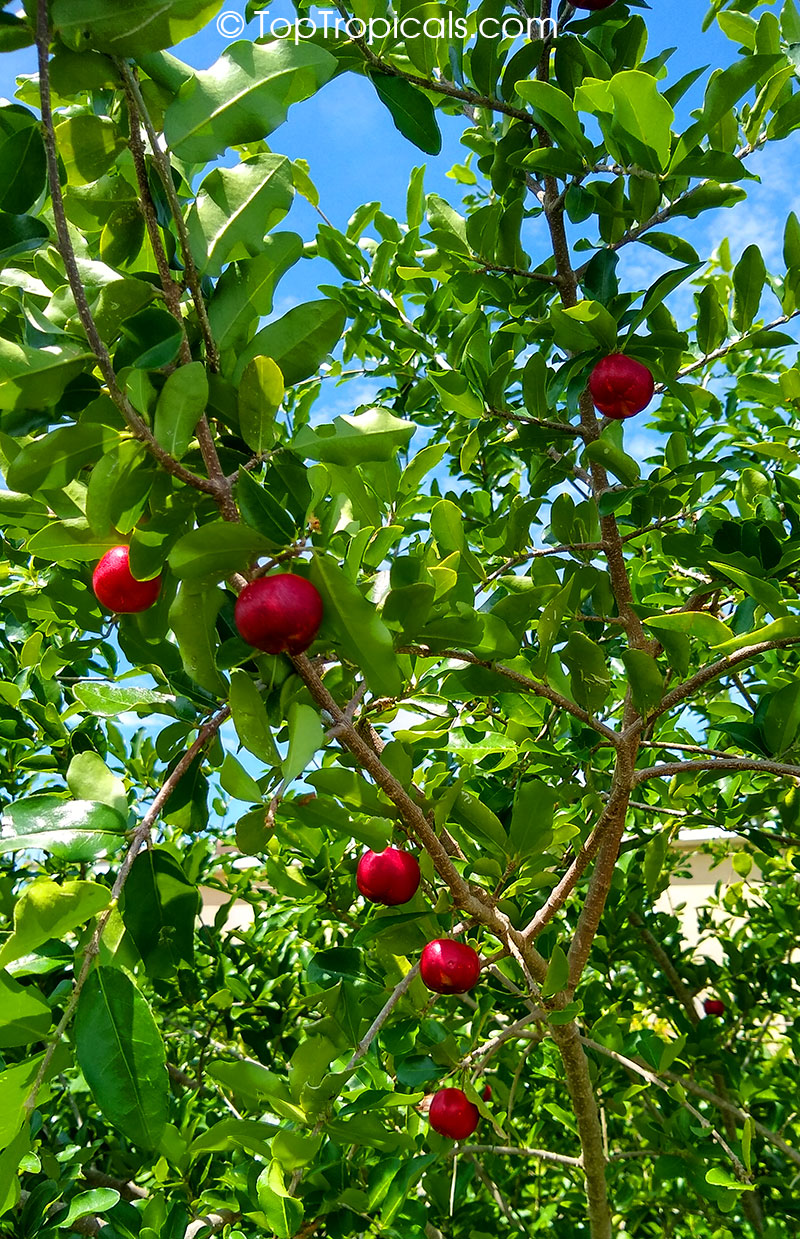
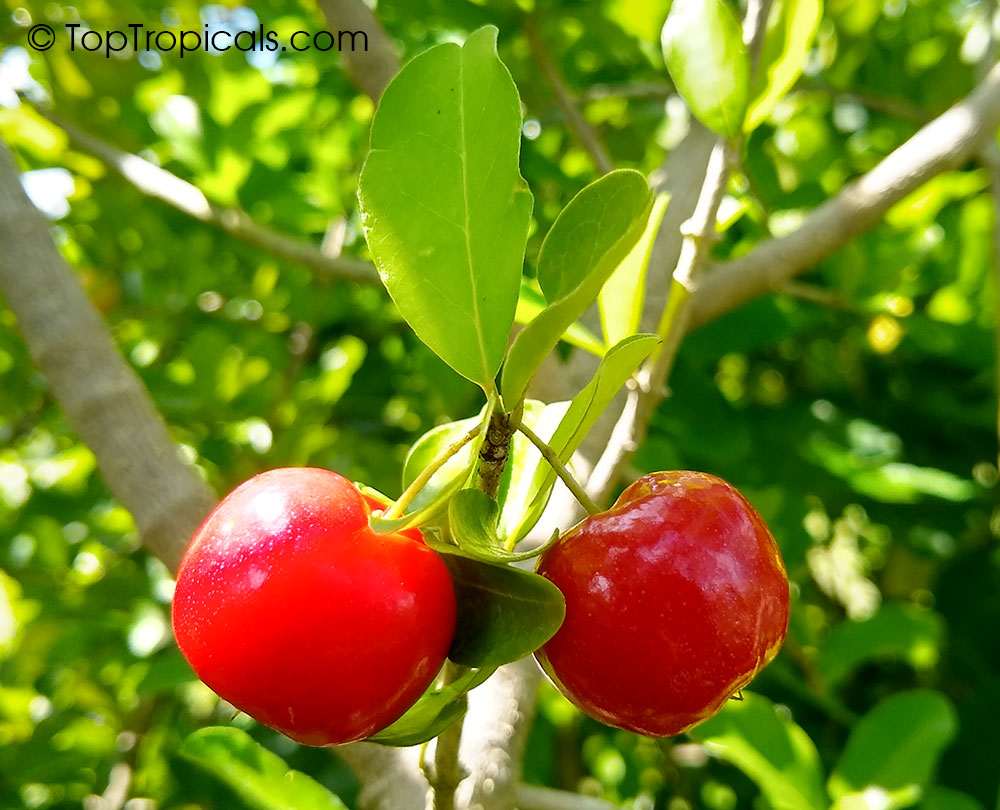
...If you are looing for a low-growing tropical fruit tree that's quite colorful in fruit and starts fruiting right away - plant Barbados Cherry...
...Small, bright red, berry-sized fruit has a vitamin C content up to 65 times that of an orange! A single fruit contains the minimum daily recommended vitamin C requirements...
...Barbados Cherry is very easy to grow and is generally free of pests, diseases, and any problems. It is drought tolerant and requires very little care. And the best part is, it will fruit for you right away! As small as 2"tiny plant can bear fruit!..

CONTINUE READING >>

Date: 8 Jul 2020

Grafted fruit trees for Hawaiian gardens

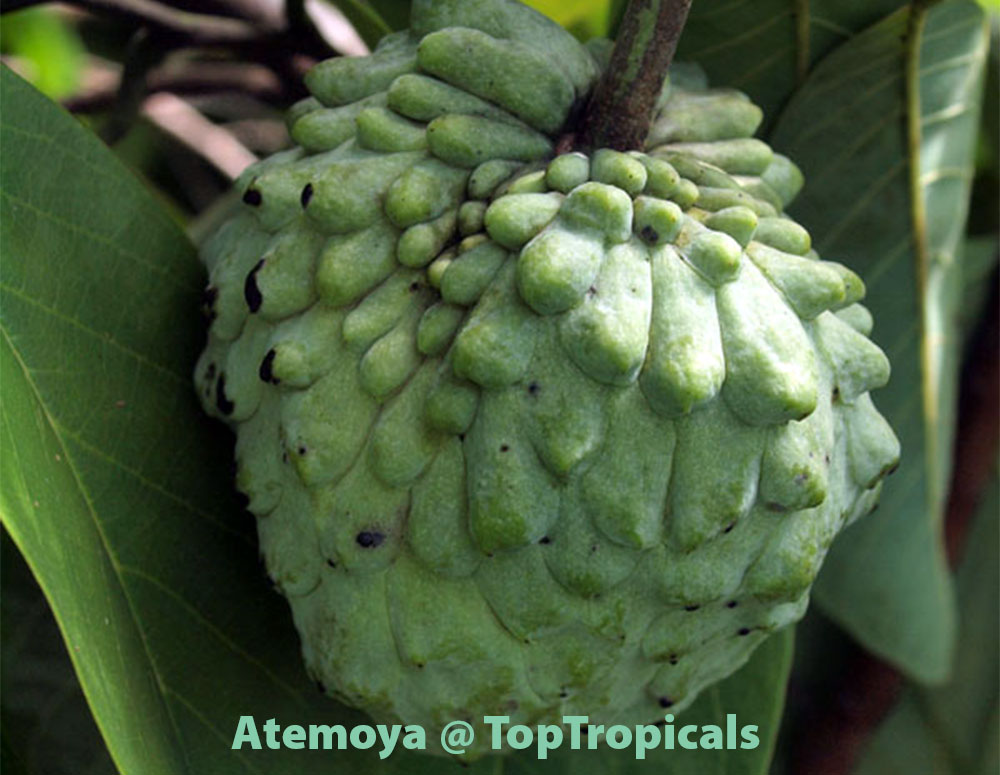
In the photo: Atemoya, one of the Annonas - fruit lover favorites.

Q: Aloha guys, I purchased a Diospyros digyna - Black Sapote grafted var. Black Beauty from you and am checking to make sure it will fruit by itself and not need both sexes. Also checking to see if the grafted atemoya I bought from you will fruit at sea level (where I'm at) or if I should give it to a friend who is above 1,000 so it will fruit? My grafted Maimi soursop is thriving! Looking at getting a grafted jackfruit from you all next.

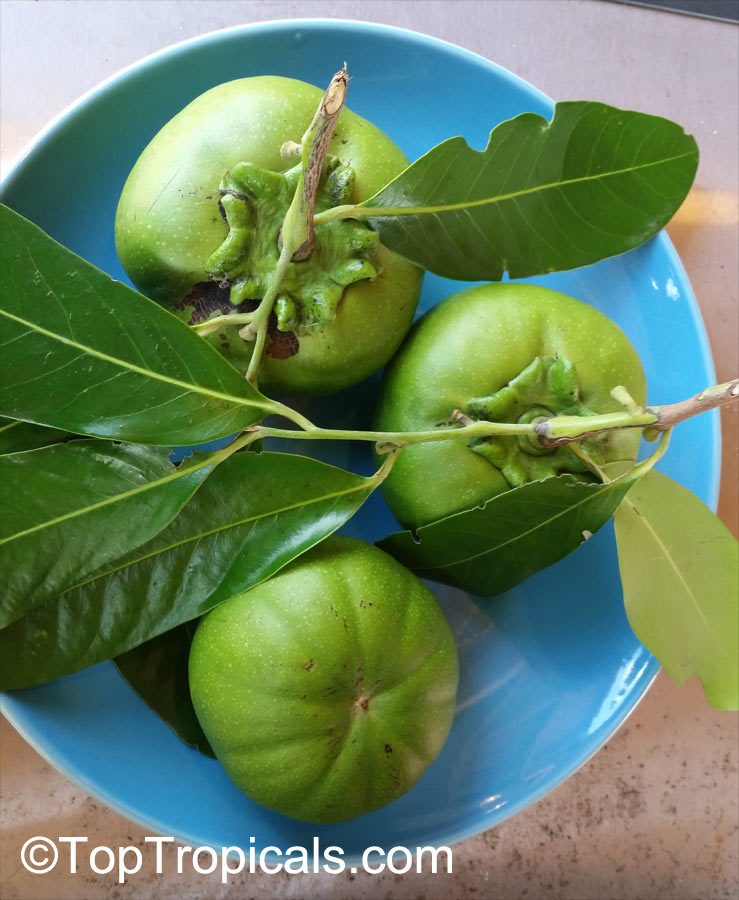
A: Black sapote Black Beauty does not need a second plant to produce fruit. Grafted trees should be flowering and setting fruit right away, or sometimes on the second year.
Atemoya does not require high elevation for fruiting. It is a hybrid Annona squamosa x Annona cherimola (A. cherimola species prefers higher elevation) so Atemoya is usually is happy at sea level.
Congratulations with your Soursop! It should be really happy in your location.

As for grafted Jackfruits, this is the list of varieties we usually carry. Since many of them are very rare, they sell out quickly once we get new arrivals. If you are looking for a specific variety, I strongly recommend to add it to your wishlist (click on "Notify me when available") and you will receive email from us as soon as we have it in stock, so you will be the first one to know about it!

Our favorite Jackfruit varieties (and also hot sellers)

Black Gold
Borneo Red
Crispy
Dang Rasimi

We also suggest to get a Kwai Muk (while we still have it!) - the most delicious fruit, and it should do well in Hawaii.

In the photo: Black Sapote

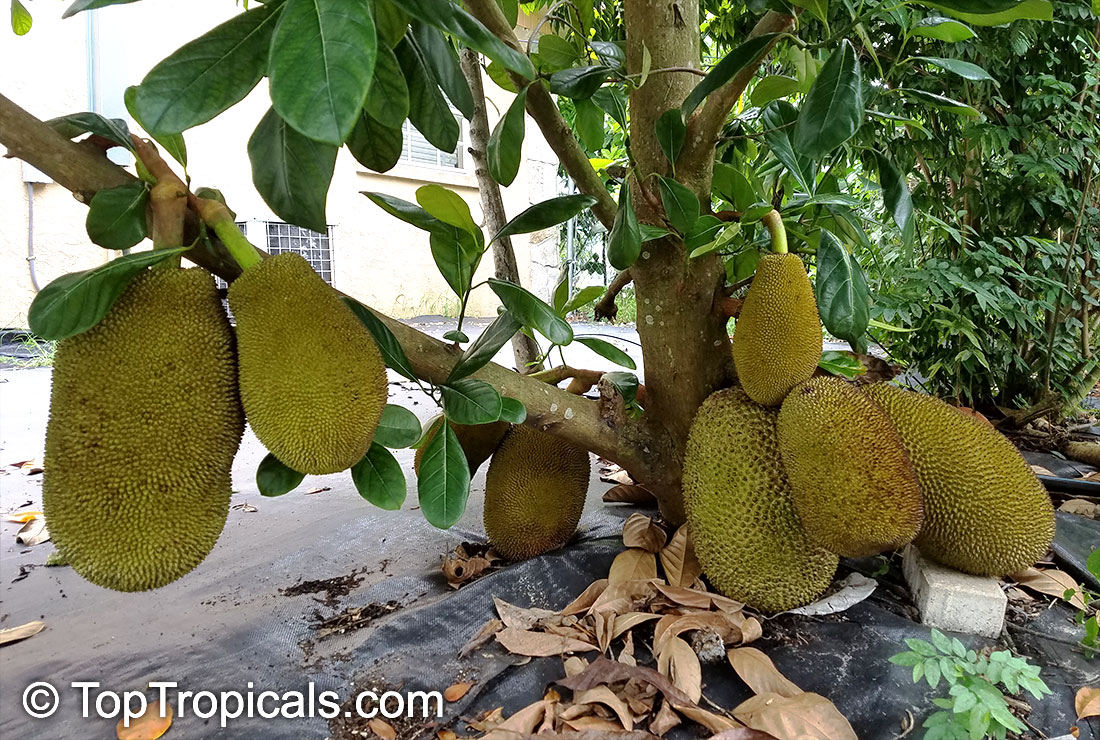
In the photo: Jackfruit at TopTropicals Garden in Ft Myers, FL

Date: 29 Sep 2024

Discover three must-have fruit
for every tropical garden

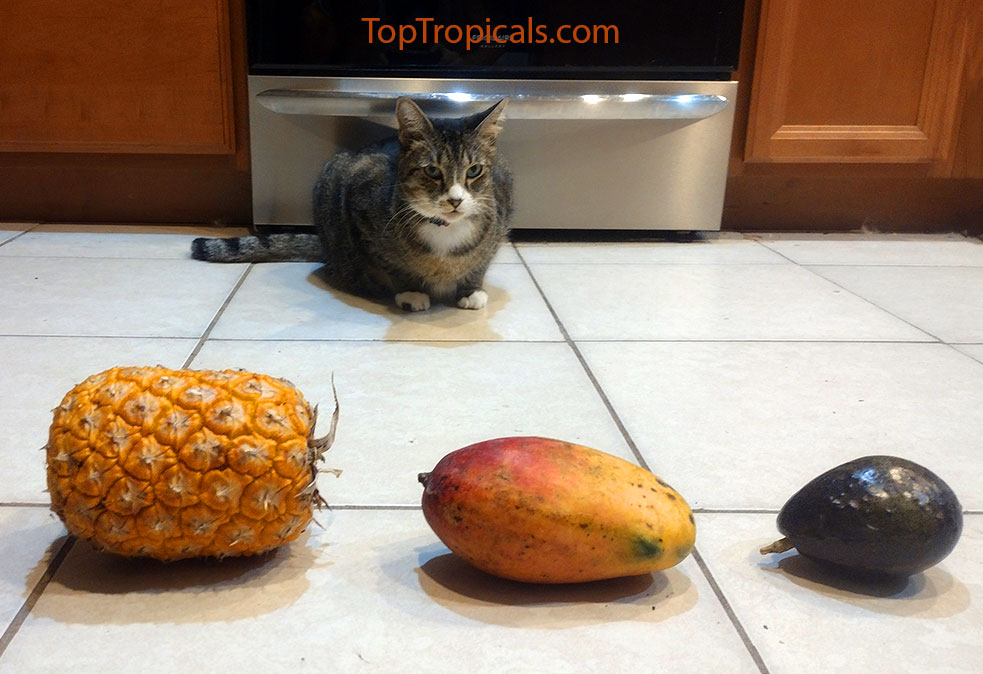
Cat  with  tropical  fruit

Q: I love tropical fruit and want to plant all of them but I have room for only a couple of trees. Help me make the best selection.

A: Here is your perfect list for 2+ fruiting plants: every tropical garden must have a Mango Tree, an Avocado Tree, and - you can plant as many as you want - Pineapples! And here is why...

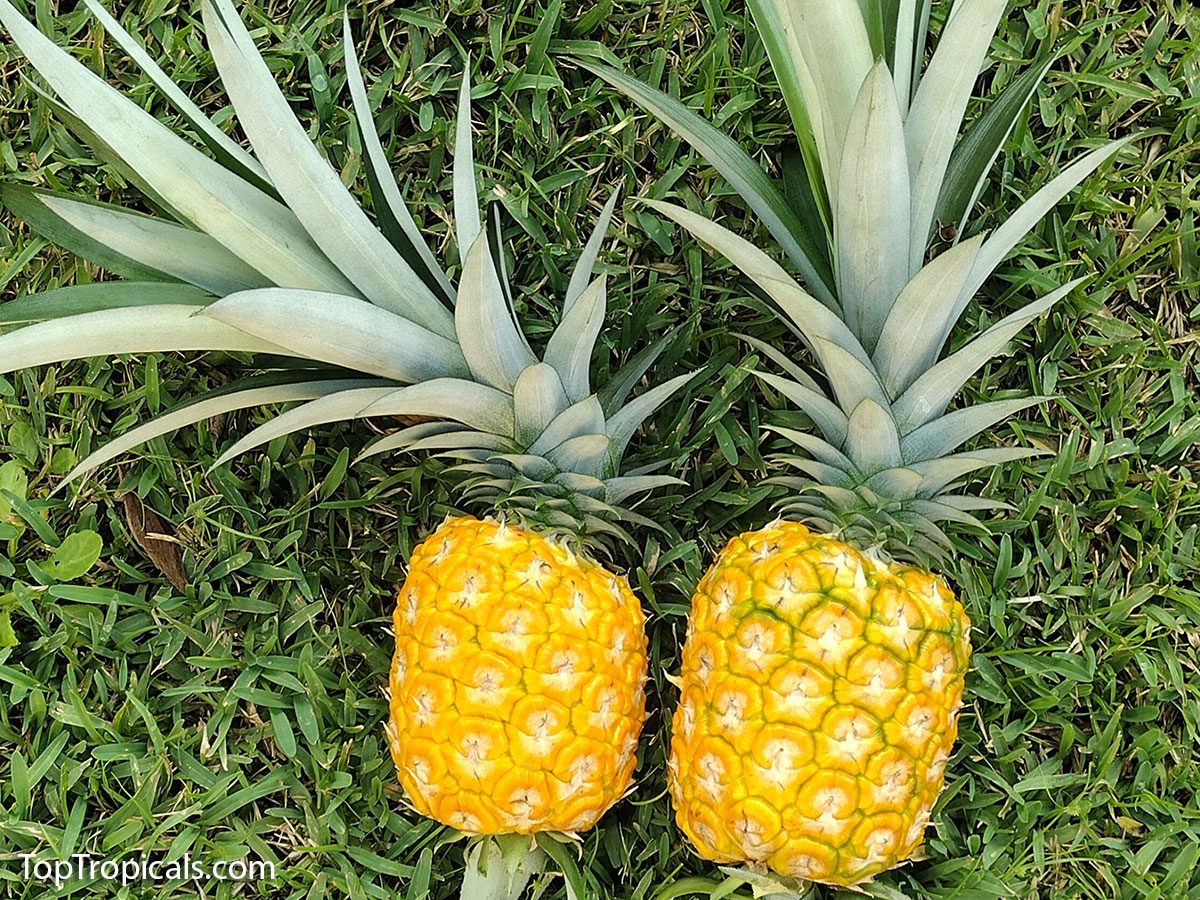
1. Pineapple

Pineapple is a tropical favorite that's incredibly easy to grow, making it a perfect choice for beginners. With minimal care, Pineapples don't take mush space, you can grown them underneath other fruit trees. Plant good varieties, and when you get your crop, plant the tops and you will have your little Pineapple plantation in no time: you'll enjoy sweet, juicy fruit from those little babies in about 18-24 months. Freshly harvested pineapples are delightful in smoothies, salads, or grilled, adding a tropical flair to your garden.

Pineapple

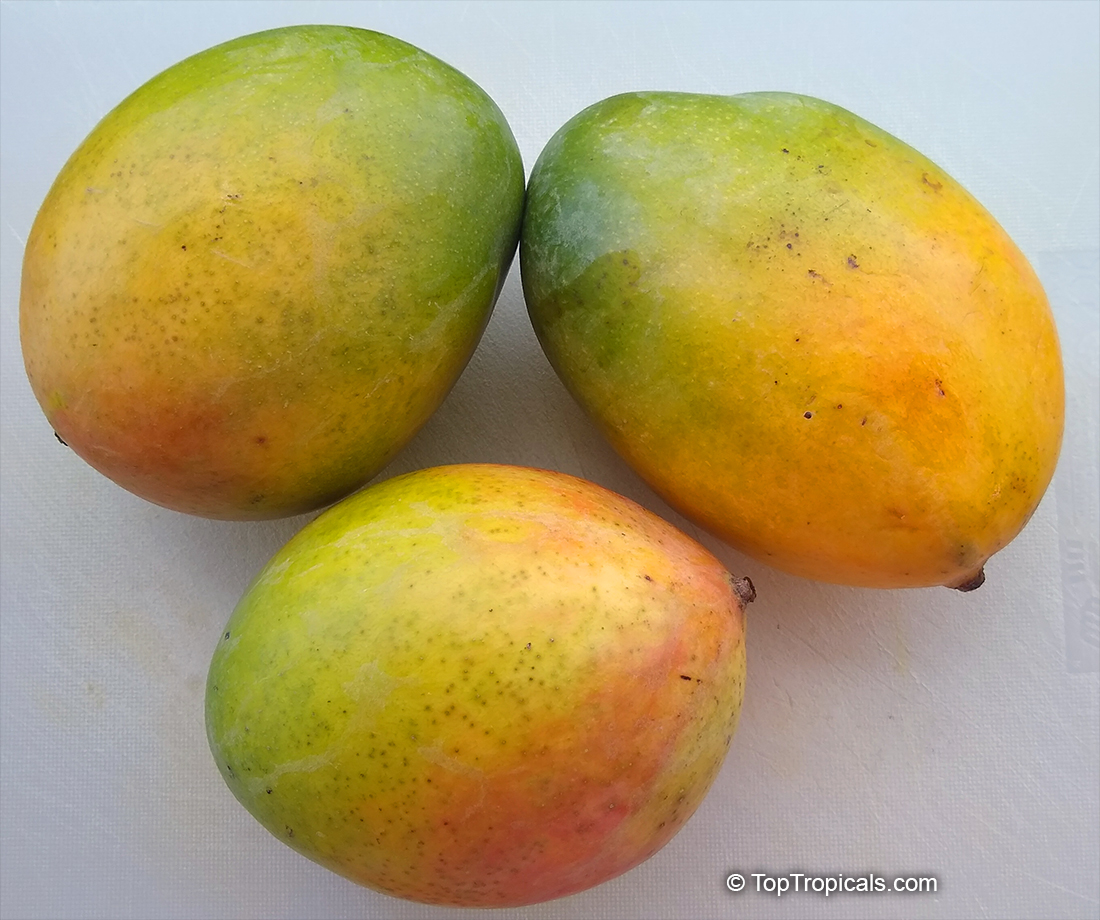
2. Mango

Mango trees are not only a staple in tropical gardens but are also easy to cultivate. They flourish in sunny spots and well-drained soil, requiring little maintenance once established. These vigorous trees can yield an abundance of juicy, flavorful fruit in just a few years. They are perfect for fresh eating or adding to salsas and chutneys. Condo varieties are dwarf trees and can be grown in containers.

Mango  fruit

3. Avocado

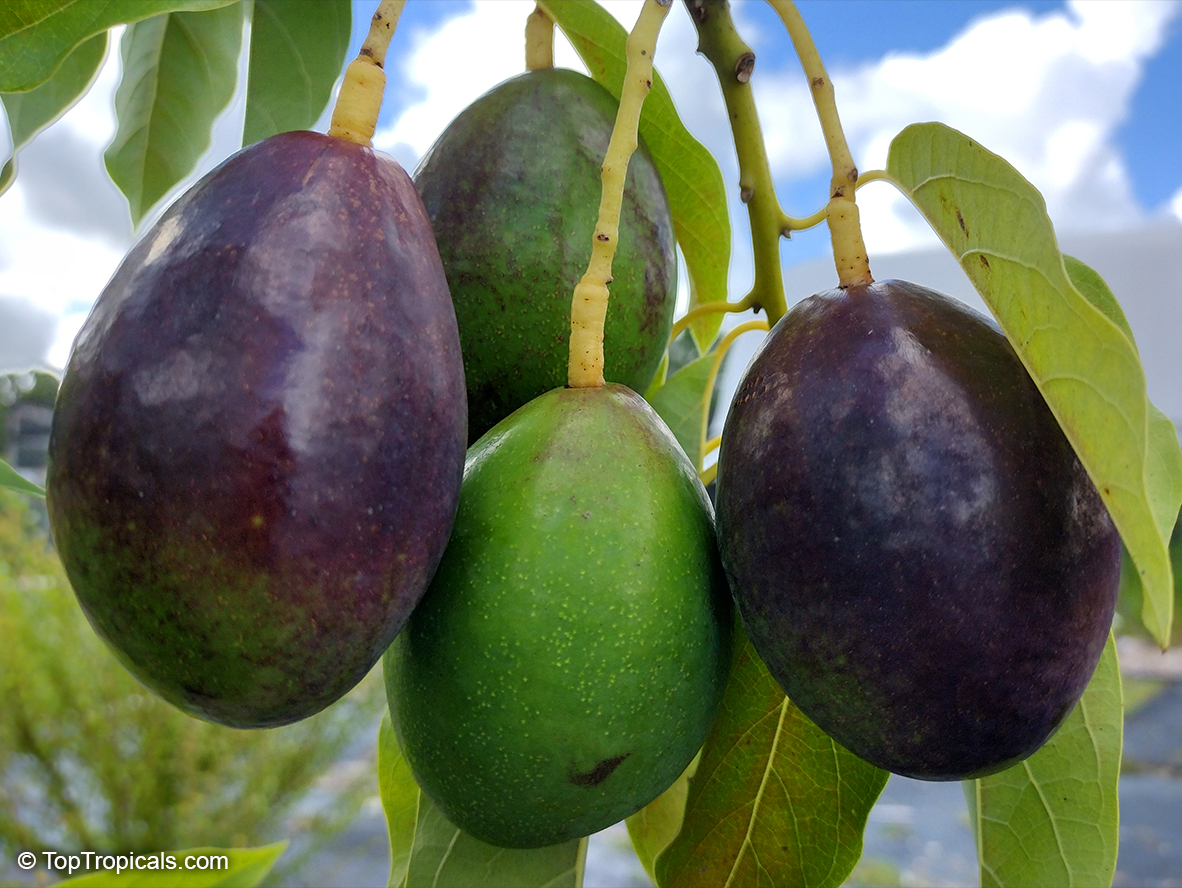
Avocado trees are fun to grow and add both beauty and nutrition to tropical gardens. Grafted cultivars start yielding fruit within a few months with proper care. The rich, creamy avocados are a culinary favorite, perfect for salads, spreads, and smoothies. With their lush foliage and bountiful harvests, avocado trees are a fantastic choice for gardeners looking for ease and abundance.

Avocado  fruit

Date: 1 Nov 2025

Tropical fruits that help you sleep better

Tropical fruits that help you sleep better: Cherries, Pineapple, Banana

Tropical fruits that help you sleep better: Cherries, Pineapple, Banana

🍒 Tropical fruits that help you sleep better


🌱 Looking for a natural way to fall asleep faster? Skip the pills and head for the fruit bowl. Some tropical fruits are surprisingly rich in melatonin, the hormone that tells your body it's bedtime. According to a study referenced by New York City Nutrition, eating melatonin-rich fruits about an hour before bedtime can naturally support better sleep quality.

😴 Melatonin naturally rises at night, helping you feel sleepy and cooling your body temperature. But things like blue light from phones, jet lag, or late-night stress can throw it off. That’s where certain fruits can help - they either contain melatonin or boost your body’s ability to make it.

🍒 Cherries


Both sweet and tart cherries are sleep boosters. Tart cherry juice is especially effective because it’s concentrated - studies show it can raise melatonin levels and increase total sleep time. Just go easy on added sugar. Try pairing the juice with almonds or cheese to keep your blood sugar steady before bed.

🍍 Pineapple


In one study, people who ate pineapple had a big jump in melatonin levels just two hours later. It’s also loaded with vitamin C and enzymes that aid digestion, making it a nice evening snack. Have it with a bit of protein, like yogurt or nuts, to avoid a sugar spike.

🍌 Banana


Bananas don’t contain much melatonin on their own, but they help your body make it. They’re full of tryptophan and magnesium, both of which support serotonin and melatonin production. A banana before bed can calm muscles and nerves - no wonder it’s a favorite natural sleep aid.

✅ Bottom line


A small fruit snack in the evening - cherries, pineapple, or banana - can help your body settle into sleep mode naturally. Eat it about an hour before bed, keep screens dim, and let nature do the rest.

🛒 Grow your own fruit and sleep better

📚 Learn more:
#Food_Forest #Remedies #Discover

🟢 Join 👉 TopTropicals