Garden Blog - Top Tropicals

Date: 5 Jan 2026

A  tuxedo  cat  planting  a  small  shrub  in  a  tropical  garden  while  a  ginger
    cat  relaxes  nearby  with  coffee  and  donuts,  illustrating  winter  planting  in 
 a  warm 
 climate.
Sunshine: January might feel warm, but its still winter. Wool socks, scarf, hot coffee.
Smokey: You get warm when you work. Plant now so roots are established before spring growth starts.
Sunshine: Alright. Lets see who stays warmer - you digging or me with coffee.

🌴 Why winter planting works in a warm climate

By our plant expert Tatiana Anderson

We are lucky to live in a warm climate. This is how I think about the seasons here. Winter is for roots. Spring is for growth. Summer is for managing heat and water.

So if we want plants that handle summer better, we plant them in the season that gives them the best start. Winter here is comfortable. The soil stays workable. The days are mild. And plants are not being stressed by heat. That is exactly why winter is the best time to plant in Florida and other warm areas.

If we use this season well, plants go into spring already settled instead of trying to catch up. This is what I like to plant now, and why.

🟢 Trees first. Anything that will be in the ground for years. Fruit trees, shade trees, flowering trees. When we plant them in winter, they can focus on roots before the spring growth surge starts. By the time spring arrives, the tree is anchored and ready to grow on top.
Examples: mango, avocado, Eugenia cherries, jackfruit, sapodilla, longan, lychee, canistel.

🟢 Shrubs next. Shrubs establish faster than trees, but winter still gives them an advantage. They settle in quietly before the spring flush and bloom cycles begin. That usually means steadier growth and fewer problems once heat returns.
Examples: gardenia, jasmine, brunfelsia, hibiscus, clerodendrums.

🟢 Vines are often overlooked. Vines want to grow fast when spring starts. If the root system is not ready, you get weak growth and frustration. Planting vines in winter gives them time to build a foundation first, so spring growth has support.
Examples: Rangoon creeper, stephanotis, Petrea, Mexican Flame Vine.

🛒 Explore cold tolerant plants

Date: 19 Dec 2016

Update on SUNSHINE in a Bottle

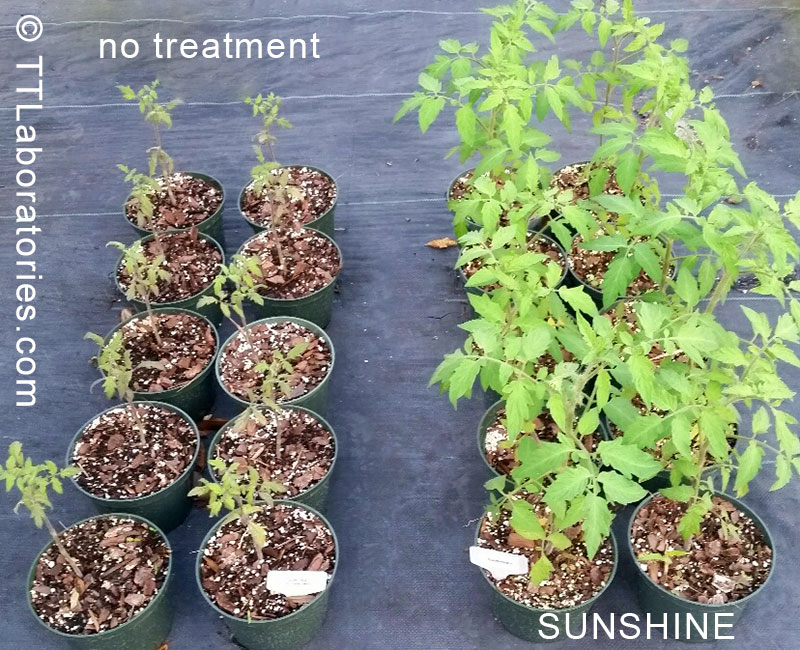
Photos of our experiments. These tomato seedlings potted 4 weeks ago, and batch on the right treated with standard recommended dose of SUNSHINEâ„¢ twice (within one week period). They are setting buds and flowers, while untreated plants (batch on the left) have much slower growth rate and are still far from flowering.
See TTLaboratories website and order SUNSHINE boosters.

Date: 24 Oct 2016

Overwintering Adeniums outside of tropics

Q: We bought several adenium plants from you. We are moving to the Denver area of Colorado. How can we make sure the plants survive? Should we use a green house?

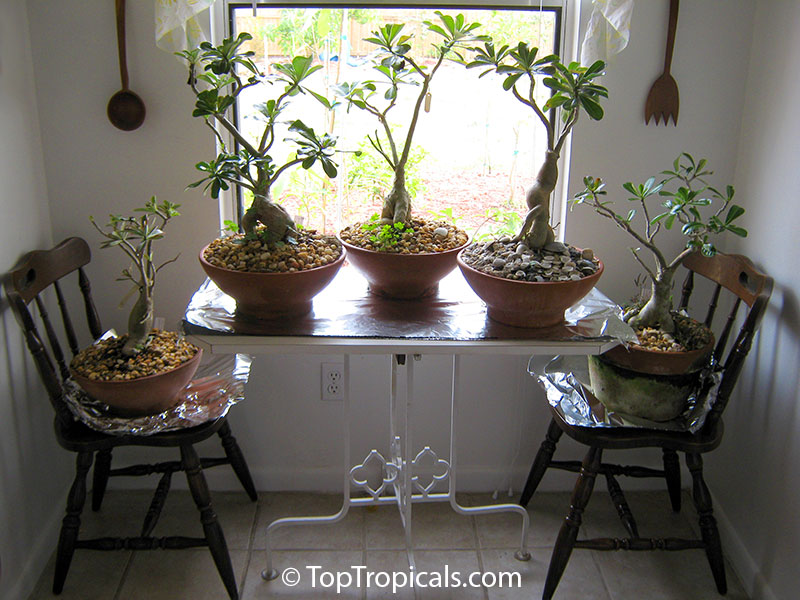
A: Adeniums are perfect container plants, and house plants. They can be easily grown outside of tropical climate. During winter, Adeniums drop leaves and go into dormancy which makes it easy to keep these plants in a dormant stage in a warm location of your house, or possibly even in well-lit spot of garage (with a window), with temperatures above 50-60F.
Here in South Florida, during time of cold, when chances of freeze are high, we move our own Adenium collection into lanai, with plastic sheet protection around lanai.

In colder climates, Adeniums can be kept indoors as house plants during winter. There are some requirements/tips for you:

  • Temperature. Move Adeniums indoors when temperature starts dropping below 45F.
  • SUNSHINE. Use SUNSHINE boosters to improve cold resistance of Adeniums, and essure healthy plant throughout winter. SUNSHINE-BC formula is specifically designed for plants with caudex, and bonsai.
  • Water. Reduce watering to minimum, especially when plants drop leaves - this means they went into dormancy. Once a week light watering is enough. Water very carefully during cooler months. When it is hot (85-100F), excessive water usually won't harm adeniums: it will be partially used by a plant, and partially will evaporate. Especially be careful with water when temperatures drop below 65F - then tropical plants simply stop growing process and go dormant. Once adeniums start losing leaves, this is a sign to reduce watering to once a week to once a month, and in very small quantity (couple tablespoons per pot).
  • Light. Bright light is not necessary, but do not keep them in dark either, even if all leaves dropped. Good light is necessary to maintain healthy stems and caudex. Keep in mind, the less light, the less watering too. Ideal spot is a windowsill, however if your space is limited and all windows occupied by other "leafy" plants, location close to window will be enough as long as watering is reduced, to avoid rot. We keep our big collection specimens on a roofed porch during winter, where level of light is very low. Last winter we haven't lost a single plant due to low light. They take shade pretty well considering minimum or no water. However bright light is always better - it creates healthier environment for a plant. We all know about space limitations for our large collections, especially in winter. So if you can afford a bright spot for adenium during winter - the plant will be lucky!
  • Soil. Use only well drained mix with much higher content of perlite than you would use for most tropical plants. For adeniums, we use mix with 30-40% of perlite in it, while regular mix has 10-15%. Adeniums like alkaline soil, unlike most of tropical plants (hard to say what else likes alkaline... Ficus for sure!). This means, regular mix with high content of peat moss may cause root rot. To increase alkalinity, you may add dolomite. Here in Florida where we have natural supply of shell rock handy, it is easy to add some shell to a potting mix (shell sand, rather than quartz sand). We always add a few large shells on top of a pots with a big specimen. Besides increasing soil pH (making it more alkaline), shells look very decorative.
  • Fertilizer. No fertilizer until Spring when plants start showing new growth and new leaves.
  • Move your Adeniums outside in Spring, when chances of freeze are zero. More sunlight and air circulation is beneficial for breaking the dormancy and providing plants with a quick growth start.

Date: 25 Jan 2021

Healthy Plants: Q&A from Mr Booster

How to get Canistel tree to produce
without dropping flowers and fruit

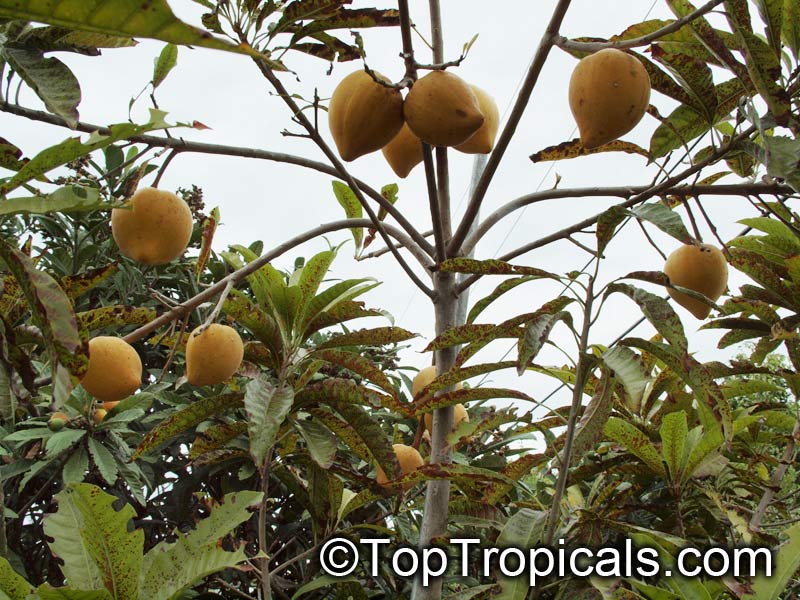
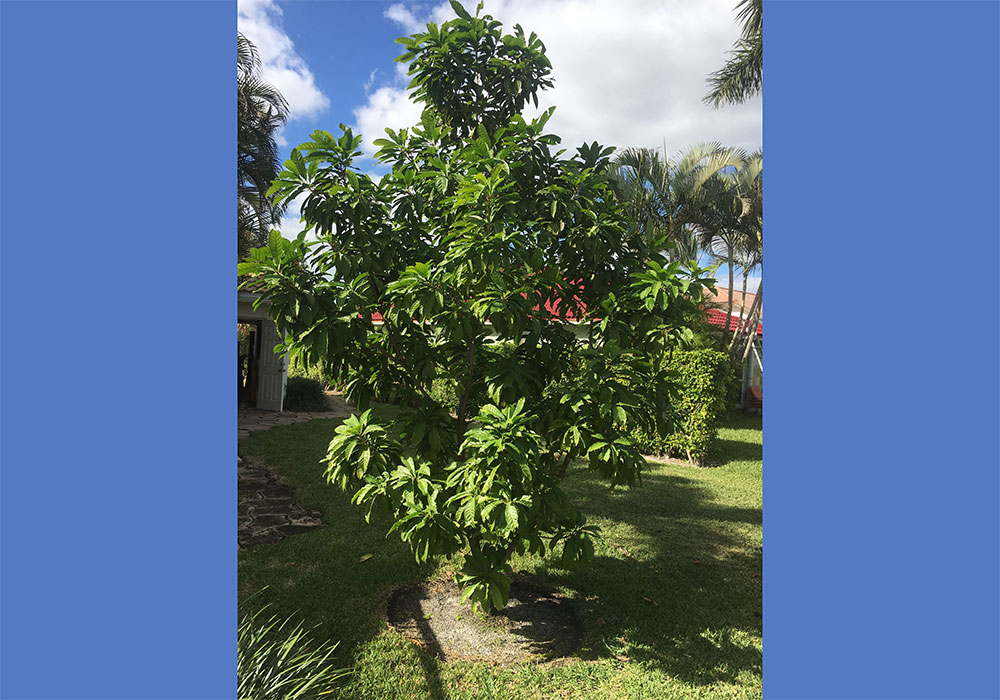
Q: My Canistel tree is 3 1/2 years old and is growing very well, see the picture below. It gets hundreds of pea sized "berries" but then they fall off. No canistel fruit. What's wrong?

A: You have such a nice looking tree, it is a shame you can't get any fruit to ripen.
In our experience, Pouteria trees dropping fruit prematurely is a very common problem. There may be one of the following reasons, or a combination of them:
- Cold winters may affect production, and while Canistel is generally pretty hardy tropical plant that can easily withstand short periods of chill, the fruit may never form properly if it had a cold winter.
- Lack of water. Canistel tree is pretty drought tolerant, but for the proper production cycle it needs regular irrigation. Especially during hot summer.
- The tree may be not strong enough; young trees drop fruit very often when they don't have enough "fruiting energy" built up in their system.
Your tree looks well established and vigorous, however, flower/fruit drop is often a sign of insufficient nutrients of particular kind, usually Boron (B) and/or Molybdenum (Mo): either when a tree is too young and not strong enough, or because of poor soils and lack of necessary elements.

Here is what can be done, considering you live in a warm, frost-free climate.

1. Provide regular fertilizing program. We recommend liquid fertilizers Sunshine Boosters that are safe to use with every watering and year around. It is beneficial to switch plants from traditional "slow-release" fertilizer to the liquid one because it makes a huge difference in plant growth and flower/fruit quality and quantity. See also:
- Why liquid fertilizers are better than dry
- Article about benefits of liquid fertilizers.

Use this plant food for your Canistel tree:
SUNSHINE C-Cibus - Crop Nutrition Booster

2. Apply micro-element remedies that are very effective for improving fruit production, especially when flower or fruit drop occurs:

SUNSHINE Honey - promotes more efficient blossoming and pollination, makes flowers bigger and reduces bud drop.
SUNSHINE SuperFood - improves plant vigor and quality and size of flowers These are all natural, eco-friendly supplements that work great for fruit trees and other edibles.

Date: 17 Sep 2025

Mulberry Care and Growing Tips

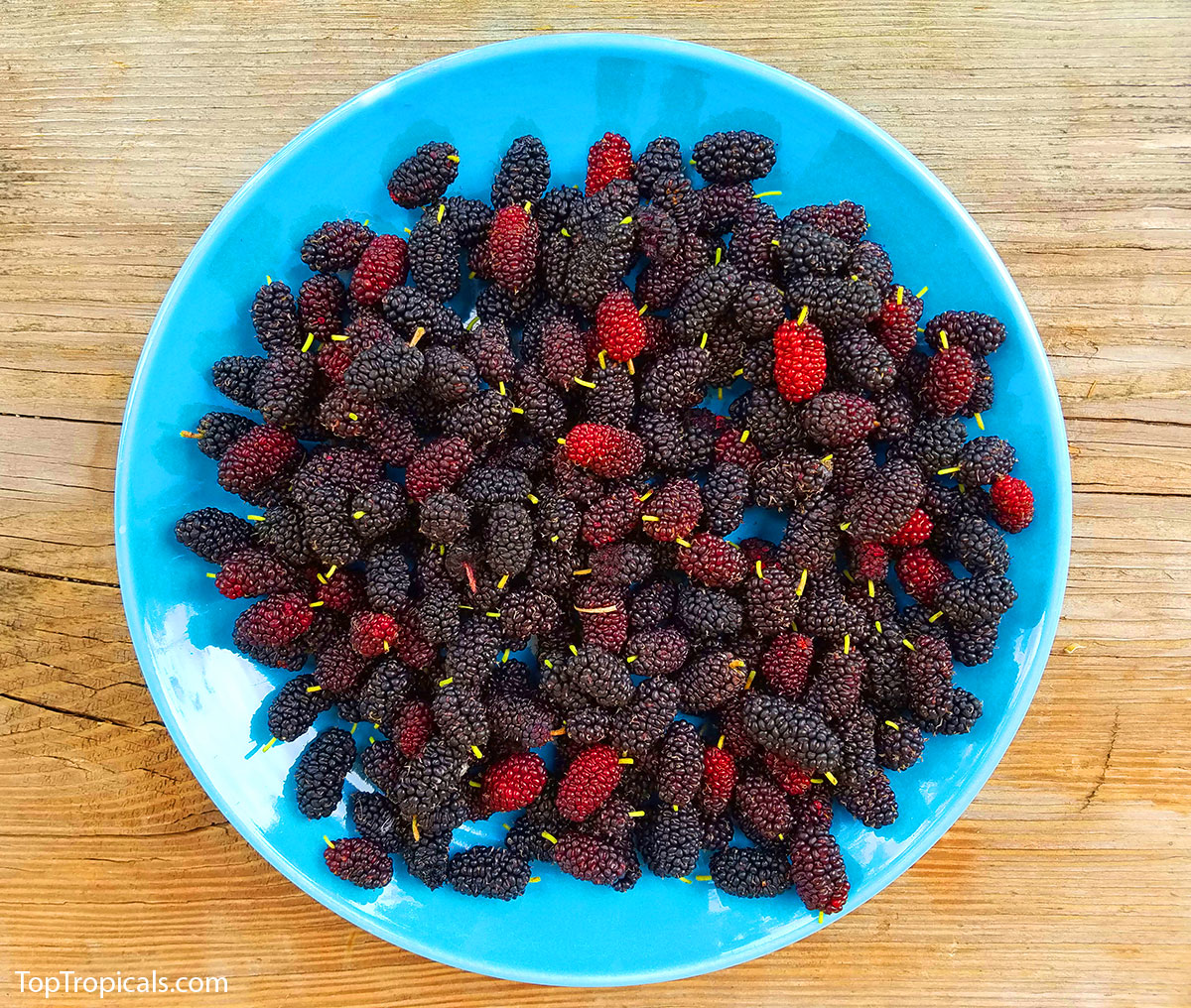
Mulberry  fruit  on  a  plate

Mulberries are tough, low-maintenance fruit trees that adapt to many conditions.

  • Climate: Hardy from USDA zone 5 to 10.
  • Soil: Grow well in almost any soil; prefer good drainage.
  • Watering: Regular watering during dry spells; drought tolerant once etablished.
  • Growth: 3–5 feet per year, producing fruit early.
  • Pruning: Annual pruning controls size and improves branching.
  • Pot culture: Dwarf types thrive in containers, staying 6–7 feet tall. Use a large pot, water consistently, and prune lightly. Use Abundance potting mix for best results.
  • Fertilizer: For reliable production, fertilizer regularly. Apply Sunshine C-Cibus liquid booster with every watering, or GreenMagic controlled release fertilizer every 5-6 months.

❓ Mulberry FAQ


How soon will a mulberry fruit?

One to two years, sometimes the very first season.

What climates are suitable?

USDA zones 5–10, from -20F winters to hot summers.

How tall do they get?

Standard trees 20–30 ft; dwarfs 6–10 ft in pots.

Do I need more than one tree?

No, they are self-pollinating.

What do they taste like?

Sweet and juicy, like a blend of blackberry and raspberry.

How long is the harvest?

Everbearing types ripen gradually from summer into fall.

Do birds eat them?

Yes, but trees are so productive there’s plenty to share.

Are they messy?

Dark-fruited varieties can stain; white mulberries do not.

Can I grow them in containers?

Yes, dwarf types (Dwarf Everbearing, Issai) fruit well in pots.

How long do they live?

Many live for decades; Illinois Everbearing can endure for generations.

What are the health benefits?

Mulberries are low-glycemic, support healthy blood sugar, improve heart health, and are rich in antioxidants.

Shop Mulberries